Downloaded 1,135 times
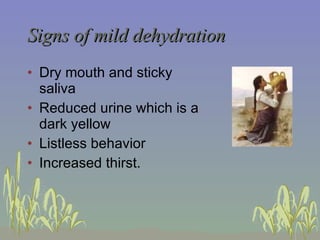
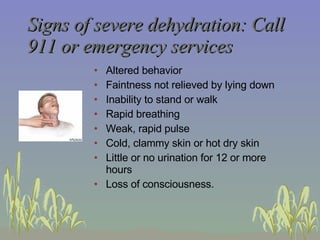
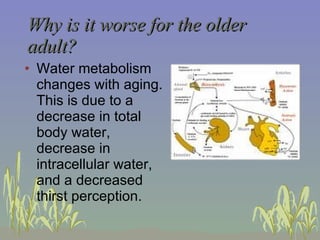
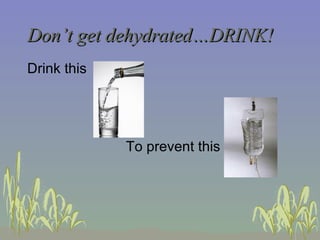

Dehydration occurs when the body loses too much fluid through illness, sweating or exercise. Mild dehydration can cause dry mouth and dark urine, while moderate dehydration adds lightheadedness and muscle cramps. Severe dehydration requires emergency help and can cause fainting, inability to walk, and loss of consciousness. The elderly are more vulnerable as water metabolism declines with age. Dehydration disrupts electrolyte balance, with too much sodium or too little potassium potentially causing seizures, coma or abnormal heart rhythms. Drinking fluids is crucial to restore balance and prevent further health issues from dehydration.


