Definitions and History
IDT 617
Instructional Design & Technology
A Tricky Beginning…
Defining the field can be tricky
It might take an entire semester to decide on what you think
is the best definition
Let’s look at some of the definitions and see how they relate
to what instructional designers do in research and practice
Many definitions…
 Instructional design is the systemic and systematic application of strategies and
techniques derived from behavioral, cognitive, and constructivist theories to the
solution of instructional problems.
 Instructional design is the systematic application of theory and other organized
knowledge to the task of instructional design and development.
 It is the entire process of analysis of learning needs and goals and the development
of a delivery system to meet those needs.
 Educational technology is the application of research, learning theory, emergent
technologies, and child and adult psychology to solving instructional and
performance problems.
The Final Word
1994: Instructional technology is the theory and practice of
design, development, utilization, management, and
evaluation of processes and resources for learning.
2006: Educational technology is the study and ethical
practice of facilitating learning and improving
performance by creating, using and managing
appropriate technological processes and resources.
Association for Educational Communications and Technology, 1994; 2006
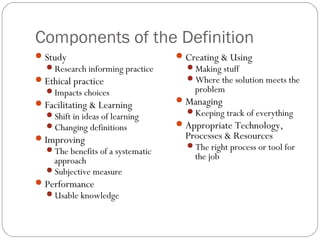
Components of the Definition
Study
Research informing practice
Ethical practice
Impacts choices
Facilitating & Learning
Shift in ideas of learning
Changing definitions
Improving
The benefits of a systematic
approach
Subjective measure
Performance
Usable knowledge
Creating & Using
Making stuff
Where the solution meets the
problem
Managing
Keeping track of everything
Appropriate Technology,
Processes & Resources
The right process or tool for
the job
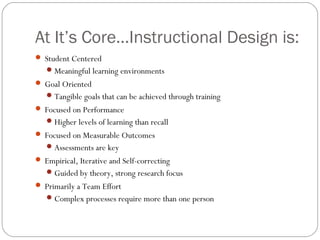
At It’s Core…Instructional Design is:
 Student Centered
Meaningful learning environments
 Goal Oriented
Tangible goals that can be achieved through training
 Focused on Performance
Higher levels of learning than recall
 Focused on Measurable Outcomes
Assessments are key
 Empirical, Iterative and Self-correcting
Guided by theory, strong research focus
 Primarily a Team Effort
Complex processes require more than one person
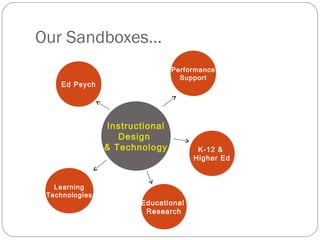
Instructional
Design
& Technology
Ed Psych
Performance
Support
K-12 &
Higher Ed
Learning
Technologies
Educational
Research
Our Sandboxes…
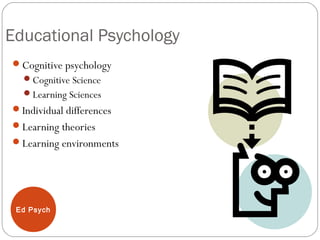
Ed Psych
Educational Psychology
Cognitive psychology
Cognitive Science
Learning Sciences
Individual differences
Learning theories
Learning environments
Performance Support
Electronic Performance
Support Systems (EPSS)
Knowledge Management
Change Management
Needs andTask Analyses
Performance
Support
Education
Technology and curriculum
integration
Media literacy
Virtual High Schools
Distance Learning
Educational Gaming
K-12 &
Higher Ed
Computer Technologies
Instructional Software
Development and
Evaluation
Hypertext
Web-based instruction
Emerging technologies
Instructional gaming and
simulation
Learning
Technologies
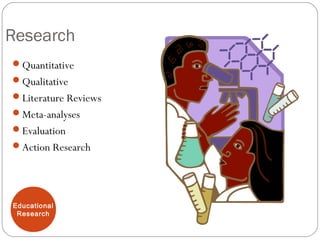
Research
Quantitative
Qualitative
Literature Reviews
Meta-analyses
Evaluation
Action Research
Educational
Research
Now that you have so many definitions
and applications…
Think about the following questions and write your
responses on the Discussion Board
Which definition makes the most sense to you as you begin to
study the field?
Where do you think the main focal point should be? Research?
Practice? Or a combination of both?
Did anything in the readings or these slides surprise you?
Comprehensive information and a good template
for yourTimeline found at:
http://www.slideshare.net/benton44/history-of-
instructional-design-and-technology
The History of IDT
Two tracks
Instructional Media
Instructional Approaches
Instructional Media
Schools and museum materials
Lantern projectors
Adoption of educational films
Telecommunications Satellites and educational television
Personal Computers
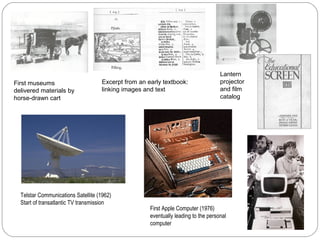
First museums
delivered materials by
horse-drawn cart
Excerpt from an early textbook:
linking images and text
Lantern
projector
and film
catalog
Telstar Communications Satellite (1962)
Start of transatlantic TV transmission
First Apple Computer (1976)
eventually leading to the personal
computer
Instructional Approaches
Dewey
Classroom as a laboratory
The importance of WWII
Skinner
Behavioral Learning Theory and Programmed instruction
Interest in the “Black Box” was minimal
A systematic approach to instruction
Moving Towards the ID process
Instructional Objectives
Robert Mager: Preparing Objectives for Programmed Instruction,
1962
Behavioral and Cognitive Objectives
Criterion referenced testing
Gagne
Conditions of learning
Taxonomy of skills
Events of instruction
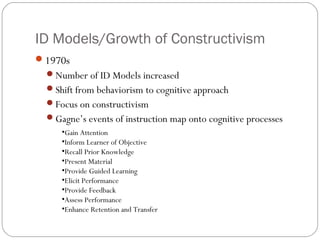
ID Models/Growth of Constructivism
1970s
Number of ID Models increased
Shift from behaviorism to cognitive approach
Focus on constructivism
Gagne’s events of instruction map onto cognitive processes
•Gain Attention
•Inform Learner of Objective
•Recall Prior Knowledge
•Present Material
•Provide Guided Learning
•Elicit Performance
•Provide Feedback
•Assess Performance
•Enhance Retention and Transfer
Progress and performance
1980s and 1990s
Explosion of Media and Access
Computers
WWW (allowed for worldwide connections)
Hypertext and Hypermedia
Performance Technologies (i.e., assessing gaps in skills)
Expanded scope of instructional designers
Instructional strategies lean more towards student centered
learning
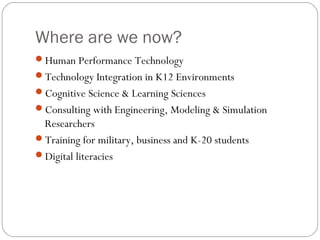
Where are we now?
Human Performance Technology
Technology Integration in K12 Environments
Cognitive Science & Learning Sciences
Consulting with Engineering, Modeling & Simulation
Researchers
Training for military, business and K-20 students
Digital literacies
For the remainder of the week…
Respond to questions on Discussion Board
Reply to classmate’s responses and continue the conversation
I will moderate, answer questions and keep us on track
Next week
I will review the discussion board interactions
We will discuss ID process and the relationship of Learning
Theory and Design
Timeline is due before class on Sept. 16th
Upload is available from Assignment Uploads link

Definitions and history

  • 1.
    Definitions and History IDT617 Instructional Design & Technology
  • 2.
    A Tricky Beginning… Definingthe field can be tricky It might take an entire semester to decide on what you think is the best definition Let’s look at some of the definitions and see how they relate to what instructional designers do in research and practice
  • 3.
    Many definitions…  Instructionaldesign is the systemic and systematic application of strategies and techniques derived from behavioral, cognitive, and constructivist theories to the solution of instructional problems.  Instructional design is the systematic application of theory and other organized knowledge to the task of instructional design and development.  It is the entire process of analysis of learning needs and goals and the development of a delivery system to meet those needs.  Educational technology is the application of research, learning theory, emergent technologies, and child and adult psychology to solving instructional and performance problems.
  • 4.
    The Final Word 1994:Instructional technology is the theory and practice of design, development, utilization, management, and evaluation of processes and resources for learning. 2006: Educational technology is the study and ethical practice of facilitating learning and improving performance by creating, using and managing appropriate technological processes and resources. Association for Educational Communications and Technology, 1994; 2006
  • 5.
    Components of theDefinition Study Research informing practice Ethical practice Impacts choices Facilitating & Learning Shift in ideas of learning Changing definitions Improving The benefits of a systematic approach Subjective measure Performance Usable knowledge Creating & Using Making stuff Where the solution meets the problem Managing Keeping track of everything Appropriate Technology, Processes & Resources The right process or tool for the job
  • 6.
    At It’s Core…InstructionalDesign is:  Student Centered Meaningful learning environments  Goal Oriented Tangible goals that can be achieved through training  Focused on Performance Higher levels of learning than recall  Focused on Measurable Outcomes Assessments are key  Empirical, Iterative and Self-correcting Guided by theory, strong research focus  Primarily a Team Effort Complex processes require more than one person
  • 7.
    Instructional Design & Technology Ed Psych Performance Support K-12& Higher Ed Learning Technologies Educational Research Our Sandboxes…
  • 8.
    Ed Psych Educational Psychology Cognitivepsychology Cognitive Science Learning Sciences Individual differences Learning theories Learning environments
  • 9.
    Performance Support Electronic Performance SupportSystems (EPSS) Knowledge Management Change Management Needs andTask Analyses Performance Support
  • 10.
    Education Technology and curriculum integration Medialiteracy Virtual High Schools Distance Learning Educational Gaming K-12 & Higher Ed
  • 11.
    Computer Technologies Instructional Software Developmentand Evaluation Hypertext Web-based instruction Emerging technologies Instructional gaming and simulation Learning Technologies
  • 12.
  • 13.
    Now that youhave so many definitions and applications… Think about the following questions and write your responses on the Discussion Board Which definition makes the most sense to you as you begin to study the field? Where do you think the main focal point should be? Research? Practice? Or a combination of both? Did anything in the readings or these slides surprise you?
  • 14.
    Comprehensive information anda good template for yourTimeline found at: http://www.slideshare.net/benton44/history-of- instructional-design-and-technology The History of IDT
  • 15.
  • 16.
    Instructional Media Schools andmuseum materials Lantern projectors Adoption of educational films Telecommunications Satellites and educational television Personal Computers
  • 17.
    First museums delivered materialsby horse-drawn cart Excerpt from an early textbook: linking images and text Lantern projector and film catalog Telstar Communications Satellite (1962) Start of transatlantic TV transmission First Apple Computer (1976) eventually leading to the personal computer
  • 18.
    Instructional Approaches Dewey Classroom asa laboratory The importance of WWII Skinner Behavioral Learning Theory and Programmed instruction Interest in the “Black Box” was minimal A systematic approach to instruction
  • 19.
    Moving Towards theID process Instructional Objectives Robert Mager: Preparing Objectives for Programmed Instruction, 1962 Behavioral and Cognitive Objectives Criterion referenced testing Gagne Conditions of learning Taxonomy of skills Events of instruction
  • 20.
    ID Models/Growth ofConstructivism 1970s Number of ID Models increased Shift from behaviorism to cognitive approach Focus on constructivism Gagne’s events of instruction map onto cognitive processes •Gain Attention •Inform Learner of Objective •Recall Prior Knowledge •Present Material •Provide Guided Learning •Elicit Performance •Provide Feedback •Assess Performance •Enhance Retention and Transfer
  • 21.
    Progress and performance 1980sand 1990s Explosion of Media and Access Computers WWW (allowed for worldwide connections) Hypertext and Hypermedia Performance Technologies (i.e., assessing gaps in skills) Expanded scope of instructional designers Instructional strategies lean more towards student centered learning
  • 22.
    Where are wenow? Human Performance Technology Technology Integration in K12 Environments Cognitive Science & Learning Sciences Consulting with Engineering, Modeling & Simulation Researchers Training for military, business and K-20 students Digital literacies
  • 23.
    For the remainderof the week… Respond to questions on Discussion Board Reply to classmate’s responses and continue the conversation I will moderate, answer questions and keep us on track
  • 24.
    Next week I willreview the discussion board interactions We will discuss ID process and the relationship of Learning Theory and Design Timeline is due before class on Sept. 16th Upload is available from Assignment Uploads link

Editor's Notes

  • #4 Pay attention to the similarities in the definitions here. All are referring to a systematic, research-based process for the design of instruction