Reading Quiz
by Cassidy Baker
Boise State University
Ed Tech 503-4173
Instructional Technology
Slide 1: Title Page
Slide 2: Table of Contents
Slide 3: Visual of the history of ID
Slide 4: Explanation of the history of ID
Slide 5: Visual of ID
Slide 6: Explanation of ID
Slide 7:Visual of systematic
Slide 8: Explanation of systematic
Slide 9: Visual of models
Slide 10: Explanation of models
Slide 11: ID Model #1
Slide 12: Explanation of ID Model #1
Slide 13: ID Model #2
Slide 14: Explanation of ID Model #2
Slide 15: ID Model #3
Slide 16: Explanation of ID Model #3
Slide 17: ID Model #4
Slide 18: Explanation of ID Model #4
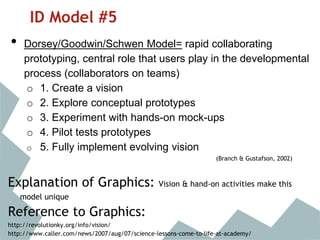
Slide 19: ID Model #5
Slide 20: Explanation of ID Model #5
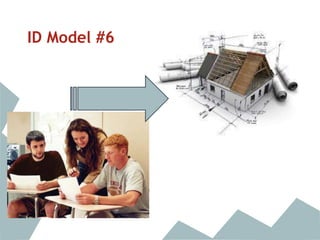
Slide 21: ID Model #6
Slide 22:Explanation of ID Model #6
Slide 23: Graphic of Constructivism
Slide 24: Explanation of
Constructivism
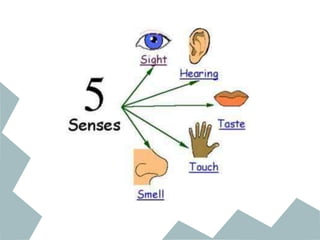
Slide 25: Graphic of Empiricism
Slide 26: Explanation of
Empiricism
Slide 27:Graphic of Behaviorism
Slide 28: Explanation of
Behaviorism
Slide 29:Graphic of Visual
Information Processing Theory
Slide 30:Explanation of
Information Processing Theory
Slide 31:Graphic of Educational
Technology
Slide 32:Explanation of
Educational Technology
History of ID
My Definition: Instructional design began to be used as a concept
during WW2 to train officers. After the WW2, many psychologists began to
see the positives of instructional design in more fields, including
education. Throughout the 1950's and 1960's many improvements to
education began including: objectives, instructional methods and how to
assess.
(Reiser, 2001)
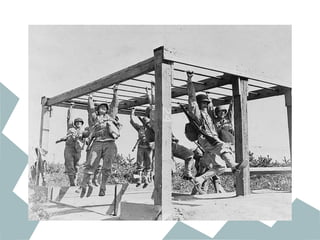
Explanation of Visual: Because of it's beginnings in WW2, this
visual represents the training process of soldiers.
Reference of Graphic:
http://www.defensemedianetwork.com/stories/theyd-murder-me-if-
they-ever-found-out/
Instructional Design
My Definition: Instructional design is the process of using your
teaching objectives and designing a lesson that allows all students to
achieve at high levels.
Explanation of Graphic: The graphic shows a teacher planning
many elements of a lesson. Instructional design allows teachers (as well as
others fields) to design lessons or trainings to best help their students.
Reference to picture:
http://www.nwlink.com/~donclark/hrd/sat4.html
Systematic
My definition: Systematic is whenever you do something
purposefully and pre-planned in hopes of achieving a particular outcome.
Explanation of visual:This visual is an example of systematic
because it shows a machine and how everything is purposefully planned to
produce a material.
Reference to picture:
http://scmapdb.com/map:sewer-systematic:toxicidia-sektor-516
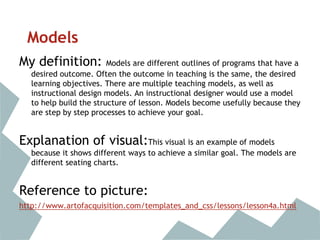
Models
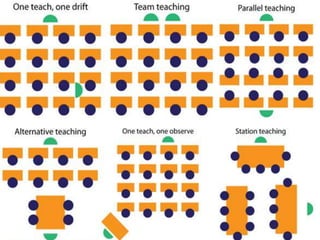
My definition: Models are different outlines of programs that have a
desired outcome. Often the outcome in teaching is the same, the desired
learning objectives. There are multiple teaching models, as well as
instructional design models. An instructional designer would use a model
to help build the structure of lesson. Models become usefully because they
are step by step processes to achieve your goal.
Explanation of visual:This visual is an example of models
because it shows different ways to achieve a similar goal. The models are
different seating charts.
Reference to picture:
http://www.artofacquisition.com/templates_and_css/lessons/lesson4a.html
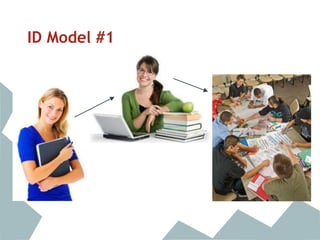
ID Model #1
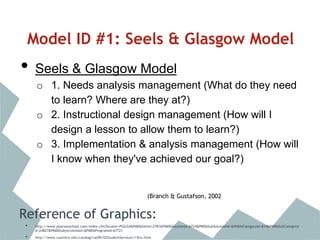
Model ID #1: Seels & Glasgow Model
• Seels & Glasgow Model
o 1. Needs analysis management (What do they need
to learn? Where are they at?)
o 2. Instructional design management (How will I
design a lesson to allow them to learn?)
o 3. Implementation & analysis management (How will
I know when they've achieved our goal?)
(Branch & Gustafson, 2002
Reference of Graphics:
• http://www.pearsonschool.com/index.cfm?locator=PSZoS4&PMDbSiteId=2781&PMDbSolutionId=6724&PMDbSubSolutionId=&PMDbCategoryId=814&PMDbSubCategoryI
d=24827&PMDbSubjectAreaId=&PMDbProgramId=67721
• http://www.csuchico.edu/catalog/cat09/02StudentServices/13lrn.html
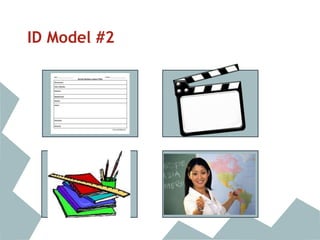
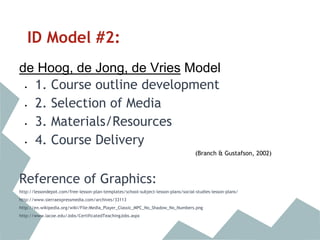
ID Model #2
ID Model #2:
de Hoog, de Jong, de Vries Model
 1. Course outline development
 2. Selection of Media
 3. Materials/Resources
 4. Course Delivery
(Branch & Gustafson, 2002)
Reference of Graphics:
http://lessondepot.com/free-lesson-plan-templates/school-subject-lesson-plans/social-studies-lesson-plans/
http://www.sierraexpressmedia.com/archives/33113
http://en.wikipedia.org/wiki/File:Media_Player_Classic_MPC_No_Shadow_No_Numbers.png
http://www.lacoe.edu/Jobs/CertificatedTeachingJobs.aspx
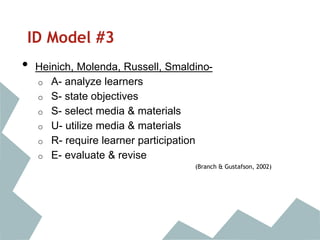
ID Model #3
ID Model #3
• Heinich, Molenda, Russell, Smaldino-
o A- analyze learners
o S- state objectives
o S- select media & materials
o U- utilize media & materials
o R- require learner participation
o E- evaluate & revise
(Branch & Gustafson, 2002)
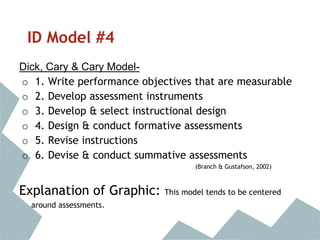
ID Model #4
ID Model #4
Dick, Cary & Cary Model-
o 1. Write performance objectives that are measurable
o 2. Develop assessment instruments
o 3. Develop & select instructional design
o 4. Design & conduct formative assessments
o 5. Revise instructions
o 6. Devise & conduct summative assessments
(Branch & Gustafson, 2002)
Explanation of Graphic: This model tends to be centered
around assessments.
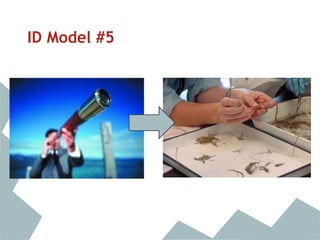
ID Model #5
ID Model #5
• Dorsey/Goodwin/Schwen Model= rapid collaborating
prototyping, central role that users play in the developmental
process (collaborators on teams)
o 1. Create a vision
o 2. Explore conceptual prototypes
o 3. Experiment with hands-on mock-ups
o 4. Pilot tests prototypes
o 5. Fully implement evolving vision
(Branch & Gustafson, 2002)
Explanation of Graphics: Vision & hand-on activities make this
model unique
Reference to Graphics:
http://revolutionky.org/info/vision/
http://www.caller.com/news/2007/aug/07/science-lessons-come-to-life-at-academy/
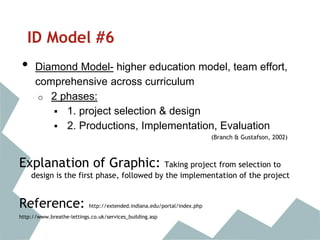
ID Model #6
ID Model #6
• Diamond Model- higher education model, team effort,
comprehensive across curriculum
o 2 phases:
 1. project selection & design
 2. Productions, Implementation, Evaluation
(Branch & Gustafson, 2002)
Explanation of Graphic: Taking project from selection to
design is the first phase, followed by the implementation of the project
Reference: http://extended.indiana.edu/portal/index.php
http://www.breathe-lettings.co.uk/services_building.asp
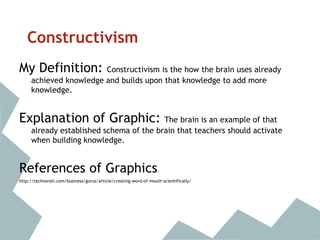
Constructivism
My Definition: Constructivism is the how the brain uses already
achieved knowledge and builds upon that knowledge to add more
knowledge.
Explanation of Graphic: The brain is an example of that
already established schema of the brain that teachers should activate
when building knowledge.
References of Graphics:
http://technorati.com/business/gurus/article/creating-word-of-mouth-scientifically/
Empiricism
My Definition: Empiricism is the idea that knowledge only comes
from primary or sensory experiences
Explanation of Graphic: This graphic shows the senses that
empiricists believe better achieve a learning experience.
Reference: http://www.commongroundgroup.net/2012/12/10/the-enlightenment-vision-of-
science-and-religion-6-empiricism-and-the-senses/
Behaviorism
My Definition: Behaviorism is the a psychological approach to
learning to focuses on observing the behavior of student.
Explanation of Graphic: Psychologists used experiments with
rats to observe the behavior and trace patterns
Reference to Graphic:
http://www.funderstanding.com/category/theory/behaviorism/
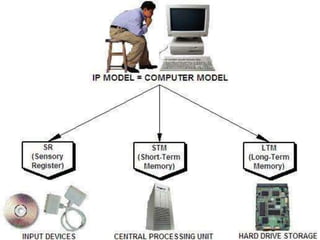
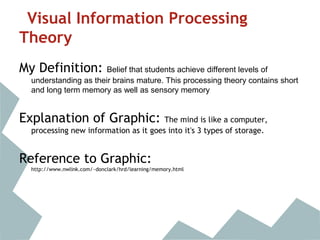
Visual Information Processing
Theory
My Definition: Belief that students achieve different levels of
understanding as their brains mature. This processing theory contains short
and long term memory as well as sensory memory
Explanation of Graphic: The mind is like a computer,
processing new information as it goes into it's 3 types of storage.
Reference to Graphic:
http://www.nwlink.com/~donclark/hrd/learning/memory.html
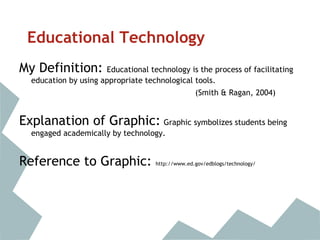
Educational Technology
My Definition: Educational technology is the process of facilitating
education by using appropriate technological tools.
(Smith & Ragan, 2004)
Explanation of Graphic: Graphic symbolizes students being
engaged academically by technology.
Reference to Graphic: http://www.ed.gov/edblogs/technology/
References:
Branch, R., Gustafson, K. (2002). Article. Retrieved from
http://edtech.mrooms.org/pluginfile.php/64668/cours
e/section/6920/ID-MODELS_Gustafson-and-Branch.pdf
Smith, P.L., Ragan, T.J. (2004). General format.
Retrieved from:
http://edtech.mrooms.org/mod/resource/view.php?id
=48472
Reiser, Robert A. (2001) Article. Retrieved from:
http://edtech.mrooms.org/pluginfile.php/64688/mod_
page/content/2/History-of-ID_Reiser.pdf

Reading quiz cassidy baker

  • 1.
    Reading Quiz by CassidyBaker Boise State University Ed Tech 503-4173 Instructional Technology
  • 2.
    Slide 1: TitlePage Slide 2: Table of Contents Slide 3: Visual of the history of ID Slide 4: Explanation of the history of ID Slide 5: Visual of ID Slide 6: Explanation of ID Slide 7:Visual of systematic Slide 8: Explanation of systematic Slide 9: Visual of models Slide 10: Explanation of models Slide 11: ID Model #1 Slide 12: Explanation of ID Model #1 Slide 13: ID Model #2 Slide 14: Explanation of ID Model #2 Slide 15: ID Model #3 Slide 16: Explanation of ID Model #3 Slide 17: ID Model #4 Slide 18: Explanation of ID Model #4 Slide 19: ID Model #5 Slide 20: Explanation of ID Model #5 Slide 21: ID Model #6 Slide 22:Explanation of ID Model #6 Slide 23: Graphic of Constructivism Slide 24: Explanation of Constructivism Slide 25: Graphic of Empiricism Slide 26: Explanation of Empiricism Slide 27:Graphic of Behaviorism Slide 28: Explanation of Behaviorism Slide 29:Graphic of Visual Information Processing Theory Slide 30:Explanation of Information Processing Theory Slide 31:Graphic of Educational Technology Slide 32:Explanation of Educational Technology
  • 4.
    History of ID MyDefinition: Instructional design began to be used as a concept during WW2 to train officers. After the WW2, many psychologists began to see the positives of instructional design in more fields, including education. Throughout the 1950's and 1960's many improvements to education began including: objectives, instructional methods and how to assess. (Reiser, 2001) Explanation of Visual: Because of it's beginnings in WW2, this visual represents the training process of soldiers. Reference of Graphic: http://www.defensemedianetwork.com/stories/theyd-murder-me-if- they-ever-found-out/
  • 6.
    Instructional Design My Definition:Instructional design is the process of using your teaching objectives and designing a lesson that allows all students to achieve at high levels. Explanation of Graphic: The graphic shows a teacher planning many elements of a lesson. Instructional design allows teachers (as well as others fields) to design lessons or trainings to best help their students. Reference to picture: http://www.nwlink.com/~donclark/hrd/sat4.html
  • 8.
    Systematic My definition: Systematicis whenever you do something purposefully and pre-planned in hopes of achieving a particular outcome. Explanation of visual:This visual is an example of systematic because it shows a machine and how everything is purposefully planned to produce a material. Reference to picture: http://scmapdb.com/map:sewer-systematic:toxicidia-sektor-516
  • 10.
    Models My definition: Modelsare different outlines of programs that have a desired outcome. Often the outcome in teaching is the same, the desired learning objectives. There are multiple teaching models, as well as instructional design models. An instructional designer would use a model to help build the structure of lesson. Models become usefully because they are step by step processes to achieve your goal. Explanation of visual:This visual is an example of models because it shows different ways to achieve a similar goal. The models are different seating charts. Reference to picture: http://www.artofacquisition.com/templates_and_css/lessons/lesson4a.html
  • 11.
  • 12.
    Model ID #1:Seels & Glasgow Model • Seels & Glasgow Model o 1. Needs analysis management (What do they need to learn? Where are they at?) o 2. Instructional design management (How will I design a lesson to allow them to learn?) o 3. Implementation & analysis management (How will I know when they've achieved our goal?) (Branch & Gustafson, 2002 Reference of Graphics: • http://www.pearsonschool.com/index.cfm?locator=PSZoS4&PMDbSiteId=2781&PMDbSolutionId=6724&PMDbSubSolutionId=&PMDbCategoryId=814&PMDbSubCategoryI d=24827&PMDbSubjectAreaId=&PMDbProgramId=67721 • http://www.csuchico.edu/catalog/cat09/02StudentServices/13lrn.html
  • 13.
  • 14.
    ID Model #2: deHoog, de Jong, de Vries Model  1. Course outline development  2. Selection of Media  3. Materials/Resources  4. Course Delivery (Branch & Gustafson, 2002) Reference of Graphics: http://lessondepot.com/free-lesson-plan-templates/school-subject-lesson-plans/social-studies-lesson-plans/ http://www.sierraexpressmedia.com/archives/33113 http://en.wikipedia.org/wiki/File:Media_Player_Classic_MPC_No_Shadow_No_Numbers.png http://www.lacoe.edu/Jobs/CertificatedTeachingJobs.aspx
  • 15.
  • 16.
    ID Model #3 •Heinich, Molenda, Russell, Smaldino- o A- analyze learners o S- state objectives o S- select media & materials o U- utilize media & materials o R- require learner participation o E- evaluate & revise (Branch & Gustafson, 2002)
  • 17.
  • 18.
    ID Model #4 Dick,Cary & Cary Model- o 1. Write performance objectives that are measurable o 2. Develop assessment instruments o 3. Develop & select instructional design o 4. Design & conduct formative assessments o 5. Revise instructions o 6. Devise & conduct summative assessments (Branch & Gustafson, 2002) Explanation of Graphic: This model tends to be centered around assessments.
  • 19.
  • 20.
    ID Model #5 •Dorsey/Goodwin/Schwen Model= rapid collaborating prototyping, central role that users play in the developmental process (collaborators on teams) o 1. Create a vision o 2. Explore conceptual prototypes o 3. Experiment with hands-on mock-ups o 4. Pilot tests prototypes o 5. Fully implement evolving vision (Branch & Gustafson, 2002) Explanation of Graphics: Vision & hand-on activities make this model unique Reference to Graphics: http://revolutionky.org/info/vision/ http://www.caller.com/news/2007/aug/07/science-lessons-come-to-life-at-academy/
  • 21.
  • 22.
    ID Model #6 •Diamond Model- higher education model, team effort, comprehensive across curriculum o 2 phases:  1. project selection & design  2. Productions, Implementation, Evaluation (Branch & Gustafson, 2002) Explanation of Graphic: Taking project from selection to design is the first phase, followed by the implementation of the project Reference: http://extended.indiana.edu/portal/index.php http://www.breathe-lettings.co.uk/services_building.asp
  • 24.
    Constructivism My Definition: Constructivismis the how the brain uses already achieved knowledge and builds upon that knowledge to add more knowledge. Explanation of Graphic: The brain is an example of that already established schema of the brain that teachers should activate when building knowledge. References of Graphics: http://technorati.com/business/gurus/article/creating-word-of-mouth-scientifically/
  • 26.
    Empiricism My Definition: Empiricismis the idea that knowledge only comes from primary or sensory experiences Explanation of Graphic: This graphic shows the senses that empiricists believe better achieve a learning experience. Reference: http://www.commongroundgroup.net/2012/12/10/the-enlightenment-vision-of- science-and-religion-6-empiricism-and-the-senses/
  • 28.
    Behaviorism My Definition: Behaviorismis the a psychological approach to learning to focuses on observing the behavior of student. Explanation of Graphic: Psychologists used experiments with rats to observe the behavior and trace patterns Reference to Graphic: http://www.funderstanding.com/category/theory/behaviorism/
  • 30.
    Visual Information Processing Theory MyDefinition: Belief that students achieve different levels of understanding as their brains mature. This processing theory contains short and long term memory as well as sensory memory Explanation of Graphic: The mind is like a computer, processing new information as it goes into it's 3 types of storage. Reference to Graphic: http://www.nwlink.com/~donclark/hrd/learning/memory.html
  • 32.
    Educational Technology My Definition:Educational technology is the process of facilitating education by using appropriate technological tools. (Smith & Ragan, 2004) Explanation of Graphic: Graphic symbolizes students being engaged academically by technology. Reference to Graphic: http://www.ed.gov/edblogs/technology/
  • 33.
    References: Branch, R., Gustafson,K. (2002). Article. Retrieved from http://edtech.mrooms.org/pluginfile.php/64668/cours e/section/6920/ID-MODELS_Gustafson-and-Branch.pdf Smith, P.L., Ragan, T.J. (2004). General format. Retrieved from: http://edtech.mrooms.org/mod/resource/view.php?id =48472 Reiser, Robert A. (2001) Article. Retrieved from: http://edtech.mrooms.org/pluginfile.php/64688/mod_ page/content/2/History-of-ID_Reiser.pdf