
DEFERRED TAX
– MAHIMA PAHWA
WHY IT ARISES
Differences between
Accounting Income and
Taxable Income
 Difference in
allowance of expenses
in Income Tax Act.
 Provision for
Bad/doubtful debts.
 Charging Depreciation.
 Accrual Basis vs
Receipt Basis.
TYPES OF
DEFERRED
TAX
TYPES
Deferred Tax
Liability
Deferred Tax
Asset
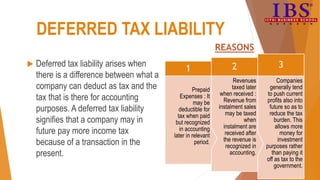
DEFERRED TAX LIABILITY
 Deferred tax liability arises when
there is a difference between what a
company can deduct as tax and the
tax that is there for accounting
purposes. A deferred tax liability
signifies that a company may in
future pay more income tax
because of a transaction in the
present.
Companies
generally tend
to push current
profits also into
future so as to
reduce the tax
burden. This
allows more
money for
investment
purposes rather
than paying it
off as tax to the
government.
3
Revenues
taxed later
when received :
Revenue from
instalment sales
may be taxed
when
instalment are
received after
the revenue is
recognized in
accounting.
2
Prepaid
Expenses : It
may be
deductible for
tax when paid
but recognized
in accounting
later in relevant
period.
1
REASONS
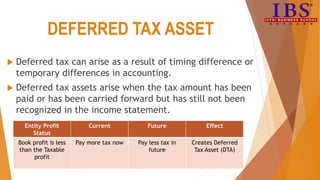
DEFERRED TAX ASSET
 Deferred tax can arise as a result of timing difference or
temporary differences in accounting.
 Deferred tax assets arise when the tax amount has been
paid or has been carried forward but has still not been
recognized in the income statement.
Entity Profit
Status
Current Future Effect
Book profit is less
than the Taxable
profit
Pay more tax now Pay less tax in
future
Creates Deferred
Tax Asset (DTA)
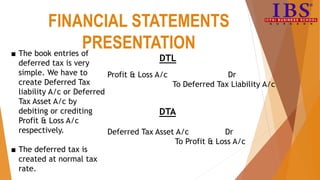
FINANCIAL STATEMENTS
PRESENTATION■ The book entries of
deferred tax is very
simple. We have to
create Deferred Tax
liability A/c or Deferred
Tax Asset A/c by
debiting or crediting
Profit & Loss A/c
respectively.
■ The deferred tax is
created at normal tax
rate.
DTL
Profit & Loss A/c Dr
To Deferred Tax Liability A/c
DTA
Deferred Tax Asset A/c Dr
To Profit & Loss A/c
 If book profit is greater than taxable profit, create
deferred tax liability.
 If book profit is less than taxable profit, create
deferred tax asset.
 If there is loss in the books of accounts but profit as
per income tax and the difference (e.g. disallowance of
exp.) subject to adjustments in future,create deferred
tax asset.
 If there is profit in the books of accounts but loss as
per income tax and carry forward of loss is allowed,
create deferred tax liability.
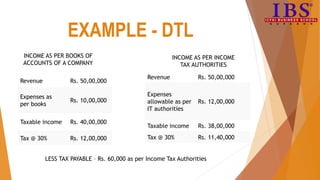
EXAMPLE - DTL
Revenue Rs. 50,00,000
Expenses as
per books
Rs. 10,00,000
Taxable income Rs. 40,00,000
Tax @ 30% Rs. 12,00,000
INCOME AS PER BOOKS OF
ACCOUNTS OF A COMPANY
INCOME AS PER INCOME
TAX AUTHORITIES
Revenue Rs. 50,00,000
Expenses
allowable as per
IT authorities
Rs. 12,00,000
Taxable income Rs. 38,00,000
Tax @ 30% Rs. 11,40,000
LESS TAX PAYABLE – Rs. 60,000 as per Income Tax Authorities
EXAMPLE - DTA
Revenue Rs. 50,00,000
Expenses as
per books
Rs. 10,00,000
Taxable income Rs. 40,00,000
Tax @ 30% Rs. 12,00,000
INCOME AS PER BOOKS OF
ACCOUNTS OF A COMPANY INCOME AS PER INCOME
TAX AUTHORITIES
Revenue Rs. 50,00,000
Expenses
allowable as per
IT authorities
Rs. 8,00,000
Taxable income Rs. 42,00,000
Tax @ 30% Rs. 12,60,000
EXCESS TAX PAYABLE – Rs. 60,000 as per Income Tax Authorities
THANK YOU

DEFERRED TAX

  • 1.
  • 2.
    WHY IT ARISES Differencesbetween Accounting Income and Taxable Income  Difference in allowance of expenses in Income Tax Act.  Provision for Bad/doubtful debts.  Charging Depreciation.  Accrual Basis vs Receipt Basis.
  • 3.
  • 4.
    DEFERRED TAX LIABILITY Deferred tax liability arises when there is a difference between what a company can deduct as tax and the tax that is there for accounting purposes. A deferred tax liability signifies that a company may in future pay more income tax because of a transaction in the present. Companies generally tend to push current profits also into future so as to reduce the tax burden. This allows more money for investment purposes rather than paying it off as tax to the government. 3 Revenues taxed later when received : Revenue from instalment sales may be taxed when instalment are received after the revenue is recognized in accounting. 2 Prepaid Expenses : It may be deductible for tax when paid but recognized in accounting later in relevant period. 1 REASONS
  • 5.
    DEFERRED TAX ASSET Deferred tax can arise as a result of timing difference or temporary differences in accounting.  Deferred tax assets arise when the tax amount has been paid or has been carried forward but has still not been recognized in the income statement. Entity Profit Status Current Future Effect Book profit is less than the Taxable profit Pay more tax now Pay less tax in future Creates Deferred Tax Asset (DTA)
  • 6.
    FINANCIAL STATEMENTS PRESENTATION■ Thebook entries of deferred tax is very simple. We have to create Deferred Tax liability A/c or Deferred Tax Asset A/c by debiting or crediting Profit & Loss A/c respectively. ■ The deferred tax is created at normal tax rate. DTL Profit & Loss A/c Dr To Deferred Tax Liability A/c DTA Deferred Tax Asset A/c Dr To Profit & Loss A/c
  • 7.
     If bookprofit is greater than taxable profit, create deferred tax liability.  If book profit is less than taxable profit, create deferred tax asset.  If there is loss in the books of accounts but profit as per income tax and the difference (e.g. disallowance of exp.) subject to adjustments in future,create deferred tax asset.  If there is profit in the books of accounts but loss as per income tax and carry forward of loss is allowed, create deferred tax liability.
  • 8.
    EXAMPLE - DTL RevenueRs. 50,00,000 Expenses as per books Rs. 10,00,000 Taxable income Rs. 40,00,000 Tax @ 30% Rs. 12,00,000 INCOME AS PER BOOKS OF ACCOUNTS OF A COMPANY INCOME AS PER INCOME TAX AUTHORITIES Revenue Rs. 50,00,000 Expenses allowable as per IT authorities Rs. 12,00,000 Taxable income Rs. 38,00,000 Tax @ 30% Rs. 11,40,000 LESS TAX PAYABLE – Rs. 60,000 as per Income Tax Authorities
  • 9.
    EXAMPLE - DTA RevenueRs. 50,00,000 Expenses as per books Rs. 10,00,000 Taxable income Rs. 40,00,000 Tax @ 30% Rs. 12,00,000 INCOME AS PER BOOKS OF ACCOUNTS OF A COMPANY INCOME AS PER INCOME TAX AUTHORITIES Revenue Rs. 50,00,000 Expenses allowable as per IT authorities Rs. 8,00,000 Taxable income Rs. 42,00,000 Tax @ 30% Rs. 12,60,000 EXCESS TAX PAYABLE – Rs. 60,000 as per Income Tax Authorities
  • 10.