IAS 12: Deferred Taxes
Interperiod Tax Allocation
A Deferred Tax Liability arises when the income tax payable calculated for the tax
return is less than the tax calculated by the accounting records.
A Deferred Tax Asset is created when the income tax payable calculated for the tax
return is more than the tax calculated by the accounting records.
In both cases the allocation is for a temporary difference. The amount will offset over
time.
For permanent differences the Income Tax Expense calculation should not take into
account the permanent difference. A permanent difference represents a case where
something is recorded as an expense in the accounting records but is not allowed as a
deduction for tax purposes.
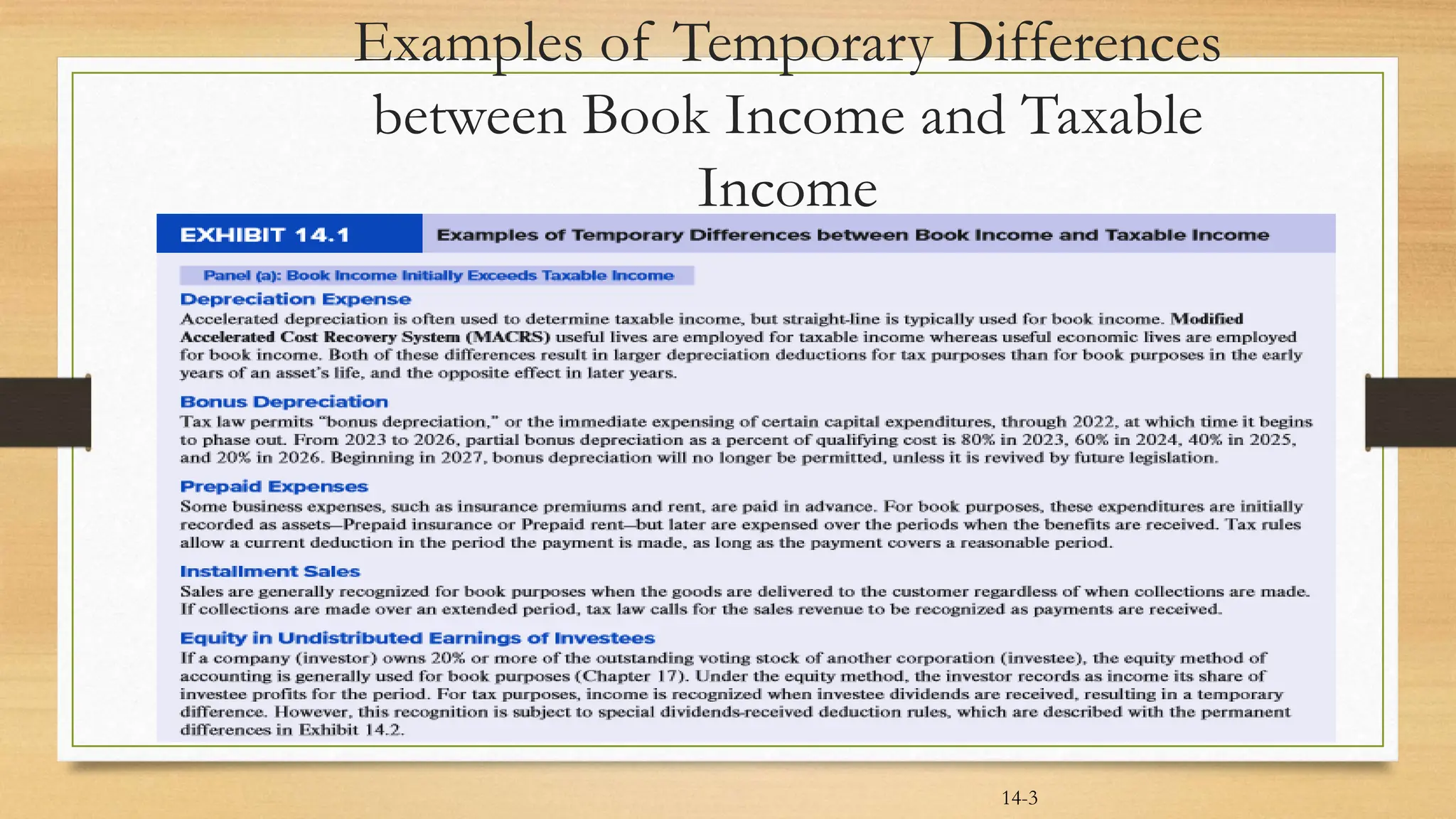
Examples of Temporary Differences
between Book Income and Taxable
Income
14-3
Examples of Temporary Differences
between Book Income and Taxable
Income, continued
14-4
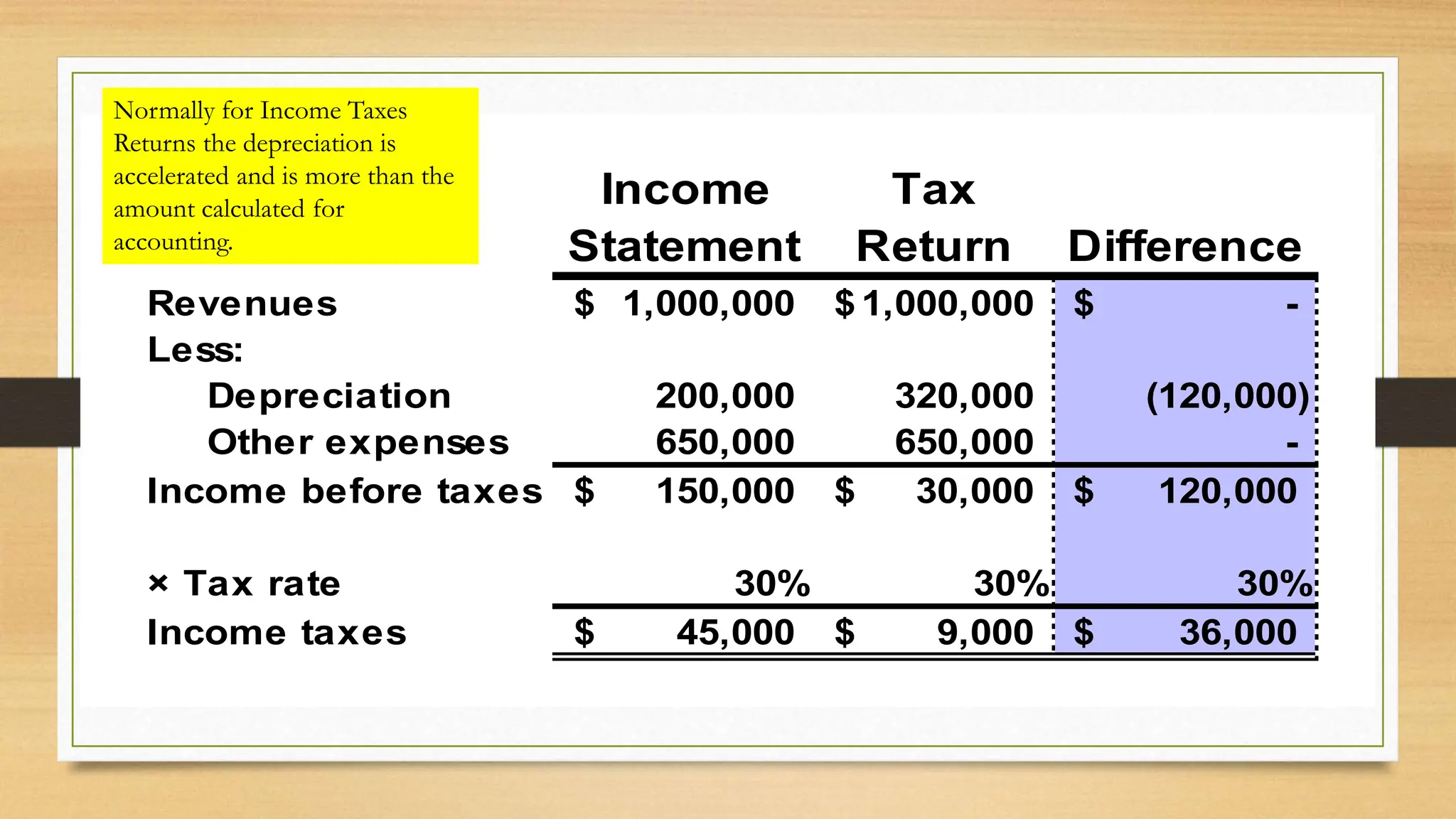
Income Tax
Statement Return Difference
Revenues 1,000,000
$ 1,000,000
$ -
$
Less:
Depreciation 200,000 320,000 (120,000)
Other expenses 650,000 650,000 -
Income before taxes 150,000
$ 30,000
$ 120,000
$
× Tax rate 30% 30% 30%
Income taxes 45,000
$ 9,000
$ 36,000
$
Normally for Income Taxes
Returns the depreciation is
accelerated and is more than the
amount calculated for
accounting.
Income Tax
Statement Return Difference
Revenues 1,000,000
$ 1,000,000
$ -
$
Less:
Depreciation 200,000 320,000 (120,000)
Other expenses 650,000 650,000 -
Income before taxes 150,000
$ 30,000
$ 120,000
$
× Tax rate 30% 30% 30%
Income taxes 45,000
$ 9,000
$ 36,000
$
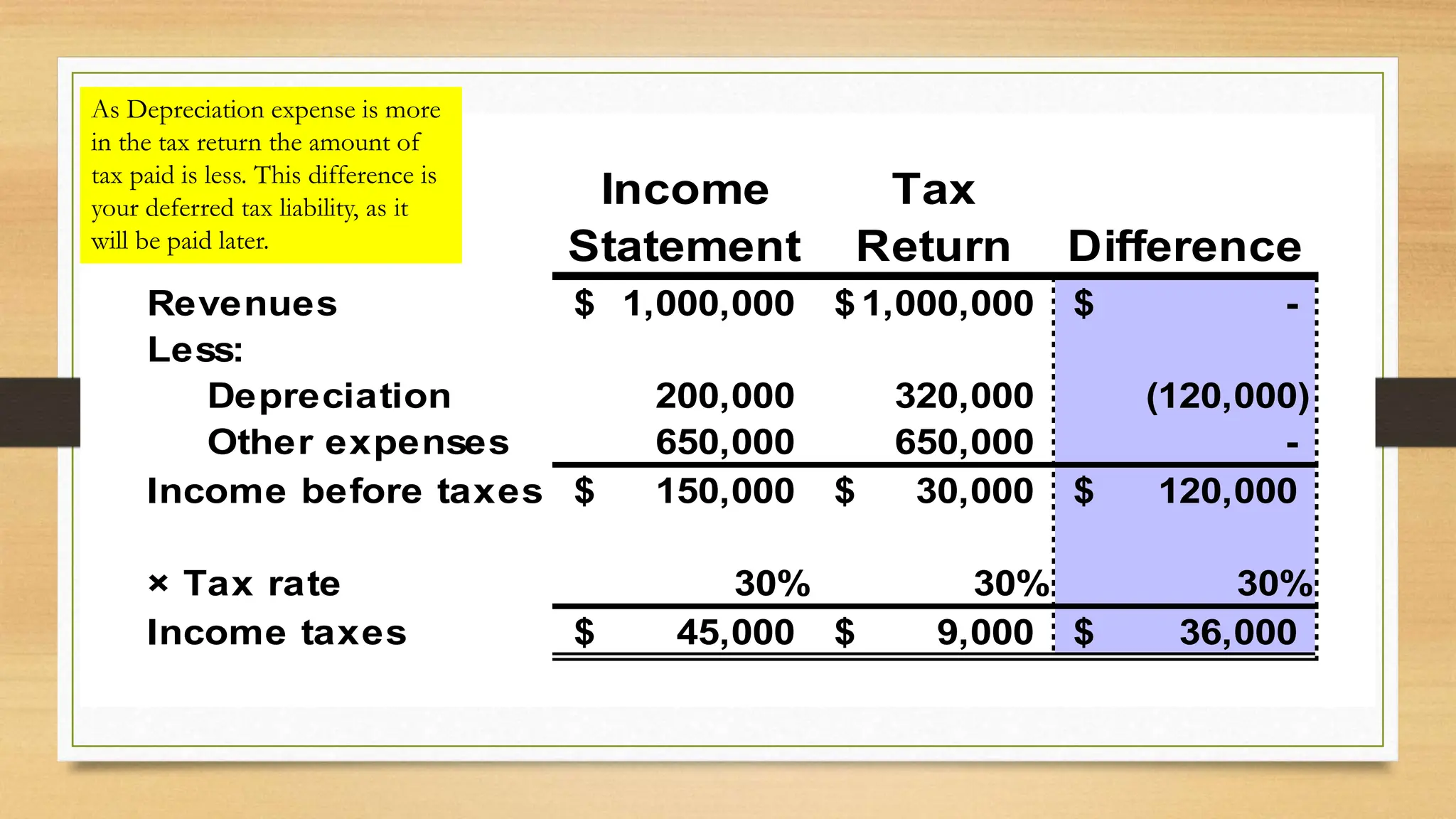
As Depreciation expense is more
in the tax return the amount of
tax paid is less. This difference is
your deferred tax liability, as it
will be paid later.
The entry to record the deferred taxes
would appear as follows:
GENERAL JOURNAL Page 77
Date Description
Post.
Ref. Debit Credit
2003
Dec. 31 Income Tax Expense 45,000
Deferred Tax Liability 36,000
Income Taxes Payable 9,000
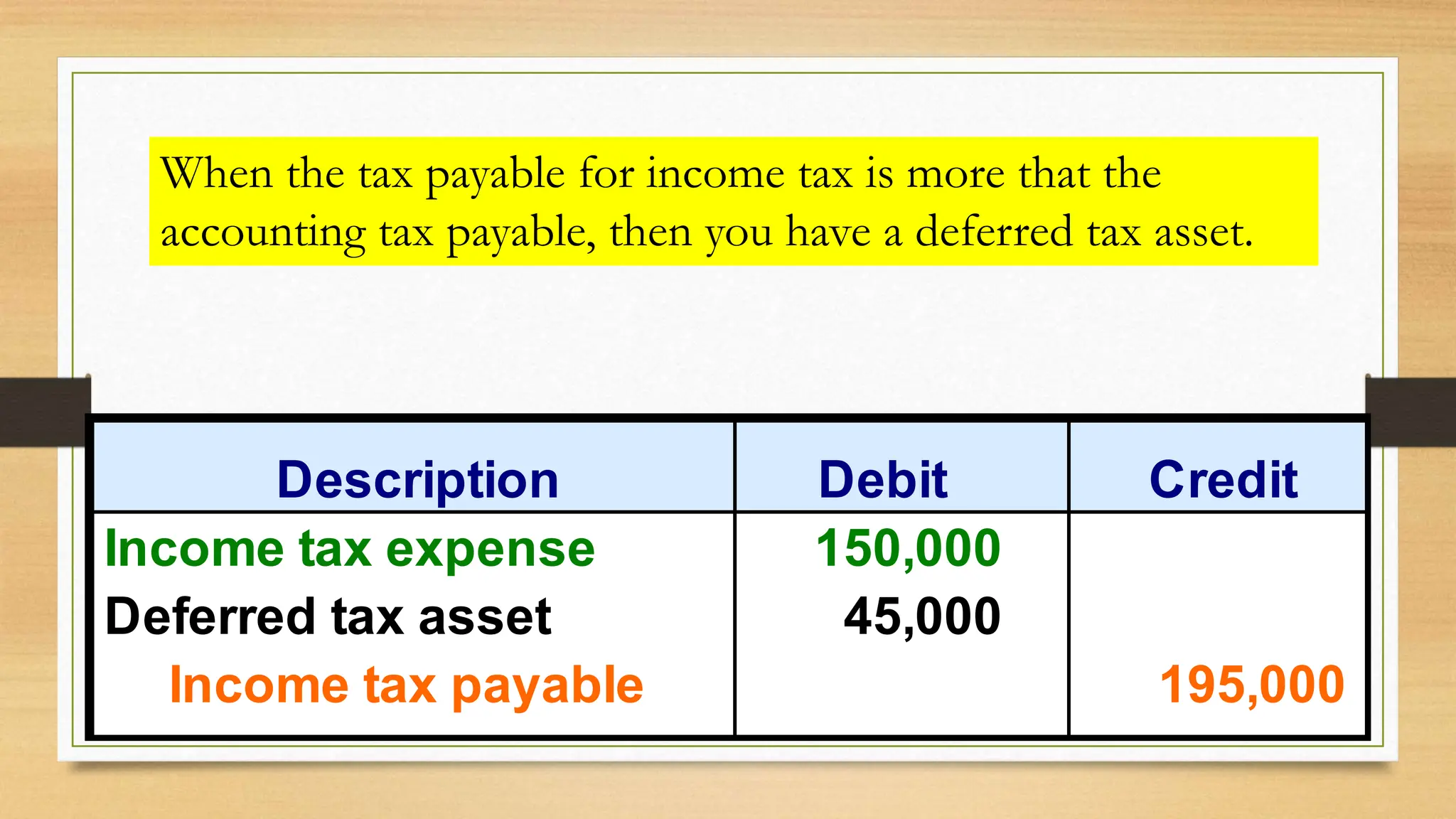
Description Debit Credit
Income tax expense 150,000
Deferred tax asset 45,000
Income tax payable 195,000
When the tax payable for income tax is more that the
accounting tax payable, then you have a deferred tax asset.
Presentation
These should be presented separately from other assets and liabilities in the
statement of financial position. Deferred tax assets and liabilities should be
distinguished from current tax assets and liabilities. In addition, deferred tax
assets/liabilities should not be classified as current assets/liabilities, where an
entity makes such a distinction.
The tax expense (income) related to the profit or loss from ordinary activities
should be shown in the statement of profit or loss.
Concluding Remarks
Loss carrybacks or carry forwards are the situation where you can take a Net
Loss backwards to get an income tax refund or carry a loss forward to reduce
your tax liability. This is a more complicated calculation as it involves different
tax rates over different periods.
Global Vantage Point: Reporting
Income Taxes
Difference GAAP IFRS (IAS 12)
Tax law changes Uses the enacted rate schedule to be in
effect when the deferred tax asset or
deferred tax liability reverses
Requires firms to use the enacted
or substantively enacted tax rate
Approach for recognizing
deferred tax assets when
realizability is uncertain
• Uses valuation account for deferred tax
asset if book basis is different from the
tax basis
• Review at end of period and increase
valuation account as necessary
• Reduction cannot be reversed
• No valuation account is used
• Recognize deferred tax assets
only if probable that they will
be realized
• Review at end of period and
reduce as necessary
• Reduction can be reversed
Reconciliation of
statutory and effective tax
rates
Uses the domestic federal statutory rate
as starting point
Use the domestic federal statutory
rate or statutory rate that
aggregates domestic rates in
various jurisdictions
14-11
Global Vantage Point: Reporting
Income Taxes, continued
Difference GAAP IFRS (IAS 12)
Offsetting deferred tax
assets and deferred tax
liabilities
Net deferred tax assets and liabilities
from the same taxing jurisdiction against
each other
Net deferred tax assets and
deferred tax liabilities only if two
very stringent conditions are met
Disclosure of income tax
amount recognized
directly in equity
Not required Disclose the aggregate amount of
current or deferred income tax
income or expense to Other
Comprehensive Income
Uncertain tax positions Extensive guidance No specific guidance; tax assets
and liabilities are measured at the
amount expected to be paid; recognize
contingent liability under certain
conditions
14-12

Chap 8 - Deferred Taxes.pptx

  • 1.
  • 2.
    Interperiod Tax Allocation ADeferred Tax Liability arises when the income tax payable calculated for the tax return is less than the tax calculated by the accounting records. A Deferred Tax Asset is created when the income tax payable calculated for the tax return is more than the tax calculated by the accounting records. In both cases the allocation is for a temporary difference. The amount will offset over time. For permanent differences the Income Tax Expense calculation should not take into account the permanent difference. A permanent difference represents a case where something is recorded as an expense in the accounting records but is not allowed as a deduction for tax purposes.
  • 3.
    Examples of TemporaryDifferences between Book Income and Taxable Income 14-3
  • 4.
    Examples of TemporaryDifferences between Book Income and Taxable Income, continued 14-4
  • 5.
    Income Tax Statement ReturnDifference Revenues 1,000,000 $ 1,000,000 $ - $ Less: Depreciation 200,000 320,000 (120,000) Other expenses 650,000 650,000 - Income before taxes 150,000 $ 30,000 $ 120,000 $ × Tax rate 30% 30% 30% Income taxes 45,000 $ 9,000 $ 36,000 $ Normally for Income Taxes Returns the depreciation is accelerated and is more than the amount calculated for accounting.
  • 6.
    Income Tax Statement ReturnDifference Revenues 1,000,000 $ 1,000,000 $ - $ Less: Depreciation 200,000 320,000 (120,000) Other expenses 650,000 650,000 - Income before taxes 150,000 $ 30,000 $ 120,000 $ × Tax rate 30% 30% 30% Income taxes 45,000 $ 9,000 $ 36,000 $ As Depreciation expense is more in the tax return the amount of tax paid is less. This difference is your deferred tax liability, as it will be paid later.
  • 7.
    The entry torecord the deferred taxes would appear as follows: GENERAL JOURNAL Page 77 Date Description Post. Ref. Debit Credit 2003 Dec. 31 Income Tax Expense 45,000 Deferred Tax Liability 36,000 Income Taxes Payable 9,000
  • 8.
    Description Debit Credit Incometax expense 150,000 Deferred tax asset 45,000 Income tax payable 195,000 When the tax payable for income tax is more that the accounting tax payable, then you have a deferred tax asset.
  • 9.
    Presentation These should bepresented separately from other assets and liabilities in the statement of financial position. Deferred tax assets and liabilities should be distinguished from current tax assets and liabilities. In addition, deferred tax assets/liabilities should not be classified as current assets/liabilities, where an entity makes such a distinction. The tax expense (income) related to the profit or loss from ordinary activities should be shown in the statement of profit or loss.
  • 10.
    Concluding Remarks Loss carrybacksor carry forwards are the situation where you can take a Net Loss backwards to get an income tax refund or carry a loss forward to reduce your tax liability. This is a more complicated calculation as it involves different tax rates over different periods.
  • 11.
    Global Vantage Point:Reporting Income Taxes Difference GAAP IFRS (IAS 12) Tax law changes Uses the enacted rate schedule to be in effect when the deferred tax asset or deferred tax liability reverses Requires firms to use the enacted or substantively enacted tax rate Approach for recognizing deferred tax assets when realizability is uncertain • Uses valuation account for deferred tax asset if book basis is different from the tax basis • Review at end of period and increase valuation account as necessary • Reduction cannot be reversed • No valuation account is used • Recognize deferred tax assets only if probable that they will be realized • Review at end of period and reduce as necessary • Reduction can be reversed Reconciliation of statutory and effective tax rates Uses the domestic federal statutory rate as starting point Use the domestic federal statutory rate or statutory rate that aggregates domestic rates in various jurisdictions 14-11
  • 12.
    Global Vantage Point:Reporting Income Taxes, continued Difference GAAP IFRS (IAS 12) Offsetting deferred tax assets and deferred tax liabilities Net deferred tax assets and liabilities from the same taxing jurisdiction against each other Net deferred tax assets and deferred tax liabilities only if two very stringent conditions are met Disclosure of income tax amount recognized directly in equity Not required Disclose the aggregate amount of current or deferred income tax income or expense to Other Comprehensive Income Uncertain tax positions Extensive guidance No specific guidance; tax assets and liabilities are measured at the amount expected to be paid; recognize contingent liability under certain conditions 14-12