Cashless Economy
Cashless Economy
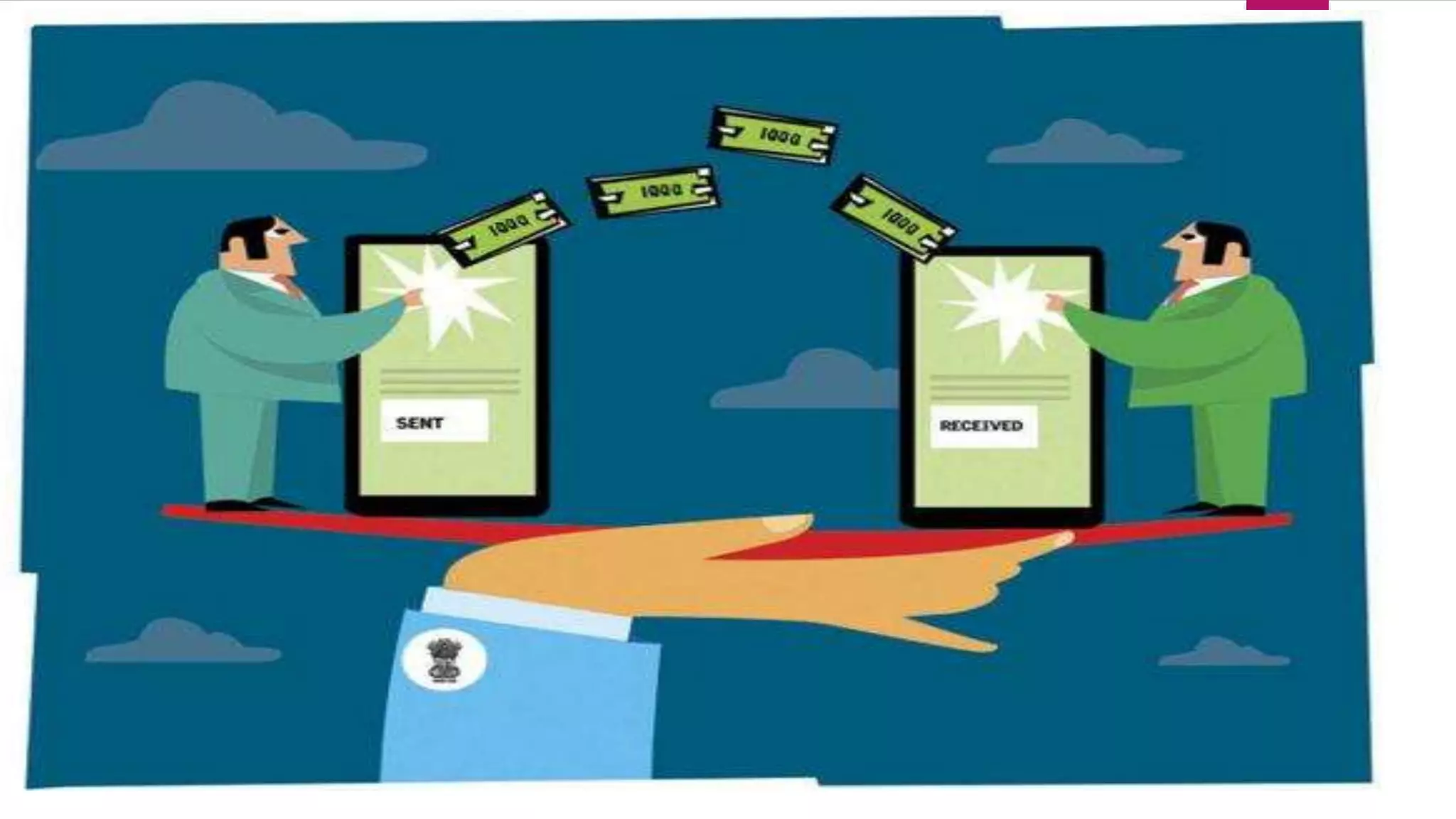
 A cashless economy is one in which all the transactions are done using cards or
digital means. The circulation of physical currency is minimal. India uses too much
cash for transactions.
Steps towards cashless economy
 Incentives for encouraging electronic payments.
 Direct benefit transfer of subsides through aadhar card integration
 Mandatory use of PAN card in sale transactions of more than 1 lakh
 Opening up of various payment banks across the country
INDIA – A CASHLESS ECONOMY VISION 2018
 RBI’s 5C’s vision 2018
1. coverage .
2. Convenienc
3. Confidence
4. Convergence
5. cost
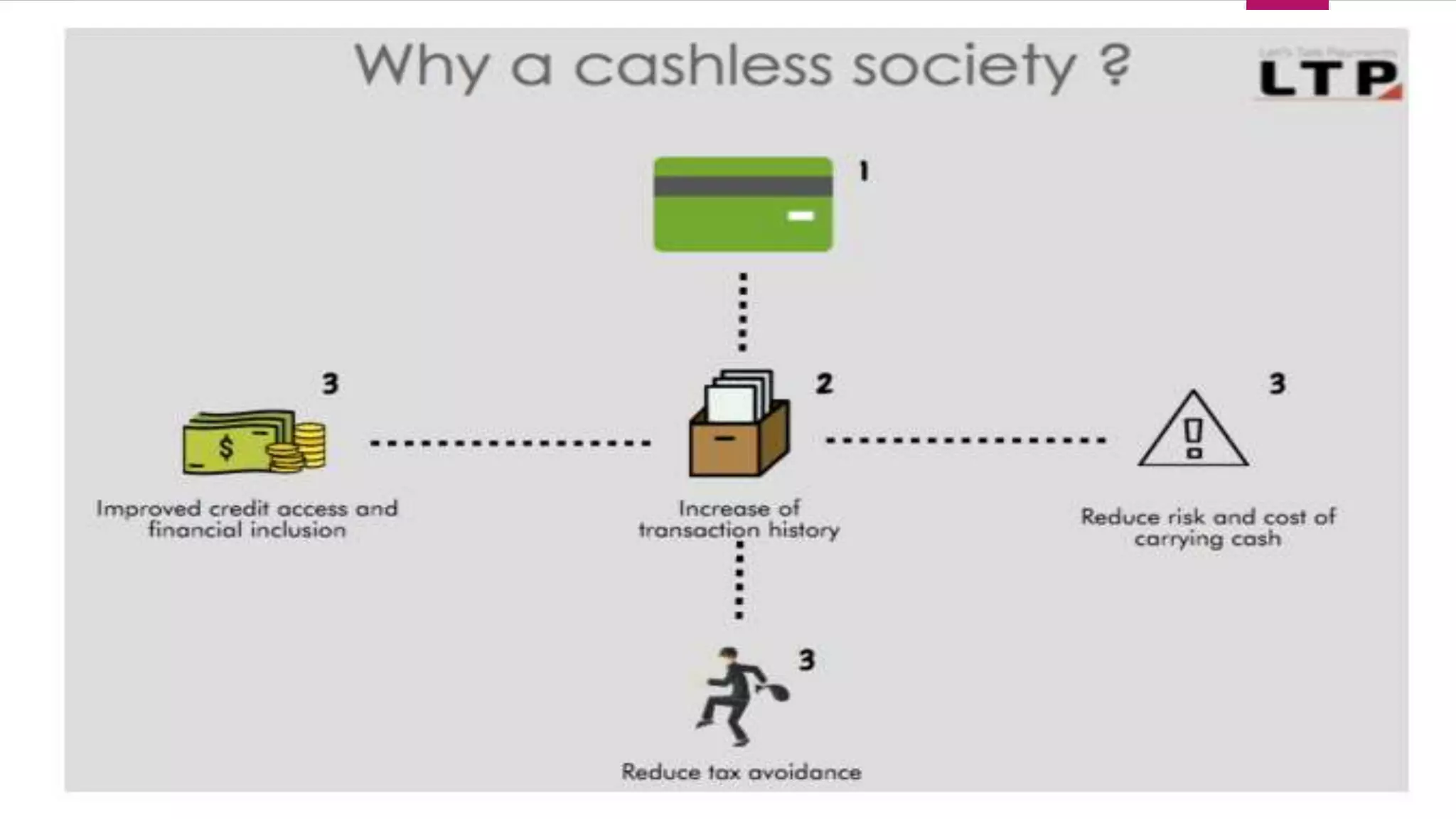
Benefits of Cashless Economy
 Crub Black Money – Hawala transfers can’t be made without paper currency.
1. No Transaction can’t go unaccounted
2. Crub Illegal trades
 Reduced Printing Cost – Cost of printing and reprinting of Billions of notes in
circulation.
 New Initiatives – Direct benifit transfer of Subsidies for LPG, fertilizers and many
more.
 Economic Growth.
 Way Forward.
 Time Saving
Difficulties In Cashless Economy
 No Privacy – Every Transaction is being recorded with Banks/Govt the sense of a privacy of what we buy is
lost.
 Security – A small loop hole in security could lead your or the entire country’s money at Risk.
 Technical for Common Public – Only 1.6% indians have credit cards and 7% uses E-Wallets, with 65%
population below 35 still the country’s Youth is not tech savvy to understand digital India initiatives.
 Huge amount Investment –To make sure everyone could be a part of Cashless Economy, Govt/RBI need to
make sure even a small Tea Seller have a basic Net connection, Debit/Credit/UPI Gear before he commences
his business.
 No Room For Uneducated.

Cashless economy

  • 1.
  • 2.
    Cashless Economy  Acashless economy is one in which all the transactions are done using cards or digital means. The circulation of physical currency is minimal. India uses too much cash for transactions.
  • 4.
    Steps towards cashlesseconomy  Incentives for encouraging electronic payments.  Direct benefit transfer of subsides through aadhar card integration  Mandatory use of PAN card in sale transactions of more than 1 lakh  Opening up of various payment banks across the country
  • 5.
    INDIA – ACASHLESS ECONOMY VISION 2018  RBI’s 5C’s vision 2018 1. coverage . 2. Convenienc 3. Confidence 4. Convergence 5. cost
  • 7.
    Benefits of CashlessEconomy  Crub Black Money – Hawala transfers can’t be made without paper currency. 1. No Transaction can’t go unaccounted 2. Crub Illegal trades  Reduced Printing Cost – Cost of printing and reprinting of Billions of notes in circulation.  New Initiatives – Direct benifit transfer of Subsidies for LPG, fertilizers and many more.  Economic Growth.  Way Forward.  Time Saving
  • 9.
    Difficulties In CashlessEconomy  No Privacy – Every Transaction is being recorded with Banks/Govt the sense of a privacy of what we buy is lost.  Security – A small loop hole in security could lead your or the entire country’s money at Risk.  Technical for Common Public – Only 1.6% indians have credit cards and 7% uses E-Wallets, with 65% population below 35 still the country’s Youth is not tech savvy to understand digital India initiatives.  Huge amount Investment –To make sure everyone could be a part of Cashless Economy, Govt/RBI need to make sure even a small Tea Seller have a basic Net connection, Debit/Credit/UPI Gear before he commences his business.  No Room For Uneducated.