MADE BY – SUMAN DAS
ROLL NO – 11
STREAM- INORGANIC
INTRODUCTION
• Crystalline material has a crystal structure in
which
ordered
the atoms are positioned in perfect
pattern which is repetitive over large
atomic distance.
• Defects have a profound impact on the
macroscopic properties of materials.
• Sometimes defects are deliberately created to
improve properties of crystal.
TYPES OF DEFECTS
• (1) Point defects :- The defects which arise
due to the irregularity or deviations from ideal
arrangement of atoms around a point or point or an
atom in a crystalline substance are called point
defects or atomic imperfections.
• (2) line defects :- The defects which arise due
to irregularities or deviations from ideal arrangement
in entire row of of lattice point are called line defects.
• These irregularities are called crystal defects or
crystal imperfections.
•(1) Vacancy
defect.
•(2) interstitial
defect.
• (a) Defects in stoichiometric
crystals.
• (b) Defects in non stoichiometric
crystals.
• (c) Impurity defects.
VACANCY
DEFECTS
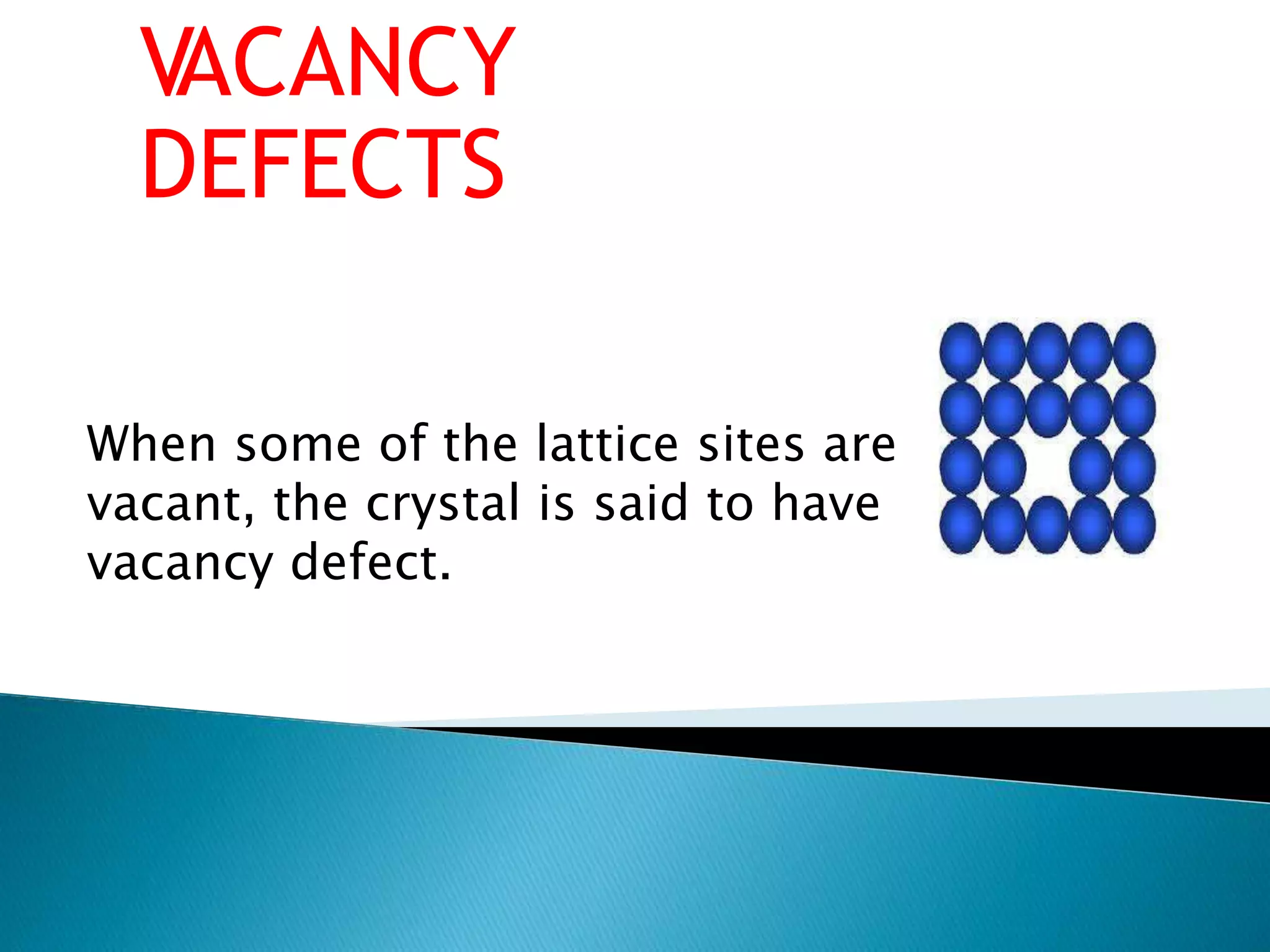
When some of the lattice sites are
vacant, the crystal is said to have
vacancy defect.
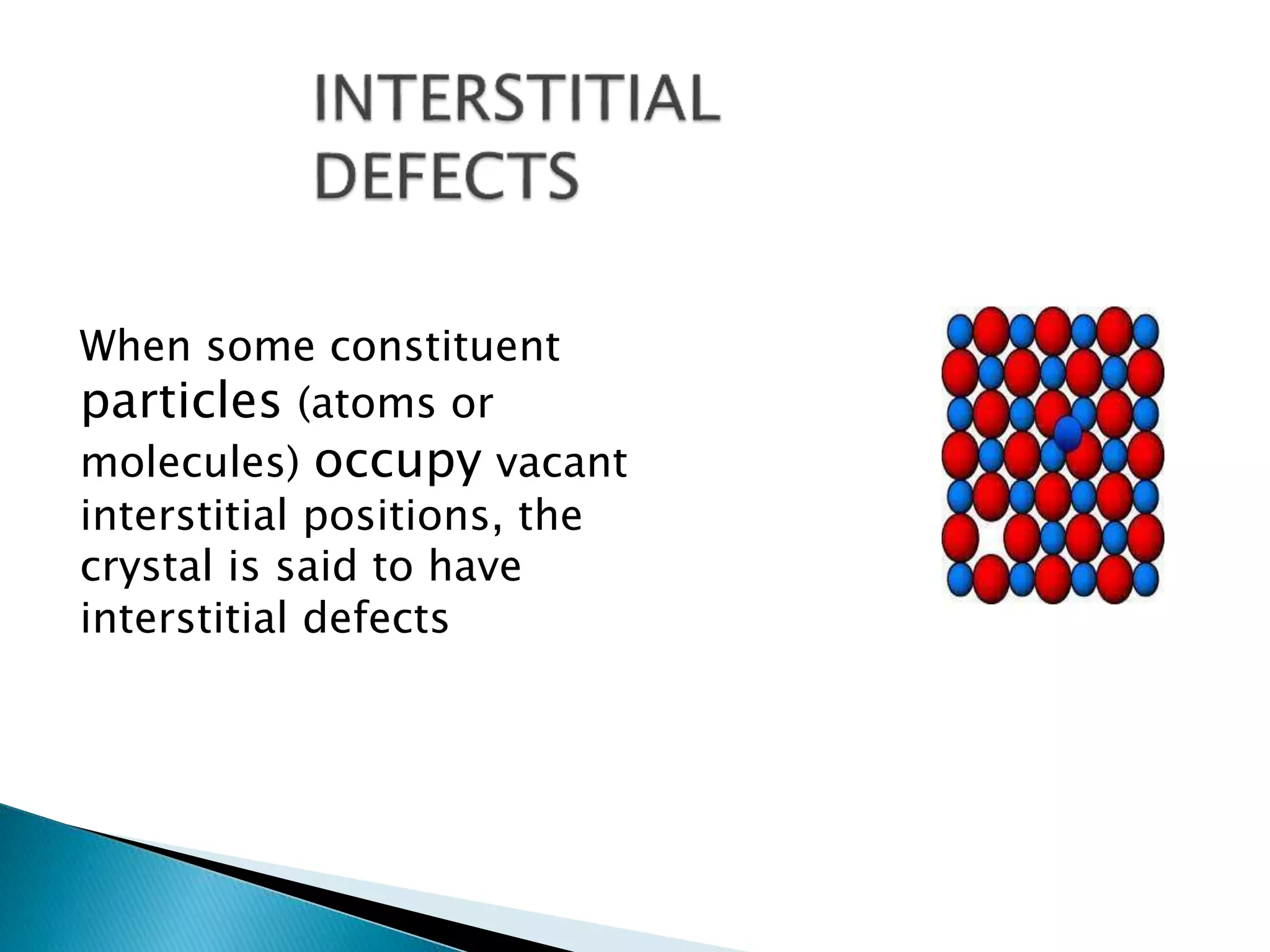
When some constituent
particles (atoms or
molecules) occupy vacant
interstitial positions, the
crystal is said to have
interstitial defects
• Stoichiometric compounds :-are those in
which the number of positive and negative
ions are exactly in the ratios indicated by
their chemical formulae.
• These are two types:-
• 1. Schottky defect.
• 2. Frenkel defect.
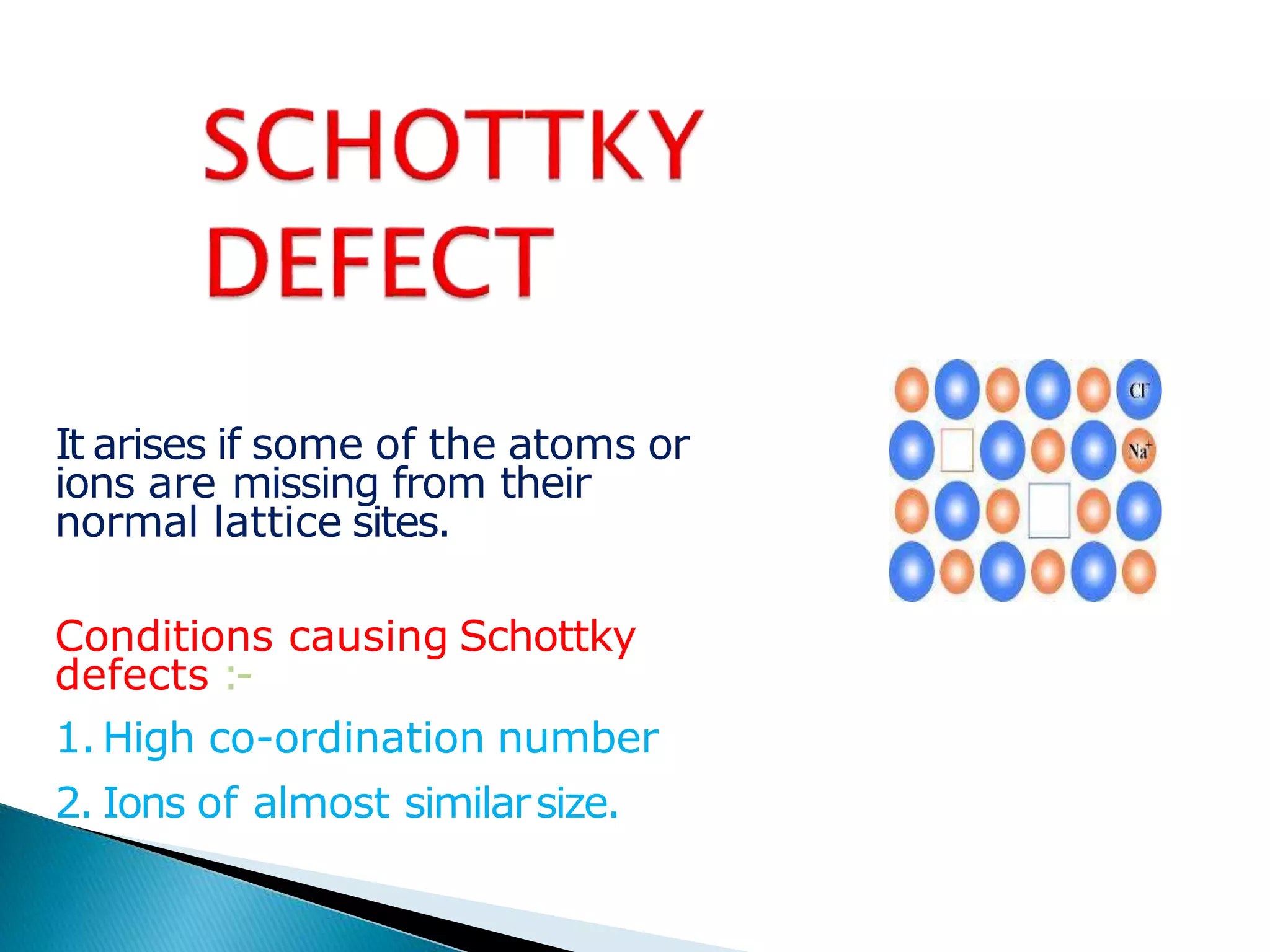
It arises if some of the atoms or
ions are missing from their
normal lattice sites.
Conditions causing Schottky
defects :-
1. High co-ordination number
2. Ions of almost similarsize.
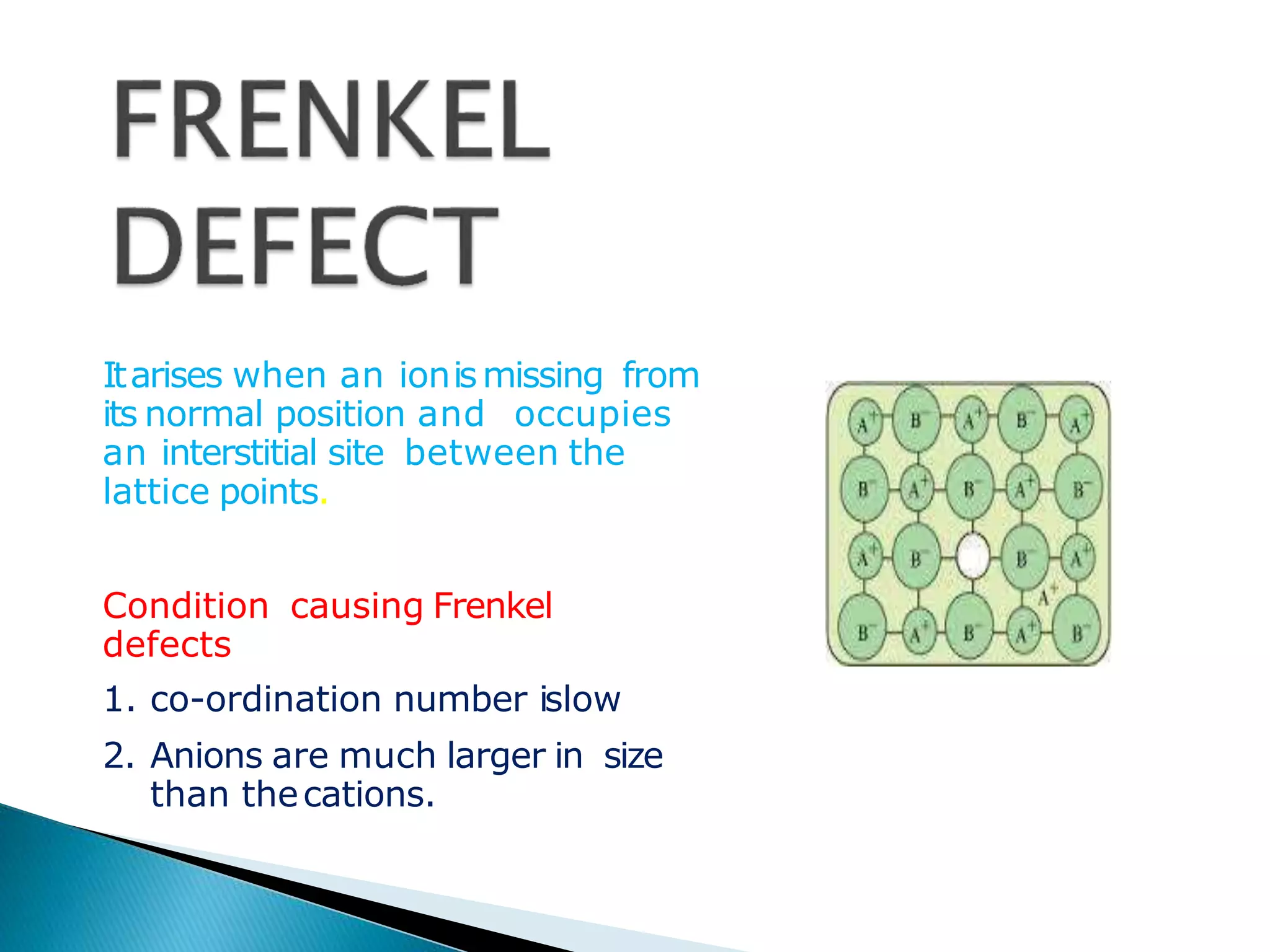
Itarises when an ionismissing from
its normal position and occupies
an interstitial site between the
lattice points.
Condition causing Frenkel
defects
1. co-ordination number islow
2. Anions are much larger in size
than thecations.
• The compound in which the ratio of positive and
negative ions present in the compound differs from that
required by ideal chemical formula of the compound
are called non-stoichiometric defects.
• These are of two types :-
• (A.1) metal excess defects
• (B.1) metal deficient defects
• In these defects the positive ions are in excess. These
may arise due to the following two ways:-
• 1. anionic vacancies
• 2. presence of extra cations in interstitial sites.
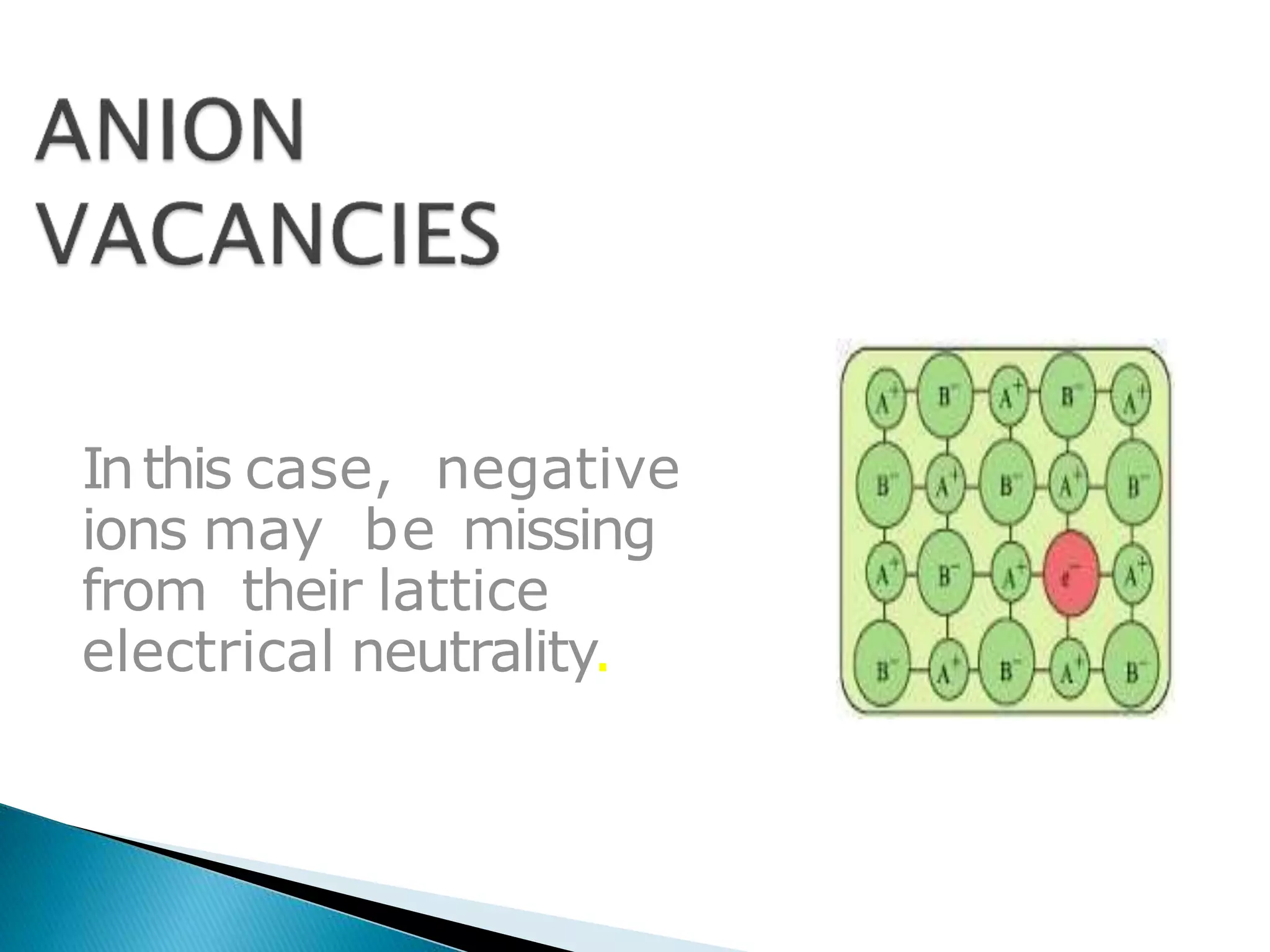
Inthis case, negative
ions may be missing
from their lattice
electrical neutrality.
In this case, there are extra
positive ions occupying
interstitial sites and the
electrons in another
interstitial sites to maintain
electrical neutrality.
(B.1) METAL DEFICIENT
DEFECTS
• These contains less number of positive ions than
negative ions. These arise due to two ways :-
• 1. Cation vacancies
• 2. Extra anions occupying interstitial
sites.
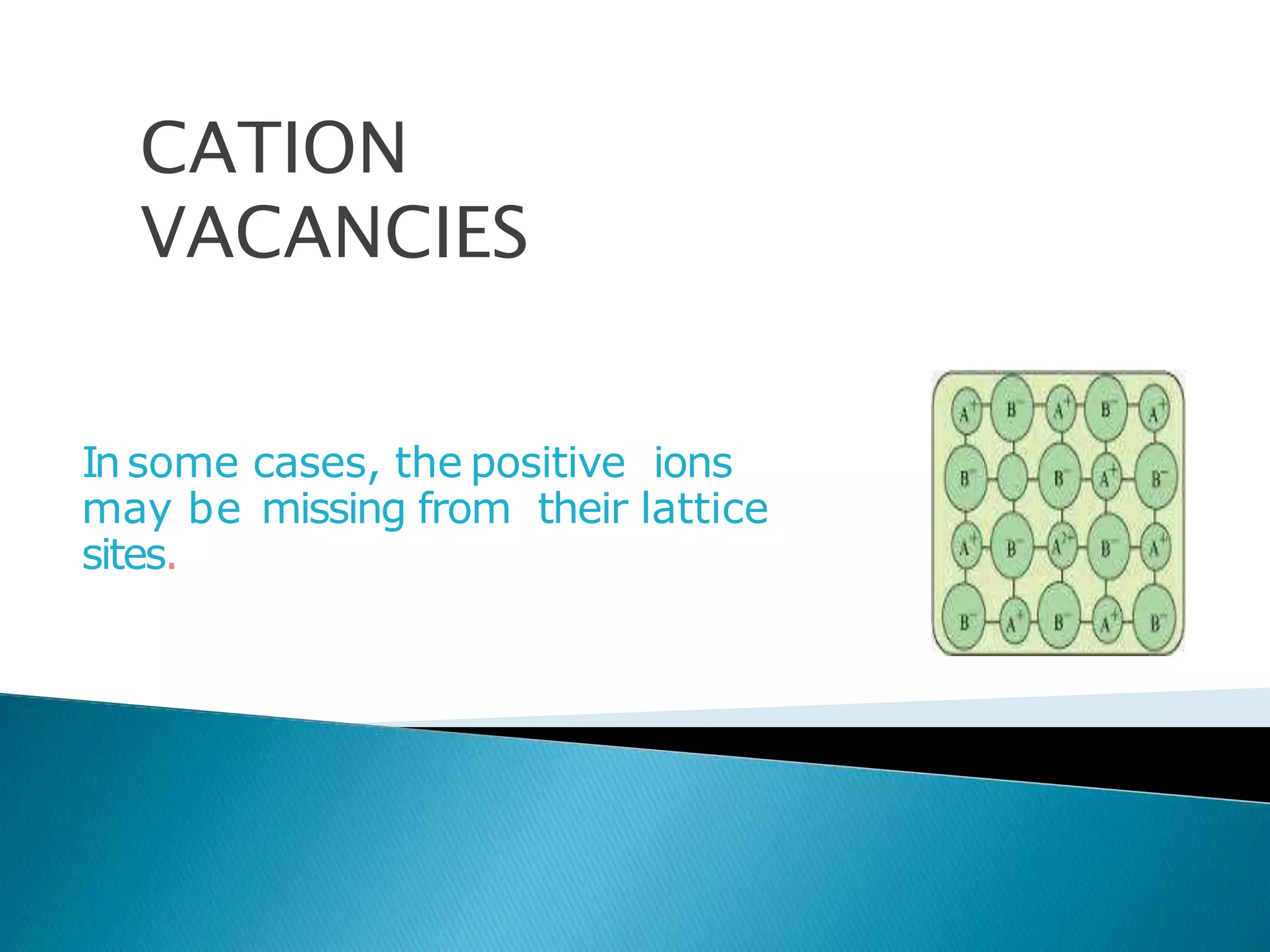
Insome cases, the positive ions
may be missing from their lattice
sites.
CATION
VACANCIES
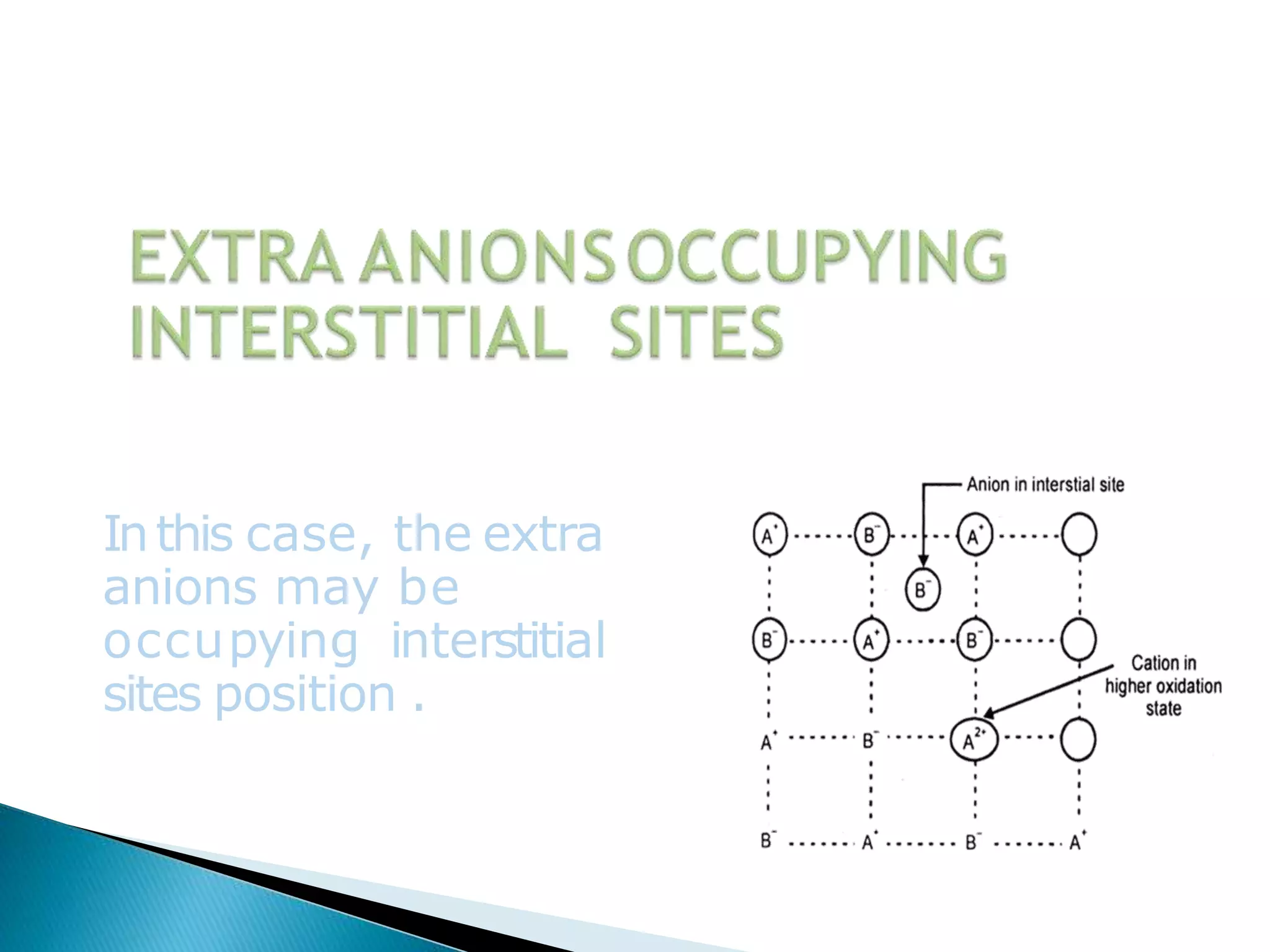
Inthis case, the extra
anions may be
occupying interstitial
sites position .
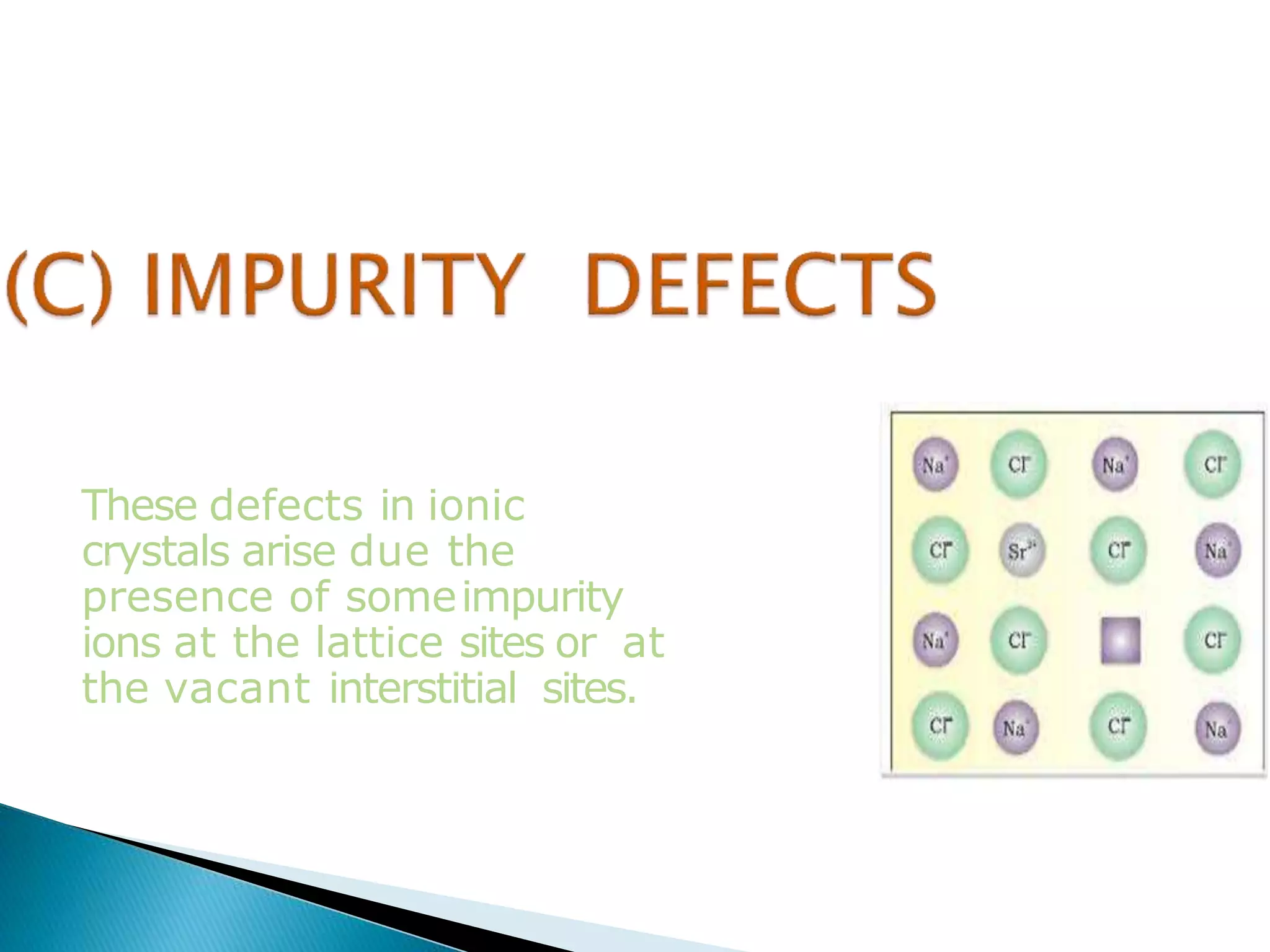
These defects in ionic
crystals arise due the
presence of someimpurity
ions at the lattice sites or at
the vacant interstitial sites.
 AS A WHOLE DUE TO METAL DEFECTS THE
ELECTRONS WHICH ARE FREE IN EITHER IN
METAL EXCESS OR METAL DEFICIENCY ARE
PARTICIPATE IN CONDUCTIVITY AND ACT AS
A SEMICONDUCTOR P OR N TYPES.
 www.wikipedia.org,www.sanfoundry.com/eng
ineering-materials, www.slideshare.net
Defects in crystals by suman

Defects in crystals by suman

  • 1.
    MADE BY –SUMAN DAS ROLL NO – 11 STREAM- INORGANIC
  • 2.
    INTRODUCTION • Crystalline materialhas a crystal structure in which ordered the atoms are positioned in perfect pattern which is repetitive over large atomic distance. • Defects have a profound impact on the macroscopic properties of materials. • Sometimes defects are deliberately created to improve properties of crystal.
  • 3.
    TYPES OF DEFECTS •(1) Point defects :- The defects which arise due to the irregularity or deviations from ideal arrangement of atoms around a point or point or an atom in a crystalline substance are called point defects or atomic imperfections. • (2) line defects :- The defects which arise due to irregularities or deviations from ideal arrangement in entire row of of lattice point are called line defects. • These irregularities are called crystal defects or crystal imperfections.
  • 4.
    •(1) Vacancy defect. •(2) interstitial defect. •(a) Defects in stoichiometric crystals. • (b) Defects in non stoichiometric crystals. • (c) Impurity defects.
  • 5.
    VACANCY DEFECTS When some ofthe lattice sites are vacant, the crystal is said to have vacancy defect.
  • 6.
    When some constituent particles(atoms or molecules) occupy vacant interstitial positions, the crystal is said to have interstitial defects
  • 7.
    • Stoichiometric compounds:-are those in which the number of positive and negative ions are exactly in the ratios indicated by their chemical formulae. • These are two types:- • 1. Schottky defect. • 2. Frenkel defect.
  • 8.
    It arises ifsome of the atoms or ions are missing from their normal lattice sites. Conditions causing Schottky defects :- 1. High co-ordination number 2. Ions of almost similarsize.
  • 9.
    Itarises when anionismissing from its normal position and occupies an interstitial site between the lattice points. Condition causing Frenkel defects 1. co-ordination number islow 2. Anions are much larger in size than thecations.
  • 10.
    • The compoundin which the ratio of positive and negative ions present in the compound differs from that required by ideal chemical formula of the compound are called non-stoichiometric defects. • These are of two types :- • (A.1) metal excess defects • (B.1) metal deficient defects
  • 11.
    • In thesedefects the positive ions are in excess. These may arise due to the following two ways:- • 1. anionic vacancies • 2. presence of extra cations in interstitial sites.
  • 12.
    Inthis case, negative ionsmay be missing from their lattice electrical neutrality.
  • 13.
    In this case,there are extra positive ions occupying interstitial sites and the electrons in another interstitial sites to maintain electrical neutrality.
  • 14.
    (B.1) METAL DEFICIENT DEFECTS •These contains less number of positive ions than negative ions. These arise due to two ways :- • 1. Cation vacancies • 2. Extra anions occupying interstitial sites.
  • 15.
    Insome cases, thepositive ions may be missing from their lattice sites. CATION VACANCIES
  • 16.
    Inthis case, theextra anions may be occupying interstitial sites position .
  • 17.
    These defects inionic crystals arise due the presence of someimpurity ions at the lattice sites or at the vacant interstitial sites.
  • 18.
     AS AWHOLE DUE TO METAL DEFECTS THE ELECTRONS WHICH ARE FREE IN EITHER IN METAL EXCESS OR METAL DEFICIENCY ARE PARTICIPATE IN CONDUCTIVITY AND ACT AS A SEMICONDUCTOR P OR N TYPES.
  • 19.