Name - Tanaya Palit
Designation– Assistant Professor , M.Pharm
Tablets manufacturing defects and their remedies
Introduction:-
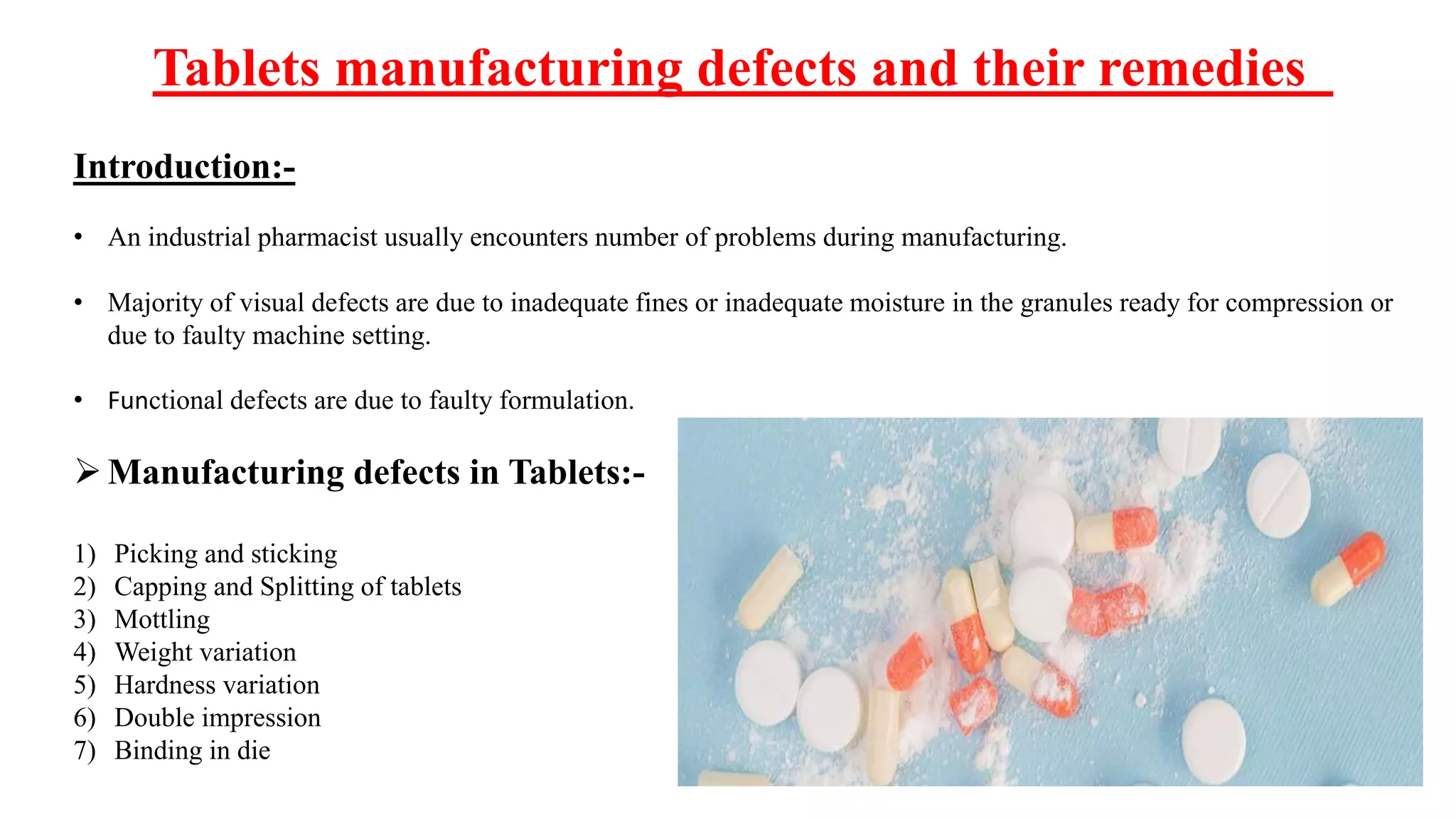
• An industrial pharmacist usually encounters number of problems during manufacturing.
• Majority of visual defects are due to inadequate fines or inadequate moisture in the granules ready for compression or
due to faulty machine setting.
• Functional defects are due to faulty formulation.
Manufacturing defects in Tablets:-
1) Picking and sticking
2) Capping and Splitting of tablets
3) Mottling
4) Weight variation
5) Hardness variation
6) Double impression
7) Binding in die
Tablets manufacturing defects and their remedies
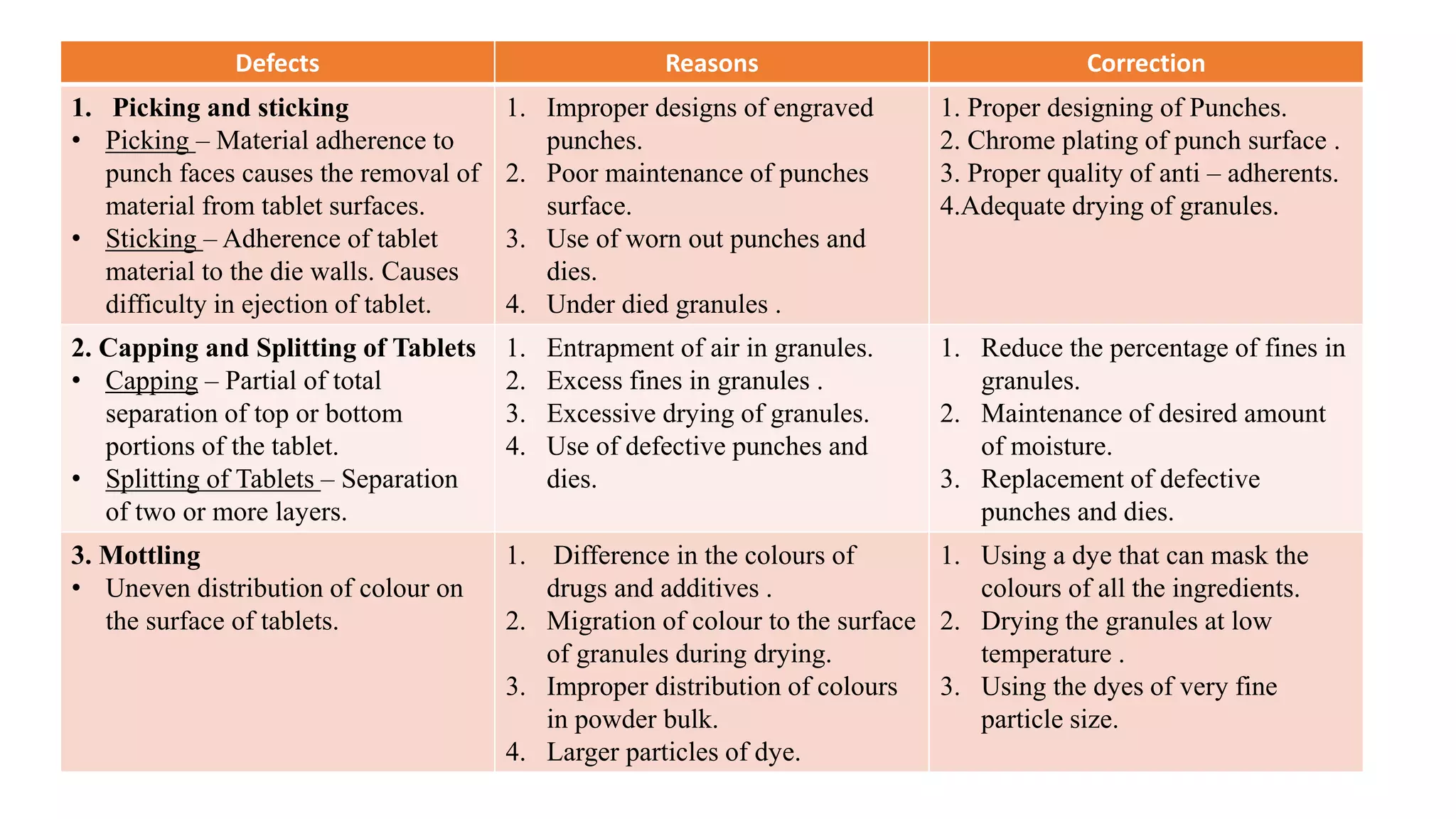
Defects Reasons Correction
1. Picking and sticking
• Picking – Material adherence to
punch faces causes the removal of
material from tablet surfaces.
• Sticking – Adherence of tablet
material to the die walls. Causes
difficulty in ejection of tablet.
1. Improper designs of engraved
punches.
2. Poor maintenance of punches
surface.
3. Use of worn out punches and
dies.
4. Under died granules .
1. Proper designing of Punches.
2. Chrome plating of punch surface .
3. Proper quality of anti – adherents.
4.Adequate drying of granules.
2. Capping and Splitting of Tablets
• Capping – Partial of total
separation of top or bottom
portions of the tablet.
• Splitting of Tablets – Separation
of two or more layers.
1. Entrapment of air in granules.
2. Excess fines in granules .
3. Excessive drying of granules.
4. Use of defective punches and
dies.
1. Reduce the percentage of fines in
granules.
2. Maintenance of desired amount
of moisture.
3. Replacement of defective
punches and dies.
3. Mottling
• Uneven distribution of colour on
the surface of tablets.
1. Difference in the colours of
drugs and additives .
2. Migration of colour to the surface
of granules during drying.
3. Improper distribution of colours
in powder bulk.
4. Larger particles of dye.
1. Using a dye that can mask the
colours of all the ingredients.
2. Drying the granules at low
temperature .
3. Using the dyes of very fine
particle size.
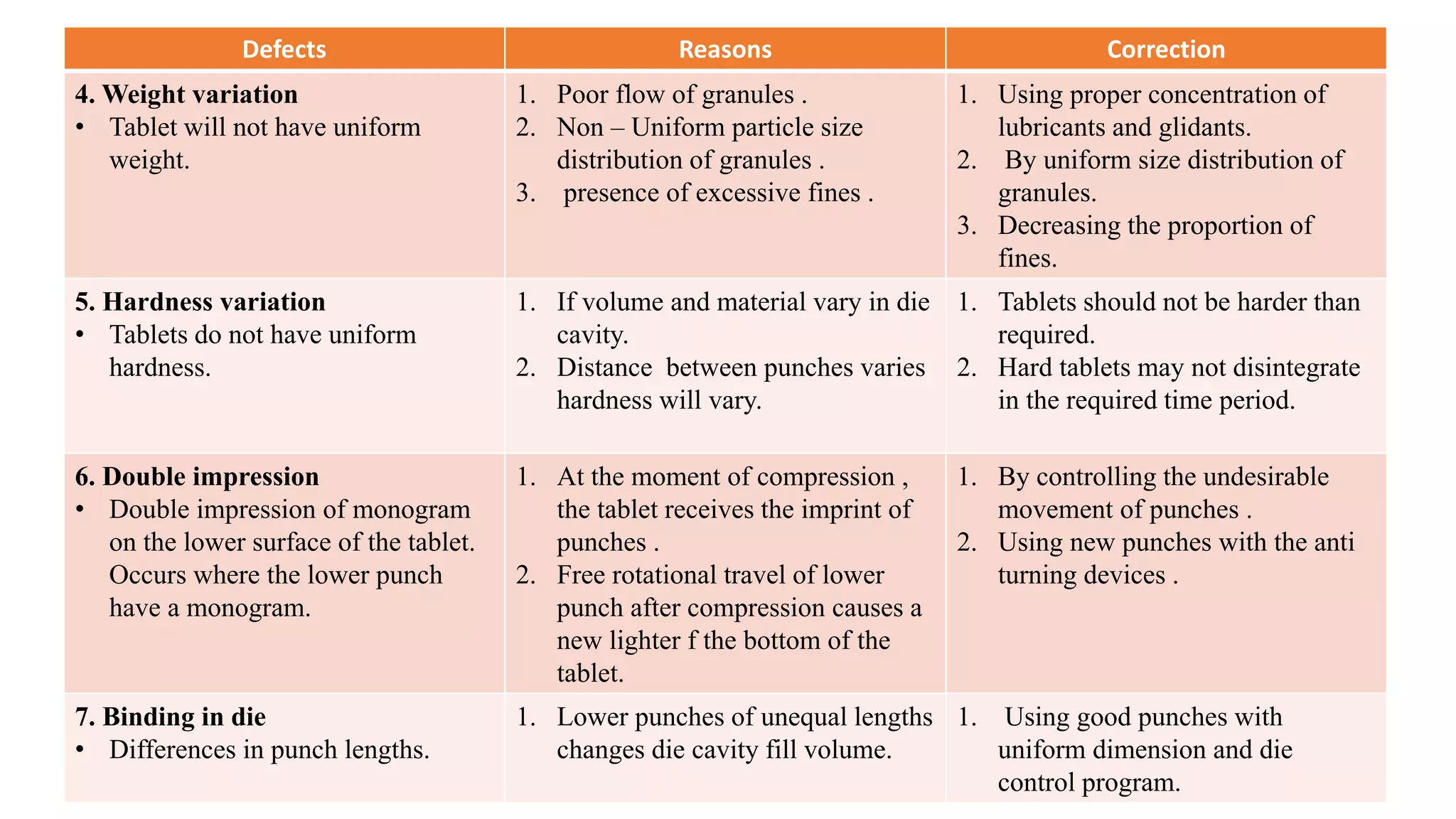
Defects Reasons Correction
4. Weight variation
• Tablet will not have uniform
weight.
1. Poor flow of granules .
2. Non – Uniform particle size
distribution of granules .
3. presence of excessive fines .
1. Using proper concentration of
lubricants and glidants.
2. By uniform size distribution of
granules.
3. Decreasing the proportion of
fines.
5. Hardness variation
• Tablets do not have uniform
hardness.
1. If volume and material vary in die
cavity.
2. Distance between punches varies
hardness will vary.
1. Tablets should not be harder than
required.
2. Hard tablets may not disintegrate
in the required time period.
6. Double impression
• Double impression of monogram
on the lower surface of the tablet.
Occurs where the lower punch
have a monogram.
1. At the moment of compression ,
the tablet receives the imprint of
punches .
2. Free rotational travel of lower
punch after compression causes a
new lighter f the bottom of the
tablet.
1. By controlling the undesirable
movement of punches .
2. Using new punches with the anti
turning devices .
7. Binding in die
• Differences in punch lengths.
1. Lower punches of unequal lengths
changes die cavity fill volume.
1. Using good punches with
uniform dimension and die
control program.
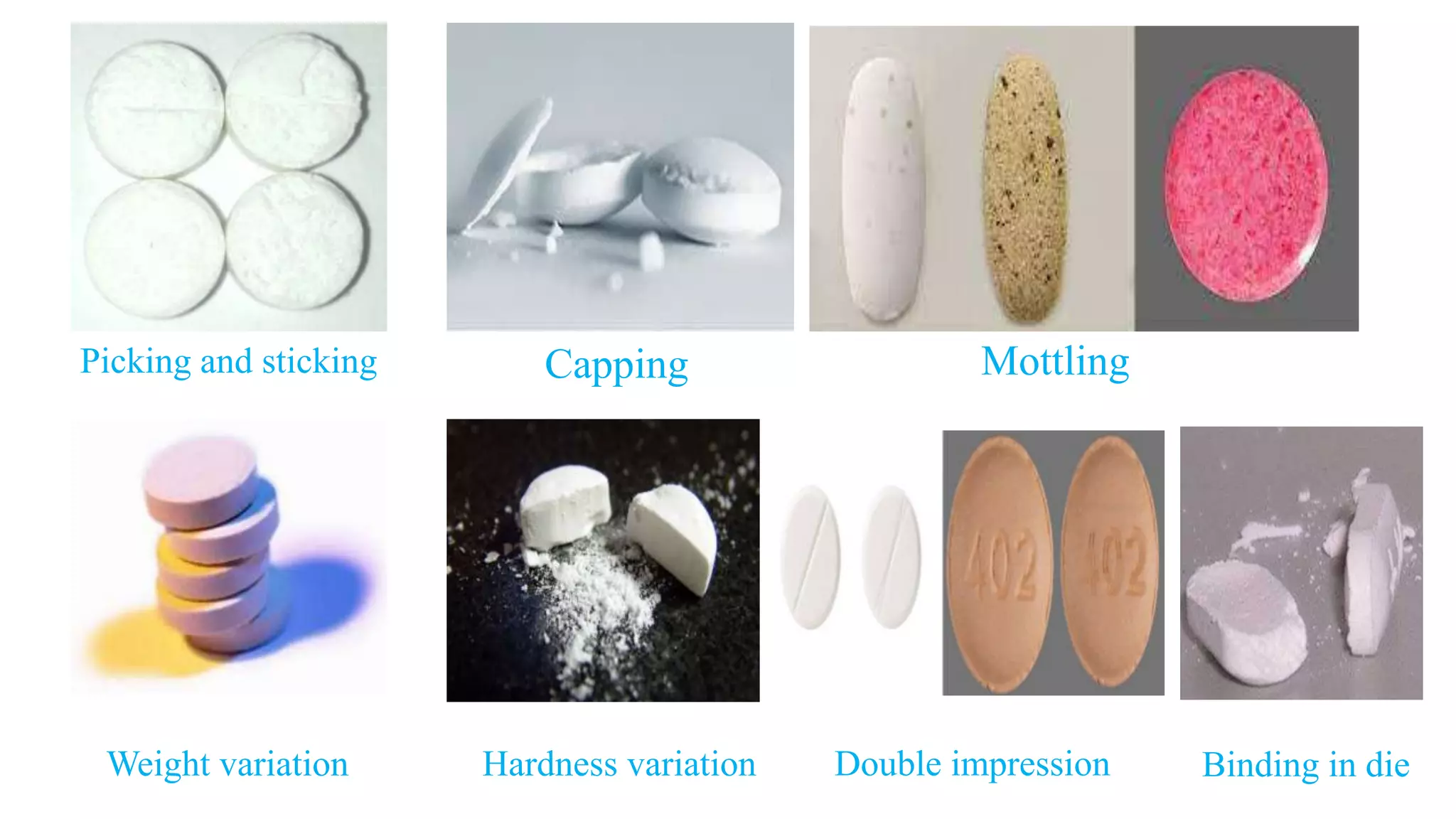
Picking and sticking Capping Mottling
Weight variation Hardness variation Double impression Binding in die
defect of tablets.pptx

defect of tablets.pptx

  • 1.
    Name - TanayaPalit Designation– Assistant Professor , M.Pharm Tablets manufacturing defects and their remedies
  • 2.
    Introduction:- • An industrialpharmacist usually encounters number of problems during manufacturing. • Majority of visual defects are due to inadequate fines or inadequate moisture in the granules ready for compression or due to faulty machine setting. • Functional defects are due to faulty formulation. Manufacturing defects in Tablets:- 1) Picking and sticking 2) Capping and Splitting of tablets 3) Mottling 4) Weight variation 5) Hardness variation 6) Double impression 7) Binding in die Tablets manufacturing defects and their remedies
  • 3.
    Defects Reasons Correction 1.Picking and sticking • Picking – Material adherence to punch faces causes the removal of material from tablet surfaces. • Sticking – Adherence of tablet material to the die walls. Causes difficulty in ejection of tablet. 1. Improper designs of engraved punches. 2. Poor maintenance of punches surface. 3. Use of worn out punches and dies. 4. Under died granules . 1. Proper designing of Punches. 2. Chrome plating of punch surface . 3. Proper quality of anti – adherents. 4.Adequate drying of granules. 2. Capping and Splitting of Tablets • Capping – Partial of total separation of top or bottom portions of the tablet. • Splitting of Tablets – Separation of two or more layers. 1. Entrapment of air in granules. 2. Excess fines in granules . 3. Excessive drying of granules. 4. Use of defective punches and dies. 1. Reduce the percentage of fines in granules. 2. Maintenance of desired amount of moisture. 3. Replacement of defective punches and dies. 3. Mottling • Uneven distribution of colour on the surface of tablets. 1. Difference in the colours of drugs and additives . 2. Migration of colour to the surface of granules during drying. 3. Improper distribution of colours in powder bulk. 4. Larger particles of dye. 1. Using a dye that can mask the colours of all the ingredients. 2. Drying the granules at low temperature . 3. Using the dyes of very fine particle size.
  • 4.
    Defects Reasons Correction 4.Weight variation • Tablet will not have uniform weight. 1. Poor flow of granules . 2. Non – Uniform particle size distribution of granules . 3. presence of excessive fines . 1. Using proper concentration of lubricants and glidants. 2. By uniform size distribution of granules. 3. Decreasing the proportion of fines. 5. Hardness variation • Tablets do not have uniform hardness. 1. If volume and material vary in die cavity. 2. Distance between punches varies hardness will vary. 1. Tablets should not be harder than required. 2. Hard tablets may not disintegrate in the required time period. 6. Double impression • Double impression of monogram on the lower surface of the tablet. Occurs where the lower punch have a monogram. 1. At the moment of compression , the tablet receives the imprint of punches . 2. Free rotational travel of lower punch after compression causes a new lighter f the bottom of the tablet. 1. By controlling the undesirable movement of punches . 2. Using new punches with the anti turning devices . 7. Binding in die • Differences in punch lengths. 1. Lower punches of unequal lengths changes die cavity fill volume. 1. Using good punches with uniform dimension and die control program.
  • 5.
    Picking and stickingCapping Mottling Weight variation Hardness variation Double impression Binding in die