Downloaded 17 times
![You can’t make new brain cells
• You make new cells all the
time but at different rates
• Your brain does remain
adaptable [plastic] – the
connections can change all
through your life
• Adults can generate new
cells – some drugs being
developed
• Activity reduces the rate of
degeneration](https://image.slidesharecdn.com/neuromyths-111023181128-phpapp02/85/Neuromyths-4-320.jpg)
![The first years of life are crucial for success ..
• There are some periods in which neural
pathways form more easily
[synaptogenesis and synaptic pruning]
• Some functions have optimal periods for
learning (language) but this cannot be
generalised some periods are more
sensitive for learning than others
• The links between early success and later
achievement are mostly an effect of
social factors and hard work](https://image.slidesharecdn.com/neuromyths-111023181128-phpapp02/85/Neuromyths-5-320.jpg)


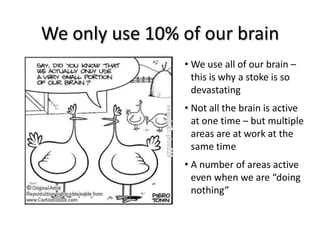
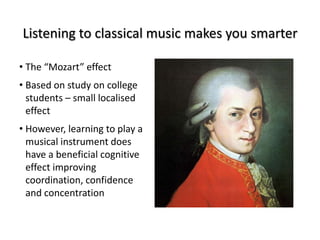
Neuromyths are commonly held beliefs about the brain that have been shown to be untrue or misleading. Some examples include the ideas that we only use 10% of our brain, that listening to classical music makes you smarter, and that learning styles like VAK are scientifically valid. While early childhood experiences are important for brain development, their impact on later success is due more to social factors than critical periods in brain development. Factors like diet, exercise, and hydration can impact cognition, but many proposed links between them and academic or behavioral outcomes have little scientific evidence. The brain remains plastic and able to form new connections throughout life.


