Avionics Systems Day 5


        Section 2
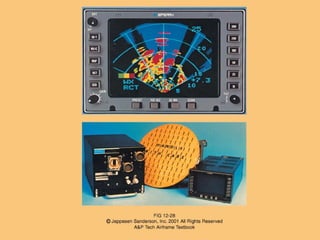
RADAR

 RAdio Detection And Ranging
 Ground based
     ATC
 Aircraft based
     Weather radar
     Radio altimeter
RADAR

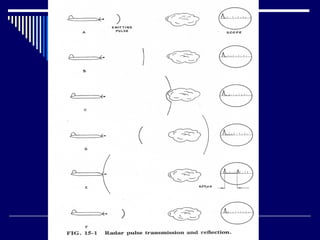
 Radar operates on the “Pulse Echo
  principle”
     A short pulse of radio energy is transmitted
     Receiver waits for reflected energy
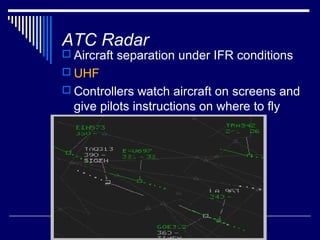
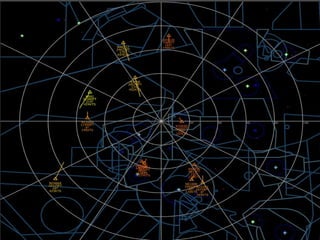
ATC Radar
 Aircraft separation under IFR conditions
 UHF
 Controllers watch aircraft on screens and
  give pilots instructions on where to fly
Aircraft Radar

 Severe weather avoidance
 Thunderstorms
 Allows pilots to continue flying while
  avoiding storm cells
Aircraft Radar

 Clouds are invisible to radar, however
  ice, rain, & hail will reflect the energy
 Size & intensity of moisture & radar type
  will effect the image displayed
Aircraft Radar

 Be careful when operating radar on
  ground
 Microwaves can be dangerous
     Point into sky
     Outside
C-BAND 5400 MHz

 Used primarily by airline operations
     Can see through clouds better
     Less reflective off of small cells to reveal
      larger cells behind
X-BAND 9333 MHz

 Used by general aviation
     Greater resolution
     Will reflect off of smaller cells with greater
      resolution but will not see behind cells
Stormscope

 A lower cost storm detection system
 Uses an AM directional receiver that
  detects lightning discharge
     NOT RADAR
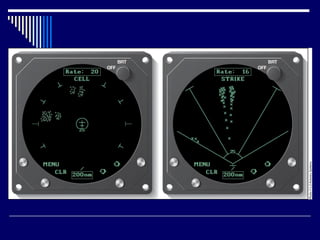
Stormscope

 Uses a loop antenna & a microprocessor
  to determine the direction to a lightning
  strike / storm cell
 Displays lightning strike data on a screen
Radar Altimeter

 A.K.A. Radio Altimeter or simply RAD ALT
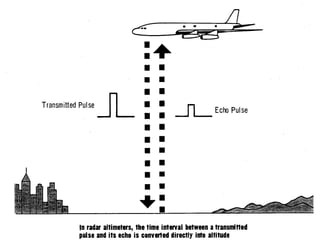
 A single target radar system used to
  indicate aircraft AGL (Above Ground
  Level) altitude
 4300 MHz
 Measures the time it takes for a radio
  pulse to go to the ground and return
Radar Altimeter

 Antenna is located on belly of aircraft
 Usually measures no higher than 5000 ft
 Usually used during landing
GPWS

 Ground Proximity Warning System
 Warns pilot of excessively low altitude
 “PULL UP!”       “PULL UP!”
GPWS

 Computer monitors several different
  systems
     Radar Altimeter
     Air data computer
     Landing gear
     Flaps
     Glideslope
 Primary component is the computer
GPWS
 Warnings are activated during flight
     Terrain avoidance (gear & flaps up)
 During landing
     Excessive rate of descent
     Below glideslope
     Below minimums
 Enhanced GPWS systems incorporate a
  worldwide terrain database & GPS
  inputs

Day 5

  • 1.
  • 2.
    RADAR  RAdio DetectionAnd Ranging  Ground based  ATC  Aircraft based  Weather radar  Radio altimeter
  • 3.
    RADAR  Radar operateson the “Pulse Echo principle”  A short pulse of radio energy is transmitted  Receiver waits for reflected energy
  • 4.
    ATC Radar  Aircraftseparation under IFR conditions  UHF  Controllers watch aircraft on screens and give pilots instructions on where to fly
  • 6.
    Aircraft Radar  Severeweather avoidance  Thunderstorms  Allows pilots to continue flying while avoiding storm cells
  • 8.
    Aircraft Radar  Cloudsare invisible to radar, however ice, rain, & hail will reflect the energy  Size & intensity of moisture & radar type will effect the image displayed
  • 10.
    Aircraft Radar  Becareful when operating radar on ground  Microwaves can be dangerous  Point into sky  Outside
  • 11.
    C-BAND 5400 MHz Used primarily by airline operations  Can see through clouds better  Less reflective off of small cells to reveal larger cells behind
  • 12.
    X-BAND 9333 MHz Used by general aviation  Greater resolution  Will reflect off of smaller cells with greater resolution but will not see behind cells
  • 13.
    Stormscope  A lowercost storm detection system  Uses an AM directional receiver that detects lightning discharge  NOT RADAR
  • 14.
    Stormscope  Uses aloop antenna & a microprocessor to determine the direction to a lightning strike / storm cell  Displays lightning strike data on a screen
  • 16.
    Radar Altimeter  A.K.A.Radio Altimeter or simply RAD ALT  A single target radar system used to indicate aircraft AGL (Above Ground Level) altitude  4300 MHz  Measures the time it takes for a radio pulse to go to the ground and return
  • 18.
    Radar Altimeter  Antennais located on belly of aircraft  Usually measures no higher than 5000 ft  Usually used during landing
  • 19.
    GPWS  Ground ProximityWarning System  Warns pilot of excessively low altitude  “PULL UP!” “PULL UP!”
  • 20.
    GPWS  Computer monitorsseveral different systems  Radar Altimeter  Air data computer  Landing gear  Flaps  Glideslope  Primary component is the computer
  • 21.
    GPWS  Warnings areactivated during flight  Terrain avoidance (gear & flaps up)  During landing  Excessive rate of descent  Below glideslope  Below minimums  Enhanced GPWS systems incorporate a worldwide terrain database & GPS inputs