DATA BASE SECURITY & INTEGRITY
Prof. Neeraj Bhargava
Pooja Dixit
Department of Computer Science
School of Engineering & System Science
MDS, University Ajmer, Rajasthan, India
1
 Definition
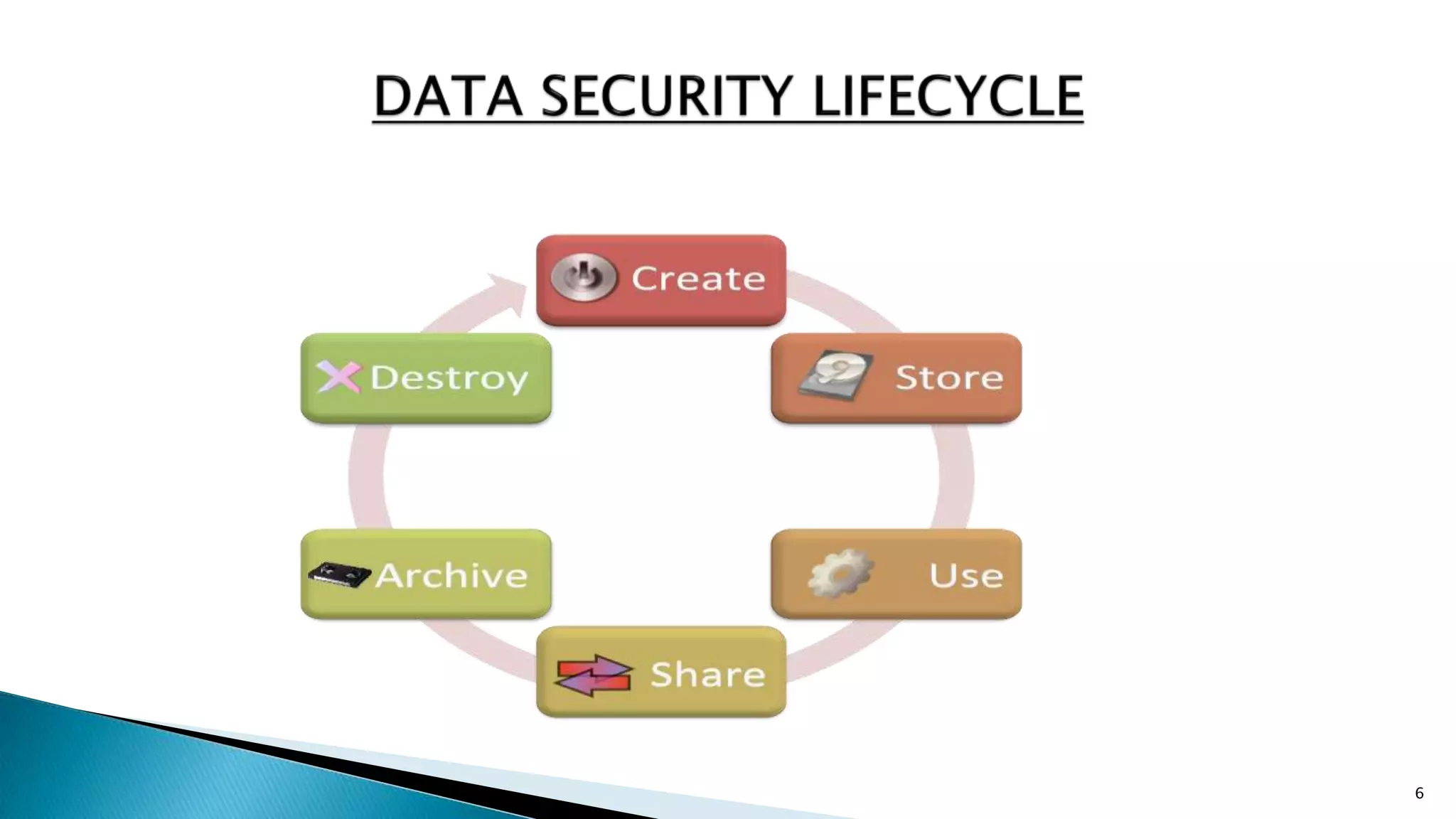
 Data security lifecycle
 Countermeasure
 Authorization
 View
 Backup and recovery
 Integrity
 Encryption
 RAID technology
2
 Definition:- data base security is the mechanism that protect
the data base against intentional or accidental threads.
 Security policy describes the security measures enforced.
 Security mechanism of the underlying DBMS must be utilized
to enforce the policy.
3
 Security curriculum is relatively light in data base system area.
 Focus currently on protecting information through network
configuration , system administration , application security.
 Need to specifically consider data base system security issues.
4
 Understand security issues in:
 A general database system environment .
 A specific DBMS environment.
 Consider database security issues in context of general security
principles and ideas.
 Consider issues relating to both database storage and database system
communication with other application.
5
6
 The process of authorization involves authenticating the user
to requesting access to object.
 They are sometimes referred as access control.
 The granting of a privilege that enable a user to have a
legitimate access to a system.
7
A system administrator is responsible for allowing users
to have access to the system by creating individual user
accounts.
 Introduction to user authentication
 Password for authentication
 Strong authentication
 Proxy authentication and authorization
8
 Recovery:- Recovery in general refers to be the various
operation involved in restoring , rolling forward , and
rolling back a backup.
 backup and recovery in general refers to the various
strategies and operation involved in protecting your
database against data loss and reconstructing the data
should that loss occur.
9
 Data integrity is a fundamental component of
information security.
 Maintaining a secure database system by preventing
data from becoming invalid.
 Only authorized users should be allowed to modify
data.
 Numeric columns should not accept alphabetic data.
 For example: student
10
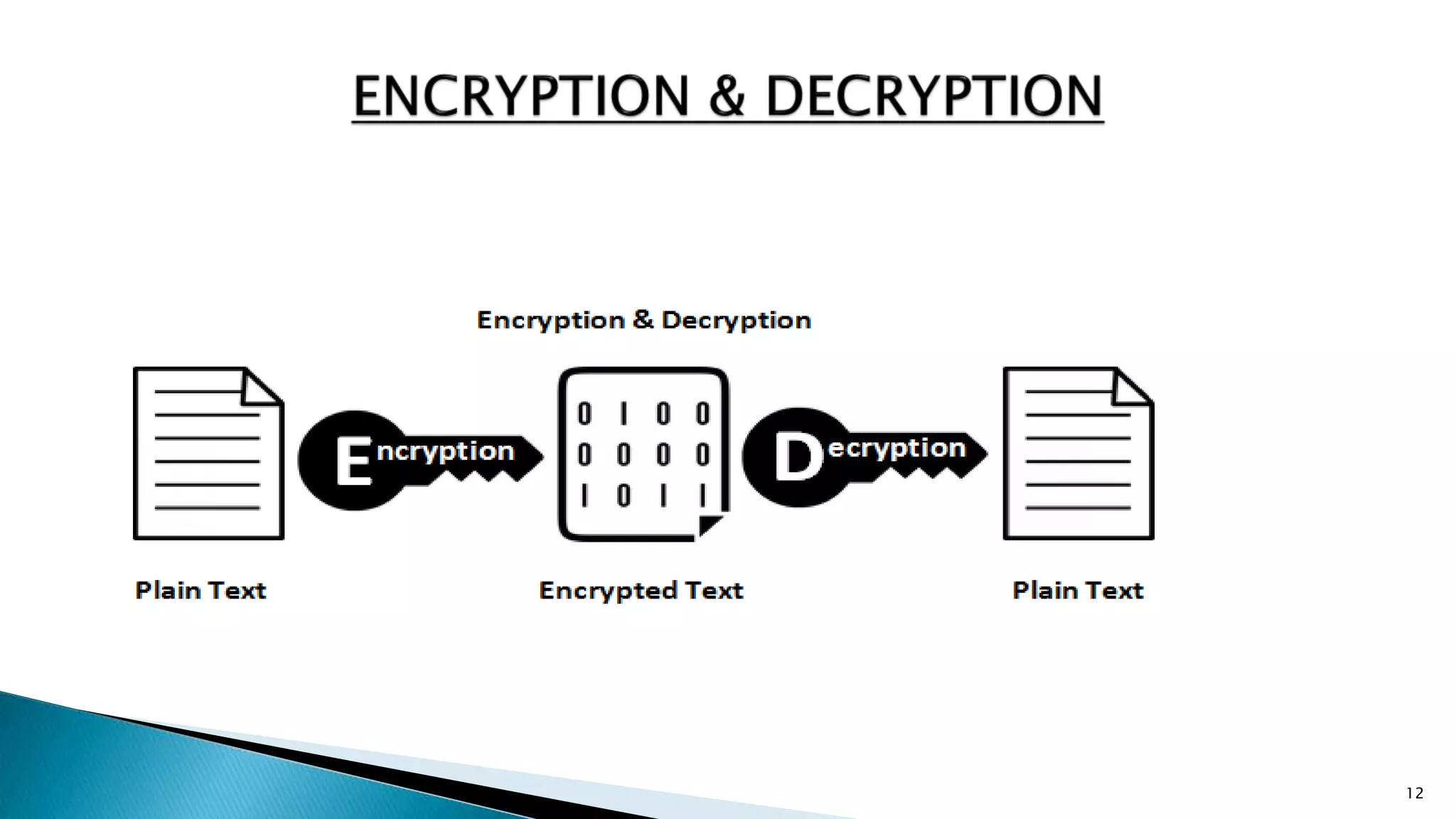
 Encryption:-
◦ The encoding of data by a special algorithm that renders the data
unreadable by any program without the decryption key.
 DECRYPTION:-
◦ Database decryption is converting the meaningless cipher text into
the original information using keys generated by the encryption
algorithm.
11
12

Data base security & integrity

  • 1.
    DATA BASE SECURITY& INTEGRITY Prof. Neeraj Bhargava Pooja Dixit Department of Computer Science School of Engineering & System Science MDS, University Ajmer, Rajasthan, India 1
  • 2.
     Definition  Datasecurity lifecycle  Countermeasure  Authorization  View  Backup and recovery  Integrity  Encryption  RAID technology 2
  • 3.
     Definition:- database security is the mechanism that protect the data base against intentional or accidental threads.  Security policy describes the security measures enforced.  Security mechanism of the underlying DBMS must be utilized to enforce the policy. 3
  • 4.
     Security curriculumis relatively light in data base system area.  Focus currently on protecting information through network configuration , system administration , application security.  Need to specifically consider data base system security issues. 4
  • 5.
     Understand securityissues in:  A general database system environment .  A specific DBMS environment.  Consider database security issues in context of general security principles and ideas.  Consider issues relating to both database storage and database system communication with other application. 5
  • 6.
  • 7.
     The processof authorization involves authenticating the user to requesting access to object.  They are sometimes referred as access control.  The granting of a privilege that enable a user to have a legitimate access to a system. 7
  • 8.
    A system administratoris responsible for allowing users to have access to the system by creating individual user accounts.  Introduction to user authentication  Password for authentication  Strong authentication  Proxy authentication and authorization 8
  • 9.
     Recovery:- Recoveryin general refers to be the various operation involved in restoring , rolling forward , and rolling back a backup.  backup and recovery in general refers to the various strategies and operation involved in protecting your database against data loss and reconstructing the data should that loss occur. 9
  • 10.
     Data integrityis a fundamental component of information security.  Maintaining a secure database system by preventing data from becoming invalid.  Only authorized users should be allowed to modify data.  Numeric columns should not accept alphabetic data.  For example: student 10
  • 11.
     Encryption:- ◦ Theencoding of data by a special algorithm that renders the data unreadable by any program without the decryption key.  DECRYPTION:- ◦ Database decryption is converting the meaningless cipher text into the original information using keys generated by the encryption algorithm. 11
  • 12.