ImportanceofDatabaseSecurity
Presented By
Md Nazmul Hoque Shourob
ID: 201002305
Content
 About Database Security
 Security risk to database includes
 About threads
 Database security concepts
 Confidentially
 Integrity
 Availability
 Methods for securing the database
 Security controls
 Flow controls
 Interface control
 Access control
 conclusion
Introduction
Database
It is a collection of information in computer
Security
.It is being free from danger
Database Security
It is the mechanism that protect the database against intentional or
accidental threats/
Protection from malicious attempts to seat (view) or modify data.
Securityrisktodatabase
includes
Bank risk to database includes :
-> Bank Accounts
-> Credit card, salary, income tax data
-> University Admission, marks/grades
-> Land records, licence’s
Aboutthreads
What isThreats ?
Threats – Any situation or event, international or accidental,
that may adversely affect a system and consequently the
organization.
*Computer System
*Database
threads
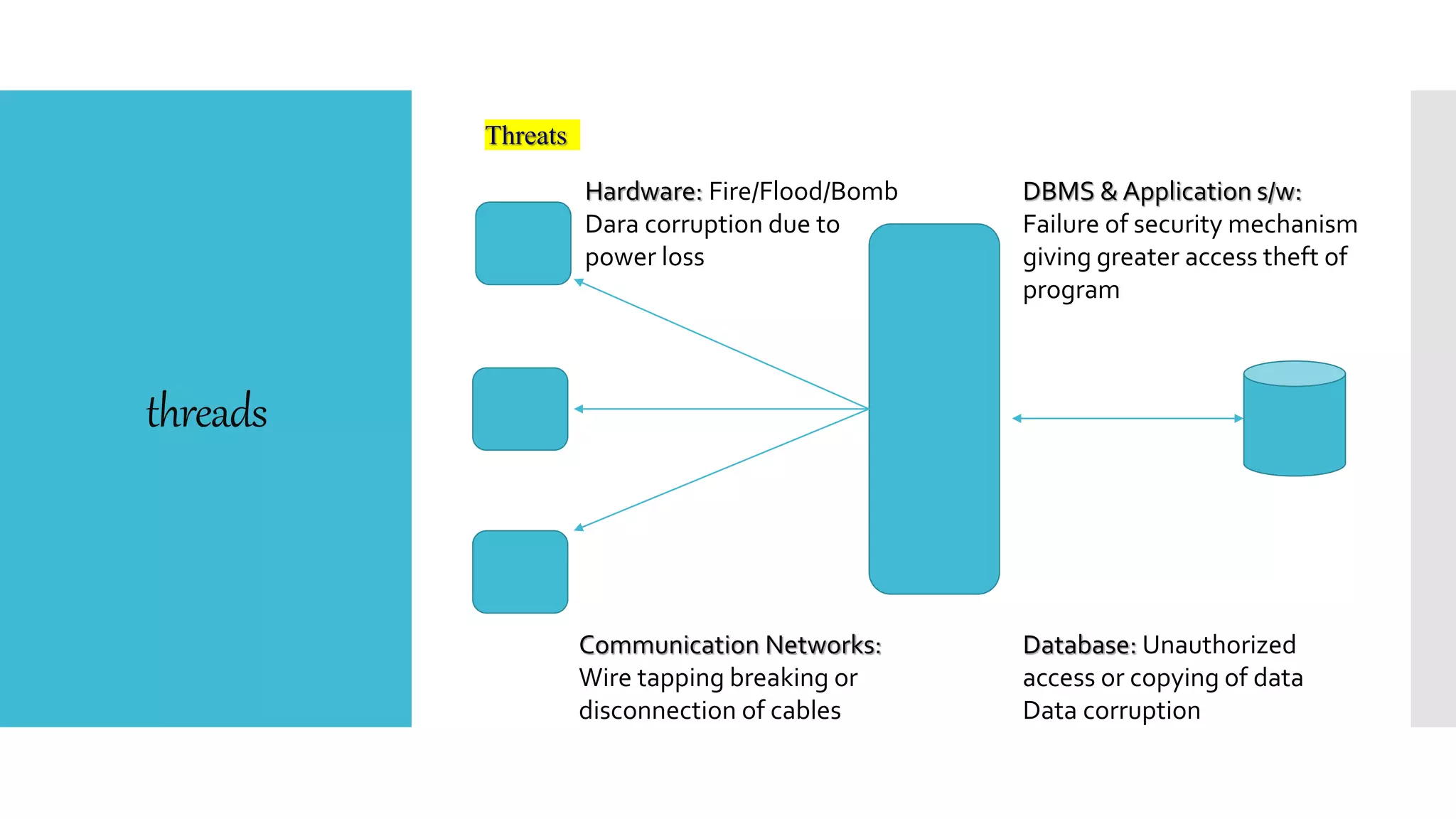
Threats
Hardware: Fire/Flood/Bomb
Dara corruption due to
power loss
DBMS & Application s/w:
Failure of security mechanism
giving greater access theft of
program
Communication Networks:
Wire tapping breaking or
disconnection of cables
Database: Unauthorized
access or copying of data
Data corruption
Databasesecurity
concepts
Three main aspects :
*Confidentiality
*Integrity
*Availability
Threats to database ::
* Loss of Integrity
* Loss of Availability
* Loss of Confidentiality
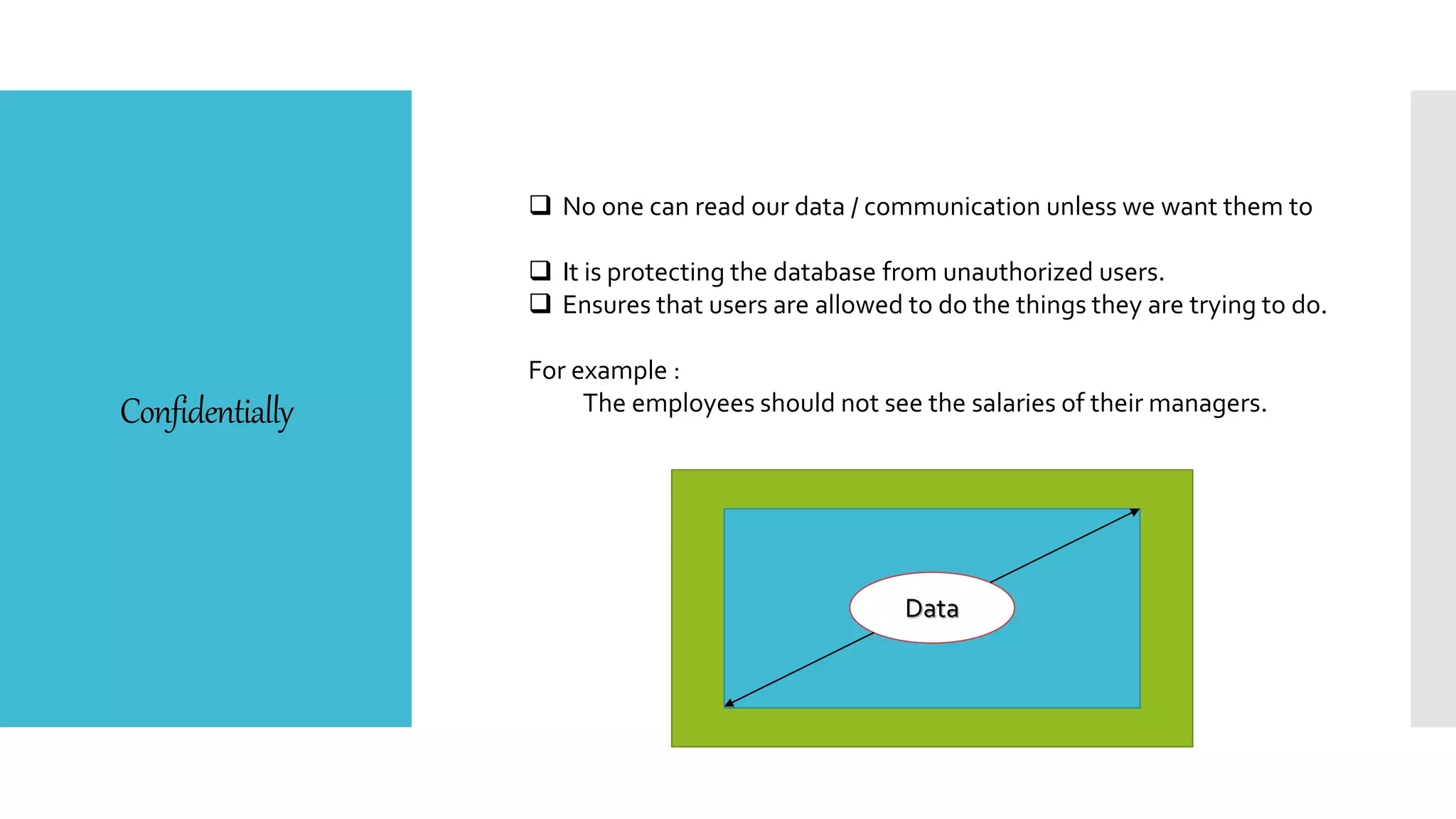
Confidentially
 No one can read our data / communication unless we want them to
 It is protecting the database from unauthorized users.
 Ensures that users are allowed to do the things they are trying to do.
For example :
The employees should not see the salaries of their managers.
Data
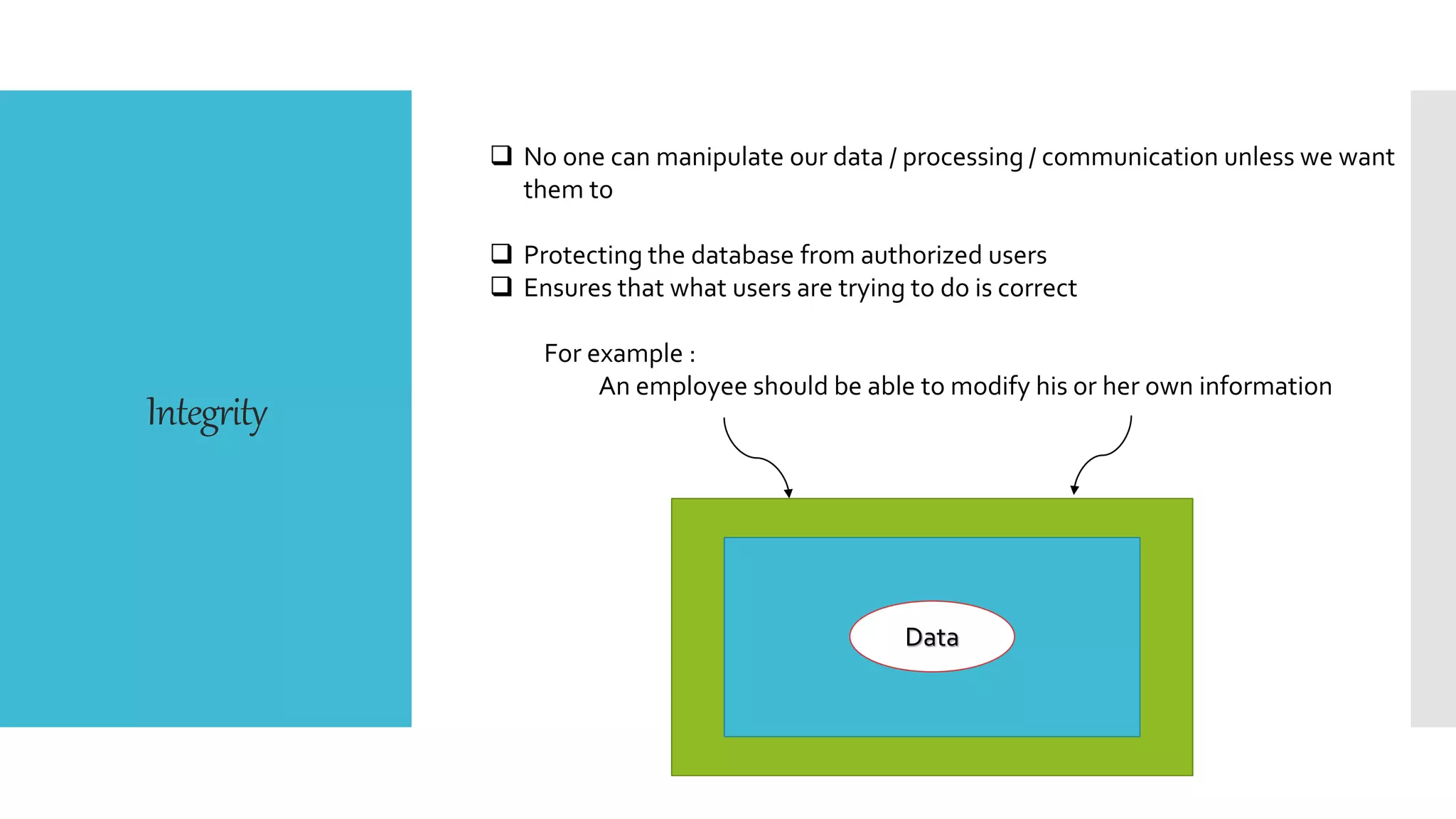
Integrity
 No one can manipulate our data / processing / communication unless we want
them to
 Protecting the database from authorized users
 Ensures that what users are trying to do is correct
For example :
An employee should be able to modify his or her own information
Data
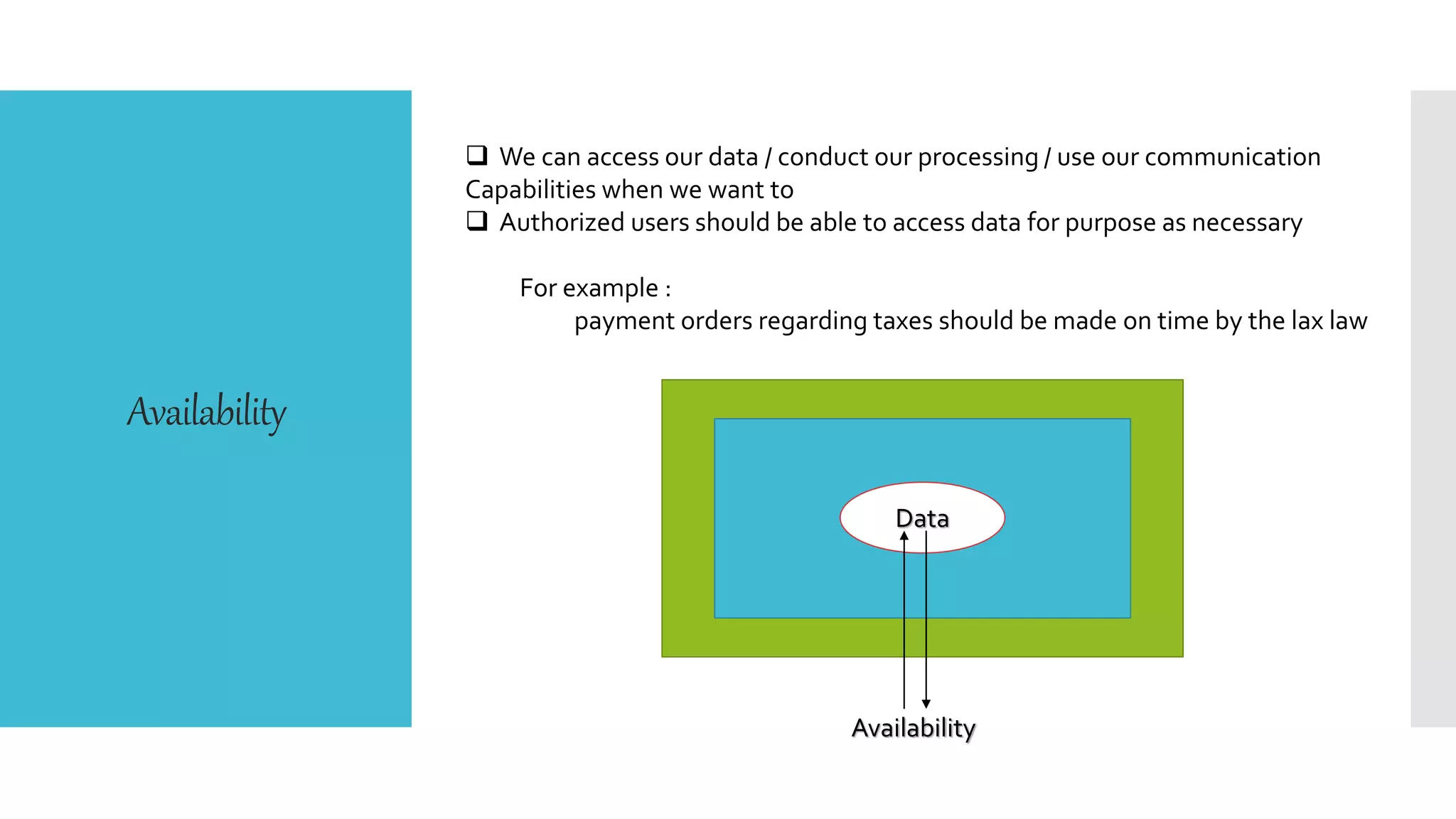
Availability
 We can access our data / conduct our processing / use our communication
Capabilities when we want to
 Authorized users should be able to access data for purpose as necessary
For example :
payment orders regarding taxes should be made on time by the lax law
Data
Availability
Methodsforsecuring
thedatabase
Authorization – Privileges, vies.
Encryption – public key / private key, secure sockets.
Authentication – passwords.
Logical – firewalls, net proxies.
Securitycontrols
Type of Database Security controls :
1. Flow Control
2. Interface Control
3. AccessControl
 Flow controls regulates the distribution (flow) of information among
accessible objects. A flow between object X andY occurs when a
statement reads values from X and writes intoY.
 Interface control occurs when : a set X of data items to be ready by a user
can be used to get the setY of data.
 Access control in information system are responsible for ensuring that all
direct accesses to the system object occur base on models and rules fixed
by protection.
Conclusion
The goal of database security is to protect our critical and confidential data
from unauthorized access.
Each organization should have a data security policy, which is a set of high-
level guidelines determide by:
 User requirements.
 Environmental aspects.
 Internal regulations.
 Governmental laws.
Comparative Analysis of Windows and Linux System.pptx

Comparative Analysis of Windows and Linux System.pptx

  • 1.
  • 2.
    Presented By Md NazmulHoque Shourob ID: 201002305
  • 3.
    Content  About DatabaseSecurity  Security risk to database includes  About threads  Database security concepts  Confidentially  Integrity  Availability  Methods for securing the database  Security controls  Flow controls  Interface control  Access control  conclusion
  • 4.
    Introduction Database It is acollection of information in computer Security .It is being free from danger Database Security It is the mechanism that protect the database against intentional or accidental threats/ Protection from malicious attempts to seat (view) or modify data.
  • 5.
    Securityrisktodatabase includes Bank risk todatabase includes : -> Bank Accounts -> Credit card, salary, income tax data -> University Admission, marks/grades -> Land records, licence’s
  • 6.
    Aboutthreads What isThreats ? Threats– Any situation or event, international or accidental, that may adversely affect a system and consequently the organization. *Computer System *Database
  • 7.
    threads Threats Hardware: Fire/Flood/Bomb Dara corruptiondue to power loss DBMS & Application s/w: Failure of security mechanism giving greater access theft of program Communication Networks: Wire tapping breaking or disconnection of cables Database: Unauthorized access or copying of data Data corruption
  • 8.
    Databasesecurity concepts Three main aspects: *Confidentiality *Integrity *Availability Threats to database :: * Loss of Integrity * Loss of Availability * Loss of Confidentiality
  • 9.
    Confidentially  No onecan read our data / communication unless we want them to  It is protecting the database from unauthorized users.  Ensures that users are allowed to do the things they are trying to do. For example : The employees should not see the salaries of their managers. Data
  • 10.
    Integrity  No onecan manipulate our data / processing / communication unless we want them to  Protecting the database from authorized users  Ensures that what users are trying to do is correct For example : An employee should be able to modify his or her own information Data
  • 11.
    Availability  We canaccess our data / conduct our processing / use our communication Capabilities when we want to  Authorized users should be able to access data for purpose as necessary For example : payment orders regarding taxes should be made on time by the lax law Data Availability
  • 12.
    Methodsforsecuring thedatabase Authorization – Privileges,vies. Encryption – public key / private key, secure sockets. Authentication – passwords. Logical – firewalls, net proxies.
  • 13.
    Securitycontrols Type of DatabaseSecurity controls : 1. Flow Control 2. Interface Control 3. AccessControl  Flow controls regulates the distribution (flow) of information among accessible objects. A flow between object X andY occurs when a statement reads values from X and writes intoY.  Interface control occurs when : a set X of data items to be ready by a user can be used to get the setY of data.  Access control in information system are responsible for ensuring that all direct accesses to the system object occur base on models and rules fixed by protection.
  • 14.
    Conclusion The goal ofdatabase security is to protect our critical and confidential data from unauthorized access. Each organization should have a data security policy, which is a set of high- level guidelines determide by:  User requirements.  Environmental aspects.  Internal regulations.  Governmental laws.