By
Aatiqa Bint e Ghazali(2298-BSSEF13-A)
Jaweria Khalid
(2272-Bssesf13A)
Define kernel.
I/O Services provided by kernel.
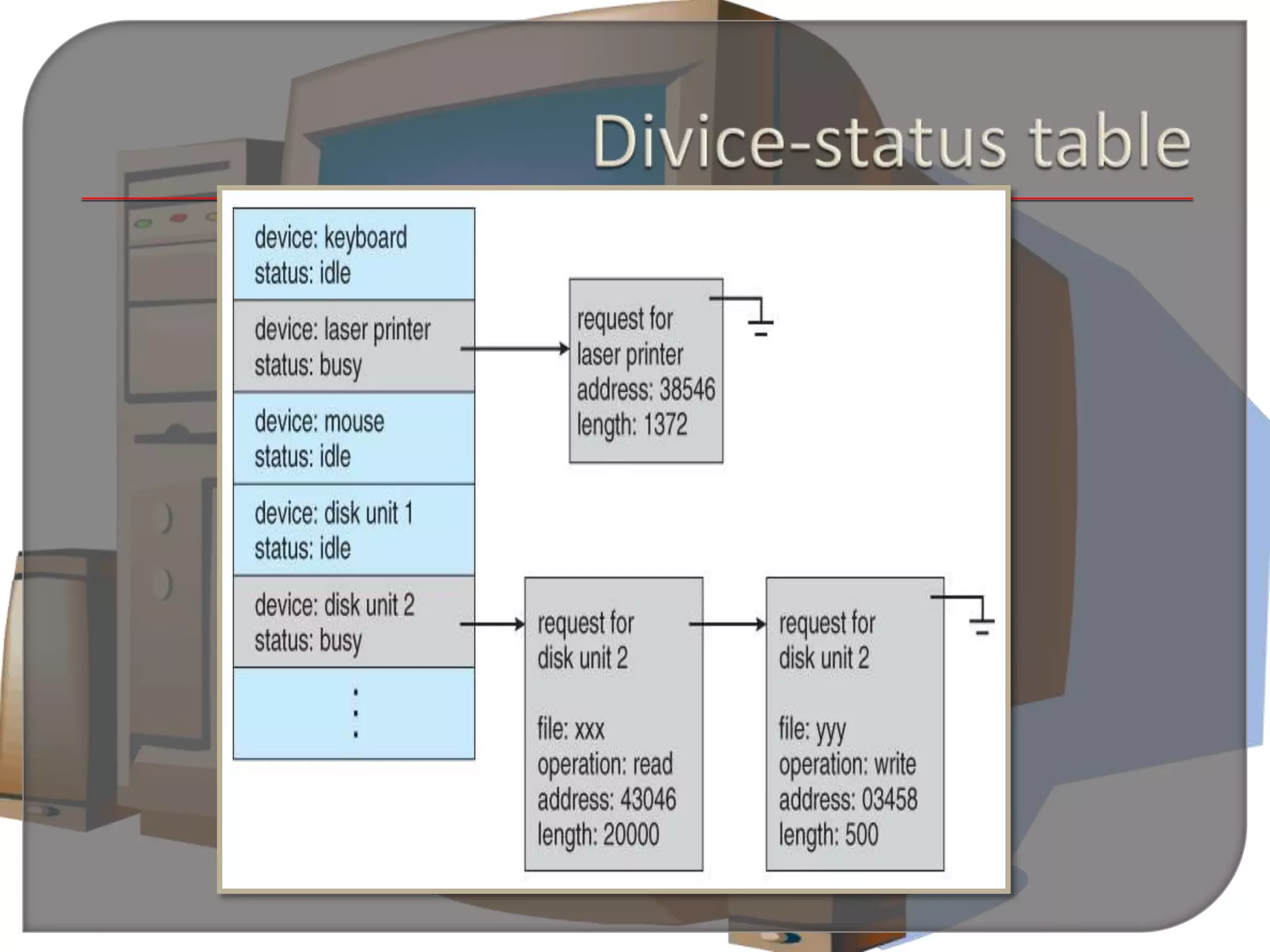
Data structures in I/O subsystems.
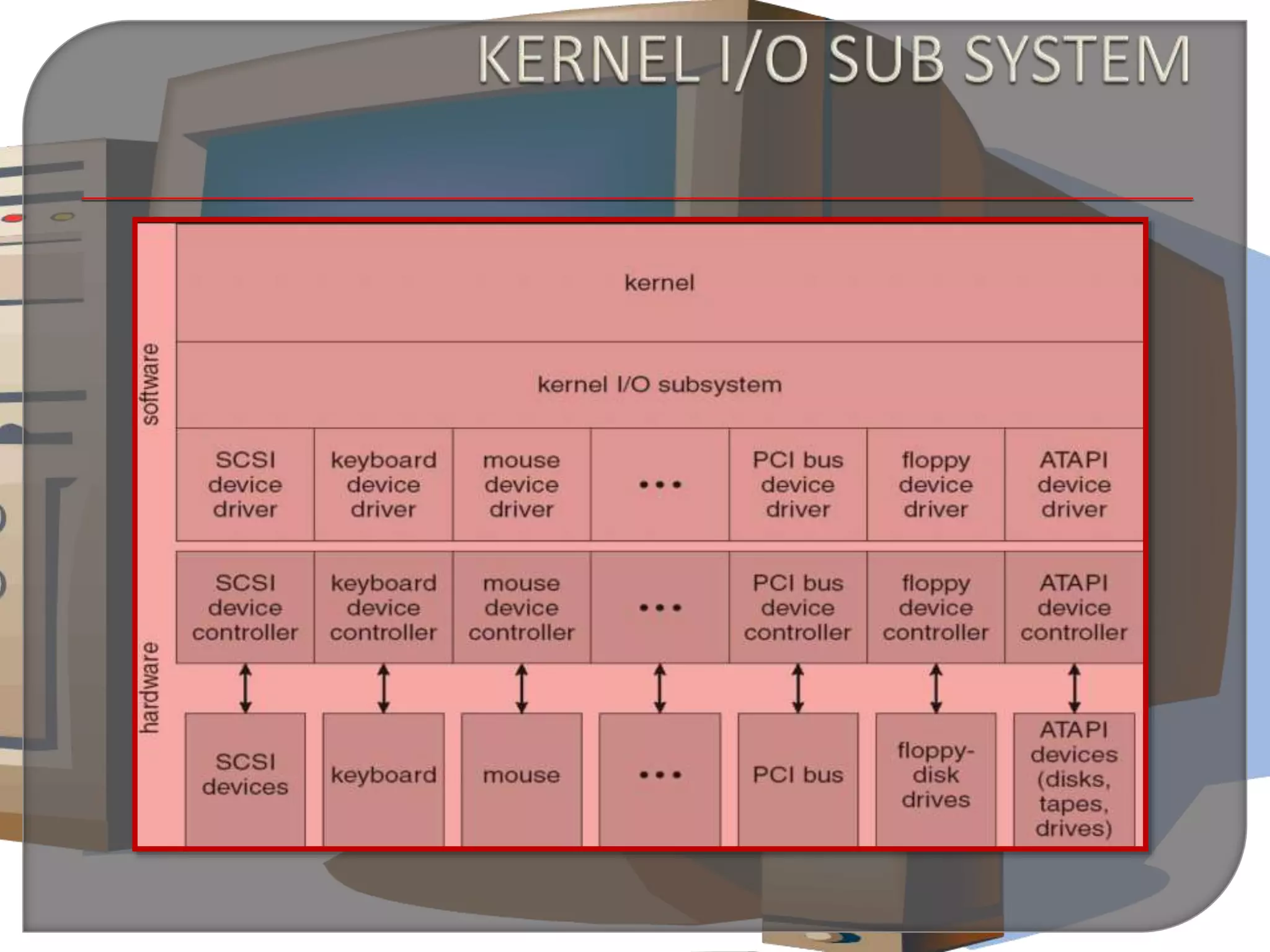
Illustration via diagrams.
The essential center of a computer operating
system, the core that provides basic services
for all other parts of the operating system.
 Scheduling
 Buffering
 Caching
 Spooling
 Device reservation
 Error handling
 I/O protection
It means to determine a good order in which
to execute input/output.
Often called disk scheduling.
Scheduling I/O requests can greatly
improve overall efficiency. Priorities can also
play a part in request scheduling.
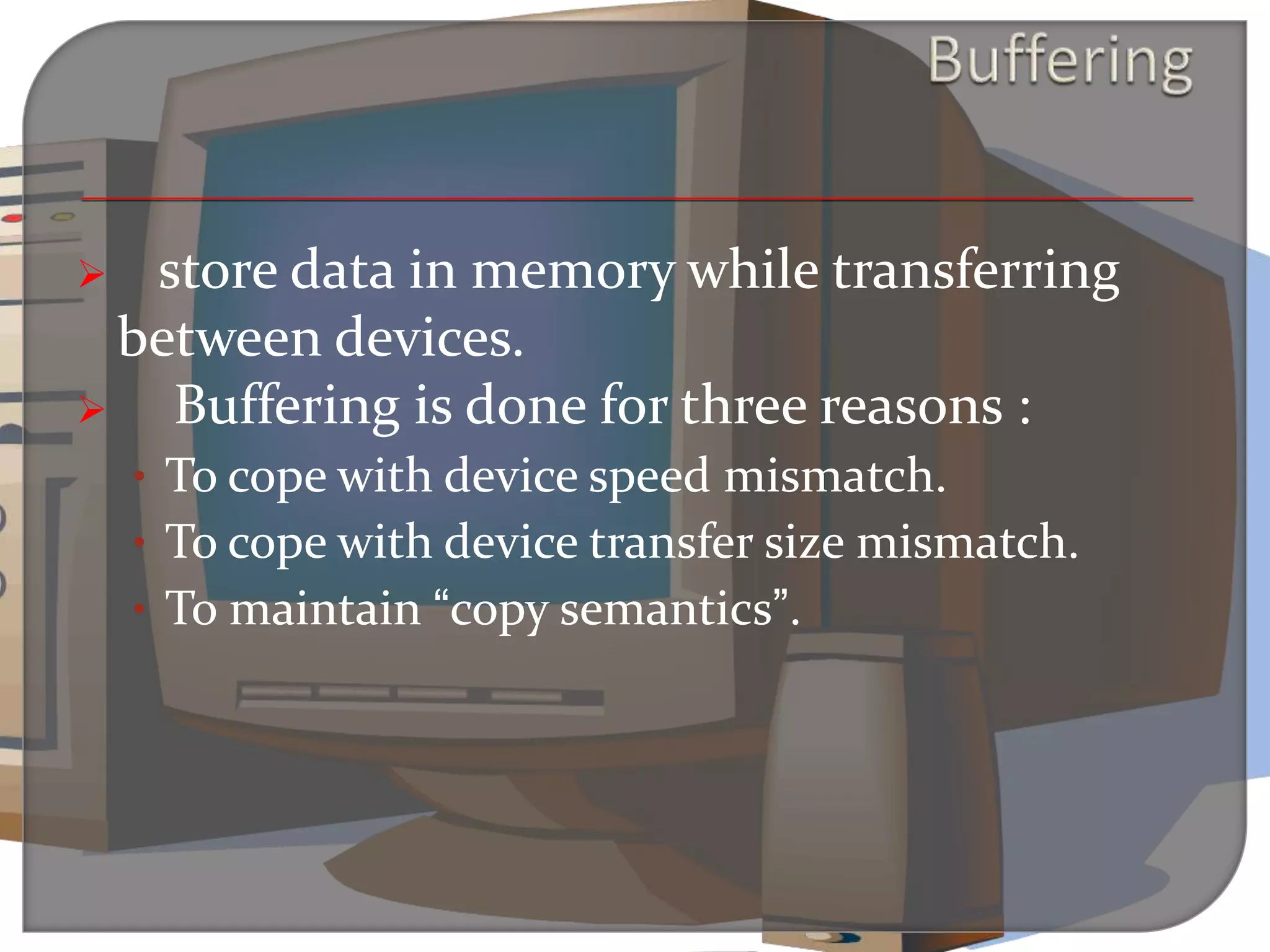
 store data in memory while transferring
between devices.
 Buffering is done for three reasons :
• To cope with device speed mismatch.
• To cope with device transfer size mismatch.
• To maintain “copy semantics”.
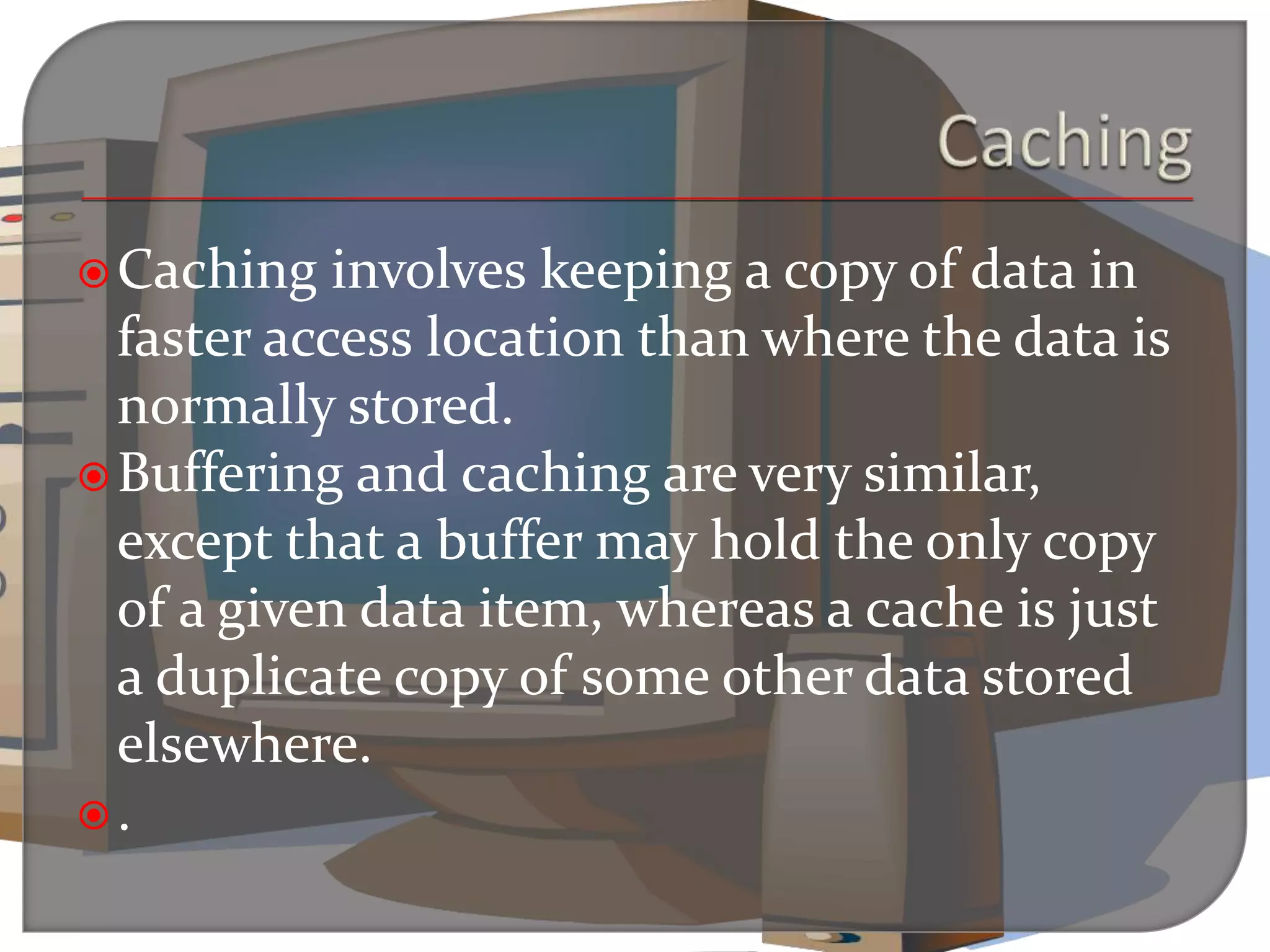
Caching involves keeping a copy of data in
faster access location than where the data is
normally stored.
Buffering and caching are very similar,
except that a buffer may hold the only copy
of a given data item, whereas a cache is just
a duplicate copy of some other data stored
elsewhere.
.
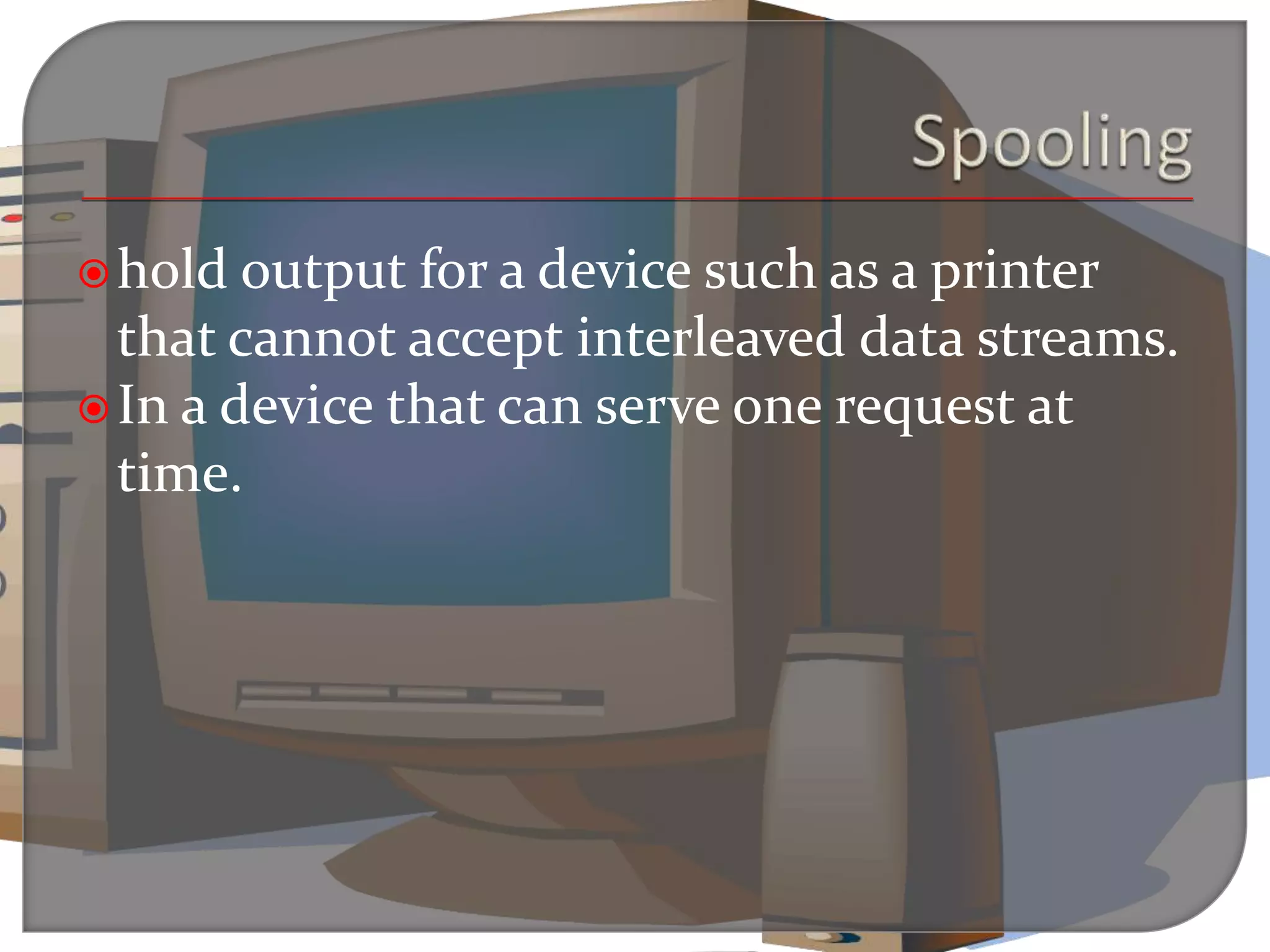
hold output for a device such as a printer
that cannot accept interleaved data streams.
In a device that can serve one request at
time.
provides exclusive access to a device
• System calls for allocation and de-
allocation
• Watch out for deadlock
OS can recover from disk read , device
unavailable, transient write(when a buffer
becomes overloaded) failures.
Most return an error number or code when
I/O request fails
System error logs hold problem reports
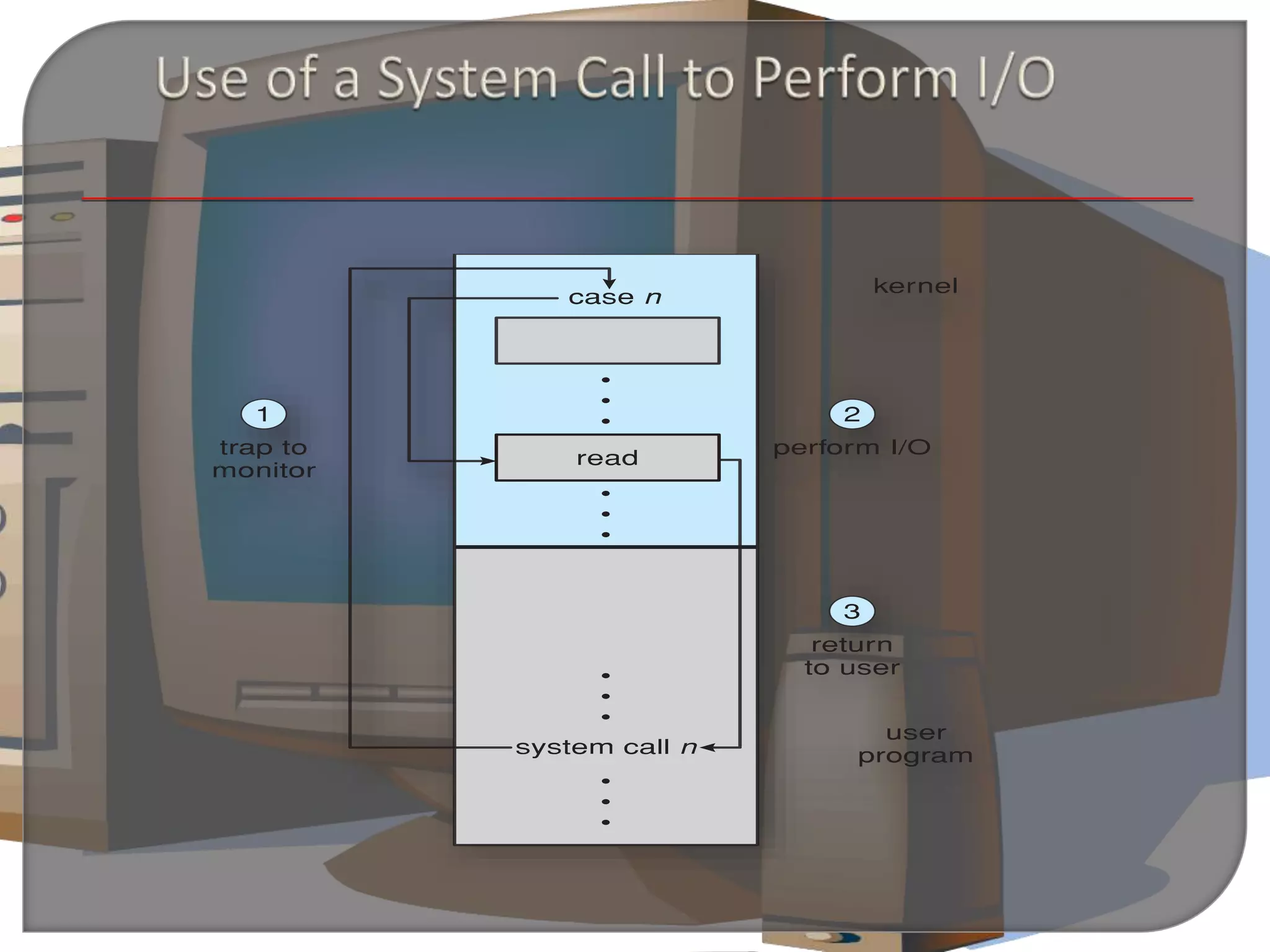
 User process may accidentally or purposefully
attempt to disrupt normal operation via illegal I/O
instructions .
 To prevent user from doing so
• All I/O instructions defined to be privileged
• I/O must be performed via system calls.
The kernel needs to keep
state information about the
use of I/O components .
It does so through a variety of
in-kernel data structures such
as open file table .
The kernel uses similar
structures to track network
connections, character-device
communications and other
I/O activities ,
Kernel I/O subsystem

Kernel I/O subsystem

  • 1.
    By Aatiqa Bint eGhazali(2298-BSSEF13-A) Jaweria Khalid (2272-Bssesf13A)
  • 2.
    Define kernel. I/O Servicesprovided by kernel. Data structures in I/O subsystems. Illustration via diagrams.
  • 3.
    The essential centerof a computer operating system, the core that provides basic services for all other parts of the operating system.
  • 4.
     Scheduling  Buffering Caching  Spooling  Device reservation  Error handling  I/O protection
  • 5.
    It means todetermine a good order in which to execute input/output. Often called disk scheduling. Scheduling I/O requests can greatly improve overall efficiency. Priorities can also play a part in request scheduling.
  • 7.
     store datain memory while transferring between devices.  Buffering is done for three reasons : • To cope with device speed mismatch. • To cope with device transfer size mismatch. • To maintain “copy semantics”.
  • 8.
    Caching involves keepinga copy of data in faster access location than where the data is normally stored. Buffering and caching are very similar, except that a buffer may hold the only copy of a given data item, whereas a cache is just a duplicate copy of some other data stored elsewhere. .
  • 9.
    hold output fora device such as a printer that cannot accept interleaved data streams. In a device that can serve one request at time.
  • 10.
    provides exclusive accessto a device • System calls for allocation and de- allocation • Watch out for deadlock
  • 11.
    OS can recoverfrom disk read , device unavailable, transient write(when a buffer becomes overloaded) failures. Most return an error number or code when I/O request fails System error logs hold problem reports
  • 12.
     User processmay accidentally or purposefully attempt to disrupt normal operation via illegal I/O instructions .  To prevent user from doing so • All I/O instructions defined to be privileged • I/O must be performed via system calls.
  • 14.
    The kernel needsto keep state information about the use of I/O components . It does so through a variety of in-kernel data structures such as open file table . The kernel uses similar structures to track network connections, character-device communications and other I/O activities ,