Safeguarding-the sources
 “Keeping children safe in education” March
2015
 “Working together to safeguard children”
2015
 “What to do if you are worried a child is being
abused” 2015
All documents are available to download on the
Department for Education website
Aim of the session
For everyone to be absolutely clear about:-
a) What is the role of the school?
b) What is the role of the school staff?
c) What do we all need to know and do?
d) What should school staff look out for?
e) What staff should do if they have concerns
about a child
A definition of Safeguarding
protecting children from maltreatment;
preventing impairment of children’s health or
development; ensuring that children grow up
in circumstances consistent with the
provision of safe and effective care; and
taking action to enable all children to have
the best outcomes
(children includes everyone under the age of 18)
Safeguarding
Safeguarding is a priority across all aspects of
our work
Safeguarding remains everyone’s business
and everyone’s responsibility
Pupils safety and well being remain central
Pupils feel safe ,secure and well protected
What is the role of the school?
 Schools should work with social care, the
police, health services and others to promote
the welfare of children and protect them from
harm.
What is the role of the school staff?
 All staff have a responsibility to provide a
safe environment in which children can learn
 All staff have a responsibility to identify
children who may be in need of extra help or
who are suffering or are likely to suffer
significant harm
What school staff need to know
 All staff should be aware of the school
system which supports safeguarding,
including the school’s own child protection
policy...the behaviour policy...the role of the
designated safeguarding lead
 Mr Ferris is the designated safeguarding lead
What school staff should look out for
 All should be aware of the signs of abuse
and neglect-knowing what to look for is vital
to its early identification
 Maintain an attitude of “it could happen here”
 Always act in the interest of the child
 Eg. A child going missing from education is a potential indicator
What are the types of abuse and neglect
 Physical abuse
Abuse involving hitting, shaking, throwing,
burning, suffocating or otherwise causing
physical harm
(Bruising on an immobile infant)
What are the types of abuse and neglect
 Emotional abuse
Conveying feelings to the child of
worthlessness-being unloved-inadequate
Not giving the child opportunities to express
their views-silencing them-making fun of
what they say-preventing participation in
normal social interactions-bullying!
What are the types of abuse and neglect
 Sexual abuse
A man or a woman forcing/enticing a child into
taking part in sexual activity
The activities may or may not include physical
contact
E’g. Watching inappropriate films/viewing
inappropriate images
What are the types of abuse and neglect
 Neglect
A persistent failure to meet a child’s basic
physical and /or psychological needs
E.g. Adequate food..clothing..shelter..protection
from harm..adequate supervision..access to
appropriate medical care or treatment
Indicators of abuse or neglect
View selected handouts
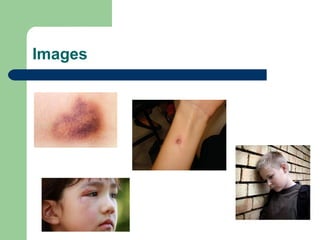
Images
What are the types of abuse and neglect
 Child sexual exploitation
 Female genital mutilation
 Preventing radicalisation
 Sexting
Further advice is to be found in “Keeping children
safe in education” (Pages 12-13)
What school staff should do if they have
concerns about a child
 Raise the concern with the schools
designated safeguarding lead
 Poor practice is failing to act on early signs of abuse
and neglect; poor record keeping; failing to listen to
the views of the child; failing to re-assess when
situations do not improve
Taking action
There are 4 key steps to responding appropriately (but
not necessarily in this set order)
1) Be alert to the signs
2) Questioning behaviours if things seem unusual-the
child has said nothing-speak to the child to seek
further information
Taking action
3) If they disclose to you then Listen-Take the
allegation seriously-Reassure them-Explain your
next action-Maintain confidentiality but DO NOT
PROMISE TO KEEP THEIR SECRET
Ask for help-Make that referral yourself or Complete the
Cause for Concern form and give to CP Lead
 4) Make the referral to Children’s Social Care
Sharing Information
Pieces of a jigsaw
A Child’s View
Children want to be respected and heard
Children want stable relationships with
teachers built upon trust and consistency
What children say-Page 11-”Working together
to safeguard children “
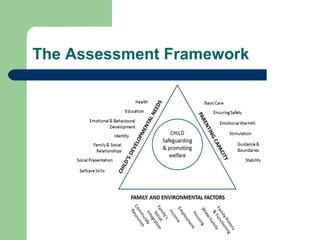
The assessment framework
Our role is to work with other agencies to help
reach a judgement about the nature and
level of need of any given child/family
Comments will be invited regarding the Childs
developmental needs-Family and Environmental
factors and on Parenting capacity
(See the new Child Protection form)
The Assessment Framework
Guiding principles
 Children have a right to be safe
 Safeguarding children is everyone’s
responsibility
 Help at the earliest stage possible-take
prompt action
 Have a co-ordinated approach from all
relevant agencies-share information
Do not let the fear of damaging relationships with adults
get in the way of protecting children
Summary
 Be alert
 Question behaviours
 Say something if you see something
 Ask for help Raise the “cause for concern”
 Inform the CP lead Refer yourself
Safeguarding children is everyone’s responsibility
Any questions?
Child Protection
 What should you look out for?
 What are the signs?
 What do I do next after pupil disclosure?
 Who would you report concerns to?
 Who are the designated staff?
 What are the agreed referral routes?
 Filling out a disclosure form
Did you come up with this list?
 Child Protection/Cause for Concern
 Site Security
 First Aid/Medicines/Head injuries/Care Plans
 Pupil/adult behaviour Rights/Responsibilities
 Health and Safety-Emergencies/Hazards
 Risk Assessments
 Confidentiality
Site Security
 Secure fences and gates
 Closed/Locked doors during session time
 Registering visitors/ID badges
 Entrance via main reception only
 Use two way radio/internal phones/cameras
 Children stay in-bounds
 Concerns to site manager Mr Mal Baker
First Aid
 Who is qualified? Who can you refer to?
 Where is First aid located?
 Maintaining records
 Bump notes Informing parents
 Detailed knowledge of care plans
 Storage of medicines
Behaviour
 Courteous and responsible behaviour
 Golden Rules
 Pupils are taught to show good manners
 Pupils treated with dignity and respect
 Pupils views are listened too
 Staff are approachable and helpful
 Feedback from lunchtime staff to SMT/Bin It
Health and Safety
 Fire drills Emergency procedures
 Rotas Supervised games Good use of space
 Routines
 Broken equipment/clutter/hazards
 Hygiene Cleanliness Tidiness
 Courteous Responsible behaviour
Prevention rather than cure
Rights and Responsibilities
We are a Rights Respecting School
We have a right but also a responsibility too…
Pupils have a responsibility for themselves, the
school environment and others
And finally….
If you are not sure….ASK!

Safeguarding presentation 2015

  • 1.
    Safeguarding-the sources  “Keepingchildren safe in education” March 2015  “Working together to safeguard children” 2015  “What to do if you are worried a child is being abused” 2015 All documents are available to download on the Department for Education website
  • 2.
    Aim of thesession For everyone to be absolutely clear about:- a) What is the role of the school? b) What is the role of the school staff? c) What do we all need to know and do? d) What should school staff look out for? e) What staff should do if they have concerns about a child
  • 3.
    A definition ofSafeguarding protecting children from maltreatment; preventing impairment of children’s health or development; ensuring that children grow up in circumstances consistent with the provision of safe and effective care; and taking action to enable all children to have the best outcomes (children includes everyone under the age of 18)
  • 4.
    Safeguarding Safeguarding is apriority across all aspects of our work Safeguarding remains everyone’s business and everyone’s responsibility Pupils safety and well being remain central Pupils feel safe ,secure and well protected
  • 5.
    What is therole of the school?  Schools should work with social care, the police, health services and others to promote the welfare of children and protect them from harm.
  • 6.
    What is therole of the school staff?  All staff have a responsibility to provide a safe environment in which children can learn  All staff have a responsibility to identify children who may be in need of extra help or who are suffering or are likely to suffer significant harm
  • 7.
    What school staffneed to know  All staff should be aware of the school system which supports safeguarding, including the school’s own child protection policy...the behaviour policy...the role of the designated safeguarding lead  Mr Ferris is the designated safeguarding lead
  • 8.
    What school staffshould look out for  All should be aware of the signs of abuse and neglect-knowing what to look for is vital to its early identification  Maintain an attitude of “it could happen here”  Always act in the interest of the child  Eg. A child going missing from education is a potential indicator
  • 9.
    What are thetypes of abuse and neglect  Physical abuse Abuse involving hitting, shaking, throwing, burning, suffocating or otherwise causing physical harm (Bruising on an immobile infant)
  • 10.
    What are thetypes of abuse and neglect  Emotional abuse Conveying feelings to the child of worthlessness-being unloved-inadequate Not giving the child opportunities to express their views-silencing them-making fun of what they say-preventing participation in normal social interactions-bullying!
  • 11.
    What are thetypes of abuse and neglect  Sexual abuse A man or a woman forcing/enticing a child into taking part in sexual activity The activities may or may not include physical contact E’g. Watching inappropriate films/viewing inappropriate images
  • 12.
    What are thetypes of abuse and neglect  Neglect A persistent failure to meet a child’s basic physical and /or psychological needs E.g. Adequate food..clothing..shelter..protection from harm..adequate supervision..access to appropriate medical care or treatment
  • 13.
    Indicators of abuseor neglect View selected handouts
  • 14.
  • 15.
    What are thetypes of abuse and neglect  Child sexual exploitation  Female genital mutilation  Preventing radicalisation  Sexting Further advice is to be found in “Keeping children safe in education” (Pages 12-13)
  • 16.
    What school staffshould do if they have concerns about a child  Raise the concern with the schools designated safeguarding lead  Poor practice is failing to act on early signs of abuse and neglect; poor record keeping; failing to listen to the views of the child; failing to re-assess when situations do not improve
  • 17.
    Taking action There are4 key steps to responding appropriately (but not necessarily in this set order) 1) Be alert to the signs 2) Questioning behaviours if things seem unusual-the child has said nothing-speak to the child to seek further information
  • 18.
    Taking action 3) Ifthey disclose to you then Listen-Take the allegation seriously-Reassure them-Explain your next action-Maintain confidentiality but DO NOT PROMISE TO KEEP THEIR SECRET Ask for help-Make that referral yourself or Complete the Cause for Concern form and give to CP Lead  4) Make the referral to Children’s Social Care
  • 19.
  • 20.
    A Child’s View Childrenwant to be respected and heard Children want stable relationships with teachers built upon trust and consistency What children say-Page 11-”Working together to safeguard children “
  • 21.
    The assessment framework Ourrole is to work with other agencies to help reach a judgement about the nature and level of need of any given child/family Comments will be invited regarding the Childs developmental needs-Family and Environmental factors and on Parenting capacity (See the new Child Protection form)
  • 22.
  • 23.
    Guiding principles  Childrenhave a right to be safe  Safeguarding children is everyone’s responsibility  Help at the earliest stage possible-take prompt action  Have a co-ordinated approach from all relevant agencies-share information Do not let the fear of damaging relationships with adults get in the way of protecting children
  • 24.
    Summary  Be alert Question behaviours  Say something if you see something  Ask for help Raise the “cause for concern”  Inform the CP lead Refer yourself Safeguarding children is everyone’s responsibility
  • 25.
  • 32.
    Child Protection  Whatshould you look out for?  What are the signs?  What do I do next after pupil disclosure?  Who would you report concerns to?  Who are the designated staff?  What are the agreed referral routes?  Filling out a disclosure form
  • 33.
    Did you comeup with this list?  Child Protection/Cause for Concern  Site Security  First Aid/Medicines/Head injuries/Care Plans  Pupil/adult behaviour Rights/Responsibilities  Health and Safety-Emergencies/Hazards  Risk Assessments  Confidentiality
  • 34.
    Site Security  Securefences and gates  Closed/Locked doors during session time  Registering visitors/ID badges  Entrance via main reception only  Use two way radio/internal phones/cameras  Children stay in-bounds  Concerns to site manager Mr Mal Baker
  • 35.
    First Aid  Whois qualified? Who can you refer to?  Where is First aid located?  Maintaining records  Bump notes Informing parents  Detailed knowledge of care plans  Storage of medicines
  • 36.
    Behaviour  Courteous andresponsible behaviour  Golden Rules  Pupils are taught to show good manners  Pupils treated with dignity and respect  Pupils views are listened too  Staff are approachable and helpful  Feedback from lunchtime staff to SMT/Bin It
  • 37.
    Health and Safety Fire drills Emergency procedures  Rotas Supervised games Good use of space  Routines  Broken equipment/clutter/hazards  Hygiene Cleanliness Tidiness  Courteous Responsible behaviour Prevention rather than cure
  • 38.
    Rights and Responsibilities Weare a Rights Respecting School We have a right but also a responsibility too… Pupils have a responsibility for themselves, the school environment and others
  • 39.
    And finally…. If youare not sure….ASK!