
Theories and Definitions
of Intelligence
Anne Jeanette M. Quilatan
III-10 BS Psychology
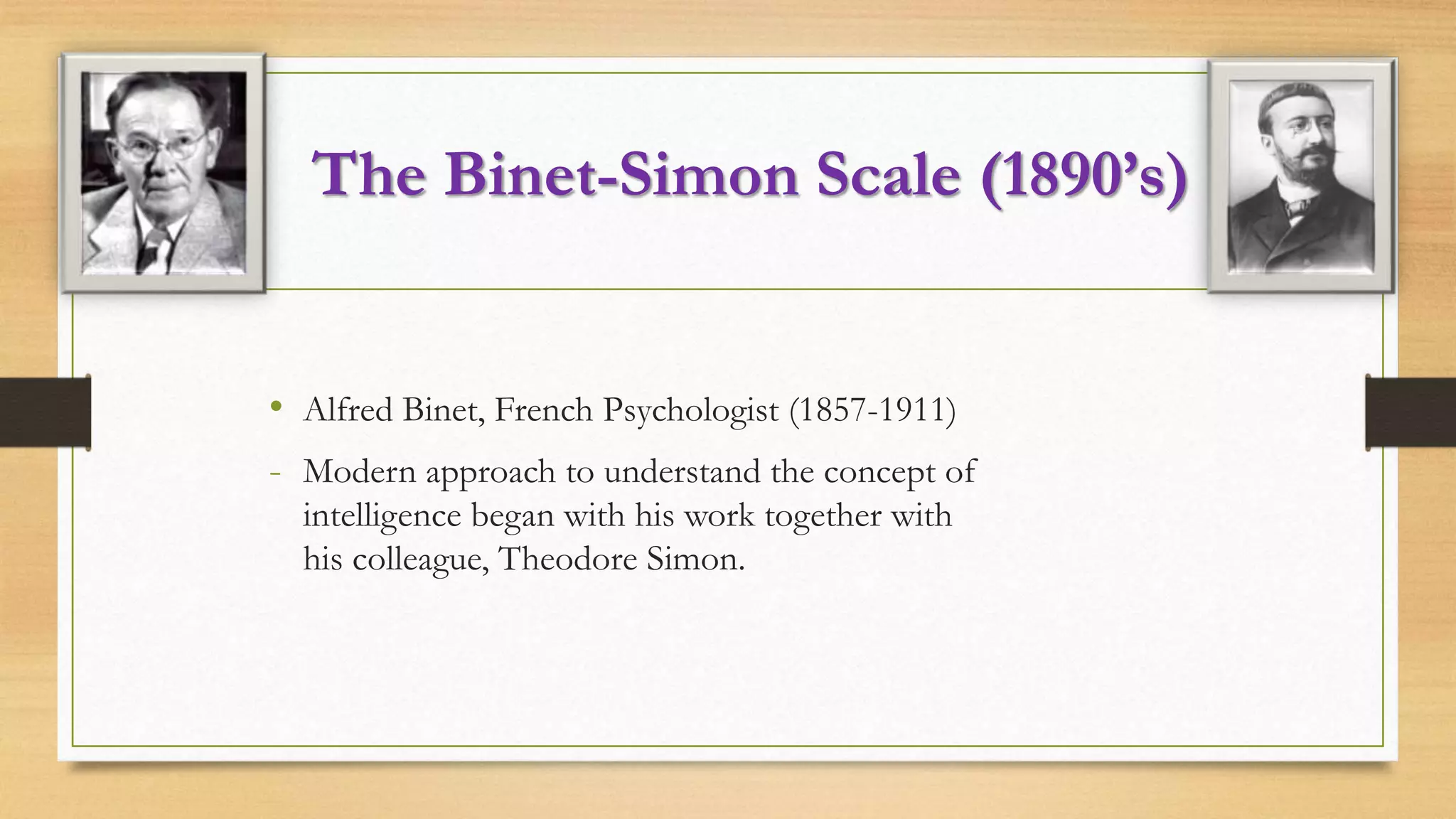
• Alfred Binet, French Psychologist (1857-1911)
- Modern approach to understand the concept of
intelligence began with his work together with
his colleague, Theodore Simon.
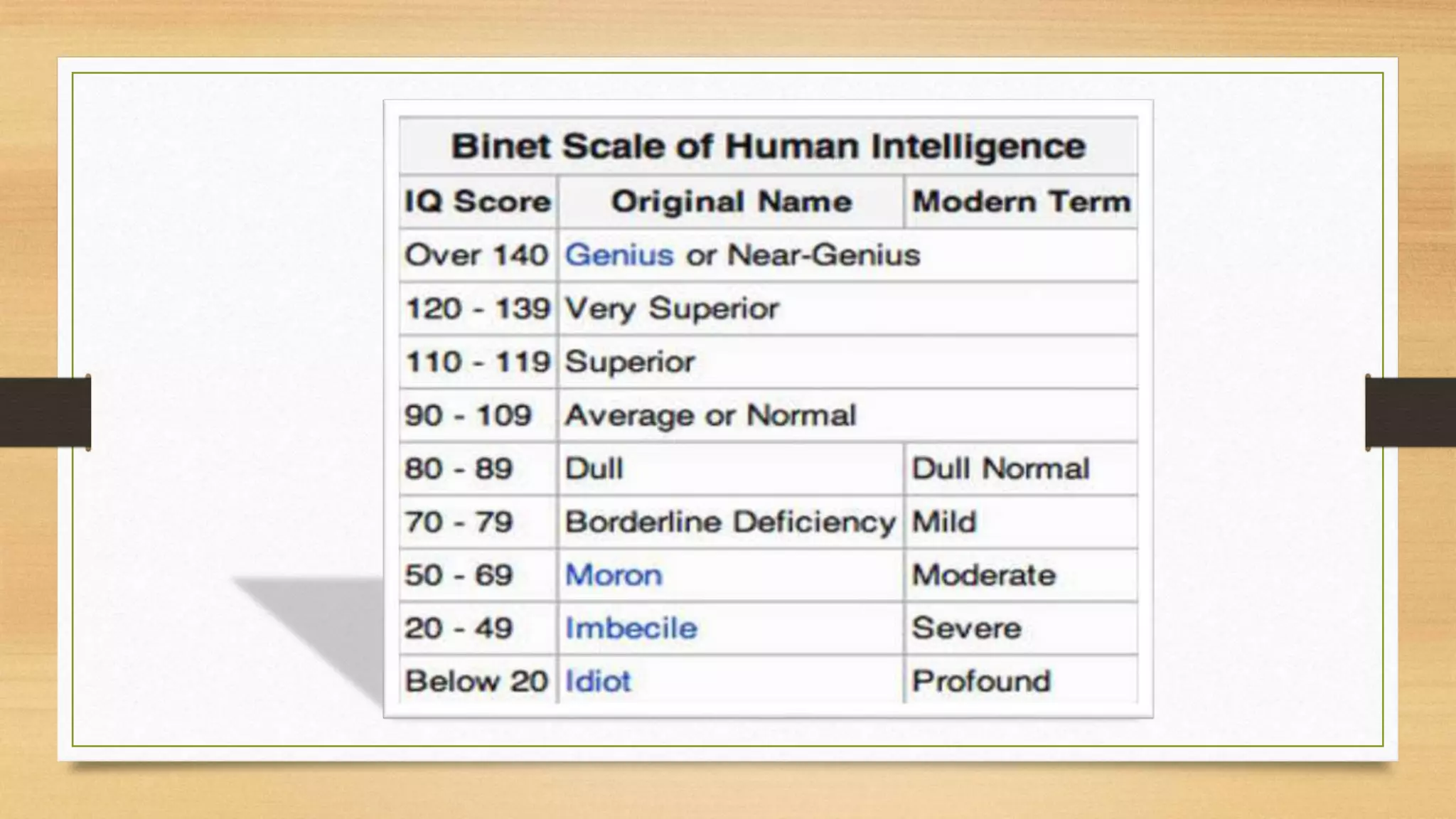
1. The Binet-Simon Scale (1890’s)
Why did they make it?
• A push for compulsory education
• To identify students with special education
• To measure the intellectual development of young children ages 3-12
• To measure the ability of children to think and reason
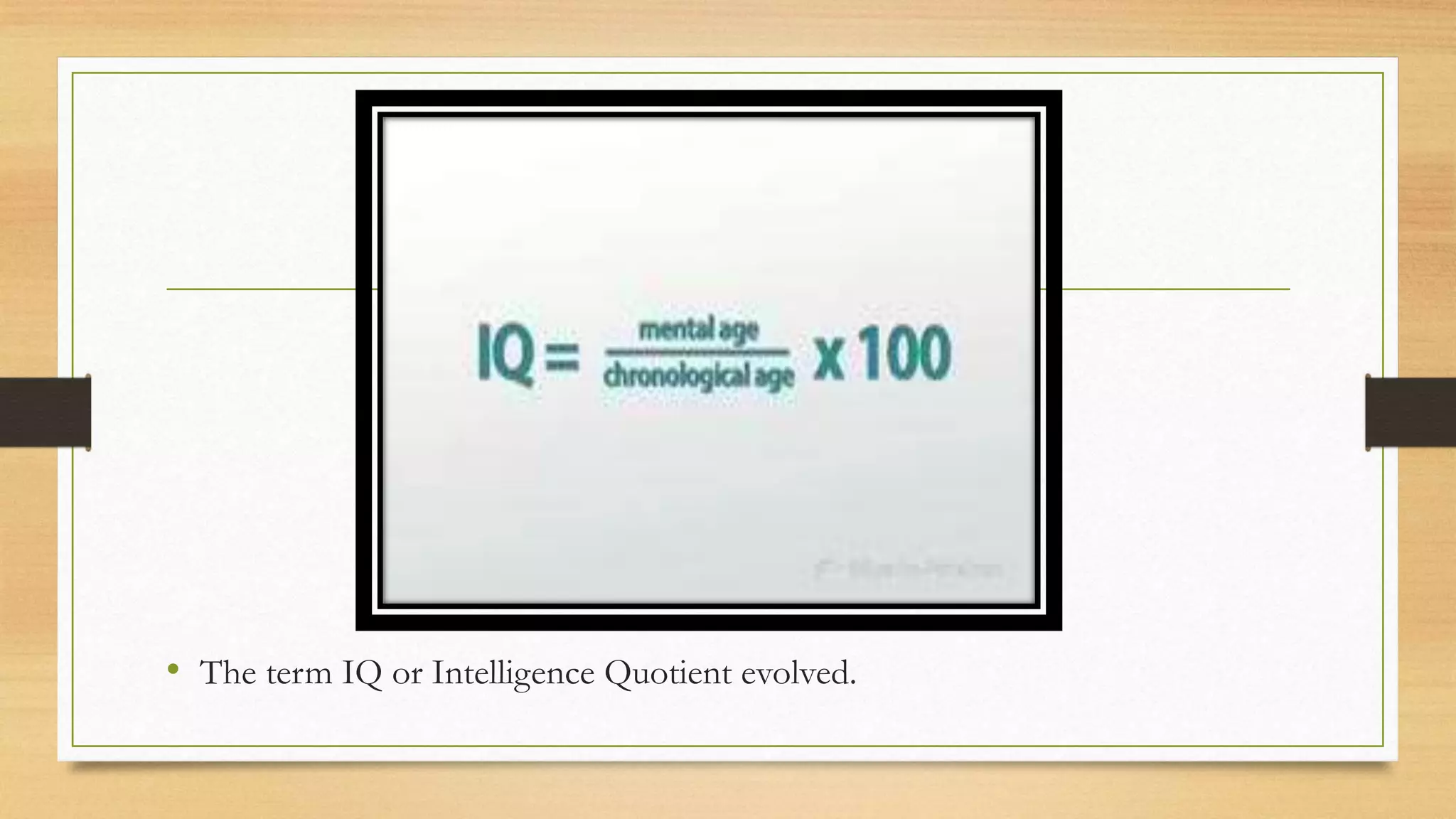
• The term IQ or Intelligence Quotient evolved.
2. Spearman’s Two-Factor Theory of
Intelligence
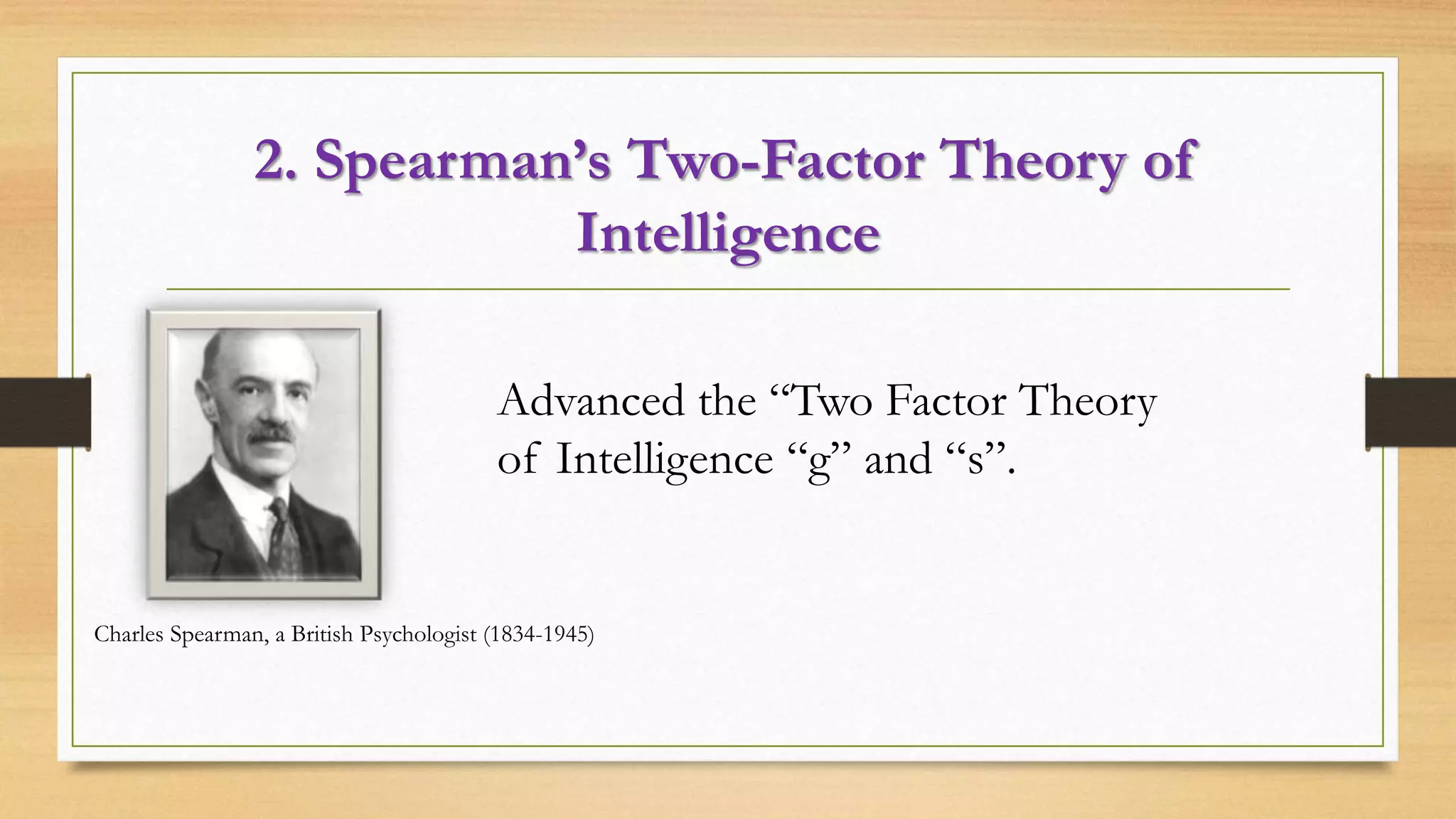
Charles Spearman, a British Psychologist (1834-1945)
Advanced the “Two Factor Theory
of Intelligence “g” and “s”.
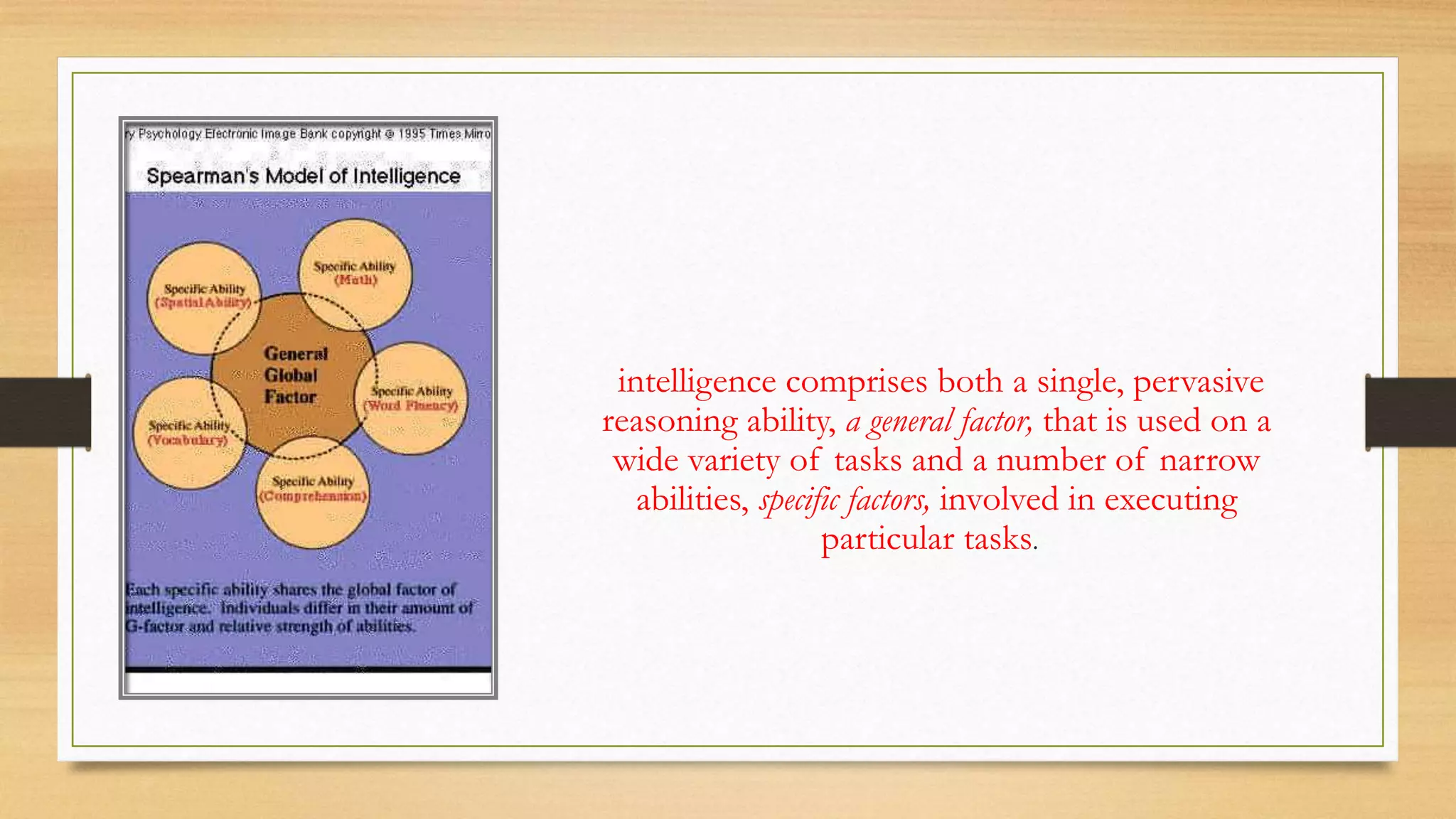
intelligence comprises both a single, pervasive
reasoning ability, a general factor, that is used on a
wide variety of tasks and a number of narrow
abilities, specific factors, involved in executing
particular tasks.
3. Terman’s Stanford Binet Individual
Intelligence Test (1906)
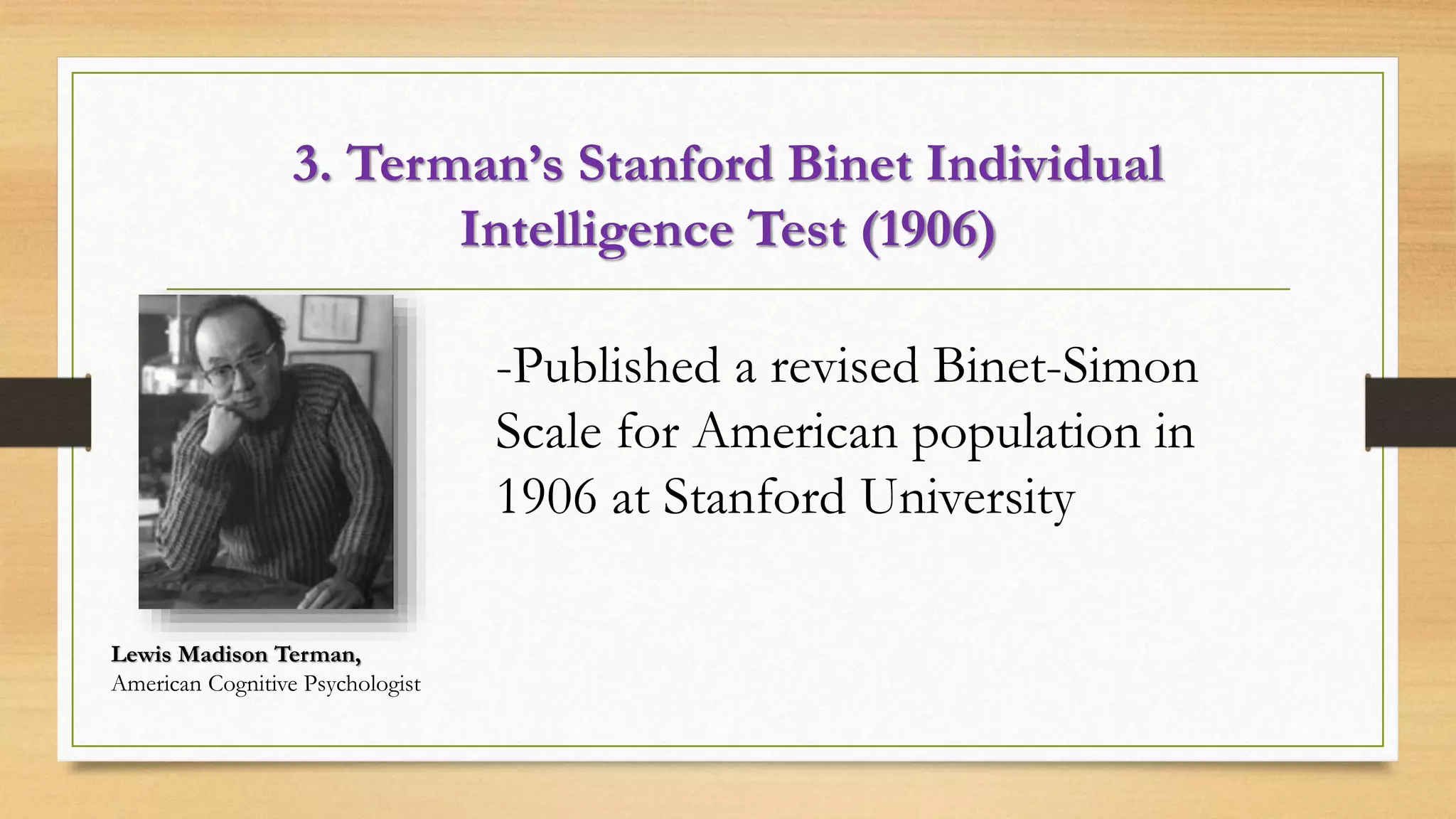
Lewis Madison Terman,
American Cognitive Psychologist
-Published a revised Binet-Simon
Scale for American population in
1906 at Stanford University
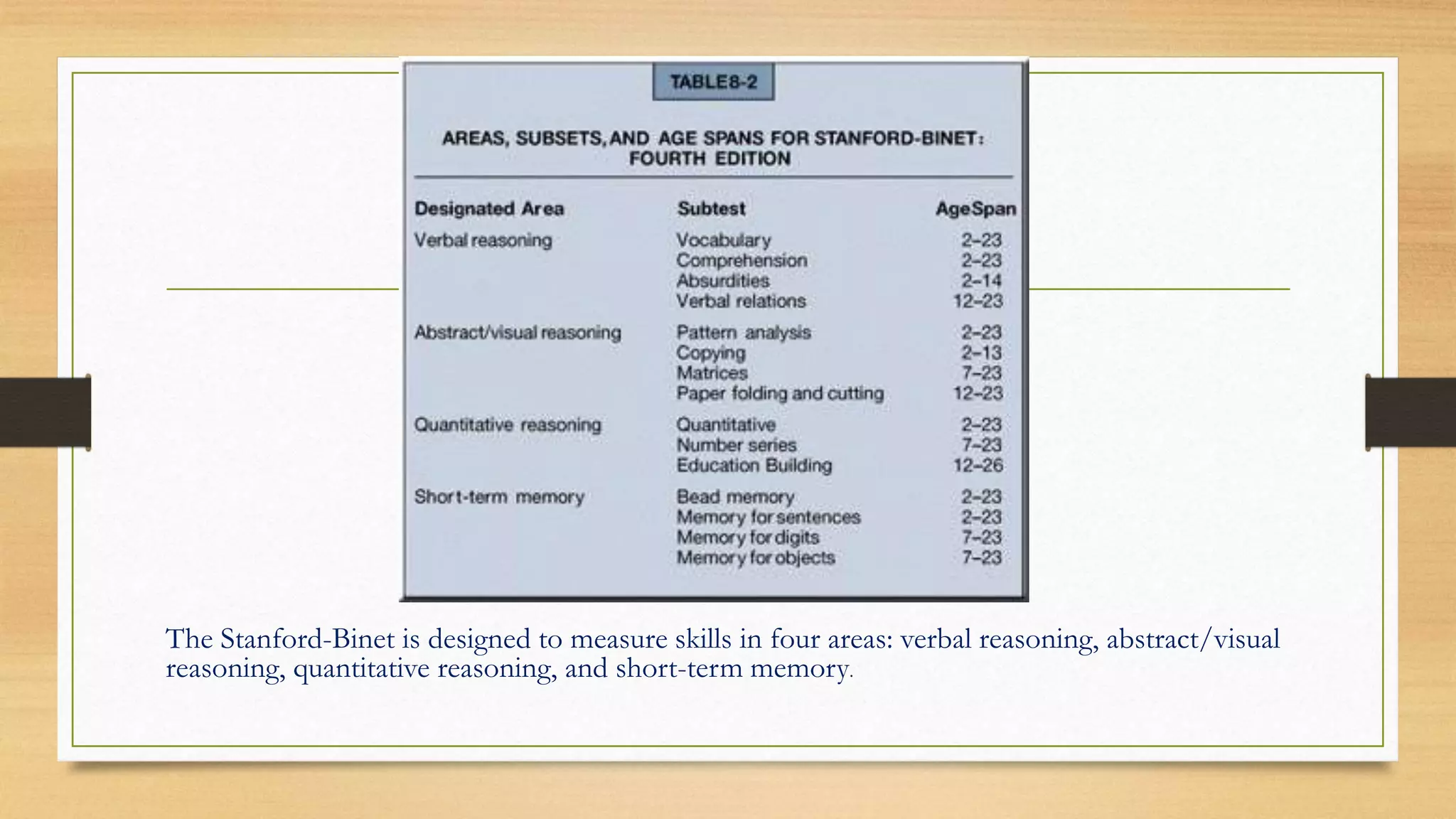
The Stanford-Binet is designed to measure skills in four areas: verbal reasoning, abstract/visual
reasoning, quantitative reasoning, and short-term memory.
4. Thorndike’s Stimulus Response Theory
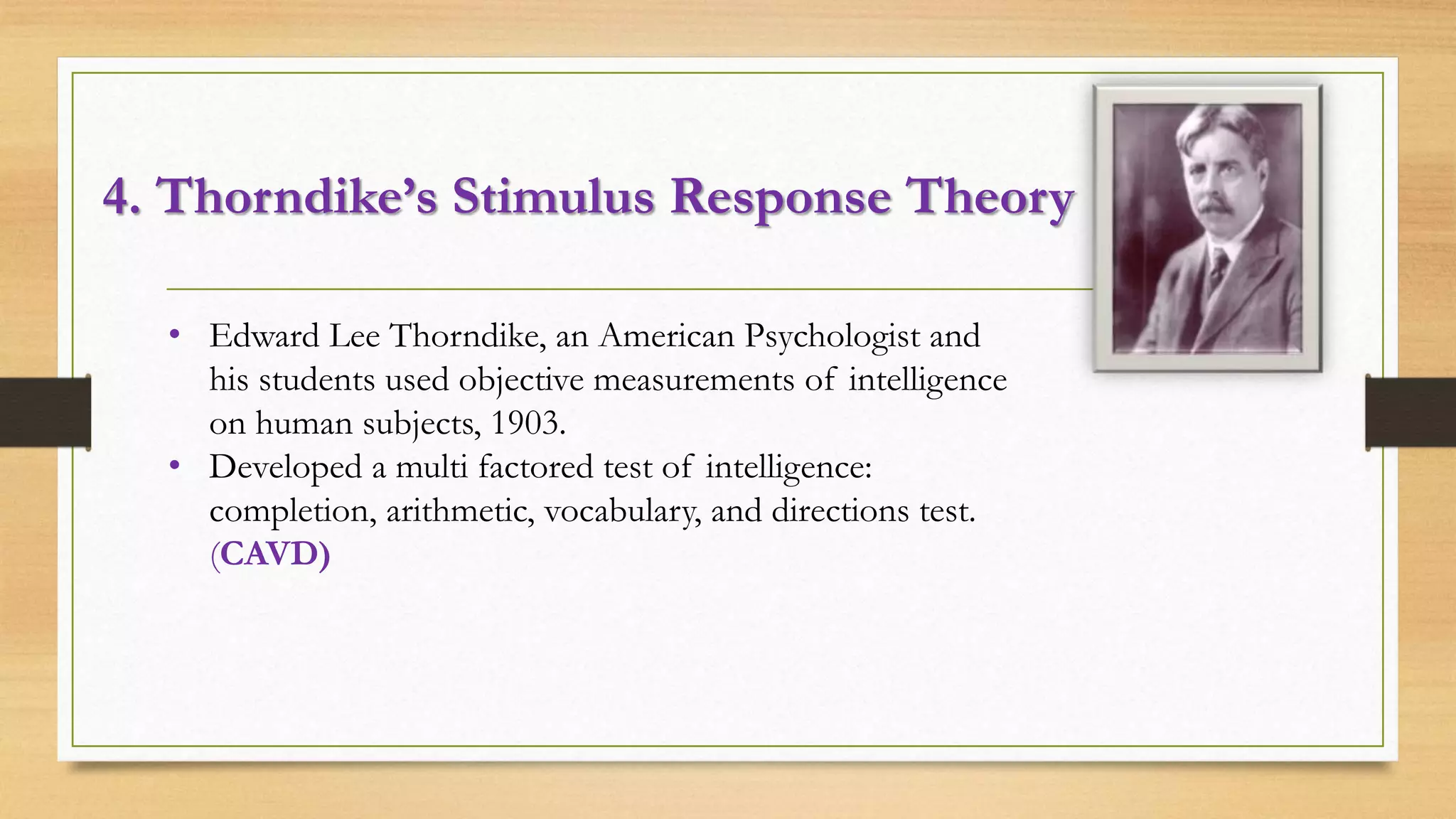
• Edward Lee Thorndike, an American Psychologist and
his students used objective measurements of intelligence
on human subjects, 1903.
• Developed a multi factored test of intelligence:
completion, arithmetic, vocabulary, and directions test.
(CAVD)
• He drew an important distinction among three broad classes of intellectual
functioning: Abstract Intelligence, Mechanical intelligence, and Social Intelligence.
Abstract Intelligence has four dimensions:
 Altitude
 Width
 Area
 Speed
Thorndike's Law of Exercise
• Trial and error and Stimulus Response Association
“ Stimulus-response connections that are repeated are strengthened, and Stimulus -
response connections that are not used are weakened”
Theories and Definitions of Intelligence

Theories and Definitions of Intelligence

  • 1.
    Theories and Definitions ofIntelligence Anne Jeanette M. Quilatan III-10 BS Psychology
  • 2.
    • Alfred Binet,French Psychologist (1857-1911) - Modern approach to understand the concept of intelligence began with his work together with his colleague, Theodore Simon. 1. The Binet-Simon Scale (1890’s)
  • 3.
    Why did theymake it? • A push for compulsory education • To identify students with special education • To measure the intellectual development of young children ages 3-12 • To measure the ability of children to think and reason
  • 4.
    • The termIQ or Intelligence Quotient evolved.
  • 6.
    2. Spearman’s Two-FactorTheory of Intelligence Charles Spearman, a British Psychologist (1834-1945) Advanced the “Two Factor Theory of Intelligence “g” and “s”.
  • 7.
    intelligence comprises botha single, pervasive reasoning ability, a general factor, that is used on a wide variety of tasks and a number of narrow abilities, specific factors, involved in executing particular tasks.
  • 8.
    3. Terman’s StanfordBinet Individual Intelligence Test (1906) Lewis Madison Terman, American Cognitive Psychologist -Published a revised Binet-Simon Scale for American population in 1906 at Stanford University
  • 9.
    The Stanford-Binet isdesigned to measure skills in four areas: verbal reasoning, abstract/visual reasoning, quantitative reasoning, and short-term memory.
  • 10.
    4. Thorndike’s StimulusResponse Theory • Edward Lee Thorndike, an American Psychologist and his students used objective measurements of intelligence on human subjects, 1903. • Developed a multi factored test of intelligence: completion, arithmetic, vocabulary, and directions test. (CAVD)
  • 11.
    • He drewan important distinction among three broad classes of intellectual functioning: Abstract Intelligence, Mechanical intelligence, and Social Intelligence. Abstract Intelligence has four dimensions:  Altitude  Width  Area  Speed Thorndike's Law of Exercise • Trial and error and Stimulus Response Association “ Stimulus-response connections that are repeated are strengthened, and Stimulus - response connections that are not used are weakened”