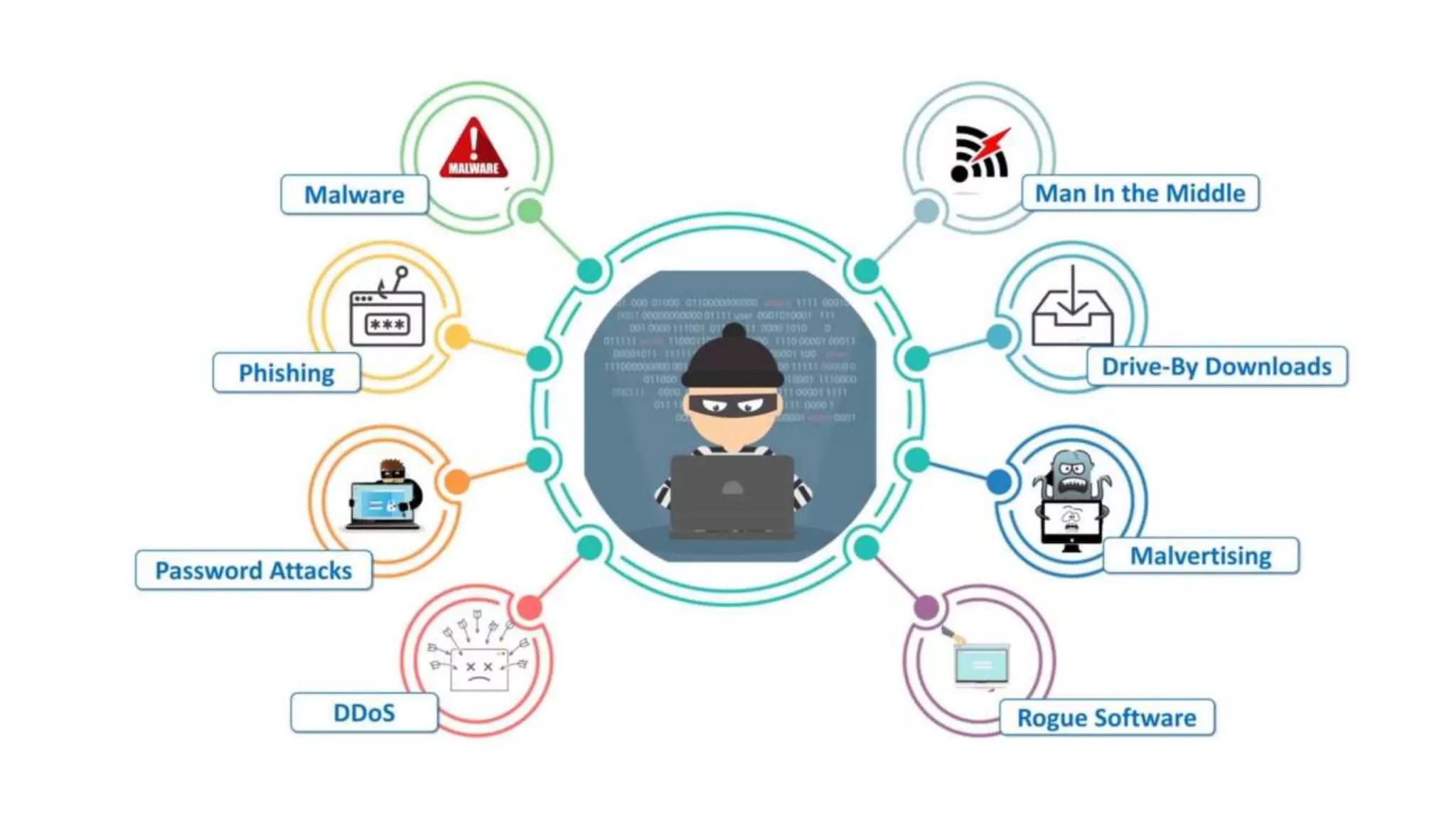
CYBER SECURITY
WHAT IS A CYBER SECURITY
• Cyber security is the application of technologies , processes
and controls to protect systems , networks , programs ,
devices and data from cyber attacks.
• Cyber security aims to reduce the risks of cyber attacks and
protect against the unauthorized exploitation of systems ,
networks and technologies.
• It is also known as information technology or electronic
information security
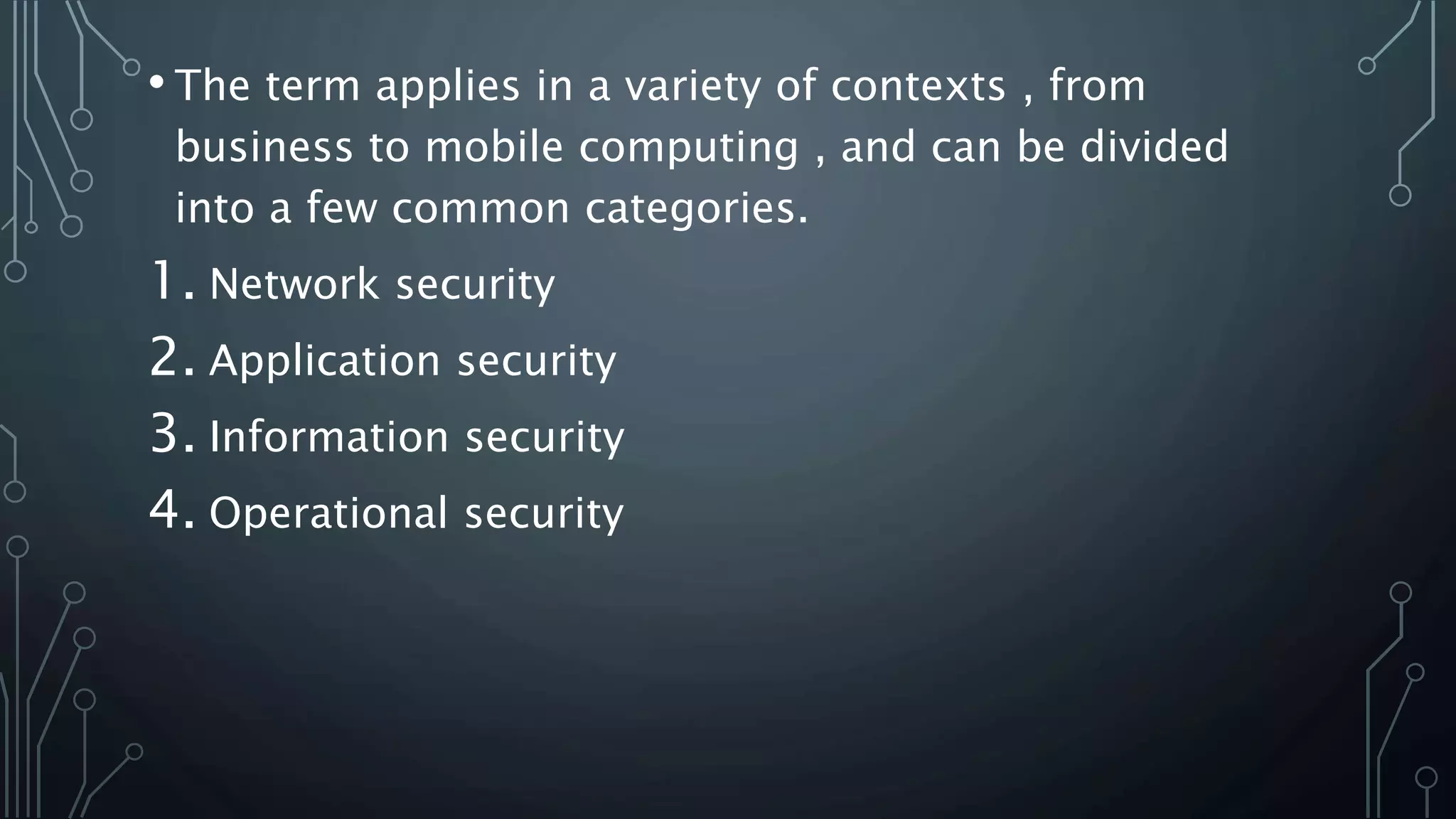
• The term applies in a variety of contexts , from
business to mobile computing , and can be divided
into a few common categories.
1. Network security
2. Application security
3. Information security
4. Operational security
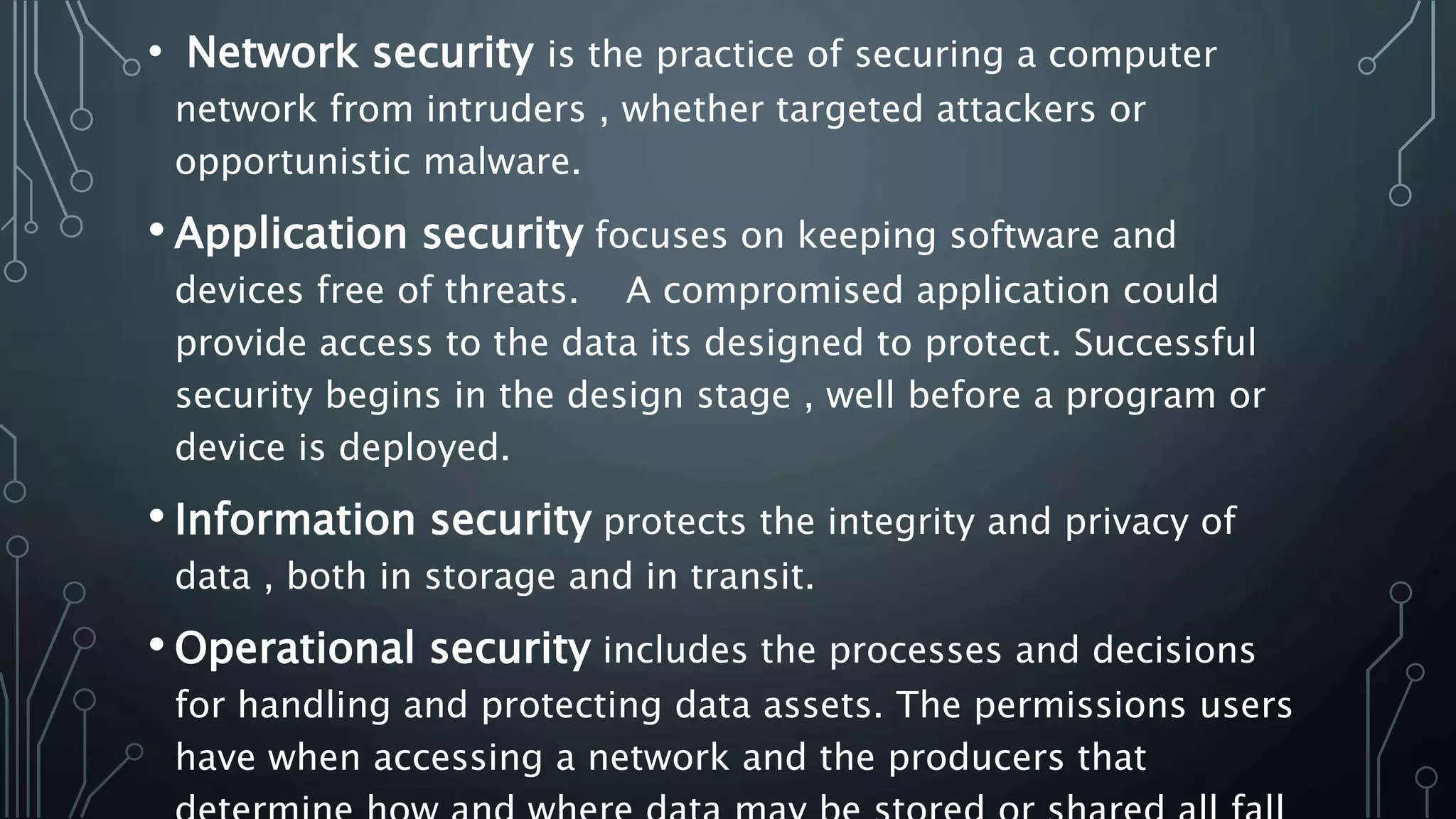
• Network security is the practice of securing a computer
network from intruders , whether targeted attackers or
opportunistic malware.
• Application security focuses on keeping software and
devices free of threats. A compromised application could
provide access to the data its designed to protect. Successful
security begins in the design stage , well before a program or
device is deployed.
• Information security protects the integrity and privacy of
data , both in storage and in transit.
• Operational security includes the processes and decisions
for handling and protecting data assets. The permissions users
have when accessing a network and the producers that
TYPES OF CYBER THREATS
• The threats countered by cyber-security are three-fold:
• 1. Cybercrime includes single actors or groups targeting systems for
financial gain or to cause disruption.
• 2. Cyber-attack often involves politically motivated information
gathering.
• 3. Cyberterrorism is intended to undermine electronic systems to
cause panic or fear.
PHISHING
 Phishing is a type of social engineering where
an attacker sends a fraudulent (e.g., spoofed,
fake, or otherwise deceptive) message
designed to trick a human victim into
revealing sensitive information to the attacker
or to deploy malicious software on the victim's
infrastructure like ransomware.
 It is usually done through email. The goal is to
steal sensitive data like credit card and login
information, or to install malware on the victim's
machine.
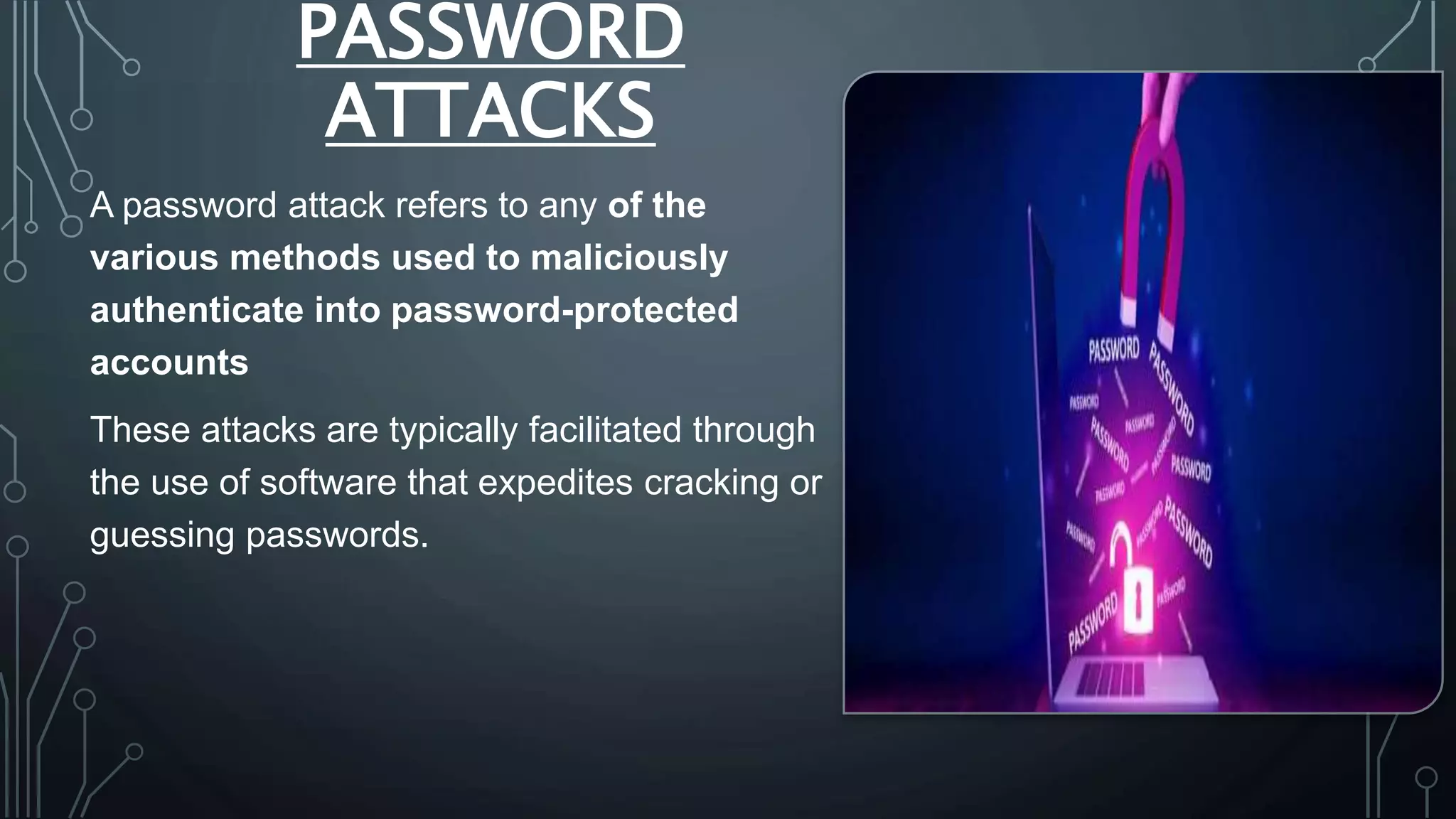
PASSWORD
ATTACKS
A password attack refers to any of the
various methods used to maliciously
authenticate into password-protected
accounts
These attacks are typically facilitated through
the use of software that expedites cracking or
guessing passwords.
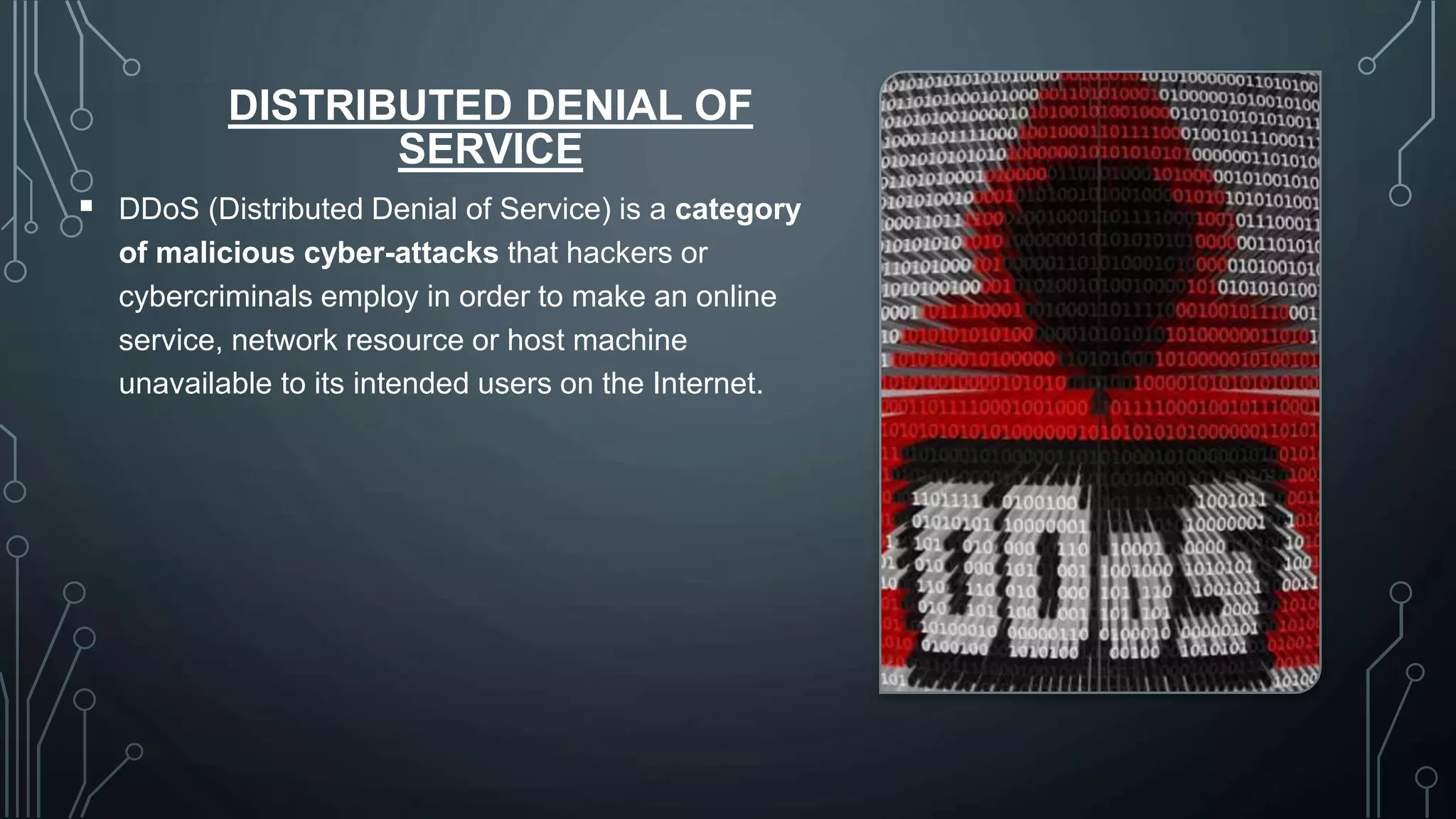
DISTRIBUTED DENIAL OF
SERVICE
 DDoS (Distributed Denial of Service) is a category
of malicious cyber-attacks that hackers or
cybercriminals employ in order to make an online
service, network resource or host machine
unavailable to its intended users on the Internet.
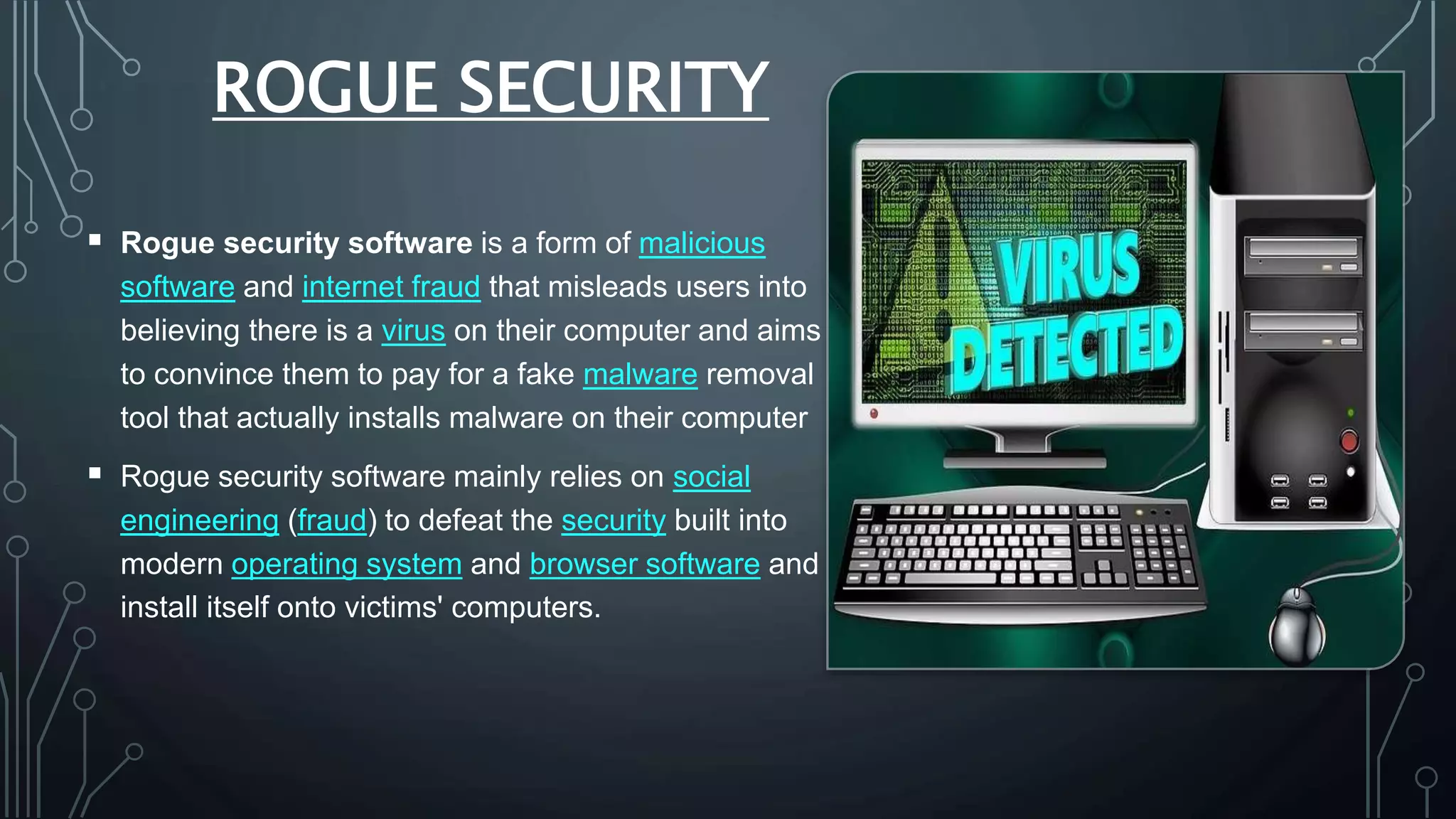
ROGUE SECURITY
 Rogue security software is a form of malicious
software and internet fraud that misleads users into
believing there is a virus on their computer and aims
to convince them to pay for a fake malware removal
tool that actually installs malware on their computer
 Rogue security software mainly relies on social
engineering (fraud) to defeat the security built into
modern operating system and browser software and
install itself onto victims' computers.
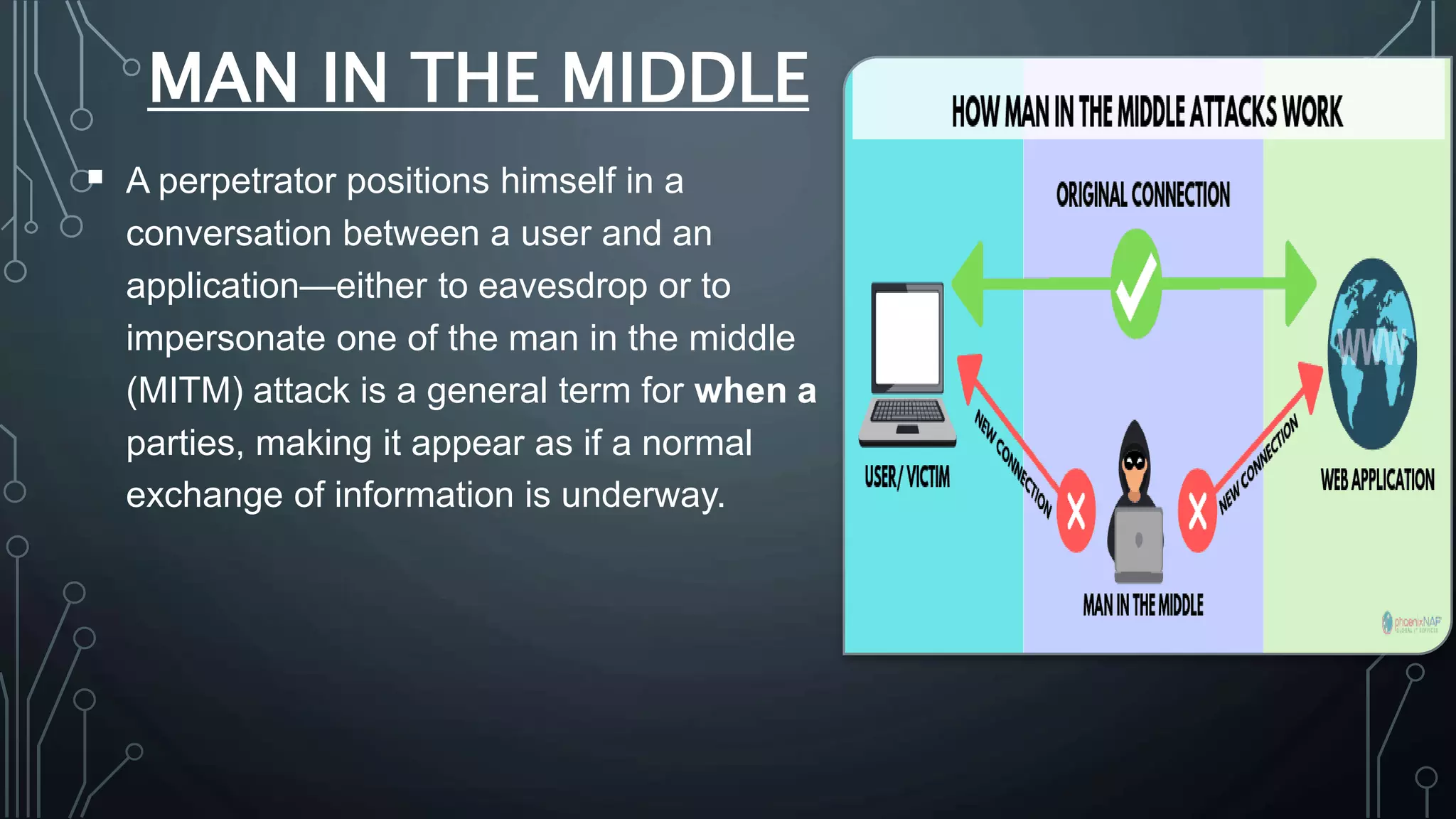
MAN IN THE MIDDLE
 A perpetrator positions himself in a
conversation between a user and an
application—either to eavesdrop or to
impersonate one of the man in the middle
(MITM) attack is a general term for when a
parties, making it appear as if a normal
exchange of information is underway.
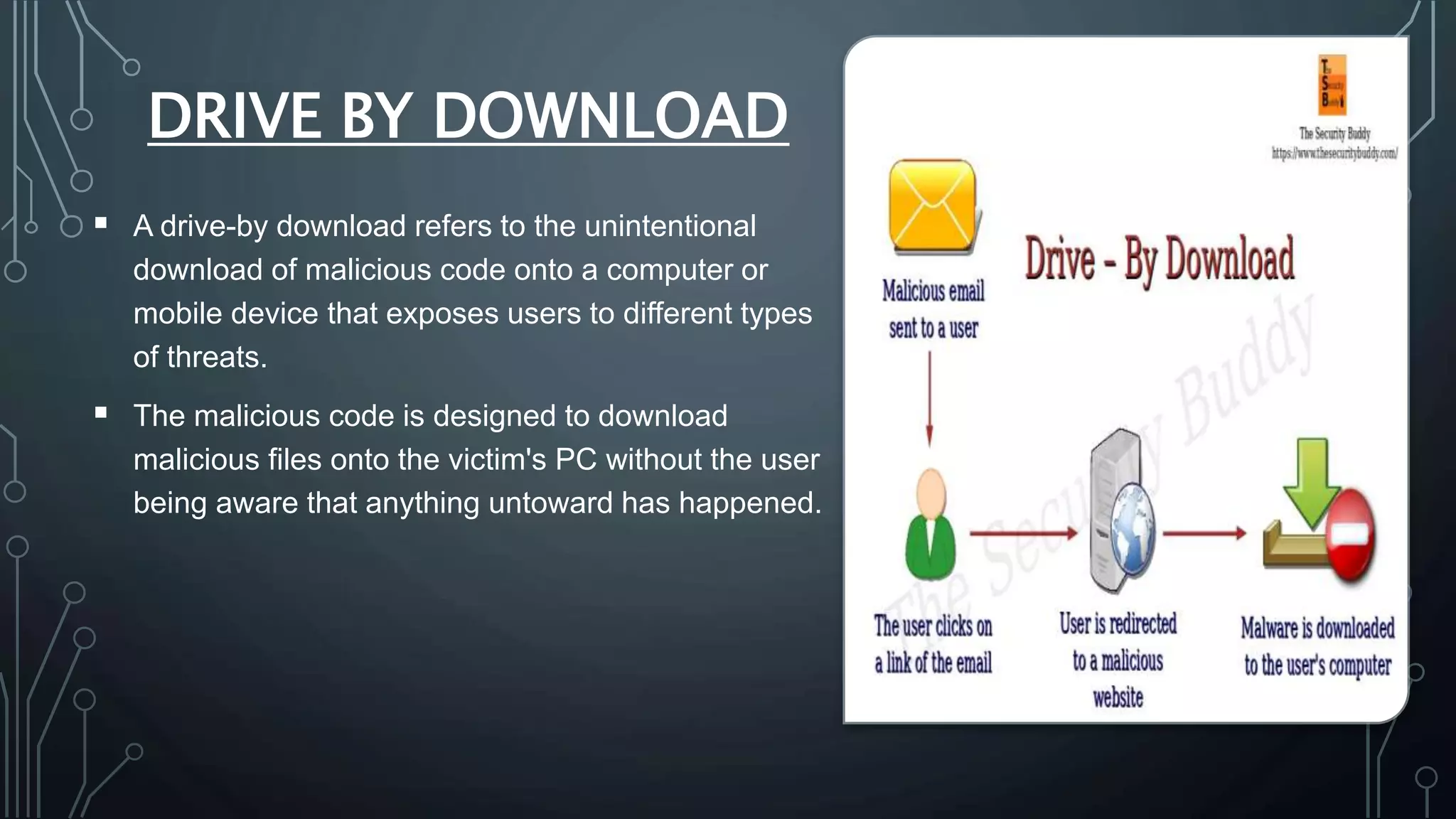
DRIVE BY DOWNLOAD
 A drive-by download refers to the unintentional
download of malicious code onto a computer or
mobile device that exposes users to different types
of threats.
 The malicious code is designed to download
malicious files onto the victim's PC without the user
being aware that anything untoward has happened.
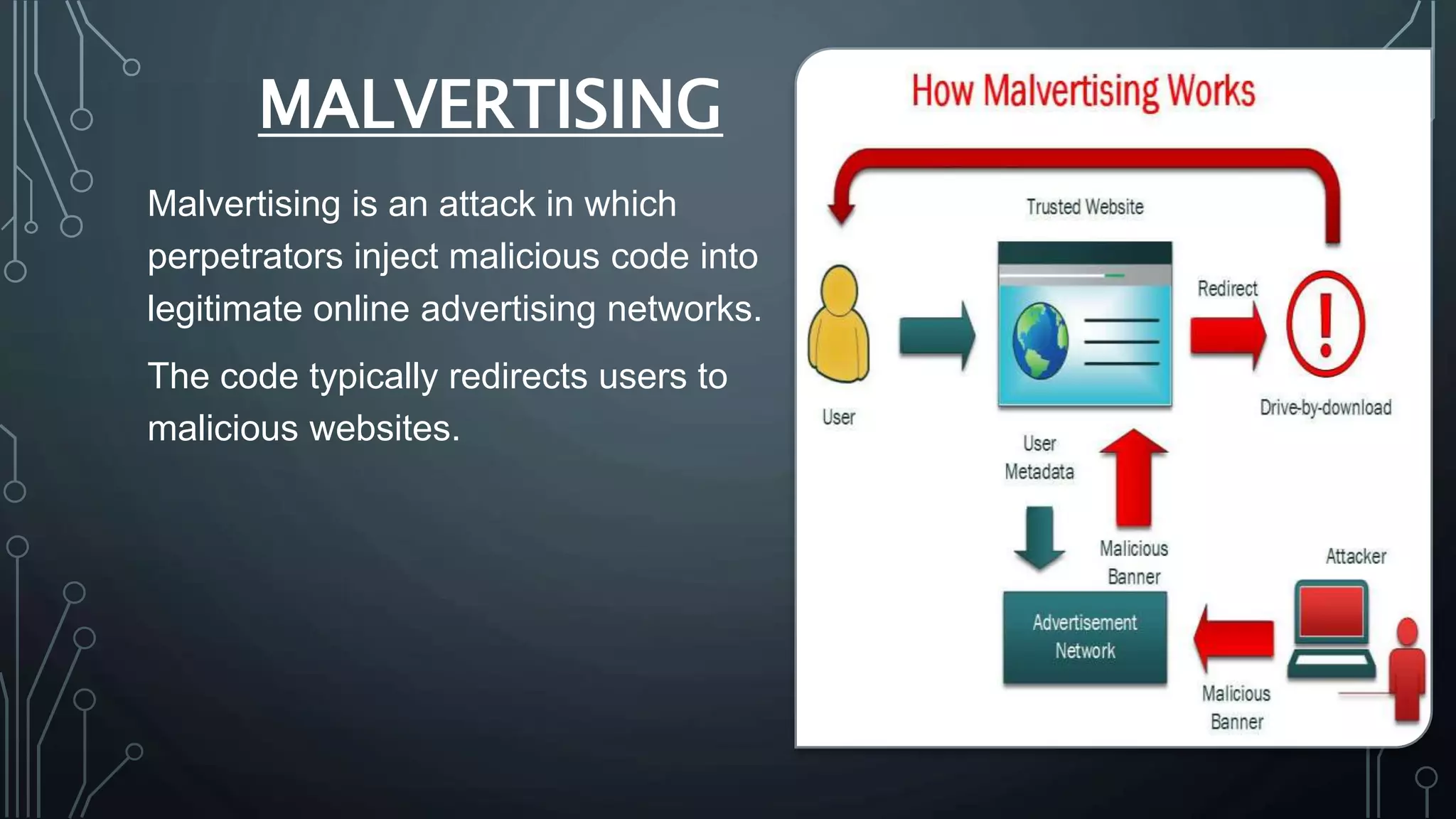
MALVERTISING
Malvertising is an attack in which
perpetrators inject malicious code into
legitimate online advertising networks.
The code typically redirects users to
malicious websites.
MALWARE
• Malware means malicious software. One of the most common cyber
threats, malware is software that a cybercriminal or hacker has
created to disrupt or damage a legitimate user’s computer. Often
spread via an unsolicited email attachment or legitimate-looking
download, malware may be used by cybercriminals to make money or
in politically motivated cyber-attacks.
• There are a number of different types of malware, including:
• Virus: A self-replicating program that attaches itself to clean file and
spreads throughout a computer system, infecting files with malicious
code.
• Trojans: A type of malware that is disguised as legitimate software.
Cybercriminals trick users into uploading Trojans onto their computer
• Spyware: A program that secretly records what a user does, so that
cybercriminals can make use of this information. For example,
spyware could capture credit card details.
• Ransomware: Malware which locks down a user’s files and data, with
the threat of erasing it unless a ransom is paid.
• Adware: Advertising software which can be used to spread malware.
• Botnets: Networks of malware infected computers which
cybercriminals use to perform tasks online without the user’s
permission.
BENEFITS FOR CYBER SECURITY
• Valuable information protection.
• Evade loss of crucial data.
• Risk mitigation.
• Privacy of customer and employee is ensured.
• Recovery time is improved.
• It will help us to browse the various websites securely.
• It will defend us from hacks and virus.
DISADVANTAGES OF CYBER SECURITY
• Firewalls can be difficult to configure correctly.
• Incorrectly configured firewalls may block users from
performing certain actions on the internet , until the firewall
configured correctly.
• Makes the system slower than before.
• Need to keep updating the new software in order to keep
security up to date.
• Lack of knowledge and not easy to use.
• To use this special expertise required.
cyber security

cyber security

  • 1.
  • 3.
    WHAT IS ACYBER SECURITY • Cyber security is the application of technologies , processes and controls to protect systems , networks , programs , devices and data from cyber attacks. • Cyber security aims to reduce the risks of cyber attacks and protect against the unauthorized exploitation of systems , networks and technologies. • It is also known as information technology or electronic information security
  • 4.
    • The termapplies in a variety of contexts , from business to mobile computing , and can be divided into a few common categories. 1. Network security 2. Application security 3. Information security 4. Operational security
  • 5.
    • Network securityis the practice of securing a computer network from intruders , whether targeted attackers or opportunistic malware. • Application security focuses on keeping software and devices free of threats. A compromised application could provide access to the data its designed to protect. Successful security begins in the design stage , well before a program or device is deployed. • Information security protects the integrity and privacy of data , both in storage and in transit. • Operational security includes the processes and decisions for handling and protecting data assets. The permissions users have when accessing a network and the producers that
  • 6.
    TYPES OF CYBERTHREATS • The threats countered by cyber-security are three-fold: • 1. Cybercrime includes single actors or groups targeting systems for financial gain or to cause disruption. • 2. Cyber-attack often involves politically motivated information gathering. • 3. Cyberterrorism is intended to undermine electronic systems to cause panic or fear.
  • 8.
    PHISHING  Phishing isa type of social engineering where an attacker sends a fraudulent (e.g., spoofed, fake, or otherwise deceptive) message designed to trick a human victim into revealing sensitive information to the attacker or to deploy malicious software on the victim's infrastructure like ransomware.  It is usually done through email. The goal is to steal sensitive data like credit card and login information, or to install malware on the victim's machine.
  • 9.
    PASSWORD ATTACKS A password attackrefers to any of the various methods used to maliciously authenticate into password-protected accounts These attacks are typically facilitated through the use of software that expedites cracking or guessing passwords.
  • 10.
    DISTRIBUTED DENIAL OF SERVICE DDoS (Distributed Denial of Service) is a category of malicious cyber-attacks that hackers or cybercriminals employ in order to make an online service, network resource or host machine unavailable to its intended users on the Internet.
  • 11.
    ROGUE SECURITY  Roguesecurity software is a form of malicious software and internet fraud that misleads users into believing there is a virus on their computer and aims to convince them to pay for a fake malware removal tool that actually installs malware on their computer  Rogue security software mainly relies on social engineering (fraud) to defeat the security built into modern operating system and browser software and install itself onto victims' computers.
  • 12.
    MAN IN THEMIDDLE  A perpetrator positions himself in a conversation between a user and an application—either to eavesdrop or to impersonate one of the man in the middle (MITM) attack is a general term for when a parties, making it appear as if a normal exchange of information is underway.
  • 13.
    DRIVE BY DOWNLOAD A drive-by download refers to the unintentional download of malicious code onto a computer or mobile device that exposes users to different types of threats.  The malicious code is designed to download malicious files onto the victim's PC without the user being aware that anything untoward has happened.
  • 14.
    MALVERTISING Malvertising is anattack in which perpetrators inject malicious code into legitimate online advertising networks. The code typically redirects users to malicious websites.
  • 15.
    MALWARE • Malware meansmalicious software. One of the most common cyber threats, malware is software that a cybercriminal or hacker has created to disrupt or damage a legitimate user’s computer. Often spread via an unsolicited email attachment or legitimate-looking download, malware may be used by cybercriminals to make money or in politically motivated cyber-attacks. • There are a number of different types of malware, including: • Virus: A self-replicating program that attaches itself to clean file and spreads throughout a computer system, infecting files with malicious code. • Trojans: A type of malware that is disguised as legitimate software. Cybercriminals trick users into uploading Trojans onto their computer
  • 16.
    • Spyware: Aprogram that secretly records what a user does, so that cybercriminals can make use of this information. For example, spyware could capture credit card details. • Ransomware: Malware which locks down a user’s files and data, with the threat of erasing it unless a ransom is paid. • Adware: Advertising software which can be used to spread malware. • Botnets: Networks of malware infected computers which cybercriminals use to perform tasks online without the user’s permission.
  • 17.
    BENEFITS FOR CYBERSECURITY • Valuable information protection. • Evade loss of crucial data. • Risk mitigation. • Privacy of customer and employee is ensured. • Recovery time is improved. • It will help us to browse the various websites securely. • It will defend us from hacks and virus.
  • 18.
    DISADVANTAGES OF CYBERSECURITY • Firewalls can be difficult to configure correctly. • Incorrectly configured firewalls may block users from performing certain actions on the internet , until the firewall configured correctly. • Makes the system slower than before. • Need to keep updating the new software in order to keep security up to date. • Lack of knowledge and not easy to use. • To use this special expertise required.