Cyber Fraud
Challenges & Solutions
                      K. K. Mookhey
                Principal Consultant
  Network Intelligence India Pvt. Ltd.
Agenda
 Ground Reality – Digesting the Hard Facts
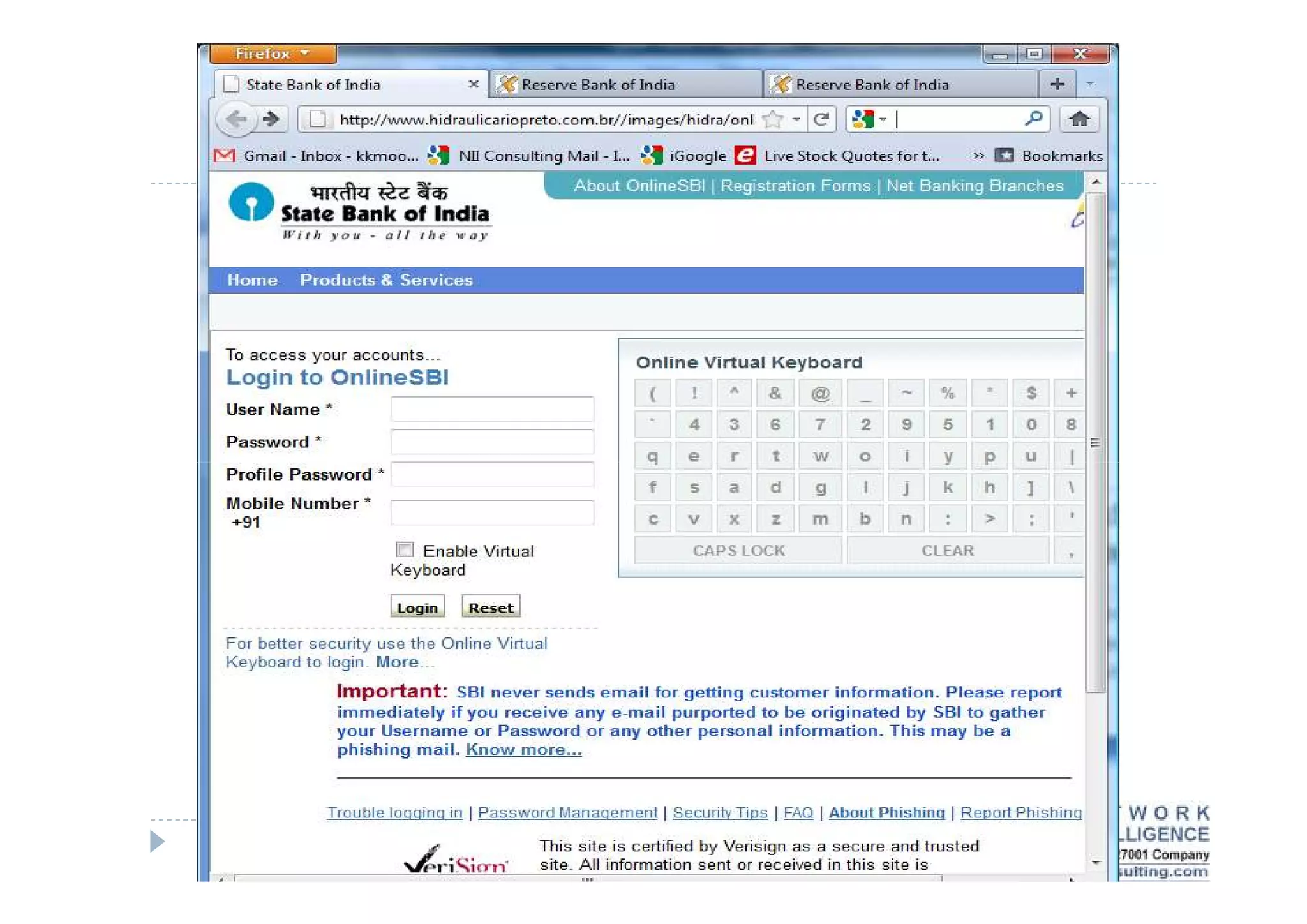
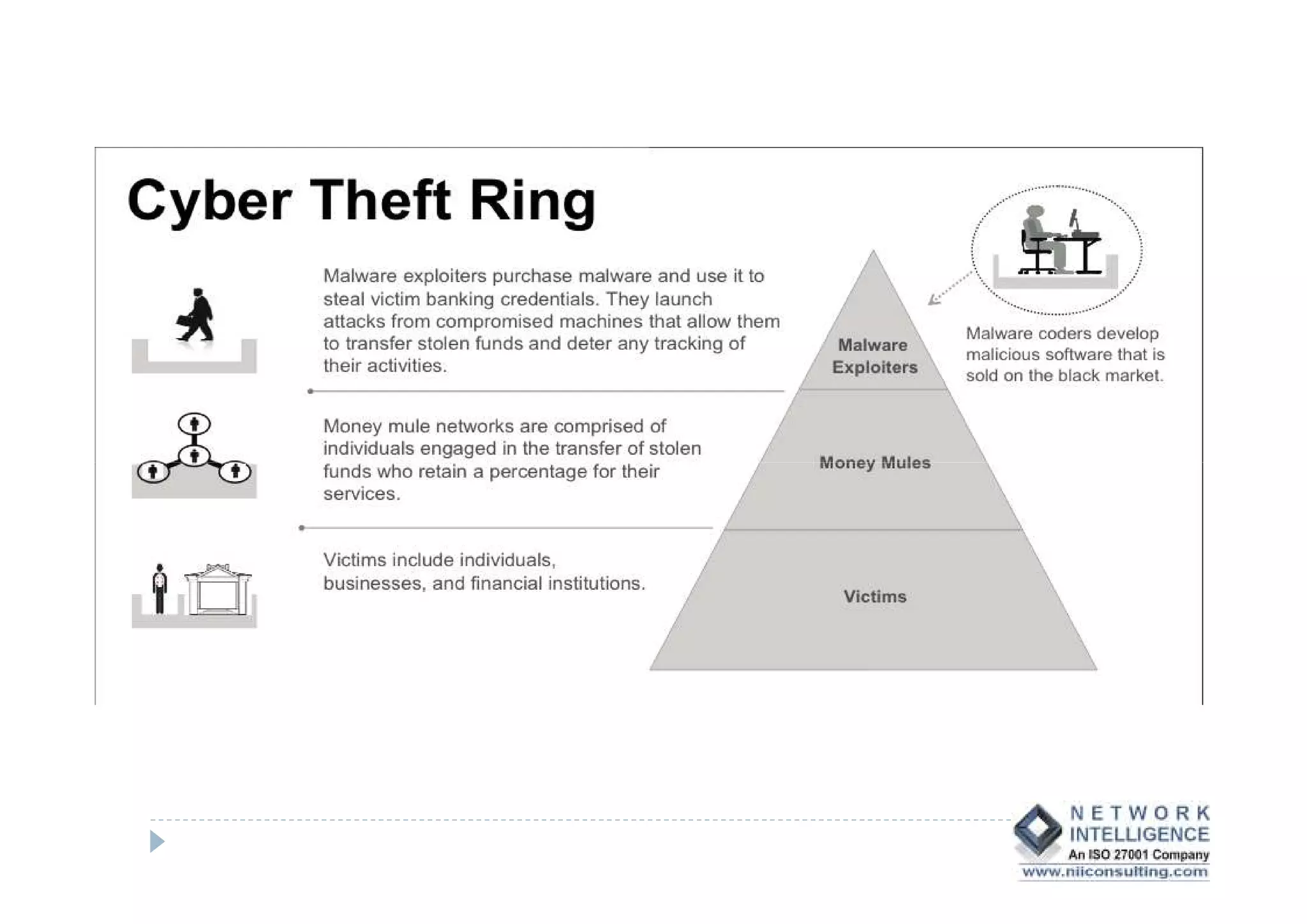
   Online Banking Fraud
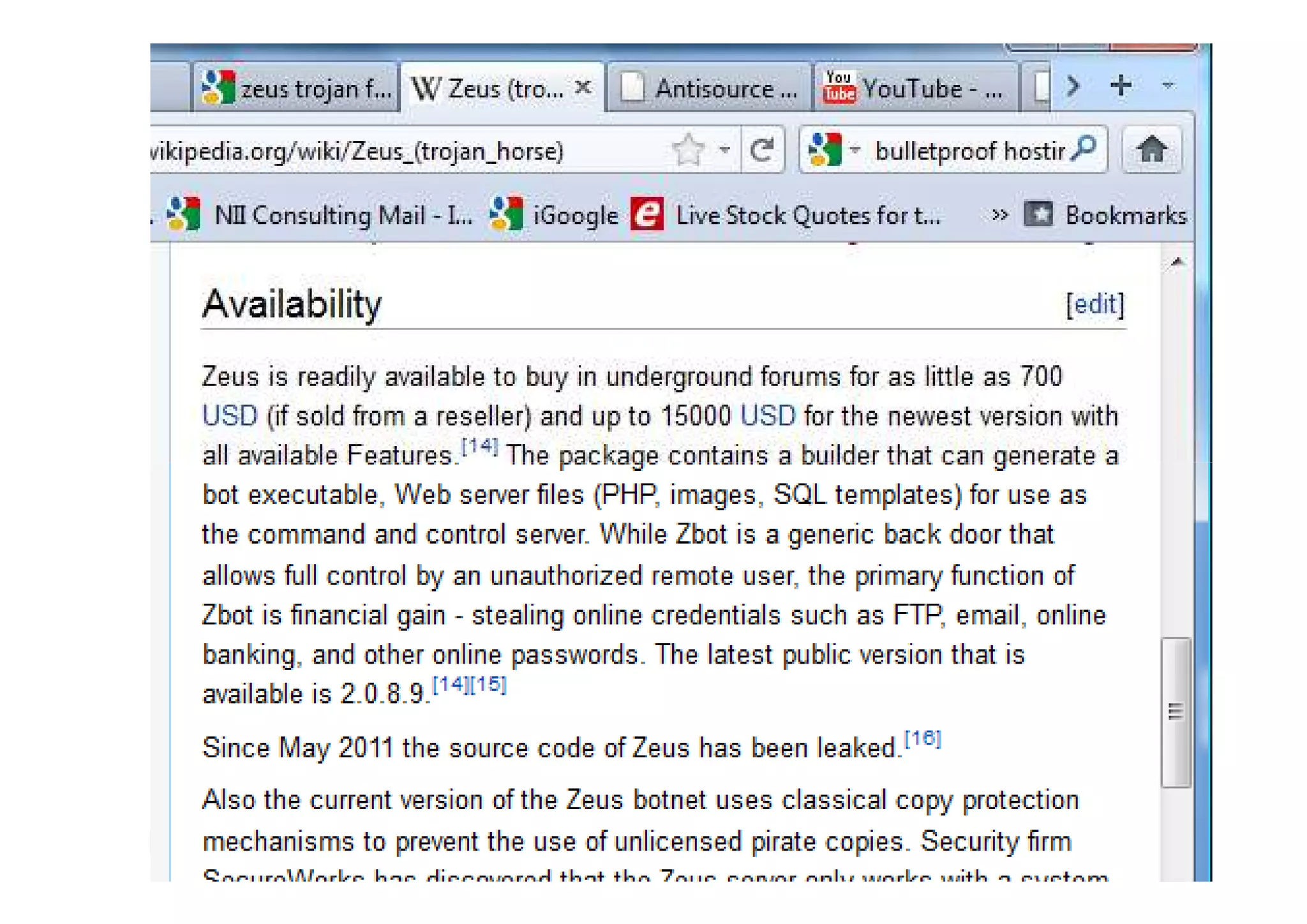
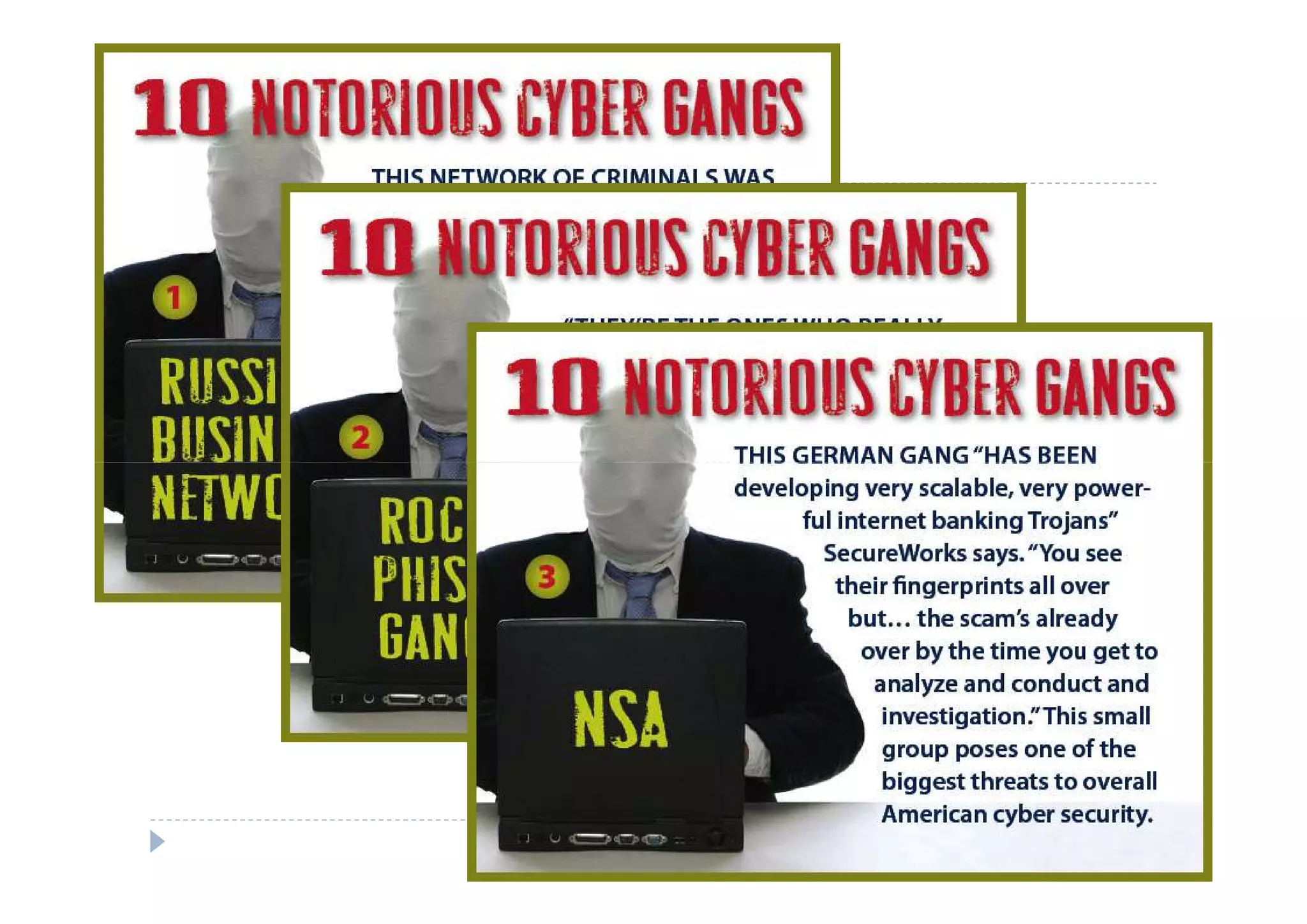
   The Data Theft Epidemic
   Skimming & ATM Fraud
   Spear Phishing & APT

 Identifying Technology Red Flags

 Technology Fraud Risk Management

 Resources
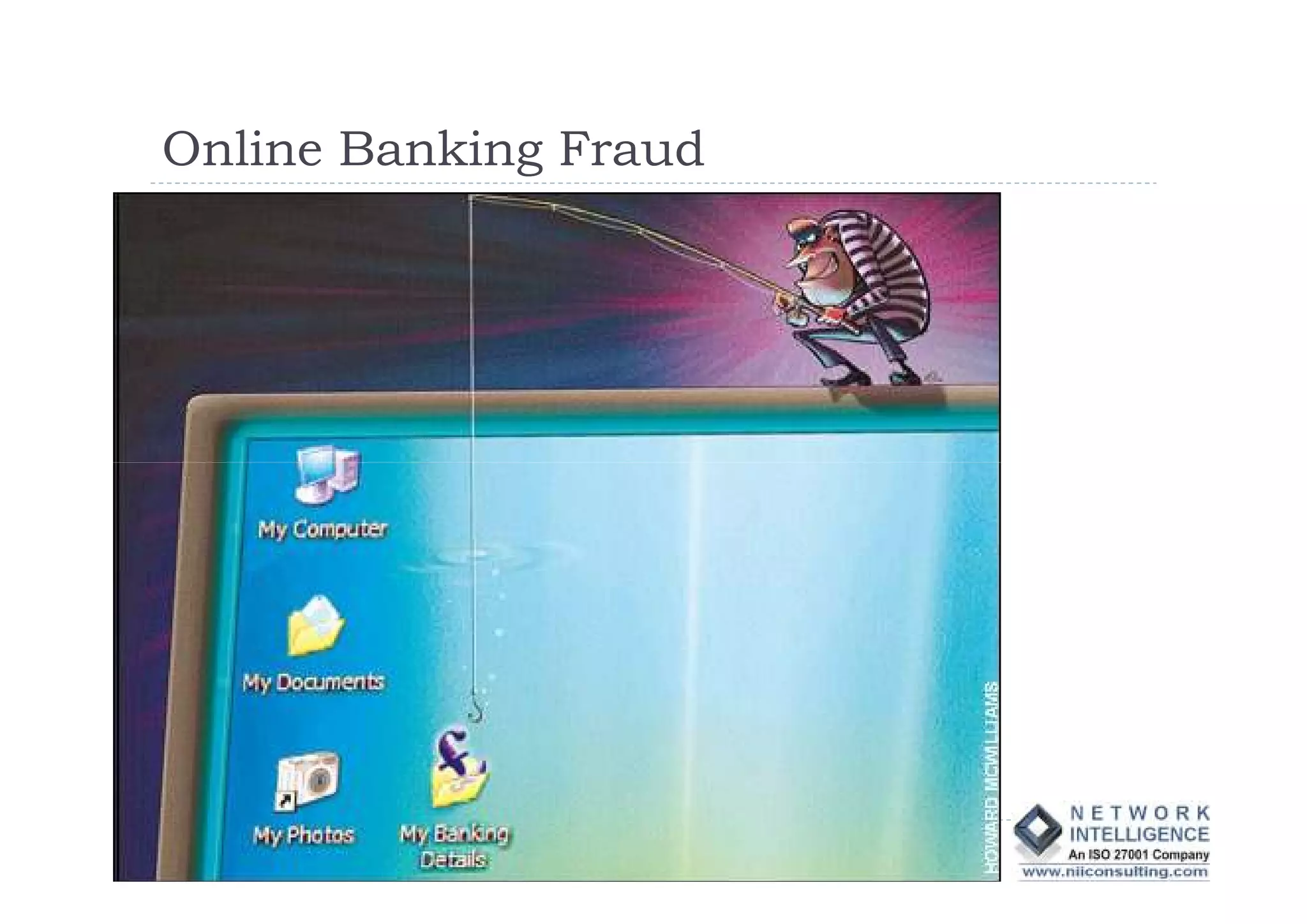
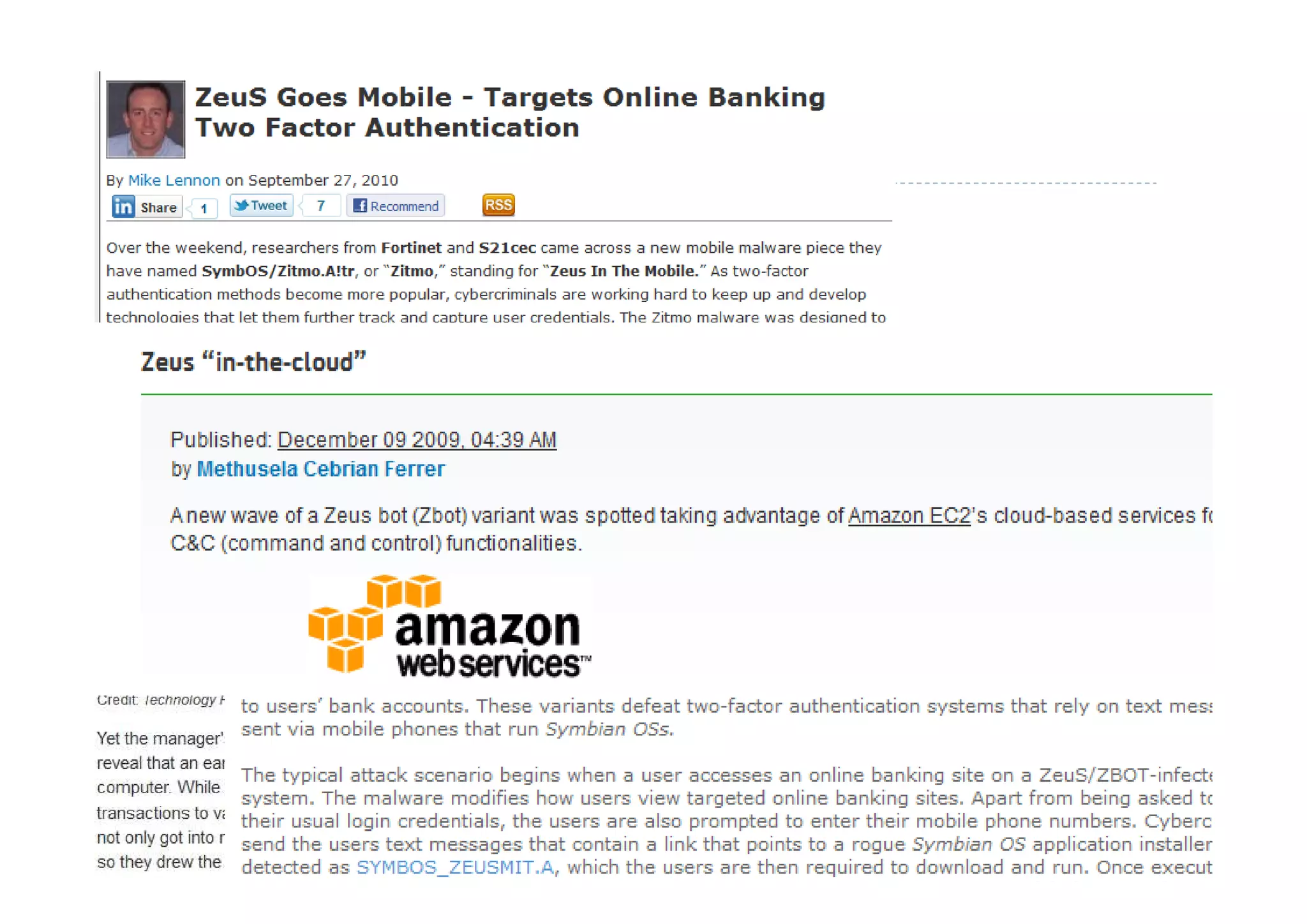
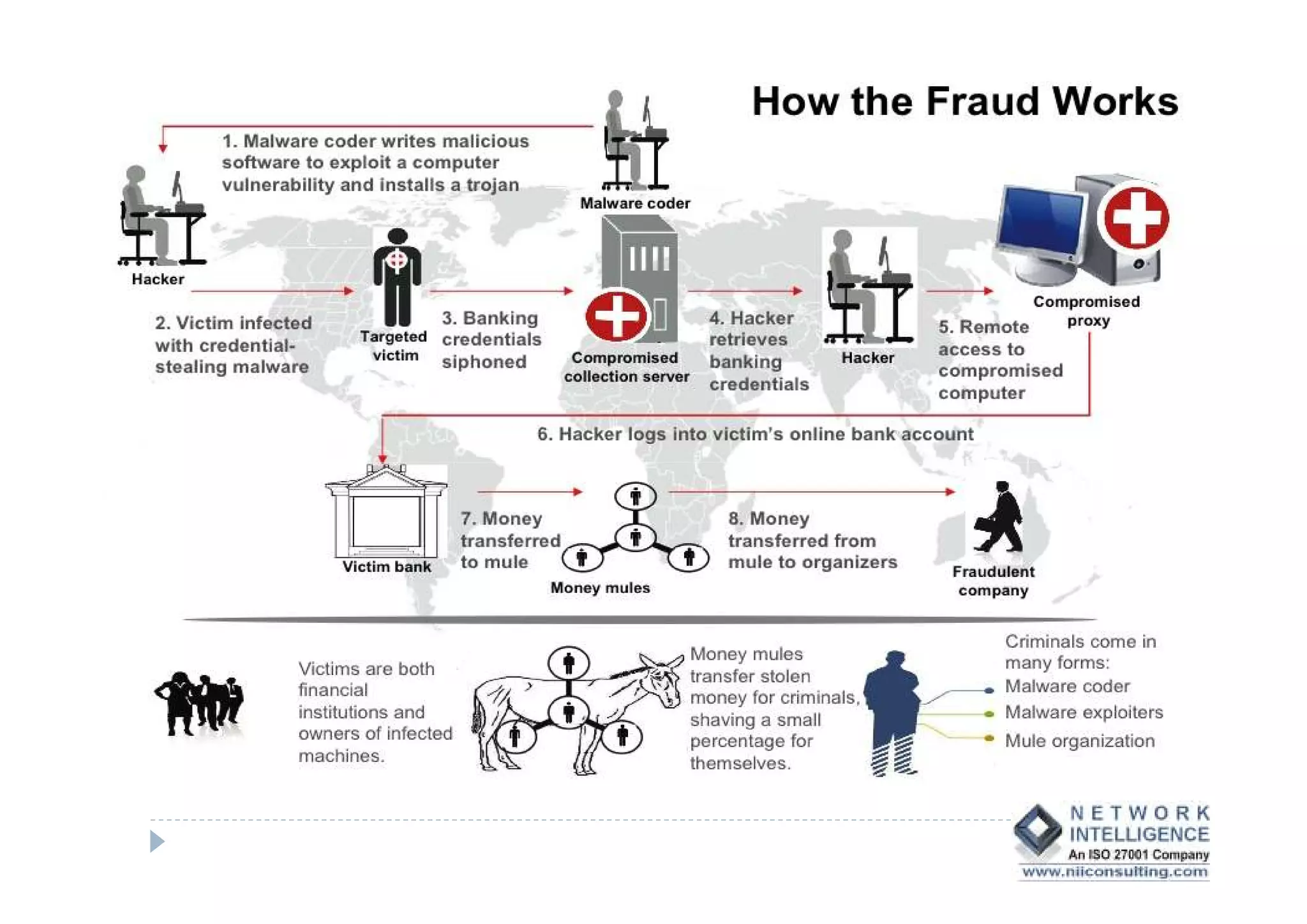
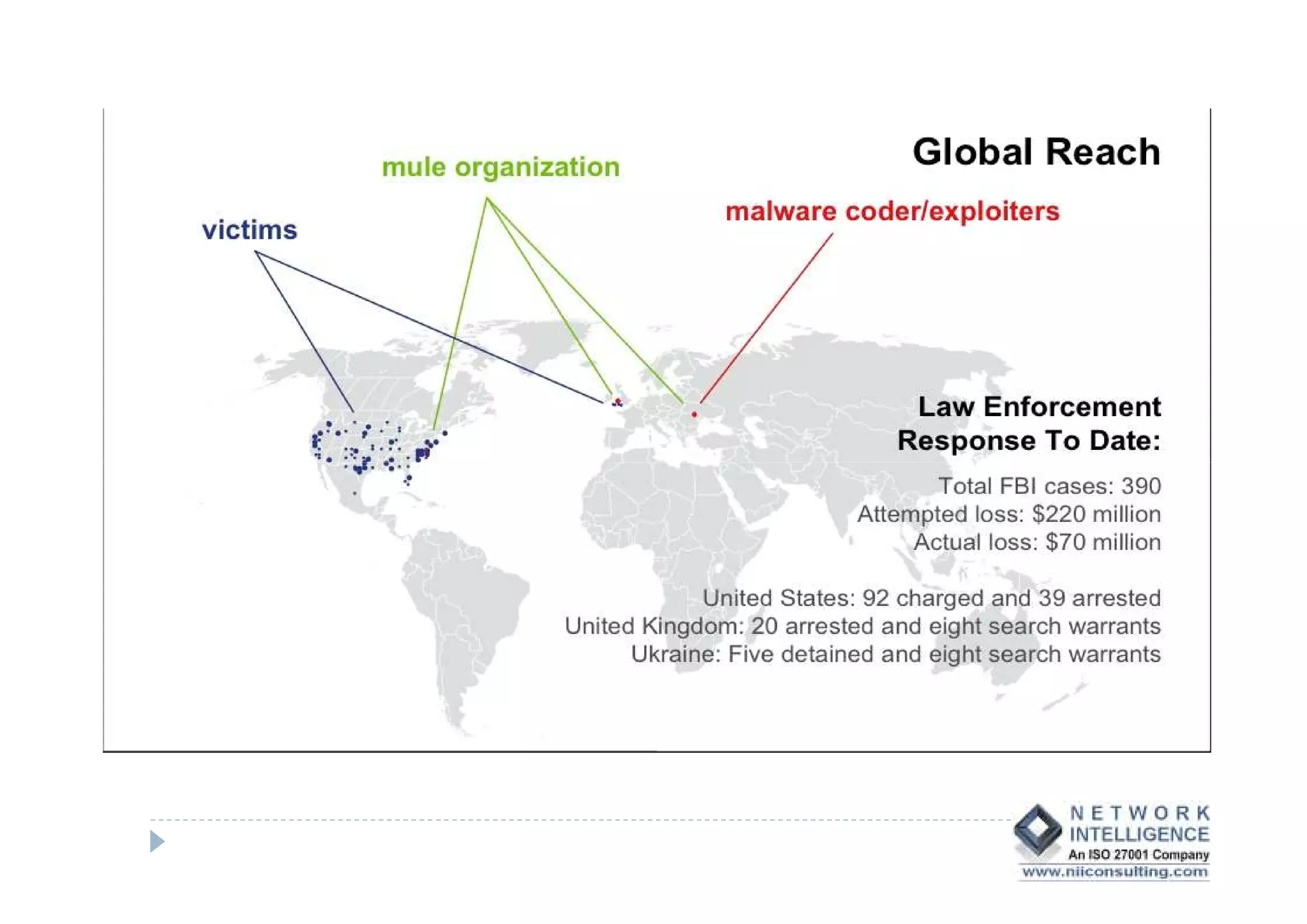
Online Banking Fraud
Primary fix?


 2-factor
Or
 OTP

 User Awareness
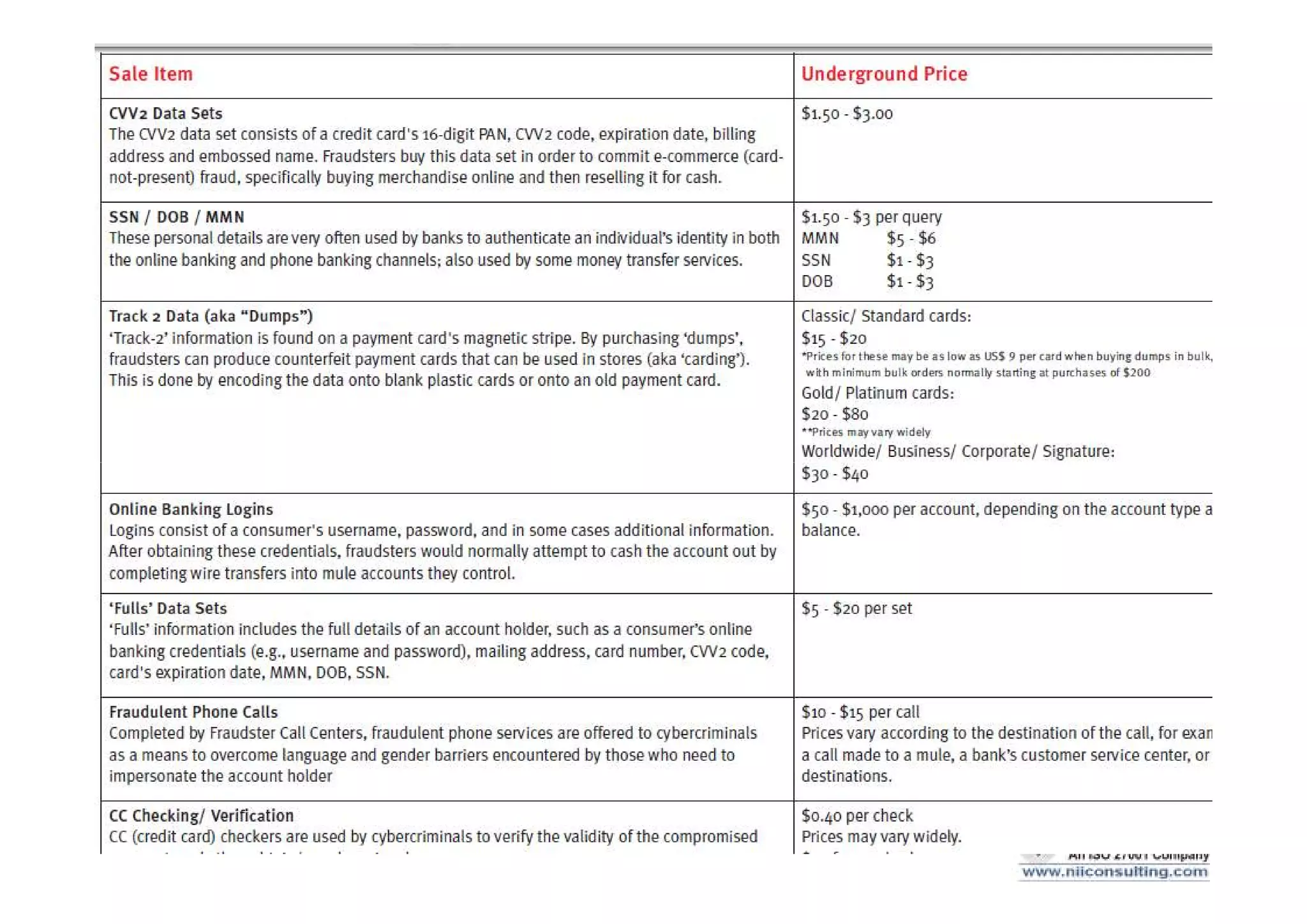
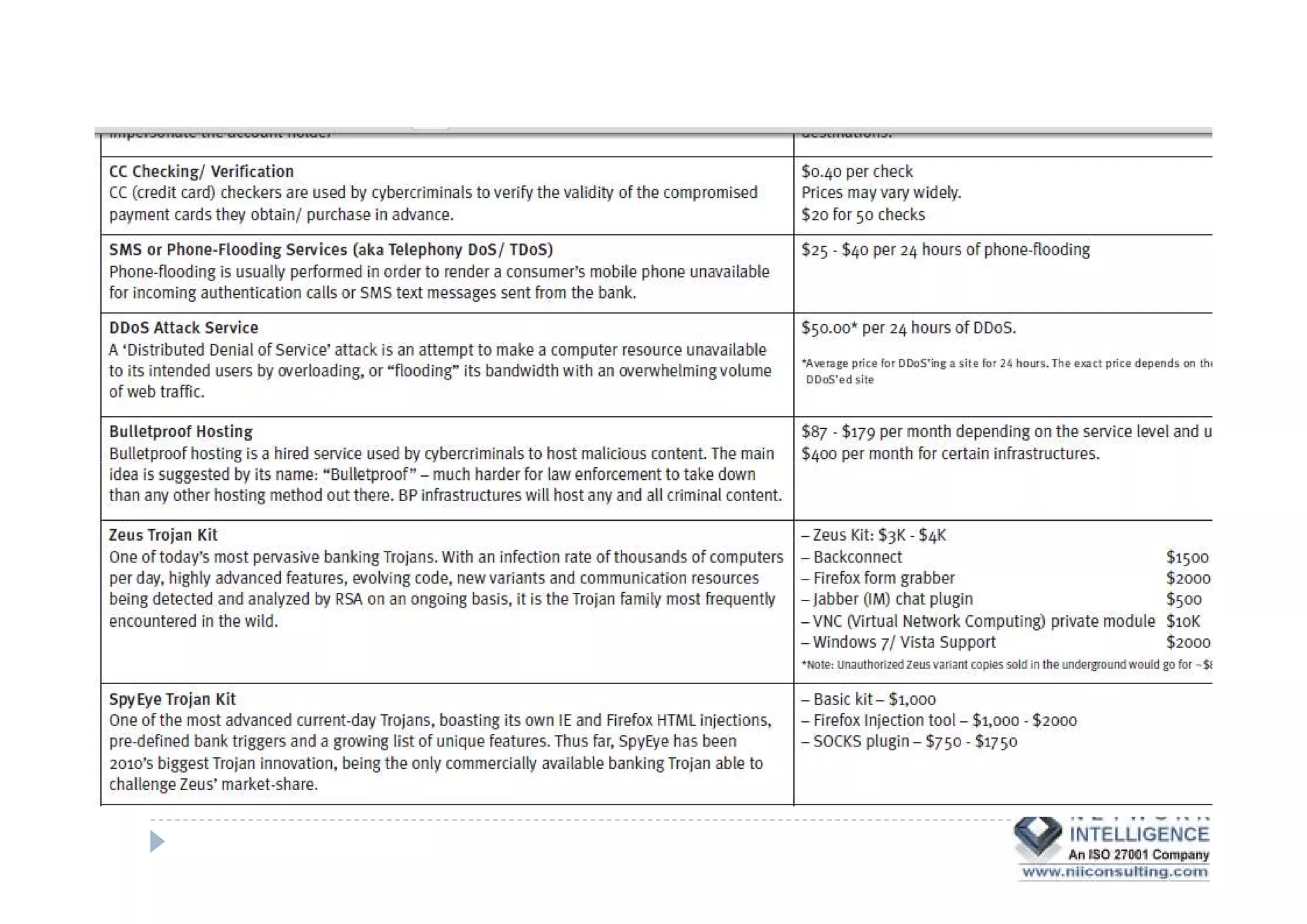
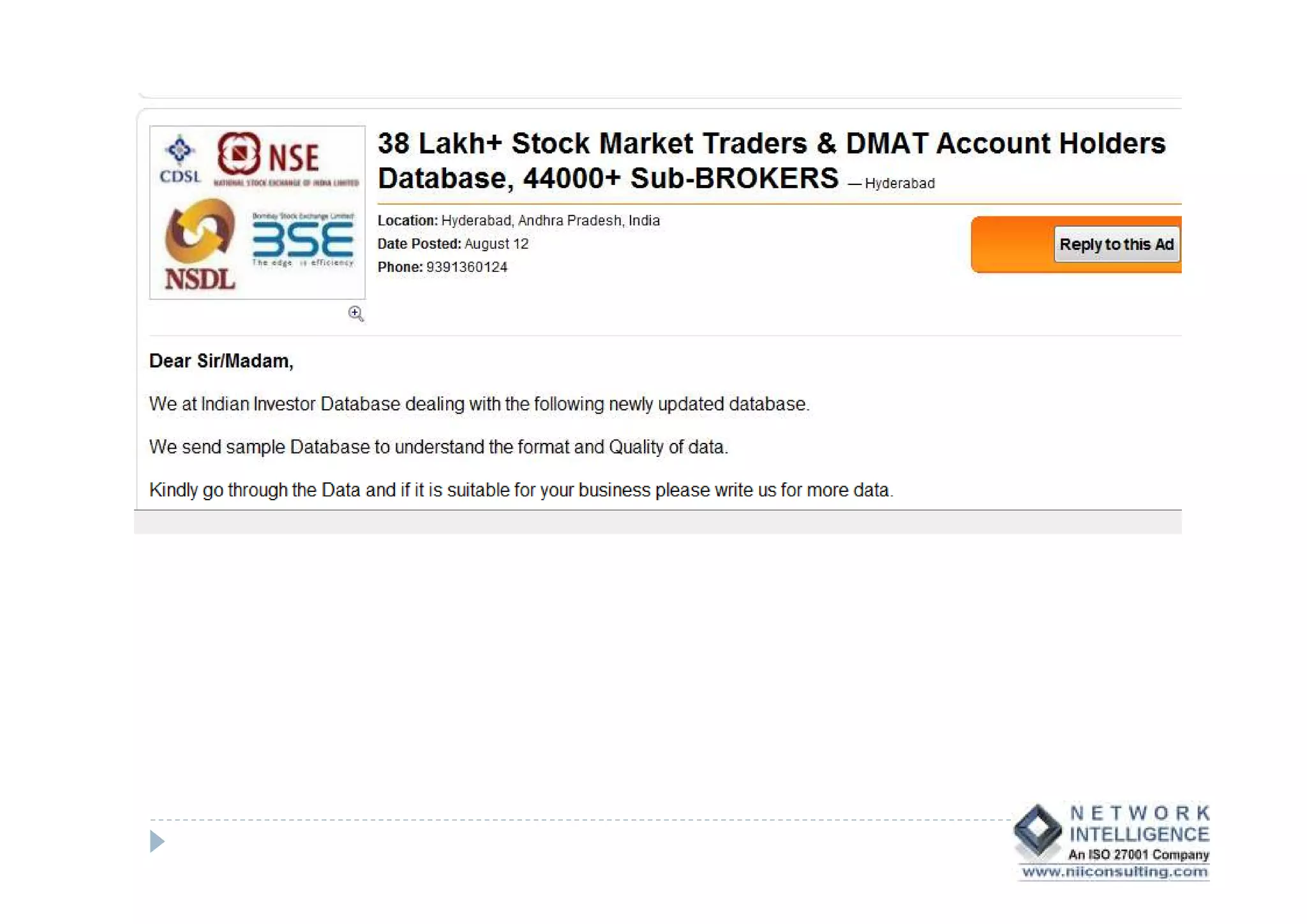
The Data Theft Epidemic
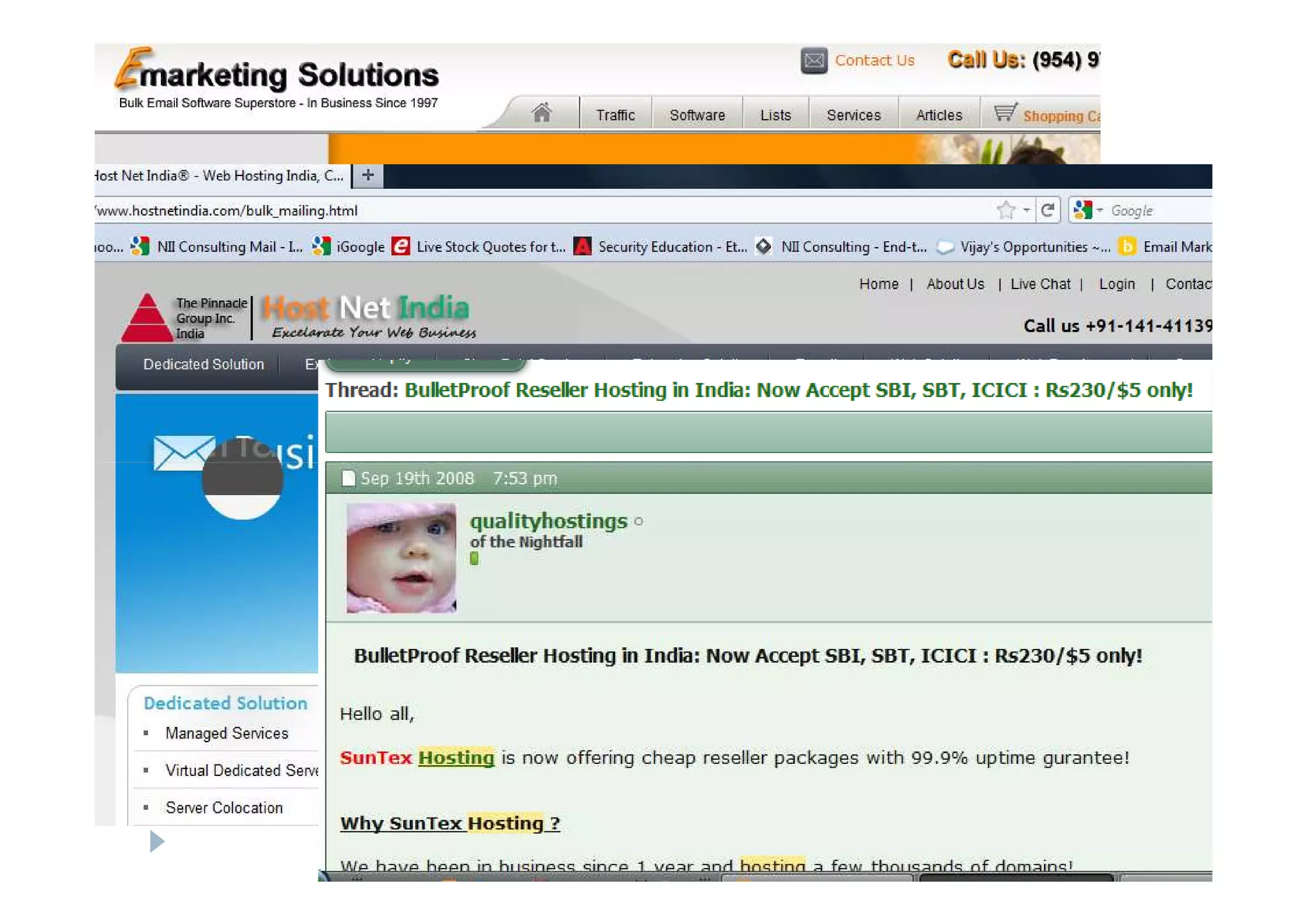
What price India?


   Online examples…
Fresh record price = Rs. 75
Converted customer price = Rs. 150
Skimming – Basic & Advanced
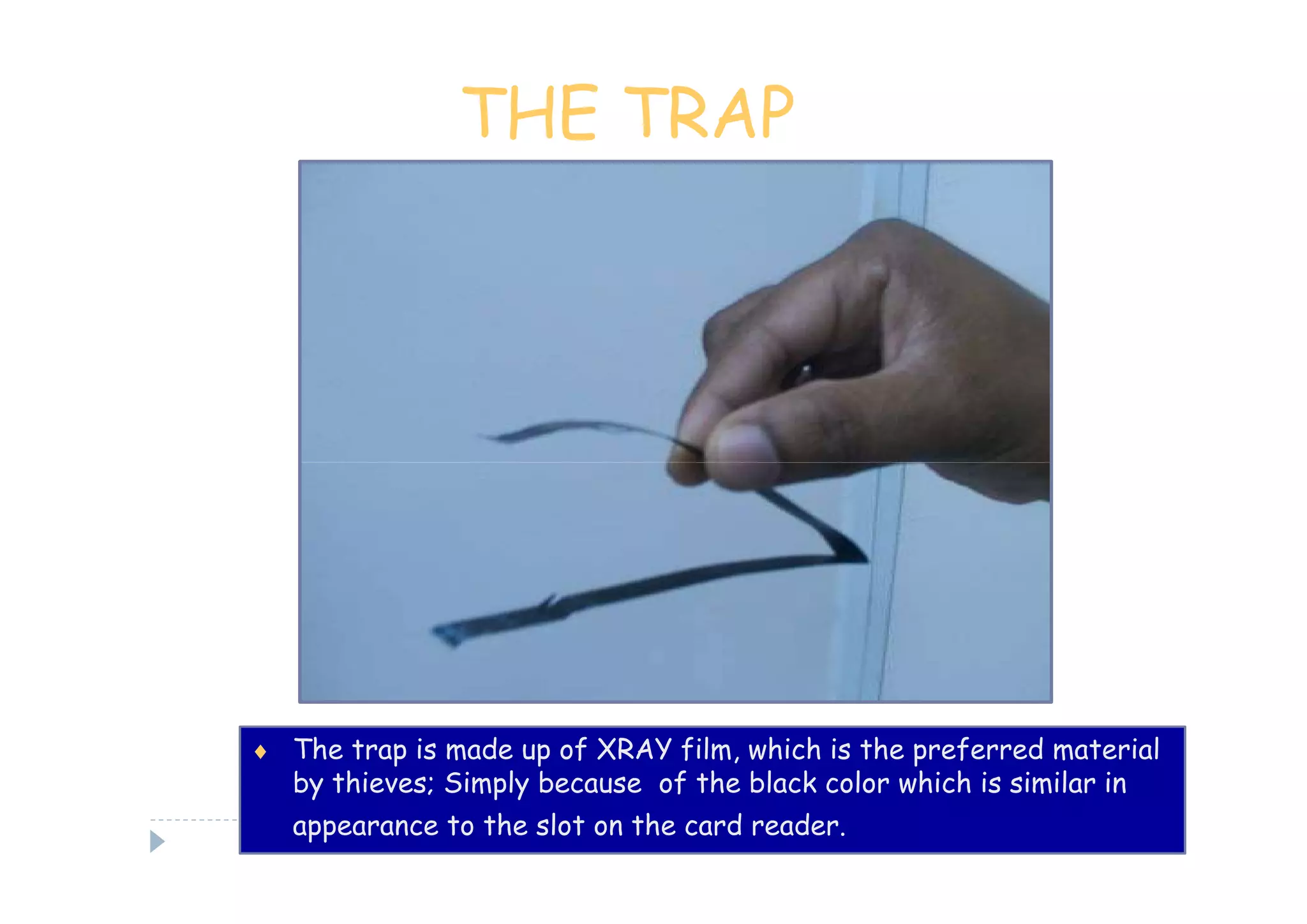
THE TRAP


♦ The trap is made up of XRAY film, which is the preferred material
   by thieves; Simply because of the black color which is similar in
   appearance to the slot on the card reader.
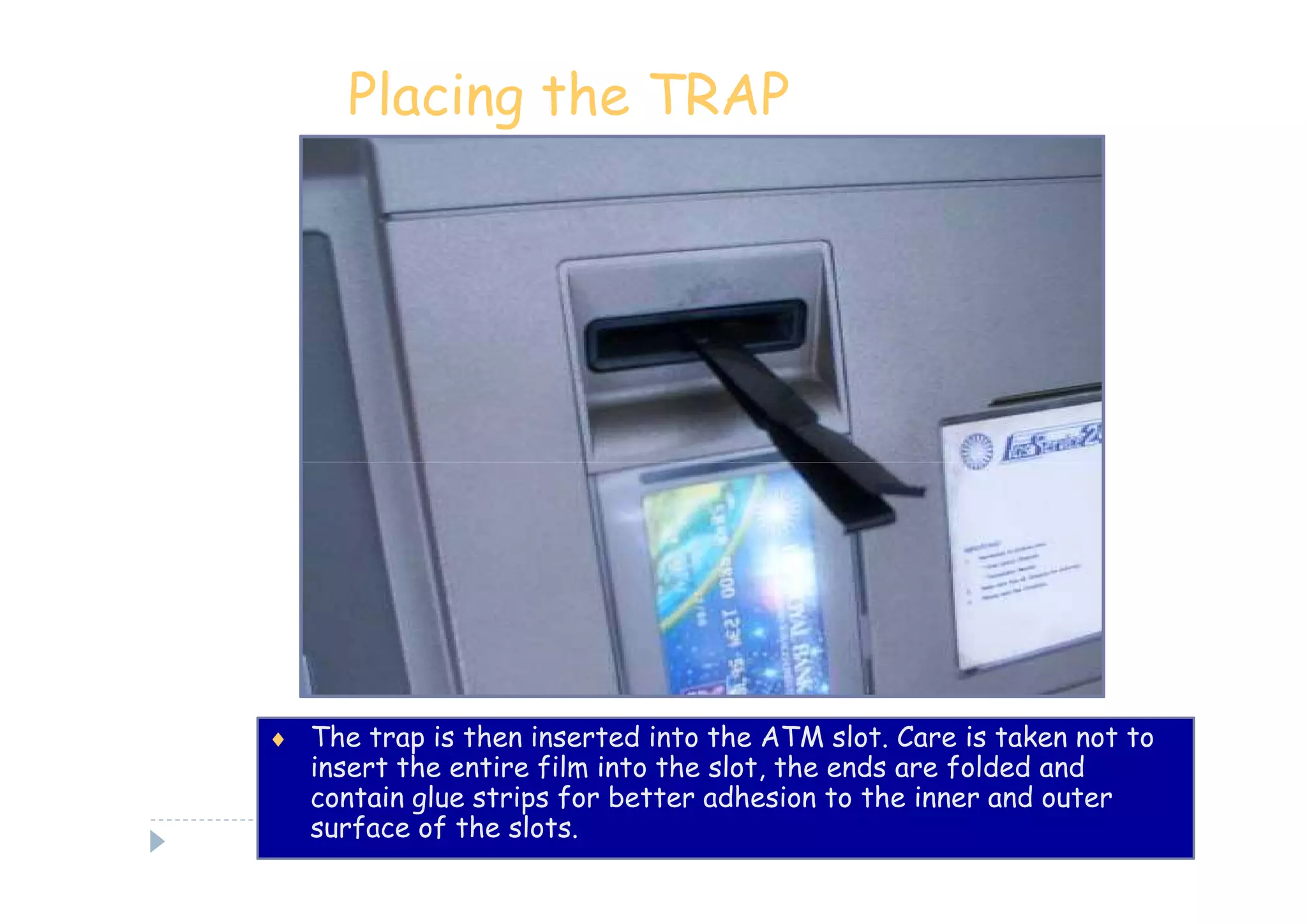
Placing the TRAP


♦ The trap is then inserted into the ATM slot. Care is taken not to
   insert the entire film into the slot, the ends are folded and
   contain glue strips for better adhesion to the inner and outer
   surface of the slots.
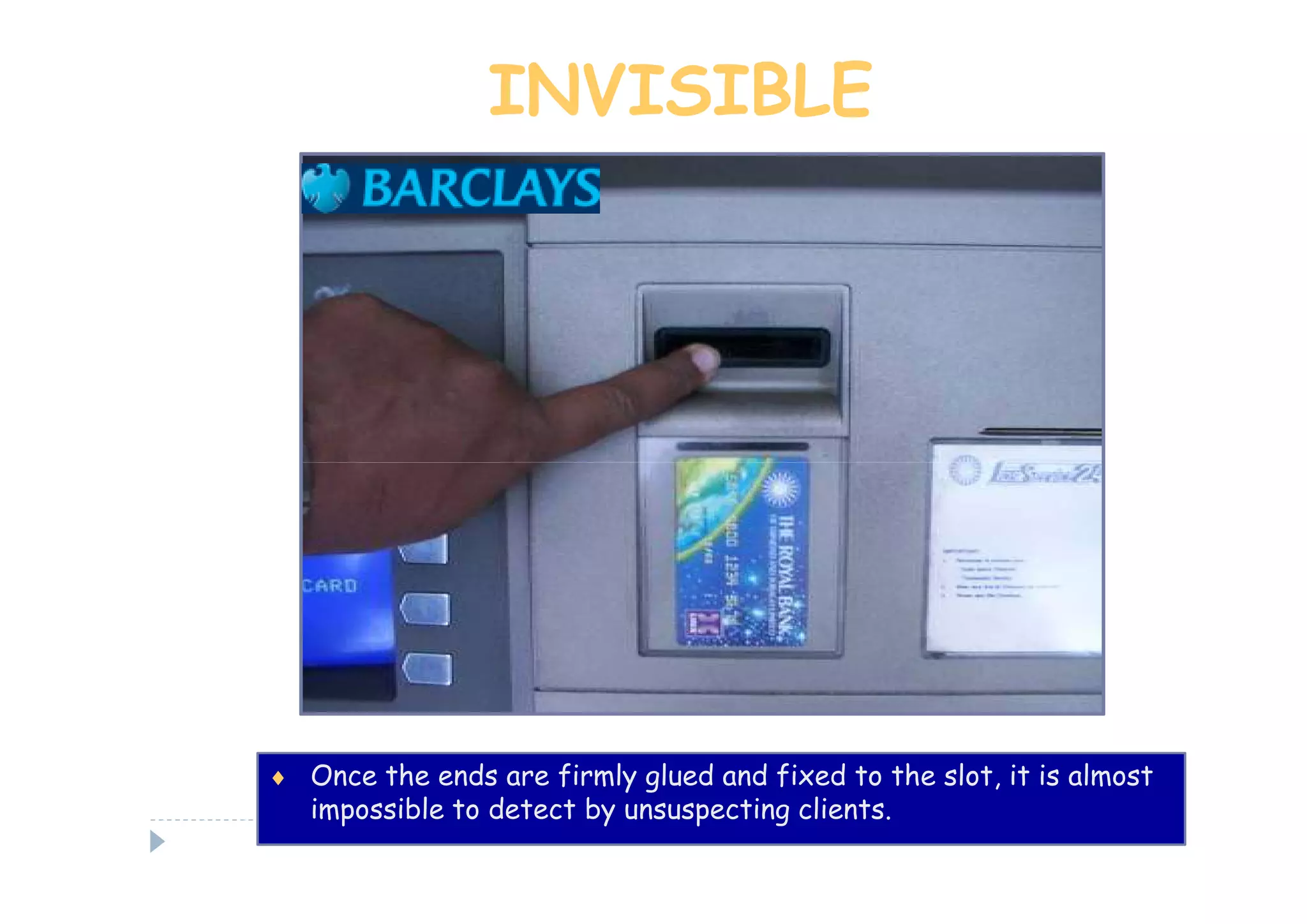
INVISIBLE


♦ Once the ends are firmly glued and fixed to the slot, it is almost
   impossible to detect by unsuspecting clients.
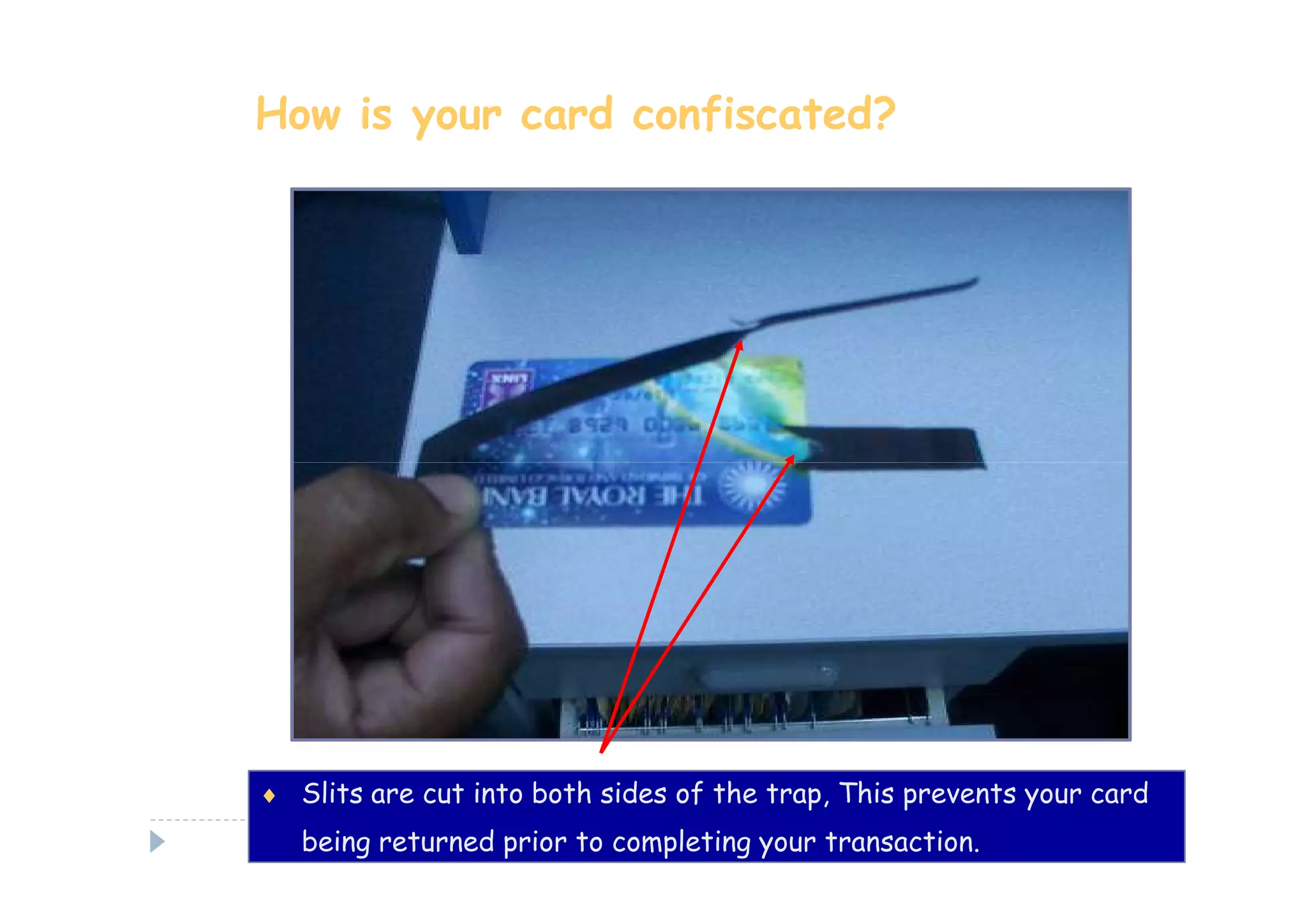
How is your card confiscated?


♦ Slits are cut into both sides of the trap, This prevents your card
   being returned prior to completing your transaction.
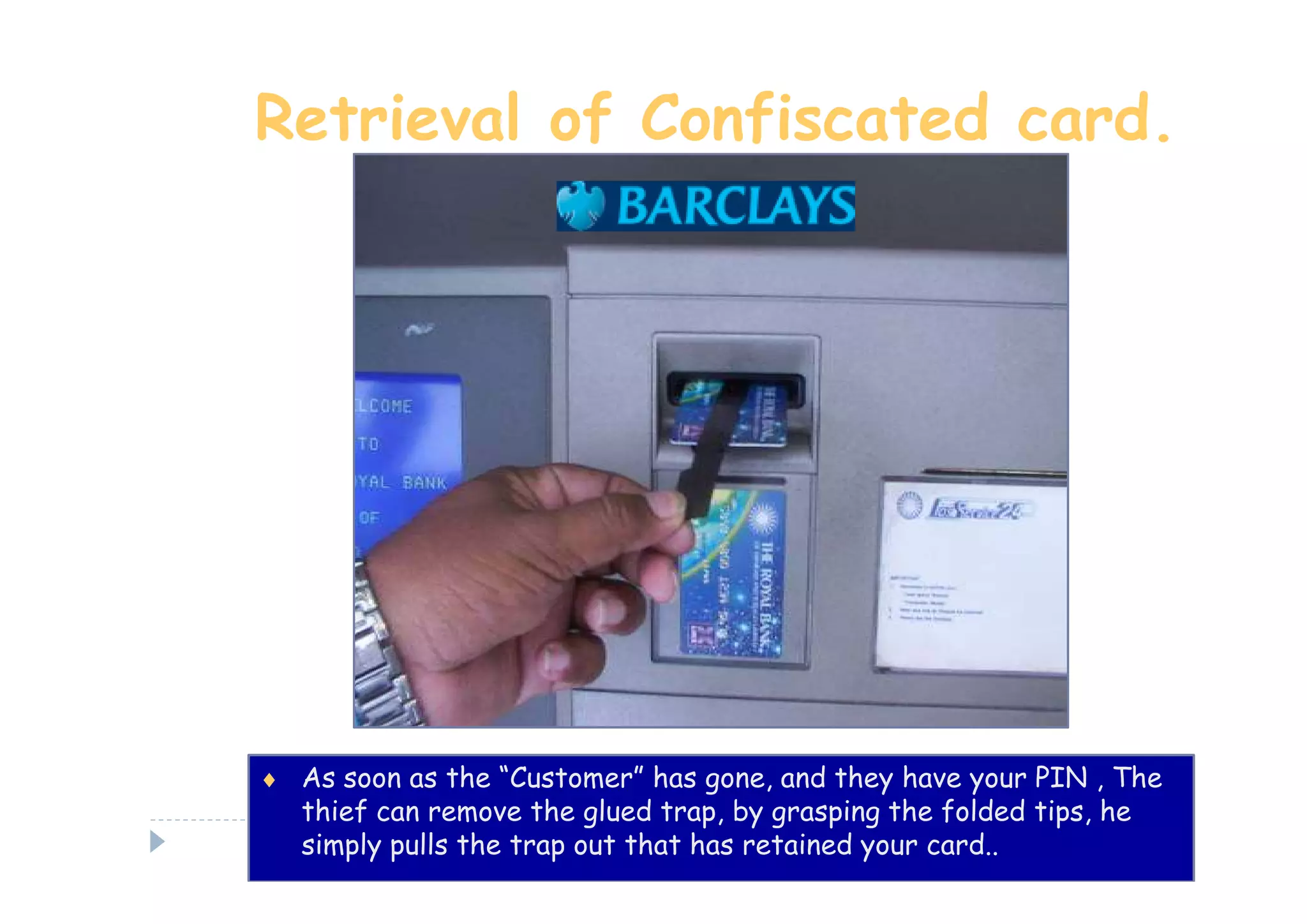
Retrieval of Confiscated card.


♦ As soon as the “Customer” has gone, and they have your PIN , The
   thief can remove the glued trap, by grasping the folded tips, he
   simply pulls the trap out that has retained your card..
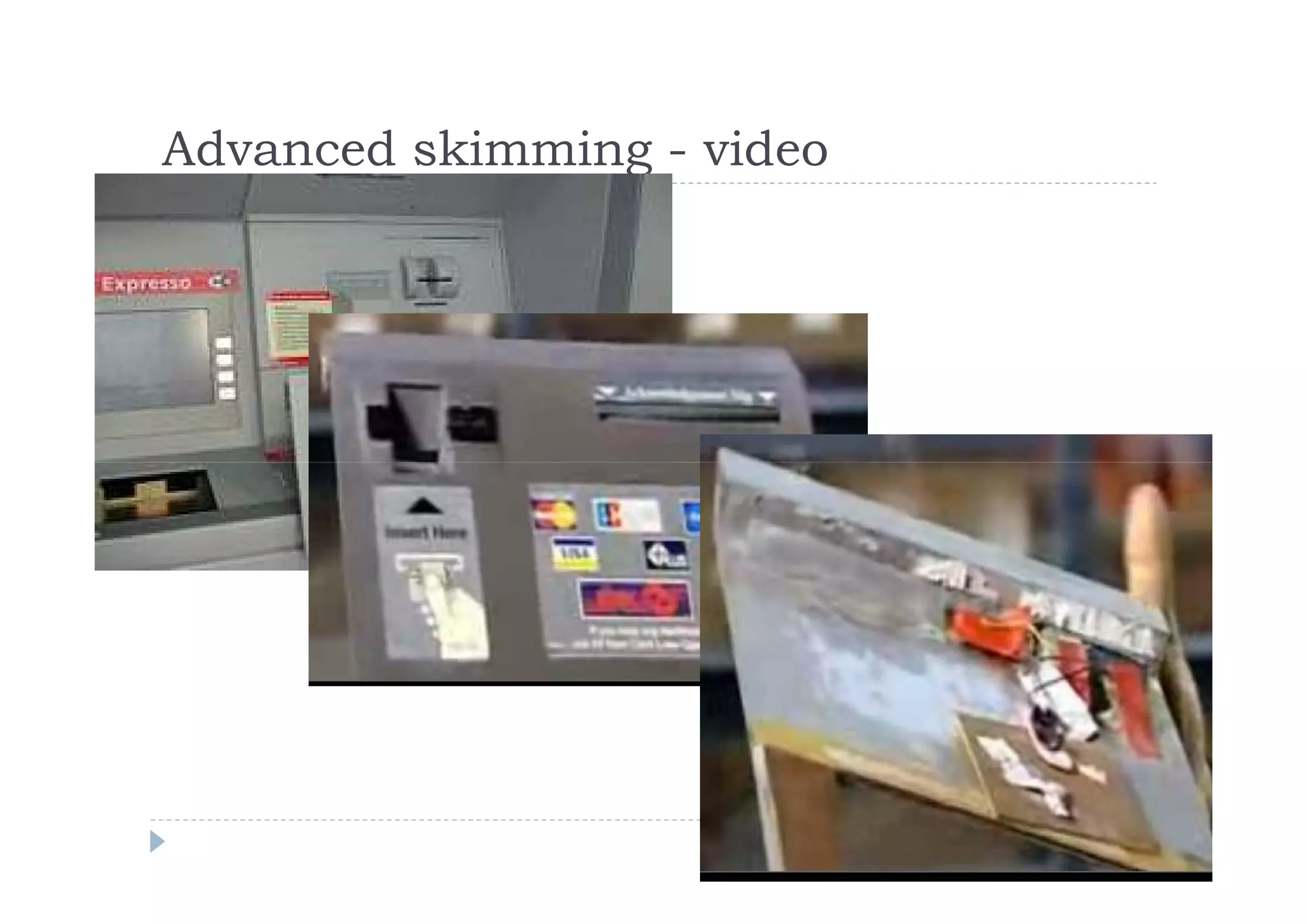
Advanced skimming - video
Where’s the silver lining?!
Technology Red Flags
 Systems crashing
 Audit trails not available
 Mysterious “system” user IDs
 Weak password controls
 Simultaneous logins
 Across-the-board transactions
 Transactions that violate trends – weekends, excessive
 amounts, repetitive amounts
 Reluctance to take leave or accept input/help
 Reluctance to switch over to a new system
The IIA – IT & Fraud Risks
Fraudulent Financial Reporting

• Unauthorized access to accounting applications —
  Personnel with inappropriate access to the general ledger,
  subsystems, or the financial reporting tool can post fraudulent
  entries.

• Override of system controls — General computer controls
  include restricted system access, restricted application access,
  and program change controls. IT personnel may be able to
  access restricted data or adjust records fraudulently.
The IIA – IT & Fraud Risks
Misappropriation of Assets
• Theft of tangible assets — Individuals who have access to tangible assets
   (e.g., cash, inventory, and fixed assets) and to the accounting systems that
   track and record activity related to those assets can use IT to conceal their
   theft of assets.
• Theft of intangible assets — Given the transition to a services-based,
   knowledge economy, more and more valuable assets of organizations are
   intangibles such as customer lists, business practices, patents, and
   copyrighted material.


Corruption
• Misuse of customer data — Personnel within or outside the organization
   can obtain employee or customer data and use such information to obtain
   credit or for other fraudulent purposes.
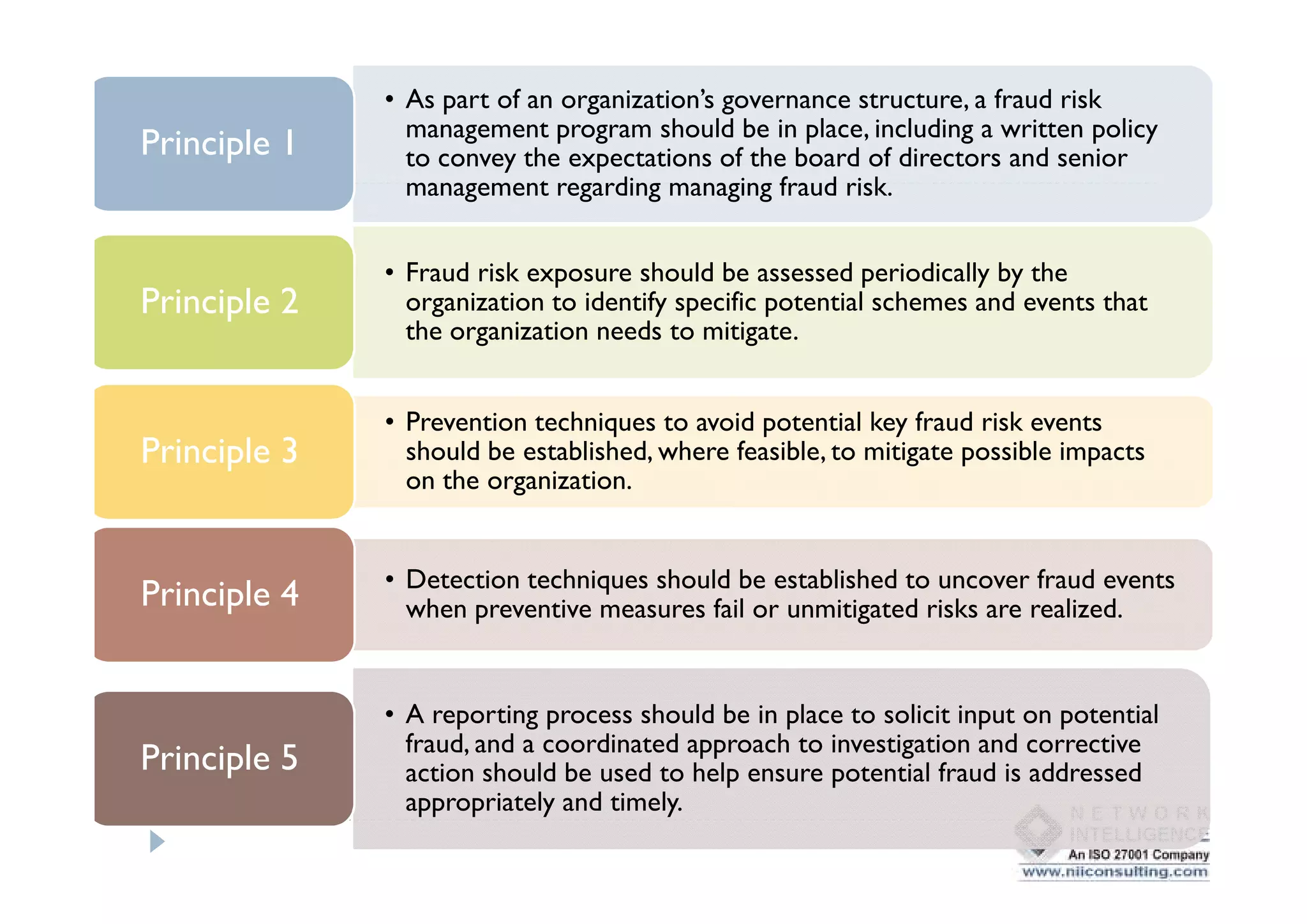
• As part of an organization’s governance structure, a fraud risk
                management program should be in place, including a written policy
Principle 1     to convey the expectations of the board of directors and senior
                management regarding managing fraud risk.


              • Fraud risk exposure should be assessed periodically by the
Principle 2     organization to identify specific potential schemes and events that
                the organization needs to mitigate.


              • Prevention techniques to avoid potential key fraud risk events
Principle 3     should be established, where feasible, to mitigate possible impacts
                on the organization.


              • Detection techniques should be established to uncover fraud events
Principle 4     when preventive measures fail or unmitigated risks are realized.


              • A reporting process should be in place to solicit input on potential
                fraud, and a coordinated approach to investigation and corrective
Principle 5     action should be used to help ensure potential fraud is addressed
                appropriately and timely.
Leveraging Technology
 Data Leakage Prevention
 Email Gateway Filtering
 Security & Controls by Design
 Information Rights Management
 Identity & Access Control Management
 Data Encryption
 Business Intelligence Solutions
 Revenue Assurance & Fraud Management Solutions
 Forensic Investigation Capabilities
Chapter 6 – Cyber Frauds
 Special Committee of the Board to be briefed separately
 Independent Fraud Risk Management Group (FRMG)
 Fraud Review Councils to be set up
 Fraud Vulnerability Assessments
 New products to be reviewed by (FRMG)
 Banks to share details of fraudulent employees
 Transaction monitoring group/system
 Continuous trainings
 Employee awareness and rewarding whistleblowers
 Training institute for financial forensic investigation
 Sharing of fraud management experiences
 State-level Financial Crime Review Committee
 Multi-lateral arrangement amongst banks to deal with online frauds
Resources
 Fraud Risk Management System in Banks
 http://www.rbi.org.in/scripts/NotificationUser.aspx?Id=527
 3&Mode=0

 IIA – Fraud Prevention and Detection in an Automated
 World
 http://www.theiia.org/guidance/technology/gtag13/
Thank you!
                                Questions?
                kkmookhey@niiconsulting.com

Information Security     Information Security Training
Consulting Services      Services

Cyber fraud in banks

  • 1.
    Cyber Fraud Challenges &Solutions K. K. Mookhey Principal Consultant Network Intelligence India Pvt. Ltd.
  • 2.
    Agenda Ground Reality– Digesting the Hard Facts Online Banking Fraud The Data Theft Epidemic Skimming & ATM Fraud Spear Phishing & APT Identifying Technology Red Flags Technology Fraud Risk Management Resources
  • 3.
  • 4.
    Primary fix? 2-factor Or OTP User Awareness
  • 13.
  • 18.
    What price India? Online examples…
  • 19.
    Fresh record price= Rs. 75 Converted customer price = Rs. 150
  • 20.
  • 21.
    THE TRAP ♦ Thetrap is made up of XRAY film, which is the preferred material by thieves; Simply because of the black color which is similar in appearance to the slot on the card reader.
  • 22.
    Placing the TRAP ♦The trap is then inserted into the ATM slot. Care is taken not to insert the entire film into the slot, the ends are folded and contain glue strips for better adhesion to the inner and outer surface of the slots.
  • 23.
    INVISIBLE ♦ Once theends are firmly glued and fixed to the slot, it is almost impossible to detect by unsuspecting clients.
  • 24.
    How is yourcard confiscated? ♦ Slits are cut into both sides of the trap, This prevents your card being returned prior to completing your transaction.
  • 25.
    Retrieval of Confiscatedcard. ♦ As soon as the “Customer” has gone, and they have your PIN , The thief can remove the glued trap, by grasping the folded tips, he simply pulls the trap out that has retained your card..
  • 26.
  • 27.
  • 28.
    Technology Red Flags Systems crashing Audit trails not available Mysterious “system” user IDs Weak password controls Simultaneous logins Across-the-board transactions Transactions that violate trends – weekends, excessive amounts, repetitive amounts Reluctance to take leave or accept input/help Reluctance to switch over to a new system
  • 29.
    The IIA –IT & Fraud Risks Fraudulent Financial Reporting • Unauthorized access to accounting applications — Personnel with inappropriate access to the general ledger, subsystems, or the financial reporting tool can post fraudulent entries. • Override of system controls — General computer controls include restricted system access, restricted application access, and program change controls. IT personnel may be able to access restricted data or adjust records fraudulently.
  • 30.
    The IIA –IT & Fraud Risks Misappropriation of Assets • Theft of tangible assets — Individuals who have access to tangible assets (e.g., cash, inventory, and fixed assets) and to the accounting systems that track and record activity related to those assets can use IT to conceal their theft of assets. • Theft of intangible assets — Given the transition to a services-based, knowledge economy, more and more valuable assets of organizations are intangibles such as customer lists, business practices, patents, and copyrighted material. Corruption • Misuse of customer data — Personnel within or outside the organization can obtain employee or customer data and use such information to obtain credit or for other fraudulent purposes.
  • 31.
    • As partof an organization’s governance structure, a fraud risk management program should be in place, including a written policy Principle 1 to convey the expectations of the board of directors and senior management regarding managing fraud risk. • Fraud risk exposure should be assessed periodically by the Principle 2 organization to identify specific potential schemes and events that the organization needs to mitigate. • Prevention techniques to avoid potential key fraud risk events Principle 3 should be established, where feasible, to mitigate possible impacts on the organization. • Detection techniques should be established to uncover fraud events Principle 4 when preventive measures fail or unmitigated risks are realized. • A reporting process should be in place to solicit input on potential fraud, and a coordinated approach to investigation and corrective Principle 5 action should be used to help ensure potential fraud is addressed appropriately and timely.
  • 32.
    Leveraging Technology DataLeakage Prevention Email Gateway Filtering Security & Controls by Design Information Rights Management Identity & Access Control Management Data Encryption Business Intelligence Solutions Revenue Assurance & Fraud Management Solutions Forensic Investigation Capabilities
  • 33.
    Chapter 6 –Cyber Frauds Special Committee of the Board to be briefed separately Independent Fraud Risk Management Group (FRMG) Fraud Review Councils to be set up Fraud Vulnerability Assessments New products to be reviewed by (FRMG) Banks to share details of fraudulent employees Transaction monitoring group/system Continuous trainings Employee awareness and rewarding whistleblowers Training institute for financial forensic investigation Sharing of fraud management experiences State-level Financial Crime Review Committee Multi-lateral arrangement amongst banks to deal with online frauds
  • 34.
    Resources Fraud RiskManagement System in Banks http://www.rbi.org.in/scripts/NotificationUser.aspx?Id=527 3&Mode=0 IIA – Fraud Prevention and Detection in an Automated World http://www.theiia.org/guidance/technology/gtag13/
  • 35.
    Thank you! Questions? kkmookhey@niiconsulting.com Information Security Information Security Training Consulting Services Services