Creating ,communicating and
delivering value to target market at
a profit(CCDVTMP)
Value.
• Reflects the sum of the perceived tangible and
intangible benefits and costs to customers
qsp
QUALITY
SERVICE
PRICE
Benefit--- Value---Cost----Satisfaction
Value is subjective and relational
Value can be enhanced
• Increasing the functionality of the product.
• Reducing the price
• Giving better service support
• Giving the customer easy access to the
product
• Offering beneficial communication
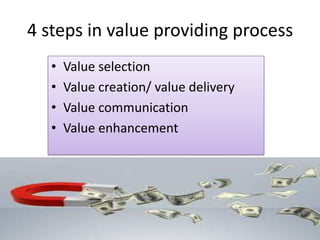
4 steps in value providing process
• Value selection
• Value creation/ value delivery
• Value communication
• Value enhancement
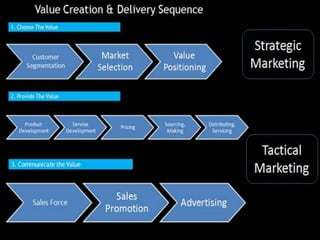
Value selection
• Marketing planning
• Buyer analysis
• Market segmentation
• Market targeting
Value creation/ value delivery
• Product development
• Manufacturing
• Service planning
• Pricing
• Distribution
• Servicing
Value communication
• Making a value proposition
• Communicating the value proposition
Value enhancement
• Marketing research
• Marketing control
CUSTOMER SATISFACTION
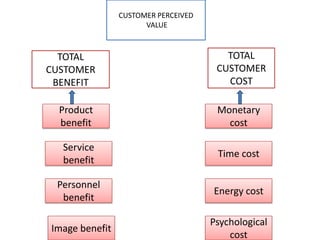
CUSTOMER PERCEIVED
VALUE
TOTAL
CUSTOMER
COST
TOTAL
CUSTOMER
BENEFIT
Monetary
cost
Time cost
Energy cost
Psychological
cost
Image benefit
Personnel
benefit
Service
benefit
Product
benefit
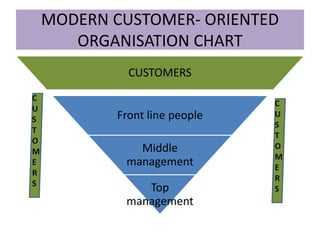
MODERN CUSTOMER- ORIENTED
ORGANISATION CHART
CUSTOMERS
Front line people
Middle
management
Top
management
C
U
S
T
O
M
E
R
S
C
U
S
T
O
M
E
R
S
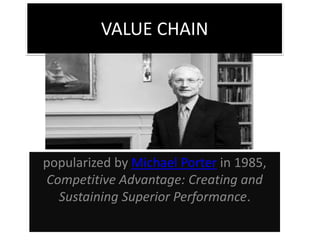
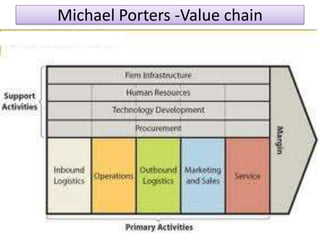
VALUE CHAIN
popularized by Michael Porter in 1985,
Competitive Advantage: Creating and
Sustaining Superior Performance.
A value chain is a set of activities that
an organization carries out to create
value for its customers
• The value that's created and captured by a
company is the profit margin
• Value Created and Captured – Cost of
Creating that Value = Margin
• The more value an organization creates, the
more profitable it is likely to be. And when
provide more value to customers , the
company build competitive advantage.
• Porter's Value Chain focuses on systems, and
how inputs are changed into the outputs
purchased by consumers. Porter described a
chain of activities common to all businesses,
and he divided them into primary and support
activities.
Michael Porters -Value chain
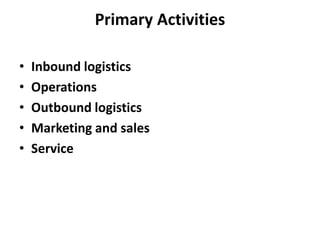
Primary Activities
• Inbound logistics
• Operations
• Outbound logistics
• Marketing and sales
• Service
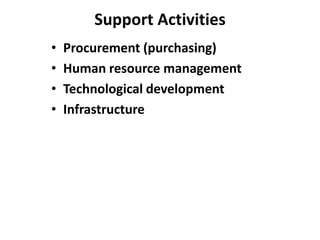
Support Activities
• Procurement (purchasing)
• Human resource management
• Technological development
• Infrastructure
• Companies use these primary and support
activities as "building blocks" to create a
valuable product or service.
Core business processes
• The market sensing process
• The new offering realization process
• The customer acquisition process
• The CRM Process
• The fulfillment management process
•
A customer value chain is a business concept that
represents the creation of value for a customer
• Customer value chain puts the emphasis on steps
taken to retain existing customers. Result in existing
customers recommending the product and
manufacturer to friends and colleagues.
• Customer value chain analysis involves breaking
down every step that contributes towards the end
satisfaction of the customer
• customer value chain is to concentrate on the steps
that lie between the finished product and the
customer.
• Customers will choose a product based on
their perceived value of it. Satisfaction is the
degree to which the actual use of a product
matches the perceived value at the time of
the purchase. A customer is satisfied only if
the actual value is the same or exceeds the
perceived value

Customer value

  • 1.
    Creating ,communicating and deliveringvalue to target market at a profit(CCDVTMP)
  • 2.
    Value. • Reflects thesum of the perceived tangible and intangible benefits and costs to customers qsp QUALITY SERVICE PRICE
  • 3.
  • 4.
    Value can beenhanced • Increasing the functionality of the product. • Reducing the price • Giving better service support • Giving the customer easy access to the product • Offering beneficial communication
  • 5.
    4 steps invalue providing process • Value selection • Value creation/ value delivery • Value communication • Value enhancement
  • 7.
    Value selection • Marketingplanning • Buyer analysis • Market segmentation • Market targeting
  • 8.
    Value creation/ valuedelivery • Product development • Manufacturing • Service planning • Pricing • Distribution • Servicing
  • 9.
    Value communication • Makinga value proposition • Communicating the value proposition
  • 10.
    Value enhancement • Marketingresearch • Marketing control CUSTOMER SATISFACTION
  • 11.
    CUSTOMER PERCEIVED VALUE TOTAL CUSTOMER COST TOTAL CUSTOMER BENEFIT Monetary cost Time cost Energycost Psychological cost Image benefit Personnel benefit Service benefit Product benefit
  • 12.
    MODERN CUSTOMER- ORIENTED ORGANISATIONCHART CUSTOMERS Front line people Middle management Top management C U S T O M E R S C U S T O M E R S
  • 13.
    VALUE CHAIN popularized byMichael Porter in 1985, Competitive Advantage: Creating and Sustaining Superior Performance.
  • 14.
    A value chainis a set of activities that an organization carries out to create value for its customers
  • 15.
    • The valuethat's created and captured by a company is the profit margin • Value Created and Captured – Cost of Creating that Value = Margin • The more value an organization creates, the more profitable it is likely to be. And when provide more value to customers , the company build competitive advantage.
  • 16.
    • Porter's ValueChain focuses on systems, and how inputs are changed into the outputs purchased by consumers. Porter described a chain of activities common to all businesses, and he divided them into primary and support activities.
  • 17.
  • 18.
    Primary Activities • Inboundlogistics • Operations • Outbound logistics • Marketing and sales • Service
  • 19.
    Support Activities • Procurement(purchasing) • Human resource management • Technological development • Infrastructure
  • 20.
    • Companies usethese primary and support activities as "building blocks" to create a valuable product or service.
  • 21.
    Core business processes •The market sensing process • The new offering realization process • The customer acquisition process • The CRM Process • The fulfillment management process
  • 22.
    • A customer valuechain is a business concept that represents the creation of value for a customer • Customer value chain puts the emphasis on steps taken to retain existing customers. Result in existing customers recommending the product and manufacturer to friends and colleagues. • Customer value chain analysis involves breaking down every step that contributes towards the end satisfaction of the customer • customer value chain is to concentrate on the steps that lie between the finished product and the customer.
  • 23.
    • Customers willchoose a product based on their perceived value of it. Satisfaction is the degree to which the actual use of a product matches the perceived value at the time of the purchase. A customer is satisfied only if the actual value is the same or exceeds the perceived value