
FORECASTING
 Forecasting is essential for a number of planning
decisions.
 Long term decisions
New product introduction
Plant expansion
MEDIUM TERM DECISIONS
 Aggregate production planning
 Man power planning
 Inventory policy
SHORT TERM DECISIONS:
• Production planning
• Scheduling of job orders
PLANNING PROCESS
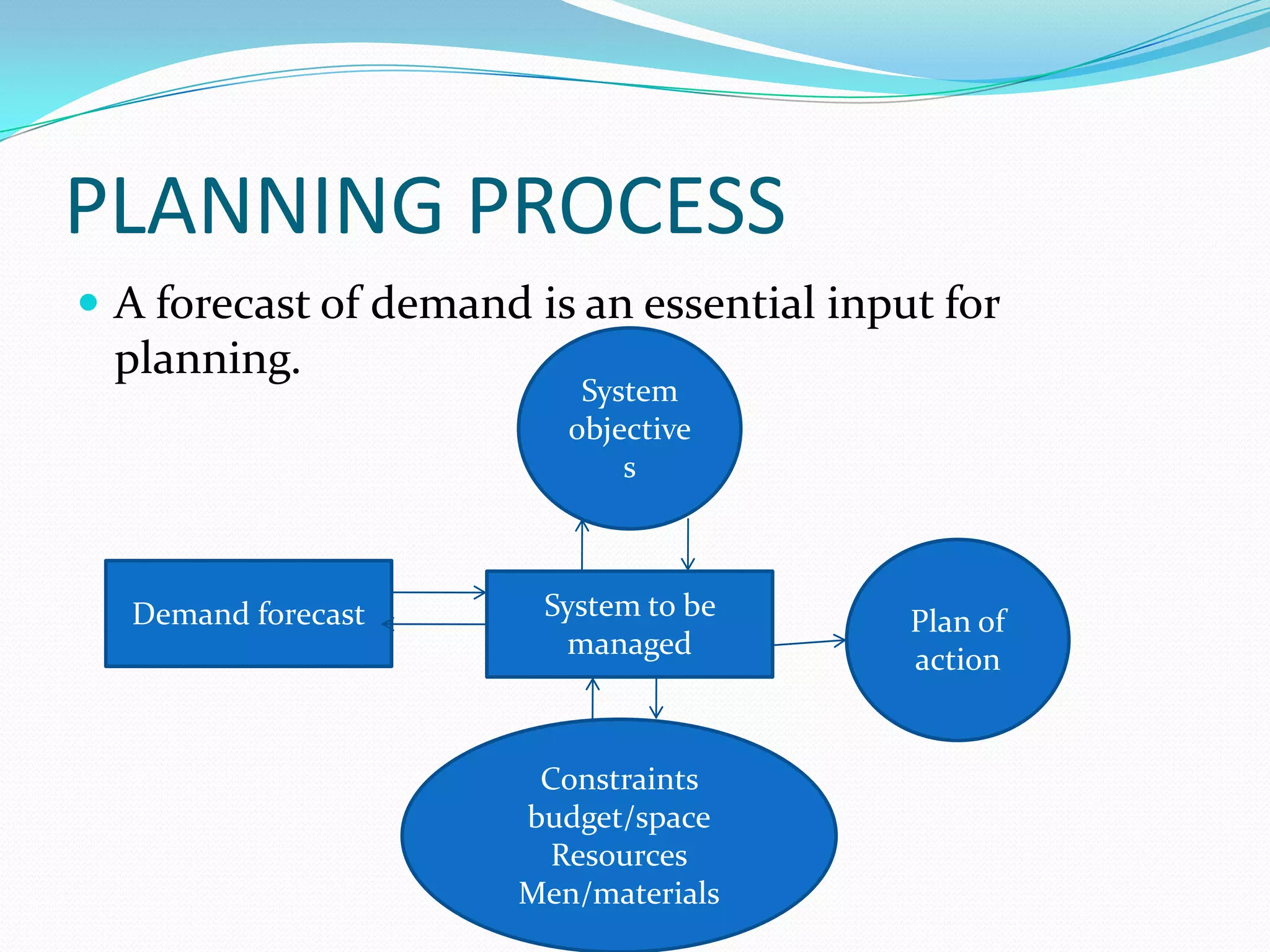
 A forecast of demand is an essential input for
planning.
System to be
managed
System
objective
s
Plan of
action
Constraints
budget/space
Resources
Men/materials
Demand forecast
METHODS OF FORECASTING
(A) subjective or intuitive methods
-opinion polls, interviews
-Delphi
(B) Methods based on averaging of past data
-moving averages
-exponential smoothing
(C) Regression models on historical data
-trend extrapolation
(D) Causal or economic models
(E) time- series analysis using stochastic models
- Box Jenkins Models
FORECASTING
 Objective
 Scientific
 Free from ‘bias’
 Reproducible
 Error analysis possible
PREDICTION
 Subjective
 Intuitive
 Individual bias
 Non reproducible
 Error analysis limited
NORMAL PATTERNS OF DEMAND
 Constant
 Linear trend
 Cyclic
 Seasonal pattern with growth
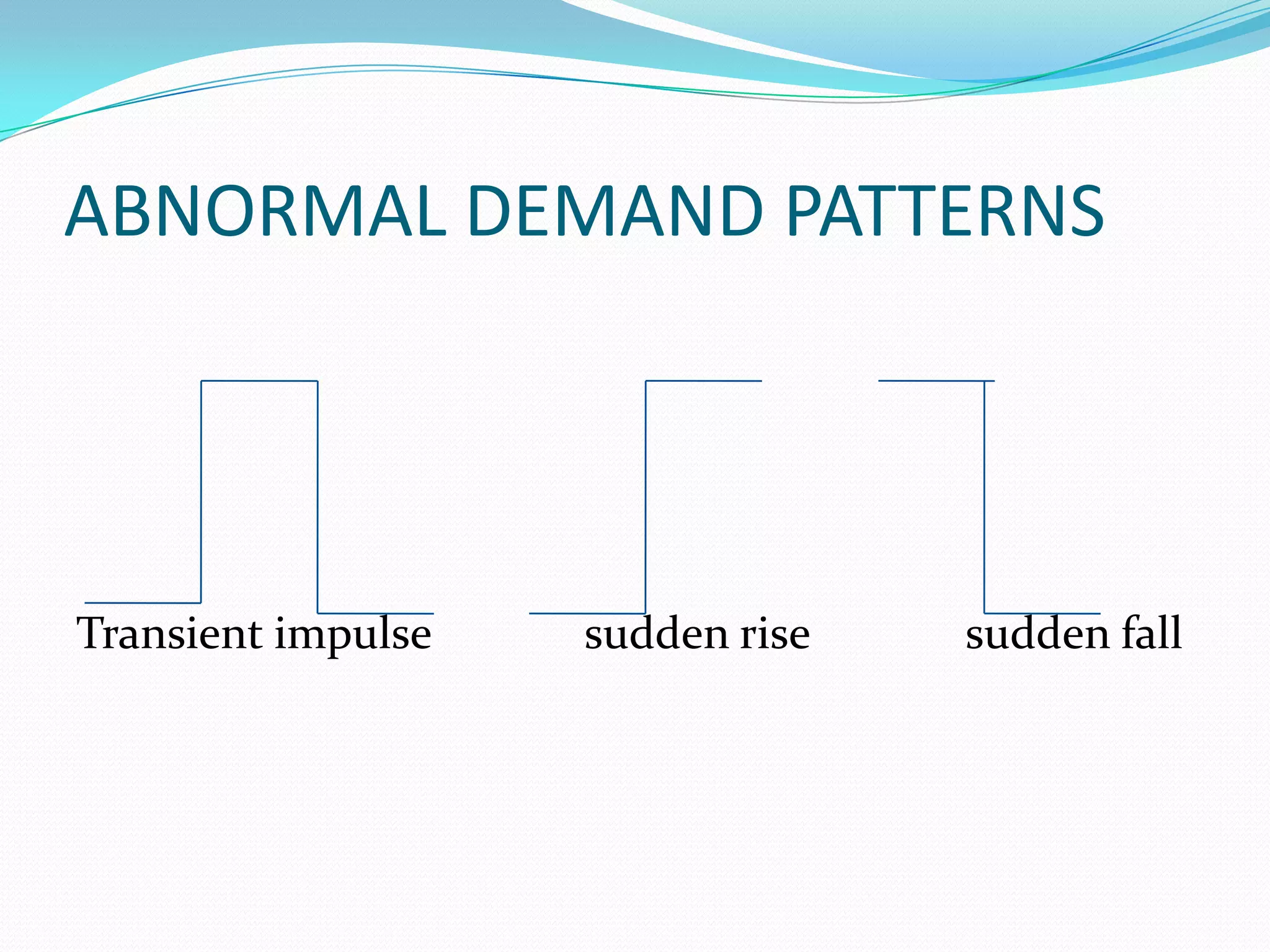
ABNORMAL DEMAND PATTERNS
Transient impulse sudden rise sudden fall
OPINION POLLS
 Personal interviews
Eg: aggregation of opinion of sales representatives to obtain sales
forecast of a region.
 Knowledge base (experience)
 Subjective bias
 Questionnaire method
 Questionnaire design
 Choice of respondents
 Obtaining respondents
 Analysis and presentation of results (forecasting)
 Telephonic conversation
 Fast
 DELPHI
DELPHI
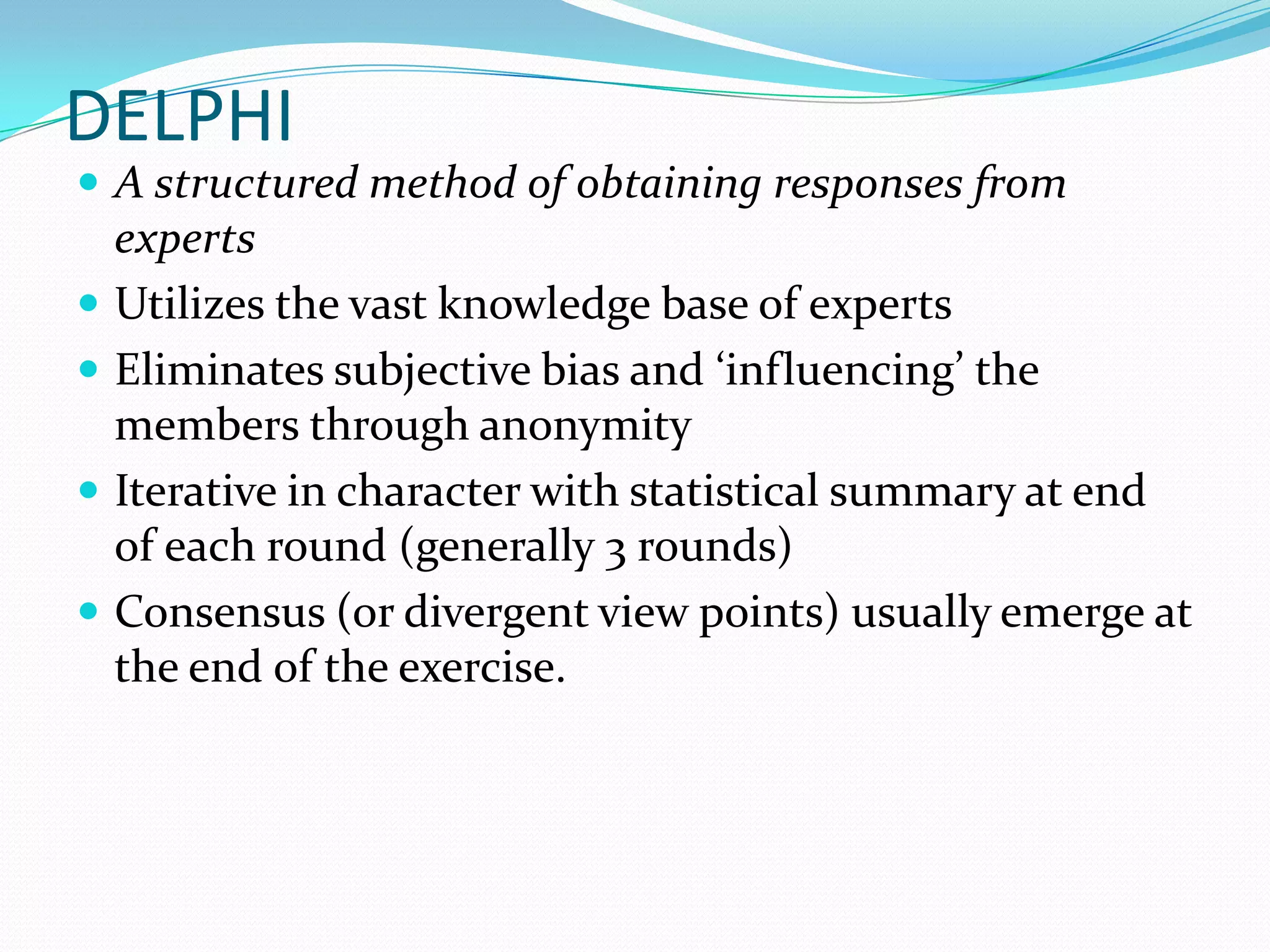
 A structured method of obtaining responses from
experts
 Utilizes the vast knowledge base of experts
 Eliminates subjective bias and ‘influencing’ the
members through anonymity
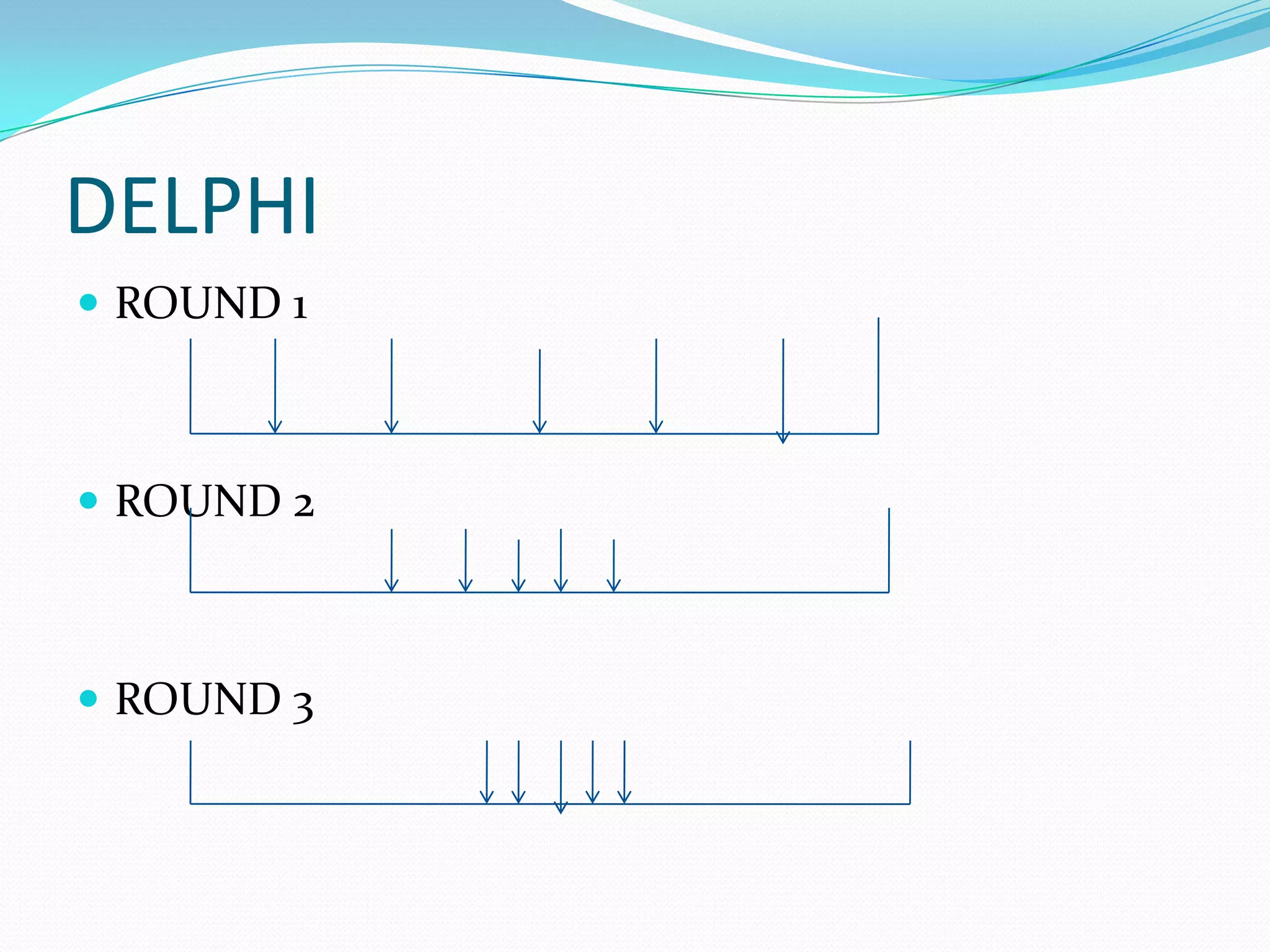
 Iterative in character with statistical summary at end
of each round (generally 3 rounds)
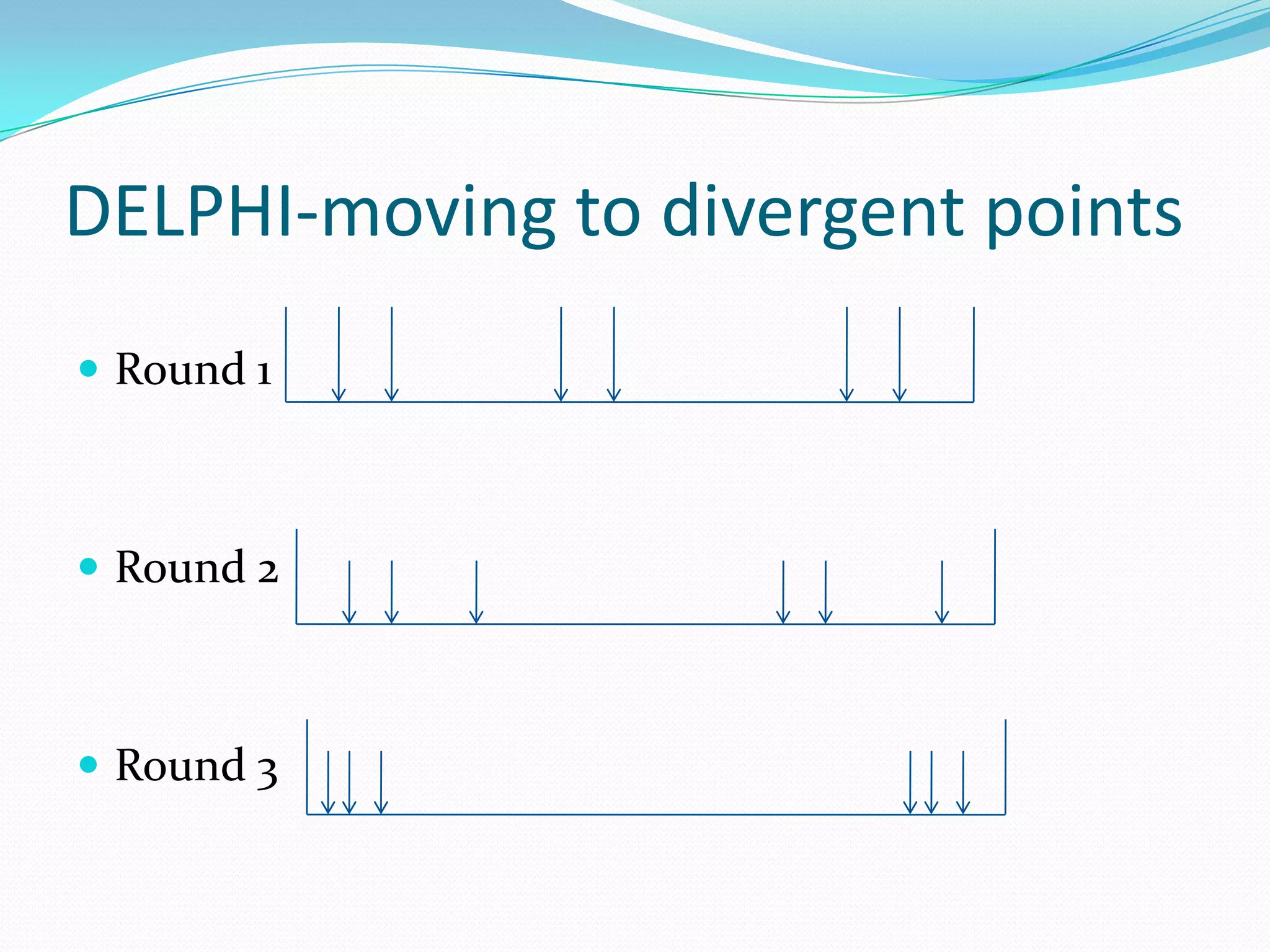
 Consensus (or divergent view points) usually emerge at
the end of the exercise.
DELPHI
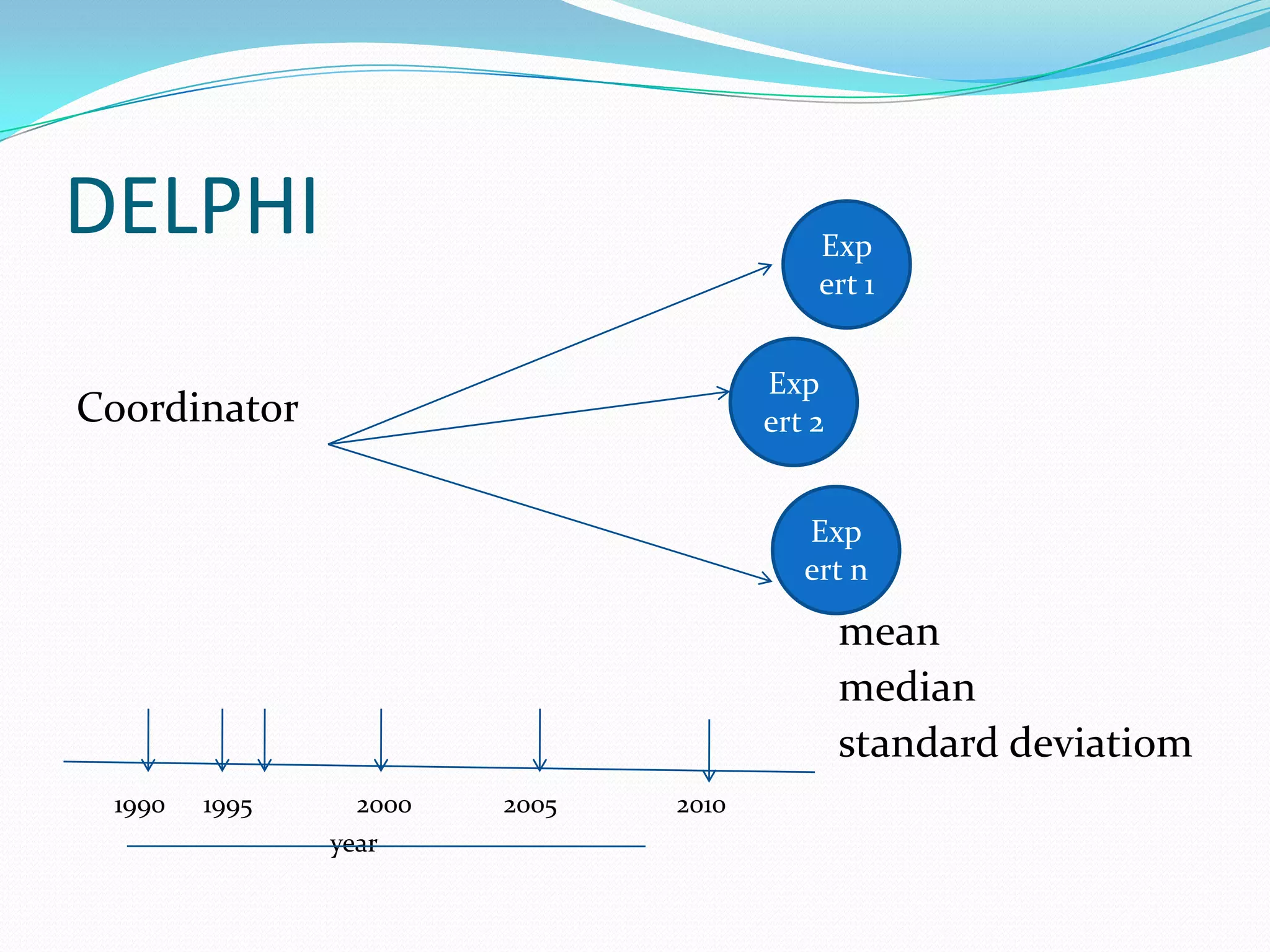
Coordinator
mean
median
standard deviatiom
1990 1995 2000 2005 2010
year
Exp
ert 1
Exp
ert 2
Exp
ert n
DELPHI
 ROUND 1
 ROUND 2
 ROUND 3
DELPHI-moving to divergent points
 Round 1
 Round 2
 Round 3

Forecasting

  • 2.
    FORECASTING  Forecasting isessential for a number of planning decisions.  Long term decisions New product introduction Plant expansion
  • 3.
    MEDIUM TERM DECISIONS Aggregate production planning  Man power planning  Inventory policy SHORT TERM DECISIONS: • Production planning • Scheduling of job orders
  • 4.
    PLANNING PROCESS  Aforecast of demand is an essential input for planning. System to be managed System objective s Plan of action Constraints budget/space Resources Men/materials Demand forecast
  • 5.
    METHODS OF FORECASTING (A)subjective or intuitive methods -opinion polls, interviews -Delphi (B) Methods based on averaging of past data -moving averages -exponential smoothing
  • 6.
    (C) Regression modelson historical data -trend extrapolation (D) Causal or economic models (E) time- series analysis using stochastic models - Box Jenkins Models
  • 7.
    FORECASTING  Objective  Scientific Free from ‘bias’  Reproducible  Error analysis possible PREDICTION  Subjective  Intuitive  Individual bias  Non reproducible  Error analysis limited
  • 8.
    NORMAL PATTERNS OFDEMAND  Constant  Linear trend  Cyclic  Seasonal pattern with growth
  • 9.
    ABNORMAL DEMAND PATTERNS Transientimpulse sudden rise sudden fall
  • 10.
    OPINION POLLS  Personalinterviews Eg: aggregation of opinion of sales representatives to obtain sales forecast of a region.  Knowledge base (experience)  Subjective bias  Questionnaire method  Questionnaire design  Choice of respondents  Obtaining respondents  Analysis and presentation of results (forecasting)  Telephonic conversation  Fast  DELPHI
  • 11.
    DELPHI  A structuredmethod of obtaining responses from experts  Utilizes the vast knowledge base of experts  Eliminates subjective bias and ‘influencing’ the members through anonymity  Iterative in character with statistical summary at end of each round (generally 3 rounds)  Consensus (or divergent view points) usually emerge at the end of the exercise.
  • 12.
    DELPHI Coordinator mean median standard deviatiom 1990 19952000 2005 2010 year Exp ert 1 Exp ert 2 Exp ert n
  • 13.
    DELPHI  ROUND 1 ROUND 2  ROUND 3
  • 14.
    DELPHI-moving to divergentpoints  Round 1  Round 2  Round 3