-RASHMI RITHUSHA.V
MBBS Student
SRMMCH&RC
 It occurs when the body is exposed to high
levels of the hormone cortisol for a long
time.
 also called hypercortisolism.
 Cushing disease is caused by a pituitary
gland tumor (usually benign) that over-
secretes the hormone ACTH, thus
overstimulating the adrenal glands' cortisol
production.
 Cushing syndrome refers to the signs and
symptoms associated with excess cortisol in
the body, regardless of the cause.
 high stress levels, including stress related to
an acute illness, surgery, injury, or
pregnancy, especially in the final trimester
 athletic training
 malnutrition
 alcoholism
 depression, panic disorders, or high levels of
emotional stress
 The most common cause of Cushing
syndrome is the use of corticosteroid
medications, such as prednisone, in high
doses for a long period.
 a pituitary gland tumor in which the pituitary
gland releases too much adrenocorticotropic
hormone, which is also known as Cushing’s
disease
 ectopic ACTH syndrome, which causes tumors
that usually occur in the lung, pancreas,
thyroid, or thymus gland
 an adrenal gland abnormality or tumor
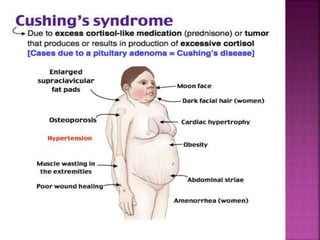
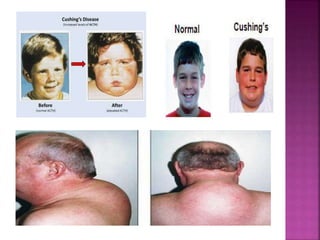
 Weight gain and fatty tissue deposits,
particularly around the midsection and upper
back, in the face (moon face), and between
the shoulders (buffalo hump)
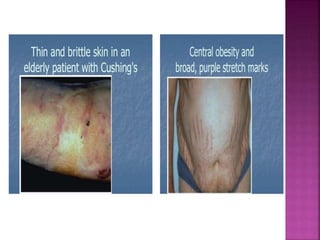
 Pink or purple stretch marks (striae) on the
skin of the abdomen, thighs, breasts and
arms
 Thinning, fragile skin that bruises easily
 Slow healing of cuts, insect bites and
infections
 Acne
Women with Cushing syndrome may
experience:
 Thicker or more visible body and facial hair
(hirsutism)
 Irregular or absent menstrual periods
Men with Cushing syndrome may experience:
 Decreased fertility
 Erectile dysfunction
 Severe fatigue
 Muscle weakness
 Depression, anxiety and irritability
 Loss of emotional control
 Cognitive difficulties
 New or worsened high blood pressure
 Headache
 Bone loss, leading to fractures over time
 In children, impaired growth
 urine & blood test
 saliva test
 imaging test
 petrosal sinus
sampling
 reducing
corticosteroid use
 surgery
 radiation therapy
 medications
 https://www.mayoclinic.org/diseases-
conditions/cushing-syndrome/.
 https://www.webmd.com/a-to-z-
guides/cushing-syndrome
 https://pituitarysociety.org/.../cushings/sy
mptoms-of-cushings-disease
Cushing's Syndrome

Cushing's Syndrome

  • 1.
  • 2.
     It occurswhen the body is exposed to high levels of the hormone cortisol for a long time.  also called hypercortisolism.
  • 3.
     Cushing diseaseis caused by a pituitary gland tumor (usually benign) that over- secretes the hormone ACTH, thus overstimulating the adrenal glands' cortisol production.  Cushing syndrome refers to the signs and symptoms associated with excess cortisol in the body, regardless of the cause.
  • 4.
     high stresslevels, including stress related to an acute illness, surgery, injury, or pregnancy, especially in the final trimester  athletic training  malnutrition  alcoholism  depression, panic disorders, or high levels of emotional stress  The most common cause of Cushing syndrome is the use of corticosteroid medications, such as prednisone, in high doses for a long period.
  • 5.
     a pituitarygland tumor in which the pituitary gland releases too much adrenocorticotropic hormone, which is also known as Cushing’s disease  ectopic ACTH syndrome, which causes tumors that usually occur in the lung, pancreas, thyroid, or thymus gland  an adrenal gland abnormality or tumor
  • 6.
     Weight gainand fatty tissue deposits, particularly around the midsection and upper back, in the face (moon face), and between the shoulders (buffalo hump)  Pink or purple stretch marks (striae) on the skin of the abdomen, thighs, breasts and arms  Thinning, fragile skin that bruises easily  Slow healing of cuts, insect bites and infections  Acne
  • 7.
    Women with Cushingsyndrome may experience:  Thicker or more visible body and facial hair (hirsutism)  Irregular or absent menstrual periods Men with Cushing syndrome may experience:  Decreased fertility  Erectile dysfunction
  • 8.
     Severe fatigue Muscle weakness  Depression, anxiety and irritability  Loss of emotional control  Cognitive difficulties  New or worsened high blood pressure  Headache  Bone loss, leading to fractures over time  In children, impaired growth
  • 12.
     urine &blood test  saliva test  imaging test  petrosal sinus sampling  reducing corticosteroid use  surgery  radiation therapy  medications
  • 13.