A Curriculum Model
    based on the work of
        Ralph Tyler

                  By

             Dr.Magdy M. Aly
Professor of Curriculum& EFL Instruction
   FACULTY OF EDUCATION ,AIN
A Definition of Curriculum
      (Daniel Tanner, 1980)

      “The planned and guided
      learning experiences and
      intended learning outcomes,
      formulated through the
      systematic reconstruction of
      knowledge and experiences,
      under the auspices of the
      school, for the learners’
      continuous and willful growth
      in personal social
      competence.”
Curriculum Models
      • Are based on a body of
        theory about teaching
        & learning.
      • Are targeted to needs
        & characteristics of a
        particular group of
        learners.
      • Outline approaches,
        methods & procedures
        for implementation.
The Tyler Model of
Curriculum Design
         • The nature &
           structure of
           knowledge
         • The needs of
           the society
         • The needs of
           the learner
Fundamental Questions in
 Developing Curriculum
            1 What
              educational
              purposes
              should the
              school seek
              to attain?
Fundamental Questions in
   Developing Curriculum
2 What
 educational
 experiences
 can be
 provided that
 are likely to
 attain these
 purposes?
Fundamental Questions in
  Developing Curriculum
            3 How can
              these
              educational
              experiences
              be effectively
              organized?
Fundamental Questions in
     Developing Curriculum
4 How can we
 determine
 whether and to
 what extent
 these purposes
 are being
 attained?
The Nature & Structure
          of Knowledge
√ Selection of
  subject matter
√ Organization of
  subject matter
  or discipline
√ Theoretical
  basis of
  methods &
  approaches
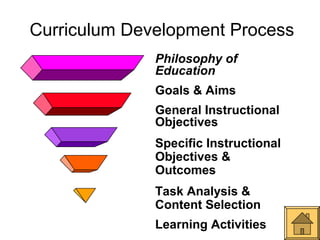
Curriculum Development Process
              Philosophy of
              Education
              Goals & Aims
              General Instructional
              Objectives
              Specific Instructional
              Objectives &
              Outcomes
              Task Analysis &
              Content Selection
              Learning Activities
Selection of Subject Matter
⇒Criteria: Relevance,
 importance, priority
⇒Scope: Amount,
 depth of coverage,
 concentration
⇒Sequence:
 Hierarchy &
 progression of
 complexity or
 difficulty
Organization of Subject Matter
              # Discrete subjects or
                courses
              # Broad fields or
                disciplines
              # Core or
                interdisciplinary
              # Skills or processes
              # Projects & activities
Approaches to Subject Matter

∞ Textual
∞ Experimental
∞ Developmental
∞ Psycho-social
∞ Experiential
Needs of the Learner
       * Cognitive
         development
       * Linguistic
         development
       * Psycho-social
         development
       * Moral/affective
         development
       * Vocational focus
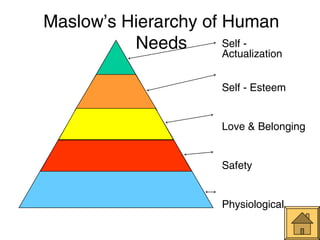
Maslow’s Hierarchy of Human
          Needs       Self -
                      Actualization


                          Self - Esteem


                          Love & Belonging


                          Safety


                          Physiological
The Needs of Society
         √ Literacy
         √ Vocational skills
         √ Social order &
           morality
         √ Interpersonal skills
         √ Transmission of
           values & culture
         √ Creativity &
           innovation

Curriculum 1

  • 1.
    A Curriculum Model based on the work of Ralph Tyler By Dr.Magdy M. Aly Professor of Curriculum& EFL Instruction FACULTY OF EDUCATION ,AIN
  • 2.
    A Definition ofCurriculum (Daniel Tanner, 1980) “The planned and guided learning experiences and intended learning outcomes, formulated through the systematic reconstruction of knowledge and experiences, under the auspices of the school, for the learners’ continuous and willful growth in personal social competence.”
  • 3.
    Curriculum Models • Are based on a body of theory about teaching & learning. • Are targeted to needs & characteristics of a particular group of learners. • Outline approaches, methods & procedures for implementation.
  • 4.
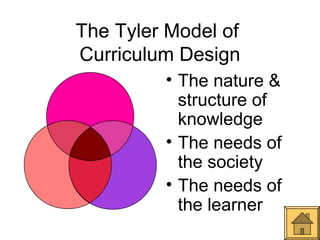
    The Tyler Modelof Curriculum Design • The nature & structure of knowledge • The needs of the society • The needs of the learner
  • 5.
    Fundamental Questions in Developing Curriculum 1 What educational purposes should the school seek to attain?
  • 6.
    Fundamental Questions in Developing Curriculum 2 What educational experiences can be provided that are likely to attain these purposes?
  • 7.
    Fundamental Questions in Developing Curriculum 3 How can these educational experiences be effectively organized?
  • 8.
    Fundamental Questions in Developing Curriculum 4 How can we determine whether and to what extent these purposes are being attained?
  • 9.
    The Nature &Structure of Knowledge √ Selection of subject matter √ Organization of subject matter or discipline √ Theoretical basis of methods & approaches
  • 10.
    Curriculum Development Process Philosophy of Education Goals & Aims General Instructional Objectives Specific Instructional Objectives & Outcomes Task Analysis & Content Selection Learning Activities
  • 11.
    Selection of SubjectMatter ⇒Criteria: Relevance, importance, priority ⇒Scope: Amount, depth of coverage, concentration ⇒Sequence: Hierarchy & progression of complexity or difficulty
  • 12.
    Organization of SubjectMatter # Discrete subjects or courses # Broad fields or disciplines # Core or interdisciplinary # Skills or processes # Projects & activities
  • 13.
    Approaches to SubjectMatter ∞ Textual ∞ Experimental ∞ Developmental ∞ Psycho-social ∞ Experiential
  • 14.
    Needs of theLearner * Cognitive development * Linguistic development * Psycho-social development * Moral/affective development * Vocational focus
  • 15.
    Maslow’s Hierarchy ofHuman Needs Self - Actualization Self - Esteem Love & Belonging Safety Physiological
  • 16.
    The Needs ofSociety √ Literacy √ Vocational skills √ Social order & morality √ Interpersonal skills √ Transmission of values & culture √ Creativity & innovation