CRYOGENIC ENGINE
Name :- Akshay Suresh Bhavar
CONTENTS : -
• INTRODUCTION
• PRINCIPLE
• CONTRUCTION
• WORKING
• ADVANTAGES
• LIMITATIONS
• Cryogenic technology involves the use of rocket
propellants at extremely low temperatures.
• The combination:- Liquid Oxygen (LOX) & Liquid
Hydroen (LH2) offers the highest energy efficiency
for rocket engines.
• Oxygen remains at liquid only at temperatures
below -183 oC and hydrogen below -253 oC.
• Basically Rocket engines are Reaction
engines.
• Use of cryogenic propellants
(cryogenic fuel or oxidizer) to produce
thrust.
• Needs high mass flow rate of
propellants.
• The liquid (LOx) oxidizer and liquid
hydrogen (LH2) fuel combination is
one of the most widely used.
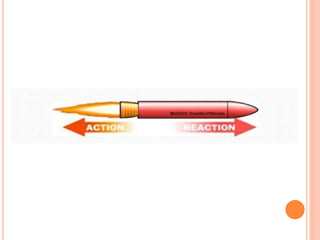
• The Basic principle driving a rocket engine
are: (i) Newton’s third law of motion (ii) Law of
conservation of momentum.
• In principle, cryogenic rocket engines
generate thrust like all ther rocket engines by
accelerating an impulse carrier to high
speeds.
• The chemical energy stored in the fuel is
converted into kinetic energy by burning it in
the thrust chamber and subsequent expansion
in the nozzle, in the process creating thrust.
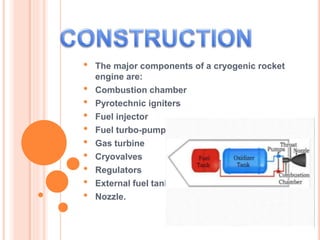
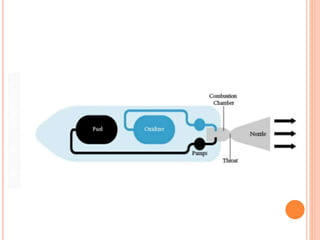
• The major components of a cryogenic rocket
engine are:
• Combustion chamber
• Pyrotechnic igniters
• Fuel injector
• Fuel turbo-pumps
• Gas turbine
• Cryovalves
• Regulators
• External fuel tanks
• Nozzle.
• Fuel and oxidizer from the external tank
enters the orbiter.
• Orbiter’s main propulsion system feed
lines the fuel and oxidizer each branch
out into three parallel paths, to each
engine.
• An Oxidizer system provides regular
supply of LOX, A Hydrogen fuel system
provides regular supply of LH2.
• Pre-burners and thrust control system.
• High Energy per unit mass:
• Propellants like oxiygen and hydrogen in
liquid form give very high amounts of
energy per unit mass due to which the
amount of fuel to be carried aboard the
rockets decreases.
• Clean Fuels:
• Hydrogen and oxygen are extremely clean
fuels. When they combine, they give out
only water. This water is thrown out of
the nozzle in form of very hot vapour.
• Boil off Rate
• Highly reactive gases
• Leakage
• Hydrogen Embrittlement
• It is the process by which various
metals, most importantly high-strength
steel, become brittle and fracture
following exposure to hydrogen.
• www.google.co.in/images/cryogenicroc
ketengine.
• http://en.wikipedia.org/wiki/Cryogenic_r
ocket_engine.
Thank you

Cryogenic engine ppt

  • 1.
    CRYOGENIC ENGINE Name :-Akshay Suresh Bhavar
  • 2.
    CONTENTS : - •INTRODUCTION • PRINCIPLE • CONTRUCTION • WORKING • ADVANTAGES • LIMITATIONS
  • 3.
    • Cryogenic technologyinvolves the use of rocket propellants at extremely low temperatures. • The combination:- Liquid Oxygen (LOX) & Liquid Hydroen (LH2) offers the highest energy efficiency for rocket engines. • Oxygen remains at liquid only at temperatures below -183 oC and hydrogen below -253 oC.
  • 4.
    • Basically Rocketengines are Reaction engines. • Use of cryogenic propellants (cryogenic fuel or oxidizer) to produce thrust. • Needs high mass flow rate of propellants. • The liquid (LOx) oxidizer and liquid hydrogen (LH2) fuel combination is one of the most widely used.
  • 5.
    • The Basicprinciple driving a rocket engine are: (i) Newton’s third law of motion (ii) Law of conservation of momentum. • In principle, cryogenic rocket engines generate thrust like all ther rocket engines by accelerating an impulse carrier to high speeds. • The chemical energy stored in the fuel is converted into kinetic energy by burning it in the thrust chamber and subsequent expansion in the nozzle, in the process creating thrust.
  • 7.
    • The majorcomponents of a cryogenic rocket engine are: • Combustion chamber • Pyrotechnic igniters • Fuel injector • Fuel turbo-pumps • Gas turbine • Cryovalves • Regulators • External fuel tanks • Nozzle.
  • 8.
    • Fuel andoxidizer from the external tank enters the orbiter. • Orbiter’s main propulsion system feed lines the fuel and oxidizer each branch out into three parallel paths, to each engine. • An Oxidizer system provides regular supply of LOX, A Hydrogen fuel system provides regular supply of LH2. • Pre-burners and thrust control system.
  • 10.
    • High Energyper unit mass: • Propellants like oxiygen and hydrogen in liquid form give very high amounts of energy per unit mass due to which the amount of fuel to be carried aboard the rockets decreases. • Clean Fuels: • Hydrogen and oxygen are extremely clean fuels. When they combine, they give out only water. This water is thrown out of the nozzle in form of very hot vapour.
  • 11.
    • Boil offRate • Highly reactive gases • Leakage • Hydrogen Embrittlement • It is the process by which various metals, most importantly high-strength steel, become brittle and fracture following exposure to hydrogen.
  • 12.
  • 13.