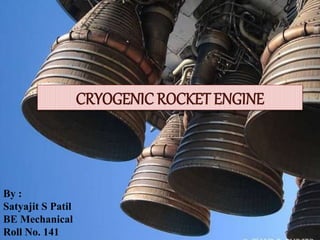
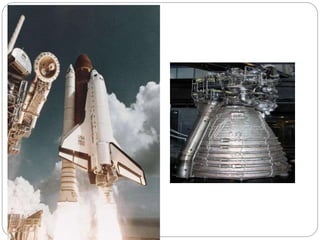
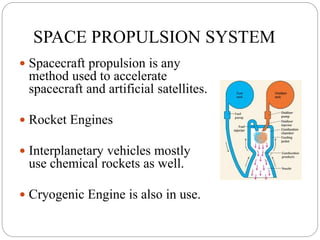
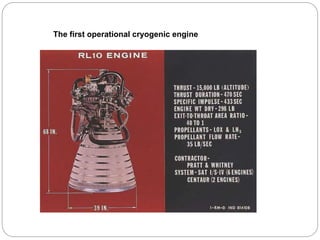
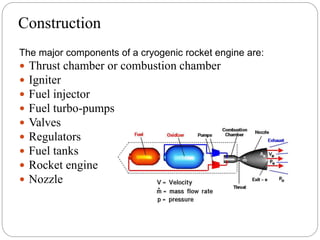
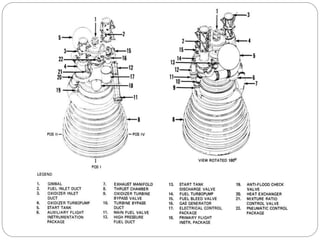
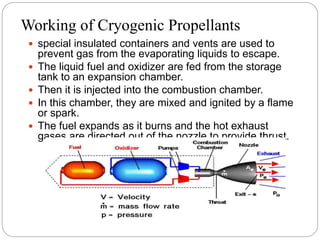
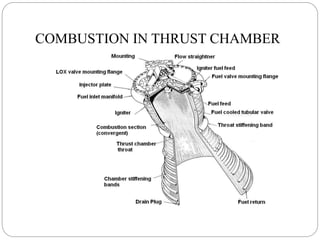
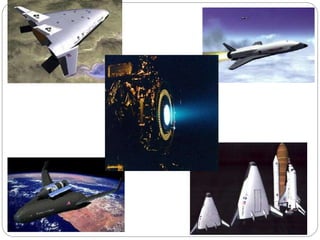
Cryogenic rocket engines use liquid oxygen and liquid hydrogen propellants, which are cooled to extremely low temperatures below their freezing points. This allows them to be stored densely in rocket fuel tanks. The first operational cryogenic engine was developed by NASA in 1961. Cryogenic engines work by pumping the liquid propellants into a combustion chamber where they ignite and expand, producing thrust through a nozzle. They offer high energy efficiency but also technical challenges due to boil off and leakage risks at very low temperatures. Future rocket technologies may use alternative propulsion methods like ion engines or nuclear thermal rockets.