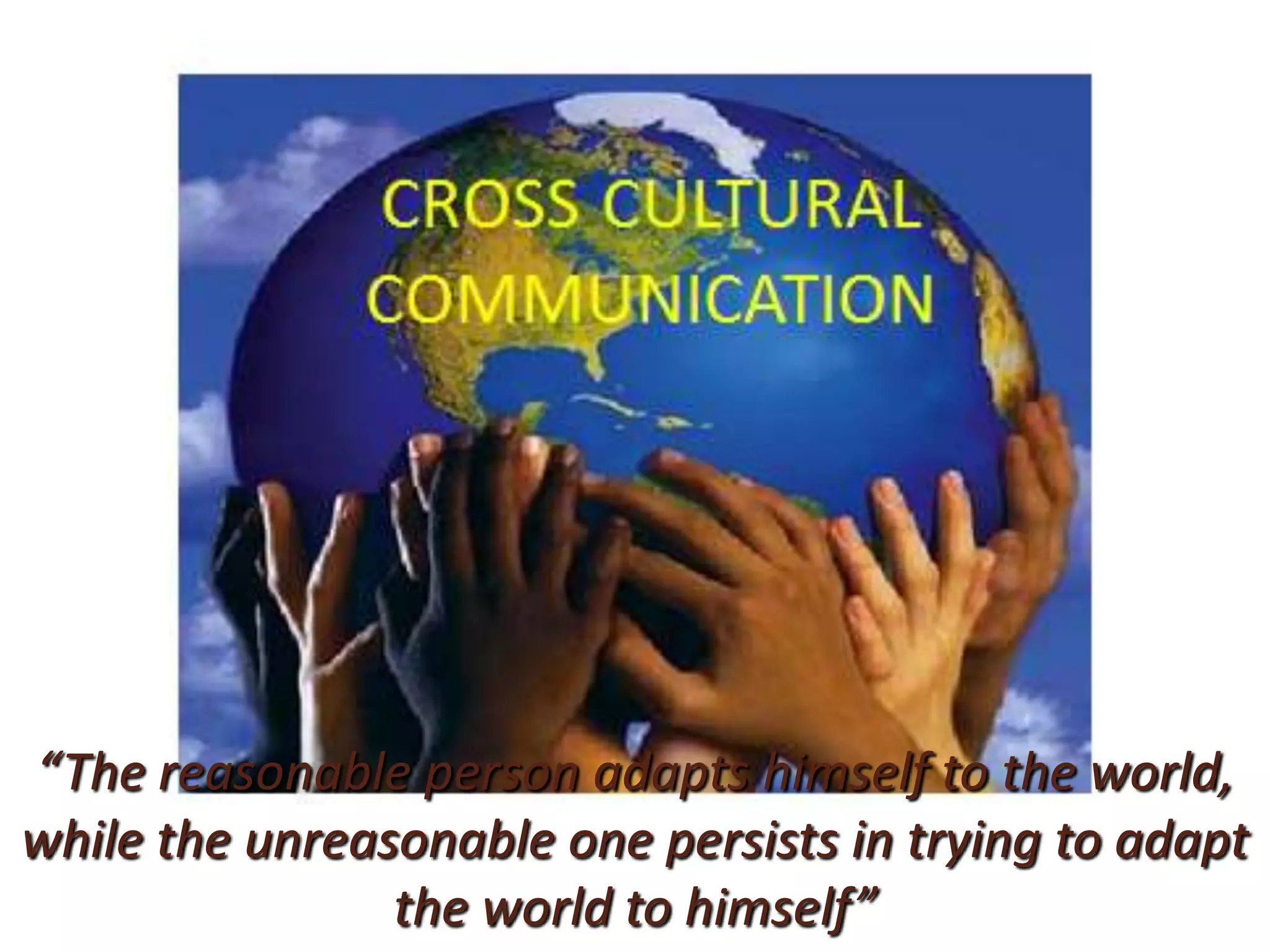


“The reasonable person adapts himself to the world,
while the unreasonable one persists in trying to adapt
the world to himself”
Meaning of Cross Culture
Communication

It is the process of sending and receiving messages
between people whose cultural background could
lead them to interpret verbal and non-verbal signs
differently.
Why Cross Culture
Communication is important ?

Business Opportunities
Job Opportunities
Improves the contribution of
employees in a diverse workforce
Sharing of views and ideas
Talent improvisation
Dimensions of Culture
o Context
o Communication style
o Time orientation
Low Context
These cultures rely more on
content rather than on
context.
• They give value to the written
words rather than oral
statements.
• Low-context cultures: North
America, Western
Europe
•
High Context
• They infer information from
message context, rather
than from content.
• They rely heavily on
nonverbal sign and prefer
indirectness & politeness.
• High-context cultures: Japan,
China, Arab.
Communication Style
• Westerners value a direct, straightforward
communication style.

Perception Of Time
o In some countries punctuality is considered
important and being late would be considered as an
insult. However, in other countries being on time
does not carry the same sense of urgency.
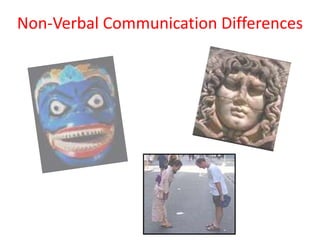
Non-Verbal Communication Differences
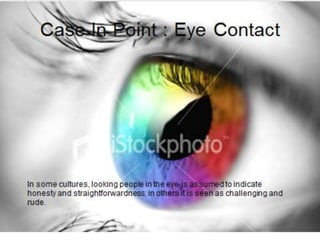
In USA, the cheapest, most
effective way to connect with
people is to look them into the eye.
Most people in Arab culture share a
great deal of eye contact and may
regard too little as disrespectful.
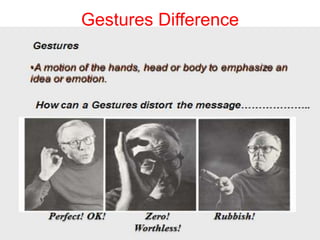
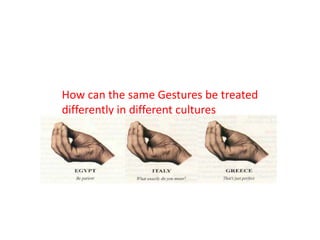
Gestures Difference
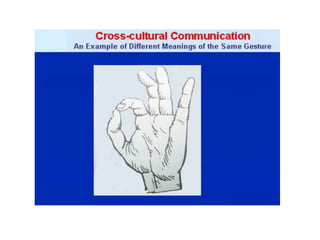
How can the same Gestures be treated
differently in different cultures
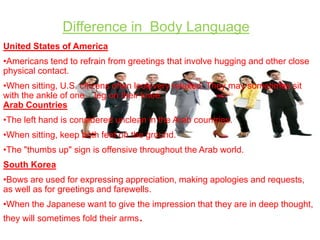
Difference in Body Language
United States of America
•Americans tend to refrain from greetings that involve hugging and other close
physical contact.

•When sitting, U.S. citizens often look very relaxed. They may sometimes sit
with the ankle of one leg on their knee.
Arab Countries
•The left hand is considered unclean in the Arab countries.
•When sitting, keep both feet on the ground.
•The "thumbs up" sign is offensive throughout the Arab world.
South Korea
•Bows are used for expressing appreciation, making apologies and requests,
as well as for greetings and farewells.
•When the Japanese want to give the impression that they are in deep thought,
they will sometimes fold their arms.
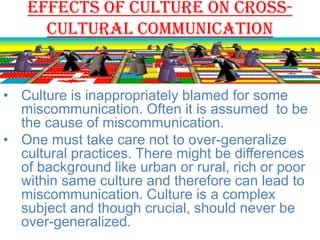
Effects of culture on crosscultural communication

• Culture is inappropriately blamed for some
miscommunication. Often it is assumed to be
the cause of miscommunication.
• One must take care not to over-generalize
cultural practices. There might be differences
of background like urban or rural, rich or poor
within same culture and therefore can lead to
miscommunication. Culture is a complex
subject and though crucial, should never be
over-generalized.
Points to be kept in mind for effective in Cultural
Communication
1.
2.
3.
4.
5.
6.
7.
8.
9.
10.

Slow Down
Separate Questions
Avoid Negative Questions
Take Turns
Write it down
Be Supportive
Check Meanings
Avoid Slangs
Watch the humour
Maintain Etiquette

Cross culture communication -BY NAVIN MATO

  • 1.
    “The reasonable personadapts himself to the world, while the unreasonable one persists in trying to adapt the world to himself”
  • 2.
    Meaning of CrossCulture Communication It is the process of sending and receiving messages between people whose cultural background could lead them to interpret verbal and non-verbal signs differently.
  • 3.
    Why Cross Culture Communicationis important ? Business Opportunities Job Opportunities Improves the contribution of employees in a diverse workforce Sharing of views and ideas Talent improvisation
  • 4.
    Dimensions of Culture oContext o Communication style o Time orientation
  • 5.
    Low Context These culturesrely more on content rather than on context. • They give value to the written words rather than oral statements. • Low-context cultures: North America, Western Europe •
  • 6.
    High Context • Theyinfer information from message context, rather than from content. • They rely heavily on nonverbal sign and prefer indirectness & politeness. • High-context cultures: Japan, China, Arab.
  • 7.
    Communication Style • Westernersvalue a direct, straightforward communication style. Perception Of Time o In some countries punctuality is considered important and being late would be considered as an insult. However, in other countries being on time does not carry the same sense of urgency.
  • 8.
  • 10.
    In USA, thecheapest, most effective way to connect with people is to look them into the eye.
  • 11.
    Most people inArab culture share a great deal of eye contact and may regard too little as disrespectful.
  • 12.
  • 14.
    How can thesame Gestures be treated differently in different cultures
  • 15.
    Difference in BodyLanguage United States of America •Americans tend to refrain from greetings that involve hugging and other close physical contact. •When sitting, U.S. citizens often look very relaxed. They may sometimes sit with the ankle of one leg on their knee. Arab Countries •The left hand is considered unclean in the Arab countries. •When sitting, keep both feet on the ground. •The "thumbs up" sign is offensive throughout the Arab world. South Korea •Bows are used for expressing appreciation, making apologies and requests, as well as for greetings and farewells. •When the Japanese want to give the impression that they are in deep thought, they will sometimes fold their arms.
  • 16.
    Effects of cultureon crosscultural communication • Culture is inappropriately blamed for some miscommunication. Often it is assumed to be the cause of miscommunication. • One must take care not to over-generalize cultural practices. There might be differences of background like urban or rural, rich or poor within same culture and therefore can lead to miscommunication. Culture is a complex subject and though crucial, should never be over-generalized.
  • 17.
    Points to bekept in mind for effective in Cultural Communication 1. 2. 3. 4. 5. 6. 7. 8. 9. 10. Slow Down Separate Questions Avoid Negative Questions Take Turns Write it down Be Supportive Check Meanings Avoid Slangs Watch the humour Maintain Etiquette