Cross-Culture Communication
           Conflict
 ENG 310 Advanced Interpersonal Communication
          California College San Diego
                 Aaron Ephraim
               Elizabeth Sanchez
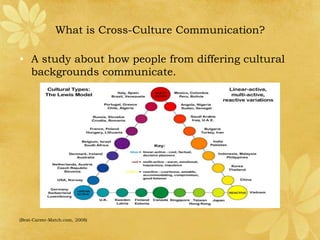
What is Cross-Culture Communication?

• A study about how people from differing cultural
  backgrounds communicate.


(Best-Career-Match.com, 2008)
Cross-Cultural Communication Comparison.

        United States              Mexico
       (Individualism)          (Collectivism)


• Loose                  • Strong
• Personal freedom is    • Societal norms is
  valued                   valued
• individual decision    • Group decision-making
  making (Hofstede,        (Hofstede, 1980).
  1980).
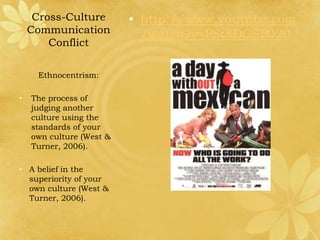
Cross-Culture        • http://www.youtube.com
    Communication           /watch?v=P8t8DCSP020
        Conflict

     Ethnocentrism:

•   The process of
    judging another
    culture using the
    standards of your
    own culture (West &
    Turner, 2006).

• A belief in the
  superiority of your
  own culture (West &
  Turner, 2006).
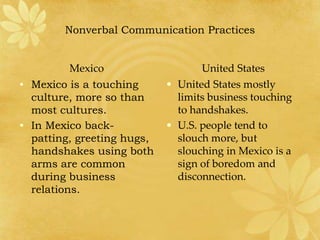
Nonverbal Communication Practices


         Mexico                    United States
• Mexico is a touching      • United States mostly
  culture, more so than       limits business touching
  most cultures.              to handshakes.
• In Mexico back-           • U.S. people tend to
  patting, greeting hugs,     slouch more, but
  handshakes using both       slouching in Mexico is a
  arms are common             sign of boredom and
  during business             disconnection.
  relations.
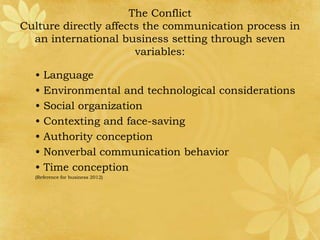
The Conflict
Culture directly affects the communication process in
  an international business setting through seven
                       variables:

  •   Language
  •   Environmental and technological considerations
  •   Social organization
  •   Contexting and face-saving
  •   Authority conception
  •   Nonverbal communication behavior
  •   Time conception
  (Reference for business 2012)
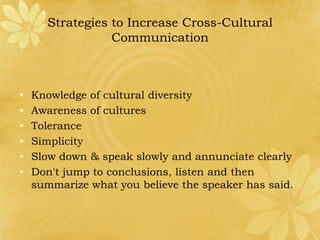
Strategies to Increase Cross-Cultural
                 Communication


•   Knowledge of cultural diversity
•   Awareness of cultures
•   Tolerance
•   Simplicity
•   Slow down & speak slowly and annunciate clearly
•   Don't jump to conclusions, listen and then
    summarize what you believe the speaker has said.
References


• West, R., & Turner, H. L. (2006). Understanding
  Interpersonal Communication– Making Choices in
  Changing Times. Belmont: Wadsworth Publishing.
• N., A. (2012). Cross-cultural international
  communication. Retrieved from
  http://www.referenceforbusiness.com/encyclopedi
  a/Cos-Des/Cross-Cultural-International-
  Communication.html

Cross culture communication

  • 1.
    Cross-Culture Communication Conflict ENG 310 Advanced Interpersonal Communication California College San Diego Aaron Ephraim Elizabeth Sanchez
  • 2.
    What is Cross-CultureCommunication? • A study about how people from differing cultural backgrounds communicate. (Best-Career-Match.com, 2008)
  • 3.
    Cross-Cultural Communication Comparison. United States Mexico (Individualism) (Collectivism) • Loose • Strong • Personal freedom is • Societal norms is valued valued • individual decision • Group decision-making making (Hofstede, (Hofstede, 1980). 1980).
  • 4.
    Cross-Culture • http://www.youtube.com Communication /watch?v=P8t8DCSP020 Conflict Ethnocentrism: • The process of judging another culture using the standards of your own culture (West & Turner, 2006). • A belief in the superiority of your own culture (West & Turner, 2006).
  • 5.
    Nonverbal Communication Practices Mexico United States • Mexico is a touching • United States mostly culture, more so than limits business touching most cultures. to handshakes. • In Mexico back- • U.S. people tend to patting, greeting hugs, slouch more, but handshakes using both slouching in Mexico is a arms are common sign of boredom and during business disconnection. relations.
  • 6.
    The Conflict Culture directlyaffects the communication process in an international business setting through seven variables: • Language • Environmental and technological considerations • Social organization • Contexting and face-saving • Authority conception • Nonverbal communication behavior • Time conception (Reference for business 2012)
  • 7.
    Strategies to IncreaseCross-Cultural Communication • Knowledge of cultural diversity • Awareness of cultures • Tolerance • Simplicity • Slow down & speak slowly and annunciate clearly • Don't jump to conclusions, listen and then summarize what you believe the speaker has said.
  • 8.
    References • West, R.,& Turner, H. L. (2006). Understanding Interpersonal Communication– Making Choices in Changing Times. Belmont: Wadsworth Publishing. • N., A. (2012). Cross-cultural international communication. Retrieved from http://www.referenceforbusiness.com/encyclopedi a/Cos-Des/Cross-Cultural-International- Communication.html