Cross-culture Communication
Paper Structure Abstract (in your material) Keywords (nonverbal conflicts tips) Introduction Main part Basic Strategy Nonverbal Conflicts Ten Tips Summary
Paper Structure Conclusion Acknowledgement (roommate) Reference [1]. MLA Style Citation: Payne, Neil "Ten Tips for Cross Cultural Communication.“   18 Sep. 2004.  EzineArticles.com . 3 May 2009 [2]. APA Style Citation:  Payne, N. (2004, September 18).  Ten Tips for Cross Cultural Communication . Retrieved May 3, 2009, from  http://ezinearticles.com
Main part  Basic Strategy Nonverbal Conflicts Ten tips
Basic Strategy Understand the potential problems of cross-cultural communication. Adjust one’s behavior appropriately Intermediaries who are familiar with both cultures. Stop, Listen, and Think R
Nonverbal Communication Expressions  (Micro) Gestures  (Subconscious) R
Micro Expression
Micro Expression
Micro Expression
Micro Expression
Micro Expression
Micro Expression R
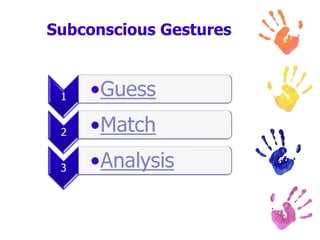
Subconscious Gestures
1.  Who are more likely to give thumbs up? A. Winners B. Losers  C. Waiters
2.  Who are more likely to wring their hands? A. Worried people. B. Bored people. C. Tired people.
3.  Who are more likely to clench their fists. A. People who are upset. B. People who are cold. C. People who are anxious. R
1. Match the appropriate gesture with  what someone says? Raise one ’ s hand. Wink at someone. Wave one ’ s hand. Thumb a ride. Hang one ’ s head . “ I feel so ashamed ” “ Present ” “ My car broke down ” “ Have a good trip! ” “ I ’ m not really serious ” “ Don ’ t ever do that again ” “ Agreed ” R
1 . What is your own interpretation of George Bush ’ s gestures? R
Solving Conflicts Probing for the culture dimension Learning about other culture Altering practices and procedures R
Ten Tips Slow Down English--- not mean speak at  normal speed.  Speak clearly and ensure your pronunciation is intelligible.
Ten Tips Separate Questions Avoid  double questions “ Do you want to carry on or shall  we stop here?”
Ten Tips Avoid Negative Questions In English  ‘ yes’  ---- affirmative  ‘ no’  ---- negative. In other cultures  ‘ yes’ or ‘no’  questioner is right or wrong.
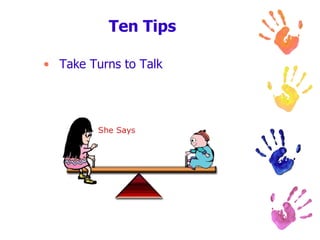
Ten Tips Take Turns to Talk
Ten Tips Write it Down A billion USA 1,000,000,000,000  UK 1,000,000,000.
Ten Tips Be Supportive Encouragement to those with weak English  Gives them confidence, support and a trust in you.
Ten Tips Check Meaning Be an active listener. Summarize what has been said in order to verify it.
Ten Tips Avoid Slang PFO ?
Ten Tips Avoid Slang PFO  perfluorooctanesulphonate ( 全氟辛烷磺酸盐 )
Ten Tips Watch the Humour Professionalism and protocol are constantly observed.  When using humor think whether it will be understood in the other culture.
Ten Tips Maintain Etiquette Do some research on the target  culture.
Conclusion What is cross – culture communication?
Conclusion Dealing with people from other  cultures in a proper way  Minimizes  Misunderstandings Maximizes your  Knowledge Potential
Thank you !

cross-culture communication

  • 1.
  • 2.
  • 3.
    Paper Structure Abstract(in your material) Keywords (nonverbal conflicts tips) Introduction Main part Basic Strategy Nonverbal Conflicts Ten Tips Summary
  • 4.
    Paper Structure ConclusionAcknowledgement (roommate) Reference [1]. MLA Style Citation: Payne, Neil "Ten Tips for Cross Cultural Communication.“ 18 Sep. 2004. EzineArticles.com . 3 May 2009 [2]. APA Style Citation: Payne, N. (2004, September 18). Ten Tips for Cross Cultural Communication . Retrieved May 3, 2009, from http://ezinearticles.com
  • 5.
    Main part Basic Strategy Nonverbal Conflicts Ten tips
  • 6.
    Basic Strategy Understandthe potential problems of cross-cultural communication. Adjust one’s behavior appropriately Intermediaries who are familiar with both cultures. Stop, Listen, and Think R
  • 7.
    Nonverbal Communication Expressions (Micro) Gestures (Subconscious) R
  • 8.
  • 9.
  • 10.
  • 11.
  • 12.
  • 13.
  • 14.
  • 15.
    1. Whoare more likely to give thumbs up? A. Winners B. Losers C. Waiters
  • 16.
    2. Whoare more likely to wring their hands? A. Worried people. B. Bored people. C. Tired people.
  • 17.
    3. Whoare more likely to clench their fists. A. People who are upset. B. People who are cold. C. People who are anxious. R
  • 18.
    1. Match theappropriate gesture with what someone says? Raise one ’ s hand. Wink at someone. Wave one ’ s hand. Thumb a ride. Hang one ’ s head . “ I feel so ashamed ” “ Present ” “ My car broke down ” “ Have a good trip! ” “ I ’ m not really serious ” “ Don ’ t ever do that again ” “ Agreed ” R
  • 19.
    1 . Whatis your own interpretation of George Bush ’ s gestures? R
  • 20.
    Solving Conflicts Probingfor the culture dimension Learning about other culture Altering practices and procedures R
  • 21.
    Ten Tips SlowDown English--- not mean speak at normal speed. Speak clearly and ensure your pronunciation is intelligible.
  • 22.
    Ten Tips SeparateQuestions Avoid double questions “ Do you want to carry on or shall we stop here?”
  • 23.
    Ten Tips AvoidNegative Questions In English ‘ yes’ ---- affirmative ‘ no’ ---- negative. In other cultures ‘ yes’ or ‘no’ questioner is right or wrong.
  • 24.
    Ten Tips TakeTurns to Talk
  • 25.
    Ten Tips Writeit Down A billion USA 1,000,000,000,000 UK 1,000,000,000.
  • 26.
    Ten Tips BeSupportive Encouragement to those with weak English Gives them confidence, support and a trust in you.
  • 27.
    Ten Tips CheckMeaning Be an active listener. Summarize what has been said in order to verify it.
  • 28.
    Ten Tips AvoidSlang PFO ?
  • 29.
    Ten Tips AvoidSlang PFO perfluorooctanesulphonate ( 全氟辛烷磺酸盐 )
  • 30.
    Ten Tips Watchthe Humour Professionalism and protocol are constantly observed. When using humor think whether it will be understood in the other culture.
  • 31.
    Ten Tips MaintainEtiquette Do some research on the target culture.
  • 32.
    Conclusion What iscross – culture communication?
  • 33.
    Conclusion Dealing withpeople from other cultures in a proper way Minimizes Misunderstandings Maximizes your Knowledge Potential
  • 34.