Attitudes & Behaviour “ Cultural Awareness”
Structure of Presentation What is Culture? Understanding Cultural differences Dealing with Cultural differences See some experiences…
Take this to your reality During this class … Talk about your experiences… If you agree or no! Talk about you contact with other cultures… Express your thoughts!
Culture A shared system of  meanings,  beliefs,  values  behaviours  through which experience is interpreted and carried out
Culture Is .. Relative Learned Collective Changes over time Complex responsive process
Forces Shaping Individual Culture   Personal Culture Values World-views Beliefs Behaviours Urbanization Migration Minority Experience Cross-cultural Adjustments Profession Gender Language Education Industrialization Social background Ethnic background Religion Nationalism Colonisation
 
 
Dangers! Stereotypes Prejudice Ethno-centric perspectives
Understanding Cultural differences Eating habits Asia -  chop sticks Europe - knife and fork Clean right hand in some countries Common plate
Understanding Cultural differences Eating habits Beef Pork Horse “ Everything that moves”
Understanding Cultural differences Eating habits Pork not eaten by Muslims for religious reasons Christians keep horses, dogs and cats as pets Fish is neutral
Understanding Cultural differences Religion Religion – an important place in many societies Knowledge of religion of host nation very important Respect religious beliefs
Understanding Cultural differences Family and Gender Elders are highly respected in some cultures Understand family ties Different gender beliefs and views
Understanding Cultural differences Communication Language is culture specific Avoid use of idiomatic expressions Humour
Understanding Cultural differences Body Language Gesture/body language have different meanings Smile will never be misunderstood Polite handshake is accepted in most cultures
Understanding Cultural differences Dress Code Depends on culture, customs, traditions and climate Adapt to local customs
Understanding Cultural differences Traffic Peacekeeper die in traffic accidents Different traffic conditions Respect local traffic laws Adapt to local conditions
Understanding Cultural differences Time People have different concept of time Need to understand “ You have the clock, we have the time”
Building Cultural Awareness Understand your own culture Understand and accept logic of other cultural frameworks Cultural differences as unique and creative problem-solving opportunity
Host Country’s Culture Knowledge of history, culture, customs and traditions Background for the conflict Expectations from “Blue Berets”
Cultural Shock Unfamiliar: Language Climate Currency Road signs Colleagues Adaptation process
The Adaptation Stages Honeymoon Initial confrontation Adjustment crisis Recovery
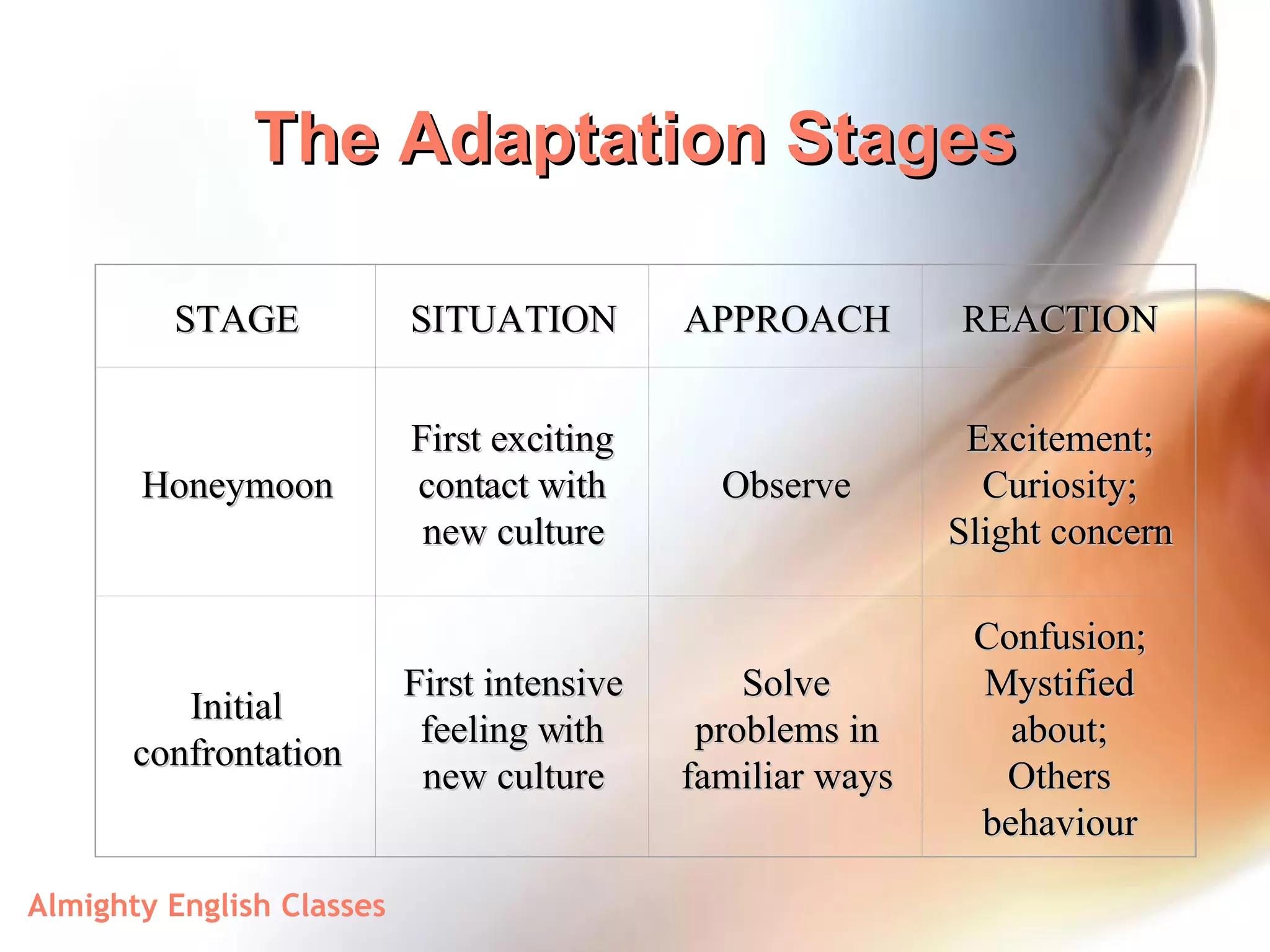
The Adaptation Stages STAGE SITUATION APPROACH REACTION Honeymoon First exciting contact with new culture Observe Excitement; Curiosity; Slight concern Initial confrontation First intensive feeling with new culture Solve problems in familiar ways Confusion; Mystified about; Others behaviour
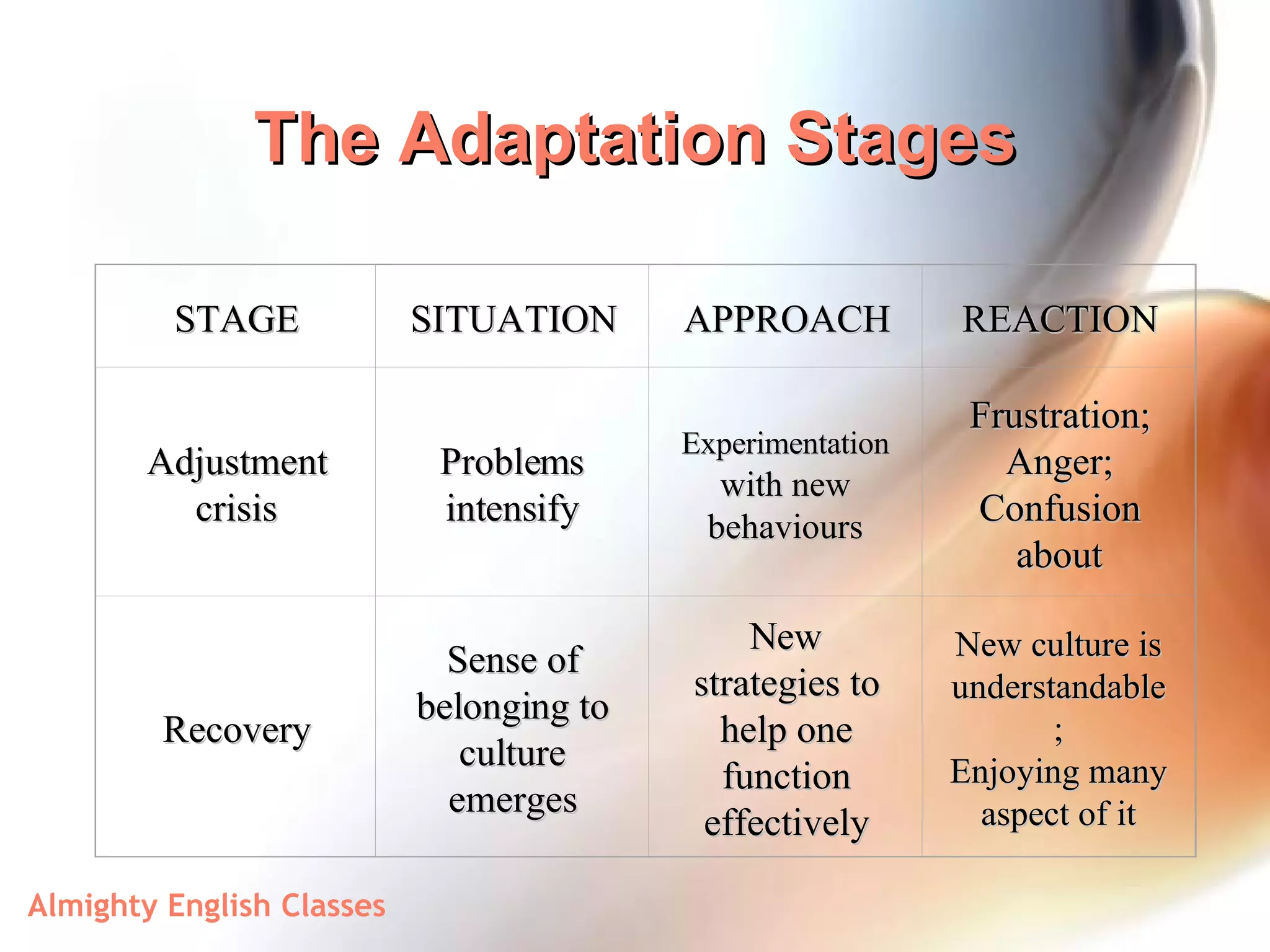
The Adaptation Stages STAGE SITUATION APPROACH REACTION Adjustment crisis Problems intensify Experimentation  with new behaviours Frustration; Anger; Confusion about Recovery Sense of belonging to culture emerges New strategies to help one function effectively New culture is understandable; Enjoying many aspect of it
Cultural Awareness “ If you are Humble Respectful Friendly you will always be fine”
Case Studies The market place The toilet  experience To walk hand in hand Movement control at the airport The gift
Summary Cultural awareness is increased by giving you the most common examples This is the first step to handle cultural differences positively, avoid conflicts due to misperception and to make you interact positively with host cultures
Summary Closely related to “Code of Conduct”, where you get written rules.  In culture you may find few written rules, but make sure, you know and obey them
 

Cultural Awareness

  • 1.
    Attitudes & Behaviour“ Cultural Awareness”
  • 2.
    Structure of PresentationWhat is Culture? Understanding Cultural differences Dealing with Cultural differences See some experiences…
  • 3.
    Take this toyour reality During this class … Talk about your experiences… If you agree or no! Talk about you contact with other cultures… Express your thoughts!
  • 4.
    Culture A sharedsystem of meanings, beliefs, values behaviours through which experience is interpreted and carried out
  • 5.
    Culture Is ..Relative Learned Collective Changes over time Complex responsive process
  • 6.
    Forces Shaping IndividualCulture Personal Culture Values World-views Beliefs Behaviours Urbanization Migration Minority Experience Cross-cultural Adjustments Profession Gender Language Education Industrialization Social background Ethnic background Religion Nationalism Colonisation
  • 7.
  • 8.
  • 9.
    Dangers! Stereotypes PrejudiceEthno-centric perspectives
  • 10.
    Understanding Cultural differencesEating habits Asia - chop sticks Europe - knife and fork Clean right hand in some countries Common plate
  • 11.
    Understanding Cultural differencesEating habits Beef Pork Horse “ Everything that moves”
  • 12.
    Understanding Cultural differencesEating habits Pork not eaten by Muslims for religious reasons Christians keep horses, dogs and cats as pets Fish is neutral
  • 13.
    Understanding Cultural differencesReligion Religion – an important place in many societies Knowledge of religion of host nation very important Respect religious beliefs
  • 14.
    Understanding Cultural differencesFamily and Gender Elders are highly respected in some cultures Understand family ties Different gender beliefs and views
  • 15.
    Understanding Cultural differencesCommunication Language is culture specific Avoid use of idiomatic expressions Humour
  • 16.
    Understanding Cultural differencesBody Language Gesture/body language have different meanings Smile will never be misunderstood Polite handshake is accepted in most cultures
  • 17.
    Understanding Cultural differencesDress Code Depends on culture, customs, traditions and climate Adapt to local customs
  • 18.
    Understanding Cultural differencesTraffic Peacekeeper die in traffic accidents Different traffic conditions Respect local traffic laws Adapt to local conditions
  • 19.
    Understanding Cultural differencesTime People have different concept of time Need to understand “ You have the clock, we have the time”
  • 20.
    Building Cultural AwarenessUnderstand your own culture Understand and accept logic of other cultural frameworks Cultural differences as unique and creative problem-solving opportunity
  • 21.
    Host Country’s CultureKnowledge of history, culture, customs and traditions Background for the conflict Expectations from “Blue Berets”
  • 22.
    Cultural Shock Unfamiliar:Language Climate Currency Road signs Colleagues Adaptation process
  • 23.
    The Adaptation StagesHoneymoon Initial confrontation Adjustment crisis Recovery
  • 24.
    The Adaptation StagesSTAGE SITUATION APPROACH REACTION Honeymoon First exciting contact with new culture Observe Excitement; Curiosity; Slight concern Initial confrontation First intensive feeling with new culture Solve problems in familiar ways Confusion; Mystified about; Others behaviour
  • 25.
    The Adaptation StagesSTAGE SITUATION APPROACH REACTION Adjustment crisis Problems intensify Experimentation with new behaviours Frustration; Anger; Confusion about Recovery Sense of belonging to culture emerges New strategies to help one function effectively New culture is understandable; Enjoying many aspect of it
  • 26.
    Cultural Awareness “If you are Humble Respectful Friendly you will always be fine”
  • 27.
    Case Studies Themarket place The toilet experience To walk hand in hand Movement control at the airport The gift
  • 28.
    Summary Cultural awarenessis increased by giving you the most common examples This is the first step to handle cultural differences positively, avoid conflicts due to misperception and to make you interact positively with host cultures
  • 29.
    Summary Closely relatedto “Code of Conduct”, where you get written rules. In culture you may find few written rules, but make sure, you know and obey them
  • 30.