Critical Thinking: Strategies in Decision Making MGT/350 Felicitator: Ron Sears  MA
Introductions Who are you? What do you do? What do you want out of this course? Fun fact Answer one of these questions: What movie or TV character would you most like to be? What two people dead or alive would you like to have lunch with? If you could go back into time—what period of time would you go back to?
Course Objectives This course develops the analytical abilities of students and equips them with concrete skills in critical thinking and decision making.
Syllabus Review Attendance Participation Late Assignments Academic Integrity Learning Teams and Roles Wikipedia Laptops
First Paper Share your paper on—Critical Thinking Application Provide an example from your personal experience.
Notable Quotes Thinking is the hardest work there is, which is probably why so few engage in it. Henry Ford At a certain age some people’s minds close up. They live on their intellectual fat. William Lyon Phelps
Learn Team Discussion Define critical thinking. Come to a consensus. Select a spoke person.
Thinking Critically Means… Examining different viewpoints  Learn to think from different perspectives. View those opinions which differ from yours. Examine the assumptions, metaphors, & analogies of your own viewpoints & of others. Avoid automatic responses.
General Working Definition of Critical Thinking A process that evaluates ideas through the testing of statements (accuracy) and the soundness of reasoning behind them.
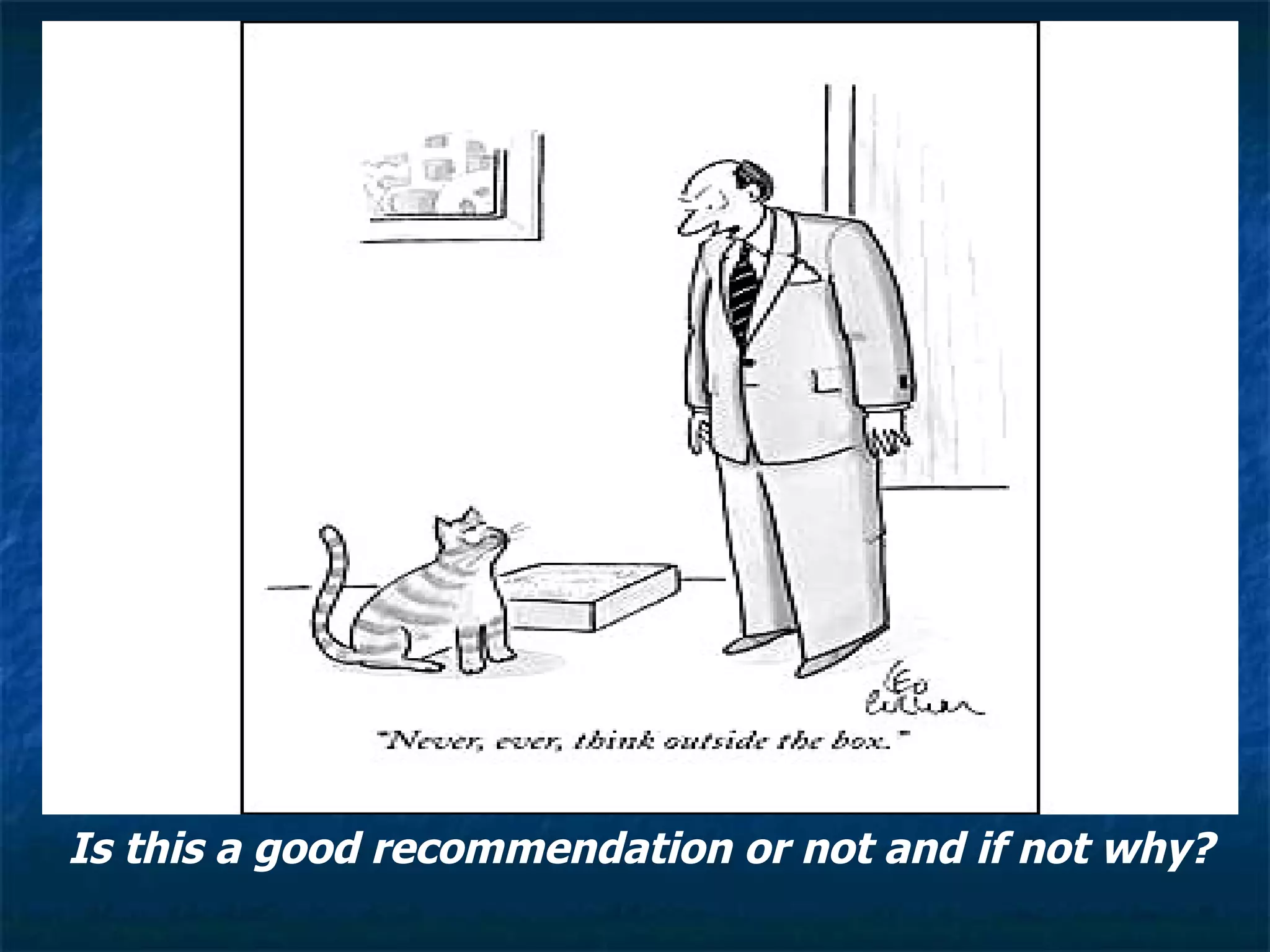
Is this a good recommendation or not and if not why?
Discussion Question Why is critical thinking important? Is there a difference between thinking and critically thinking? Can we train ourselves to think differently? How do we prepare ourselves to new patterns of thought?
Critical Thinking Someone with Critical Thinking skills is able to: Understand the logical connections between ideas. Detect inconsistencies and common mistakes in reasoning. Solve problems systematically. Reflect on the justification of one’s own beliefs and values.
Thoughts to Ponder Education means development of the mind from within so it will help one to take problems apart and put them to work based upon sound judgment.  What if you choose to read no new books for the next ten years? Would your mind be different?
Critical Thinking Quotes We can’t solve problems by using the same kind of thinking we used when we created them.     Albert Einstein Discovery is seeing what everybody else has seen, and thinking what nobody else has thought.     Unknown The human mind once stretched by a new idea never goes back to its original dimensions.     Oliver Wendell Homes
Characteristics of Critical Thinkers:  Strive for understanding Are honest with themselves Base judgment on evidence Are interested in other people’s ideas Control their feelings/emotions Recognize that extreme views are seldom correct.
Characteristics of Critical Thinkers Keep an open mind They are very observant Identify key issues and raise questions Obtain relevant facts Evaluate the findings and form judgments
What does the absence of critical thinking look like? We blindly accept at face value all justifications given by organizations and political leaders. We blindly believe TV commercials. We blindly continue to hold on to old beliefs.
Discussion Question Do you agree or disagree with the following statement and why? Not only do we tend to think about the world according to what we want to see and what we need to see, we tend to think of it in terms of what we expect to see.
Follow-up Discussion Are we reluctant to change our perceptions and ideas to accommodate the facts, or is it easier to maintain the status quo based upon our prior experiences? Do stereotypes effect our thinking?
Should You Believe  Everything You See? Perception is learned from both our own experience and through interaction with others. Is perception reality?
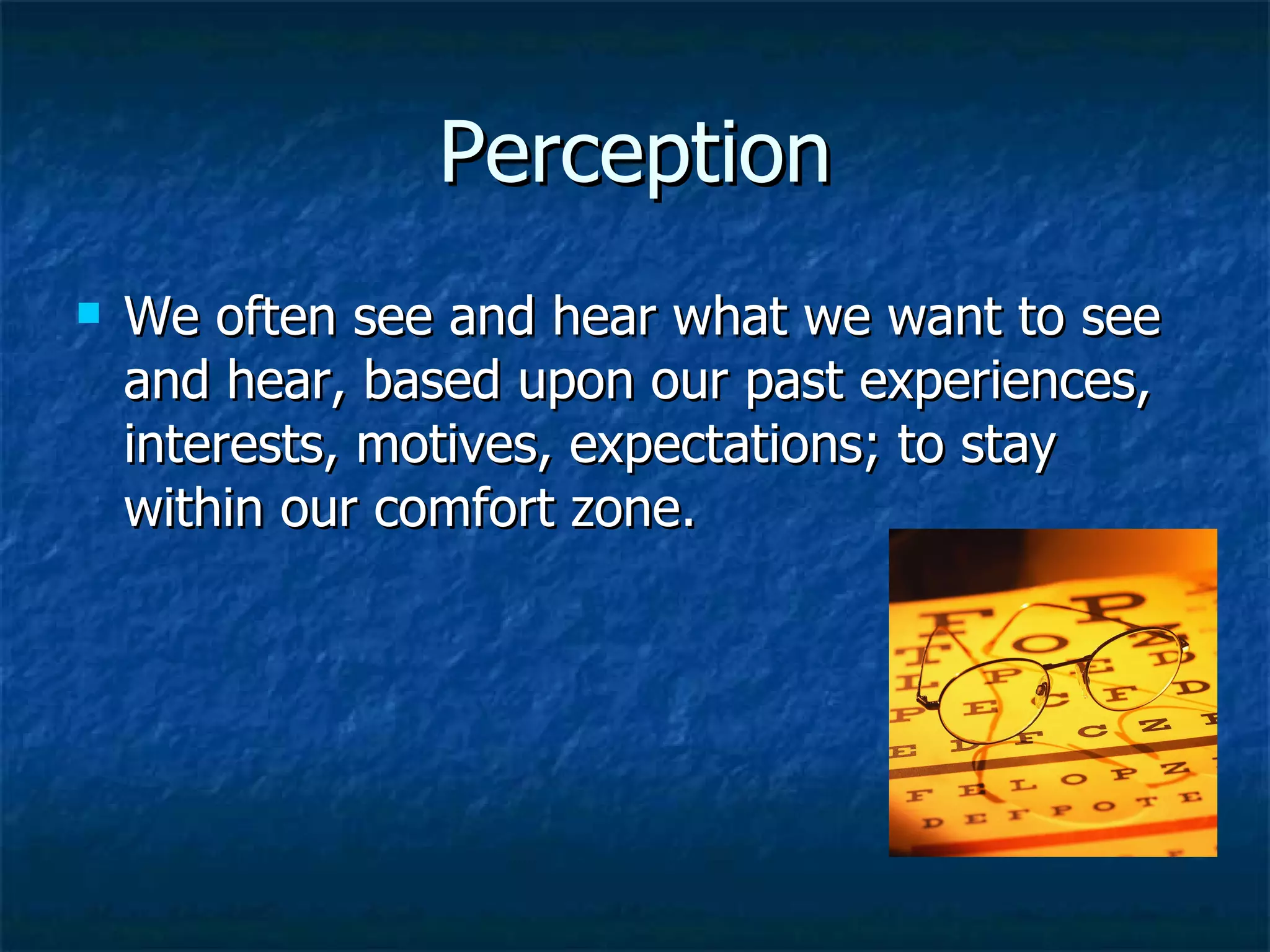
Perception We often see and hear what we want to see and hear, based upon our past experiences, interests, motives, expectations; to stay within our comfort zone.
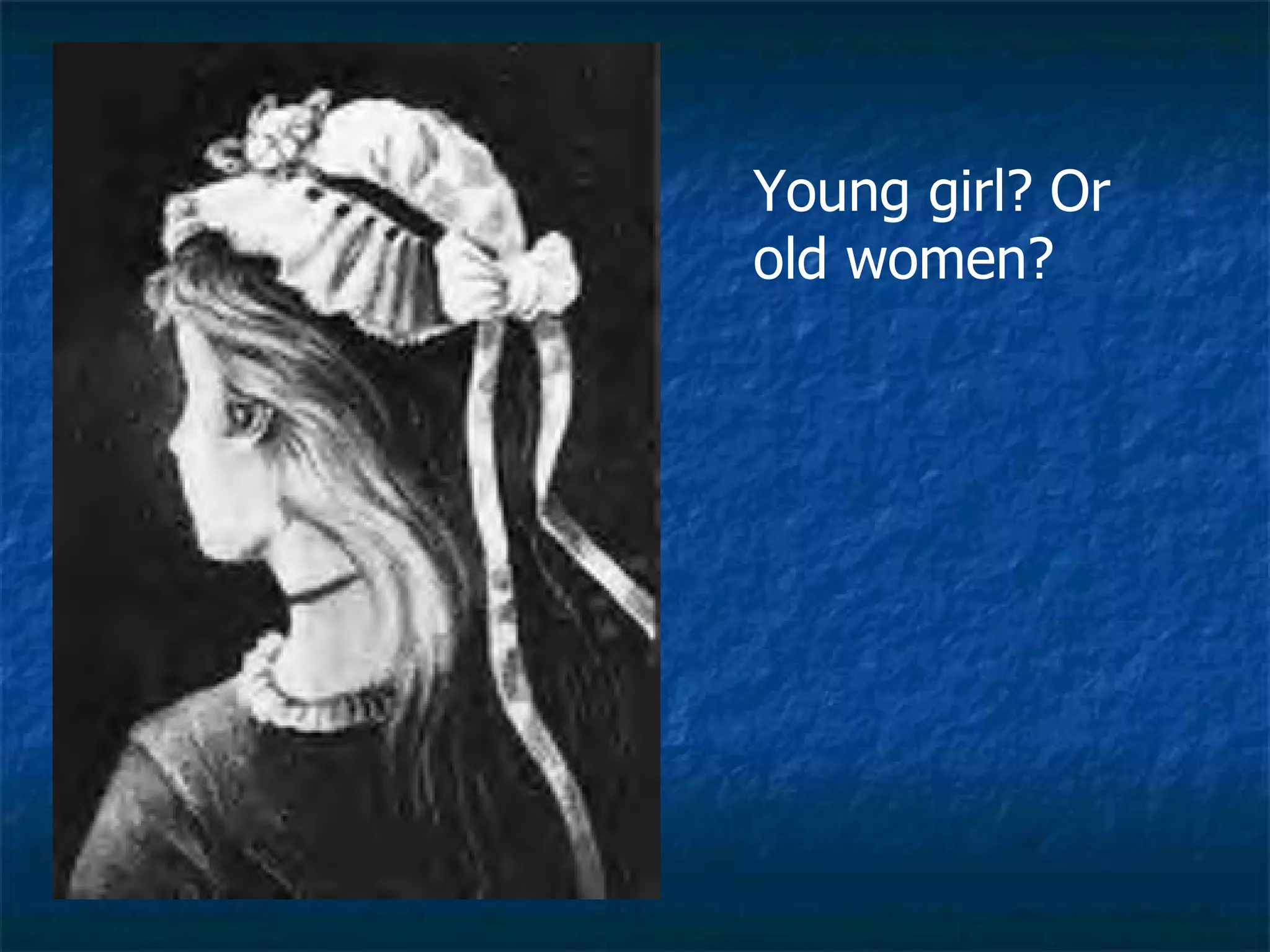
Young girl? Or old women?
Man playing horn? Or a women’s silhouette?
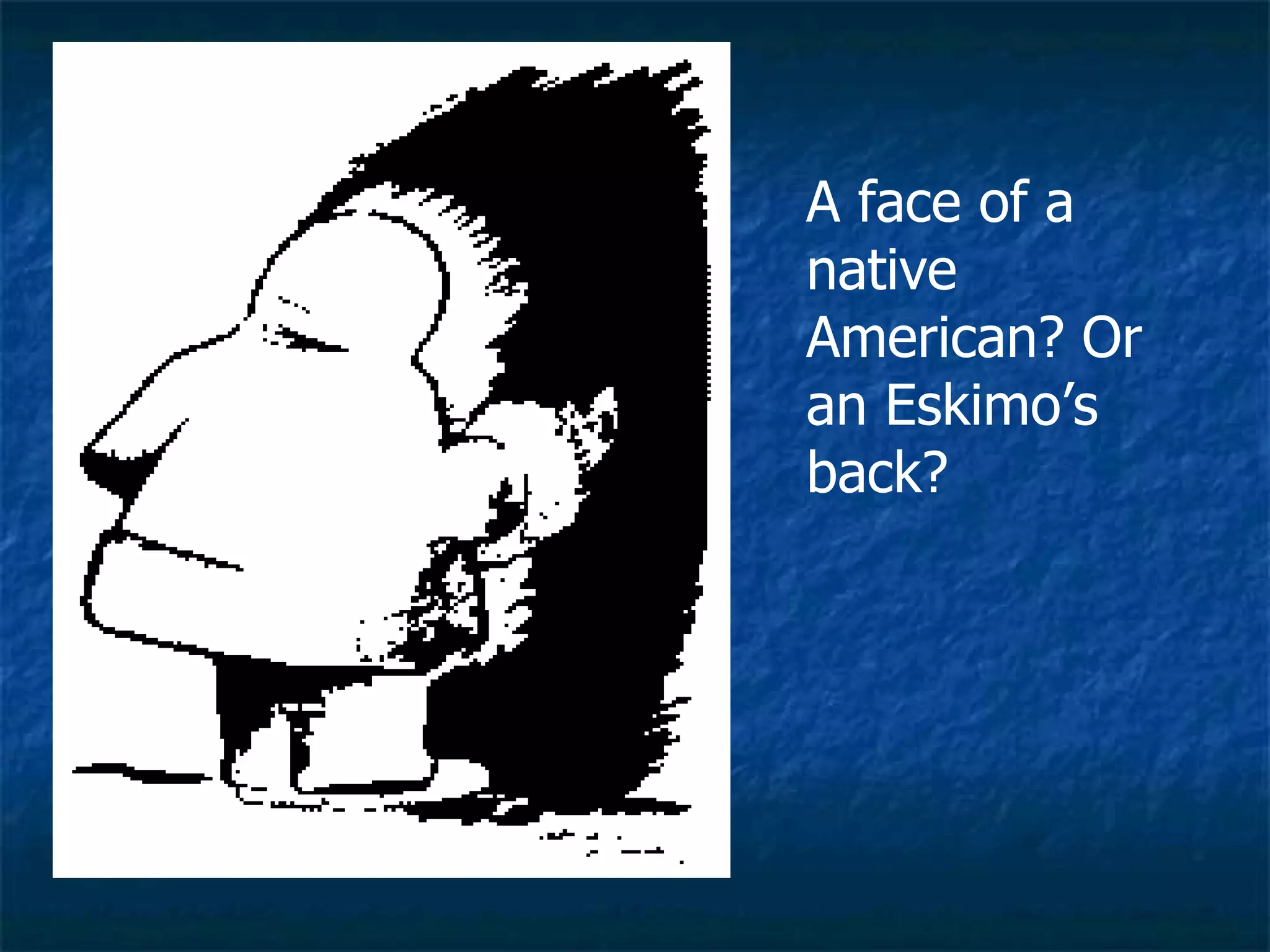
A face of a native American? Or an Eskimo’s back?
Terms of Critical Thinking Ambiguity Assumptions Values Emotions Language Argument Fallacy Thinking Barriers
Ambiguity Ambiguity  – the existence of multiple possible meanings for a word or phrase. Words and language is everything. Words often have multiple meaning. Abstract – less and less specific of a definition. Arguments can have different meanings… anti-war vs. support our troops Words can also be emotionally based.
Hints for Dealing with Ambiguity Try to understand the meaning of the ambiguous terms. Try to understand the context. Ask what the author means. Be aware of the emotional impact of certain words. Ask the speaker to rephrase. Rephrase your understanding of what they said in your response. “Do you mean…” “I understood your comment to mean…”
Assumptions Unstated beliefs that support specific reasoning. Something taken to be true without proof or demonstration.  Webster’s Dictionary
Assumptions Can Be . . . Can be hidden or unstated. Taken for granted. Influential in determining the conclusion Sometimes necessary, if the reasoning is to make sense.  Potentially deceptive.
Tips for Locating Assumptions: Look for ideas that support the reason. Identify with the author or speaker, walk in their shoes, understand their role Play devil’s advocate or role-reversal Creatively think about other possibilities.
Values Importance of certain ideas or beliefs. Does our values influences behavior? Ideas that people see as worthwhile.  Provide standards of conduct by which we measure quality of human behavior.
Emotion “Leave emotion out of it!” is  impossible. Part of everything we do and think Critical thinkers don’t ignore or deny emotions; accept and manage them. Question   Do we make sound decision in a highly charged emotional state?
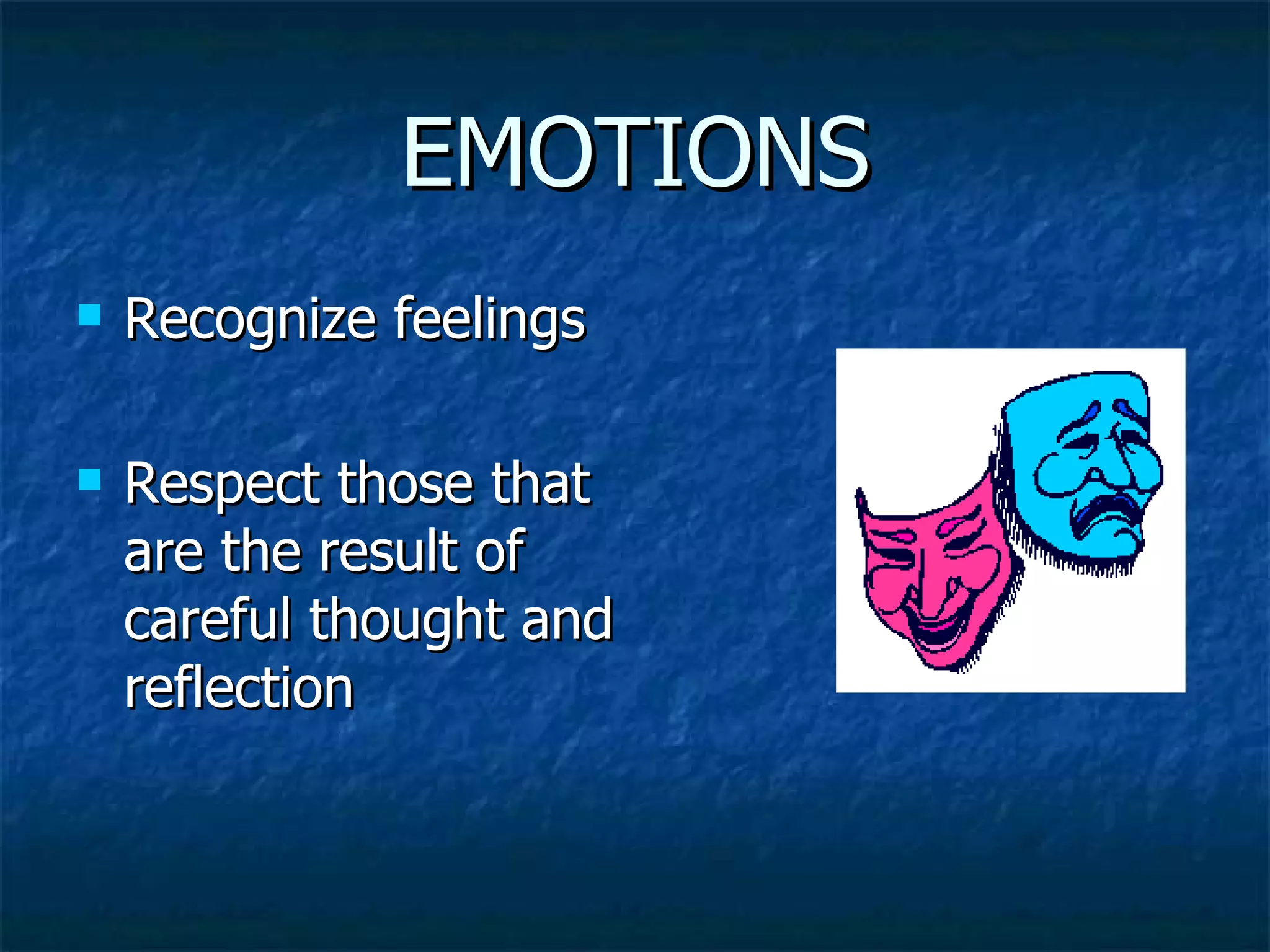
EMOTIONS Recognize feelings Respect those that are the result of careful thought and reflection
Language The landscape of the mind. The software of the brain. The limits of my language are the limits of my life to this point.
Language How is language used in decision making?
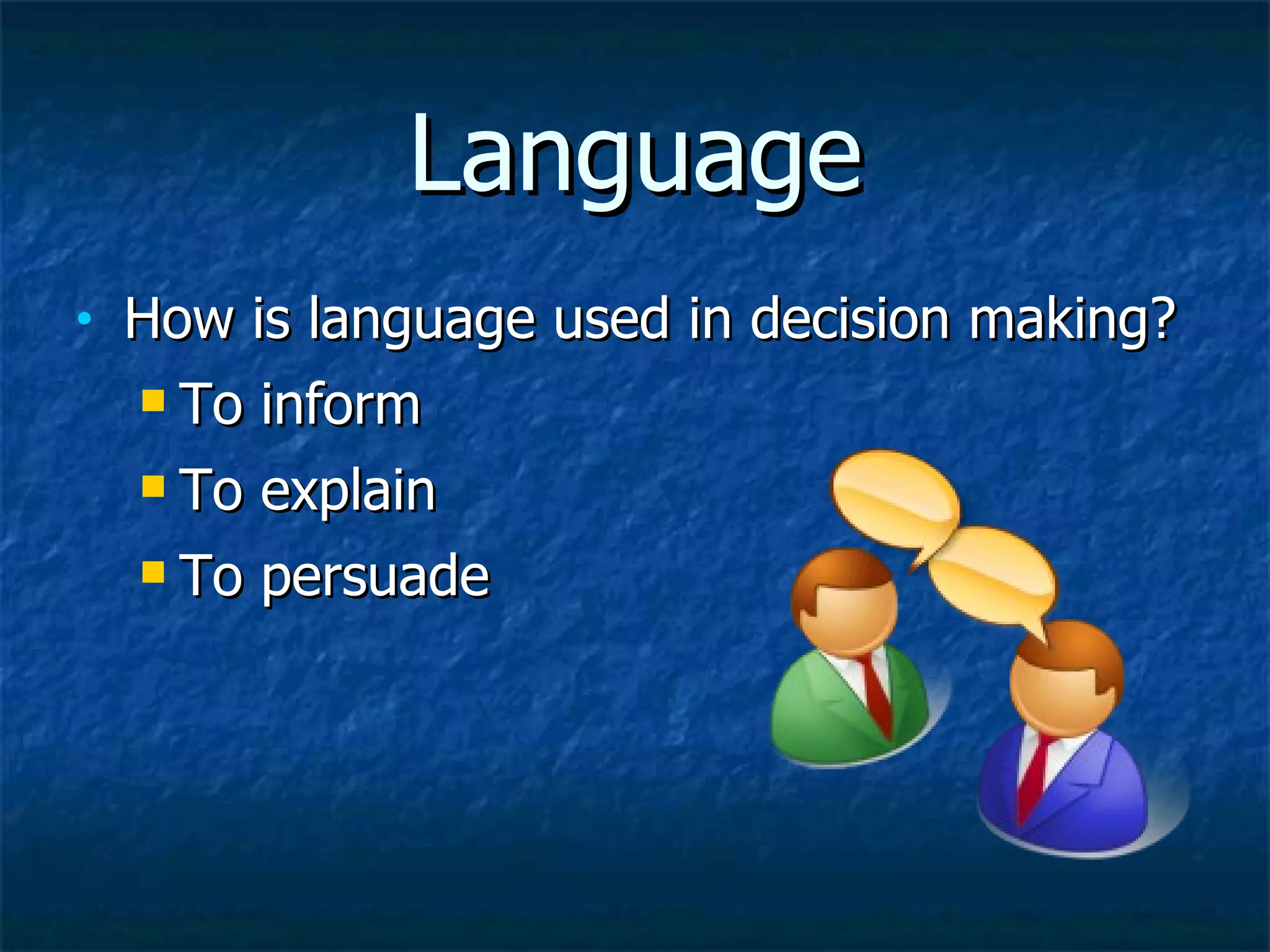
Language How is language used in decision making? To inform To explain To persuade
Language Words can have two kinds of meaning: Denotative Connotative What does each mean?
Language Denotative: Dictionary meaning
Language Denotative : Dictionary meaning: What is an apple? The firm, edible, usually rounded fruit of this tree.
Language Connotative : Overtones or suggestions beyond the dictionary meanings. What do you think of when you hear the word apple?
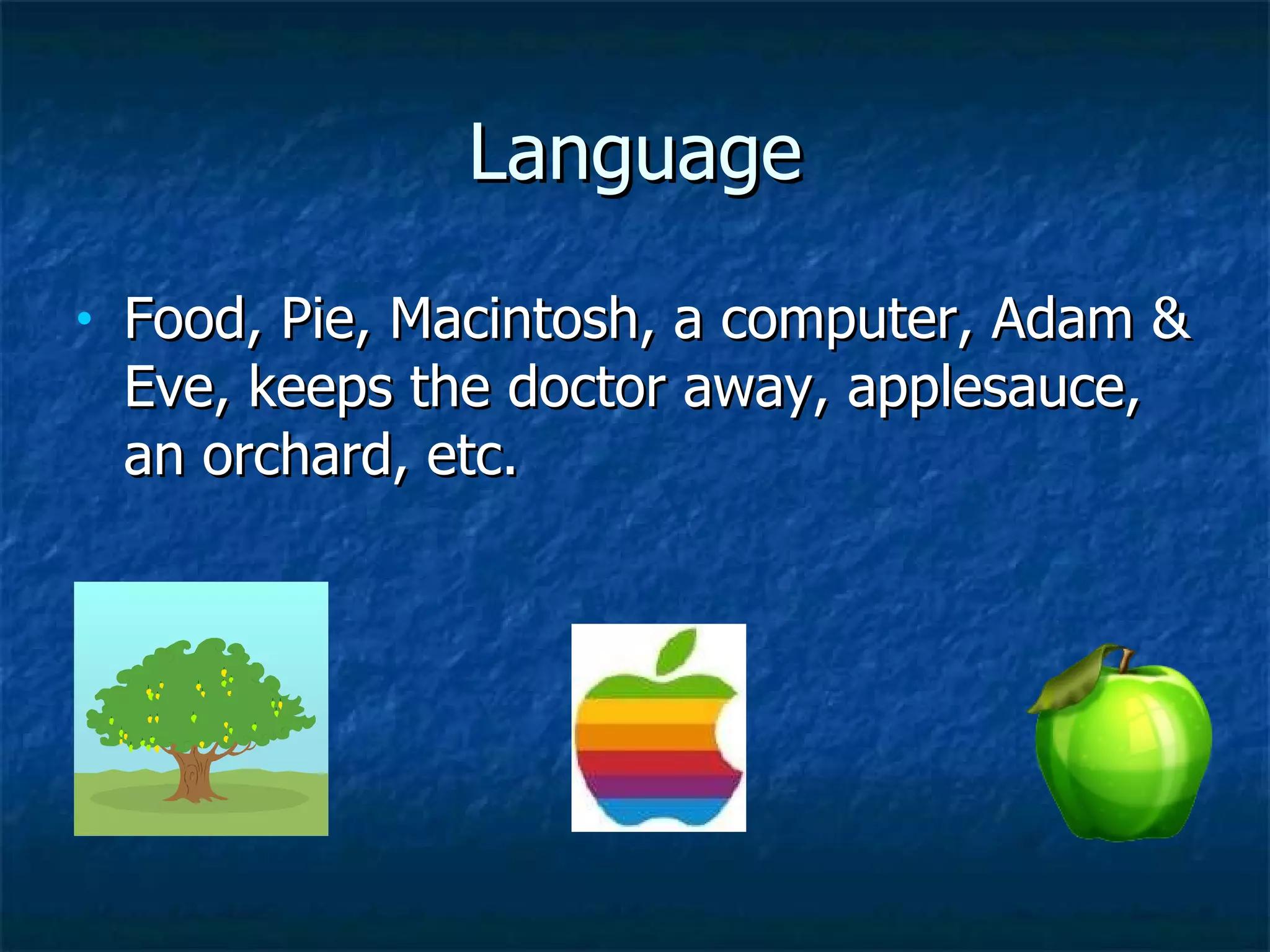
Language Food, Pie, Macintosh, a computer, Adam & Eve, keeps the doctor away, applesauce, an orchard, etc.
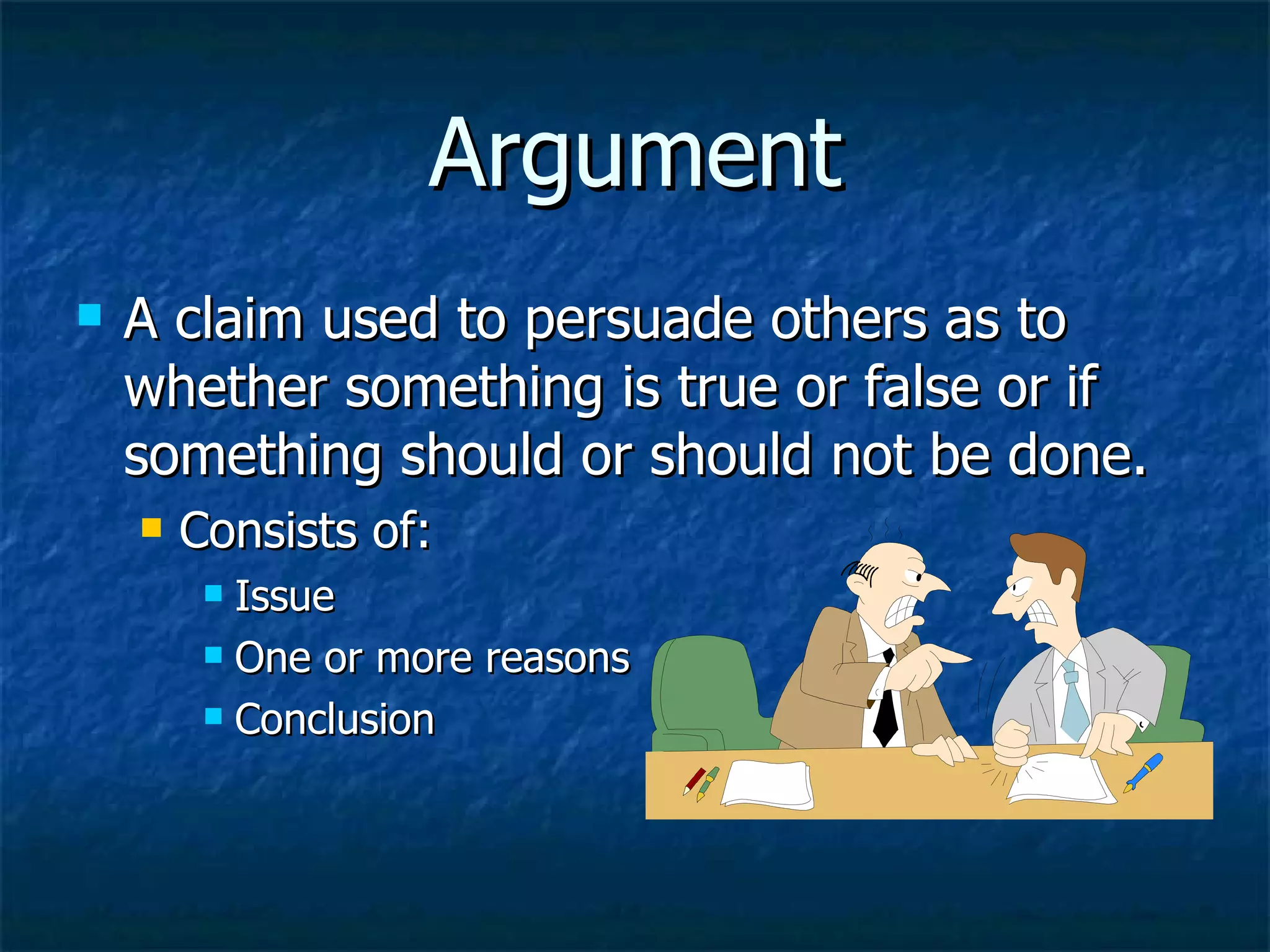
Argument A claim used to persuade others as to whether something is true or false or if something should or should not be done. Consists of: Issue One or more reasons Conclusion
Fallacy An incorrect pattern of reasoning Many fallacy’s exist Example: Common belief fallacy: We assume a statement is true based on the evidence that others believe it. A statement or argument based upon a false or invalid conclusion.  Webster’s Dictionary
Thinking Barriers Emotions Anger Passion Depression Stress Bias (values and beliefs)
Personal Barriers to thinking  (Ego Defenses) Denial Refuse to accept reality. Projection We see in others what is really happening to us. Rationalization Lying to ourselves about the real reasons for our behaviors and feelings.
Thinking Errors Personalization Thinking in which the world revolves around an individual Polarized Thinking There is only black or white – no gray Catastrophizing Always consider the worst possible outcome (all the time)
Thinking Errors  (Continued) Selective abstraction Focusing on one detail of a situation and ignoring the larger picture Overgeneralization Drawing broad conclusions on the basis of a single incident.
Five Phases of Critical Thinking Phase 1: Trigger Event Usually an unexpected event that causes some kind of inner discomfort or confusion. Phase 2: Appraisal A period of reflection and the need to find another approach to deal with the issue. Phase 3: Exploration People start asking questions and gathering more information.
Five Phases of Critical Thinking Phase 4: Finding Alternatives Also called the transition stage when old ideas are either left behind and a new way of thinking begins. Phase 5: Integration Involves fitting new ideas and information into everyday usage.
Key Questions to Critical  Thinking What are the issues and the expected conclusions? What are the reasons? What words or phrases are ambiguous? What are the value conflicts and assumptions? What are the assumptions?
Key Questions to Critical  Thinking Are there any fallacies in the reasoning? How good is the evidence? Are there rival causes? Are the statistics deceptive? What significant information is omitted? What reasonable conclusions are possible?
Critical thinking involves evaluating information or arguments in terms of their accuracy and worth Verbal Reasoning Understanding and evaluating the persuasive techniques found in oral and written language Argument Analysis Discriminating between reasons that do and do not support a particular conclusion
Critical thinking involves evaluating information or arguments in terms of their accuracy and worth Decision Making identifying and judging several alternatives and selecting the best alternative Critical Analysis of Prior Research   evaluating the value of data and research results in terms of the methods used to obtain them and their potential relevance to particular conclusions.
Problem Solving Procedure Define the problem (not the symptom) Remove thinking barriers (bias and logical) Gather all relevant facts Generate solutions (brainstorming, creative thinking) Select a solution (pro’s and con’s) and have a back up plan Implement and evaluate
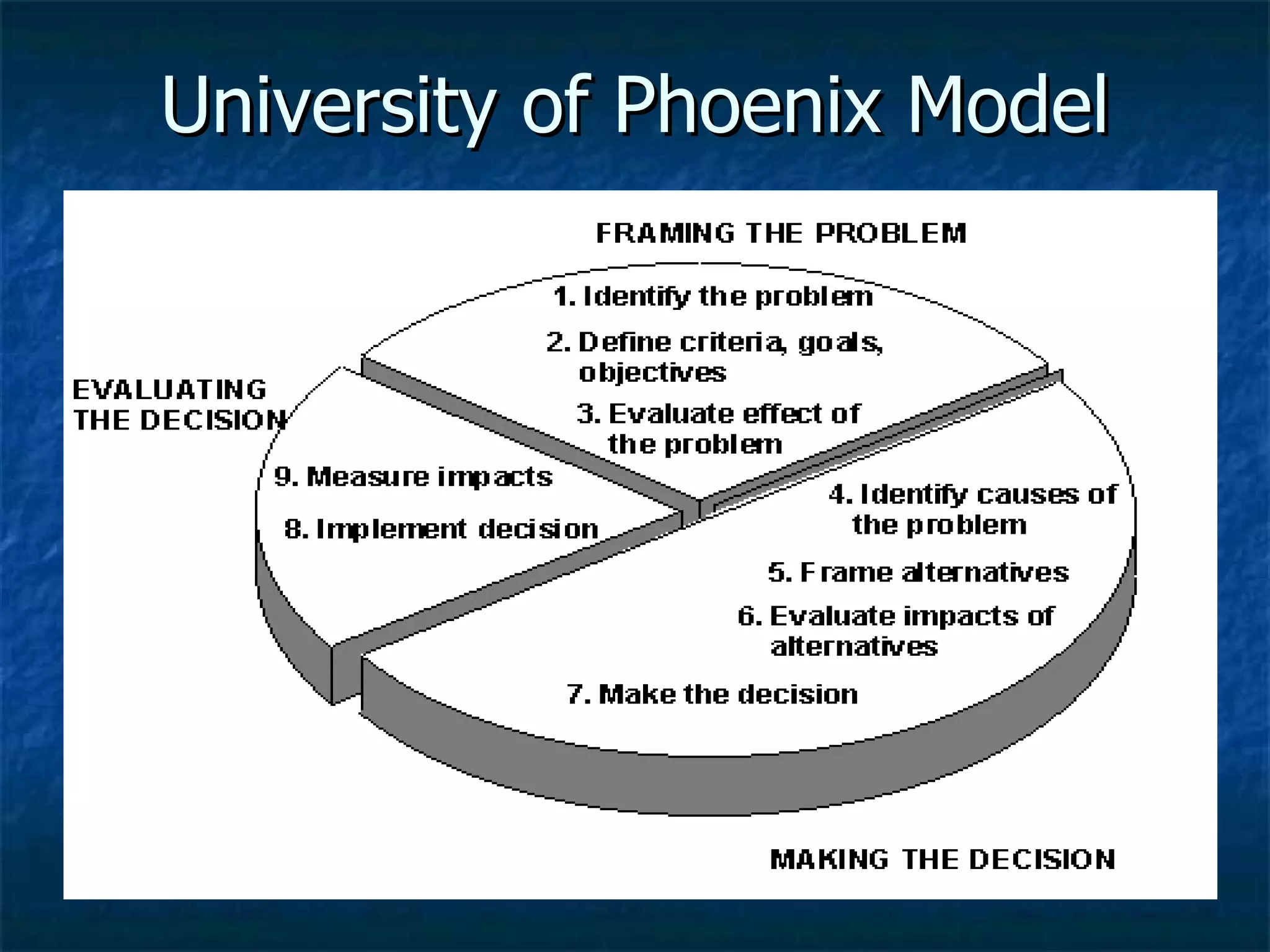
Characteristics of Critical Thinking & Decision Making University of Phoenix Model Framing the question  Making the decision  Evaluating the decision
University of Phoenix Model
Learning Team Assignment Prepare a 1050 to 1400 word paper in which you analyze at least three different types of thinking styles. Compare and contrast and comment on how each affects the critical-thinking process. Apply Critical Thinking  to a workplace example.

Critical Thinking Ppt Week 1

  • 1.
    Critical Thinking: Strategiesin Decision Making MGT/350 Felicitator: Ron Sears MA
  • 2.
    Introductions Who areyou? What do you do? What do you want out of this course? Fun fact Answer one of these questions: What movie or TV character would you most like to be? What two people dead or alive would you like to have lunch with? If you could go back into time—what period of time would you go back to?
  • 3.
    Course Objectives Thiscourse develops the analytical abilities of students and equips them with concrete skills in critical thinking and decision making.
  • 4.
    Syllabus Review AttendanceParticipation Late Assignments Academic Integrity Learning Teams and Roles Wikipedia Laptops
  • 5.
    First Paper Shareyour paper on—Critical Thinking Application Provide an example from your personal experience.
  • 6.
    Notable Quotes Thinkingis the hardest work there is, which is probably why so few engage in it. Henry Ford At a certain age some people’s minds close up. They live on their intellectual fat. William Lyon Phelps
  • 7.
    Learn Team DiscussionDefine critical thinking. Come to a consensus. Select a spoke person.
  • 8.
    Thinking Critically Means…Examining different viewpoints Learn to think from different perspectives. View those opinions which differ from yours. Examine the assumptions, metaphors, & analogies of your own viewpoints & of others. Avoid automatic responses.
  • 9.
    General Working Definitionof Critical Thinking A process that evaluates ideas through the testing of statements (accuracy) and the soundness of reasoning behind them.
  • 10.
    Is this agood recommendation or not and if not why?
  • 11.
    Discussion Question Whyis critical thinking important? Is there a difference between thinking and critically thinking? Can we train ourselves to think differently? How do we prepare ourselves to new patterns of thought?
  • 12.
    Critical Thinking Someonewith Critical Thinking skills is able to: Understand the logical connections between ideas. Detect inconsistencies and common mistakes in reasoning. Solve problems systematically. Reflect on the justification of one’s own beliefs and values.
  • 13.
    Thoughts to PonderEducation means development of the mind from within so it will help one to take problems apart and put them to work based upon sound judgment. What if you choose to read no new books for the next ten years? Would your mind be different?
  • 14.
    Critical Thinking QuotesWe can’t solve problems by using the same kind of thinking we used when we created them. Albert Einstein Discovery is seeing what everybody else has seen, and thinking what nobody else has thought. Unknown The human mind once stretched by a new idea never goes back to its original dimensions. Oliver Wendell Homes
  • 15.
    Characteristics of CriticalThinkers: Strive for understanding Are honest with themselves Base judgment on evidence Are interested in other people’s ideas Control their feelings/emotions Recognize that extreme views are seldom correct.
  • 16.
    Characteristics of CriticalThinkers Keep an open mind They are very observant Identify key issues and raise questions Obtain relevant facts Evaluate the findings and form judgments
  • 17.
    What does theabsence of critical thinking look like? We blindly accept at face value all justifications given by organizations and political leaders. We blindly believe TV commercials. We blindly continue to hold on to old beliefs.
  • 18.
    Discussion Question Doyou agree or disagree with the following statement and why? Not only do we tend to think about the world according to what we want to see and what we need to see, we tend to think of it in terms of what we expect to see.
  • 19.
    Follow-up Discussion Arewe reluctant to change our perceptions and ideas to accommodate the facts, or is it easier to maintain the status quo based upon our prior experiences? Do stereotypes effect our thinking?
  • 20.
    Should You Believe Everything You See? Perception is learned from both our own experience and through interaction with others. Is perception reality?
  • 21.
    Perception We oftensee and hear what we want to see and hear, based upon our past experiences, interests, motives, expectations; to stay within our comfort zone.
  • 22.
    Young girl? Orold women?
  • 23.
    Man playing horn?Or a women’s silhouette?
  • 24.
    A face ofa native American? Or an Eskimo’s back?
  • 25.
    Terms of CriticalThinking Ambiguity Assumptions Values Emotions Language Argument Fallacy Thinking Barriers
  • 26.
    Ambiguity Ambiguity – the existence of multiple possible meanings for a word or phrase. Words and language is everything. Words often have multiple meaning. Abstract – less and less specific of a definition. Arguments can have different meanings… anti-war vs. support our troops Words can also be emotionally based.
  • 27.
    Hints for Dealingwith Ambiguity Try to understand the meaning of the ambiguous terms. Try to understand the context. Ask what the author means. Be aware of the emotional impact of certain words. Ask the speaker to rephrase. Rephrase your understanding of what they said in your response. “Do you mean…” “I understood your comment to mean…”
  • 28.
    Assumptions Unstated beliefsthat support specific reasoning. Something taken to be true without proof or demonstration. Webster’s Dictionary
  • 29.
    Assumptions Can Be. . . Can be hidden or unstated. Taken for granted. Influential in determining the conclusion Sometimes necessary, if the reasoning is to make sense. Potentially deceptive.
  • 30.
    Tips for LocatingAssumptions: Look for ideas that support the reason. Identify with the author or speaker, walk in their shoes, understand their role Play devil’s advocate or role-reversal Creatively think about other possibilities.
  • 31.
    Values Importance ofcertain ideas or beliefs. Does our values influences behavior? Ideas that people see as worthwhile. Provide standards of conduct by which we measure quality of human behavior.
  • 32.
    Emotion “Leave emotionout of it!” is impossible. Part of everything we do and think Critical thinkers don’t ignore or deny emotions; accept and manage them. Question Do we make sound decision in a highly charged emotional state?
  • 33.
    EMOTIONS Recognize feelingsRespect those that are the result of careful thought and reflection
  • 34.
    Language The landscapeof the mind. The software of the brain. The limits of my language are the limits of my life to this point.
  • 35.
    Language How islanguage used in decision making?
  • 36.
    Language How islanguage used in decision making? To inform To explain To persuade
  • 37.
    Language Words canhave two kinds of meaning: Denotative Connotative What does each mean?
  • 38.
  • 39.
    Language Denotative :Dictionary meaning: What is an apple? The firm, edible, usually rounded fruit of this tree.
  • 40.
    Language Connotative :Overtones or suggestions beyond the dictionary meanings. What do you think of when you hear the word apple?
  • 41.
    Language Food, Pie,Macintosh, a computer, Adam & Eve, keeps the doctor away, applesauce, an orchard, etc.
  • 42.
    Argument A claimused to persuade others as to whether something is true or false or if something should or should not be done. Consists of: Issue One or more reasons Conclusion
  • 43.
    Fallacy An incorrectpattern of reasoning Many fallacy’s exist Example: Common belief fallacy: We assume a statement is true based on the evidence that others believe it. A statement or argument based upon a false or invalid conclusion. Webster’s Dictionary
  • 44.
    Thinking Barriers EmotionsAnger Passion Depression Stress Bias (values and beliefs)
  • 45.
    Personal Barriers tothinking (Ego Defenses) Denial Refuse to accept reality. Projection We see in others what is really happening to us. Rationalization Lying to ourselves about the real reasons for our behaviors and feelings.
  • 46.
    Thinking Errors PersonalizationThinking in which the world revolves around an individual Polarized Thinking There is only black or white – no gray Catastrophizing Always consider the worst possible outcome (all the time)
  • 47.
    Thinking Errors (Continued) Selective abstraction Focusing on one detail of a situation and ignoring the larger picture Overgeneralization Drawing broad conclusions on the basis of a single incident.
  • 48.
    Five Phases ofCritical Thinking Phase 1: Trigger Event Usually an unexpected event that causes some kind of inner discomfort or confusion. Phase 2: Appraisal A period of reflection and the need to find another approach to deal with the issue. Phase 3: Exploration People start asking questions and gathering more information.
  • 49.
    Five Phases ofCritical Thinking Phase 4: Finding Alternatives Also called the transition stage when old ideas are either left behind and a new way of thinking begins. Phase 5: Integration Involves fitting new ideas and information into everyday usage.
  • 50.
    Key Questions toCritical Thinking What are the issues and the expected conclusions? What are the reasons? What words or phrases are ambiguous? What are the value conflicts and assumptions? What are the assumptions?
  • 51.
    Key Questions toCritical Thinking Are there any fallacies in the reasoning? How good is the evidence? Are there rival causes? Are the statistics deceptive? What significant information is omitted? What reasonable conclusions are possible?
  • 52.
    Critical thinking involvesevaluating information or arguments in terms of their accuracy and worth Verbal Reasoning Understanding and evaluating the persuasive techniques found in oral and written language Argument Analysis Discriminating between reasons that do and do not support a particular conclusion
  • 53.
    Critical thinking involvesevaluating information or arguments in terms of their accuracy and worth Decision Making identifying and judging several alternatives and selecting the best alternative Critical Analysis of Prior Research evaluating the value of data and research results in terms of the methods used to obtain them and their potential relevance to particular conclusions.
  • 54.
    Problem Solving ProcedureDefine the problem (not the symptom) Remove thinking barriers (bias and logical) Gather all relevant facts Generate solutions (brainstorming, creative thinking) Select a solution (pro’s and con’s) and have a back up plan Implement and evaluate
  • 55.
    Characteristics of CriticalThinking & Decision Making University of Phoenix Model Framing the question Making the decision Evaluating the decision
  • 56.
  • 57.
    Learning Team AssignmentPrepare a 1050 to 1400 word paper in which you analyze at least three different types of thinking styles. Compare and contrast and comment on how each affects the critical-thinking process. Apply Critical Thinking to a workplace example.