CRITICAL
THINKING SKILLS
TODAY’S STUDENTS’
DEMANDS
Critical Thinking
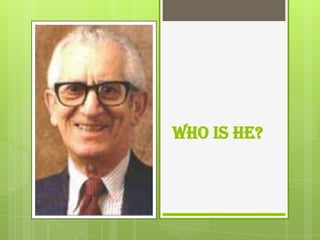
Who is he?
HOW DID THEY APPEAR?
   Benjamin Bloom (1956) developed a classification
    of levels of intellectual behavior in learning.
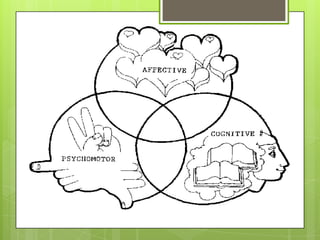
   This taxonomy contained three overlapping
    domains: the cognitive, psychomotor, and
    affective.
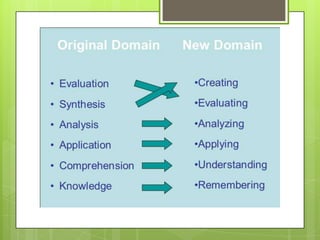
    Within the cognitive domain: six levels:
    knowledge, comprehension, application, analysis,
    synthesis, and evaluation.
   These domains and levels are still useful today as
    you develop the critical thinking skills of your
    students.
The Three Types of Learning

What IS Critical Thinking?
 Critical thinking can be defined several
  ways. One definition is “an active,
  organized, cognitive process”.
 Another definition is “a process for
  identifying underlying assumptions and
  variables in order to draw conclusions
  and make decisions”.
 You could even use the definition “a
  process used to explore alternatives to
  determine what is important”.
brainteaser
     When I was going to St. Ives
     I met a man with seven wives
      Every wife had seven sacks
       Every sack had seven cats
      Every cat had seven kittens;
     Kittens, cats, sacks and wives
   How many were going to St. Ives?
What IS Critical Thinking?
 Exploring   encourages you to identify all
  the variables within a situation.
 Analyzing is the process of studying each
  variable to understand its meaning and its
  relationship to the other variables.
 Prioritizing requires you to weigh the
  relative importance of each variable to
  the others, at a given point in time.
What IS Critical Thinking?
 Explaining  the variables involves the
  exercise of amplifying each variable to
  understand its meaning in the situation
  and to the involved parties.
 Deciding means to choose a specific
  course of action.
 Evaluating requires the thinker to assess
  how correct the thinking process was,
  and if further action is needed.
cognitive
DVD-ROM feature: writing
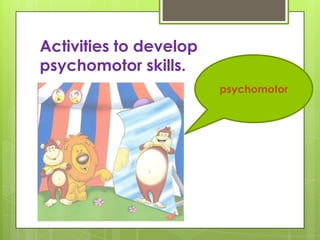
Activities to develop
psychomotor skills.
                        psychomotor
affective
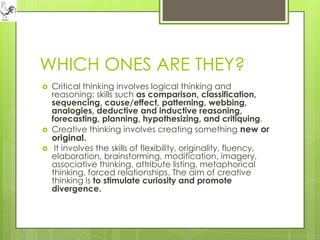
WHICH ONES ARE THEY?
   Critical thinking involves logical thinking and
    reasoning: skills such as comparison, classification,
    sequencing, cause/effect, patterning, webbing,
    analogies, deductive and inductive reasoning,
    forecasting, planning, hypothesizing, and critiquing.
   Creative thinking involves creating something new or
    original.
    It involves the skills of flexibility, originality, fluency,
    elaboration, brainstorming, modification, imagery,
    associative thinking, attribute listing, metaphorical
    thinking, forced relationships. The aim of creative
    thinking is to stimulate curiosity and promote
    divergence.
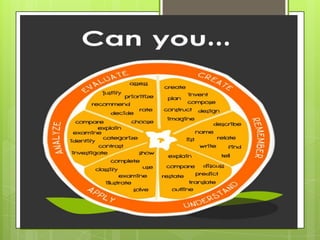
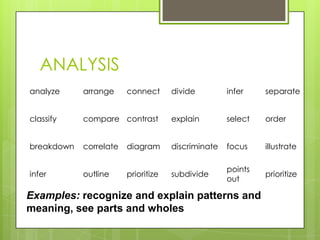
ANALYSIS
analyze     arrange     connect      divide         infer    separate


classify    compare contrast         explain        select   order


breakdown   correlate   diagram      discriminate   focus    illustrate

                                                    points
infer       outline     prioritize   subdivide               prioritize
                                                    out

Examples: recognize and explain patterns and
meaning, see parts and wholes
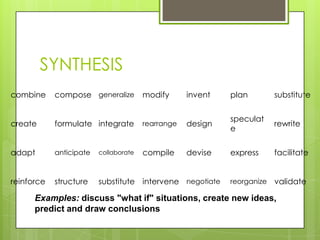
SYNTHESIS
combine     compose generalize         modify      invent   plan         substitute


                                                            speculat
create      formulate integrate        rearrange   design                rewrite
                                                            e


adapt       anticipate   collaborate   compile     devise   express      facilitate


reinforce   structure    substitute intervene negotiate     reorganize   validate

      Examples: discuss "what if" situations, create new ideas,
      predict and draw conclusions
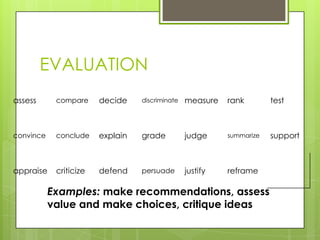
EVALUATION
assess      compare     decide    discriminate   measure   rank        test


convince    conclude    explain   grade          judge     summarize   support


appraise    criticize   defend    persuade       justify   reframe

           Examples: make recommendations, assess
           value and make choices, critique ideas
AFFECTIVE DOMAIN

accepts       attempts   challenges defends   disputes joins          judges


contributes   praises    questions   shares   supports   volunteers


     Domain Attributes: interpersonal relations,
     emotions, attitudes, appreciations, and values
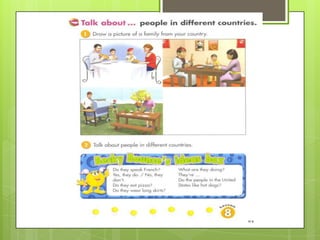
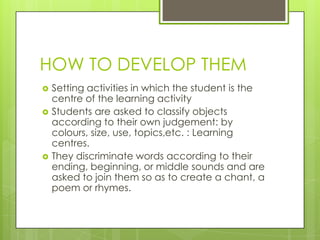
HOW TO DEVELOP THEM
   Setting activities in which the student is the
    centre of the learning activity
   Students are asked to classify objects
    according to their own judgement: by
    colours, size, use, topics,etc. : Learning
    centres.
   They discriminate words according to their
    ending, beginning, or middle sounds and are
    asked to join them so as to create a chant, a
    poem or rhymes.
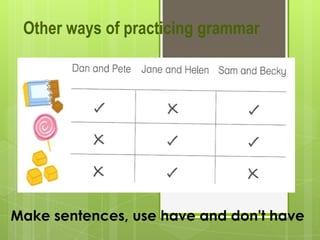
Other ways of practicing grammar


Make sentences, use have and don't have
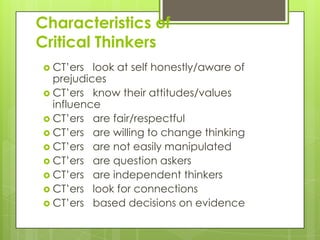
Characteristics of
Critical Thinkers
 CT’ers  look at self honestly/aware of
  prejudices
 CT’ers know their attitudes/values
  influence
 CT’ers are fair/respectful
 CT’ers are willing to change thinking
 CT’ers are not easily manipulated
 CT’ers are question askers
 CT’ers are independent thinkers
 CT’ers look for connections
 CT’ers based decisions on evidence
WHAT ABOUT GAMES?
 Word    games: create associations,
  relationships among different elements (
  listing words )
 Visual thinking games: develop
  visualization through shapes and forms,
  abstract images to discuss whta they see.
 Drawing games: Includes both
  visualization and word games , drawing
  squiggles and ask them what they see.
5 Ways To Help Kids Think
1.   Provide a thoughtful classroom
     environment
2.   Make the invisible – visible
3.   Scaffold and cue (use tools)
4.   Provide continuing direct
     instruction
5.   Integrate thinking instruction
     with content …move it around
WEBLIOGRAPHY
www.livestrong.com
www.accessexcellence.org
www.criticalthinking.org
www.buzzle.com ( exercises for children )
www.vforteachers.com ( exercises &
experiments for children )
THANK YOU
VERY MUCH!
    Ms. Jeanne Luz Ortiz
 jortiz@macmillan.com.pe

6. critical thinking skills 2

  • 1.
  • 2.
  • 3.
  • 4.
    HOW DID THEYAPPEAR?  Benjamin Bloom (1956) developed a classification of levels of intellectual behavior in learning.  This taxonomy contained three overlapping domains: the cognitive, psychomotor, and affective.  Within the cognitive domain: six levels: knowledge, comprehension, application, analysis, synthesis, and evaluation.  These domains and levels are still useful today as you develop the critical thinking skills of your students.
  • 7.
    The Three Typesof Learning What IS Critical Thinking?
  • 8.
    What IS CriticalThinking?  Critical thinking can be defined several ways. One definition is “an active, organized, cognitive process”.  Another definition is “a process for identifying underlying assumptions and variables in order to draw conclusions and make decisions”.  You could even use the definition “a process used to explore alternatives to determine what is important”.
  • 9.
    brainteaser When I was going to St. Ives I met a man with seven wives Every wife had seven sacks Every sack had seven cats Every cat had seven kittens; Kittens, cats, sacks and wives How many were going to St. Ives?
  • 10.
    What IS CriticalThinking?  Exploring encourages you to identify all the variables within a situation.  Analyzing is the process of studying each variable to understand its meaning and its relationship to the other variables.  Prioritizing requires you to weigh the relative importance of each variable to the others, at a given point in time.
  • 11.
    What IS CriticalThinking?  Explaining the variables involves the exercise of amplifying each variable to understand its meaning in the situation and to the involved parties.  Deciding means to choose a specific course of action.  Evaluating requires the thinker to assess how correct the thinking process was, and if further action is needed.
  • 12.
  • 13.
  • 14.
  • 17.
    WHICH ONES ARETHEY?  Critical thinking involves logical thinking and reasoning: skills such as comparison, classification, sequencing, cause/effect, patterning, webbing, analogies, deductive and inductive reasoning, forecasting, planning, hypothesizing, and critiquing.  Creative thinking involves creating something new or original.  It involves the skills of flexibility, originality, fluency, elaboration, brainstorming, modification, imagery, associative thinking, attribute listing, metaphorical thinking, forced relationships. The aim of creative thinking is to stimulate curiosity and promote divergence.
  • 18.
    ANALYSIS analyze arrange connect divide infer separate classify compare contrast explain select order breakdown correlate diagram discriminate focus illustrate points infer outline prioritize subdivide prioritize out Examples: recognize and explain patterns and meaning, see parts and wholes
  • 19.
    SYNTHESIS combine compose generalize modify invent plan substitute speculat create formulate integrate rearrange design rewrite e adapt anticipate collaborate compile devise express facilitate reinforce structure substitute intervene negotiate reorganize validate Examples: discuss "what if" situations, create new ideas, predict and draw conclusions
  • 20.
    EVALUATION assess compare decide discriminate measure rank test convince conclude explain grade judge summarize support appraise criticize defend persuade justify reframe Examples: make recommendations, assess value and make choices, critique ideas
  • 21.
    AFFECTIVE DOMAIN accepts attempts challenges defends disputes joins judges contributes praises questions shares supports volunteers Domain Attributes: interpersonal relations, emotions, attitudes, appreciations, and values
  • 22.
    HOW TO DEVELOPTHEM  Setting activities in which the student is the centre of the learning activity  Students are asked to classify objects according to their own judgement: by colours, size, use, topics,etc. : Learning centres.  They discriminate words according to their ending, beginning, or middle sounds and are asked to join them so as to create a chant, a poem or rhymes.
  • 23.
    Other ways ofpracticing grammar Make sentences, use have and don't have
  • 24.
    Characteristics of Critical Thinkers CT’ers look at self honestly/aware of prejudices  CT’ers know their attitudes/values influence  CT’ers are fair/respectful  CT’ers are willing to change thinking  CT’ers are not easily manipulated  CT’ers are question askers  CT’ers are independent thinkers  CT’ers look for connections  CT’ers based decisions on evidence
  • 25.
    WHAT ABOUT GAMES? Word games: create associations, relationships among different elements ( listing words )  Visual thinking games: develop visualization through shapes and forms, abstract images to discuss whta they see.  Drawing games: Includes both visualization and word games , drawing squiggles and ask them what they see.
  • 26.
    5 Ways ToHelp Kids Think 1. Provide a thoughtful classroom environment 2. Make the invisible – visible 3. Scaffold and cue (use tools) 4. Provide continuing direct instruction 5. Integrate thinking instruction with content …move it around
  • 27.
    WEBLIOGRAPHY www.livestrong.com www.accessexcellence.org www.criticalthinking.org www.buzzle.com ( exercisesfor children ) www.vforteachers.com ( exercises & experiments for children )
  • 29.
    THANK YOU VERY MUCH! Ms. Jeanne Luz Ortiz jortiz@macmillan.com.pe