




Critical Appraisal
of Medical Research


                                             Susan Fowler, MLIS
                                               314-362-8092
                                             fowler@wustl.edu


Photo: http://www.pantherkut.com/2009/05/27/cat-thoughts/
Agenda
• Study Design
• PICO(T)
• Types of Questions
• FRISBE
• Clinical Importance
• 3 Therapy
  Examples
• Resources


    Photo: http://catscientists.tumblr.com/post/19458666129
    Susan Fowler, MLIS                            Washington University in St. Louis
Photo: http://kuln.es/c5cwg
Susan Fowler, MLIS            Washington University in St. Louis
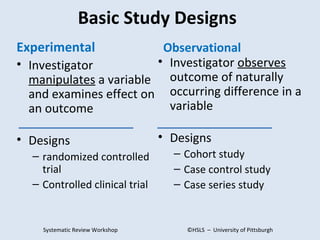
Basic Study Designs
Experimental             Observational
• Investigator          • Investigator observes
  manipulates a variable outcome of naturally
  and examines effect on occurring difference in a
  an outcome              variable

• Designs                        • Designs
  – randomized controlled          – Cohort study
    trial                          – Case control study
  – Controlled clinical trial      – Case series study


    Systematic Review Workshop       ©HSLS – University of Pittsburgh
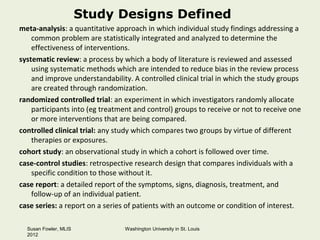
Study Designs Defined
meta-analysis: a quantitative approach in which individual study findings addressing a
    common problem are statistically integrated and analyzed to determine the
    effectiveness of interventions.
systematic review: a process by which a body of literature is reviewed and assessed
    using systematic methods which are intended to reduce bias in the review process
    and improve understandability. A controlled clinical trial in which the study groups
    are created through randomization.
randomized controlled trial: an experiment in which investigators randomly allocate
    participants into (eg treatment and control) groups to receive or not to receive one
    or more interventions that are being compared.
controlled clinical trial: any study which compares two groups by virtue of different
    therapies or exposures.
cohort study: an observational study in which a cohort is followed over time.
case-control studies: retrospective research design that compares individuals with a
    specific condition to those without it.
case report: a detailed report of the symptoms, signs, diagnosis, treatment, and
    follow-up of an individual patient.
case series: a report on a series of patients with an outcome or condition of interest.

  Susan Fowler, MLIS             Washington University in St. Louis
  2012
PICO (T)
  • Patient or problem - How would I describe a group of
    patients similar to mine?
  • Intervention - Which main intervention, prognostic
    factor, or exposure am I considering?
  • Comparison (if appropriate)- What is the main
    alternative to compare with the intervention?
  • Outcome - What can I hope to accomplish, measure,
    improve or affect?
  • Type of Study – Based on my question, what type of
    study will provide the best answer?


 Susan Fowler, MLIS    Washington University in St. Louis
 2012
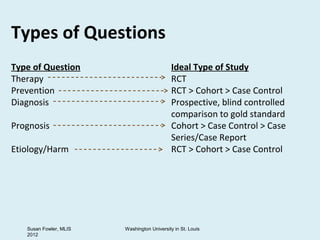
Types of Questions
Type of Question                             Ideal Type of Study
Therapy                                      RCT
Prevention                                   RCT > Cohort > Case Control
Diagnosis                                    Prospective, blind controlled
                                             comparison to gold standard
Prognosis                                    Cohort > Case Control > Case
                                             Series/Case Report
Etiology/Harm                                RCT > Cohort > Case Control


   Susan Fowler, MLIS   Washington University in St. Louis
   2012
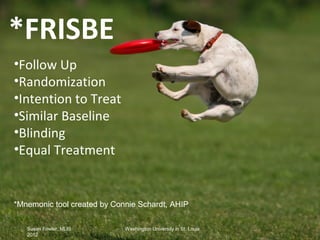
*FRISBE
•Follow Up
•Randomization
•Intention to Treat
•Similar Baseline
•Blinding
•Equal Treatment


*Mnemonic tool created by Connie Schardt, AHIP

   Susan Fowler, MLIS        Washington University in St. Louis
   2012
Follow Up – Were all patients who entered the trial
                                          properly accounted for and attributed at its
                                          conclusion?

                                          Randomization - Was the allocation (assignment) of
                                          patients to treatment randomized?
                                          Was the allocation concealed?

                                          Intention-to-Treat Analysis - Were patients analyzed
                                          in the groups to which they were
                                          randomized? Were all randomized patient
                                          data analyzed?

                                          Similar Baseline Characteristics of Patients - Were
                                          groups similar at the start of the trial?

                                          Blinding - Were patients, health workers, and study
                                          personnel "blind" to treatment?

                                          Equal Treatment - Aside from the experimental
                                          intervention, were the groups
                                          treated equally?

Photo: http://www.glassofwin.com/2010/06/03/cats-of-win-three-years/
Susan Fowler, MLIS                         Washington University in St. Louis
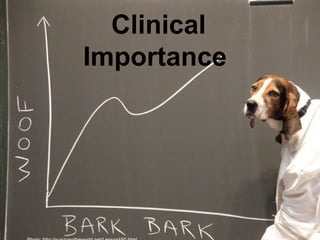
Clinical
Importance
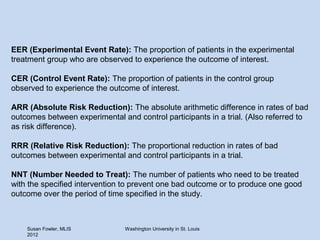
EER (Experimental Event Rate): The proportion of patients in the experimental
treatment group who are observed to experience the outcome of interest.

CER (Control Event Rate): The proportion of patients in the control group
observed to experience the outcome of interest.

ARR (Absolute Risk Reduction): The absolute arithmetic difference in rates of bad
outcomes between experimental and control participants in a trial. (Also referred to
as risk difference).

RRR (Relative Risk Reduction): The proportional reduction in rates of bad
outcomes between experimental and control participants in a trial.

NNT (Number Needed to Treat): The number of patients who need to be treated
with the specified intervention to prevent one bad outcome or to produce one good
outcome over the period of time specified in the study.


    Susan Fowler, MLIS          Washington University in St. Louis
    2012
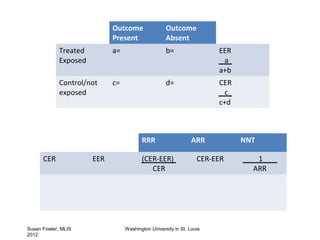
Outcome                Outcome
                             Present                Absent
             Treated         a=                     b=                 EER
             Exposed                                                    a
                                                                       a+b
             Control/not     c=                     d=                 CER
             exposed                                                     c
                                                                       c+d


                                         RRR                    ARR          NNT

      CER              EER               (CER-EER)                CER-EER       1
                                            CER                                ARR


Susan Fowler, MLIS                Washington University in St. Louis
2012
Susan Fowler, MLIS   Washington University in St. Louis
2012
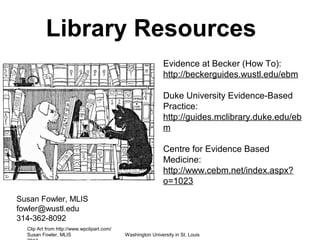
Library Resources
                                                             Evidence at Becker (How To):
                                                             http://beckerguides.wustl.edu/ebm

                                                             Duke University Evidence-Based
                                                             Practice:
                                                             http://guides.mclibrary.duke.edu/eb
                                                             m

                                                             Centre for Evidence Based
                                                             Medicine:
                                                             http://www.cebm.net/index.aspx?
                                                             o=1023
Susan Fowler, MLIS
fowler@wustl.edu
314-362-8092
  Clip Art from http://www.wpclipart.com/
  Susan Fowler, MLIS                        Washington University in St. Louis
Q
                                                                   u
                                                                   e
                                                                   s
                                                                   t
                                                                   I
                                                                   o
                                                                   n
                                                                   s
Photo by Juniors Bildarchiv
                                                                   ?
Susan Fowler, MLIS            Washington University in St. Louis
2012

Critical appraisal

  • 1.
    Critical Appraisal of MedicalResearch Susan Fowler, MLIS 314-362-8092 fowler@wustl.edu Photo: http://www.pantherkut.com/2009/05/27/cat-thoughts/
  • 2.
    Agenda • Study Design •PICO(T) • Types of Questions • FRISBE • Clinical Importance • 3 Therapy Examples • Resources Photo: http://catscientists.tumblr.com/post/19458666129 Susan Fowler, MLIS Washington University in St. Louis
  • 3.
    Photo: http://kuln.es/c5cwg Susan Fowler,MLIS Washington University in St. Louis
  • 4.
    Basic Study Designs Experimental Observational • Investigator • Investigator observes manipulates a variable outcome of naturally and examines effect on occurring difference in a an outcome variable • Designs • Designs – randomized controlled – Cohort study trial – Case control study – Controlled clinical trial – Case series study Systematic Review Workshop ©HSLS – University of Pittsburgh
  • 5.
    Study Designs Defined meta-analysis:a quantitative approach in which individual study findings addressing a common problem are statistically integrated and analyzed to determine the effectiveness of interventions. systematic review: a process by which a body of literature is reviewed and assessed using systematic methods which are intended to reduce bias in the review process and improve understandability. A controlled clinical trial in which the study groups are created through randomization. randomized controlled trial: an experiment in which investigators randomly allocate participants into (eg treatment and control) groups to receive or not to receive one or more interventions that are being compared. controlled clinical trial: any study which compares two groups by virtue of different therapies or exposures. cohort study: an observational study in which a cohort is followed over time. case-control studies: retrospective research design that compares individuals with a specific condition to those without it. case report: a detailed report of the symptoms, signs, diagnosis, treatment, and follow-up of an individual patient. case series: a report on a series of patients with an outcome or condition of interest. Susan Fowler, MLIS Washington University in St. Louis 2012
  • 6.
    PICO (T) • Patient or problem - How would I describe a group of patients similar to mine? • Intervention - Which main intervention, prognostic factor, or exposure am I considering? • Comparison (if appropriate)- What is the main alternative to compare with the intervention? • Outcome - What can I hope to accomplish, measure, improve or affect? • Type of Study – Based on my question, what type of study will provide the best answer? Susan Fowler, MLIS Washington University in St. Louis 2012
  • 7.
    Types of Questions Typeof Question Ideal Type of Study Therapy RCT Prevention RCT > Cohort > Case Control Diagnosis Prospective, blind controlled comparison to gold standard Prognosis Cohort > Case Control > Case Series/Case Report Etiology/Harm RCT > Cohort > Case Control Susan Fowler, MLIS Washington University in St. Louis 2012
  • 8.
    *FRISBE •Follow Up •Randomization •Intention toTreat •Similar Baseline •Blinding •Equal Treatment *Mnemonic tool created by Connie Schardt, AHIP Susan Fowler, MLIS Washington University in St. Louis 2012
  • 9.
    Follow Up –Were all patients who entered the trial properly accounted for and attributed at its conclusion? Randomization - Was the allocation (assignment) of patients to treatment randomized? Was the allocation concealed? Intention-to-Treat Analysis - Were patients analyzed in the groups to which they were randomized? Were all randomized patient data analyzed? Similar Baseline Characteristics of Patients - Were groups similar at the start of the trial? Blinding - Were patients, health workers, and study personnel "blind" to treatment? Equal Treatment - Aside from the experimental intervention, were the groups treated equally? Photo: http://www.glassofwin.com/2010/06/03/cats-of-win-three-years/ Susan Fowler, MLIS Washington University in St. Louis
  • 10.
  • 11.
    EER (Experimental EventRate): The proportion of patients in the experimental treatment group who are observed to experience the outcome of interest. CER (Control Event Rate): The proportion of patients in the control group observed to experience the outcome of interest. ARR (Absolute Risk Reduction): The absolute arithmetic difference in rates of bad outcomes between experimental and control participants in a trial. (Also referred to as risk difference). RRR (Relative Risk Reduction): The proportional reduction in rates of bad outcomes between experimental and control participants in a trial. NNT (Number Needed to Treat): The number of patients who need to be treated with the specified intervention to prevent one bad outcome or to produce one good outcome over the period of time specified in the study. Susan Fowler, MLIS Washington University in St. Louis 2012
  • 12.
    Outcome Outcome Present Absent Treated a= b= EER Exposed a a+b Control/not c= d= CER exposed c c+d RRR ARR NNT CER EER (CER-EER) CER-EER 1 CER ARR Susan Fowler, MLIS Washington University in St. Louis 2012
  • 14.
    Susan Fowler, MLIS Washington University in St. Louis 2012
  • 15.
    Library Resources Evidence at Becker (How To): http://beckerguides.wustl.edu/ebm Duke University Evidence-Based Practice: http://guides.mclibrary.duke.edu/eb m Centre for Evidence Based Medicine: http://www.cebm.net/index.aspx? o=1023 Susan Fowler, MLIS fowler@wustl.edu 314-362-8092 Clip Art from http://www.wpclipart.com/ Susan Fowler, MLIS Washington University in St. Louis
  • 16.
    Q u e s t I o n s Photo by Juniors Bildarchiv ? Susan Fowler, MLIS Washington University in St. Louis 2012