PRESCOUTER 1
The presentation will begin shortly...
WHILE YOU WAIT:
 Stay up to date with industry disruptors and R&D events by signing up for The
PreScouter Newsletter on www.prescouter.com.
 Check your email after the presentation for a survey and recording from this webinar.
PRESCOUTER 2
PRESCOUTER
CRISPR:
Opportunities and Challenges Webinar
Your Personal Research Assistant
PRESCOUTER 3
Webinar Host
PRESCOUTER
 Medical Lead Scientist at PreScouter, Inc.
 Ph.D. Biophysical Sciences from the University of Chicago
Charles Wright, Ph.D.
PRESCOUTER 4
What is CRISPR/Cas?
PRESCOUTER
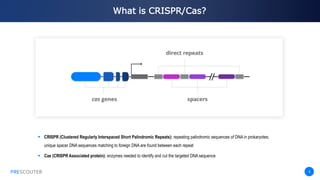
 CRISPR (Clustered Regularly Interspaced Short Palindromic Repeats): repeating palindromic sequences of
DNA in prokaryotes; unique spacer DNA sequences matching to foreign DNA are found between each repeat
 Cas (CRISPR Associated protein): enzymes needed to identify and cut the targeted DNA sequence
PRESCOUTER 5
What is CRISPR/Cas?
PRESCOUTER
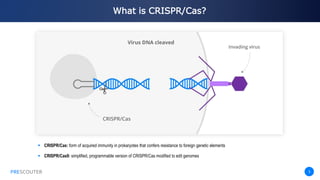
 CRISPR/Cas: form of acquired immunity in prokaryotes that confers resistance to foreign genetic elements
 CRISPR/Cas9: simplified, programmable version of CRISPR/Cas modified to edit genomes
PRESCOUTER 6
How the CRISPR/Cas9 system works
PRESCOUTER
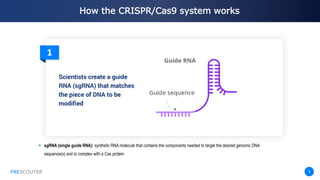
 sgRNA (single guide RNA): synthetic RNA molecule that contains the components needed to target the desired
genomic DNA sequence(s) and to complex with a Cas protein
PRESCOUTER 7
How the CRISPR/Cas9 system works
PRESCOUTER
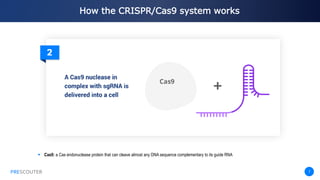
 Cas9: a Cas endonuclease protein that can cleave almost any DNA sequence complementary to its guide RNA
PRESCOUTER 8
How the CRISPR/Cas9 system works
PRESCOUTER
PRESCOUTER 9
How the CRISPR/Cas9 system works
PRESCOUTER
PRESCOUTER 10
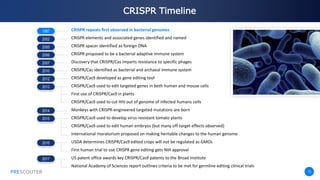
CRISPR Timeline
PRESCOUTER
1987
2002
2005
2006
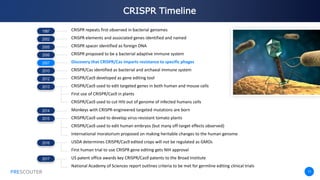
2007
2010
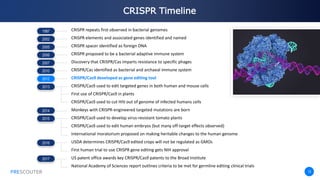
2012
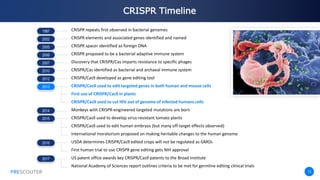
2013
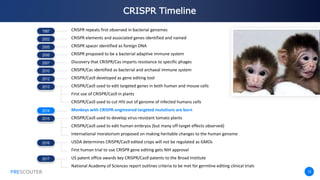
2014
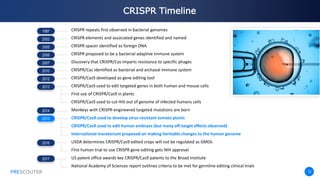
2015
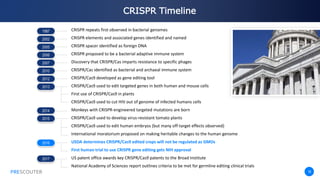
2016
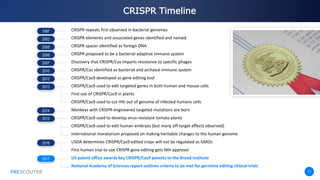
2017
CRISPR repeats first observed in bacterial genomes
CRISPR elements and associated genes identified and named
CRISPR spacer identified as foreign DNA
CRISPR proposed to be a bacterial adaptive immune system
Discovery that CRISPR/Cas imparts resistance to specific phages
CRISPR/Cas identified as bacterial and archaeal immune system
CRISPR/Cas9 developed as gene editing tool
CRISPR/Cas9 used to edit targeted genes in both human and mouse cells
First use of CRISPR/Cas9 in plants
CRISPR/Cas9 used to cut HIV out of genome of infected humans cells
Monkeys with CRISPR-engineered targeted mutations are born
CRISPR/Cas9 used to develop virus-resistant tomato plants
CRISPR/Cas9 used to edit human embryos (but many off-target effects observed)
International moratorium proposed on making heritable changes to the human genome
USDA determines CRISPR/Cas9 edited crops will not be regulated as GMOs
First human trial to use CRISPR gene editing gets NIH approval
US patent office awards key CRISPR/Cas9 patents to the Broad Institute
National Academy of Sciences report outlines criteria to be met for germline editing clinical trials
PRESCOUTER
CRISPR repeats first observed in bacterial genomes
CRISPR elements and associated genes identified and named
CRISPR spacer identified as foreign DNA
CRISPR proposed to be a bacterial adaptive immune system
Discovery that CRISPR/Cas imparts resistance to specific phages
CRISPR/Cas identified as bacterial and archaeal immune system
CRISPR/Cas9 developed as gene editing tool
CRISPR/Cas9 used to edit targeted genes in both human and mouse cells
First use of CRISPR/Cas9 in plants
CRISPR/Cas9 used to cut HIV out of genome of infected humans cells
Monkeys with CRISPR-engineered targeted mutations are born
CRISPR/Cas9 used to develop virus-resistant tomato plants
CRISPR/Cas9 used to edit human embryos (but many off-target effects observed)
International moratorium proposed on making heritable changes to the human genome
USDA determines CRISPR/Cas9 edited crops will not be regulated as GMOs
First human trial to use CRISPR gene editing gets NIH approval
US patent office awards key CRISPR/Cas9 patents to the Broad Institute
National Academy of Sciences report outlines criteria to be met for germline editing clinical trials
11
CRISPR Timeline
PRESCOUTER
1987
2002
2005
2006
2007
2010
2012
2013
2014
2015
2016
2017
PRESCOUTER 12
CRISPR Timeline
PRESCOUTER
1987
2002
2005
2006
2007
2010
2012
2013
2014
2015
2016
2017
CRISPR repeats first observed in bacterial genomes
CRISPR elements and associated genes identified and named
CRISPR spacer identified as foreign DNA
CRISPR proposed to be a bacterial adaptive immune system
Discovery that CRISPR/Cas imparts resistance to specific phages
CRISPR/Cas identified as bacterial and archaeal immune system
CRISPR/Cas9 developed as gene editing tool
CRISPR/Cas9 used to edit targeted genes in both human and mouse cells
First use of CRISPR/Cas9 in plants
CRISPR/Cas9 used to cut HIV out of genome of infected humans cells
Monkeys with CRISPR-engineered targeted mutations are born
CRISPR/Cas9 used to develop virus-resistant tomato plants
CRISPR/Cas9 used to edit human embryos (but many off-target effects observed)
International moratorium proposed on making heritable changes to the human genome
USDA determines CRISPR/Cas9 edited crops will not be regulated as GMOs
First human trial to use CRISPR gene editing gets NIH approval
US patent office awards key CRISPR/Cas9 patents to the Broad Institute
National Academy of Sciences report outlines criteria to be met for germline editing clinical trials
PRESCOUTER 13
CRISPR Timeline
PRESCOUTER
1987
2002
2005
2006
2007
2010
2012
2013
2014
2015
2016
2017
CRISPR repeats first observed in bacterial genomes
CRISPR elements and associated genes identified and named
CRISPR spacer identified as foreign DNA
CRISPR proposed to be a bacterial adaptive immune system
Discovery that CRISPR/Cas imparts resistance to specific phages
CRISPR/Cas identified as bacterial and archaeal immune system
CRISPR/Cas9 developed as gene editing tool
CRISPR/Cas9 used to edit targeted genes in both human and mouse cells
First use of CRISPR/Cas9 in plants
CRISPR/Cas9 used to cut HIV out of genome of infected humans cells
Monkeys with CRISPR-engineered targeted mutations are born
CRISPR/Cas9 used to develop virus-resistant tomato plants
CRISPR/Cas9 used to edit human embryos (but many off-target effects observed)
International moratorium proposed on making heritable changes to the human genome
USDA determines CRISPR/Cas9 edited crops will not be regulated as GMOs
First human trial to use CRISPR gene editing gets NIH approval
US patent office awards key CRISPR/Cas9 patents to the Broad Institute
National Academy of Sciences report outlines criteria to be met for germline editing clinical trials
PRESCOUTER 14
CRISPR Timeline
PRESCOUTER
1987
2002
2005
2006
2007
2010
2012
2013
2014
2015
2016
2017
CRISPR repeats first observed in bacterial genomes
CRISPR elements and associated genes identified and named
CRISPR spacer identified as foreign DNA
CRISPR proposed to be a bacterial adaptive immune system
Discovery that CRISPR/Cas imparts resistance to specific phages
CRISPR/Cas identified as bacterial and archaeal immune system
CRISPR/Cas9 developed as gene editing tool
CRISPR/Cas9 used to edit targeted genes in both human and mouse cells
First use of CRISPR/Cas9 in plants
CRISPR/Cas9 used to cut HIV out of genome of infected humans cells
Monkeys with CRISPR-engineered targeted mutations are born
CRISPR/Cas9 used to develop virus-resistant tomato plants
CRISPR/Cas9 used to edit human embryos (but many off-target effects observed)
International moratorium proposed on making heritable changes to the human genome
USDA determines CRISPR/Cas9 edited crops will not be regulated as GMOs
First human trial to use CRISPR gene editing gets NIH approval
US patent office awards key CRISPR/Cas9 patents to the Broad Institute
National Academy of Sciences report outlines criteria to be met for germline editing clinical trials
PRESCOUTER 15
CRISPR Timeline
PRESCOUTER
1987
2002
2005
2006
2007
2010
2012
2013
2014
2015
2016
2017
CRISPR repeats first observed in bacterial genomes
CRISPR elements and associated genes identified and named
CRISPR spacer identified as foreign DNA
CRISPR proposed to be a bacterial adaptive immune system
Discovery that CRISPR/Cas imparts resistance to specific phages
CRISPR/Cas identified as bacterial and archaeal immune system
CRISPR/Cas9 developed as gene editing tool
CRISPR/Cas9 used to edit targeted genes in both human and mouse cells
First use of CRISPR/Cas9 in plants
CRISPR/Cas9 used to cut HIV out of genome of infected humans cells
Monkeys with CRISPR-engineered targeted mutations are born
CRISPR/Cas9 used to develop virus-resistant tomato plants
CRISPR/Cas9 used to edit human embryos (but many off-target effects observed)
International moratorium proposed on making heritable changes to the human genome
USDA determines CRISPR/Cas9 edited crops will not be regulated as GMOs
First human trial to use CRISPR gene editing gets NIH approval
US patent office awards key CRISPR/Cas9 patents to the Broad Institute
National Academy of Sciences report outlines criteria to be met for germline editing clinical trials
PRESCOUTER 16
CRISPR Timeline
PRESCOUTER
1987
2002
2005
2006
2007
2010
2012
2013
2014
2015
2016
2017
CRISPR repeats first observed in bacterial genomes
CRISPR elements and associated genes identified and named
CRISPR spacer identified as foreign DNA
CRISPR proposed to be a bacterial adaptive immune system
Discovery that CRISPR/Cas imparts resistance to specific phages
CRISPR/Cas identified as bacterial and archaeal immune system
CRISPR/Cas9 developed as gene editing tool
CRISPR/Cas9 used to edit targeted genes in both human and mouse cells
First use of CRISPR/Cas9 in plants
CRISPR/Cas9 used to cut HIV out of genome of infected humans cells
Monkeys with CRISPR-engineered targeted mutations are born
CRISPR/Cas9 used to develop virus-resistant tomato plants
CRISPR/Cas9 used to edit human embryos (but many off-target effects observed)
International moratorium proposed on making heritable changes to the human genome
USDA determines CRISPR/Cas9 edited crops will not be regulated as GMOs
First human trial to use CRISPR gene editing gets NIH approval
US patent office awards key CRISPR/Cas9 patents to the Broad Institute
National Academy of Sciences report outlines criteria to be met for germline editing clinical trials
PRESCOUTER 17
CRISPR Timeline
PRESCOUTER
1987
2002
2005
2006
2007
2010
2012
2013
2014
2015
2016
2017
CRISPR repeats first observed in bacterial genomes
CRISPR elements and associated genes identified and named
CRISPR spacer identified as foreign DNA
CRISPR proposed to be a bacterial adaptive immune system
Discovery that CRISPR/Cas imparts resistance to specific phages
CRISPR/Cas identified as bacterial and archaeal immune system
CRISPR/Cas9 developed as gene editing tool
CRISPR/Cas9 used to edit targeted genes in both human and mouse cells
First use of CRISPR/Cas9 in plants
CRISPR/Cas9 used to cut HIV out of genome of infected humans cells
Monkeys with CRISPR-engineered targeted mutations are born
CRISPR/Cas9 used to develop virus-resistant tomato plants
CRISPR/Cas9 used to edit human embryos (but many off-target effects observed)
International moratorium proposed on making heritable changes to the human genome
USDA determines CRISPR/Cas9 edited crops will not be regulated as GMOs
First human trial to use CRISPR gene editing gets NIH approval
US patent office awards key CRISPR/Cas9 patents to the Broad Institute
National Academy of Sciences report outlines criteria to be met for germline editing clinical trials
PRESCOUTER 18
Potential Applications of CRISPR
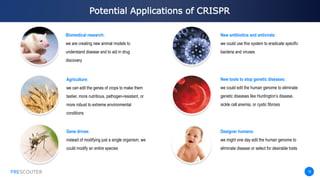
Biomedical research:
we are creating new animal models
to understand disease and to aid in
drug discovery
Agriculture:
we can edit the genes of crops to
make them tastier, more nutritious,
pathogen-resistant, or more robust to
extreme environmental conditions
Gene drives:
instead of modifying just a single
organism, we could modify an entire
species
New antibiotics and antivirals:
we could use this system to eradicate
specific bacteria and viruses
New tools to stop genetic diseases:
we could edit the human genome to
eliminate genetic diseases like
Huntington’s disease, sickle cell
anemia, or cystic fibrosis
Designer humans:
we might one day edit the human
genome to eliminate disease or select
for desirable traits
PRESCOUTER
Your Personal Research Assistant
Technology Scouting
Market Analysis
Competitive Intelligence
Technology Evaluation
19
Technology Landscapes
Start up Interviews
Forecasts
Market Sizing
PRESCOUTER 20
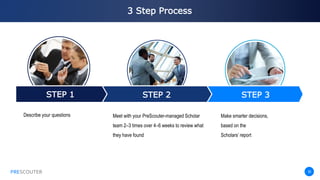
3 Step Process
PRESCOUTER
STEP 1
Describe your questions Meet with your PreScouter-managed
Scholar team 2–3 times over 4–6 weeks

to review what they have found
STEP 2
Make smarter decisions,
based on the
Scholars’ report
STEP 3
PRESCOUTER 21
CRISPR Panelists
PRESCOUTER
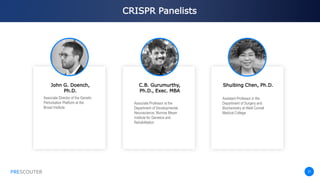
John G. Doench, Ph.D.
Associate Director of the
Genetic Perturbation
Platform at the
Broad Institute
C.B. Gurumurthy,
Ph.D., Exec. MBA
Associate Professor at the
Department of
Developmental
Neuroscience, Munroe
Meyer Institute for Genetics
and Rehabilitation
Shuibing Chen, Ph.D.
Assistant Professor in the
Department of Surgery and
Biochemistry at Weill
Cornell Medical College
Questions
PRESCOUTER
What enhancements to the CRISPR/Cas9 system do
you think will be the most impactful?
1
PRESCOUTER
Of the current technical limitations facing the CRISPR technology,
which do you think are most important?
2
PRESCOUTER
What are the lessons we can learn from the obstacles faced by
CRISPR’s predecessors? In what ways is CRISPR unique from
these systems?
3
PRESCOUTER
What are the main technical challenges of applying CRISPR to
animal models? How will CRISPR-based development of
animal models allow us to create better disease models and
aid in drug discovery?
4
PRESCOUTER
5
How can CRISPR aid in research involving pluripotent stem cells?
What translational/therapeutic use cases do you foresee? What are
the hurdles to achieving these applications?
PRESCOUTER 28
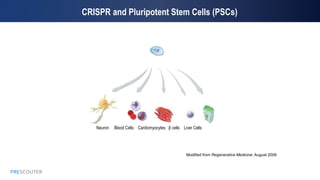
CRISPR and Pluripotent Stem Cells (PSCs)
Neuron Blood Cells Cardiomyocytes β cells Liver Cells
Modified from Regenerative Medicine. August 2006
PRESCOUTER 29
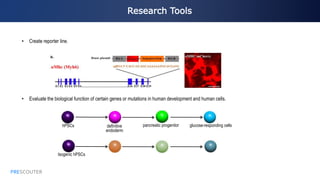
Research Tools
• Create reporter line.
• Evaluate the biological function of certain genes or mutations in human development and human cells.
hPSCs definitive
endoderm
pancreatic
progenitor
glucose-responding
cells
Isogenic hPSCs
PRESCOUTER 30
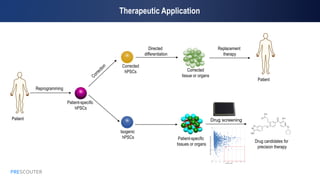
Therapeutic Application
Patient
Corrected
hPSCs
Reprogramming
Patient-specific
hPSCs
Directed
differentiation
Replacement
therapy
Patient
Corrected
tissue or organs
Isogenic
hPSCs Patient-specific
tissues or organs
Drug screening
Drug candidates for
precision therapy
FoldChangeofINS+
CellDeathRate
#of INS+
cells
0.01
0.10
1.00
10.00
-100 100 300 500 700 900 1100 1300 1500
PRESCOUTER
What are the greatest challenges (technical, regulatory, or ethical) to
broader applications of CRISPR within biomedical research, drug
discovery, agricultural enhancements, or therapeutic applications?
6
PRESCOUTER
What applications of CRISPR are you most excited to see in the next
few years? What about the next 10–20 years?
7
PRESCOUTER 33
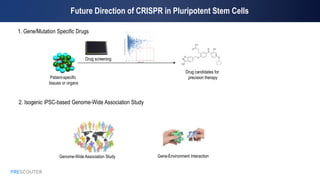
Future Direction of CRISPR in Pluripotent Stem Cells
1. Gene/Mutation Specific Drugs
Patient-specific
tissues or organs
Drug screening
Drug candidates for
precision therapy
FoldChangeofINS+
CellDeathRate
#of INS+
cells
0.01
0.10
1.00
10.00
-100 100 300 500 700 900 1100 1300 1500
2. Isogenic iPSC-based Genome-Wide Association Study
Genome-Wide Association Study Gene-Environment Interaction
THANK YOU
STICK AROUND FOR OUR Q&A
PRESCOUTER
Your Personal Research Assistant

CRISPR: Opportunities and Challenges Webinar

  • 1.
    PRESCOUTER 1 The presentationwill begin shortly... WHILE YOU WAIT:  Stay up to date with industry disruptors and R&D events by signing up for The PreScouter Newsletter on www.prescouter.com.  Check your email after the presentation for a survey and recording from this webinar.
  • 2.
    PRESCOUTER 2 PRESCOUTER CRISPR: Opportunities andChallenges Webinar Your Personal Research Assistant
  • 3.
    PRESCOUTER 3 Webinar Host PRESCOUTER Medical Lead Scientist at PreScouter, Inc.  Ph.D. Biophysical Sciences from the University of Chicago Charles Wright, Ph.D.
  • 4.
    PRESCOUTER 4 What isCRISPR/Cas? PRESCOUTER  CRISPR (Clustered Regularly Interspaced Short Palindromic Repeats): repeating palindromic sequences of DNA in prokaryotes; unique spacer DNA sequences matching to foreign DNA are found between each repeat  Cas (CRISPR Associated protein): enzymes needed to identify and cut the targeted DNA sequence
  • 5.
    PRESCOUTER 5 What isCRISPR/Cas? PRESCOUTER  CRISPR/Cas: form of acquired immunity in prokaryotes that confers resistance to foreign genetic elements  CRISPR/Cas9: simplified, programmable version of CRISPR/Cas modified to edit genomes
  • 6.
    PRESCOUTER 6 How theCRISPR/Cas9 system works PRESCOUTER  sgRNA (single guide RNA): synthetic RNA molecule that contains the components needed to target the desired genomic DNA sequence(s) and to complex with a Cas protein
  • 7.
    PRESCOUTER 7 How theCRISPR/Cas9 system works PRESCOUTER  Cas9: a Cas endonuclease protein that can cleave almost any DNA sequence complementary to its guide RNA
  • 8.
    PRESCOUTER 8 How theCRISPR/Cas9 system works PRESCOUTER
  • 9.
    PRESCOUTER 9 How theCRISPR/Cas9 system works PRESCOUTER
  • 10.
    PRESCOUTER 10 CRISPR Timeline PRESCOUTER 1987 2002 2005 2006 2007 2010 2012 2013 2014 2015 2016 2017 CRISPRrepeats first observed in bacterial genomes CRISPR elements and associated genes identified and named CRISPR spacer identified as foreign DNA CRISPR proposed to be a bacterial adaptive immune system Discovery that CRISPR/Cas imparts resistance to specific phages CRISPR/Cas identified as bacterial and archaeal immune system CRISPR/Cas9 developed as gene editing tool CRISPR/Cas9 used to edit targeted genes in both human and mouse cells First use of CRISPR/Cas9 in plants CRISPR/Cas9 used to cut HIV out of genome of infected humans cells Monkeys with CRISPR-engineered targeted mutations are born CRISPR/Cas9 used to develop virus-resistant tomato plants CRISPR/Cas9 used to edit human embryos (but many off-target effects observed) International moratorium proposed on making heritable changes to the human genome USDA determines CRISPR/Cas9 edited crops will not be regulated as GMOs First human trial to use CRISPR gene editing gets NIH approval US patent office awards key CRISPR/Cas9 patents to the Broad Institute National Academy of Sciences report outlines criteria to be met for germline editing clinical trials
  • 11.
    PRESCOUTER CRISPR repeats firstobserved in bacterial genomes CRISPR elements and associated genes identified and named CRISPR spacer identified as foreign DNA CRISPR proposed to be a bacterial adaptive immune system Discovery that CRISPR/Cas imparts resistance to specific phages CRISPR/Cas identified as bacterial and archaeal immune system CRISPR/Cas9 developed as gene editing tool CRISPR/Cas9 used to edit targeted genes in both human and mouse cells First use of CRISPR/Cas9 in plants CRISPR/Cas9 used to cut HIV out of genome of infected humans cells Monkeys with CRISPR-engineered targeted mutations are born CRISPR/Cas9 used to develop virus-resistant tomato plants CRISPR/Cas9 used to edit human embryos (but many off-target effects observed) International moratorium proposed on making heritable changes to the human genome USDA determines CRISPR/Cas9 edited crops will not be regulated as GMOs First human trial to use CRISPR gene editing gets NIH approval US patent office awards key CRISPR/Cas9 patents to the Broad Institute National Academy of Sciences report outlines criteria to be met for germline editing clinical trials 11 CRISPR Timeline PRESCOUTER 1987 2002 2005 2006 2007 2010 2012 2013 2014 2015 2016 2017
  • 12.
    PRESCOUTER 12 CRISPR Timeline PRESCOUTER 1987 2002 2005 2006 2007 2010 2012 2013 2014 2015 2016 2017 CRISPRrepeats first observed in bacterial genomes CRISPR elements and associated genes identified and named CRISPR spacer identified as foreign DNA CRISPR proposed to be a bacterial adaptive immune system Discovery that CRISPR/Cas imparts resistance to specific phages CRISPR/Cas identified as bacterial and archaeal immune system CRISPR/Cas9 developed as gene editing tool CRISPR/Cas9 used to edit targeted genes in both human and mouse cells First use of CRISPR/Cas9 in plants CRISPR/Cas9 used to cut HIV out of genome of infected humans cells Monkeys with CRISPR-engineered targeted mutations are born CRISPR/Cas9 used to develop virus-resistant tomato plants CRISPR/Cas9 used to edit human embryos (but many off-target effects observed) International moratorium proposed on making heritable changes to the human genome USDA determines CRISPR/Cas9 edited crops will not be regulated as GMOs First human trial to use CRISPR gene editing gets NIH approval US patent office awards key CRISPR/Cas9 patents to the Broad Institute National Academy of Sciences report outlines criteria to be met for germline editing clinical trials
  • 13.
    PRESCOUTER 13 CRISPR Timeline PRESCOUTER 1987 2002 2005 2006 2007 2010 2012 2013 2014 2015 2016 2017 CRISPRrepeats first observed in bacterial genomes CRISPR elements and associated genes identified and named CRISPR spacer identified as foreign DNA CRISPR proposed to be a bacterial adaptive immune system Discovery that CRISPR/Cas imparts resistance to specific phages CRISPR/Cas identified as bacterial and archaeal immune system CRISPR/Cas9 developed as gene editing tool CRISPR/Cas9 used to edit targeted genes in both human and mouse cells First use of CRISPR/Cas9 in plants CRISPR/Cas9 used to cut HIV out of genome of infected humans cells Monkeys with CRISPR-engineered targeted mutations are born CRISPR/Cas9 used to develop virus-resistant tomato plants CRISPR/Cas9 used to edit human embryos (but many off-target effects observed) International moratorium proposed on making heritable changes to the human genome USDA determines CRISPR/Cas9 edited crops will not be regulated as GMOs First human trial to use CRISPR gene editing gets NIH approval US patent office awards key CRISPR/Cas9 patents to the Broad Institute National Academy of Sciences report outlines criteria to be met for germline editing clinical trials
  • 14.
    PRESCOUTER 14 CRISPR Timeline PRESCOUTER 1987 2002 2005 2006 2007 2010 2012 2013 2014 2015 2016 2017 CRISPRrepeats first observed in bacterial genomes CRISPR elements and associated genes identified and named CRISPR spacer identified as foreign DNA CRISPR proposed to be a bacterial adaptive immune system Discovery that CRISPR/Cas imparts resistance to specific phages CRISPR/Cas identified as bacterial and archaeal immune system CRISPR/Cas9 developed as gene editing tool CRISPR/Cas9 used to edit targeted genes in both human and mouse cells First use of CRISPR/Cas9 in plants CRISPR/Cas9 used to cut HIV out of genome of infected humans cells Monkeys with CRISPR-engineered targeted mutations are born CRISPR/Cas9 used to develop virus-resistant tomato plants CRISPR/Cas9 used to edit human embryos (but many off-target effects observed) International moratorium proposed on making heritable changes to the human genome USDA determines CRISPR/Cas9 edited crops will not be regulated as GMOs First human trial to use CRISPR gene editing gets NIH approval US patent office awards key CRISPR/Cas9 patents to the Broad Institute National Academy of Sciences report outlines criteria to be met for germline editing clinical trials
  • 15.
    PRESCOUTER 15 CRISPR Timeline PRESCOUTER 1987 2002 2005 2006 2007 2010 2012 2013 2014 2015 2016 2017 CRISPRrepeats first observed in bacterial genomes CRISPR elements and associated genes identified and named CRISPR spacer identified as foreign DNA CRISPR proposed to be a bacterial adaptive immune system Discovery that CRISPR/Cas imparts resistance to specific phages CRISPR/Cas identified as bacterial and archaeal immune system CRISPR/Cas9 developed as gene editing tool CRISPR/Cas9 used to edit targeted genes in both human and mouse cells First use of CRISPR/Cas9 in plants CRISPR/Cas9 used to cut HIV out of genome of infected humans cells Monkeys with CRISPR-engineered targeted mutations are born CRISPR/Cas9 used to develop virus-resistant tomato plants CRISPR/Cas9 used to edit human embryos (but many off-target effects observed) International moratorium proposed on making heritable changes to the human genome USDA determines CRISPR/Cas9 edited crops will not be regulated as GMOs First human trial to use CRISPR gene editing gets NIH approval US patent office awards key CRISPR/Cas9 patents to the Broad Institute National Academy of Sciences report outlines criteria to be met for germline editing clinical trials
  • 16.
    PRESCOUTER 16 CRISPR Timeline PRESCOUTER 1987 2002 2005 2006 2007 2010 2012 2013 2014 2015 2016 2017 CRISPRrepeats first observed in bacterial genomes CRISPR elements and associated genes identified and named CRISPR spacer identified as foreign DNA CRISPR proposed to be a bacterial adaptive immune system Discovery that CRISPR/Cas imparts resistance to specific phages CRISPR/Cas identified as bacterial and archaeal immune system CRISPR/Cas9 developed as gene editing tool CRISPR/Cas9 used to edit targeted genes in both human and mouse cells First use of CRISPR/Cas9 in plants CRISPR/Cas9 used to cut HIV out of genome of infected humans cells Monkeys with CRISPR-engineered targeted mutations are born CRISPR/Cas9 used to develop virus-resistant tomato plants CRISPR/Cas9 used to edit human embryos (but many off-target effects observed) International moratorium proposed on making heritable changes to the human genome USDA determines CRISPR/Cas9 edited crops will not be regulated as GMOs First human trial to use CRISPR gene editing gets NIH approval US patent office awards key CRISPR/Cas9 patents to the Broad Institute National Academy of Sciences report outlines criteria to be met for germline editing clinical trials
  • 17.
    PRESCOUTER 17 CRISPR Timeline PRESCOUTER 1987 2002 2005 2006 2007 2010 2012 2013 2014 2015 2016 2017 CRISPRrepeats first observed in bacterial genomes CRISPR elements and associated genes identified and named CRISPR spacer identified as foreign DNA CRISPR proposed to be a bacterial adaptive immune system Discovery that CRISPR/Cas imparts resistance to specific phages CRISPR/Cas identified as bacterial and archaeal immune system CRISPR/Cas9 developed as gene editing tool CRISPR/Cas9 used to edit targeted genes in both human and mouse cells First use of CRISPR/Cas9 in plants CRISPR/Cas9 used to cut HIV out of genome of infected humans cells Monkeys with CRISPR-engineered targeted mutations are born CRISPR/Cas9 used to develop virus-resistant tomato plants CRISPR/Cas9 used to edit human embryos (but many off-target effects observed) International moratorium proposed on making heritable changes to the human genome USDA determines CRISPR/Cas9 edited crops will not be regulated as GMOs First human trial to use CRISPR gene editing gets NIH approval US patent office awards key CRISPR/Cas9 patents to the Broad Institute National Academy of Sciences report outlines criteria to be met for germline editing clinical trials
  • 18.
    PRESCOUTER 18 Potential Applicationsof CRISPR Biomedical research: we are creating new animal models to understand disease and to aid in drug discovery Agriculture: we can edit the genes of crops to make them tastier, more nutritious, pathogen-resistant, or more robust to extreme environmental conditions Gene drives: instead of modifying just a single organism, we could modify an entire species New antibiotics and antivirals: we could use this system to eradicate specific bacteria and viruses New tools to stop genetic diseases: we could edit the human genome to eliminate genetic diseases like Huntington’s disease, sickle cell anemia, or cystic fibrosis Designer humans: we might one day edit the human genome to eliminate disease or select for desirable traits
  • 19.
    PRESCOUTER Your Personal ResearchAssistant Technology Scouting Market Analysis Competitive Intelligence Technology Evaluation 19 Technology Landscapes Start up Interviews Forecasts Market Sizing
  • 20.
    PRESCOUTER 20 3 StepProcess PRESCOUTER STEP 1 Describe your questions Meet with your PreScouter-managed Scholar team 2–3 times over 4–6 weeks to review what they have found STEP 2 Make smarter decisions, based on the Scholars’ report STEP 3
  • 21.
    PRESCOUTER 21 CRISPR Panelists PRESCOUTER JohnG. Doench, Ph.D. Associate Director of the Genetic Perturbation Platform at the Broad Institute C.B. Gurumurthy, Ph.D., Exec. MBA Associate Professor at the Department of Developmental Neuroscience, Munroe Meyer Institute for Genetics and Rehabilitation Shuibing Chen, Ph.D. Assistant Professor in the Department of Surgery and Biochemistry at Weill Cornell Medical College
  • 22.
  • 23.
    PRESCOUTER What enhancements tothe CRISPR/Cas9 system do you think will be the most impactful? 1
  • 24.
    PRESCOUTER Of the currenttechnical limitations facing the CRISPR technology, which do you think are most important? 2
  • 25.
    PRESCOUTER What are thelessons we can learn from the obstacles faced by CRISPR’s predecessors? In what ways is CRISPR unique from these systems? 3
  • 26.
    PRESCOUTER What are themain technical challenges of applying CRISPR to animal models? How will CRISPR-based development of animal models allow us to create better disease models and aid in drug discovery? 4
  • 27.
    PRESCOUTER 5 How can CRISPRaid in research involving pluripotent stem cells? What translational/therapeutic use cases do you foresee? What are the hurdles to achieving these applications?
  • 28.
    PRESCOUTER 28 CRISPR andPluripotent Stem Cells (PSCs) Neuron Blood Cells Cardiomyocytes β cells Liver Cells Modified from Regenerative Medicine. August 2006
  • 29.
    PRESCOUTER 29 Research Tools •Create reporter line. • Evaluate the biological function of certain genes or mutations in human development and human cells. hPSCs definitive endoderm pancreatic progenitor glucose-responding cells Isogenic hPSCs
  • 30.
    PRESCOUTER 30 Therapeutic Application Patient Corrected hPSCs Reprogramming Patient-specific hPSCs Directed differentiation Replacement therapy Patient Corrected tissueor organs Isogenic hPSCs Patient-specific tissues or organs Drug screening Drug candidates for precision therapy FoldChangeofINS+ CellDeathRate #of INS+ cells 0.01 0.10 1.00 10.00 -100 100 300 500 700 900 1100 1300 1500
  • 31.
    PRESCOUTER What are thegreatest challenges (technical, regulatory, or ethical) to broader applications of CRISPR within biomedical research, drug discovery, agricultural enhancements, or therapeutic applications? 6
  • 32.
    PRESCOUTER What applications ofCRISPR are you most excited to see in the next few years? What about the next 10–20 years? 7
  • 33.
    PRESCOUTER 33 Future Directionof CRISPR in Pluripotent Stem Cells 1. Gene/Mutation Specific Drugs Patient-specific tissues or organs Drug screening Drug candidates for precision therapy FoldChangeofINS+ CellDeathRate #of INS+ cells 0.01 0.10 1.00 10.00 -100 100 300 500 700 900 1100 1300 1500 2. Isogenic iPSC-based Genome-Wide Association Study Genome-Wide Association Study Gene-Environment Interaction
  • 34.
    THANK YOU STICK AROUNDFOR OUR Q&A PRESCOUTER Your Personal Research Assistant

Editor's Notes

  • #2 Hello everyone, and thank you for joining us for today’s webinar.
  • #3 Today we’ll be talking about CRISPR, the genome-editing technology that has been lauded as one of the most important scientific breakthroughs of this century. CRISPR allows us to insert, add, or delete genes inside living cells with far greater precision, efficiency, and flexibility than previously possible. It’s already accelerating biomedical research and enhancing our ability to improve crop yields, and it is poised to revolutionize our ability to treat genetic diseases. Our goal today is to provide an overview of this disruptive technology, then discuss the hurdles that it currently faces as well as the applications we can expect to see in biomedical research, agriculture, and medicine in upcoming years. This live presentation will run for about 45 minutes, and will be followed by a brief question-and-answer section. During the presentation, please type your questions in the chat panel so that we can discuss them. And if you have any technical problems during the presentation, please report them via the chat tool or send them directly to webinar@prescouter.com.
  • #4 My name is Dr. Charles Wright and I will be your webinar host for today. I’m one of PreScouter's Project Architects specializing in the medical industry. I received my PhD in biophysics from the University of Chicago. As a Project Architect at PreScouter, I have looked into a range of technologies that are impacting the life sciences and healthcare space, running the gamut from lab on a chip to artificial intelligence. I believe that CRISPR is one of the most exciting technologies in this area both because of the variety of possible applications, but also because the rapid pace of advances means that we could see those impacts not decades, but years down the road. So, I’m excited to be discussing CRISPR today with you. I’ll first give you a brief overview of how this technology works, then I’ll explain a bit about what we do at PreScouter. After introducing the panelists, we’ll jump into the discussion. At the end, we’ll have time for questions from the audience. Again, you can type them into the chatbox throughout the presentation and we’ll answer as many as we can.
  • #5 Let’s begin with an overview of the CRISPR/Cas system in its natural context, as an adaptive immune system in bacteria and archaea. The CRISPR sequences, so called because they consist of clustered regularly interspaced short palindromic repeats, are a repository of past infections. The unique DNA spacer sequences between these repeats contain snippets of dangerous viruses, which allow a cell to recognize those sequences and mount a successful defense against the next infection. Close by the CRISPR sequences are genes encoding for Cas, or CRISPR-associated, enzymes, which carry out the task of recognizing the matching foreign DNA and destroying it.
  • #6 So, how does this all work? The cell first transcribes the spacer sequences into RNA molecules, which form a complex with a Cas enzyme and drift through the cell until coming into contact with foreign DNA complementary to the RNA. When this occurs, the CRISPR RNA binds tightly to the matching DNA, allowing the Cas enzyme to precisely cut it and thus prevent the virus from replicating. After successfully killing off an invading virus, other proteins cut up pieces of the viral DNA and store them as CRISPR spacer sequences to prepare for future infections.
  • #7 We’re going to focus the rest of this talk on one specific system, CRISPR/Cas9, which is a simplified, programmable version that has been modified to edit genomes. There are four basic steps to using CRISPR/Cas9. First, scientists create an sgRNA, a synthetic (single guide) RNA molecule that has everything needed to target the desired genomic DNA sequence(s) and to complex with a Cas protein.
  • #8 A Cas9 nuclease in complex with the sgRNA is then delivered into the cell. Cas9 is an endonuclease that can cleave almost any DNA sequence complementary to its guide RNA.
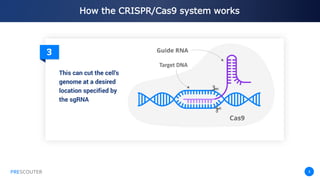
  • #9 When the guide sequence binds to its matching target DNA from the cell’s genome, the Cas9 enzyme cleaves the DNA at a specific location.
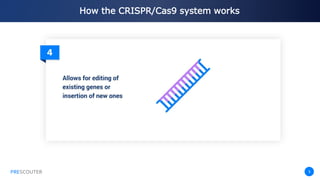
  • #10 This allows for editing or deletion of existing genes, or insertion of new ones.
  • #11 Now let’s take a look at some of the milestones in the history of CRISPR since its discovery three decades ago. In 1987, Japanese scientists came across unusual repeating sequences in the E. coli genome. In subsequent years, researchers discovered similar repeats in other species of bacteria and archaea, which were eventually given the name CRISPR.
  • #12 Over the next two decades, researchers worked to solve the mystery of this system. In 2007, food scientists at Danisco studying the bacteria used to make yogurt confirmed experimentally that CRISPR is a prokaryotic immune system.
  • #13 Five years later, in 2012, Jennifer Doudna and Emmanuelle Charpentier created a programmable CRISPR/Cas9 system with “considerable potential”. They simplified the system down to the Cas9 nuclease and a synthetic guide RNA, which allows it to precisely cut and paste pieces of DNA into the genome.
  • #14 Shortly thereafter, Feng Zhang and George Church successfully adapted this system for genome editing in eukaryotic cells. 2013 saw the first use in mouse, human, and plant cells, as well as the demonstration of its potential therapeutic significance, when it was used to cut HIV out of the genome of infected humans cells.
  • #15 In the following year, Chinese scientists created monkeys with CRISPR-engineered targeted mutations.
  • #16 In 2015, Chinese scientists also used CRISPR/Cas9 for the first time to edit human embryos. Even though the resulting cells were not viable, researchers in the field called for an international moratorium on making heritable changes to the human genome until the ethical implications could be fully discussed.
  • #17 2016 saw important regulatory decisions for the future of CRISPR, including a determination by the USDA that it will not regulate crops edited with CRISPR/Cas9 as GMOs, and NIH approval of the first human trial to use CRISPR gene editing, with the goal of modifying human T cells to attack cancer cells.
  • #18 This year, CRISPR has been in the news quite a bit, as a patent debate ended when the US patent office determined that key patents from the Broad Institute do not interfere with patents from the University of California. And finally, the National Academies of Sciences and Medicine recently published a report outlining the criteria that must be met in order for clinical trials of germline editing to proceed.
  • #19 CRISPR could impact almost every field of biology. One major application in biomedical research is to create model animals with multiple specific mutations within a single generation, dramatically reducing the time and effort required to generate new disease models. Last year, DuPont released its first commercial agricultural product developed through CRISPR-enabled advanced breeding technologies. In the future, we could edit crops to make them tastier, more nutritious, and more robust to environmental stresses. We could also potentially use “gene drive” to modify the genome of an entire species. Last year, researchers reported construction of CRISPR/Cas9 constructs that could be used to suppress mosquito populations to levels that do not support malaria transmission. In terms of therapeutics, CRISPR could be used to create a powerful new generation of drugs, including antibiotics that could target only pathogenic bacteria and to which bacteria can’t easily develop resistance, and antivirals that could specifically target viral RNA to prevent infections. Researchers have already used CRISPR to correct the sickle cell mutation in the cells that eventually turn into red blood cells and to fix mutations in the blood stem cells of patients with a rare immunodeficiency disorder. Once applied to humans, we could use CRISPR-based therapeutics to correct the mutations responsible for a host of genetic diseases. Finally, with editing of germline cells, we could edit out the genes responsible for genetic disorders or potentially use this technology to select for desired traits in humans.
  • #20 Before we get into today’s panel discussions, I would like to briefly tell you more about PreScouter. You can think of us as your personal research assistant. As a Project Architect at PreScouter, I get asked questions about disruptive technologies such as artificial intelligence, blockchain, and CRISPR. PreScouter helps companies like yours by providing answers to the most pressing questions. By helping solve your innovation goals, we reduce your tactical work—thus allowing you to focus on strategy. To date, we have helped over 300 clients including GE Healthcare, BD, and Pfizer, to name a few in the healthcare and pharmaceuticals space.
  • #21 We can simplify the PreScouter process to three easy steps. First, you provide us your question or something you would like to learn more about. Here we discuss criteria for the people, organizations or technologies you want PreScouter to research. For instance, if your company is thinking of developing CRISPR-based products, what applications would best align with your capabilities? Next, PreScouter assembles a team of scholars from our network. The scholars are recruited from leading research institutions worldwide and are all under nondisclosure agreements. They use a combination of their own human intelligence networks and proprietary software developed at PreScouter to answer your query. After a few short meetings with PreScouter’s team, and through interviews and analysis of the information, you receive a deliverable that reflects your innovation needs. On average, our clients find that the report contains around 80% of information that is new and relevant, which allows them to perform informed decisions and—more importantly—take action. If you have any questions about how the PreScouter process operates, please feel free to email webinar@prescouter.com.
  • #22 Now, we’ll move into the panel discussion. First, I would like to introduce you to the guest panelists. John, could you please introduce yourself? And Guru, could you please tell us more about you? And finally, Shuibing, could you tell us a bit about you?
  • #23 With that, let’s get into our panel discussion.
  • #24 Scientists continue to improve upon the original CRISPR/Cas9 system by modifying the guide RNA, modifying the Cas9 endonuclease, and identifying new endonuclease proteins (such as Cpf1). What enhancements to the system do you think will be the most impactful?
  • #25 So you’ve brought up a few of the hurdles that researchers are attempting to address. Of the technical limitations currently facing the CRISPR technology—for example, presence of off-target effects or efficiency of homology-directed repair—do you think are most important to overcome, especially to ensure applicability of CRISPR outside of biomedical research?
  • #26 The next question is for John. You have worked extensively in the development and use of functional genomic techniques, in particular RNAi. What are the lessons we can learn from the obstacles that RNAi has faced in its applications, that could be applied to inform our forecasts of CRISPR? In what ways is CRISPR unique from its predecessors (e.g., zinc finger nucleases, TALEN)?
  • #27 This question is for Guru. Your research focuses on the development of animal models using CRISPR. Looking back over the last four years, and thinking of where we can be in the next four years, what are the main technical challenges that remain and how will CRISPR-based development of animal models allow us to create better disease models and aid in drug discovery?
  • #28 This question is for Dr. Chen. You work with pluripotent stem cells [for the audience: these are cells that have been genetically modified to behave like embryonic stem cells, which have the ability to form any type of adult cell type], especially for translational research with the ultimate goal of replacement therapy and drug discovery. How can CRISPR aid in this area of research? What translational/therapeutic use cases do you foresee? What are the hurdles to achieving these applications?
  • #32 When we speak about such an exciting technology as CRISPR, we inevitably come across much hype, particularly with respect to the potential practical applications. In addition to the technical challenges that we’ve already discussed, there are many regulatory and ethical considerations. For some potential applications, such as gene drives and designer babies, there is considerable debate about whether to even pursue them. When you look at the claims being made, ranging from agricultural enhancements to therapeutic applications, what do you think are the greatest challenges facing us today?
  • #33 What applications of CRISPR are you most excited to see coming up in the next few years? And looking much further down the road, what about in the next decade or two?
  • #35 Thank you again to John, Guru, and Shuibing for their time and insights. And before we move into the Q&A session, I would also like to mention that we have people available to further discuss PreScouter or CRISPR with you after this presentation. We’ll send you a follow-up email if you are interested in discussing CRISPR further. And now, the first question from the audience: 1. You agreed that delivery of the CRISPR/Cas9 complex to cells is one of the major hurdles. How is this currently accomplished, and what proposed alternatives do you think are most promising? 2. I understand how CRISPR could be used to treat diseases based on point mutations. But what if we want to make multiple changes at once? Would that be possible, and if so, how? 3. You mentioned that next generation sequencing has played an important role in the pace of advances using CRISPR. What exactly has been that role, and can next generation sequencing be leveraged for applications outside of research? 4. Can you describe in more detail how libraries of CRISPR-modified cells could be used for drug discovery?