Creativity in
EngineeringEducation
The National Academy of Engineers (NAE) suggests that the essence of engineering—the iterative process of designing, predicting ---performance, building, and testing —should be taught from the earliest stages of --the curriculum, including the first year.-- (National Academy of Engineers, 2005).
The educational role of faculty members is not to impart knowledge; it is to design learning environments that support the process of knowledge acquisition .-- (Adams and Felder, 2008; National Research Council, 2000).
Competency in Educational Design requires Domain-Specific (content) KnowledgeKnowledge in Teaching and LearningReflective Educational Practice
Creativity
“Creativity as the production of something that is both new and truly valuable” -- Rothenberg
“It would seem to be our responsibility to produce some creative engineers or at least not to extinguish the creative spark in our students.” – Richard Felder
Professor Richard Felder’s Suggestion on Creative Teaching…
Techniques of Creative Thinking  + Traditional Methods of Engineering Education
Methods intended to develop creativity and high-level thinking skills should not take too much class time
   To be effective,    these techniques must be introduced throughout the curriculum(not as an elective)
New methods should also not take too much of the instructor’s time.
Richards (1998) recommends a series of activities to incite creativity when faced with an engineering problem:• Immerse yourself in a domain or problem;• Be prolific—generate lots of ideas;• Use tools for representations and thoughts (e.g., brainstorming,notebooks &sketches);• Play with ideas;• Avoid premature closure;
• Don’t be afraid to be different;• Be open and receptive to new ideas;• Do it—practice your craft;• Maintain a product orientation;• Relax—indulge your diversions;• Reflect—review what you have done;• Have fun!
The National Curriculum Handbook included creativity within the section on thinking skills:‘Creative thinking skills . . .enable studentsto suggest hypotheses, to generate and extend ideas,to apply imagination, andto look for alternative innovative outcomes.’
Chair ?Four legsArmsBack rest………
Chair Why Not like this?
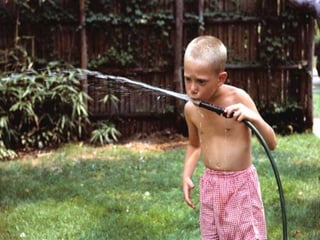
Suggest HypothesesWe don’t require vessel / tumbler/ container to drink water…
We drink water like this…
Apply Imagination
Miniature hard drive +  head phones = ?
Look For Alternative Innovative Outcomes
Fan ?
Exclusively available at the Dyson online store and select design stores The Dyson Air Multiplier introduced the amazing technology of a fan with no bladesvideo
Watermelon ….Shape?
‘Creativity is the application of knowledge and skills in new ways to achieve a valued goal. To achieve this, learners must have four key qualities:3142
1The ability to identify new problems, rather than depending on others to define them
2The ability to transfer knowledge gained in one context to another in order to solve a problem
3A belief in learning as an incremental process, in which repeated attempts will eventually lead to success
4The capacity to focus attention in the pursuit of a goal, or set of goals.(Seltzer & Bentley, 1999).
Thank YouProf.P.MadarValliGIT,Gitam UniversityIndia

Creativity in Engineering Education.ppt

  • 1.
  • 2.
  • 3.
    The National Academyof Engineers (NAE) suggests that the essence of engineering—the iterative process of designing, predicting ---performance, building, and testing —should be taught from the earliest stages of --the curriculum, including the first year.-- (National Academy of Engineers, 2005).
  • 4.
    The educational roleof faculty members is not to impart knowledge; it is to design learning environments that support the process of knowledge acquisition .-- (Adams and Felder, 2008; National Research Council, 2000).
  • 5.
    Competency in EducationalDesign requires Domain-Specific (content) KnowledgeKnowledge in Teaching and LearningReflective Educational Practice
  • 6.
  • 7.
    “Creativity as theproduction of something that is both new and truly valuable” -- Rothenberg
  • 8.
    “It would seemto be our responsibility to produce some creative engineers or at least not to extinguish the creative spark in our students.” – Richard Felder
  • 9.
    Professor Richard Felder’sSuggestion on Creative Teaching…
  • 10.
    Techniques of CreativeThinking + Traditional Methods of Engineering Education
  • 11.
    Methods intended todevelop creativity and high-level thinking skills should not take too much class time
  • 12.
    To be effective, these techniques must be introduced throughout the curriculum(not as an elective)
  • 13.
    New methods shouldalso not take too much of the instructor’s time.
  • 14.
    Richards (1998) recommendsa series of activities to incite creativity when faced with an engineering problem:• Immerse yourself in a domain or problem;• Be prolific—generate lots of ideas;• Use tools for representations and thoughts (e.g., brainstorming,notebooks &sketches);• Play with ideas;• Avoid premature closure;
  • 15.
    • Don’t beafraid to be different;• Be open and receptive to new ideas;• Do it—practice your craft;• Maintain a product orientation;• Relax—indulge your diversions;• Reflect—review what you have done;• Have fun!
  • 16.
    The National CurriculumHandbook included creativity within the section on thinking skills:‘Creative thinking skills . . .enable studentsto suggest hypotheses, to generate and extend ideas,to apply imagination, andto look for alternative innovative outcomes.’
  • 18.
  • 20.
    Chair Why Notlike this?
  • 28.
    Suggest HypothesesWe don’trequire vessel / tumbler/ container to drink water…
  • 29.
    We drink waterlike this…
  • 34.
  • 35.
    Miniature hard drive+ head phones = ?
  • 43.
    Look For AlternativeInnovative Outcomes
  • 44.
  • 45.
    Exclusively available atthe Dyson online store and select design stores The Dyson Air Multiplier introduced the amazing technology of a fan with no bladesvideo
  • 46.
  • 48.
    ‘Creativity is theapplication of knowledge and skills in new ways to achieve a valued goal. To achieve this, learners must have four key qualities:3142
  • 49.
    1The ability toidentify new problems, rather than depending on others to define them
  • 50.
    2The ability totransfer knowledge gained in one context to another in order to solve a problem
  • 51.
    3A belief inlearning as an incremental process, in which repeated attempts will eventually lead to success
  • 52.
    4The capacity tofocus attention in the pursuit of a goal, or set of goals.(Seltzer & Bentley, 1999).
  • 53.