Reflection is:
 Self awareness: thinking of yourself, your
experiences and your view of the world
 Self improvement: learning from experiences
and wanting to improve some area of your life
 Empowerment: putting you in control of
making changes and behaving in a different
way
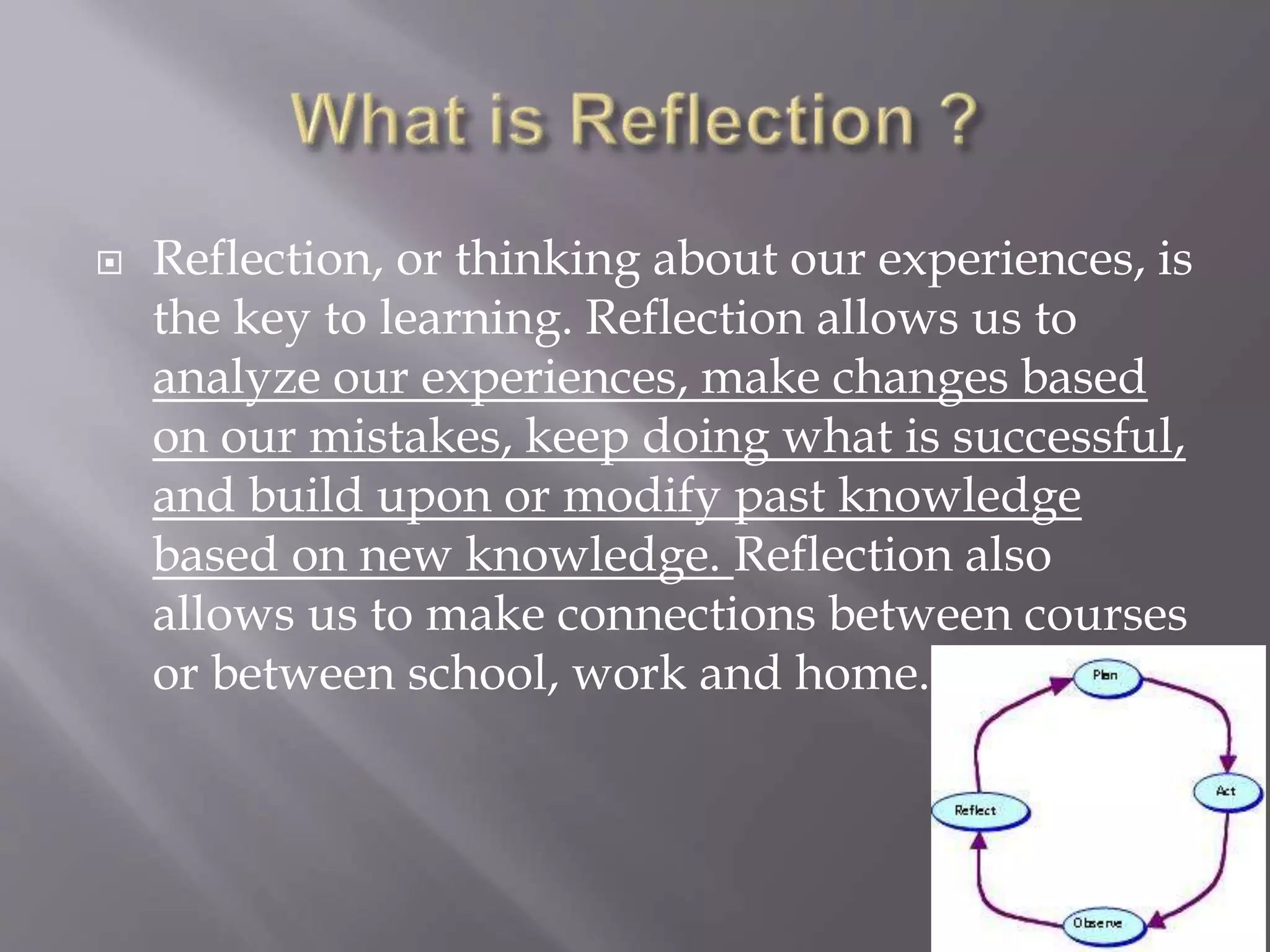
 Reflection, or thinking about our experiences, is
the key to learning. Reflection allows us to
analyze our experiences, make changes based
on our mistakes, keep doing what is successful,
and build upon or modify past knowledge
based on new knowledge. Reflection also
allows us to make connections between courses
or between school, work and home.
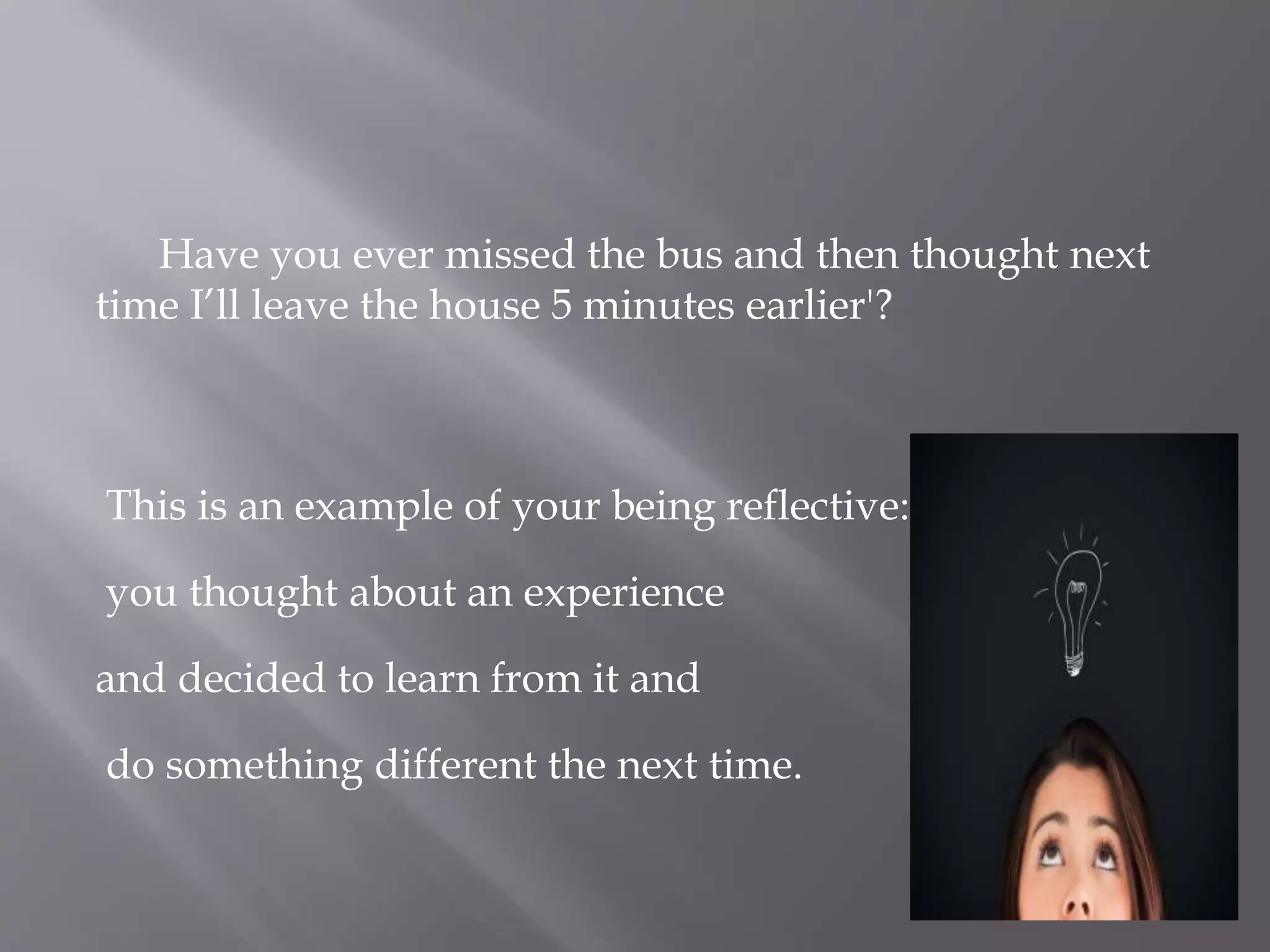
Have you ever missed the bus and then thought next
time I’ll leave the house 5 minutes earlier'?
This is an example of your being reflective:
you thought about an experience
and decided to learn from it and
do something different the next time.
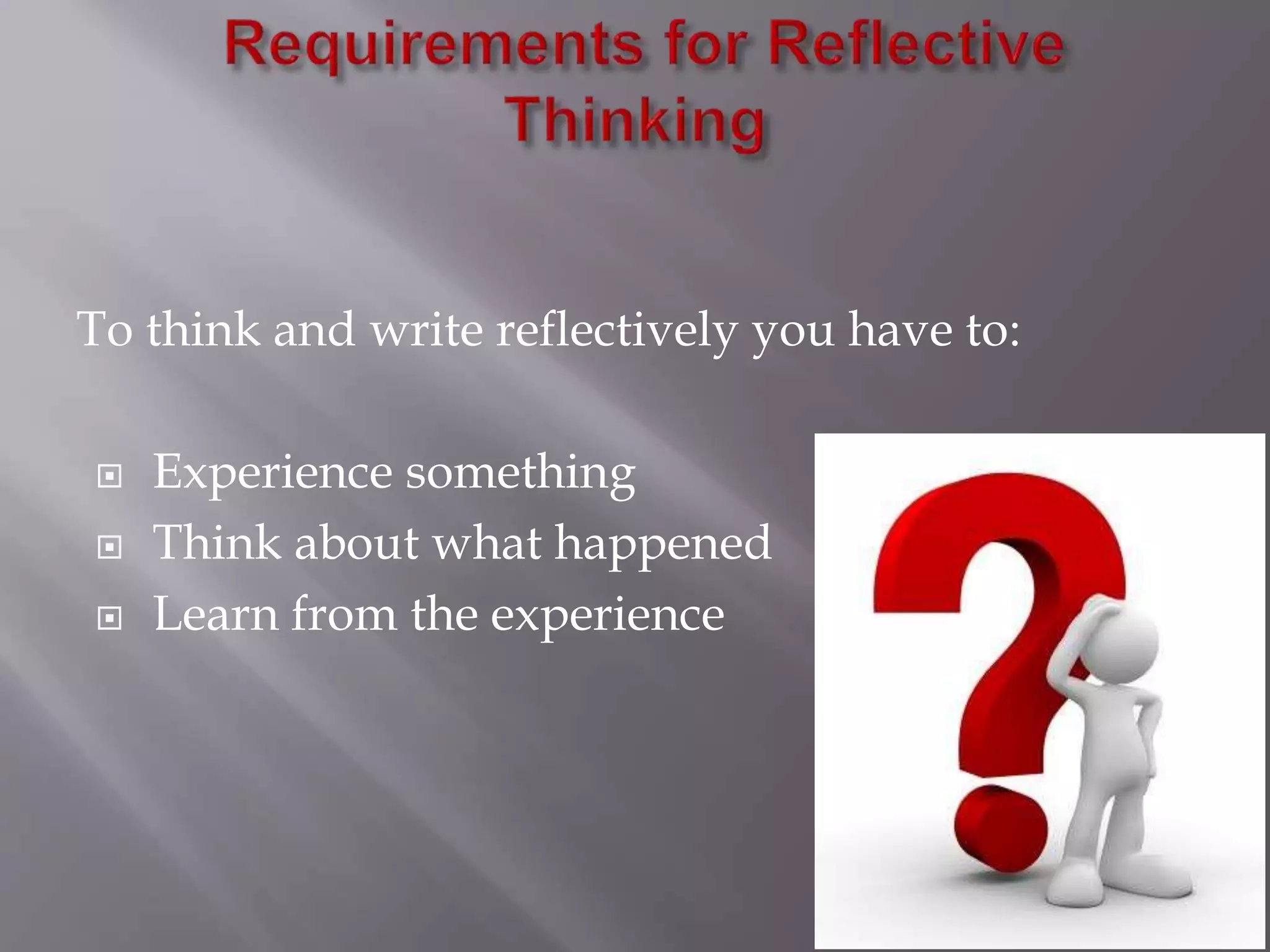
To think and write reflectively you have to:
 Experience something
 Think about what happened
 Learn from the experience
Reflective thinking helps you to:
 Develop a questioning attitude and new perspectives
 Identify areas for change and improvement
 Respond effectively to new challenges
 Generalize and apply what you have learned from
one situation to other situations
Why is reflective thinking important?
 Modern society is becoming more complex,
information is becoming available and changing more
rapidly prompting users to constantly rethink, switch
directions, and change problem-solving strategies.
Thus, it is increasingly important to prompt reflective
thinking during learning to help learners develop
strategies to apply new knowledge to the complex
situations in their day-to-day activities.
Reflective thinking helps learners develop
higher-order thinking skills by prompting
learners to
a) relate new knowledge to prior understanding,
b) think in both abstract and conceptual terms,
c) apply specific strategies in novel tasks,
d) understand their own thinking and learning
strategies.
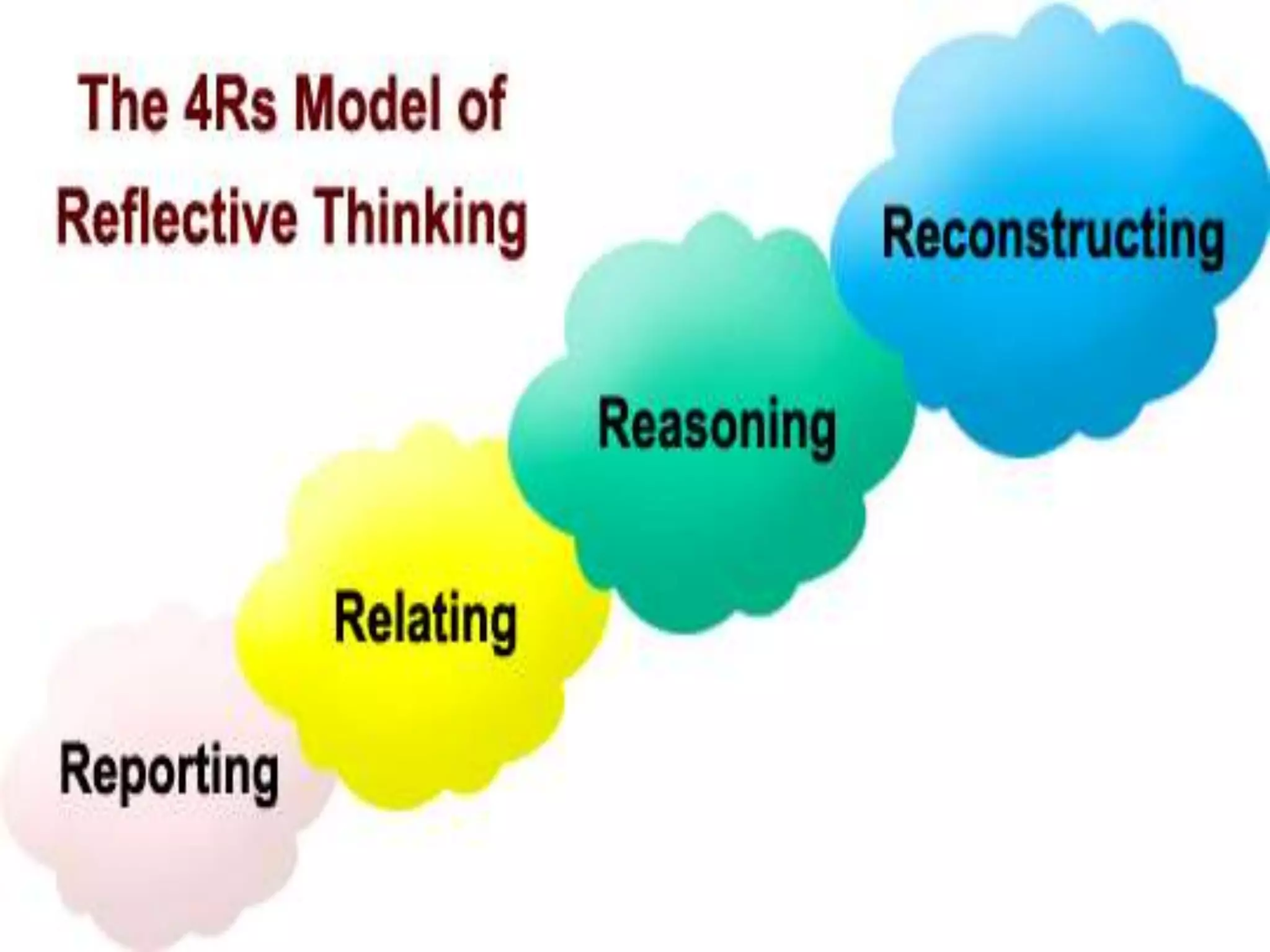
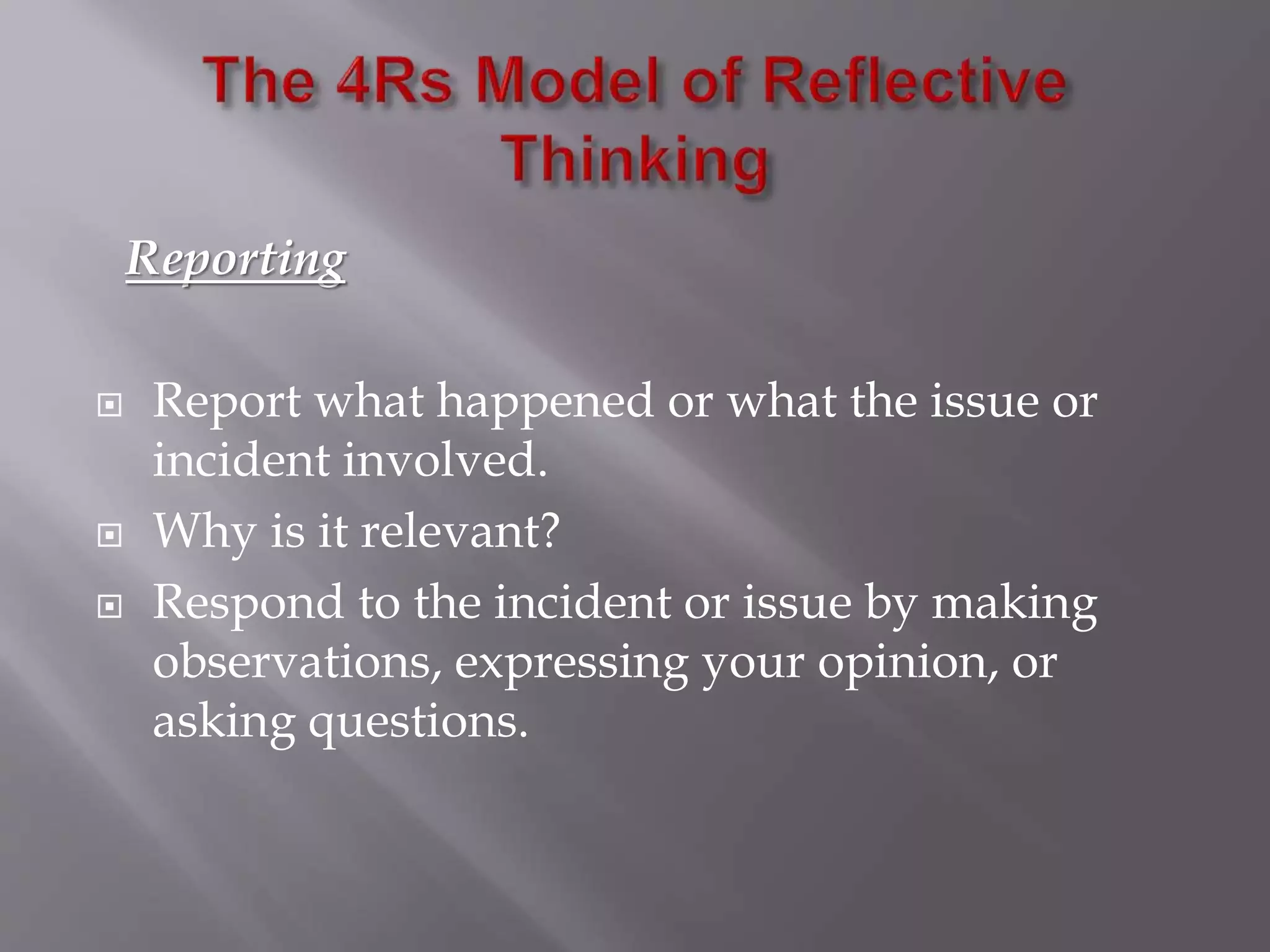
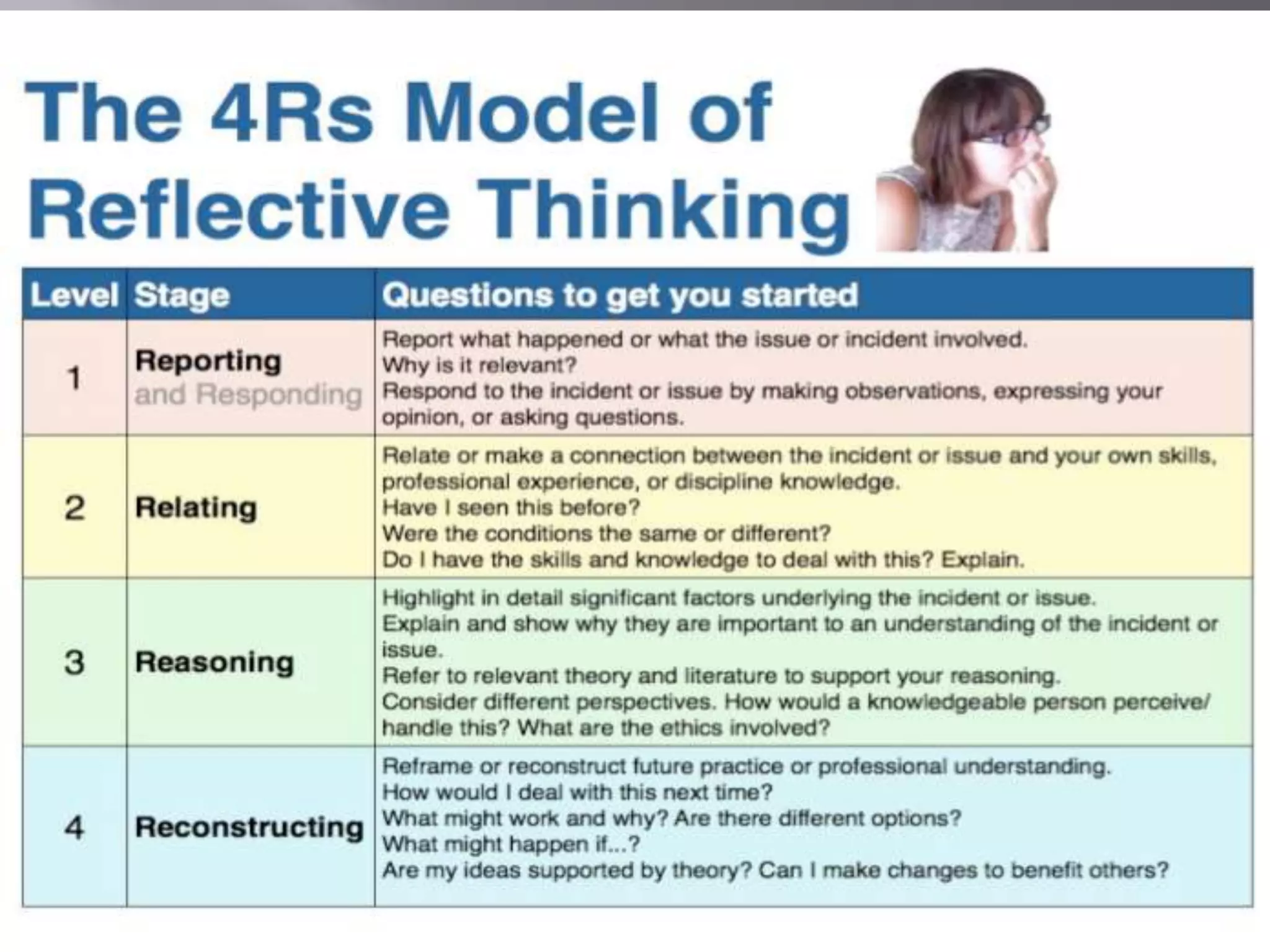
Reporting
 Report what happened or what the issue or
incident involved.
 Why is it relevant?
 Respond to the incident or issue by making
observations, expressing your opinion, or
asking questions.
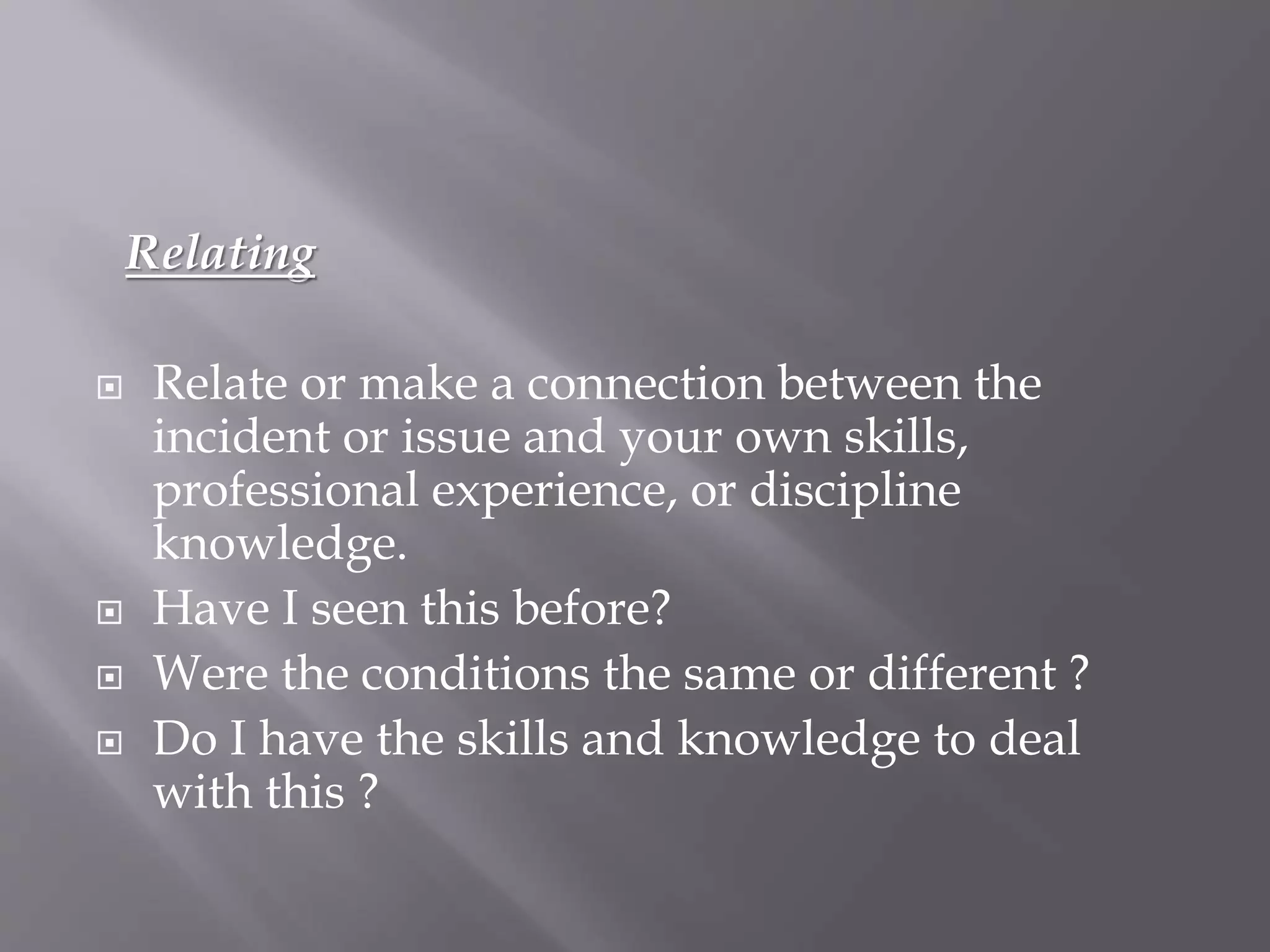
Relating
 Relate or make a connection between the
incident or issue and your own skills,
professional experience, or discipline
knowledge.
 Have I seen this before?
 Were the conditions the same or different ?
 Do I have the skills and knowledge to deal
with this ?
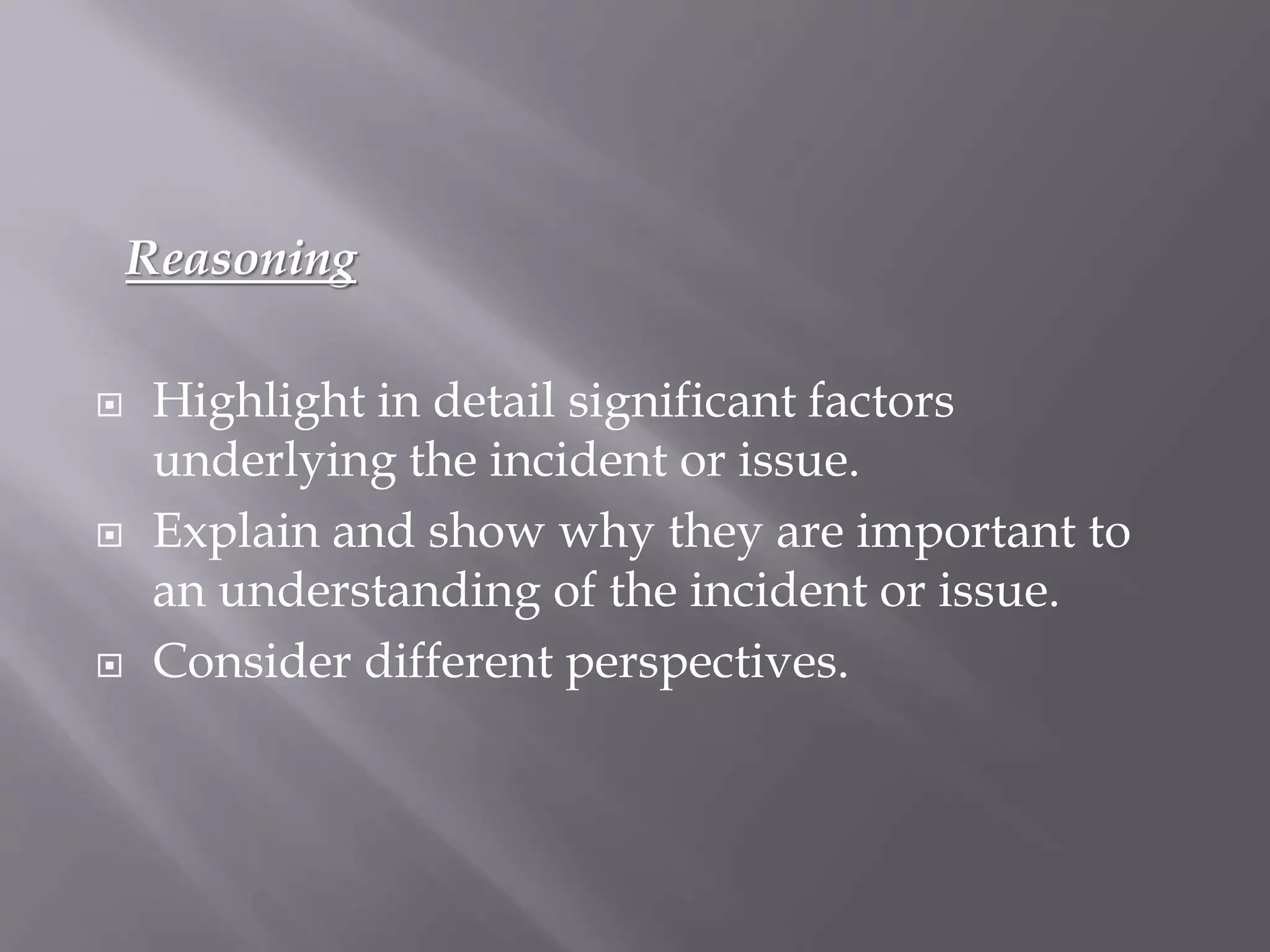
Reasoning
 Highlight in detail significant factors
underlying the incident or issue.
 Explain and show why they are important to
an understanding of the incident or issue.
 Consider different perspectives.
Reconstructing
 Reframe or reconstruct future practice or
professional understanding.
 How would I deal with this next time?
 What might work and why? Are there different
options?
 Are my ideas supported by theory?
 An action research is an inquiry-oriented process of self
monitoring that allows practitioners to develop skills,
assess disposition towards teaching and learning, and
provide systematic experiences that foster growth in
teaching and learning.
 It is an integral part of working in a school. Through
action research , practitioners move from technical
rationality (Van Manen,1977) within classroom to
critical examination of classroom processes.
Creating reflective thinking through action
research is a very substantial method, and
practitioners carry out it today because:
 Investigations are more natural
 Finding are more credible and valid when
relate to practice.
 Practitioners are valuable source of knowledge
regarding classroom situations.
 Practitioners’ research into their own practices
may foster change more readily.
 Action research establishes a reflective, problem
solving mindset in practitioners.
 Practitioners experience a chance to explore issues
of interest and concern.
 An opportunity exist for improved professionalism
and efficacy.
 Practitioners’ empowerment is increased.
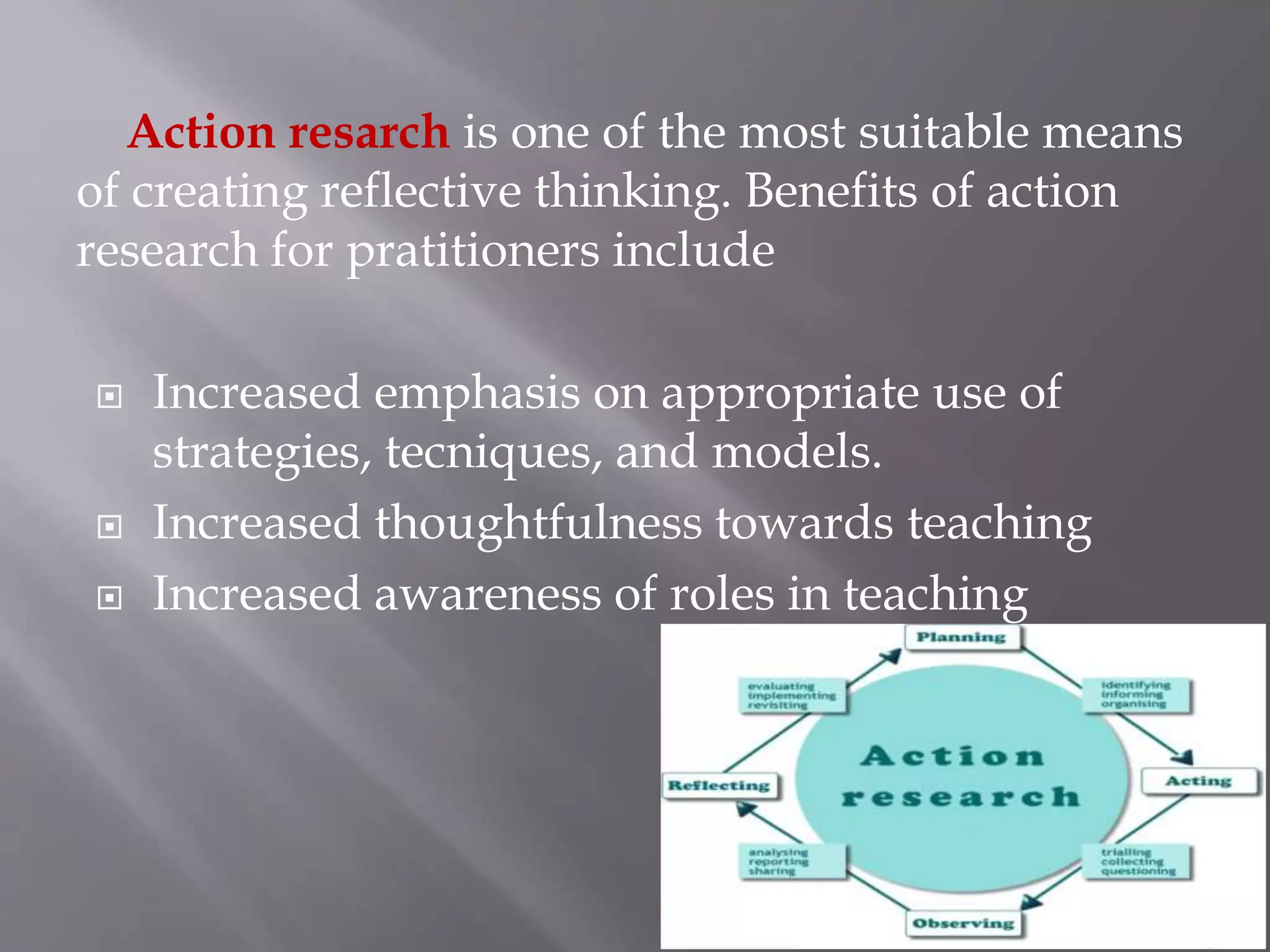
Action resarch is one of the most suitable means
of creating reflective thinking. Benefits of action
research for pratitioners include
 Increased emphasis on appropriate use of
strategies, tecniques, and models.
 Increased thoughtfulness towards teaching
 Increased awareness of roles in teaching
 Identification of a problem
 Focusing on a central theme or questions.
 Deciding on a purpose and goals.
 Selecting techniques for monitoring research.
 Principles of procedures that include data
gathering and analysis.
 Application to and implications for existing
practice and further research.
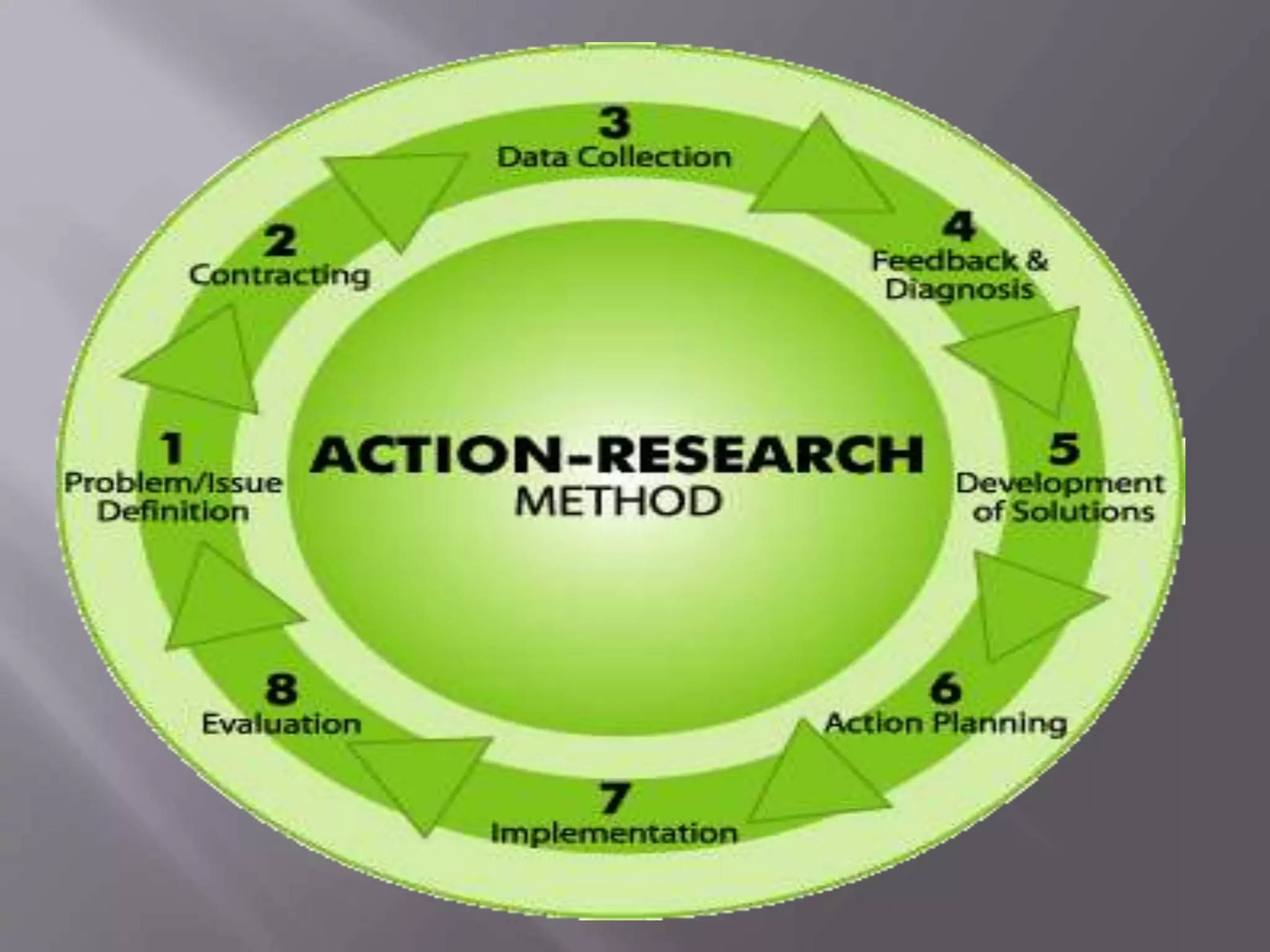
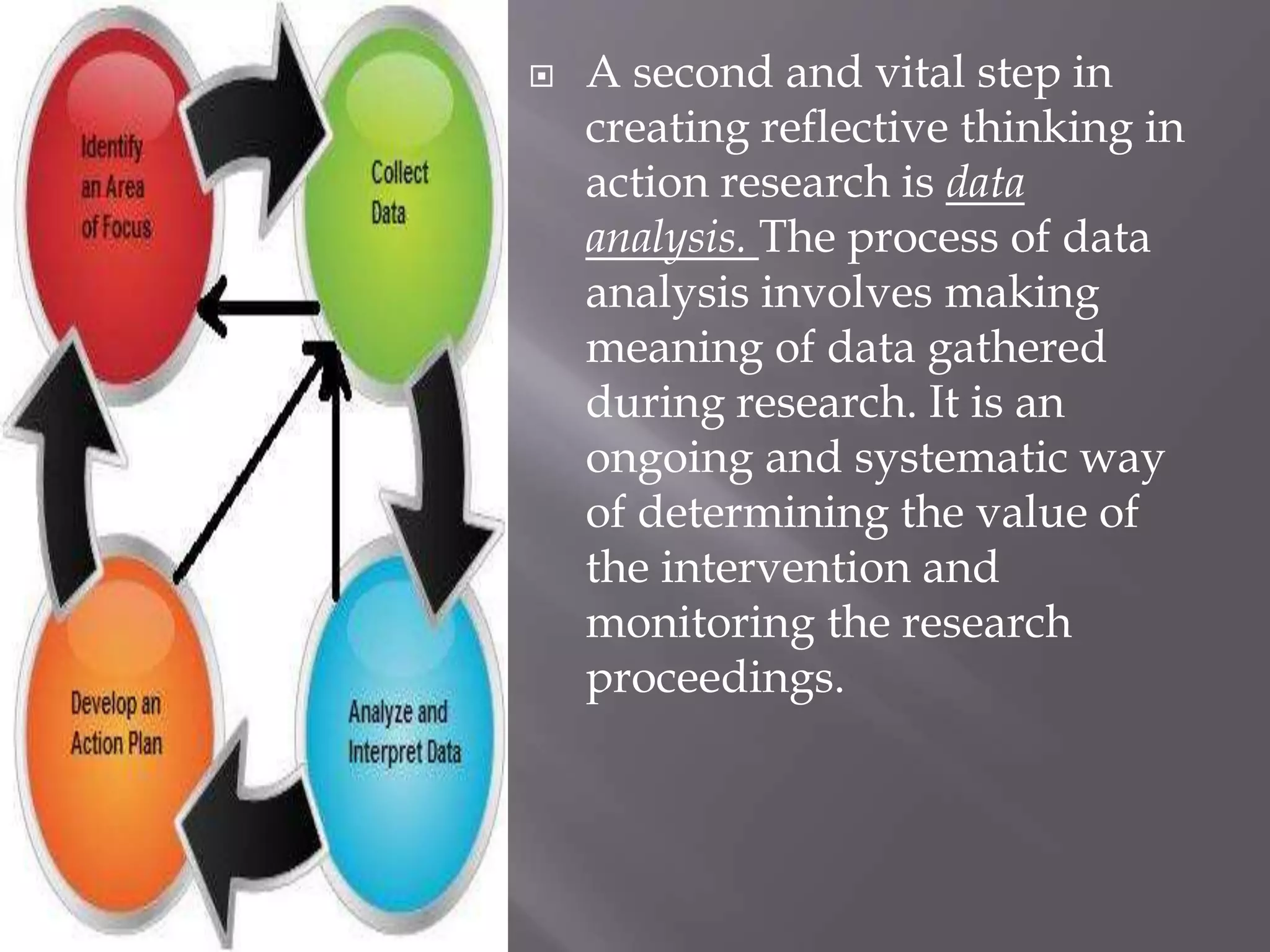
The process involved in action research correlates
well with the reflective thinking model. There are
some steps to take to create reflective thinking through
action resarch.
The first step is to identify a problem. Identification of a
problem should stem from a puzzlement or a gap
between what is desired and what currently exist.
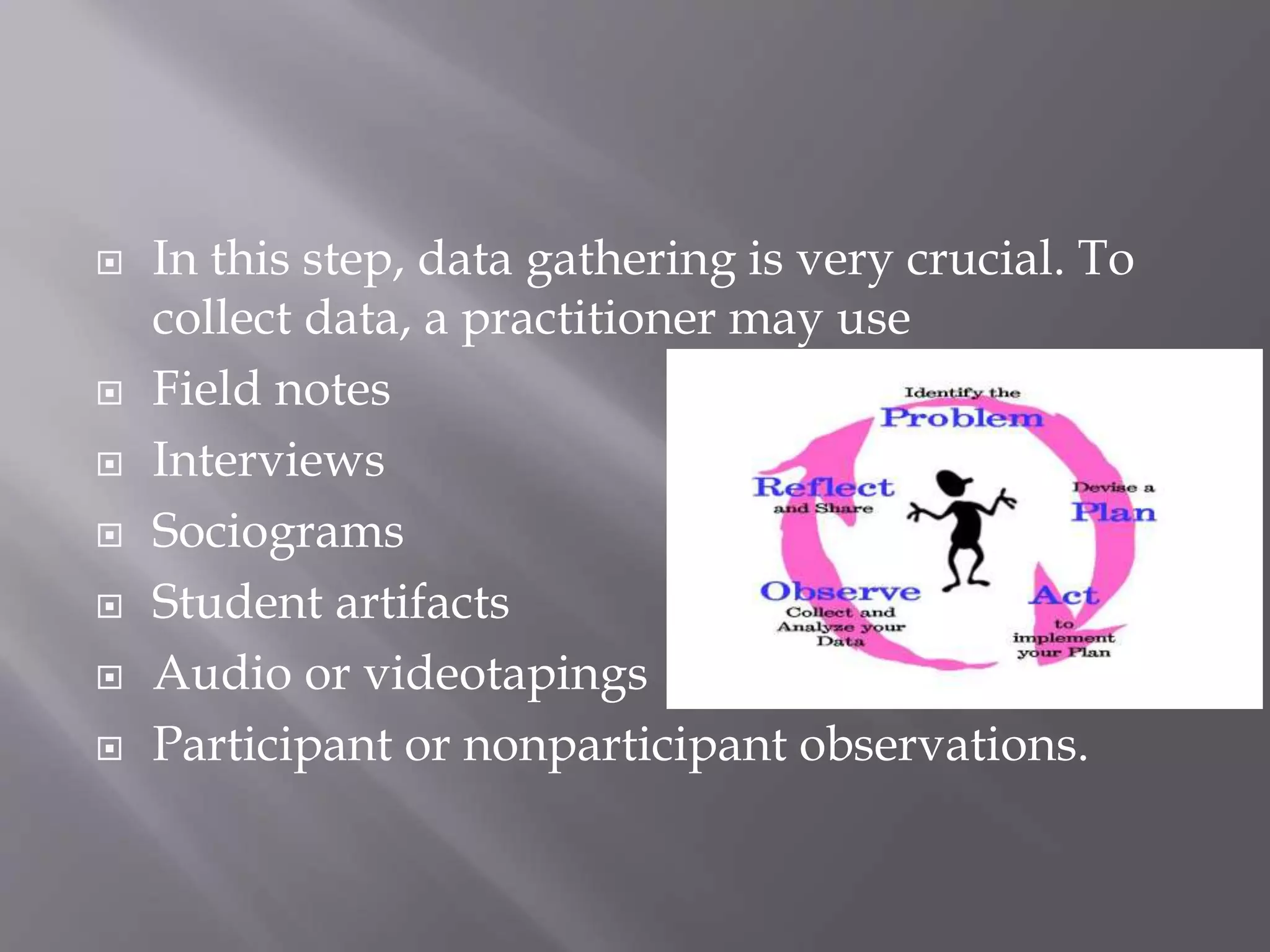
 In this step, data gathering is very crucial. To
collect data, a practitioner may use
 Field notes
 Interviews
 Sociograms
 Student artifacts
 Audio or videotapings
 Participant or nonparticipant observations.
 A second and vital step in
creating reflective thinking in
action research is data
analysis. The process of data
analysis involves making
meaning of data gathered
during research. It is an
ongoing and systematic way
of determining the value of
the intervention and
monitoring the research
proceedings.
 Final stages of the process include application
considerations and implications for further
action or research thay may lead to a reframing
of the process.
The action research provides a focus to
promote/create reflective thinking in order to
help practitioners to work through or work
within the ‘problem’ they experience.
To create reflective thinking, action research
makes use of reflective activities. Reflective
thinking activities consists of three different
modes.
Technical
 Practitioners engaging in action research at a
technical level seek to analyze and improve
instruction. It provides them with a forum for
discussing problems within a field setting
worthy of further research.
Contextual
 At the contextual level, decision making of
practitioners is enhanced through action research.
 Practitioners with grade or building commodities
collaborate to plan a small research project.
Dialectical
 Practitioners functining in the dialectical mode
are aware of social, political, and ethical issues
in school cultures. Action research is carried
out to seek change based on ethical, moral, or
sociopolitical issues of situations that are
problematic to them.
 Reflection and action research go together, and
they back up each other.
 Action resarch is a chief way of promoting
reflective thinking. It creates many advantages
both for teachers and learners.
 It is important to go step by step while doing
action research to create a reflective thinking
environment.
 Thanks for Listening
MİTHAT EKİNCİ

Creating promoting action research

  • 3.
    Reflection is:  Selfawareness: thinking of yourself, your experiences and your view of the world  Self improvement: learning from experiences and wanting to improve some area of your life  Empowerment: putting you in control of making changes and behaving in a different way
  • 4.
     Reflection, orthinking about our experiences, is the key to learning. Reflection allows us to analyze our experiences, make changes based on our mistakes, keep doing what is successful, and build upon or modify past knowledge based on new knowledge. Reflection also allows us to make connections between courses or between school, work and home.
  • 5.
    Have you evermissed the bus and then thought next time I’ll leave the house 5 minutes earlier'? This is an example of your being reflective: you thought about an experience and decided to learn from it and do something different the next time.
  • 6.
    To think andwrite reflectively you have to:  Experience something  Think about what happened  Learn from the experience
  • 7.
    Reflective thinking helpsyou to:  Develop a questioning attitude and new perspectives  Identify areas for change and improvement  Respond effectively to new challenges  Generalize and apply what you have learned from one situation to other situations
  • 8.
    Why is reflectivethinking important?  Modern society is becoming more complex, information is becoming available and changing more rapidly prompting users to constantly rethink, switch directions, and change problem-solving strategies. Thus, it is increasingly important to prompt reflective thinking during learning to help learners develop strategies to apply new knowledge to the complex situations in their day-to-day activities.
  • 9.
    Reflective thinking helpslearners develop higher-order thinking skills by prompting learners to a) relate new knowledge to prior understanding, b) think in both abstract and conceptual terms, c) apply specific strategies in novel tasks, d) understand their own thinking and learning strategies.
  • 11.
    Reporting  Report whathappened or what the issue or incident involved.  Why is it relevant?  Respond to the incident or issue by making observations, expressing your opinion, or asking questions.
  • 12.
    Relating  Relate ormake a connection between the incident or issue and your own skills, professional experience, or discipline knowledge.  Have I seen this before?  Were the conditions the same or different ?  Do I have the skills and knowledge to deal with this ?
  • 13.
    Reasoning  Highlight indetail significant factors underlying the incident or issue.  Explain and show why they are important to an understanding of the incident or issue.  Consider different perspectives.
  • 14.
    Reconstructing  Reframe orreconstruct future practice or professional understanding.  How would I deal with this next time?  What might work and why? Are there different options?  Are my ideas supported by theory?
  • 17.
     An actionresearch is an inquiry-oriented process of self monitoring that allows practitioners to develop skills, assess disposition towards teaching and learning, and provide systematic experiences that foster growth in teaching and learning.  It is an integral part of working in a school. Through action research , practitioners move from technical rationality (Van Manen,1977) within classroom to critical examination of classroom processes.
  • 19.
    Creating reflective thinkingthrough action research is a very substantial method, and practitioners carry out it today because:  Investigations are more natural  Finding are more credible and valid when relate to practice.  Practitioners are valuable source of knowledge regarding classroom situations.
  • 20.
     Practitioners’ researchinto their own practices may foster change more readily.  Action research establishes a reflective, problem solving mindset in practitioners.  Practitioners experience a chance to explore issues of interest and concern.  An opportunity exist for improved professionalism and efficacy.  Practitioners’ empowerment is increased.
  • 21.
    Action resarch isone of the most suitable means of creating reflective thinking. Benefits of action research for pratitioners include  Increased emphasis on appropriate use of strategies, tecniques, and models.  Increased thoughtfulness towards teaching  Increased awareness of roles in teaching
  • 22.
     Identification ofa problem  Focusing on a central theme or questions.  Deciding on a purpose and goals.  Selecting techniques for monitoring research.  Principles of procedures that include data gathering and analysis.  Application to and implications for existing practice and further research.
  • 23.
    The process involvedin action research correlates well with the reflective thinking model. There are some steps to take to create reflective thinking through action resarch. The first step is to identify a problem. Identification of a problem should stem from a puzzlement or a gap between what is desired and what currently exist.
  • 24.
     In thisstep, data gathering is very crucial. To collect data, a practitioner may use  Field notes  Interviews  Sociograms  Student artifacts  Audio or videotapings  Participant or nonparticipant observations.
  • 25.
     A secondand vital step in creating reflective thinking in action research is data analysis. The process of data analysis involves making meaning of data gathered during research. It is an ongoing and systematic way of determining the value of the intervention and monitoring the research proceedings.
  • 26.
     Final stagesof the process include application considerations and implications for further action or research thay may lead to a reframing of the process.
  • 27.
    The action researchprovides a focus to promote/create reflective thinking in order to help practitioners to work through or work within the ‘problem’ they experience. To create reflective thinking, action research makes use of reflective activities. Reflective thinking activities consists of three different modes.
  • 28.
    Technical  Practitioners engagingin action research at a technical level seek to analyze and improve instruction. It provides them with a forum for discussing problems within a field setting worthy of further research.
  • 29.
    Contextual  At thecontextual level, decision making of practitioners is enhanced through action research.  Practitioners with grade or building commodities collaborate to plan a small research project.
  • 30.
    Dialectical  Practitioners functiningin the dialectical mode are aware of social, political, and ethical issues in school cultures. Action research is carried out to seek change based on ethical, moral, or sociopolitical issues of situations that are problematic to them.
  • 31.
     Reflection andaction research go together, and they back up each other.  Action resarch is a chief way of promoting reflective thinking. It creates many advantages both for teachers and learners.  It is important to go step by step while doing action research to create a reflective thinking environment.
  • 32.
     Thanks forListening MİTHAT EKİNCİ