Creating A Government 
1777-1791
Articles of 
Confederation 
We won the war now we must govern 
ourselves 
1777-1787
Overview 
Second Continental 
Congress proposed 
for adoption 1777 
Approved 1781 
Formed a 
confederation of 
states, each had a 
separate government 
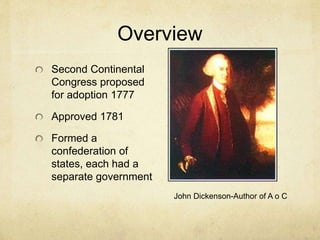
John Dickenson-Author of A o C
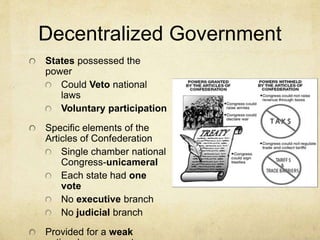
Decentralized Government 
States possessed the 
power 
Could Veto national 
laws 
Voluntary participation 
Specific elements of the 
Articles of Confederation 
Single chamber national 
Congress-unicameral 
Each state had one 
vote 
No executive branch 
No judicial branch 
Provided for a weak 
national government
Successes 
Fought and Won the 
Revolution 
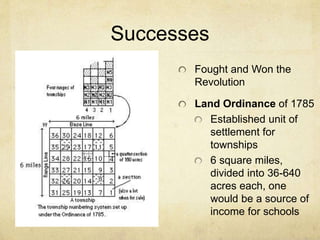
Land Ordinance of 1785 
Established unit of 
settlement for 
townships 
6 square miles, 
divided into 36-640 
acres each, one 
would be a source of 
income for schools
Successes 
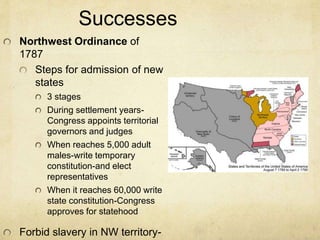
Northwest Ordinance of 
1787 
Steps for admission of new 
states 
3 stages 
During settlement years- 
Congress appoints territorial 
governors and judges 
When reaches 5,000 adult 
males-write temporary 
constitution-and elect 
representatives 
When it reaches 60,000 write 
state constitution-Congress 
approves for statehood 
Forbid slavery in NW territory-states
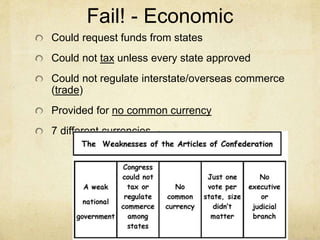
Fail! - Economic 
Could request funds from states 
Could not tax unless every state approved 
Could not regulate interstate/overseas commerce 
(trade) 
Provided for no common currency 
7 different currencies
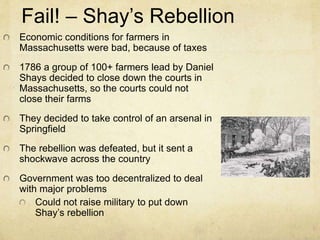
Fail! – Shay’s Rebellion 
Economic conditions for farmers in 
Massachusetts were bad, because of taxes 
1786 a group of 100+ farmers lead by Daniel 
Shays decided to close down the courts in 
Massachusetts, so the courts could not 
close their farms 
They decided to take control of an arsenal in 
Springfield 
The rebellion was defeated, but it sent a 
shockwave across the country 
Government was too decentralized to deal 
with major problems 
Could not raise military to put down 
Shay’s rebellion
The Constitutional 
Convention 
America needed a change, the Articles 
were not working 
1787
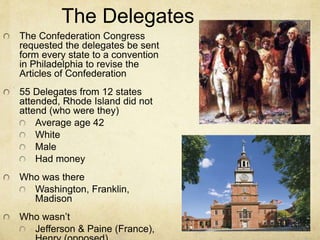
The Delegates 
The Confederation Congress 
requested the delegates be sent 
form every state to a convention 
in Philadelphia to revise the 
Articles of Confederation 
55 Delegates from 12 states 
attended, Rhode Island did not 
attend (who were they) 
Average age 42 
White 
Male 
Had money 
Who was there 
Washington, Franklin, 
Madison 
Who wasn’t 
Jefferson & Paine (France), 
Henry (opposed)
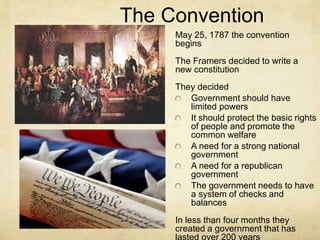
The Convention 
May 25, 1787 the convention 
begins 
The Framers decided to write a 
new constitution 
They decided 
Government should have 
limited powers 
It should protect the basic rights 
of people and promote the 
common welfare 
A need for a strong national 
government 
A need for a republican 
government 
The government needs to have 
a system of checks and 
balances 
In less than four months they 
created a government that has 
lasted over 200 years
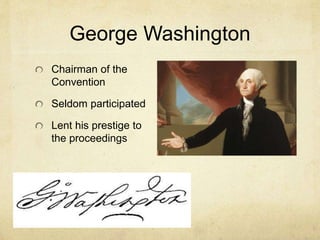
George Washington 
Chairman of the 
Convention 
Seldom participated 
Lent his prestige to 
the proceedings
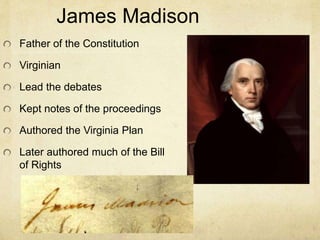
James Madison 
Father of the Constitution 
Virginian 
Lead the debates 
Kept notes of the proceedings 
Authored the Virginia Plan 
Later authored much of the Bill 
of Rights
Key Compromises 
The framers had to overcome some 
differences to create the new government
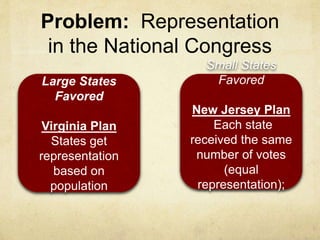
Problem: Representation 
in the National Congress 
Large States 
Favored 
Virginia Plan 
States get 
representation 
based on 
population 
Small States 
Favored 
New Jersey Plan 
Each state 
received the same 
number of votes 
(equal 
representation);
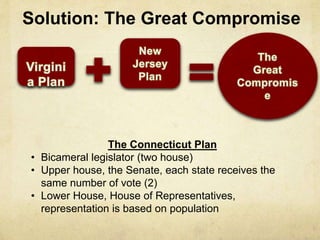
Solution: The Great Compromise 
The Connecticut Plan 
• Bicameral legislator (two house) 
• Upper house, the Senate, each state receives the 
same number of vote (2) 
• Lower House, House of Representatives, 
representation is based on population
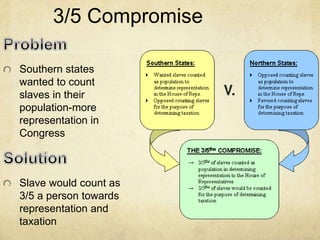
3/5 Compromise 
Southern states 
wanted to count 
slaves in their 
population-more 
representation in 
Congress 
Slave would count as 
3/5 a person towards 
representation and 
taxation
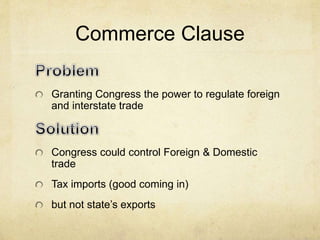
Commerce Clause 
Granting Congress the power to regulate foreign 
and interstate trade 
Congress could control Foreign & Domestic 
trade 
Tax imports (good coming in) 
but not state’s exports
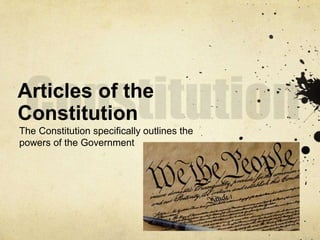
Articles of the 
Constitution 
The Constitution specifically outlines the 
powers of the Government
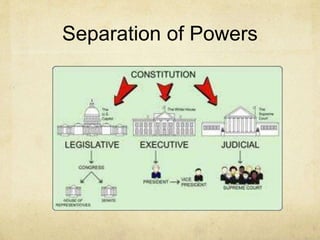
Separation of Powers
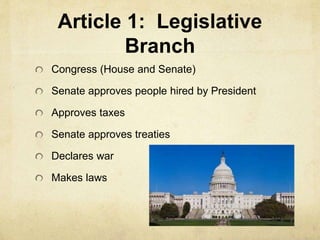
Article 1: Legislative 
Branch 
Congress (House and Senate) 
Senate approves people hired by President 
Approves taxes 
Senate approves treaties 
Declares war 
Makes laws
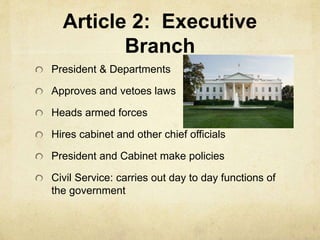
Article 2: Executive 
Branch 
President & Departments 
Approves and vetoes laws 
Heads armed forces 
Hires cabinet and other chief officials 
President and Cabinet make policies 
Civil Service: carries out day to day functions of 
the government
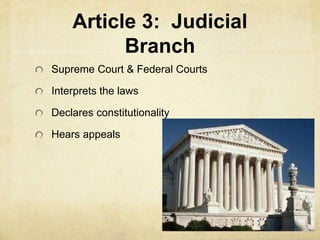
Article 3: Judicial 
Branch 
Supreme Court & Federal Courts 
Interprets the laws 
Declares constitutionality 
Hears appeals
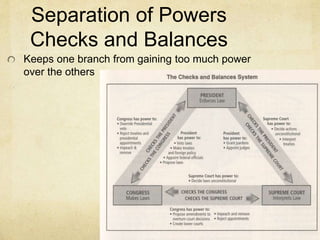
Separation of Powers 
Checks and Balances 
Keeps one branch from gaining too much power 
over the others
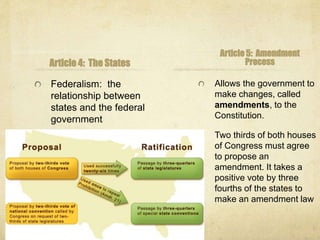
Article 4: The States 
Federalism: the 
relationship between 
states and the federal 
government 
Article 5: Amendment 
Process 
Allows the government to 
make changes, called 
amendments, to the 
Constitution. 
Two thirds of both houses 
of Congress must agree 
to propose an 
amendment. It takes a 
positive vote by three 
fourths of the states to 
make an amendment law
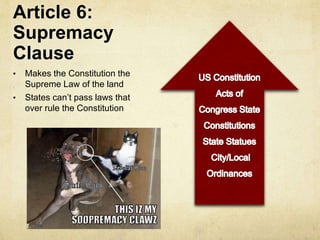
Article 6: 
Supremacy 
Clause 
• Makes the Constitution the 
Supreme Law of the land 
• States can’t pass laws that 
over rule the Constitution
Article 7: Ratification 
Established that the document must be ratified 
by the States (3/4) for It to become law
Ratification 
Once delegates left the convention that 
had to get their states to ratify the 
Constitution 
1787-1791
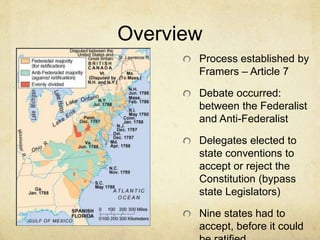
Overview 
Process established by 
Framers – Article 7 
Debate occurred: 
between the Federalist 
and Anti-Federalist 
Delegates elected to 
state conventions to 
accept or reject the 
Constitution (bypass 
state Legislators) 
Nine states had to 
accept, before it could 
be ratified
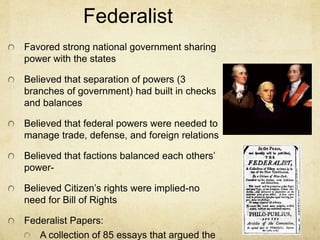
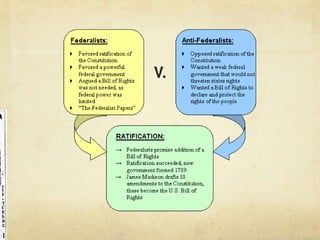
Federalist 
Favored strong national government sharing 
power with the states 
Believed that separation of powers (3 
branches of government) had built in checks 
and balances 
Believed that federal powers were needed to 
manage trade, defense, and foreign relations 
Believed that factions balanced each others’ 
power- 
Believed Citizen’s rights were implied-no 
need for Bill of Rights 
Federalist Papers: 
A collection of 85 essays that argued the
Anti-Federalist 
Believed that the federal government would 
favor the interest of the rich and powerful and 
ignore the rights of the masses 
Believed that one central government would be 
too powerful and would threaten individual rights 
and liberties 
Believed that individual rights must be protected 
in a Bill of Rights
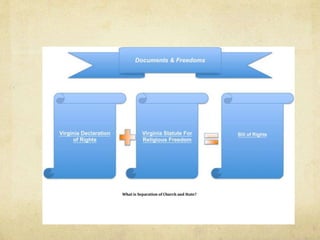
Virginia Documents and 
Freedom 
How VA helped make the Bill of Rights
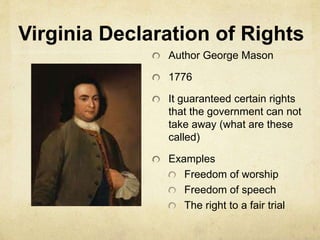
Virginia Declaration of Rights 
Author George Mason 
1776 
It guaranteed certain rights 
that the government can not 
take away (what are these 
called) 
Examples 
Freedom of worship 
Freedom of speech 
The right to a fair trial
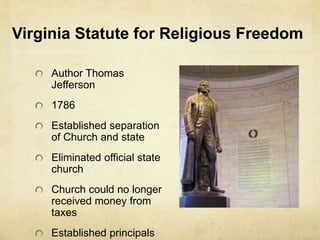
Virginia Statute for Religious Freedom 
Author Thomas 
Jefferson 
1786 
Established separation 
of Church and state 
Eliminated official state 
church 
Church could no longer 
received money from 
taxes 
Established principals
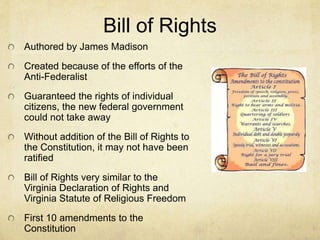
Bill of Rights 
Authored by James Madison 
Created because of the efforts of the 
Anti-Federalist 
Guaranteed the rights of individual 
citizens, the new federal government 
could not take away 
Without addition of the Bill of Rights to 
the Constitution, it may not have been 
ratified 
Bill of Rights very similar to the 
Virginia Declaration of Rights and 
Virginia Statute of Religious Freedom 
First 10 amendments to the 
Constitution
Creating agovernment1

Creating agovernment1

  • 1.
  • 2.
    Articles of Confederation We won the war now we must govern ourselves 1777-1787
  • 3.
    Overview Second Continental Congress proposed for adoption 1777 Approved 1781 Formed a confederation of states, each had a separate government John Dickenson-Author of A o C
  • 4.
    Decentralized Government Statespossessed the power Could Veto national laws Voluntary participation Specific elements of the Articles of Confederation Single chamber national Congress-unicameral Each state had one vote No executive branch No judicial branch Provided for a weak national government
  • 5.
    Successes Fought andWon the Revolution Land Ordinance of 1785 Established unit of settlement for townships 6 square miles, divided into 36-640 acres each, one would be a source of income for schools
  • 6.
    Successes Northwest Ordinanceof 1787 Steps for admission of new states 3 stages During settlement years- Congress appoints territorial governors and judges When reaches 5,000 adult males-write temporary constitution-and elect representatives When it reaches 60,000 write state constitution-Congress approves for statehood Forbid slavery in NW territory-states
  • 7.
    Fail! - Economic Could request funds from states Could not tax unless every state approved Could not regulate interstate/overseas commerce (trade) Provided for no common currency 7 different currencies
  • 8.
    Fail! – Shay’sRebellion Economic conditions for farmers in Massachusetts were bad, because of taxes 1786 a group of 100+ farmers lead by Daniel Shays decided to close down the courts in Massachusetts, so the courts could not close their farms They decided to take control of an arsenal in Springfield The rebellion was defeated, but it sent a shockwave across the country Government was too decentralized to deal with major problems Could not raise military to put down Shay’s rebellion
  • 9.
    The Constitutional Convention America needed a change, the Articles were not working 1787
  • 10.
    The Delegates TheConfederation Congress requested the delegates be sent form every state to a convention in Philadelphia to revise the Articles of Confederation 55 Delegates from 12 states attended, Rhode Island did not attend (who were they) Average age 42 White Male Had money Who was there Washington, Franklin, Madison Who wasn’t Jefferson & Paine (France), Henry (opposed)
  • 11.
    The Convention May25, 1787 the convention begins The Framers decided to write a new constitution They decided Government should have limited powers It should protect the basic rights of people and promote the common welfare A need for a strong national government A need for a republican government The government needs to have a system of checks and balances In less than four months they created a government that has lasted over 200 years
  • 12.
    George Washington Chairmanof the Convention Seldom participated Lent his prestige to the proceedings
  • 13.
    James Madison Fatherof the Constitution Virginian Lead the debates Kept notes of the proceedings Authored the Virginia Plan Later authored much of the Bill of Rights
  • 14.
    Key Compromises Theframers had to overcome some differences to create the new government
  • 15.
    Problem: Representation inthe National Congress Large States Favored Virginia Plan States get representation based on population Small States Favored New Jersey Plan Each state received the same number of votes (equal representation);
  • 16.
    Solution: The GreatCompromise The Connecticut Plan • Bicameral legislator (two house) • Upper house, the Senate, each state receives the same number of vote (2) • Lower House, House of Representatives, representation is based on population
  • 17.
    3/5 Compromise Southernstates wanted to count slaves in their population-more representation in Congress Slave would count as 3/5 a person towards representation and taxation
  • 18.
    Commerce Clause GrantingCongress the power to regulate foreign and interstate trade Congress could control Foreign & Domestic trade Tax imports (good coming in) but not state’s exports
  • 19.
    Articles of the Constitution The Constitution specifically outlines the powers of the Government
  • 20.
  • 21.
    Article 1: Legislative Branch Congress (House and Senate) Senate approves people hired by President Approves taxes Senate approves treaties Declares war Makes laws
  • 22.
    Article 2: Executive Branch President & Departments Approves and vetoes laws Heads armed forces Hires cabinet and other chief officials President and Cabinet make policies Civil Service: carries out day to day functions of the government
  • 23.
    Article 3: Judicial Branch Supreme Court & Federal Courts Interprets the laws Declares constitutionality Hears appeals
  • 24.
    Separation of Powers Checks and Balances Keeps one branch from gaining too much power over the others
  • 25.
    Article 4: TheStates Federalism: the relationship between states and the federal government Article 5: Amendment Process Allows the government to make changes, called amendments, to the Constitution. Two thirds of both houses of Congress must agree to propose an amendment. It takes a positive vote by three fourths of the states to make an amendment law
  • 26.
    Article 6: Supremacy Clause • Makes the Constitution the Supreme Law of the land • States can’t pass laws that over rule the Constitution
  • 27.
    Article 7: Ratification Established that the document must be ratified by the States (3/4) for It to become law
  • 28.
    Ratification Once delegatesleft the convention that had to get their states to ratify the Constitution 1787-1791
  • 29.
    Overview Process establishedby Framers – Article 7 Debate occurred: between the Federalist and Anti-Federalist Delegates elected to state conventions to accept or reject the Constitution (bypass state Legislators) Nine states had to accept, before it could be ratified
  • 30.
    Federalist Favored strongnational government sharing power with the states Believed that separation of powers (3 branches of government) had built in checks and balances Believed that federal powers were needed to manage trade, defense, and foreign relations Believed that factions balanced each others’ power- Believed Citizen’s rights were implied-no need for Bill of Rights Federalist Papers: A collection of 85 essays that argued the
  • 31.
    Anti-Federalist Believed thatthe federal government would favor the interest of the rich and powerful and ignore the rights of the masses Believed that one central government would be too powerful and would threaten individual rights and liberties Believed that individual rights must be protected in a Bill of Rights
  • 33.
    Virginia Documents and Freedom How VA helped make the Bill of Rights
  • 34.
    Virginia Declaration ofRights Author George Mason 1776 It guaranteed certain rights that the government can not take away (what are these called) Examples Freedom of worship Freedom of speech The right to a fair trial
  • 35.
    Virginia Statute forReligious Freedom Author Thomas Jefferson 1786 Established separation of Church and state Eliminated official state church Church could no longer received money from taxes Established principals
  • 36.
    Bill of Rights Authored by James Madison Created because of the efforts of the Anti-Federalist Guaranteed the rights of individual citizens, the new federal government could not take away Without addition of the Bill of Rights to the Constitution, it may not have been ratified Bill of Rights very similar to the Virginia Declaration of Rights and Virginia Statute of Religious Freedom First 10 amendments to the Constitution