Understanding the Virginia and New Jersey Plans The Great Compromise
I. Main Idea Delegates to the Constitutional Convention of 1787 had to compromise on key issues in order to complete a new constitution. Compromise
II.The Virginia Plan A. Proposed three separate branches of government (executive, legislative, and judicial). B. Congress would consist of two houses – House of Representatives and the Senate. In both houses representation based on population. Small states feared this plan. Why?
III.The New Jersey Plan A. Proposed three branches of government. B. Congress would consist of only one house. C. Each state would have one vote regardless of population.
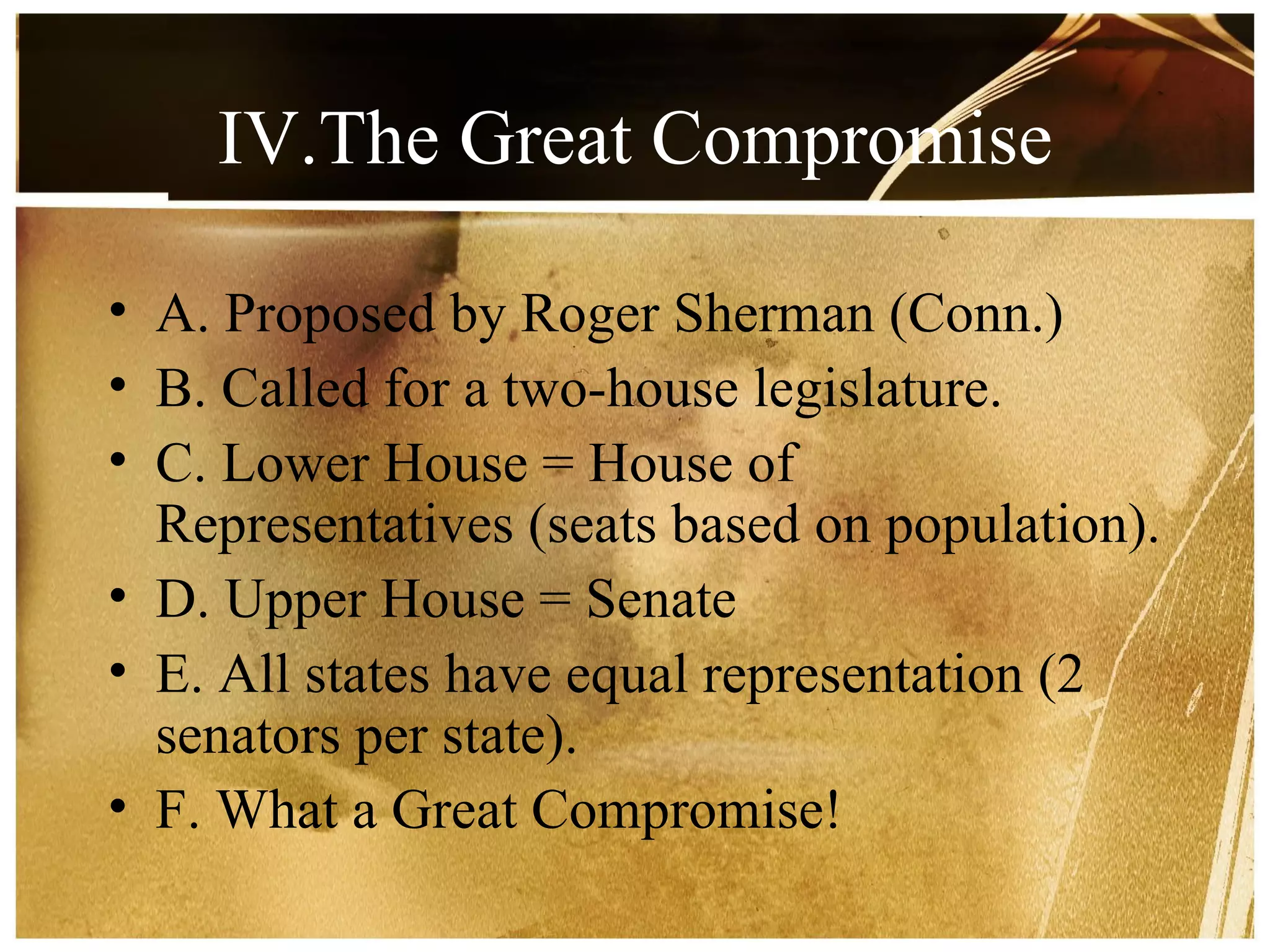
IV.The Great Compromise A. Proposed by Roger Sherman (Conn.) B. Called for a two-house legislature. C. Lower House = House of Representatives (seats based on population). D. Upper House = Senate E. All states have equal representation (2 senators per state). F. What a Great Compromise!

Great Compromise

  • 1.
    Understanding the Virginiaand New Jersey Plans The Great Compromise
  • 2.
    I. Main IdeaDelegates to the Constitutional Convention of 1787 had to compromise on key issues in order to complete a new constitution. Compromise
  • 3.
    II.The Virginia PlanA. Proposed three separate branches of government (executive, legislative, and judicial). B. Congress would consist of two houses – House of Representatives and the Senate. In both houses representation based on population. Small states feared this plan. Why?
  • 4.
    III.The New JerseyPlan A. Proposed three branches of government. B. Congress would consist of only one house. C. Each state would have one vote regardless of population.
  • 5.
    IV.The Great CompromiseA. Proposed by Roger Sherman (Conn.) B. Called for a two-house legislature. C. Lower House = House of Representatives (seats based on population). D. Upper House = Senate E. All states have equal representation (2 senators per state). F. What a Great Compromise!