Cowpea
INTRODUCTION
Common Name :Cowpea; Black-eyed bean,
Horse bean, Black-eyed pea, Southern
pea, Yard long bean, Asparagus bean.
Scientific Name :Vigna ungiculata
Chromosome number :2n=2x=22
ORIGIN
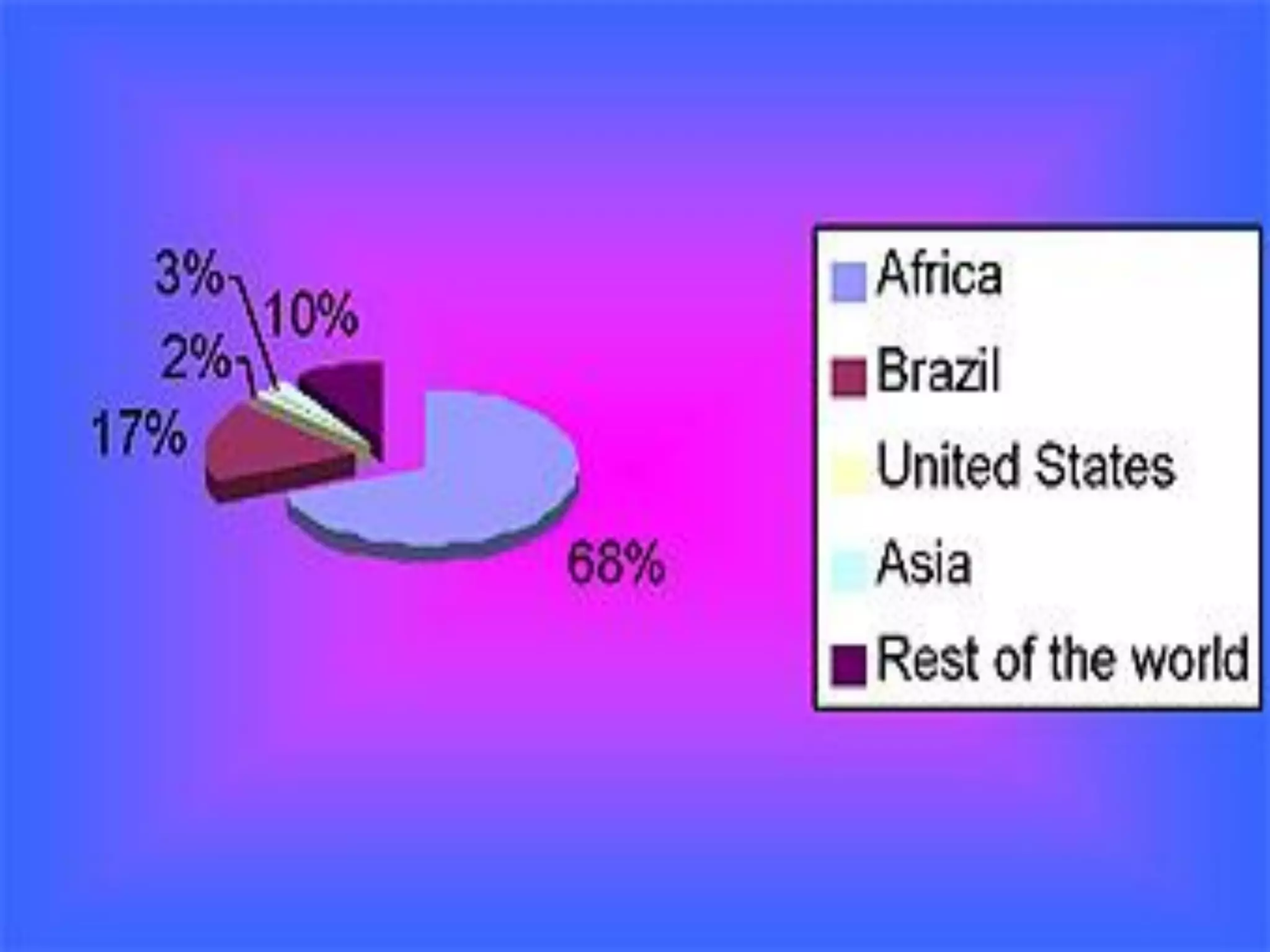
Primary center of origin : Africa
Secondary center of origin : India, china.
Place of domestication :Ethiopia, Central,
south, and west Africa and India.
Area covered
 7 million. ha (world)
 5 lakh. ha (India)
TAXONOMY
Kingdom : Plantae
Class : Dicotyledon
Sub-class : Polypetalous
Order : Rosales
Family : Fabaceae
Sub Family :Papiloinaceae
Genus : Vigna
Species : Unguiculata
Nutrient content of mature
cowpea seed
Protein 24.8%
Fat 1.9%
Fiber 6.3%
Carbohydrate 63.6%
Thiamine 0.00074%
Riboflavin 0.00042%
Niacin 0.00281%
Growth Habits:
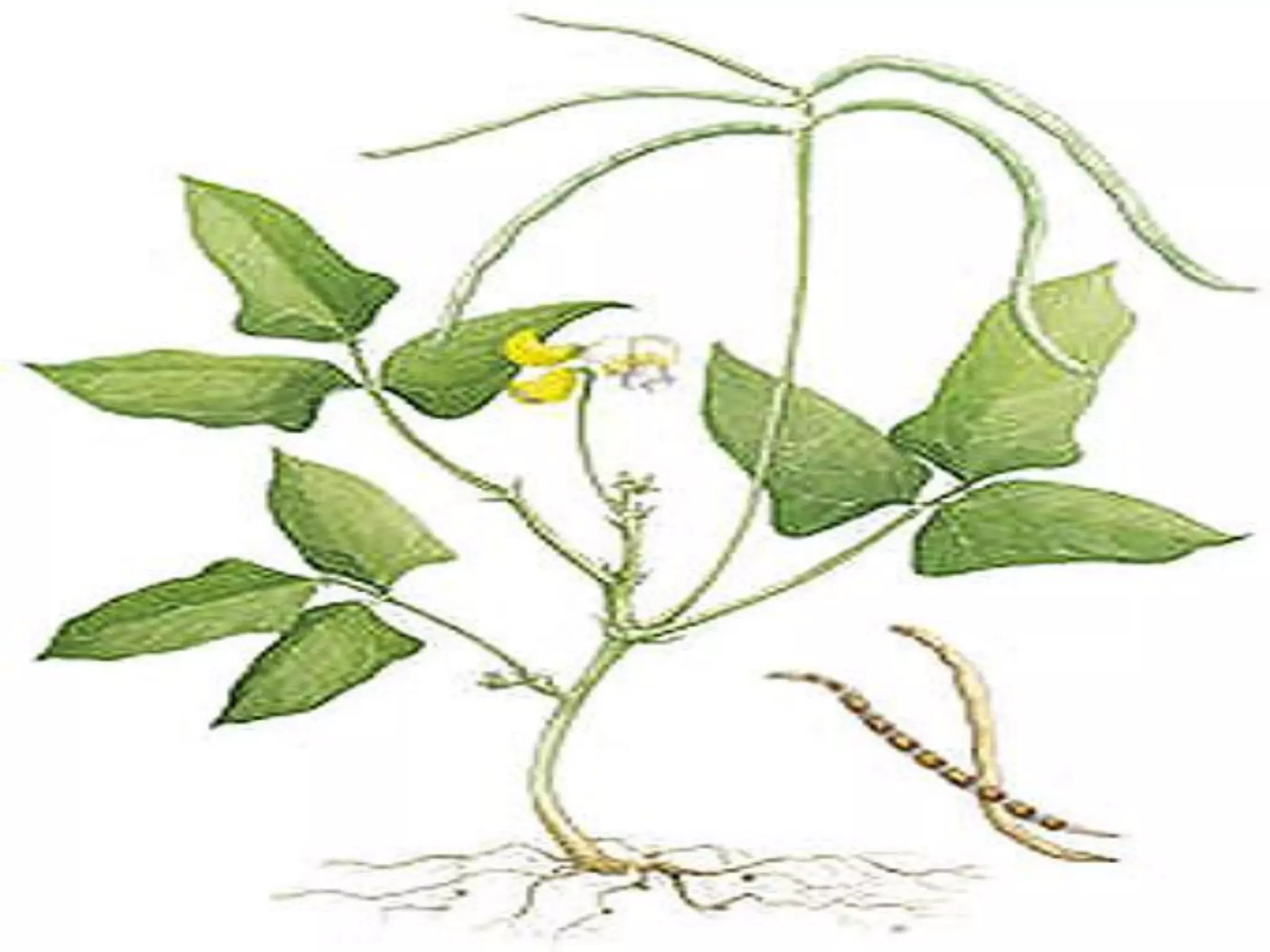
 Cowpea is a warm-season, annual, herbaceous
legume. Plant types are often categorized as
erect, semi-erect, prostrate (trailing), or climbing.
There is much variability within the species.
Growth habit ranges from indeterminate to fairly
determinate with the non-vining types tending to
be more determinate. Cowpea generally is
strongly taprooted.
Growth Habits:
 Emergence is epigeal (similar to common bean,
and lupin) where the cotyledons emerge from the
ground during germination.
 The trifoliolate leaves develop alternately. Leaves
are smooth, dull to shiny, and rarely pubescent.
Commonly, the terminal leaflet is longer and
larger than the lateral leaflets.
 Cowpea generally is day neutral. Flowers are
borne in multiple racemes on 8 to 20 in. flower
stalks (peduncles) that arise from the leaf axil
FLORAL BIOLOGY
 Inflorescence is an unbranched,
axillary raceme bearing several
flowers at the tip of peduncle.
Flowers are in alternate pairs.
Gamosepalous
Corolla is papilionaceous and having
three different kinds of petals such as
standard, wing, and keel.
Stamens are diadelphous (9+1)
Anthers are bright yellow.
Anthers are uniform and ovary is
superior with many ovules.
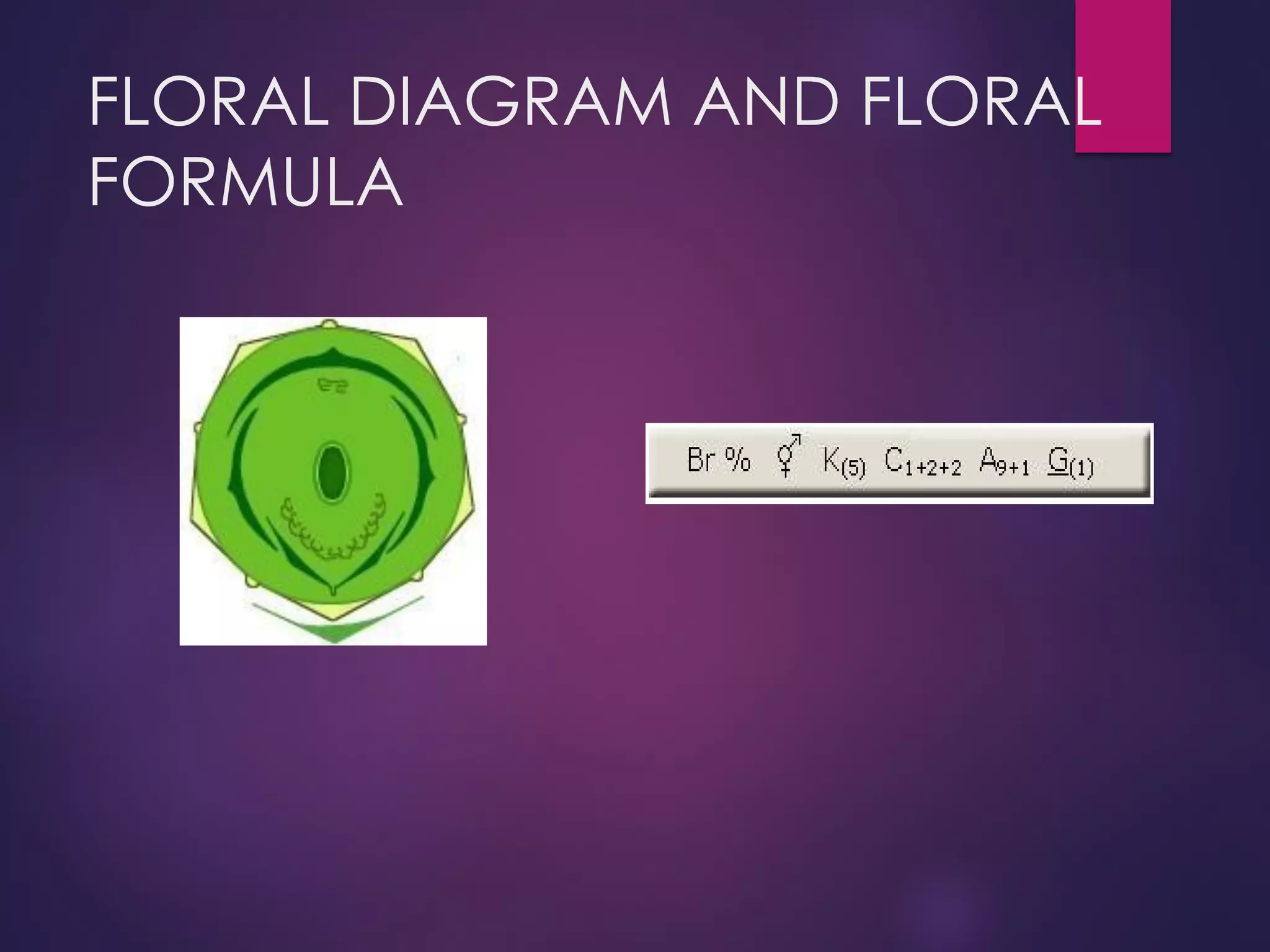
FLORAL DIAGRAM AND FLORAL
FORMULA
Anthesis
There are 2-3 flowering period
Takes 11-14 days for the flowers to
develop and bloom.
Flower opening at morning from 6-10 am.
Dehiscence of anther prior to blooming
i.e.; 10 pm-1 am
Cytology
o Diploid chromosome number is
2n=2x=22
o 11 bivalent complement consists of
1 short(19 micron m.)
7 medium(26-36 micron m.)
3 long(41-45 micron m.)
SELFING
 Cowpea is being a self pollinated crop it
dose not required any artificial selfing
methods but for the betterment we
generally go for bagging of the mature
flower bud.
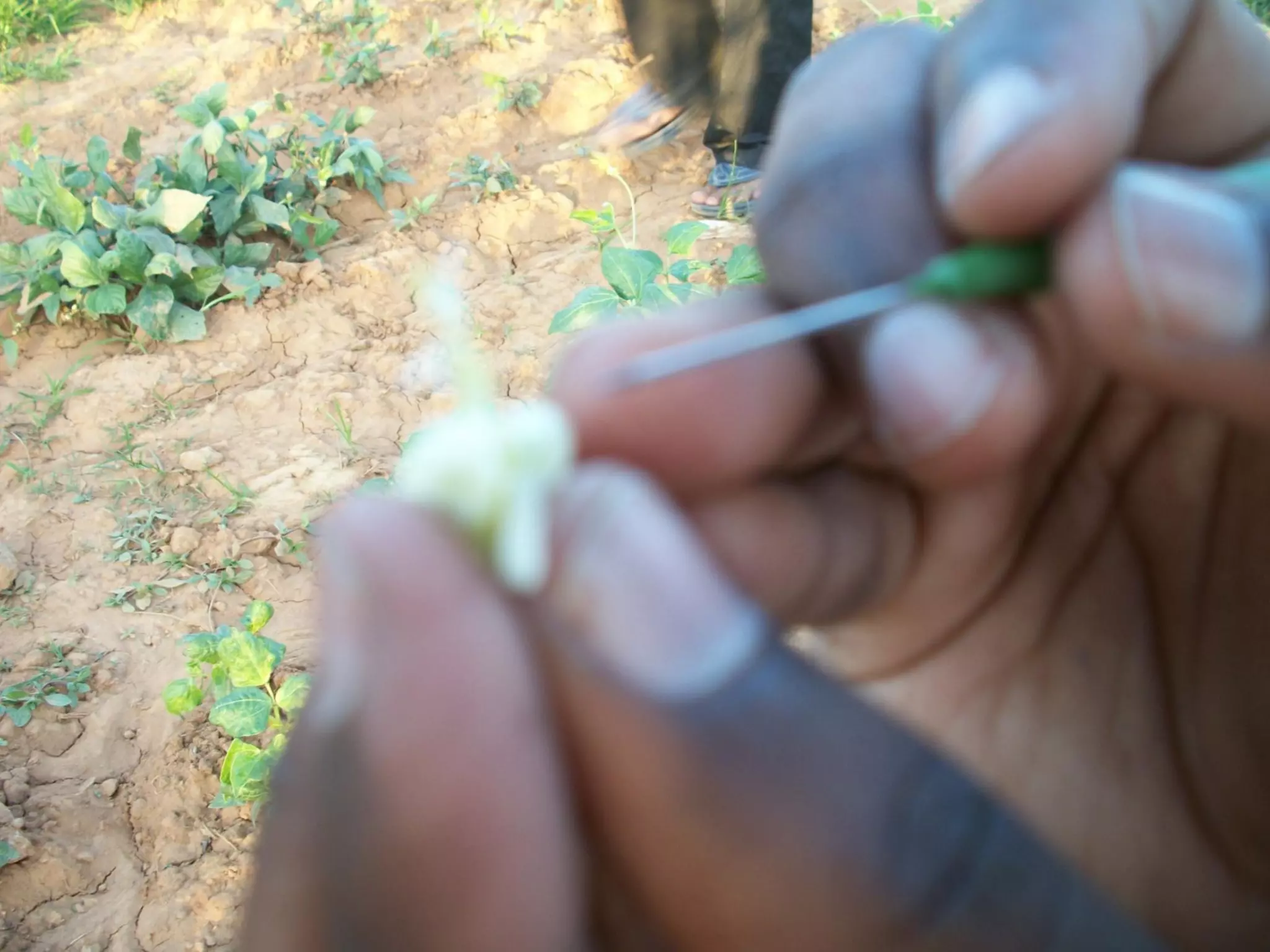
Crossing
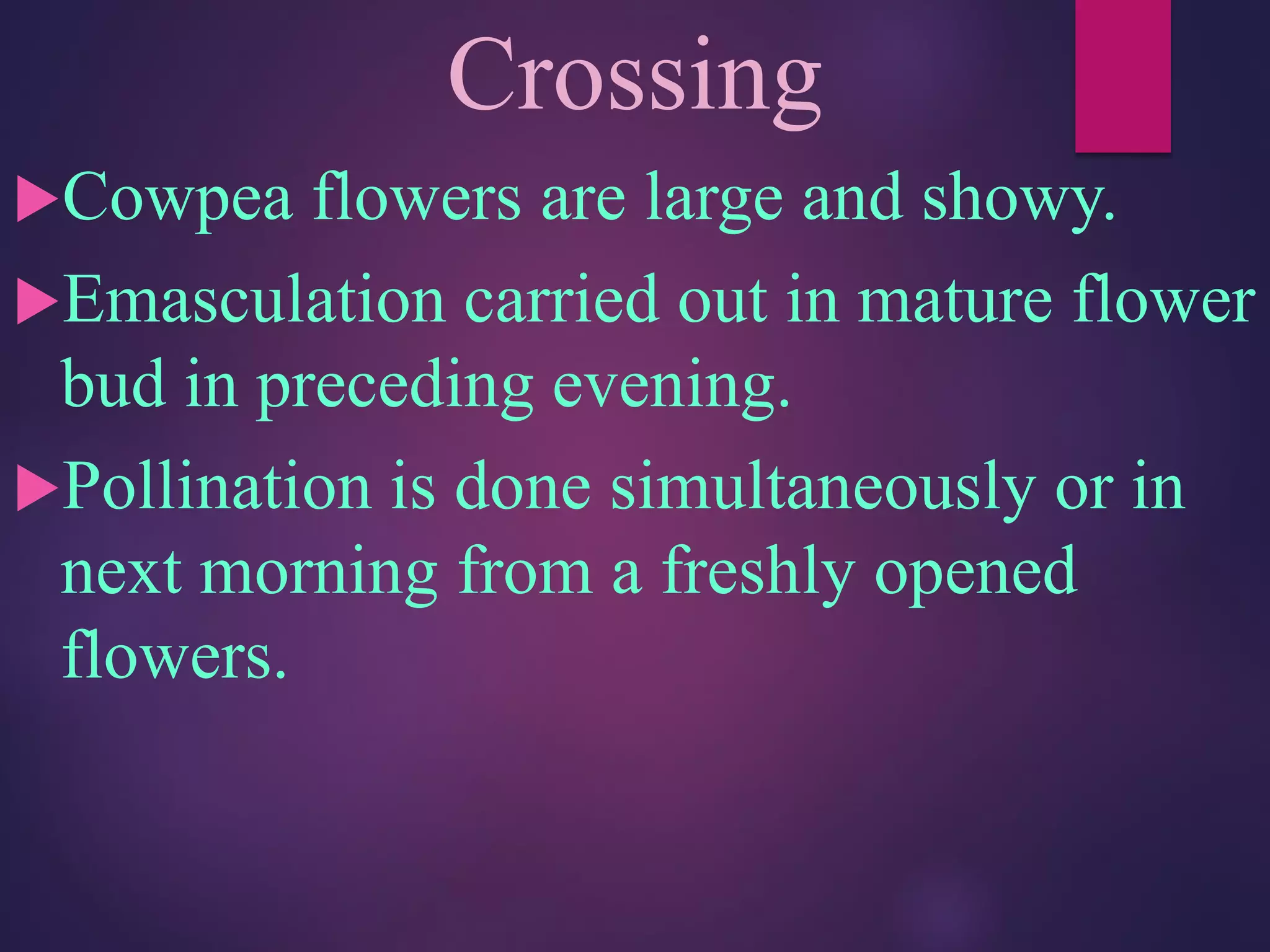
Cowpea flowers are large and showy.
Emasculation carried out in mature flower
bud in preceding evening.
Pollination is done simultaneously or in
next morning from a freshly opened
flowers.
Breeding objectives
High green pod yield
High seed yield
High fodder yield
Dual purpose
Appropriate plant type
Resistance to disease
Resistance to insects
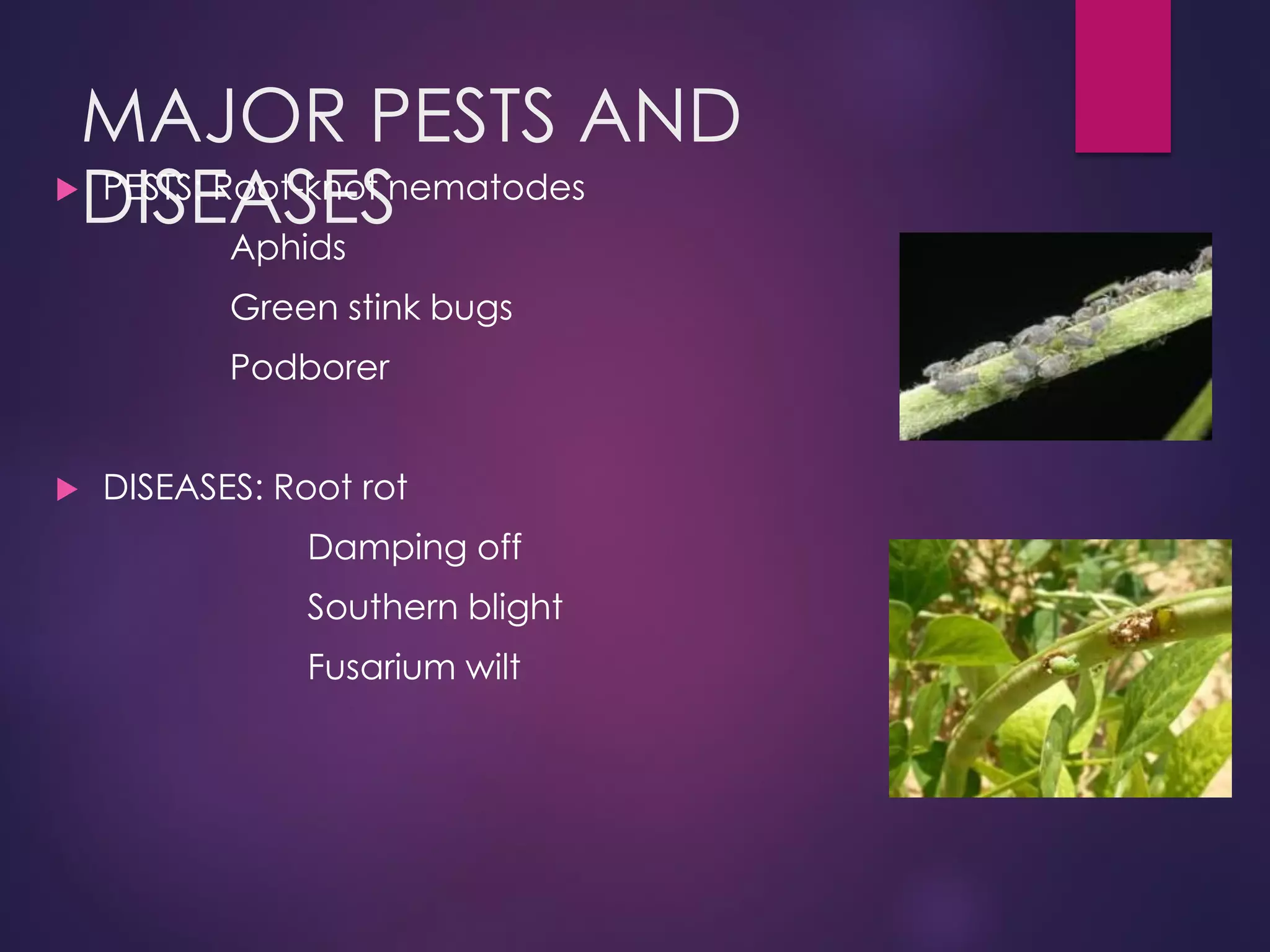
MAJOR PESTS AND
DISEASES PESTS: Root-knot nematodes
Aphids
Green stink bugs
Podborer
 DISEASES: Root rot
Damping off
Southern blight
Fusarium wilt
Varieties
 KBC-2 (13 q/ha),
 IT-38956-1 (12.5 q/ha)
 KM-5 (12 q/ha)
 PKB-4
 AV-5
SOURCE:
 Breeding of field crops by V L Chopra
 Breeding of field crops by B D Singh
 http://www.fao.org/inpho/content/compend/tex
t/ch32/ch32_01.htm
 http://www.hort.purdue.edu/newcrop/afcm/cow
pea.html
Cowpea 12

Cowpea 12

  • 1.
  • 2.
    INTRODUCTION Common Name :Cowpea;Black-eyed bean, Horse bean, Black-eyed pea, Southern pea, Yard long bean, Asparagus bean. Scientific Name :Vigna ungiculata Chromosome number :2n=2x=22
  • 3.
    ORIGIN Primary center oforigin : Africa Secondary center of origin : India, china. Place of domestication :Ethiopia, Central, south, and west Africa and India.
  • 4.
    Area covered  7million. ha (world)  5 lakh. ha (India)
  • 6.
    TAXONOMY Kingdom : Plantae Class: Dicotyledon Sub-class : Polypetalous Order : Rosales Family : Fabaceae Sub Family :Papiloinaceae Genus : Vigna Species : Unguiculata
  • 7.
    Nutrient content ofmature cowpea seed Protein 24.8% Fat 1.9% Fiber 6.3% Carbohydrate 63.6% Thiamine 0.00074% Riboflavin 0.00042% Niacin 0.00281%
  • 8.
    Growth Habits:  Cowpeais a warm-season, annual, herbaceous legume. Plant types are often categorized as erect, semi-erect, prostrate (trailing), or climbing. There is much variability within the species. Growth habit ranges from indeterminate to fairly determinate with the non-vining types tending to be more determinate. Cowpea generally is strongly taprooted.
  • 9.
    Growth Habits:  Emergenceis epigeal (similar to common bean, and lupin) where the cotyledons emerge from the ground during germination.  The trifoliolate leaves develop alternately. Leaves are smooth, dull to shiny, and rarely pubescent. Commonly, the terminal leaflet is longer and larger than the lateral leaflets.  Cowpea generally is day neutral. Flowers are borne in multiple racemes on 8 to 20 in. flower stalks (peduncles) that arise from the leaf axil
  • 11.
    FLORAL BIOLOGY  Inflorescenceis an unbranched, axillary raceme bearing several flowers at the tip of peduncle. Flowers are in alternate pairs. Gamosepalous
  • 13.
    Corolla is papilionaceousand having three different kinds of petals such as standard, wing, and keel.
  • 14.
    Stamens are diadelphous(9+1) Anthers are bright yellow. Anthers are uniform and ovary is superior with many ovules.
  • 15.
    FLORAL DIAGRAM ANDFLORAL FORMULA
  • 17.
    Anthesis There are 2-3flowering period Takes 11-14 days for the flowers to develop and bloom. Flower opening at morning from 6-10 am. Dehiscence of anther prior to blooming i.e.; 10 pm-1 am
  • 19.
    Cytology o Diploid chromosomenumber is 2n=2x=22 o 11 bivalent complement consists of 1 short(19 micron m.) 7 medium(26-36 micron m.) 3 long(41-45 micron m.)
  • 20.
    SELFING  Cowpea isbeing a self pollinated crop it dose not required any artificial selfing methods but for the betterment we generally go for bagging of the mature flower bud.
  • 21.
    Crossing Cowpea flowers arelarge and showy. Emasculation carried out in mature flower bud in preceding evening. Pollination is done simultaneously or in next morning from a freshly opened flowers.
  • 25.
    Breeding objectives High greenpod yield High seed yield High fodder yield Dual purpose Appropriate plant type Resistance to disease Resistance to insects
  • 26.
    MAJOR PESTS AND DISEASESPESTS: Root-knot nematodes Aphids Green stink bugs Podborer  DISEASES: Root rot Damping off Southern blight Fusarium wilt
  • 27.
    Varieties  KBC-2 (13q/ha),  IT-38956-1 (12.5 q/ha)  KM-5 (12 q/ha)  PKB-4  AV-5
  • 28.
    SOURCE:  Breeding offield crops by V L Chopra  Breeding of field crops by B D Singh  http://www.fao.org/inpho/content/compend/tex t/ch32/ch32_01.htm  http://www.hort.purdue.edu/newcrop/afcm/cow pea.html