COLLEGE OF AGRICULTURAL TECHNOLOGY
(Affiliated to Tamil Nadu Agricultural University, Coimbatore-3)
Kullapuram (Po), ViaVaigai Dam, Theni - 625 562
GUAVA WILT
COURSE TEACHER STUDENT
Dr. PARTHASARTHY. S NAME : C. GOKILA
Asst. Professor (Plant Pathology) ID.NO : 2015021038
GUAVA WILT
• Fusarium oxysporum f.sp. psidii (Prasad et al 1952)
Occurrence
History
• The disease was first noticed in 1935 in Allahabad.
• It spread to more than 20,000 sq. miles during 1952.
Geographical distribution
World
• Guava wilt has been reported in Taiwan (Hsieh et al),
South Africa (Grech and Frean), Brazil (Tokeshi et al),
Pakistan (Ansar et al) and Reunion island (Normand).
Geographical distribution
India
• Guava wilt reported in the different part of Uttar Pradesh,
West Bengal, Haryana, Punjab, Bihar, Delhi, Andhra
Pradesh, Gujarat, Maharashtra and Madhya Pradesh.
Significance
Economical
• Reported, 5-20 % trees killed in annually in Allahabad,
Lucknow and Faridabad.
• In West Bengal the wilt caused reduction of the yield upto
80%.
Significance
• In Andhra Pradesh land value reduced to half due to wilt
disease.
• 150 acres of the wilt affected guava orchid in Punjab.
• 300 acres in Haryana were uprooted in 1978-1981.
Symptoms
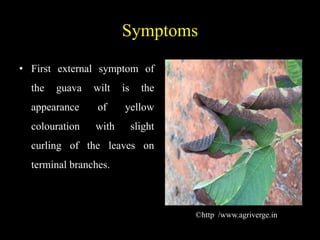
• First external symptom of
the guava wilt is the
appearance of yellow
colouration with slight
curling of the leaves on
terminal branches.
©http /www.agriverge.in
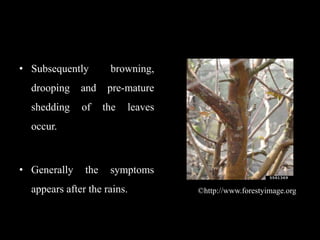
• Subsequently browning,
drooping and pre-mature
shedding of the leaves
occur.
• Generally the symptoms
appears after the rains. ©http://www.forestyimage.org
• That is during October - November when the fruits are small.
• The wilt affected branches fruits remain under developed, hard
and stony.
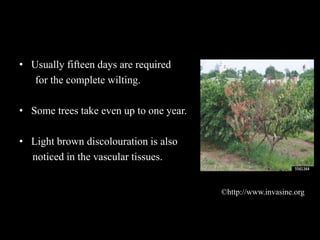
• Usually fifteen days are required
for the complete wilting.
• Some trees take even up to one year.
• Light brown discolouration is also
noticed in the vascular tissues.
©http://www.invasine.org
Pathogen
• Das Gupta and Rai reported the association of Fusarium sp
with the wilt disease in U.P.
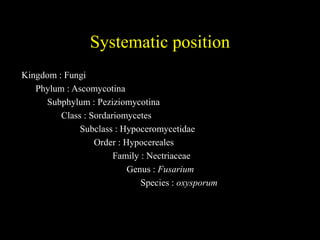
Systematic position
Kingdom : Fungi
Phylum : Ascomycotina
Subphylum : Peziziomycotina
Class : Sordariomycetes
Subclass : Hypoceromycetidae
Order : Hypocereales
Family : Nectriaceae
Genus : Fusarium
Species : oxysporum
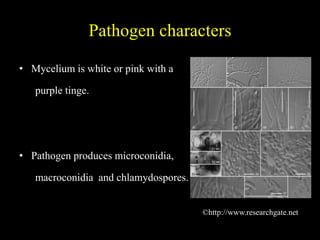
Pathogen characters
• Mycelium is white or pink with a
purple tinge.
• Pathogen produces microconidia,
macroconidia and chlamydospores.
©http://www.researchgate.net
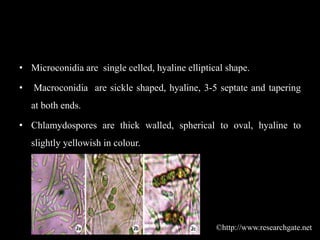
• Microconidia are single celled, hyaline elliptical shape.
• Macroconidia are sickle shaped, hyaline, 3-5 septate and tapering
at both ends.
• Chlamydospores are thick walled, spherical to oval, hyaline to
slightly yellowish in colour.
©http://www.researchgate.net
Life cycle
©http://www.agronomie.info
Survival and spread
• It is soil borne pathogen. Survives in soil as chlamydospores for
longer periods.
• The primary spread of the disease by the affected soil.
• Secondary spread by water.
• Root injury predisposes wilt disease.
Favourable conditions
• High rainfall during August/ September.
• Stagnation of water in guava field for long duration.
• Maximum and minimum temperature ranges 23-32○C with 76% RH
are conducive.
• Lack of timely application of suitable control measures.
Integrated disease management
• Cultivate the resistant varieties of Banarasi, Dholka a Sind,
Nasik white guava, Supreme and Lucknow 96.
• Pruning and burning the affected twigs.
• Application of green manure and oil cake.
• Spread of the wilt could be checked by judicious amendments
of N and Zn.
• The wilt was reported to be controlled by soil treatment with
1.82 kg lime or gypsum / tree.
• Biocontrol agents Trichoderma sp and Streptomyces
chibaensis have been suggested for the control of wilt
pathogens.
• Soil drenching with Carbendazim 0.2% at 4 times in a year.
References
• Tripathi.D.P. 2009. Crop diseases. Kalyani publishers. New
Delhi. Pg.No :164.
• Saha.L.R. 2002. Hand book of plant diseases.Kalyani
publishers. New Delhi. Pg.No : 299.
• Thind.T.S. 2001. Diseases of fruit and vegetables and their
management. Kalyani Publishers. New Delhi. Pg.No : 124.
• www. agrivilage.in

Plant Pathology - Guava Wilt

  • 1.
    COLLEGE OF AGRICULTURALTECHNOLOGY (Affiliated to Tamil Nadu Agricultural University, Coimbatore-3) Kullapuram (Po), ViaVaigai Dam, Theni - 625 562 GUAVA WILT COURSE TEACHER STUDENT Dr. PARTHASARTHY. S NAME : C. GOKILA Asst. Professor (Plant Pathology) ID.NO : 2015021038
  • 2.
    GUAVA WILT • Fusariumoxysporum f.sp. psidii (Prasad et al 1952)
  • 3.
    Occurrence History • The diseasewas first noticed in 1935 in Allahabad. • It spread to more than 20,000 sq. miles during 1952.
  • 4.
    Geographical distribution World • Guavawilt has been reported in Taiwan (Hsieh et al), South Africa (Grech and Frean), Brazil (Tokeshi et al), Pakistan (Ansar et al) and Reunion island (Normand).
  • 5.
    Geographical distribution India • Guavawilt reported in the different part of Uttar Pradesh, West Bengal, Haryana, Punjab, Bihar, Delhi, Andhra Pradesh, Gujarat, Maharashtra and Madhya Pradesh.
  • 6.
    Significance Economical • Reported, 5-20% trees killed in annually in Allahabad, Lucknow and Faridabad. • In West Bengal the wilt caused reduction of the yield upto 80%.
  • 7.
    Significance • In AndhraPradesh land value reduced to half due to wilt disease. • 150 acres of the wilt affected guava orchid in Punjab. • 300 acres in Haryana were uprooted in 1978-1981.
  • 8.
    Symptoms • First externalsymptom of the guava wilt is the appearance of yellow colouration with slight curling of the leaves on terminal branches. ©http /www.agriverge.in
  • 9.
    • Subsequently browning, droopingand pre-mature shedding of the leaves occur. • Generally the symptoms appears after the rains. ©http://www.forestyimage.org
  • 10.
    • That isduring October - November when the fruits are small. • The wilt affected branches fruits remain under developed, hard and stony.
  • 11.
    • Usually fifteendays are required for the complete wilting. • Some trees take even up to one year. • Light brown discolouration is also noticed in the vascular tissues. ©http://www.invasine.org
  • 12.
    Pathogen • Das Guptaand Rai reported the association of Fusarium sp with the wilt disease in U.P.
  • 13.
    Systematic position Kingdom :Fungi Phylum : Ascomycotina Subphylum : Peziziomycotina Class : Sordariomycetes Subclass : Hypoceromycetidae Order : Hypocereales Family : Nectriaceae Genus : Fusarium Species : oxysporum
  • 14.
    Pathogen characters • Myceliumis white or pink with a purple tinge. • Pathogen produces microconidia, macroconidia and chlamydospores. ©http://www.researchgate.net
  • 15.
    • Microconidia aresingle celled, hyaline elliptical shape. • Macroconidia are sickle shaped, hyaline, 3-5 septate and tapering at both ends. • Chlamydospores are thick walled, spherical to oval, hyaline to slightly yellowish in colour. ©http://www.researchgate.net
  • 16.
  • 17.
    Survival and spread •It is soil borne pathogen. Survives in soil as chlamydospores for longer periods. • The primary spread of the disease by the affected soil. • Secondary spread by water. • Root injury predisposes wilt disease.
  • 18.
    Favourable conditions • Highrainfall during August/ September. • Stagnation of water in guava field for long duration. • Maximum and minimum temperature ranges 23-32○C with 76% RH are conducive. • Lack of timely application of suitable control measures.
  • 19.
    Integrated disease management •Cultivate the resistant varieties of Banarasi, Dholka a Sind, Nasik white guava, Supreme and Lucknow 96. • Pruning and burning the affected twigs. • Application of green manure and oil cake.
  • 20.
    • Spread ofthe wilt could be checked by judicious amendments of N and Zn. • The wilt was reported to be controlled by soil treatment with 1.82 kg lime or gypsum / tree.
  • 21.
    • Biocontrol agentsTrichoderma sp and Streptomyces chibaensis have been suggested for the control of wilt pathogens. • Soil drenching with Carbendazim 0.2% at 4 times in a year.
  • 22.
    References • Tripathi.D.P. 2009.Crop diseases. Kalyani publishers. New Delhi. Pg.No :164. • Saha.L.R. 2002. Hand book of plant diseases.Kalyani publishers. New Delhi. Pg.No : 299. • Thind.T.S. 2001. Diseases of fruit and vegetables and their management. Kalyani Publishers. New Delhi. Pg.No : 124. • www. agrivilage.in