

Covid 19 in immunocompromised
patients
Fawzia Abo Ali
Prof. of Allergy & clinical Immunology
Ain Shams faculty of medicine
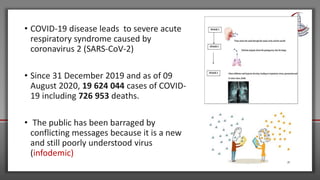
• COVID-19 disease leads to severe acute
respiratory syndrome caused by
coronavirus 2 (SARS-CoV-2)
• Since 31 December 2019 and as of 09
August 2020, 19 624 044 cases of COVID-
19 including 726 953 deaths.
• The public has been barraged by
conflicting messages because it is a new
and still poorly understood virus
(infodemic)
According to the Centers for Disease Control and Prevention,
SARS-CoV-2 is more likely to cause severe disease in:
• People older than 65 years old,
• Those with comorbid conditions
• Immunocompromised patients:
• patients with primary immunodeficiency.
• patients with human immunodeficiency virus (HIV) infection
• patients with cancer or hematologic malignancy,
• solid-organ transplant (SOT) recipients,
• patients taking biologics & immunosuppressive therapy.
Important questions crucial to our understanding of
immunocompromised patients with COVID-19 .
Do immunosuppressed patients have more severe COVID-19 outcomes?
 or, conversely, are they protected from cytokine-mediated inflammation
and therefore severe disease?
do immunocompromised patients have atypical clinical manifestations?
What is the attributable risk of immunosuppression versus other
comorbidities on COVID-19 severity??
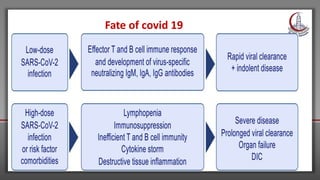
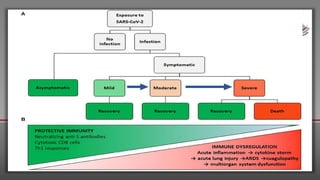
Fate of covid 19
COVID-19 and immunocompromised patients
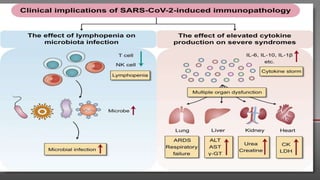
• the biological response to SARS-CoV-2 infection requires
the activation of the innate and acquired immunity.
• the overactivation of T cells, manifested by increase of
Th17 and high cytotoxicity of CD8+T cells, were related
with the severe lung immune injury.
• So the effects of immunosuppression may be protective,
modifying the “cytokine storm” related to COVID-19 poor
outcomes
• The interplay between the viral load and active
inflammatory response of immune system decide who
will win finally
Covid 19 in immunocompromised hosts:
• The clinical features and outcomes of COVID-19 among
immunosuppressed patients are not well understood.
• Some studies have reported an overall asymptomatic or mild COVID-
19 course in immunocompromised patients, such as children under
anticancer therapy, , immunosuppressive chronic drugs
users, transplant recipients, and poorly controlled HIV or AIDS
patients.
• In these reports, the few severely affected individuals recovered and
low fatality rates were registered.
Taming of the shrew:
• However, the association between
COVID-19 and intense cytokine release
(cytokine storm and secondary
hemophagocytic lymphohistiocytosis
syndrome) ,raises the possibility that
immunosuppression may actually
temper the accompanied excited
inflammatory response .
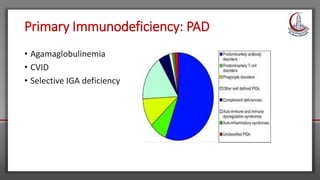
Primary Immunodeficiency: PAD
• Agamaglobulinemia
• CVID
• Selective IGA deficiency
Primary Immunodeficiency: PAD
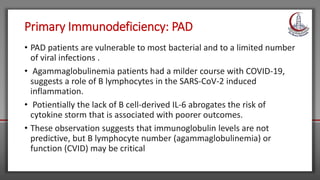
• PAD patients are vulnerable to most bacterial and to a limited number
of viral infections .
• Agammaglobulinemia patients had a milder course with COVID-19,
suggests a role of B lymphocytes in the SARS-CoV-2 induced
inflammation.
• Potientially the lack of B cell-derived IL-6 abrogates the risk of
cytokine storm that is associated with poorer outcomes.
• These observation suggests that immunoglobulin levels are not
predictive, but B lymphocyte number (agammaglobulinemia) or
function (CVID) may be critical
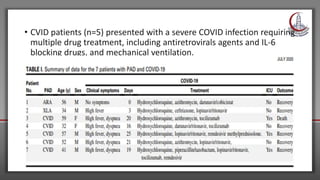
• CVID patients (n=5) presented with a severe COVID infection requiring
multiple drug treatment, including antiretrovirals agents and IL-6
blocking drugs, and mechanical ventilation.
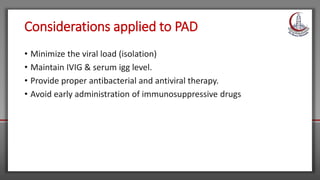
Considerations applied to PAD
• Minimize the viral load (isolation)
• Maintain IVIG & serum igg level.
• Provide proper antibacterial and antiviral therapy.
• Avoid early administration of immunosuppressive drugs
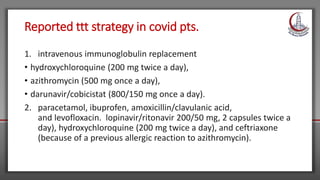
Reported ttt strategy in covid pts.
1. intravenous immunoglobulin replacement
• hydroxychloroquine (200 mg twice a day),
• azithromycin (500 mg once a day),
• darunavir/cobicistat (800/150 mg once a day).
2. paracetamol, ibuprofen, amoxicillin/clavulanic acid,
and levofloxacin. lopinavir/ritonavir 200/50 mg, 2 capsules twice a
day), hydroxychloroquine (200 mg twice a day), and ceftriaxone
(because of a previous allergic reaction to azithromycin).
• 3.vancomycin, meropenem, linezolid, caspofungin, with prednisone
(25 mg per day) and subcutaneously injected immunoglobulins
and ​oral steroids,
• ​Therapy with lopinavir/ritonavir (400/100 mg once a day),
azithromycin (500 mg once a day), and hydroxychloroquine (200 mg
twice a day) was started.
• 4. The patient received immunoglobulin replacement treatment at a
rate of 400 mg/kg per dose every 4 weeks He started receiving
lopinavir/ritonavir (400/100 mg once a day), hydroxychloroquine (200
mg twice a day), and piperacillin/tazobactam.
• tocilizumab (8 mg/kg per day) was started. After 2 days of mechanical
ventilation, the patient was switched to remdesivir (200 mg
intravenously once a day) (on the first day) followed by remdesivir
(100 mg intravenously once a day
Selective IgA deficiency:
• So far, selective IgA deficiency has not been identified as a risk factor,
though it is the most common PID. Given the marked anxiety
surrounding the COVID-19 pandemic, taking the individual family's
fears and concerns into account.
• Diarrhea and other gastrointestinal symptoms occur in more than
10% of people with SARS-CoV-2 infection.
• However, recent studies revealed that once respiratory infections
occur, 20% to 30% of them develop severe symptoms.
• Areas of high prevalence have high mortality.
Patients taking corticosteroids
• low-dose corticosteroids do not seem to affect the incidence of
serious infections in patients.
• High dose steroids, Although there is a concern for increased risk of
viral infections if given early, While corticosteroids may blunt or
inhibit the immune response, the tissue damage may be decreased by
corticosteroid use.
HIV/AIDS
• People living with HIV and on effective antiretroviral treatment (ART)
are not at greater risk of getting coronavirus.
• People living with HIV who have a compromised immune system
should be extra cautious to prevent coronavirus infection.
These include people with
• a low CD4 count (<200 copies/cell),
• a high viral load,
• or a recent opportunistic infection
• older people(As with the general population) living with HIV should
take extra precautions to prevent illness.
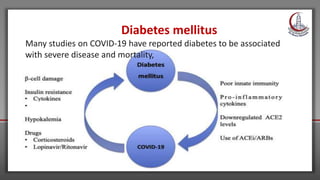
Diabetes mellitus
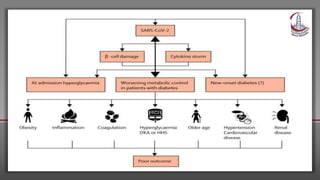
Many studies on COVID-19 have reported diabetes to be associated
with severe disease and mortality,
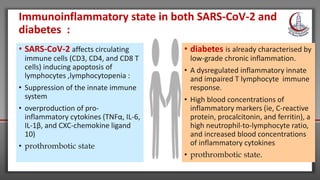
• SARS-CoV-2 affects circulating
immune cells (CD3, CD4, and CD8 T
cells) inducing apoptosis of
lymphocytes ,lymphocytopenia :
• Suppression of the innate immune
system
• overproduction of pro-
inflammatory cytokines (TNFα, IL-6,
IL-1β, and CXC-chemokine ligand
10)
• prothrombotic state
• diabetes is already characterised by
low-grade chronic inflammation.
• A dysregulated inflammatory innate
and impaired T lymphocyte immune
response.
• High blood concentrations of
inflammatory markers (ie, C-reactive
protein, procalcitonin, and ferritin), a
high neutrophil-to-lymphocyte ratio,
and increased blood concentrations
of inflammatory cytokines
• prothrombotic state.
Immunoinflammatory state in both SARS-CoV-2 and
diabetes :
Effect of Age
• One of the risk factors most strongly associated with severe COVID-19
and death is advanced age.
• Immunosenescence present in the elderly affects innate immunity
• reducedT cell-dependent adaptive responses .
• In addition, documented evidences that elderly have increased levels
of proinflammatory cytokines
Sex difference
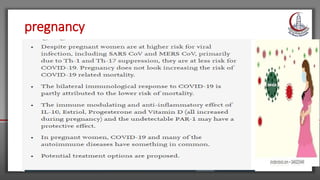
pregnancy
Home message
• Since COVID-19 is a new disease, knowledge about this disease is still
incomplete and evolving.
• current best practice guidelines worldwide recommended the
continuation of immunosuppression treatment in patients who
require them cautiously .
• the immune system is a double-edged weapon, that has balance
between its primary activity of defense against foreign pathogens,
and hyperinflammatory status.
• Covid 19 has unique immunoinflammatory pathogenesis
• The clinical features and outcomes of COVID-19 among
immunosuppressed patients, who are at presumed risk of more
severe disease but who may also have decreased inflammatory
responses, are not well studied.
• As Preliminary clinical experiences showed that morbidity and
mortality rates in immunosuppressed patients may not differ largely
from the general population,Yet a lot of precautions should be
considered in these situations
• As more people become infected with coronavirus, we will learn more
• Overall, further prospective controlled studies are needed to
determine the attributable risk of immunocompromising conditions
and therapies on COVID-19 disease prognosis.
Covid 19 in immunocompromised patients

Covid 19 in immunocompromised patients

  • 1.
    Covid 19 inimmunocompromised patients Fawzia Abo Ali Prof. of Allergy & clinical Immunology Ain Shams faculty of medicine
  • 2.
    • COVID-19 diseaseleads to severe acute respiratory syndrome caused by coronavirus 2 (SARS-CoV-2) • Since 31 December 2019 and as of 09 August 2020, 19 624 044 cases of COVID- 19 including 726 953 deaths. • The public has been barraged by conflicting messages because it is a new and still poorly understood virus (infodemic)
  • 3.
    According to theCenters for Disease Control and Prevention, SARS-CoV-2 is more likely to cause severe disease in: • People older than 65 years old, • Those with comorbid conditions • Immunocompromised patients: • patients with primary immunodeficiency. • patients with human immunodeficiency virus (HIV) infection • patients with cancer or hematologic malignancy, • solid-organ transplant (SOT) recipients, • patients taking biologics & immunosuppressive therapy.
  • 4.
    Important questions crucialto our understanding of immunocompromised patients with COVID-19 . Do immunosuppressed patients have more severe COVID-19 outcomes?  or, conversely, are they protected from cytokine-mediated inflammation and therefore severe disease? do immunocompromised patients have atypical clinical manifestations? What is the attributable risk of immunosuppression versus other comorbidities on COVID-19 severity??
  • 6.
  • 9.
    COVID-19 and immunocompromisedpatients • the biological response to SARS-CoV-2 infection requires the activation of the innate and acquired immunity. • the overactivation of T cells, manifested by increase of Th17 and high cytotoxicity of CD8+T cells, were related with the severe lung immune injury. • So the effects of immunosuppression may be protective, modifying the “cytokine storm” related to COVID-19 poor outcomes • The interplay between the viral load and active inflammatory response of immune system decide who will win finally
  • 10.
    Covid 19 inimmunocompromised hosts: • The clinical features and outcomes of COVID-19 among immunosuppressed patients are not well understood. • Some studies have reported an overall asymptomatic or mild COVID- 19 course in immunocompromised patients, such as children under anticancer therapy, , immunosuppressive chronic drugs users, transplant recipients, and poorly controlled HIV or AIDS patients. • In these reports, the few severely affected individuals recovered and low fatality rates were registered.
  • 11.
    Taming of theshrew: • However, the association between COVID-19 and intense cytokine release (cytokine storm and secondary hemophagocytic lymphohistiocytosis syndrome) ,raises the possibility that immunosuppression may actually temper the accompanied excited inflammatory response .
  • 12.
    Primary Immunodeficiency: PAD •Agamaglobulinemia • CVID • Selective IGA deficiency
  • 13.
    Primary Immunodeficiency: PAD •PAD patients are vulnerable to most bacterial and to a limited number of viral infections . • Agammaglobulinemia patients had a milder course with COVID-19, suggests a role of B lymphocytes in the SARS-CoV-2 induced inflammation. • Potientially the lack of B cell-derived IL-6 abrogates the risk of cytokine storm that is associated with poorer outcomes. • These observation suggests that immunoglobulin levels are not predictive, but B lymphocyte number (agammaglobulinemia) or function (CVID) may be critical
  • 14.
    • CVID patients(n=5) presented with a severe COVID infection requiring multiple drug treatment, including antiretrovirals agents and IL-6 blocking drugs, and mechanical ventilation.
  • 15.
    Considerations applied toPAD • Minimize the viral load (isolation) • Maintain IVIG & serum igg level. • Provide proper antibacterial and antiviral therapy. • Avoid early administration of immunosuppressive drugs
  • 16.
    Reported ttt strategyin covid pts. 1. intravenous immunoglobulin replacement • hydroxychloroquine (200 mg twice a day), • azithromycin (500 mg once a day), • darunavir/cobicistat (800/150 mg once a day). 2. paracetamol, ibuprofen, amoxicillin/clavulanic acid, and levofloxacin. lopinavir/ritonavir 200/50 mg, 2 capsules twice a day), hydroxychloroquine (200 mg twice a day), and ceftriaxone (because of a previous allergic reaction to azithromycin).
  • 17.
    • 3.vancomycin, meropenem,linezolid, caspofungin, with prednisone (25 mg per day) and subcutaneously injected immunoglobulins and ​oral steroids, • ​Therapy with lopinavir/ritonavir (400/100 mg once a day), azithromycin (500 mg once a day), and hydroxychloroquine (200 mg twice a day) was started. • 4. The patient received immunoglobulin replacement treatment at a rate of 400 mg/kg per dose every 4 weeks He started receiving lopinavir/ritonavir (400/100 mg once a day), hydroxychloroquine (200 mg twice a day), and piperacillin/tazobactam. • tocilizumab (8 mg/kg per day) was started. After 2 days of mechanical ventilation, the patient was switched to remdesivir (200 mg intravenously once a day) (on the first day) followed by remdesivir (100 mg intravenously once a day
  • 18.
    Selective IgA deficiency: •So far, selective IgA deficiency has not been identified as a risk factor, though it is the most common PID. Given the marked anxiety surrounding the COVID-19 pandemic, taking the individual family's fears and concerns into account. • Diarrhea and other gastrointestinal symptoms occur in more than 10% of people with SARS-CoV-2 infection. • However, recent studies revealed that once respiratory infections occur, 20% to 30% of them develop severe symptoms. • Areas of high prevalence have high mortality.
  • 19.
    Patients taking corticosteroids •low-dose corticosteroids do not seem to affect the incidence of serious infections in patients. • High dose steroids, Although there is a concern for increased risk of viral infections if given early, While corticosteroids may blunt or inhibit the immune response, the tissue damage may be decreased by corticosteroid use.
  • 20.
    HIV/AIDS • People livingwith HIV and on effective antiretroviral treatment (ART) are not at greater risk of getting coronavirus. • People living with HIV who have a compromised immune system should be extra cautious to prevent coronavirus infection. These include people with • a low CD4 count (<200 copies/cell), • a high viral load, • or a recent opportunistic infection • older people(As with the general population) living with HIV should take extra precautions to prevent illness.
  • 21.
    Diabetes mellitus Many studieson COVID-19 have reported diabetes to be associated with severe disease and mortality,
  • 23.
    • SARS-CoV-2 affectscirculating immune cells (CD3, CD4, and CD8 T cells) inducing apoptosis of lymphocytes ,lymphocytopenia : • Suppression of the innate immune system • overproduction of pro- inflammatory cytokines (TNFα, IL-6, IL-1β, and CXC-chemokine ligand 10) • prothrombotic state • diabetes is already characterised by low-grade chronic inflammation. • A dysregulated inflammatory innate and impaired T lymphocyte immune response. • High blood concentrations of inflammatory markers (ie, C-reactive protein, procalcitonin, and ferritin), a high neutrophil-to-lymphocyte ratio, and increased blood concentrations of inflammatory cytokines • prothrombotic state. Immunoinflammatory state in both SARS-CoV-2 and diabetes :
  • 24.
    Effect of Age •One of the risk factors most strongly associated with severe COVID-19 and death is advanced age. • Immunosenescence present in the elderly affects innate immunity • reducedT cell-dependent adaptive responses . • In addition, documented evidences that elderly have increased levels of proinflammatory cytokines
  • 25.
  • 26.
  • 27.
    Home message • SinceCOVID-19 is a new disease, knowledge about this disease is still incomplete and evolving. • current best practice guidelines worldwide recommended the continuation of immunosuppression treatment in patients who require them cautiously . • the immune system is a double-edged weapon, that has balance between its primary activity of defense against foreign pathogens, and hyperinflammatory status. • Covid 19 has unique immunoinflammatory pathogenesis
  • 28.
    • The clinicalfeatures and outcomes of COVID-19 among immunosuppressed patients, who are at presumed risk of more severe disease but who may also have decreased inflammatory responses, are not well studied. • As Preliminary clinical experiences showed that morbidity and mortality rates in immunosuppressed patients may not differ largely from the general population,Yet a lot of precautions should be considered in these situations • As more people become infected with coronavirus, we will learn more • Overall, further prospective controlled studies are needed to determine the attributable risk of immunocompromising conditions and therapies on COVID-19 disease prognosis.