Coronavirus Disease 2019
(COVID-19):
Emerging and Future
Challenges
for Dental Surgeon
Dr. SHAIVY (MDS)
DEPT. OF
PROSTHODNTICS
Dr. SOUMENDU
(MDS)
DEPT. OF OMFS
What Is COVID-19???
Coronaviruses are zoonotic in nature and cause symptoms
ranging from those similar to the common cold to more severe
respiratory, enteric, hepatic, and neurological symptoms.
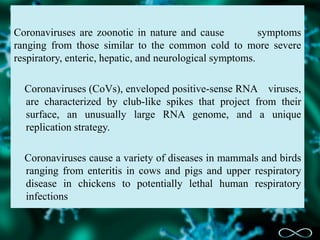
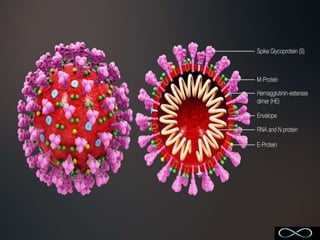
Coronaviruses (CoVs), enveloped positive-sense RNA viruses,
are characterized by club-like spikes that project from their
surface, an unusually large RNA genome, and a unique
replication strategy.
Coronaviruses cause a variety of diseases in mammals and birds
ranging from enteritis in cows and pigs and upper respiratory
disease in chickens to potentially lethal human respiratory
infections
• Coronavirus virions are spherical with diameters of
approximately 125 nm as depicted in recent studies by
cryo-electron tomography and cryo-electron microscopy.
• Club-shaped spike projections emanating from the surface
of the virion.
• These spikes are a defining feature of the virion and give
them the appearance of a solar corona, prompting the
name, Coronaviruses.
• Within the envelope of the virion is the nucleocapsid
which is helically symmetrical nucleocapsids, which is
uncommon among positive-sense RNA viruses, but far
more common for negative-sense RNA viruses.
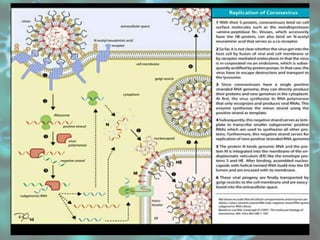
CORONAVIRUS LIFE CYCLE
The novel coronavirus was initially named 2019-
nCoV and officially as Severe Acute Respiratory
Syndrome Coronavirus-2 (SARSCoV-2).
As of February 26, COVID-19 has been
recognized in 34 countries.
On January 8, 2020, a novel coronavirus was
officially announced as the causative pathogen
of COVID-19 by the Chinese Centre for disease
control and prevention (li et al. 2020).
The epidemics of coronavirus disease 2019
(COVID-19) started from Wuhan, China, last
December and have become a major challenging
public health problem for not only China but also
countries around the world (Phelan et al. 2020).
On January 30, 2020, the World Health
Organization (WHO) announced that this outbreak
had constituted a public health emergency of
international concern (Mahase 2020).
Different Strains Of Corona Virus
Other than SARSCoV-2, there are six known coronaviruses
in humans:
HCoV-229E
HCoV-OC43
SARS-CoV
HCoVNL63
HCoV-HKU1
MERS-CoV.
Coronaviruses have caused two large-scale pandemics in the
last two decades: SARS and MERS
Routes of transmission
The three most common transmission routes of
novel coronavirus include:
A) Direct transmission (through cough,
sneeze or droplet inhalation)
B) Contact transmission (through oro-nasal-
ocular route)
C) Aerosol transmission
DIFFERENCE BETWEEN AEROSOLAND
SPLATTER
AEROSOL
• Particles less than 50micron
diameter
• Contain saliva,
nasopharyngeal secretions,
plaque, blood, viruses,
bacteria
• Stay airborne up to 30 min
before setting on surfaces or
entering respiratory tract
SPLATTER
• Particles larger than 50micron
diameter
• Behave in ballistic manner and
shoot like a bullet untill they
hit surface or fall to floor
• Can evaporate and became re-
airborne as dust
SourceOf Transmission
&
Why It Is Challenging??????
Although patients with symptomatic COVID-19 have
been the main source of transmission, recent
observations suggest that asymptomatic patients and
patients in their incubation period are also carriers of
SARS-CoV-2 (Chan et al. 2020; Rothe et al. 2020).
This epidemiologic feature of COVID-19 has made its
control extremely challenging, as it is difficult to
identify and quarantine these patients on time, which
can result in the accumulation of SARS-CoV-2 in
communities.
In addition, it is still unknown whether patients
in the recovering phase are a potential source of
transmission
IncubationPeriod
The incubation period of COVID-19 has been
estimated to be 5 to 6 days on average, but
there is evidence that it could be as long as 14
days, which is now the commonly adopted
duration for medical observation and quarantine
of (potentially) exposed persons.
Peopleat HighRiskof Infection
Current observations suggest that people of all
ages are generally susceptible to this new
infectious disease. However, those who are in
close contact with patients with symptomatic
and asymptomatic COVID-19, including health
care workers and other patients in the hospital,
are at higher risk of SARS-CoV-2 infection.
Older adults and people of any age who have
serious underlying medical conditions (like
immunocompromised patients, hypertensive
patients, cancer patients, patients with
cardiovascular diseases) might be at higher
risk.
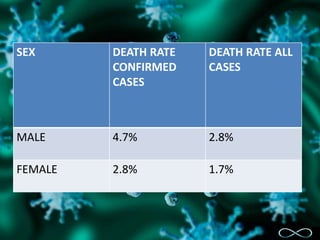
Fatality Rate
According to current data, the fatality rate
(cumulative deaths divided by cumulative cases)
of COVID-19 is 0.39% to 4.05%, depending on
different regions.
SEX DEATH RATE
CONFIRMED
CASES
DEATH RATE ALL
CASES
MALE 4.7% 2.8%
FEMALE 2.8% 1.7%
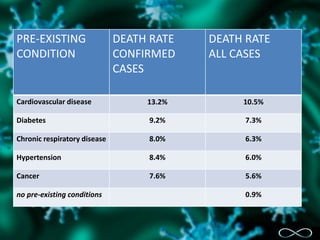
PRE-EXISTING
CONDITION
DEATH RATE
CONFIRMED
CASES
DEATH RATE
ALL CASES
Cardiovascular disease 13.2% 10.5%
Diabetes 9.2% 7.3%
Chronic respiratory disease 8.0% 6.3%
Hypertension 8.4% 6.0%
Cancer 7.6% 5.6%
no pre-existing conditions 0.9%
ClinicalManifestations
The majority of patients experienced fever and
dry cough, while some also had shortness of
breath, fatigue, and other atypical symptoms,
such as muscle pain, confusion, headache, sore
throat, diarrhoea, and vomiting.
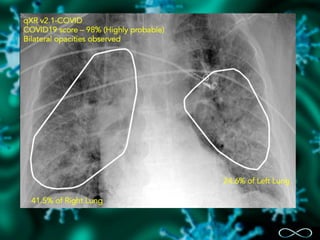
Among patients who underwent chest computed
tomography (CT), most showed bilateral
pneumonia, with ground-glass opacity and
bilateral patchy shadows being the most
common patterns (Guan et al. 2020; Wang et al.
2020).
Around one-fourth to one-third hospitalized
patients developed serious complications, such
as acute respiratory distress syndrome,
arrhythmia, and shock, and were therefore
transferred to the intensive care unit.
Diagnosis
According to standards protocol of
WHO
The diagnosis of COVID-19 can be based on a
combination of epidemiologic information (e.g., a history
of travel to or residence in affected region 14 days prior to
symptom onset), clinical symptoms, CT imaging findings,
and laboratory tests (e.g., reverse transcriptase polymerase
chain reaction [RT-PCR] tests on respiratory tract
specimens)
management
Management Of Mild COVID-19: Symptomatic
Treatment And Monitoring
• Patients with mild disease do not require hospital
interventions, but isolation is necessary to contain virus
transmission and will depend on national strategy and
resources.
• Provide patients with mild COVID-19 with symptomatic
treatment such as antipyretics for fever.
• Counsel patients with mild COVID-19 about signs and
symptoms of complicated disease. If they develop any of
these symptoms, they should seek urgent care through
national referral systems .
Management Of Severe COVID-19: Oxygen
Therapy And Monitoring
• Give supplemental oxygen therapy immediately to
patients with SARI and respiratory distress, hypoxaemia
or shock and target SpO2 > 94%.
• Closely monitor patients with COVID-19 for signs of
clinical deterioration, such as rapidly progressive
respiratory failure and sepsis and respond immediately
with supportive care interventions.
• Understand the patient’s co-morbid condition(s) to tailor
the management of critical illness.
• Use conservative fluid management in patients with
SARI when there is no evidence of shock.
Management Of Severe COVID-19:
Treatment Of Co-infections
• Give empiric antimicrobials to treat all
likely pathogens causing SARI and sepsis as
soon as possible, within 1 hour of initial
assessment for patients with sepsis .
• Empiric therapy should be de-escalated on
the basis of microbiology results and clinical
judgment.
Management Of Critical Covid-19:
Acute Respiratory Distress Syndrome
(ARDS)
• Recognize severe hypoxemic respiratory failure
when a patient with respiratory distress is failing
to respond to standard oxygen therapy and
prepare to provide advanced oxygen/ventilatory
support
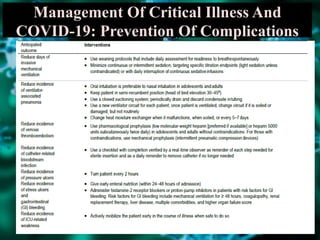
Management Of Critical Illness And
COVID-19: Prevention Of Complications
Management Of Critical Illness And
COVID-19: Septic Shock
• Recognize septic shock in adults when infection is suspected or
confirmed & vasopressors are needed to maintain mean arterial
pressure (MAP) ≥ 65 mmHg & lactate is ≥ 2 mmol/L, in absence
of hypovolemia.
• Recognize septic shock in children with any hypotension
(systolic blood pressure [SBP] < 5th centile or > 2 SD below
normal for age) or two or more of the following: altered mental
state; bradycardia or tachycardia (HR < 90 bpm or > 160 bpm
in infants and HR < 70 bpm or > 150 bpm in children);
prolonged capillary refill (> 2 sec) or feeble pulses; tachypnea;
mottled or cold skin or petechial or purpuric rash; increased
lactate; oliguria; hyperthermia or hypothermia.
Adjunctive therapiesfor COVID-19:
CORTICOSTEROIDS---
Do not routinely give systemic corticosteroids
for treatment of viral pneumonia outside
clinical trials
No specific antivirals have been proven to be
effective as per currently available data.
HYDROXYCHLOROQUINE-
Asymptomatic healthcare workers involved in
the care of suspected or confirmed cases of
COVID 19: 400 mg twice a day on day 1 ,
followed by 400mg once weekly for next 7
weeks to be taken with meals.
Asymptomatic household contacts of
laboratory confirmed cases: 400mg twice a day
on day1, followed bY 400 mg once weekly for
next 3 weeks to be taken with meals.
Not recommended for prophylaxis in children
under 15 yrs of age.
Contraindicated in retinopathy, known
hypersensitive patients, 4- aminoquinoline
compounds.
LOPINAVIR/ROTINAVIR
Suggested dose- (200/50) 2 tab BD for
maximum 14 days.
CAUTION: Do not co –administer Lopinavir/
Ritonavir and Hydroxychloroquine due to drug
interaction which may cause increased
Hydroxychloroquine levels and subsequent
toxicity (eg. QT Prolongation, hypoglycemia)
BCG VACCINE A POTENTIAL NEW TOOL TO
FIGHT COVID -19–
 Examining how the Covid-19 has impacted different
countries, researchers have found that Bacillus Calmette-
Guerin (BCG), a vaccine for tuberculosis (TB), could be
a potential new tool in the fight against the disease.
 BCG vaccine has a documented protective effect against
meningitis and disseminated TB in children.
 Countries without universal policies of BCG vaccination
(Italy, the Netherlands, the US) have been more severely
affected compared to countries with universal and long-
standing BCG policies," said the study conducted by
researchers from New York Institute of Technology
(NYIT) College of Osteopathic Medicine in the US.
INTERFERON ALPHA -2B RECOMBINANT
(IFNrec)
 The drug, called Interferon Alpha-2B Recombinant
(IFNrec) (WONDER DRUG), is jointly developed by
scientists from Cuba and China, where the coronavirus
COVID-19 disease outbreak first emerged late last year.
 Already active in China since January, the Cuban Medical
Brigades began deploying to dozens of nations, providing
personnel and products such as its new anti-viral drug to
battle the disease that has exceeded 400,000 confirmed
cases across the globe, over 100,000 people have
recovered from the infection and more than 18,000 have
died.
InfectionControl inDentalSettings
• Providing Dental Care during the COVID-19 Pandemic:
Recommendations
• As health care professionals it is our duty to
mitigate the community spread of this disease
through responsible and informed actions. We
need to fulfil our professional duty towards our
patients, while keeping ourselves, our staff and
environment safe.
• Immediate postponement of all elective dental
procedures while keeping emergency services
operational. Concentration on emergency care will
take care of immediate patient needs for true
dental emergencies.
• Specific recommendations for dentists to
triage patients to decide, what is a dental
emergency and when and how to schedule
such patients.
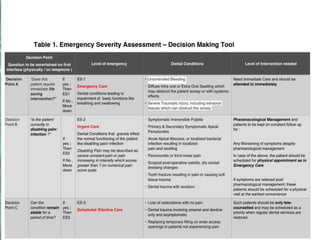
• An objective triaging tool has been suggested
to facilitate the scheduling of the patients based
on the level of need.
• The following triages the patients into
3categories
• Emergency Care
• Urgent Care
• Scheduled Care / Elective Care
• 2. Recommendations regarding a work
flow and steps to be followed in a dental
setting to reduce exposure while keeping
the services functional for emergency care-
2.1. Patient Triaging And Tele-screening:
To minimise the risk of exposure and community
spread it is critical to reduce physical walk-ins in the
dental setting. This can be done effectively by tele-
screening and triaging by phone.
• The front-desk staff members should to be
trained to triage callers based on their
emergency severity assessment of the dental
condition and the exposure risk categories related
to COVID-19.
Exposure Risk Categories: Low/High based on
a detailed medical history.
▪Stage of disease spread in a particular
geographic location/state/country.
▪History of exposure to potentially infected
persons or places (through travel) - Positive
COVID - 19 suspect.
▪Any respiratory illness symptoms (fever,
coughing, difficulty in breathing).
– Emergency Severity Assessment of the associated
dental condition
Only patients which fall under
Emergency/Urgent Care should be attended to or
scheduled immediately for management. While
others may be tele-counselled, put under
pharmacological management if needed and kept
on a telephonic follow up for any exacerbation of
symptoms.
• 2.2: For Physical Walk-ins :
• Direct walk-ins in the clinics should be
greatly discouraged other than life
threatening dental conditions. Educating and
informing the patients before-hand using
digital and mobile applications and messages
and setting up of tele-consultation avenues
may prove to be effective tools for the same.
• 2.3:Pre-Check Triage:
Dental clinics are recommended to establish pre-
check triages to measure and record the
temperature of every patient as a routine
procedure (this should also be carried out for all
dental team members). As outlined above, all
patients on arrival should be questioned and a
detailed medical history form should be
completed to identify patients at high risk from
infection.
• RECOMMENDATIONS FOR
INFECTION PREVENTION AND
CONTROL
• 3.1 GENERAL RECOMMENDATIONS--
If aerosol generating procedures are
undertaken, operators should wear appropriate
personal protective equipment ideally
comprised of a fluid-resistant mask, visor and
apron.
Which Procedures Make Aerosol?
• SONIC AND ULTRASONIC SCALERS
• AIR/WATER SYRINGE
• HIGH SPEED HANDPIECE
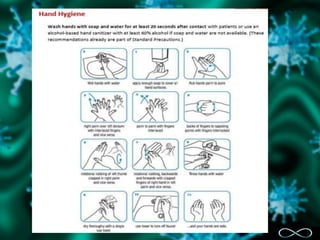
3.1.1 HAND HYGIENE
• The WHO guidelines on hand hygiene in healthcare (2009) suggest
that hand hygiene is the single most important measure for prevention
of infection.
• Use alcohol-based hand rubs (ABHR), when hands are not visibly
soiled or tap and running water is not available
• Hand hygiene must be performed:
Before patient examination
Before dental procedures
If gloves are torn or compromised during the procedure
After removing gloves
After touching the patient
After touching surroundings or equipment that are not disinfected
Dental professionals should avoid touching their own eyes, mouth
and nose
3.1.2 USE OF PERSONAL PROTECTION
EQUIPMENT(PPE)
• The use of PPE, including protective eyewear,
masks & respirators, gowns/aprons, gloves,
caps, face shields, and protective outerwear,
are strongly recommended for all healthcare
givers in the clinic/hospital settings during the
COVID-19 pandemic.
SEQUENCE OF DONNING AND
DOFFING OF PPE
Sequence of Donning PPE
• Show cover
• Gown
• Cap/hood
• Mask or respirator
• Goggles or face shield
• Gloves
Sequence of Doffing PPE
• Gloves
• Face shield or goggles
• Gown
• Mask or respirator
• Cap/hood
• Shoe cover
HOWTO WEAR PPE ??
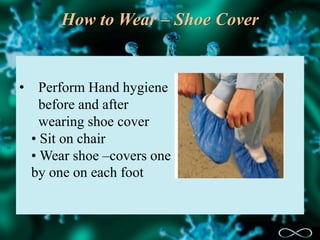
How to Wear – Shoe Cover
• Perform Hand hygiene
before and after
wearing shoe cover
• Sit on chair
• Wear shoe –covers one
by one on each foot
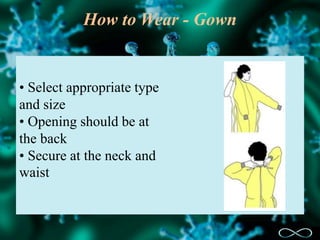
How to Wear - Gown
• Select appropriate type
and size
• Opening should be at
the back
• Secure at the neck and
waist
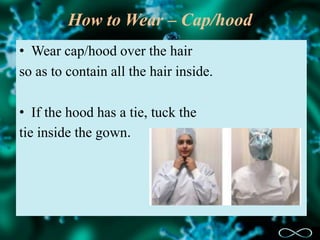
How to Wear – Cap/hood
• Wear cap/hood over the hair
so as to contain all the hair inside.
• If the hood has a tie, tuck the
tie inside the gown.
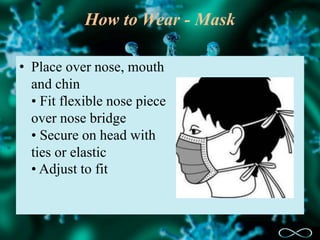
How to Wear - Mask
• Place over nose, mouth
and chin
• Fit flexible nose piece
over nose bridge
• Secure on head with
ties or elastic
• Adjust to fit
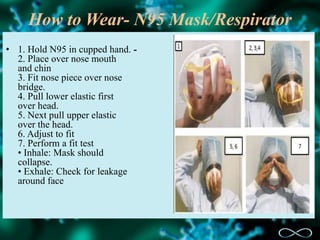
How to Wear- N95 Mask/Respirator
• 1. Hold N95 in cupped hand. -
2. Place over nose mouth
and chin
3. Fit nose piece over nose
bridge.
4. Pull lower elastic first
over head.
5. Next pull upper elastic
over the head.
6. Adjust to fit
7. Perform a fit test
• Inhale: Mask should
collapse.
• Exhale: Check for leakage
around face
• A). A triple-layered surgical mask can be worn by all health care
providers when within 1–2 meters of patient.
surgical masks reduce the aerosols 4fold compared to outside of mask
• B). Particulate respirators (N-95 masks authenticated by the
National Institute for Occupational Safety and Health or FFP2-
standard masks set by the European Union) are recommended for
routine dental practice.
N95 or FPP2 masks filter out >99% of particles in the range of 0.2-
1ⴗm.
For DROPLETS difference between the two is even smaller
Interestingly for OUTWARD PROTECTION the difference and
effectiveness is much smaller.
• C). If available an FFP3-standard mask should be used and in
COVID-19 positive
What Is The Difference Between A
Mask And A Respirator?
• A surgical mask is intended to protect the
mucous membranes of the wearer from contact
with patient body fluids
- it may also be worn by a person with a respiratory illness to
reduce the droplets released into the air when they cough or
sneeze.
• A medical N95 respirator filters particles to prevent
them reaching the respiratory tract of the wearer
- Different N95 respirators are used for different purposes, but
during this shortage OSHA , the CDC and FDA agree
healthcare workers treating active COVID -19 patients may
use N95 respirators that are not labeled for medical use.
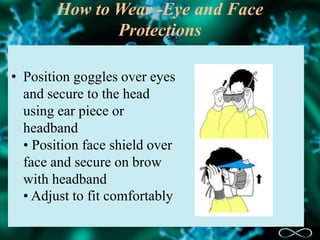
How to Wear -Eye and Face
Protections
• Position goggles over eyes
and secure to the head
using ear piece or
headband
• Position face shield over
face and secure on brow
with headband
• Adjust to fit comfortably
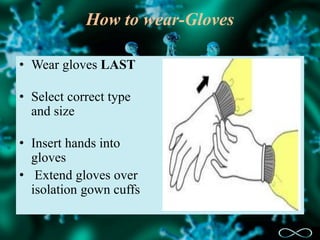
How to wear-Gloves
• Wear gloves LAST
• Select correct type
and size
• Insert hands into
gloves
• Extend gloves over
isolation gown cuffs
HOW TO REMOVE PPE
Where To Remove PPE??
• At the doorway, before leaving the patient’s
room
• Remove respirator outside the room, after the
door has been close
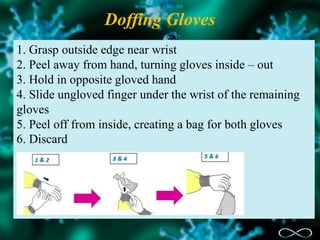
Doffing Gloves
1. Grasp outside edge near wrist
2. Peel away from hand, turning gloves inside – out
3. Hold in opposite gloved hand
4. Slide ungloved finger under the wrist of the remaining
gloves
5. Peel off from inside, creating a bag for both gloves
6. Discard
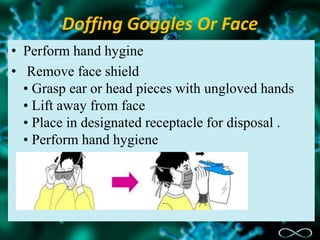
Doffing Goggles Or Face
• Perform hand hygine
• Remove face shield
• Grasp ear or head pieces with ungloved hands
• Lift away from face
• Place in designated receptacle for disposal .
• Perform hand hygiene
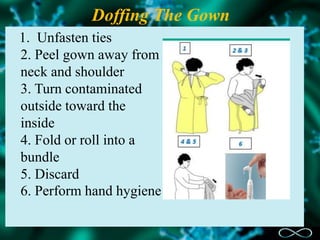
Doffing The Gown
1. Unfasten ties
2. Peel gown away from
neck and shoulder
3. Turn contaminated
outside toward the
inside
4. Fold or roll into a
bundle
5. Discard
6. Perform hand hygiene
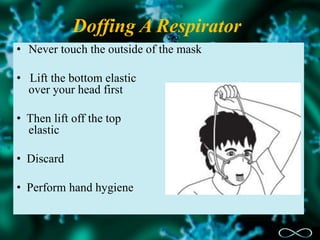
Doffing A Respirator
• Never touch the outside of the mask
• Lift the bottom elastic
over your head first
• Then lift off the top
elastic
• Discard
• Perform hand hygiene
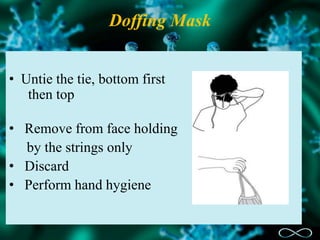
Doffing Mask
• Untie the tie, bottom first
then top
• Remove from face holding
by the strings only
• Discard
• Perform hand hygiene
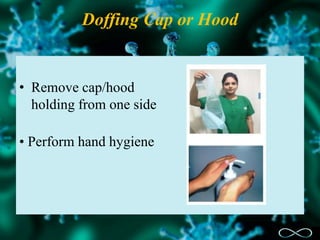
Doffing Cap or Hood
• Remove cap/hood
holding from one side
• Perform hand hygiene
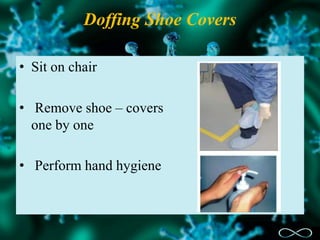
Doffing Shoe Covers
• Sit on chair
• Remove shoe – covers
one by one
• Perform hand hygiene
4. RECOMMENDATIONS FOR SPECIFIC
DENTAL PROCEDURE
OPERATORY CONSIDERATIONS
• Highest zone of infection due to aerosol is
within the circumference of 3 metres (10 feet)
of dental chair.
• HEPA filter.
• Ultraviolet germicidal irrradiation (UVGI).
• Extraoral Suction & Disinfection Device.
• Universal surface and disinfectant protocol:
Wet-mopping floor
Use 1% NaOCl (To prepare 1% NaOCl: 500
ml of 6% NaOCl mix with 2500ml of water=
3000 ml of 1% NaOCl).
• Disinfect waterlines using 0.01% NaOCl
 1ml of 5% NaOCl mixed in 5 litres of dental
waterline.
1 ml of 3% NaOCl mixed in 3 litres of dental
waterline
Disinfection of dental clinics
HEPA +UV light +Filters
• What is HEPA Filter?
• High Efficiency Particulate Air
• HEPA filters can remove at least 99.97% of
dust, pollen, mould bateria and any airborne
particles 0.3 micron.
• Filters
• High Fibre Cotton
• Fibreglass filter
• Activated carbon
• UV Light
• Intensity -1210ⴗw/cm2
• Wavelength 280nm
• Kills all virus and bacteria
• Bleach
• Sodium hypochlorite solutions are also used to
disinfect many types of surfaces in hospitals,
medical labs, doctors’ offices and nursing homes
to prevent the spread of infection among patients,
residents and healthcare workers.
• Spray sodium hypochlorite on table, chair,
doorknobs which act as fomite, wait for atleast
1min and then mop it with fresh clean cloth.
CHECKLIST FOR DENTAL CENTRES
BEFORE TREATING PATIENTS (Getting Your
Workplace Ready)
• Place Visual Alerts for patient awareness using posters
on COVID -19 pandemic awareness, cough etiquette
and hand hygiene practice.
• Seating arrangement with SOCIAL DISTANCING of
1-2 metres.
• Insist on ALCOHOL BASED HAND RUB (ABHR)
for all.
• Insist on face masks for both patients and attenders
(#MASKINDIA)
• Provision for HAND WASHING with soap
and water
• Avoid AC unless equipped with High
Efficiency Particulate Air (HEPA) filters.
• Use natural and mechanical ventilators.
• Mandatory use of tissue paper dispenser and
foot operated waste bin in patient waiting
room.
SPECIAL RECOMMENDATIONS FOR
MAXILLOFACIAL SURGEON
 Ideally operate the case in a negative pressure theatre or
isolation room. If not available consider a normal theatre
with closed doors during the procedure.
 Consider turning off laminar flow in OT chamber.
 Only use cuffed, non-fenestrated tracheostomy tubes.
 Better to avoid microvascular surgery. Use more pedicle
flap rather than free flap.
SOME
DOUBTFUL QUESTIONS???
QS NO--1
Why India’s Covid-19 fatality
rate looks lower than most
other countries when they
were at a same similar
stage?????????
The death toll due to covid 19 in India stands
at 32. At 1,000 mark india had 25 death.this
puts the death rate for india at 2.5 percent.
About This Different Authors Have Different Opinion….
No.1
• LOW RATE OF TESTING—
Till now India faces an acute shortage of testing
kits and centres. Many health experts have
expressed concern that when India widens its
testing criteria, the number of Covid 19 patients in
country may swell exponentially.
NO.2
• INDIANS HAVE SOME GENETIC
ADVANTAGE--
Indians have some more KIR genes than
Chinese, Italian, Americans. KIR genes play
first line defense against viral infections.
NO.3
• STRAIN OF COVID-19 IS LESS
VIRULENT IN INDIA—
Unique mutation in the spike surface
glycoprotein (A930V (24351C>T)) in the Indian
SARS-CoV2. Antiviral code host-miRNAs may
be controlling the viral pathogenesis.
NO.4
Countries without universal policies of BCG
vaccination (Italy, the Netherlands, the US)
have been more severely affected compared
to countries with universal and long-
standing BCG policies.
BCG vaccination may induce (partial)
protection against susceptibility to and/or
severity of SARS-CoV-2 infection even during
the epidemic.
QS NO.-2
WHY LOCKDOWN IS IMPORTANT????
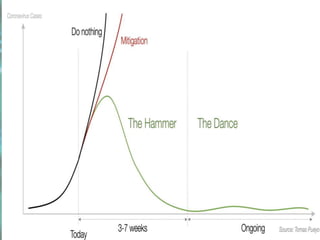
• Tomas Pueyo has described 3models on
19th March in Imperial College and tried to
explain how to save millions of lives along
the way.
MODEL NO 1
DO NOTHING
According to this model if we do nothing .
If we think host antibody is enough to
control the infection then all healthcare
system will collapse, and the death will be in
millions, maybe more than 10 million.
This model is baseless and unattested.
MODEL NO 2
MITIGATION STRATEGY
• According to this model schools ,colleges,
university, supermall should remain closed but all
government services, production unit should
remain open.
• Disadvantage— By this it’s impossible to
control the present situation.
Chances of community spread
infection.
• Advantage— Econmic crisis can be minimized.
MODEL NO 3
HAMMER AND DANCE MODEL
• This model demonstrate complete LOCKDOWN
• Act quickly and aggressively—i.e. Hammering
• How Long??
Until the graph declines
Here, we’re going to look at what a true
Suppression Strategy would look like-- we can call
it the Hammer and the Dance.
Advantage—Dramatically decrease the
spread of infection (from one person to more
than 3 person to one person to less than one
person).
Buying some time for anti viral dote or
vaccination.
Disadvantage—Economical Crisis
QS NO--3
WHO CAN TAKE
HYDROXYCHLOROQUINE????
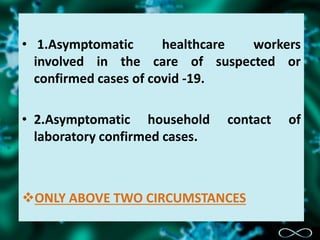
• 1.Asymptomatic healthcare workers
involved in the care of suspected or
confirmed cases of covid -19.
• 2.Asymptomatic household contact of
laboratory confirmed cases.
ONLY ABOVE TWO CIRCUMSTANCES
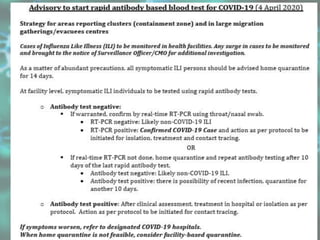
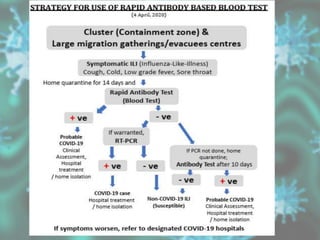
QS NO--4
WHAT IS THE NEXT STEP WHEN A
PERSON’S ANTIBODY TEST
POSITIVE OR A SUSPECTED
PERSON WHOSE ANTIBODY TEST
NEGATIVE????
Concluding Remarks:
Unprecedented challenges necessitate unprecedented solutions.
As dental health care providers our primary goal is to serve our
patients during their times of need.
However, the current pandemic makes dentistry a potent channel
of community transmission of disease. Hence, current reality
requires revised policy guidelines that provide clarity on the
extent of dental services that can be provided by us safely. This
joint position statement from IFEA and IES is an attempt to
provide a logical and effective clinical decision making process
that enable us to effectively screen, protect and serve our patients.
Defining the mechanism of how coronaviruses cause disease
and understanding the host immunopathological response will
significantly improve our ability to design vaccines and reduce
disease burden
Covid 19--EMERGING AND FUTURE CHALLENGES FOR DENTAL SURGEON

Covid 19--EMERGING AND FUTURE CHALLENGES FOR DENTAL SURGEON

  • 1.
    Coronavirus Disease 2019 (COVID-19): Emergingand Future Challenges for Dental Surgeon
  • 2.
    Dr. SHAIVY (MDS) DEPT.OF PROSTHODNTICS Dr. SOUMENDU (MDS) DEPT. OF OMFS
  • 3.
  • 4.
    Coronaviruses are zoonoticin nature and cause symptoms ranging from those similar to the common cold to more severe respiratory, enteric, hepatic, and neurological symptoms. Coronaviruses (CoVs), enveloped positive-sense RNA viruses, are characterized by club-like spikes that project from their surface, an unusually large RNA genome, and a unique replication strategy. Coronaviruses cause a variety of diseases in mammals and birds ranging from enteritis in cows and pigs and upper respiratory disease in chickens to potentially lethal human respiratory infections
  • 6.
    • Coronavirus virionsare spherical with diameters of approximately 125 nm as depicted in recent studies by cryo-electron tomography and cryo-electron microscopy. • Club-shaped spike projections emanating from the surface of the virion. • These spikes are a defining feature of the virion and give them the appearance of a solar corona, prompting the name, Coronaviruses. • Within the envelope of the virion is the nucleocapsid which is helically symmetrical nucleocapsids, which is uncommon among positive-sense RNA viruses, but far more common for negative-sense RNA viruses.
  • 7.
  • 9.
    The novel coronaviruswas initially named 2019- nCoV and officially as Severe Acute Respiratory Syndrome Coronavirus-2 (SARSCoV-2). As of February 26, COVID-19 has been recognized in 34 countries.
  • 10.
    On January 8,2020, a novel coronavirus was officially announced as the causative pathogen of COVID-19 by the Chinese Centre for disease control and prevention (li et al. 2020).
  • 11.
    The epidemics ofcoronavirus disease 2019 (COVID-19) started from Wuhan, China, last December and have become a major challenging public health problem for not only China but also countries around the world (Phelan et al. 2020). On January 30, 2020, the World Health Organization (WHO) announced that this outbreak had constituted a public health emergency of international concern (Mahase 2020).
  • 12.
    Different Strains OfCorona Virus Other than SARSCoV-2, there are six known coronaviruses in humans: HCoV-229E HCoV-OC43 SARS-CoV HCoVNL63 HCoV-HKU1 MERS-CoV. Coronaviruses have caused two large-scale pandemics in the last two decades: SARS and MERS
  • 13.
  • 14.
    The three mostcommon transmission routes of novel coronavirus include: A) Direct transmission (through cough, sneeze or droplet inhalation) B) Contact transmission (through oro-nasal- ocular route) C) Aerosol transmission
  • 15.
    DIFFERENCE BETWEEN AEROSOLAND SPLATTER AEROSOL •Particles less than 50micron diameter • Contain saliva, nasopharyngeal secretions, plaque, blood, viruses, bacteria • Stay airborne up to 30 min before setting on surfaces or entering respiratory tract SPLATTER • Particles larger than 50micron diameter • Behave in ballistic manner and shoot like a bullet untill they hit surface or fall to floor • Can evaporate and became re- airborne as dust
  • 16.
    SourceOf Transmission & Why ItIs Challenging??????
  • 17.
    Although patients withsymptomatic COVID-19 have been the main source of transmission, recent observations suggest that asymptomatic patients and patients in their incubation period are also carriers of SARS-CoV-2 (Chan et al. 2020; Rothe et al. 2020). This epidemiologic feature of COVID-19 has made its control extremely challenging, as it is difficult to identify and quarantine these patients on time, which can result in the accumulation of SARS-CoV-2 in communities.
  • 18.
    In addition, itis still unknown whether patients in the recovering phase are a potential source of transmission
  • 19.
  • 20.
    The incubation periodof COVID-19 has been estimated to be 5 to 6 days on average, but there is evidence that it could be as long as 14 days, which is now the commonly adopted duration for medical observation and quarantine of (potentially) exposed persons.
  • 21.
  • 22.
    Current observations suggestthat people of all ages are generally susceptible to this new infectious disease. However, those who are in close contact with patients with symptomatic and asymptomatic COVID-19, including health care workers and other patients in the hospital, are at higher risk of SARS-CoV-2 infection.
  • 23.
    Older adults andpeople of any age who have serious underlying medical conditions (like immunocompromised patients, hypertensive patients, cancer patients, patients with cardiovascular diseases) might be at higher risk.
  • 24.
  • 25.
    According to currentdata, the fatality rate (cumulative deaths divided by cumulative cases) of COVID-19 is 0.39% to 4.05%, depending on different regions.
  • 26.
    SEX DEATH RATE CONFIRMED CASES DEATHRATE ALL CASES MALE 4.7% 2.8% FEMALE 2.8% 1.7%
  • 27.
    PRE-EXISTING CONDITION DEATH RATE CONFIRMED CASES DEATH RATE ALLCASES Cardiovascular disease 13.2% 10.5% Diabetes 9.2% 7.3% Chronic respiratory disease 8.0% 6.3% Hypertension 8.4% 6.0% Cancer 7.6% 5.6% no pre-existing conditions 0.9%
  • 28.
  • 29.
    The majority ofpatients experienced fever and dry cough, while some also had shortness of breath, fatigue, and other atypical symptoms, such as muscle pain, confusion, headache, sore throat, diarrhoea, and vomiting.
  • 30.
    Among patients whounderwent chest computed tomography (CT), most showed bilateral pneumonia, with ground-glass opacity and bilateral patchy shadows being the most common patterns (Guan et al. 2020; Wang et al. 2020).
  • 32.
    Around one-fourth toone-third hospitalized patients developed serious complications, such as acute respiratory distress syndrome, arrhythmia, and shock, and were therefore transferred to the intensive care unit.
  • 33.
  • 34.
    According to standardsprotocol of WHO The diagnosis of COVID-19 can be based on a combination of epidemiologic information (e.g., a history of travel to or residence in affected region 14 days prior to symptom onset), clinical symptoms, CT imaging findings, and laboratory tests (e.g., reverse transcriptase polymerase chain reaction [RT-PCR] tests on respiratory tract specimens)
  • 35.
  • 36.
    Management Of MildCOVID-19: Symptomatic Treatment And Monitoring • Patients with mild disease do not require hospital interventions, but isolation is necessary to contain virus transmission and will depend on national strategy and resources. • Provide patients with mild COVID-19 with symptomatic treatment such as antipyretics for fever. • Counsel patients with mild COVID-19 about signs and symptoms of complicated disease. If they develop any of these symptoms, they should seek urgent care through national referral systems .
  • 37.
    Management Of SevereCOVID-19: Oxygen Therapy And Monitoring • Give supplemental oxygen therapy immediately to patients with SARI and respiratory distress, hypoxaemia or shock and target SpO2 > 94%. • Closely monitor patients with COVID-19 for signs of clinical deterioration, such as rapidly progressive respiratory failure and sepsis and respond immediately with supportive care interventions. • Understand the patient’s co-morbid condition(s) to tailor the management of critical illness. • Use conservative fluid management in patients with SARI when there is no evidence of shock.
  • 38.
    Management Of SevereCOVID-19: Treatment Of Co-infections • Give empiric antimicrobials to treat all likely pathogens causing SARI and sepsis as soon as possible, within 1 hour of initial assessment for patients with sepsis . • Empiric therapy should be de-escalated on the basis of microbiology results and clinical judgment.
  • 39.
    Management Of CriticalCovid-19: Acute Respiratory Distress Syndrome (ARDS) • Recognize severe hypoxemic respiratory failure when a patient with respiratory distress is failing to respond to standard oxygen therapy and prepare to provide advanced oxygen/ventilatory support
  • 40.
    Management Of CriticalIllness And COVID-19: Prevention Of Complications
  • 41.
    Management Of CriticalIllness And COVID-19: Septic Shock • Recognize septic shock in adults when infection is suspected or confirmed & vasopressors are needed to maintain mean arterial pressure (MAP) ≥ 65 mmHg & lactate is ≥ 2 mmol/L, in absence of hypovolemia. • Recognize septic shock in children with any hypotension (systolic blood pressure [SBP] < 5th centile or > 2 SD below normal for age) or two or more of the following: altered mental state; bradycardia or tachycardia (HR < 90 bpm or > 160 bpm in infants and HR < 70 bpm or > 150 bpm in children); prolonged capillary refill (> 2 sec) or feeble pulses; tachypnea; mottled or cold skin or petechial or purpuric rash; increased lactate; oliguria; hyperthermia or hypothermia.
  • 42.
  • 43.
    CORTICOSTEROIDS--- Do not routinelygive systemic corticosteroids for treatment of viral pneumonia outside clinical trials No specific antivirals have been proven to be effective as per currently available data.
  • 44.
    HYDROXYCHLOROQUINE- Asymptomatic healthcare workersinvolved in the care of suspected or confirmed cases of COVID 19: 400 mg twice a day on day 1 , followed by 400mg once weekly for next 7 weeks to be taken with meals.
  • 45.
    Asymptomatic household contactsof laboratory confirmed cases: 400mg twice a day on day1, followed bY 400 mg once weekly for next 3 weeks to be taken with meals. Not recommended for prophylaxis in children under 15 yrs of age. Contraindicated in retinopathy, known hypersensitive patients, 4- aminoquinoline compounds.
  • 46.
    LOPINAVIR/ROTINAVIR Suggested dose- (200/50)2 tab BD for maximum 14 days. CAUTION: Do not co –administer Lopinavir/ Ritonavir and Hydroxychloroquine due to drug interaction which may cause increased Hydroxychloroquine levels and subsequent toxicity (eg. QT Prolongation, hypoglycemia)
  • 47.
    BCG VACCINE APOTENTIAL NEW TOOL TO FIGHT COVID -19–  Examining how the Covid-19 has impacted different countries, researchers have found that Bacillus Calmette- Guerin (BCG), a vaccine for tuberculosis (TB), could be a potential new tool in the fight against the disease.  BCG vaccine has a documented protective effect against meningitis and disseminated TB in children.  Countries without universal policies of BCG vaccination (Italy, the Netherlands, the US) have been more severely affected compared to countries with universal and long- standing BCG policies," said the study conducted by researchers from New York Institute of Technology (NYIT) College of Osteopathic Medicine in the US.
  • 48.
    INTERFERON ALPHA -2BRECOMBINANT (IFNrec)  The drug, called Interferon Alpha-2B Recombinant (IFNrec) (WONDER DRUG), is jointly developed by scientists from Cuba and China, where the coronavirus COVID-19 disease outbreak first emerged late last year.  Already active in China since January, the Cuban Medical Brigades began deploying to dozens of nations, providing personnel and products such as its new anti-viral drug to battle the disease that has exceeded 400,000 confirmed cases across the globe, over 100,000 people have recovered from the infection and more than 18,000 have died.
  • 49.
  • 50.
    • Providing DentalCare during the COVID-19 Pandemic: Recommendations
  • 51.
    • As healthcare professionals it is our duty to mitigate the community spread of this disease through responsible and informed actions. We need to fulfil our professional duty towards our patients, while keeping ourselves, our staff and environment safe. • Immediate postponement of all elective dental procedures while keeping emergency services operational. Concentration on emergency care will take care of immediate patient needs for true dental emergencies.
  • 52.
    • Specific recommendationsfor dentists to triage patients to decide, what is a dental emergency and when and how to schedule such patients. • An objective triaging tool has been suggested to facilitate the scheduling of the patients based on the level of need.
  • 53.
    • The followingtriages the patients into 3categories • Emergency Care • Urgent Care • Scheduled Care / Elective Care
  • 55.
    • 2. Recommendationsregarding a work flow and steps to be followed in a dental setting to reduce exposure while keeping the services functional for emergency care-
  • 56.
    2.1. Patient TriagingAnd Tele-screening: To minimise the risk of exposure and community spread it is critical to reduce physical walk-ins in the dental setting. This can be done effectively by tele- screening and triaging by phone. • The front-desk staff members should to be trained to triage callers based on their emergency severity assessment of the dental condition and the exposure risk categories related to COVID-19.
  • 57.
    Exposure Risk Categories:Low/High based on a detailed medical history. ▪Stage of disease spread in a particular geographic location/state/country. ▪History of exposure to potentially infected persons or places (through travel) - Positive COVID - 19 suspect. ▪Any respiratory illness symptoms (fever, coughing, difficulty in breathing).
  • 58.
    – Emergency SeverityAssessment of the associated dental condition Only patients which fall under Emergency/Urgent Care should be attended to or scheduled immediately for management. While others may be tele-counselled, put under pharmacological management if needed and kept on a telephonic follow up for any exacerbation of symptoms.
  • 59.
    • 2.2: ForPhysical Walk-ins : • Direct walk-ins in the clinics should be greatly discouraged other than life threatening dental conditions. Educating and informing the patients before-hand using digital and mobile applications and messages and setting up of tele-consultation avenues may prove to be effective tools for the same.
  • 60.
    • 2.3:Pre-Check Triage: Dentalclinics are recommended to establish pre- check triages to measure and record the temperature of every patient as a routine procedure (this should also be carried out for all dental team members). As outlined above, all patients on arrival should be questioned and a detailed medical history form should be completed to identify patients at high risk from infection.
  • 61.
    • RECOMMENDATIONS FOR INFECTIONPREVENTION AND CONTROL
  • 62.
    • 3.1 GENERALRECOMMENDATIONS-- If aerosol generating procedures are undertaken, operators should wear appropriate personal protective equipment ideally comprised of a fluid-resistant mask, visor and apron.
  • 63.
    Which Procedures MakeAerosol? • SONIC AND ULTRASONIC SCALERS • AIR/WATER SYRINGE • HIGH SPEED HANDPIECE
  • 64.
    3.1.1 HAND HYGIENE •The WHO guidelines on hand hygiene in healthcare (2009) suggest that hand hygiene is the single most important measure for prevention of infection. • Use alcohol-based hand rubs (ABHR), when hands are not visibly soiled or tap and running water is not available • Hand hygiene must be performed: Before patient examination Before dental procedures If gloves are torn or compromised during the procedure After removing gloves After touching the patient After touching surroundings or equipment that are not disinfected Dental professionals should avoid touching their own eyes, mouth and nose
  • 66.
    3.1.2 USE OFPERSONAL PROTECTION EQUIPMENT(PPE) • The use of PPE, including protective eyewear, masks & respirators, gowns/aprons, gloves, caps, face shields, and protective outerwear, are strongly recommended for all healthcare givers in the clinic/hospital settings during the COVID-19 pandemic.
  • 67.
    SEQUENCE OF DONNINGAND DOFFING OF PPE Sequence of Donning PPE • Show cover • Gown • Cap/hood • Mask or respirator • Goggles or face shield • Gloves Sequence of Doffing PPE • Gloves • Face shield or goggles • Gown • Mask or respirator • Cap/hood • Shoe cover
  • 68.
  • 69.
    How to Wear– Shoe Cover • Perform Hand hygiene before and after wearing shoe cover • Sit on chair • Wear shoe –covers one by one on each foot
  • 70.
    How to Wear- Gown • Select appropriate type and size • Opening should be at the back • Secure at the neck and waist
  • 71.
    How to Wear– Cap/hood • Wear cap/hood over the hair so as to contain all the hair inside. • If the hood has a tie, tuck the tie inside the gown.
  • 72.
    How to Wear- Mask • Place over nose, mouth and chin • Fit flexible nose piece over nose bridge • Secure on head with ties or elastic • Adjust to fit
  • 73.
    How to Wear-N95 Mask/Respirator • 1. Hold N95 in cupped hand. - 2. Place over nose mouth and chin 3. Fit nose piece over nose bridge. 4. Pull lower elastic first over head. 5. Next pull upper elastic over the head. 6. Adjust to fit 7. Perform a fit test • Inhale: Mask should collapse. • Exhale: Check for leakage around face
  • 74.
    • A). Atriple-layered surgical mask can be worn by all health care providers when within 1–2 meters of patient. surgical masks reduce the aerosols 4fold compared to outside of mask • B). Particulate respirators (N-95 masks authenticated by the National Institute for Occupational Safety and Health or FFP2- standard masks set by the European Union) are recommended for routine dental practice. N95 or FPP2 masks filter out >99% of particles in the range of 0.2- 1ⴗm. For DROPLETS difference between the two is even smaller Interestingly for OUTWARD PROTECTION the difference and effectiveness is much smaller. • C). If available an FFP3-standard mask should be used and in COVID-19 positive
  • 75.
    What Is TheDifference Between A Mask And A Respirator? • A surgical mask is intended to protect the mucous membranes of the wearer from contact with patient body fluids - it may also be worn by a person with a respiratory illness to reduce the droplets released into the air when they cough or sneeze. • A medical N95 respirator filters particles to prevent them reaching the respiratory tract of the wearer - Different N95 respirators are used for different purposes, but during this shortage OSHA , the CDC and FDA agree healthcare workers treating active COVID -19 patients may use N95 respirators that are not labeled for medical use.
  • 76.
    How to Wear-Eye and Face Protections • Position goggles over eyes and secure to the head using ear piece or headband • Position face shield over face and secure on brow with headband • Adjust to fit comfortably
  • 77.
    How to wear-Gloves •Wear gloves LAST • Select correct type and size • Insert hands into gloves • Extend gloves over isolation gown cuffs
  • 78.
  • 79.
    Where To RemovePPE?? • At the doorway, before leaving the patient’s room • Remove respirator outside the room, after the door has been close
  • 80.
    Doffing Gloves 1. Graspoutside edge near wrist 2. Peel away from hand, turning gloves inside – out 3. Hold in opposite gloved hand 4. Slide ungloved finger under the wrist of the remaining gloves 5. Peel off from inside, creating a bag for both gloves 6. Discard
  • 81.
    Doffing Goggles OrFace • Perform hand hygine • Remove face shield • Grasp ear or head pieces with ungloved hands • Lift away from face • Place in designated receptacle for disposal . • Perform hand hygiene
  • 82.
    Doffing The Gown 1.Unfasten ties 2. Peel gown away from neck and shoulder 3. Turn contaminated outside toward the inside 4. Fold or roll into a bundle 5. Discard 6. Perform hand hygiene
  • 83.
    Doffing A Respirator •Never touch the outside of the mask • Lift the bottom elastic over your head first • Then lift off the top elastic • Discard • Perform hand hygiene
  • 84.
    Doffing Mask • Untiethe tie, bottom first then top • Remove from face holding by the strings only • Discard • Perform hand hygiene
  • 85.
    Doffing Cap orHood • Remove cap/hood holding from one side • Perform hand hygiene
  • 86.
    Doffing Shoe Covers •Sit on chair • Remove shoe – covers one by one • Perform hand hygiene
  • 87.
    4. RECOMMENDATIONS FORSPECIFIC DENTAL PROCEDURE
  • 91.
    OPERATORY CONSIDERATIONS • Highestzone of infection due to aerosol is within the circumference of 3 metres (10 feet) of dental chair. • HEPA filter. • Ultraviolet germicidal irrradiation (UVGI). • Extraoral Suction & Disinfection Device. • Universal surface and disinfectant protocol: Wet-mopping floor
  • 92.
    Use 1% NaOCl(To prepare 1% NaOCl: 500 ml of 6% NaOCl mix with 2500ml of water= 3000 ml of 1% NaOCl). • Disinfect waterlines using 0.01% NaOCl  1ml of 5% NaOCl mixed in 5 litres of dental waterline. 1 ml of 3% NaOCl mixed in 3 litres of dental waterline
  • 93.
    Disinfection of dentalclinics HEPA +UV light +Filters • What is HEPA Filter? • High Efficiency Particulate Air • HEPA filters can remove at least 99.97% of dust, pollen, mould bateria and any airborne particles 0.3 micron.
  • 94.
    • Filters • HighFibre Cotton • Fibreglass filter • Activated carbon • UV Light • Intensity -1210ⴗw/cm2 • Wavelength 280nm • Kills all virus and bacteria
  • 95.
    • Bleach • Sodiumhypochlorite solutions are also used to disinfect many types of surfaces in hospitals, medical labs, doctors’ offices and nursing homes to prevent the spread of infection among patients, residents and healthcare workers. • Spray sodium hypochlorite on table, chair, doorknobs which act as fomite, wait for atleast 1min and then mop it with fresh clean cloth.
  • 96.
    CHECKLIST FOR DENTALCENTRES BEFORE TREATING PATIENTS (Getting Your Workplace Ready) • Place Visual Alerts for patient awareness using posters on COVID -19 pandemic awareness, cough etiquette and hand hygiene practice. • Seating arrangement with SOCIAL DISTANCING of 1-2 metres. • Insist on ALCOHOL BASED HAND RUB (ABHR) for all. • Insist on face masks for both patients and attenders (#MASKINDIA)
  • 97.
    • Provision forHAND WASHING with soap and water • Avoid AC unless equipped with High Efficiency Particulate Air (HEPA) filters. • Use natural and mechanical ventilators. • Mandatory use of tissue paper dispenser and foot operated waste bin in patient waiting room.
  • 98.
  • 99.
     Ideally operatethe case in a negative pressure theatre or isolation room. If not available consider a normal theatre with closed doors during the procedure.  Consider turning off laminar flow in OT chamber.  Only use cuffed, non-fenestrated tracheostomy tubes.  Better to avoid microvascular surgery. Use more pedicle flap rather than free flap.
  • 100.
  • 101.
    QS NO--1 Why India’sCovid-19 fatality rate looks lower than most other countries when they were at a same similar stage?????????
  • 102.
    The death tolldue to covid 19 in India stands at 32. At 1,000 mark india had 25 death.this puts the death rate for india at 2.5 percent. About This Different Authors Have Different Opinion….
  • 103.
    No.1 • LOW RATEOF TESTING— Till now India faces an acute shortage of testing kits and centres. Many health experts have expressed concern that when India widens its testing criteria, the number of Covid 19 patients in country may swell exponentially.
  • 104.
    NO.2 • INDIANS HAVESOME GENETIC ADVANTAGE-- Indians have some more KIR genes than Chinese, Italian, Americans. KIR genes play first line defense against viral infections.
  • 105.
    NO.3 • STRAIN OFCOVID-19 IS LESS VIRULENT IN INDIA— Unique mutation in the spike surface glycoprotein (A930V (24351C>T)) in the Indian SARS-CoV2. Antiviral code host-miRNAs may be controlling the viral pathogenesis.
  • 106.
    NO.4 Countries without universalpolicies of BCG vaccination (Italy, the Netherlands, the US) have been more severely affected compared to countries with universal and long- standing BCG policies. BCG vaccination may induce (partial) protection against susceptibility to and/or severity of SARS-CoV-2 infection even during the epidemic.
  • 107.
    QS NO.-2 WHY LOCKDOWNIS IMPORTANT????
  • 108.
    • Tomas Pueyohas described 3models on 19th March in Imperial College and tried to explain how to save millions of lives along the way.
  • 109.
    MODEL NO 1 DONOTHING According to this model if we do nothing . If we think host antibody is enough to control the infection then all healthcare system will collapse, and the death will be in millions, maybe more than 10 million. This model is baseless and unattested.
  • 110.
    MODEL NO 2 MITIGATIONSTRATEGY • According to this model schools ,colleges, university, supermall should remain closed but all government services, production unit should remain open. • Disadvantage— By this it’s impossible to control the present situation. Chances of community spread infection. • Advantage— Econmic crisis can be minimized.
  • 111.
    MODEL NO 3 HAMMERAND DANCE MODEL • This model demonstrate complete LOCKDOWN • Act quickly and aggressively—i.e. Hammering • How Long?? Until the graph declines Here, we’re going to look at what a true Suppression Strategy would look like-- we can call it the Hammer and the Dance.
  • 112.
    Advantage—Dramatically decrease the spreadof infection (from one person to more than 3 person to one person to less than one person). Buying some time for anti viral dote or vaccination. Disadvantage—Economical Crisis
  • 114.
    QS NO--3 WHO CANTAKE HYDROXYCHLOROQUINE????
  • 115.
    • 1.Asymptomatic healthcareworkers involved in the care of suspected or confirmed cases of covid -19. • 2.Asymptomatic household contact of laboratory confirmed cases. ONLY ABOVE TWO CIRCUMSTANCES
  • 116.
    QS NO--4 WHAT ISTHE NEXT STEP WHEN A PERSON’S ANTIBODY TEST POSITIVE OR A SUSPECTED PERSON WHOSE ANTIBODY TEST NEGATIVE????
  • 119.
    Concluding Remarks: Unprecedented challengesnecessitate unprecedented solutions. As dental health care providers our primary goal is to serve our patients during their times of need. However, the current pandemic makes dentistry a potent channel of community transmission of disease. Hence, current reality requires revised policy guidelines that provide clarity on the extent of dental services that can be provided by us safely. This joint position statement from IFEA and IES is an attempt to provide a logical and effective clinical decision making process that enable us to effectively screen, protect and serve our patients. Defining the mechanism of how coronaviruses cause disease and understanding the host immunopathological response will significantly improve our ability to design vaccines and reduce disease burden