
COVID-19
(CORONAVIRUS
DISEASE
2019)
PRESENTED BY- REKHA DEHRIYA (M.SC. NURSING 1ST YEAR)
BHOPAL NURSING COLLEGE
BMHRC BHOPAL
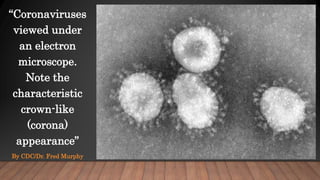
“Coronaviruses
viewed under
an electron
microscope.
Note the
characteristic
crown-like
(corona)
appearance”
By CDC/Dr. Fred Murphy
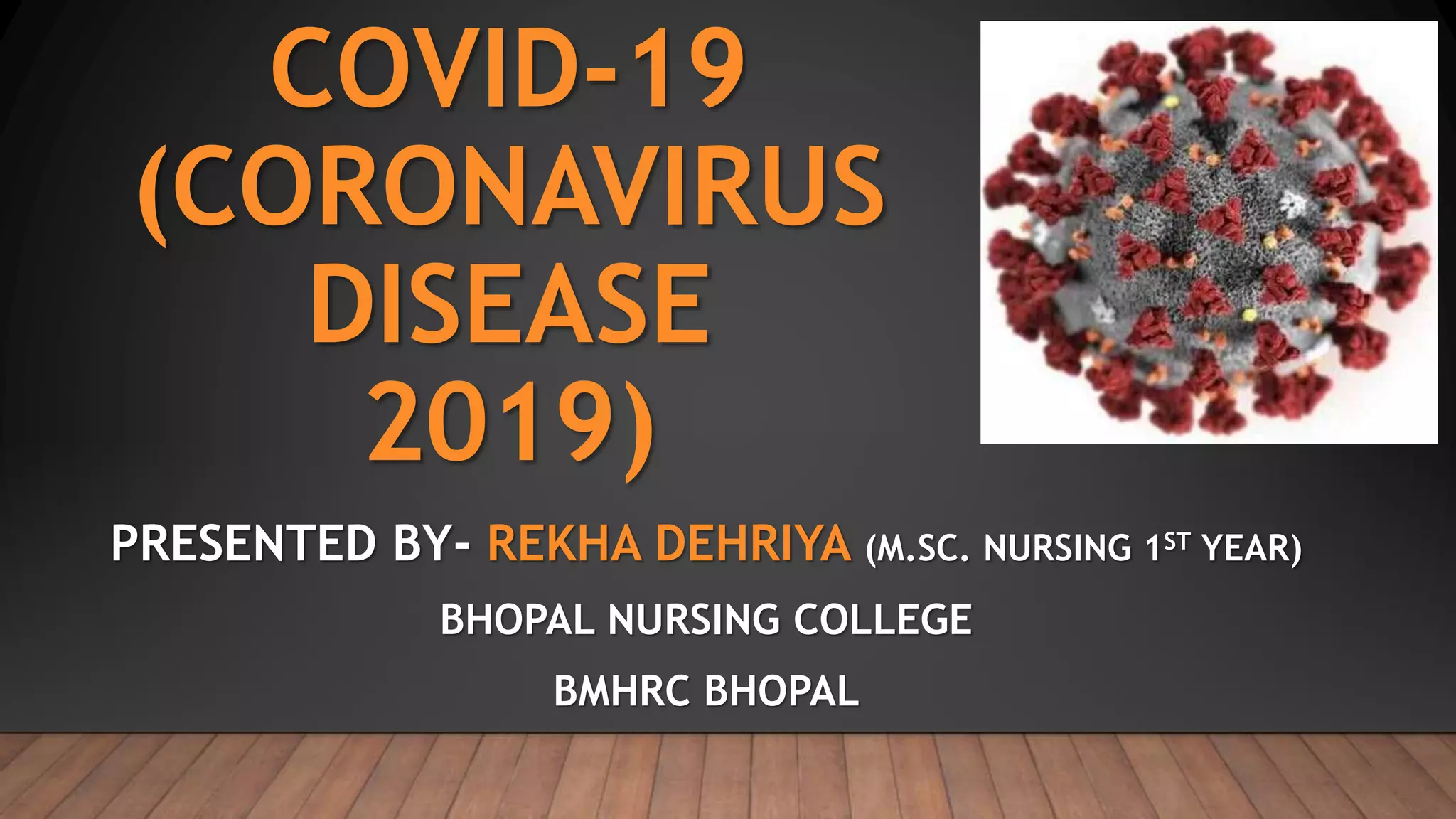
ETIOLOGY
Coronaviruses (CoV) are a family of enveloped, positive-sense,
single-stranded RNA (+ssRNA) viruses. species of CoV, only 3
are known to cause severe infections in humans:
Severe acute respiratory disease coronavirus (SARS-CoV):
emerged in 2003 in southern China from civet cats
Middle East respiratory syndrome coronavirus (MERS-CoV):
emerged in 2012 in Saudi Arabia from dromedary camels
SARS-CoV 2: emerged in December 2019 in China possibly
from bats or pangolins (still under investigation)
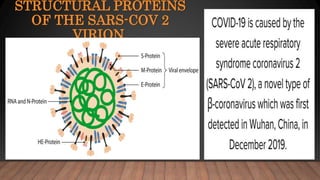
STRUCTURAL PROTEINS
OF THE SARS-COV 2
VIRION.
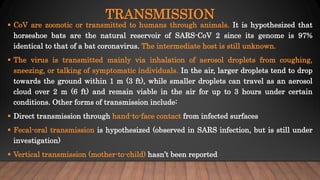
TRANSMISSION
 CoV are zoonotic or transmitted to humans through animals. It is hypothesized that
horseshoe bats are the natural reservoir of SARS-CoV 2 since its genome is 97%
identical to that of a bat coronavirus. The intermediate host is still unknown.
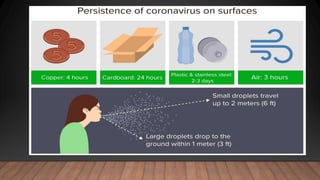
 The virus is transmitted mainly via inhalation of aerosol droplets from coughing,
sneezing, or talking of symptomatic individuals. In the air, larger droplets tend to drop
towards the ground within 1 m (3 ft), while smaller droplets can travel as an aerosol
cloud over 2 m (6 ft) and remain viable in the air for up to 3 hours under certain
conditions. Other forms of transmission include:
 Direct transmission through hand-to-face contact from infected surfaces
 Fecal-oral transmission is hypothesized (observed in SARS infection, but is still under
investigation)
 Vertical transmission (mother-to-child) hasn’t been reported
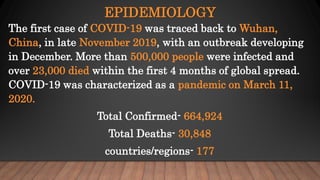
EPIDEMIOLOGY
The first case of COVID-19 was traced back to Wuhan,
China, in late November 2019, with an outbreak developing
in December. More than 500,000 people were infected and
over 23,000 died within the first 4 months of global spread.
COVID-19 was characterized as a pandemic on March 11,
2020.
Total Confirmed- 664,924
Total Deaths- 30,848
countries/regions- 177
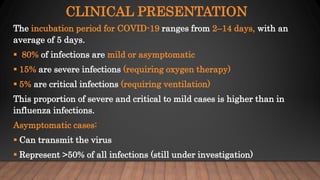
CLINICAL PRESENTATION
The incubation period for COVID-19 ranges from 2–14 days, with an
average of 5 days.
 80% of infections are mild or asymptomatic
 15% are severe infections (requiring oxygen therapy)
 5% are critical infections (requiring ventilation)
This proportion of severe and critical to mild cases is higher than in
influenza infections.
Asymptomatic cases:
 Can transmit the virus
 Represent >50% of all infections (still under investigation)
CONTD.
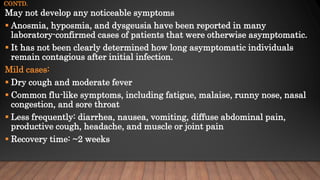
May not develop any noticeable symptoms
 Anosmia, hyposmia, and dysgeusia have been reported in many
laboratory-confirmed cases of patients that were otherwise asymptomatic.
 It has not been clearly determined how long asymptomatic individuals
remain contagious after initial infection.
Mild cases:
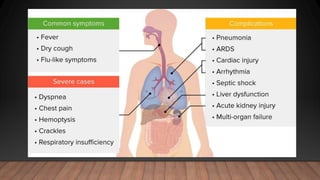
 Dry cough and moderate fever
 Common flu-like symptoms, including fatigue, malaise, runny nose, nasal
congestion, and sore throat
 Less frequently: diarrhea, nausea, vomiting, diffuse abdominal pain,
productive cough, headache, and muscle or joint pain
 Recovery time: ~2 weeks
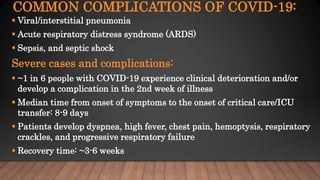
COMMON COMPLICATIONS OF COVID-19:
 Viral/interstitial pneumonia
 Acute respiratory distress syndrome (ARDS)
 Sepsis, and septic shock
Severe cases and complications:
 ~1 in 6 people with COVID-19 experience clinical deterioration and/or
develop a complication in the 2nd week of illness
 Median time from onset of symptoms to the onset of critical care/ICU
transfer: 8-9 days
 Patients develop dyspnea, high fever, chest pain, hemoptysis, respiratory
crackles, and progressive respiratory failure
 Recovery time: ~3-6 weeks
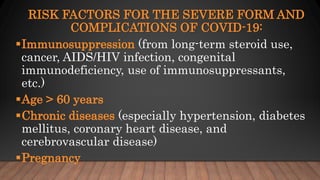
RISK FACTORS FOR THE SEVERE FORM AND
COMPLICATIONS OF COVID-19:
Immunosuppression (from long-term steroid use,
cancer, AIDS/HIV infection, congenital
immunodeficiency, use of immunosuppressants,
etc.)
Age > 60 years
Chronic diseases (especially hypertension, diabetes
mellitus, coronary heart disease, and
cerebrovascular disease)
Pregnancy
DIAGNOSTICS
Polymerase chain reaction (PCR) is currently the only test being used to confirm
cases of COVID-19 infection and should be performed as soon as possible once a
person under investigation (PUI) is identified. The specimens used for testing
include:
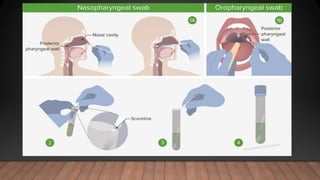
 Nasopharyngeal (NP) and/or oropharyngeal (OP) swab (for mild or
asymptomatic suspected cases)
o NP is the first choice. OP swabs are acceptable only if other swabs are not available.
o Can be negative initially. If suspicion of COVID-19 remains, retest every 2-3 days.
o In severe cases, NP and OP swabs may be negative, while specimens from the lower
respiratory tract are positive.
 Sputum (for patients with productive cough, inducing is not recommended)
 Bronchial and tracheal secretions or bronchoalveolar lavage (for patients
receiving invasive mechanical ventilation)
In hospitalized patients with severe infections, regular laboratory
testing and imaging are necessary in order to monitor disease
progression and early diagnosis of complications.
• CBC: severe cases present with advanced lymphocytopenia and
thrombocytopenia
• ABG: to assess levels of hypoxia and acid-base balance
oARDS presents initially as hypoxemic respiratory failure with low
PaO2 and respiratory alkalosis, later progressing into hypercapnic
respiratory failure.
• Inflammatory markers:
o↑ IL-6 and C-reactive protein in severe cases
o↑ procalcitonin in bacterial coinfection with pneumonia and/or
sepsis
o↑ lactate in sepsis and septic shock
• Hemostasis tests:
oProlonged PT and PTT times
o↑ D-dimer in cardiac injury and septic shock
• Assessment of organ function: abnormal findings may indicate multi-organ
failure
oCreatinine, urea, and BUN used to assess renal function
oAST, ALT, GGT, and bilirubin used to assess hepatic function
oTroponin and ECG used to assess cardiac function
• Chest X-ray and CT: severe infections may also present
oPleural thickening and effusion
oLymphadenopathy
oAir bronchograms and atelectasis
oSolid white consolidation
MANAGEMENT
 No specific treatment for COVID-19 is currently available. As a healthcare
professional, one must always implement practices for infection prevention
and control (IPC) whenever dealing with a PUI or laboratory-confirmed
COVID-19 case.
 Patients with mild symptoms and no risk factors do not require
hospitalization and are recommended to begin supportive at-home care. In
the case of antipyretics, the use of ibuprofen is now considered safe
according to the latest WHO advice (March 17, 2020).
In the outpatient setting, one must seek professional medical assistance if
any of the following emergency warning signs develop:
 Difficulty breathing or shortness of breath
 Persistent pain or pressure in the chest
CONTD.
 Confusion or inability to arouse
 Cyanosis (bluish-tint to lips or face)
Once hospitalized, supportive care and acute measures should be applied
as necessary for complications, such as:
 Oxygen therapy for patients who develop respiratory distress, hypoxemia,
or shock
 Empiric antimicrobials in the case of sepsis or secondary pneumonia
 Advanced oxygen therapy, ventilatory support, and conservative fluid
management in the case of acute respiratory distress syndrome
 Fluid bolus and vasopressors in the case of septic shock
CONTD.
INVESTIGATIONAL THERAPIES
Several clinical trials are currently being performed to further the
development and research of antiviral drugs against SARS-CoV 2.
However, it’s important to note that there is no available data as of March
28, 2020, to support the recommendation of any of the following
investigational therapeutics for patients with confirmed/suspected
COVID-19:
Remdesivir is reported to have in-vitro activity against SARS-CoV and
MERS-CoV by incorporating into nascent viral RNA chains and
producing pre-mature termination.
Chloroquine and hydroxychloroquine, widely-used antimalarial drugs,
are reported to block viral entry by inhibiting virus/cell fusion.
CONTD.
The combined use of hydroxychloroquine and azithromycin, a macrolide
antibiotic, was reported to reduce the detection of SARS-CoV-2 RNA in
upper respiratory tract specimens. Caution is advised when
administering these drugs in patients with chronic medical conditions as
both are associated QT prolongation and may lead to life-threatening
arrhythmia or sudden death.
Lopinavir-ritonavir, a combined protease inhibitor usually used for HIV
infection, was reported as having in vitro inhibitory activity against
SARS-CoV. However, no benefit was observed in hospitalized adult
patients with severe Covid-19 in trials conducted in China.
Tocilizumab is an anti-IL-6 receptor agent used for rheumatoid
arthritis. It is currently being investigated in patients with severe
COVID-19 presenting with high IL-6 levels.
Camostat mesilate (CM): a TMPRSS2 inhibitor, is reported to block
viral entry by inhibiting S protein priming.
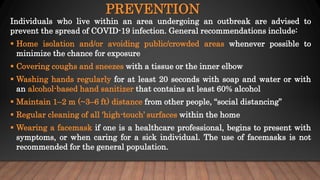
PREVENTION
Individuals who live within an area undergoing an outbreak are advised to
prevent the spread of COVID-19 infection. General recommendations include:
 Home isolation and/or avoiding public/crowded areas whenever possible to
minimize the chance for exposure
 Covering coughs and sneezes with a tissue or the inner elbow
 Washing hands regularly for at least 20 seconds with soap and water or with
an alcohol-based hand sanitizer that contains at least 60% alcohol
 Maintain 1–2 m (~3–6 ft) distance from other people, “social distancing”
 Regular cleaning of all ‘high-touch’ surfaces within the home
 Wearing a facemask if one is a healthcare professional, begins to present with
symptoms, or when caring for a sick individual. The use of facemasks is not
recommended for the general population.
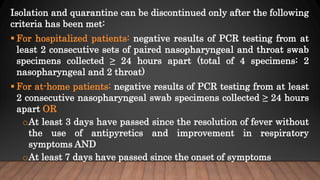
Isolation and quarantine can be discontinued only after the following
criteria has been met:
 For hospitalized patients: negative results of PCR testing from at
least 2 consecutive sets of paired nasopharyngeal and throat swab
specimens collected ≥ 24 hours apart (total of 4 specimens: 2
nasopharyngeal and 2 throat)
 For at-home patients: negative results of PCR testing from at least
2 consecutive nasopharyngeal swab specimens collected ≥ 24 hours
apart OR
oAt least 3 days have passed since the resolution of fever without
the use of antipyretics and improvement in respiratory
symptoms AND
oAt least 7 days have passed since the onset of symptoms
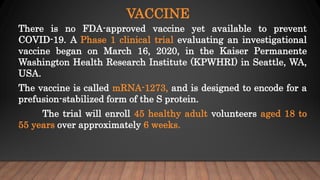
VACCINE
There is no FDA-approved vaccine yet available to prevent
COVID-19. A Phase 1 clinical trial evaluating an investigational
vaccine began on March 16, 2020, in the Kaiser Permanente
Washington Health Research Institute (KPWHRI) in Seattle, WA,
USA.
The vaccine is called mRNA-1273, and is designed to encode for a
prefusion-stabilized form of the S protein.
The trial will enroll 45 healthy adult volunteers aged 18 to
55 years over approximately 6 weeks.
THANK
YOU

Covid-19 according to CDC

  • 1.
    COVID-19 (CORONAVIRUS DISEASE 2019) PRESENTED BY- REKHADEHRIYA (M.SC. NURSING 1ST YEAR) BHOPAL NURSING COLLEGE BMHRC BHOPAL
  • 2.
    “Coronaviruses viewed under an electron microscope. Notethe characteristic crown-like (corona) appearance” By CDC/Dr. Fred Murphy
  • 3.
    ETIOLOGY Coronaviruses (CoV) area family of enveloped, positive-sense, single-stranded RNA (+ssRNA) viruses. species of CoV, only 3 are known to cause severe infections in humans: Severe acute respiratory disease coronavirus (SARS-CoV): emerged in 2003 in southern China from civet cats Middle East respiratory syndrome coronavirus (MERS-CoV): emerged in 2012 in Saudi Arabia from dromedary camels SARS-CoV 2: emerged in December 2019 in China possibly from bats or pangolins (still under investigation)
  • 4.
    STRUCTURAL PROTEINS OF THESARS-COV 2 VIRION.
  • 5.
    TRANSMISSION  CoV arezoonotic or transmitted to humans through animals. It is hypothesized that horseshoe bats are the natural reservoir of SARS-CoV 2 since its genome is 97% identical to that of a bat coronavirus. The intermediate host is still unknown.  The virus is transmitted mainly via inhalation of aerosol droplets from coughing, sneezing, or talking of symptomatic individuals. In the air, larger droplets tend to drop towards the ground within 1 m (3 ft), while smaller droplets can travel as an aerosol cloud over 2 m (6 ft) and remain viable in the air for up to 3 hours under certain conditions. Other forms of transmission include:  Direct transmission through hand-to-face contact from infected surfaces  Fecal-oral transmission is hypothesized (observed in SARS infection, but is still under investigation)  Vertical transmission (mother-to-child) hasn’t been reported
  • 7.
    EPIDEMIOLOGY The first caseof COVID-19 was traced back to Wuhan, China, in late November 2019, with an outbreak developing in December. More than 500,000 people were infected and over 23,000 died within the first 4 months of global spread. COVID-19 was characterized as a pandemic on March 11, 2020. Total Confirmed- 664,924 Total Deaths- 30,848 countries/regions- 177
  • 8.
    CLINICAL PRESENTATION The incubationperiod for COVID-19 ranges from 2–14 days, with an average of 5 days.  80% of infections are mild or asymptomatic  15% are severe infections (requiring oxygen therapy)  5% are critical infections (requiring ventilation) This proportion of severe and critical to mild cases is higher than in influenza infections. Asymptomatic cases:  Can transmit the virus  Represent >50% of all infections (still under investigation)
  • 9.
    CONTD. May not developany noticeable symptoms  Anosmia, hyposmia, and dysgeusia have been reported in many laboratory-confirmed cases of patients that were otherwise asymptomatic.  It has not been clearly determined how long asymptomatic individuals remain contagious after initial infection. Mild cases:  Dry cough and moderate fever  Common flu-like symptoms, including fatigue, malaise, runny nose, nasal congestion, and sore throat  Less frequently: diarrhea, nausea, vomiting, diffuse abdominal pain, productive cough, headache, and muscle or joint pain  Recovery time: ~2 weeks
  • 11.
    COMMON COMPLICATIONS OFCOVID-19:  Viral/interstitial pneumonia  Acute respiratory distress syndrome (ARDS)  Sepsis, and septic shock Severe cases and complications:  ~1 in 6 people with COVID-19 experience clinical deterioration and/or develop a complication in the 2nd week of illness  Median time from onset of symptoms to the onset of critical care/ICU transfer: 8-9 days  Patients develop dyspnea, high fever, chest pain, hemoptysis, respiratory crackles, and progressive respiratory failure  Recovery time: ~3-6 weeks
  • 12.
    RISK FACTORS FORTHE SEVERE FORM AND COMPLICATIONS OF COVID-19: Immunosuppression (from long-term steroid use, cancer, AIDS/HIV infection, congenital immunodeficiency, use of immunosuppressants, etc.) Age > 60 years Chronic diseases (especially hypertension, diabetes mellitus, coronary heart disease, and cerebrovascular disease) Pregnancy
  • 13.
    DIAGNOSTICS Polymerase chain reaction(PCR) is currently the only test being used to confirm cases of COVID-19 infection and should be performed as soon as possible once a person under investigation (PUI) is identified. The specimens used for testing include:  Nasopharyngeal (NP) and/or oropharyngeal (OP) swab (for mild or asymptomatic suspected cases) o NP is the first choice. OP swabs are acceptable only if other swabs are not available. o Can be negative initially. If suspicion of COVID-19 remains, retest every 2-3 days. o In severe cases, NP and OP swabs may be negative, while specimens from the lower respiratory tract are positive.  Sputum (for patients with productive cough, inducing is not recommended)  Bronchial and tracheal secretions or bronchoalveolar lavage (for patients receiving invasive mechanical ventilation)
  • 15.
    In hospitalized patientswith severe infections, regular laboratory testing and imaging are necessary in order to monitor disease progression and early diagnosis of complications. • CBC: severe cases present with advanced lymphocytopenia and thrombocytopenia • ABG: to assess levels of hypoxia and acid-base balance oARDS presents initially as hypoxemic respiratory failure with low PaO2 and respiratory alkalosis, later progressing into hypercapnic respiratory failure. • Inflammatory markers: o↑ IL-6 and C-reactive protein in severe cases o↑ procalcitonin in bacterial coinfection with pneumonia and/or sepsis o↑ lactate in sepsis and septic shock
  • 16.
    • Hemostasis tests: oProlongedPT and PTT times o↑ D-dimer in cardiac injury and septic shock • Assessment of organ function: abnormal findings may indicate multi-organ failure oCreatinine, urea, and BUN used to assess renal function oAST, ALT, GGT, and bilirubin used to assess hepatic function oTroponin and ECG used to assess cardiac function • Chest X-ray and CT: severe infections may also present oPleural thickening and effusion oLymphadenopathy oAir bronchograms and atelectasis oSolid white consolidation
  • 17.
    MANAGEMENT  No specifictreatment for COVID-19 is currently available. As a healthcare professional, one must always implement practices for infection prevention and control (IPC) whenever dealing with a PUI or laboratory-confirmed COVID-19 case.  Patients with mild symptoms and no risk factors do not require hospitalization and are recommended to begin supportive at-home care. In the case of antipyretics, the use of ibuprofen is now considered safe according to the latest WHO advice (March 17, 2020). In the outpatient setting, one must seek professional medical assistance if any of the following emergency warning signs develop:  Difficulty breathing or shortness of breath  Persistent pain or pressure in the chest
  • 18.
    CONTD.  Confusion orinability to arouse  Cyanosis (bluish-tint to lips or face) Once hospitalized, supportive care and acute measures should be applied as necessary for complications, such as:  Oxygen therapy for patients who develop respiratory distress, hypoxemia, or shock  Empiric antimicrobials in the case of sepsis or secondary pneumonia  Advanced oxygen therapy, ventilatory support, and conservative fluid management in the case of acute respiratory distress syndrome  Fluid bolus and vasopressors in the case of septic shock
  • 19.
    CONTD. INVESTIGATIONAL THERAPIES Several clinicaltrials are currently being performed to further the development and research of antiviral drugs against SARS-CoV 2. However, it’s important to note that there is no available data as of March 28, 2020, to support the recommendation of any of the following investigational therapeutics for patients with confirmed/suspected COVID-19: Remdesivir is reported to have in-vitro activity against SARS-CoV and MERS-CoV by incorporating into nascent viral RNA chains and producing pre-mature termination. Chloroquine and hydroxychloroquine, widely-used antimalarial drugs, are reported to block viral entry by inhibiting virus/cell fusion.
  • 20.
    CONTD. The combined useof hydroxychloroquine and azithromycin, a macrolide antibiotic, was reported to reduce the detection of SARS-CoV-2 RNA in upper respiratory tract specimens. Caution is advised when administering these drugs in patients with chronic medical conditions as both are associated QT prolongation and may lead to life-threatening arrhythmia or sudden death. Lopinavir-ritonavir, a combined protease inhibitor usually used for HIV infection, was reported as having in vitro inhibitory activity against SARS-CoV. However, no benefit was observed in hospitalized adult patients with severe Covid-19 in trials conducted in China. Tocilizumab is an anti-IL-6 receptor agent used for rheumatoid arthritis. It is currently being investigated in patients with severe COVID-19 presenting with high IL-6 levels. Camostat mesilate (CM): a TMPRSS2 inhibitor, is reported to block viral entry by inhibiting S protein priming.
  • 21.
    PREVENTION Individuals who livewithin an area undergoing an outbreak are advised to prevent the spread of COVID-19 infection. General recommendations include:  Home isolation and/or avoiding public/crowded areas whenever possible to minimize the chance for exposure  Covering coughs and sneezes with a tissue or the inner elbow  Washing hands regularly for at least 20 seconds with soap and water or with an alcohol-based hand sanitizer that contains at least 60% alcohol  Maintain 1–2 m (~3–6 ft) distance from other people, “social distancing”  Regular cleaning of all ‘high-touch’ surfaces within the home  Wearing a facemask if one is a healthcare professional, begins to present with symptoms, or when caring for a sick individual. The use of facemasks is not recommended for the general population.
  • 22.
    Isolation and quarantinecan be discontinued only after the following criteria has been met:  For hospitalized patients: negative results of PCR testing from at least 2 consecutive sets of paired nasopharyngeal and throat swab specimens collected ≥ 24 hours apart (total of 4 specimens: 2 nasopharyngeal and 2 throat)  For at-home patients: negative results of PCR testing from at least 2 consecutive nasopharyngeal swab specimens collected ≥ 24 hours apart OR oAt least 3 days have passed since the resolution of fever without the use of antipyretics and improvement in respiratory symptoms AND oAt least 7 days have passed since the onset of symptoms
  • 23.
    VACCINE There is noFDA-approved vaccine yet available to prevent COVID-19. A Phase 1 clinical trial evaluating an investigational vaccine began on March 16, 2020, in the Kaiser Permanente Washington Health Research Institute (KPWHRI) in Seattle, WA, USA. The vaccine is called mRNA-1273, and is designed to encode for a prefusion-stabilized form of the S protein. The trial will enroll 45 healthy adult volunteers aged 18 to 55 years over approximately 6 weeks.
  • 24.