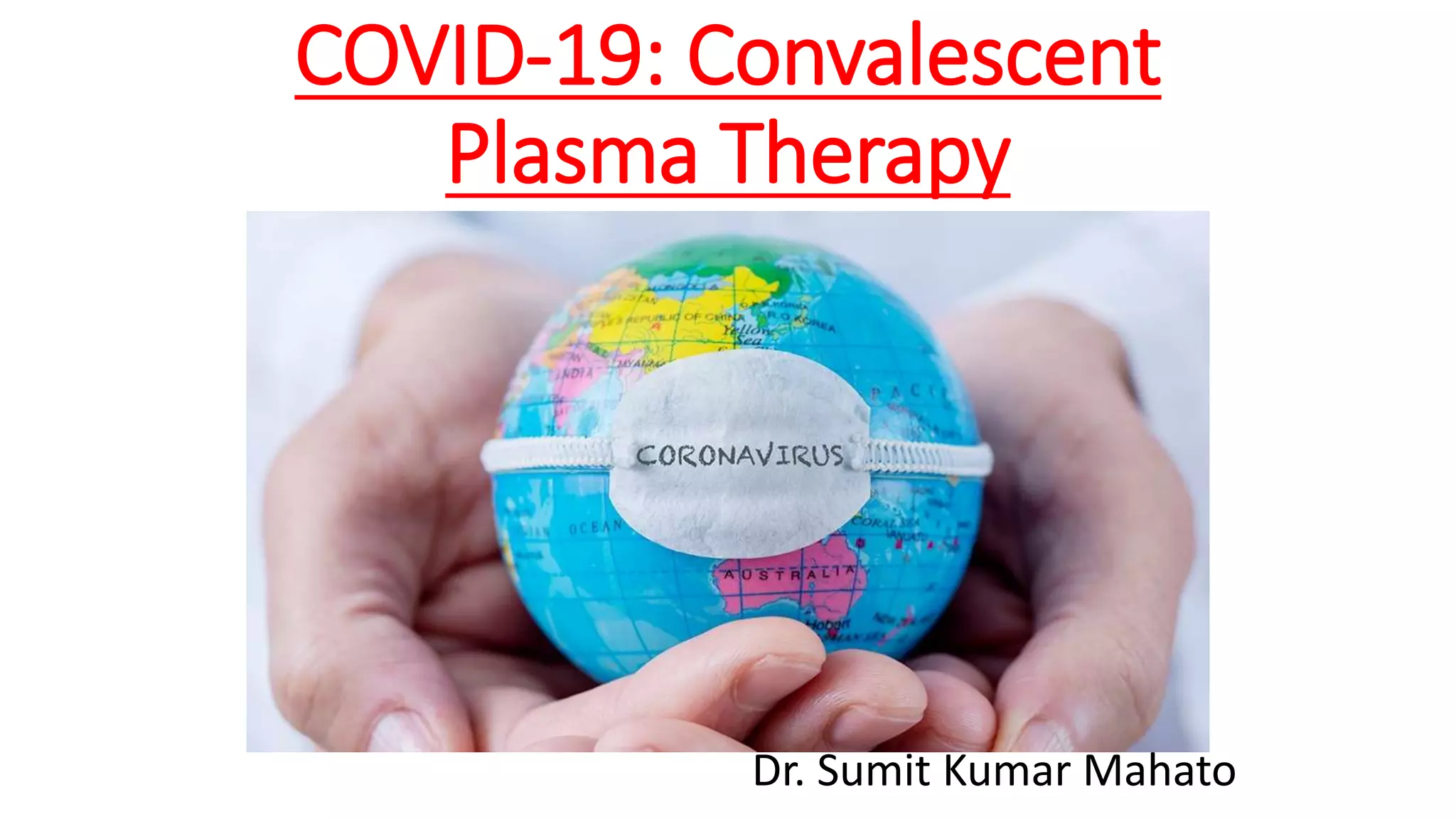
COVID-19: Convalescent
Plasma Therapy
Dr. Sumit Kumar Mahato
Introduction
The outbreak of severe acute respiratory syndrome coronavirus 2 (SARS-CoV-2), which
originated in Wuhan, China, has become a major concern all over the world. The
pneumonia induced by the SARS-CoV-2 is named coronavirus disease 2019 (COVID-19
The Word Health Organization on 11th March 2020, declared Coronavirus disease
2019 (COVID-19) as a pandemic with 4 million case on may 8th
To date, no specific treatment has been proven to be effective for SARS-CoV-2
infection.
Apart from supportive care, such as oxygen supply in mild cases and extracorporeal
membrane oxygenation for the critically ill patients, specific drugs for this disease are
still being researched
Structure of Covid-19
The present SARS-CoV-2 virus has genetic resemblance to the SARS Coronavirus of
2002 (SARS-CoV-1)
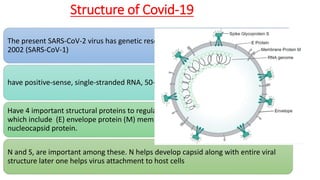
have positive-sense, single-stranded RNA, 50-200 nm diameter and enveloped.
Have 4 important structural proteins to regulate the function and viral structure,
which include (E) envelope protein (M) membrane protein (S) spike protein and (N)
nucleocapsid protein.
N and S, are important among these. N helps develop capsid along with entire viral
structure later one helps virus attachment to host cells
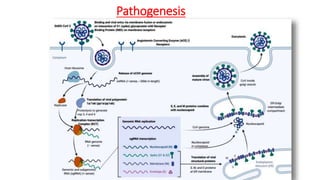
Pathogenesis
Transmission occurs primarily via respiratory droplets from coughs and sneezes
within a range of about 1.8 meters (6 ft).
Peak viral load in pharynx reaches approximately four days after infection.
According to world health organization (WHO)
•"Transmission from asymptomatic cases is likely not a major driver of
transmission".
• "Pre-symptomatic shedding may be typical among documented infections"
Antimicrobials with potential activity against SARS-CoV-2:
• Chloroquine
• Hydroxychloroquine
• Remdesivir
• Lopinavir; Ritonavir
• Favipiravir
• Azithromycin
COVID-19 Convalescent Plasma therapy
Historical Use of Convalescent Serum and Hyperimmune
Immunoglobulin
Passive antibody therapy was the first effective antimicrobial strategy available for the
treatment of infectious diseases until the introduction of sulfonamides in 1940s.
The ability of specific antibodies to protect against bacterial toxins was discovered by
Behring and Kitasato in the early 1890s,
They discovered that administering immune sera could protect a host against bacterial
toxins
This observation led to the rapid development of antibody therapy for the treatment of
various infectious diseases
All antibody preparations were derived from the serum of immunized animals or immune
human donors, this form of therapy was known as ‘serum therapy
Administration of large amounts of animal proteins was often associated with side
effects that ranging from immediate hypersensitivity reactions to serum sickness,
which is a form of antigen–antibody complex disease
By the late 1940s, serum was largely abandoned as an antibacterial agent, but
antibody-based therapies retained a niche as a treatment for venoms, toxins and
certain viral infections
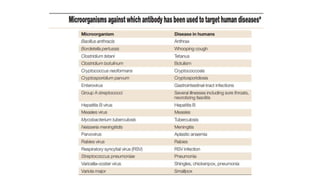
Currently serum therapy is used for the prophylaxis and treatment of rabies,
hepatitis A and B, varicella–zoster virus and pneumonia caused by respiratory
syncytial virus (RSV)
During the Spanish influenza pandemic, investigators reported that convalescent
blood products were highly effective in the treatment of influenza pneumonia
Animal sera were used to treat diseases if animals could be infected or immunized to
yield high-titer sera in large volumes.
For diseases that affected only humans and animal immunization was not practical, the
serum was usually of human origin.
To overcome the collection, cold-storage, transportation, and immunoassay limitations of
that era, the “lyophile” process was developed and involved drying pooled hyperimmune
serum in a vacuum
Lyophile sera were available for the prophylaxis and/or therapy of conditions such as
scarlet fever, measles, mumps, chickenpox, erysipelas, german measles, and acute
haemolytic streptococcal infections
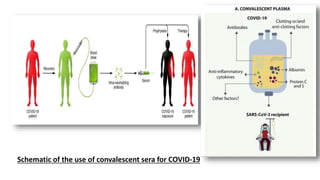
Schematic of the use of convalescent sera for COVID-19
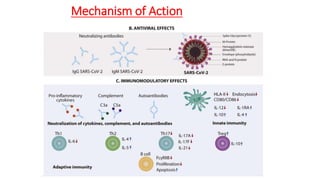
Mechanism of Action
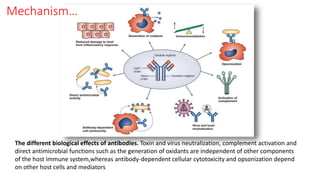
Mechanism…
The different biological effects of antibodies. Toxin and virus neutralization, complement activation and
direct antimicrobial functions such as the generation of oxidants are independent of other components
of the host immune system,whereas antibody-dependent cellular cytotoxicity and opsonization depend
on other host cells and mediators
Mechanism….
NeutralisingAbs(Nabs) are crucial in virus clearance and have been considered
essential in protecting against viral diseases
In SARS-CoV and MERS it was discovered that NAbs bind to spike1-receptor
binding protein (S1-RBD), S1-N-terminal domain and S2, thus inhibiting their
entry, limiting viral amplification
Other antibody-mediated pathways such as complement activation, antibody-
dependent cellular cytotoxicity and/or phagocytosis may also promote the
therapeutic effect of CP
Six conditions must be met to deploy convalescent serum administration
for COVID-19:
Availability of a population of donors who have recovered from the disease and can donate convalescent
serum
Blood banking facilities to process the serum donations
Availability of assays, including serological assays, to detect sars-cov-2 in serum and virological assays to
measure viral neutralization
Virology laboratory support to perform these assays
Prophylaxis and therapeutic protocols, which should ideally include randomized clinical trials to assess the
efficacy of any intervention and measure immune responses
Regulatory compliance, including institutional review board approval, which may vary depending on
location
Donor Eligibilty Criteria
COVID-19 convalescent plasma is collected from individuals who meet the
following qualifications:
1. Evidence of COVID-19 documented by a laboratory test either by:
I. A diagnostic test (e.g., nasopharyngeal swab) at the time of illness OR
II. A positive serological test for SARS-CoV-2 antibodies afterrecovery, if prior diagnostic
testing was not performed at the time COVID-19 was suspected.
2. Complete resolution of symptoms at least 14 days before the donation. A
negative result for COVID-19 by a diagnostic test is not necessary to qualify
the donor.
3. Male donors, or female donors who have not been pregnant, or female
donors who have been tested since their most recent pregnancy and results
interpreted as negative for HLA antibodies.
Donor eligibility criteria…….
4. SARS-CoV-2 neutralizing antibody titers, if available
I. When measurement of neutralizing antibody titers is available,
recommend neutralizing antibody titers of at least 1:160. A titer of 1:80
may be considered acceptable if an alternative matched unit is not
available.
II. When measurement of neutralizing antibody titers is not available,
consider storing a retention sample from the convalescent plasma
donation for determining antibody titers at a later date..
Patient Eligibility For Plasma Therapy
• Must have laboratory confirmed COVID-19
• Must have severe or immediate life-threatening COVID-19
Severe disease defined as:
 Dyspnea
 Respiratory rate 30 breaths/minute or greater
 Blood oxygen saturation 93% or less
 Partial pressure of arterial oxygen to fraction of inspired oxygen ratio less than 300,
and/or
Lung infiltration greater than 50% within 24 to 48 hours
• Life-threatening disease defined as:
Respiratory failure
Septic shock, and/or
Multiple organ dysfunction or failure
• Must provide informed consent
Experience with the use of convalescent sera against
coronavirus diseases
There have been two other epidemics in the 21st century, with coronaviruses associated with
high mortality, SARS-1 in 2003 and middle east respiratory syndrome (MERS) in 2012
SARS-1 epidemic was contained, but MERS became endemic in the middle east and triggered
a secondary major outbreak in south korea.
A study involving 80 patients with SARS in Hong Kong treated before day 14 had improved
prognosis, defined by discharge from hospital before day 22*
In addition, those who were PCR positive and seronegative for coronavirus at the time of
therapy had improved prognosis
*Cheng Y, et al. Use of convalescent plasma therapy in SARS patients in Hong Kong. Eur J Clin Microbiol Infect Dis. 2005;24(1):44–46
• The findings from current study by Kai Duan et al. involving 10 severe patients
confirmed by real-time viral RNA test showed following finding:
• After CP transfusion, the level of neutralizing antibody increased rapidly up to
1:640 in five cases, while that of the other four cases maintained at a high level
(1:640).
• The clinical symptoms were significantly improved along with increase of
oxyhemoglobin saturation within 3 d.
• Several parameters improved as compared to pretransfusion, including
increased lymphocyte counts (0.65 × 10⁹/L vs. 0.76 × 10⁹/L) and decreased C-
reactive protein (55.98 mg/L vs. 18.13 mg/L).
• Radiological examinations showed varying degrees of absorption of lung lesions
within 7 d.
• The viral load was undetectable after transfusion in seven patients who had
previous viremia. No severe adverse effects were observed
Risks and benefits
COVID-19 convalescent sera can be used for either prophylaxis of infection or treatment of disease
In prophylactic mode, benefit of convalescent serum administration include
Prevention of infection and subsequent disease amongst
• Those who are at high risk for disease i.e. Vulnerable individuals with underlying medical conditions,
• Health care providers,
• Those exposed to confirmed cases of COVID-19
For example, patients exposed to hepatitis B and rabies viruses are treated with hepatitis B immune globulin (HBIG) and
human rabies immune globulin (HRIG)
Therapeutically, convalescent serum is administered to those with clinical disease to reduce their symptoms and mortality
Risk and benefit…..
Risks of passive administration of convalescent sera fall into two categories, known and
theoretical.
Known risks are due to transfer of blood substances, include
• Infection with another infectious disease agent
• Reactions to serum constituents, including immunological reactions such as serum sickness.
In individuals with pulmonary disease, Convalescent sera used therapeutic carries some risk for
transfusion related acute lung injury (TRALI)
Theoretical risk includes:
1. Phenomenon of antibody dependent enhancement of infection (ADE)
• ADE can occur in several viral diseases and involves an enhancement of disease in the presence of certain antibodies
Risk and benefit….
For coronaviruses, several mechanisms for ADE have been described, and there is the
theoretical concern that antibodies to one type of coronavirus could enhance infection to
another viral strain
ADE may be unlikely with the use of convalescent sera in the COVID-19 epidemic, with high
titers of neutralizing antibody against the same virus, SARS2-CoV-2,
2. Antibody administration to those exposed to SARS-CoV-2 may prevent disease in a manner
that attenuates the immune response, leaving such individuals vulnerable to subsequent
reinfection
Limitation
At this time, we do not know what doses would be effective therapeutically.
Current immunological knowledge is insufficient to predict which antibodies are effective against specific
microorganisms
Errors in typing, mixed infections can complicated infections and result in failure of serum therapy
Lack of large-scale, randomised, well-designed clinical trials, tend to consider CP an "empirical" therapy. Since most of
the studies conducted so far are case series, they provide low-quality scientific evidence that may or may not be
representative of the target populations
References
• Manuel Rojasa, Yhojan Rodrígueza,b, Diana M. Monsalvea, Yeny Acosta-Ampudiaa,Bernardo
Camacho. Convalescent plasma in Covid-19: Possible mechanisms of action: Autoimmunity
Reviews, April 2020.
• https://www.fda.gov/vaccines-bloodbiologics/guidance-compliance-regulatory-information-
biologics/biologics-guidances
• Casadevall A, Pirofski LA. Antibody-mediated regulation of cellular immunity and the
inflammatory response. Trends Immunol.2003;24(9):474–478
• Casadevall A, Pirofski LA. The convalescent sera option for containing COVID-19. J Clin Invest.
2020;138003.
• John D. Roback, Jeannette Guarner. Convalescent Plasma to Treat COVID-19:Possibilities and
Challenges; JAMA April 28, 2020 Volume 323, Number 16.
Thank You

Covid 19 convalescent plasma therapy

  • 1.
  • 2.
    Introduction The outbreak ofsevere acute respiratory syndrome coronavirus 2 (SARS-CoV-2), which originated in Wuhan, China, has become a major concern all over the world. The pneumonia induced by the SARS-CoV-2 is named coronavirus disease 2019 (COVID-19 The Word Health Organization on 11th March 2020, declared Coronavirus disease 2019 (COVID-19) as a pandemic with 4 million case on may 8th To date, no specific treatment has been proven to be effective for SARS-CoV-2 infection. Apart from supportive care, such as oxygen supply in mild cases and extracorporeal membrane oxygenation for the critically ill patients, specific drugs for this disease are still being researched
  • 3.
    Structure of Covid-19 Thepresent SARS-CoV-2 virus has genetic resemblance to the SARS Coronavirus of 2002 (SARS-CoV-1) have positive-sense, single-stranded RNA, 50-200 nm diameter and enveloped. Have 4 important structural proteins to regulate the function and viral structure, which include (E) envelope protein (M) membrane protein (S) spike protein and (N) nucleocapsid protein. N and S, are important among these. N helps develop capsid along with entire viral structure later one helps virus attachment to host cells
  • 4.
  • 5.
    Transmission occurs primarilyvia respiratory droplets from coughs and sneezes within a range of about 1.8 meters (6 ft). Peak viral load in pharynx reaches approximately four days after infection. According to world health organization (WHO) •"Transmission from asymptomatic cases is likely not a major driver of transmission". • "Pre-symptomatic shedding may be typical among documented infections"
  • 6.
    Antimicrobials with potentialactivity against SARS-CoV-2: • Chloroquine • Hydroxychloroquine • Remdesivir • Lopinavir; Ritonavir • Favipiravir • Azithromycin
  • 7.
  • 8.
    Historical Use ofConvalescent Serum and Hyperimmune Immunoglobulin Passive antibody therapy was the first effective antimicrobial strategy available for the treatment of infectious diseases until the introduction of sulfonamides in 1940s. The ability of specific antibodies to protect against bacterial toxins was discovered by Behring and Kitasato in the early 1890s, They discovered that administering immune sera could protect a host against bacterial toxins This observation led to the rapid development of antibody therapy for the treatment of various infectious diseases All antibody preparations were derived from the serum of immunized animals or immune human donors, this form of therapy was known as ‘serum therapy
  • 9.
    Administration of largeamounts of animal proteins was often associated with side effects that ranging from immediate hypersensitivity reactions to serum sickness, which is a form of antigen–antibody complex disease By the late 1940s, serum was largely abandoned as an antibacterial agent, but antibody-based therapies retained a niche as a treatment for venoms, toxins and certain viral infections Currently serum therapy is used for the prophylaxis and treatment of rabies, hepatitis A and B, varicella–zoster virus and pneumonia caused by respiratory syncytial virus (RSV) During the Spanish influenza pandemic, investigators reported that convalescent blood products were highly effective in the treatment of influenza pneumonia
  • 10.
    Animal sera wereused to treat diseases if animals could be infected or immunized to yield high-titer sera in large volumes. For diseases that affected only humans and animal immunization was not practical, the serum was usually of human origin. To overcome the collection, cold-storage, transportation, and immunoassay limitations of that era, the “lyophile” process was developed and involved drying pooled hyperimmune serum in a vacuum Lyophile sera were available for the prophylaxis and/or therapy of conditions such as scarlet fever, measles, mumps, chickenpox, erysipelas, german measles, and acute haemolytic streptococcal infections
  • 13.
    Schematic of theuse of convalescent sera for COVID-19
  • 14.
  • 15.
    Mechanism… The different biologicaleffects of antibodies. Toxin and virus neutralization, complement activation and direct antimicrobial functions such as the generation of oxidants are independent of other components of the host immune system,whereas antibody-dependent cellular cytotoxicity and opsonization depend on other host cells and mediators
  • 16.
    Mechanism…. NeutralisingAbs(Nabs) are crucialin virus clearance and have been considered essential in protecting against viral diseases In SARS-CoV and MERS it was discovered that NAbs bind to spike1-receptor binding protein (S1-RBD), S1-N-terminal domain and S2, thus inhibiting their entry, limiting viral amplification Other antibody-mediated pathways such as complement activation, antibody- dependent cellular cytotoxicity and/or phagocytosis may also promote the therapeutic effect of CP
  • 17.
    Six conditions mustbe met to deploy convalescent serum administration for COVID-19: Availability of a population of donors who have recovered from the disease and can donate convalescent serum Blood banking facilities to process the serum donations Availability of assays, including serological assays, to detect sars-cov-2 in serum and virological assays to measure viral neutralization Virology laboratory support to perform these assays Prophylaxis and therapeutic protocols, which should ideally include randomized clinical trials to assess the efficacy of any intervention and measure immune responses Regulatory compliance, including institutional review board approval, which may vary depending on location
  • 18.
    Donor Eligibilty Criteria COVID-19convalescent plasma is collected from individuals who meet the following qualifications: 1. Evidence of COVID-19 documented by a laboratory test either by: I. A diagnostic test (e.g., nasopharyngeal swab) at the time of illness OR II. A positive serological test for SARS-CoV-2 antibodies afterrecovery, if prior diagnostic testing was not performed at the time COVID-19 was suspected. 2. Complete resolution of symptoms at least 14 days before the donation. A negative result for COVID-19 by a diagnostic test is not necessary to qualify the donor. 3. Male donors, or female donors who have not been pregnant, or female donors who have been tested since their most recent pregnancy and results interpreted as negative for HLA antibodies.
  • 19.
    Donor eligibility criteria……. 4.SARS-CoV-2 neutralizing antibody titers, if available I. When measurement of neutralizing antibody titers is available, recommend neutralizing antibody titers of at least 1:160. A titer of 1:80 may be considered acceptable if an alternative matched unit is not available. II. When measurement of neutralizing antibody titers is not available, consider storing a retention sample from the convalescent plasma donation for determining antibody titers at a later date..
  • 20.
    Patient Eligibility ForPlasma Therapy • Must have laboratory confirmed COVID-19 • Must have severe or immediate life-threatening COVID-19 Severe disease defined as:  Dyspnea  Respiratory rate 30 breaths/minute or greater  Blood oxygen saturation 93% or less  Partial pressure of arterial oxygen to fraction of inspired oxygen ratio less than 300, and/or Lung infiltration greater than 50% within 24 to 48 hours • Life-threatening disease defined as: Respiratory failure Septic shock, and/or Multiple organ dysfunction or failure • Must provide informed consent
  • 21.
    Experience with theuse of convalescent sera against coronavirus diseases There have been two other epidemics in the 21st century, with coronaviruses associated with high mortality, SARS-1 in 2003 and middle east respiratory syndrome (MERS) in 2012 SARS-1 epidemic was contained, but MERS became endemic in the middle east and triggered a secondary major outbreak in south korea. A study involving 80 patients with SARS in Hong Kong treated before day 14 had improved prognosis, defined by discharge from hospital before day 22* In addition, those who were PCR positive and seronegative for coronavirus at the time of therapy had improved prognosis *Cheng Y, et al. Use of convalescent plasma therapy in SARS patients in Hong Kong. Eur J Clin Microbiol Infect Dis. 2005;24(1):44–46
  • 23.
    • The findingsfrom current study by Kai Duan et al. involving 10 severe patients confirmed by real-time viral RNA test showed following finding: • After CP transfusion, the level of neutralizing antibody increased rapidly up to 1:640 in five cases, while that of the other four cases maintained at a high level (1:640). • The clinical symptoms were significantly improved along with increase of oxyhemoglobin saturation within 3 d. • Several parameters improved as compared to pretransfusion, including increased lymphocyte counts (0.65 × 10⁹/L vs. 0.76 × 10⁹/L) and decreased C- reactive protein (55.98 mg/L vs. 18.13 mg/L). • Radiological examinations showed varying degrees of absorption of lung lesions within 7 d. • The viral load was undetectable after transfusion in seven patients who had previous viremia. No severe adverse effects were observed
  • 24.
    Risks and benefits COVID-19convalescent sera can be used for either prophylaxis of infection or treatment of disease In prophylactic mode, benefit of convalescent serum administration include Prevention of infection and subsequent disease amongst • Those who are at high risk for disease i.e. Vulnerable individuals with underlying medical conditions, • Health care providers, • Those exposed to confirmed cases of COVID-19 For example, patients exposed to hepatitis B and rabies viruses are treated with hepatitis B immune globulin (HBIG) and human rabies immune globulin (HRIG) Therapeutically, convalescent serum is administered to those with clinical disease to reduce their symptoms and mortality
  • 25.
    Risk and benefit….. Risksof passive administration of convalescent sera fall into two categories, known and theoretical. Known risks are due to transfer of blood substances, include • Infection with another infectious disease agent • Reactions to serum constituents, including immunological reactions such as serum sickness. In individuals with pulmonary disease, Convalescent sera used therapeutic carries some risk for transfusion related acute lung injury (TRALI) Theoretical risk includes: 1. Phenomenon of antibody dependent enhancement of infection (ADE) • ADE can occur in several viral diseases and involves an enhancement of disease in the presence of certain antibodies
  • 26.
    Risk and benefit…. Forcoronaviruses, several mechanisms for ADE have been described, and there is the theoretical concern that antibodies to one type of coronavirus could enhance infection to another viral strain ADE may be unlikely with the use of convalescent sera in the COVID-19 epidemic, with high titers of neutralizing antibody against the same virus, SARS2-CoV-2, 2. Antibody administration to those exposed to SARS-CoV-2 may prevent disease in a manner that attenuates the immune response, leaving such individuals vulnerable to subsequent reinfection
  • 27.
    Limitation At this time,we do not know what doses would be effective therapeutically. Current immunological knowledge is insufficient to predict which antibodies are effective against specific microorganisms Errors in typing, mixed infections can complicated infections and result in failure of serum therapy Lack of large-scale, randomised, well-designed clinical trials, tend to consider CP an "empirical" therapy. Since most of the studies conducted so far are case series, they provide low-quality scientific evidence that may or may not be representative of the target populations
  • 28.
    References • Manuel Rojasa,Yhojan Rodrígueza,b, Diana M. Monsalvea, Yeny Acosta-Ampudiaa,Bernardo Camacho. Convalescent plasma in Covid-19: Possible mechanisms of action: Autoimmunity Reviews, April 2020. • https://www.fda.gov/vaccines-bloodbiologics/guidance-compliance-regulatory-information- biologics/biologics-guidances • Casadevall A, Pirofski LA. Antibody-mediated regulation of cellular immunity and the inflammatory response. Trends Immunol.2003;24(9):474–478 • Casadevall A, Pirofski LA. The convalescent sera option for containing COVID-19. J Clin Invest. 2020;138003. • John D. Roback, Jeannette Guarner. Convalescent Plasma to Treat COVID-19:Possibilities and Challenges; JAMA April 28, 2020 Volume 323, Number 16.
  • 29.