Dr . Vaidyanathan R
Consultant Intensivist
 DISCLOSURES:NONE
 CONFLICT OF INTEREST:NONE
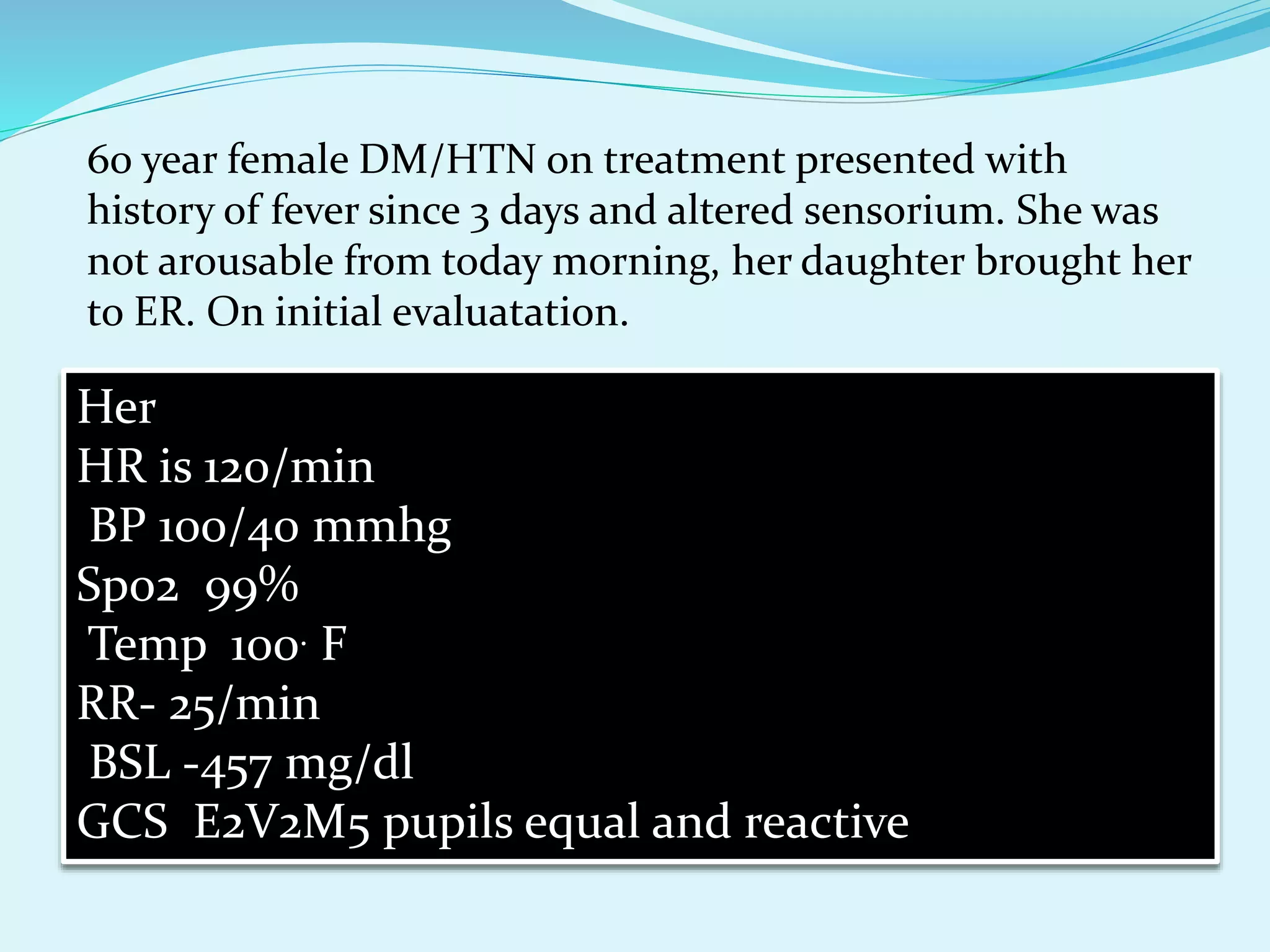
60 year female DM/HTN on treatment presented with
history of fever since 3 days and altered sensorium. She was
not arousable from today morning, her daughter brought her
to ER. On initial evaluatation.
Her
HR is 120/min
BP 100/40 mmhg
Spo2 99%
Temp 100. F
RR- 25/min
BSL -457 mg/dl
GCS E2V2M5 pupils equal and reactive
 How will you evaluate the patient before lab report arrives?
 What lab reports you would like to ask for this patient?
 What should be your initial response?
Her daughter reveals that she had been to pilgrimage 1 week
back and she has been unwell after returning.
The new recommendations define sepsis as life-threatening
organ dysfunction due to a dysregulated host response to
infection.
Septic shock is defined as a subset of sepsis in which particularly
profound circulatory, cellular, and metabolic abnormalities substantially
increase mortality.
The new diagnostic tool is named quick SOFA, or qSOFA.
It consists of three simple tests that clinicians can conduct at
the bedside to identify patients at risk for sepsis.
 An alteration in mental status
 A decrease in systolic blood pressure of less than 100 mm Hg
 A respiration rate greater than 22 breaths/min
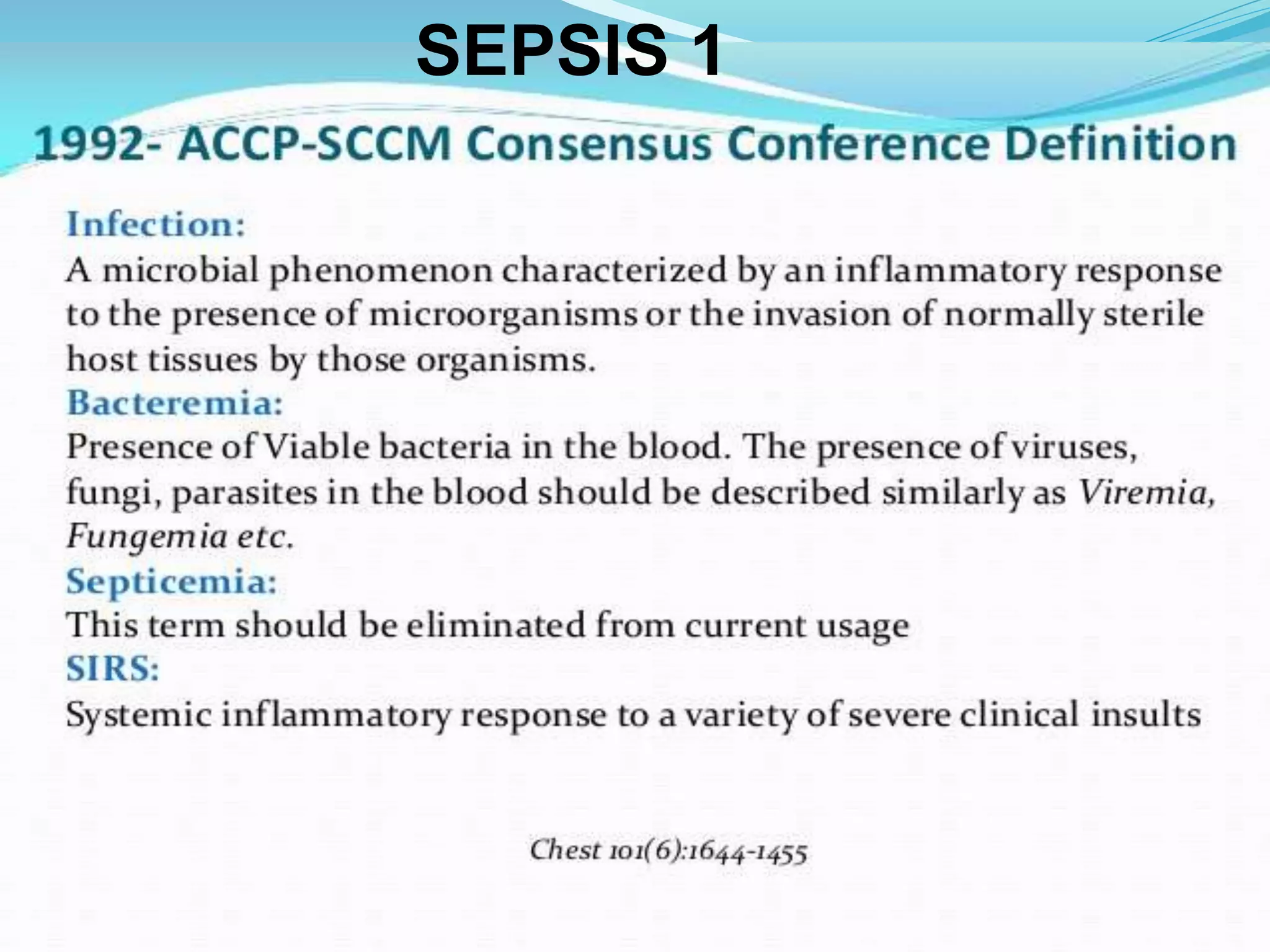
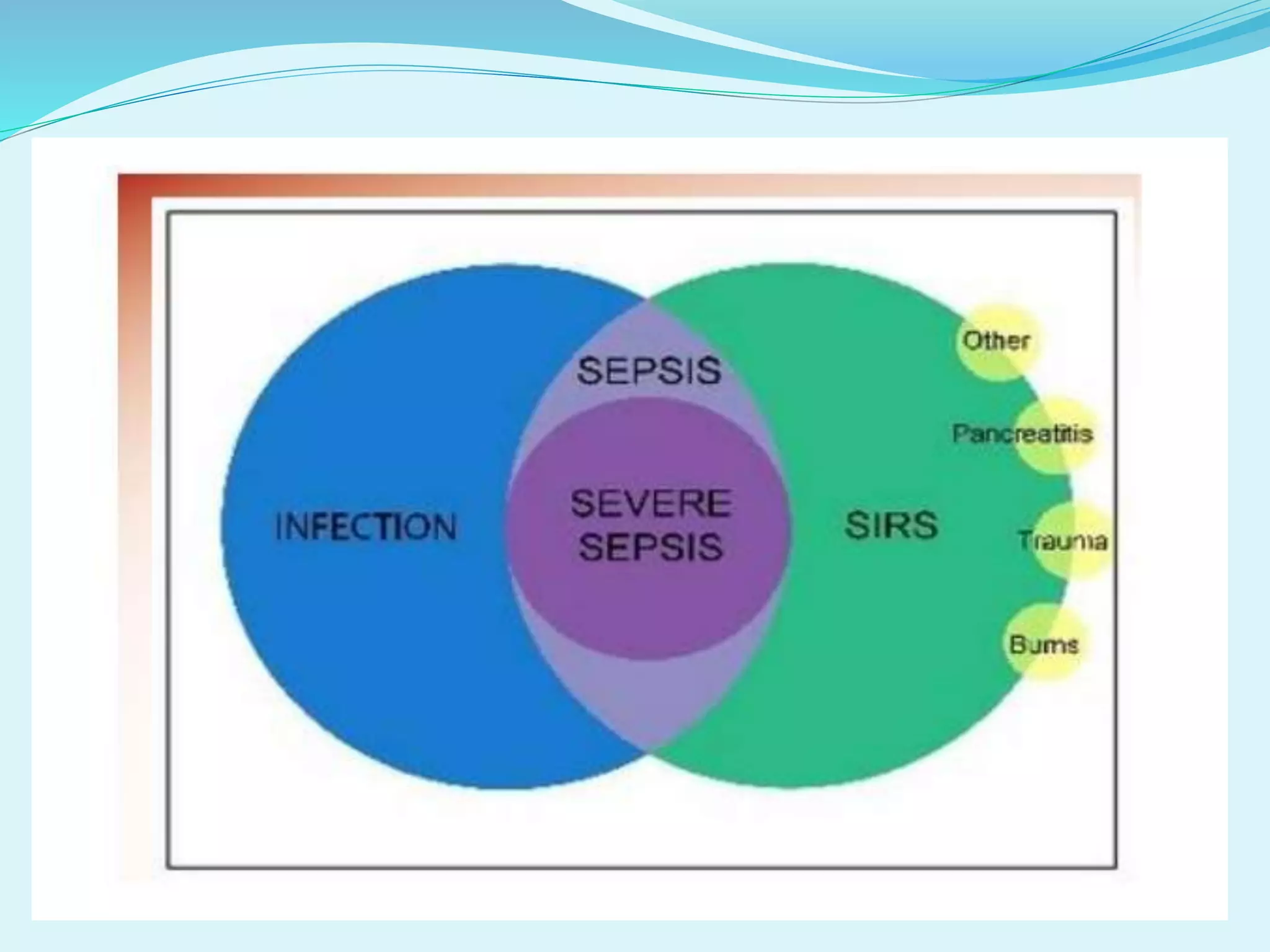
SEPSIS 1
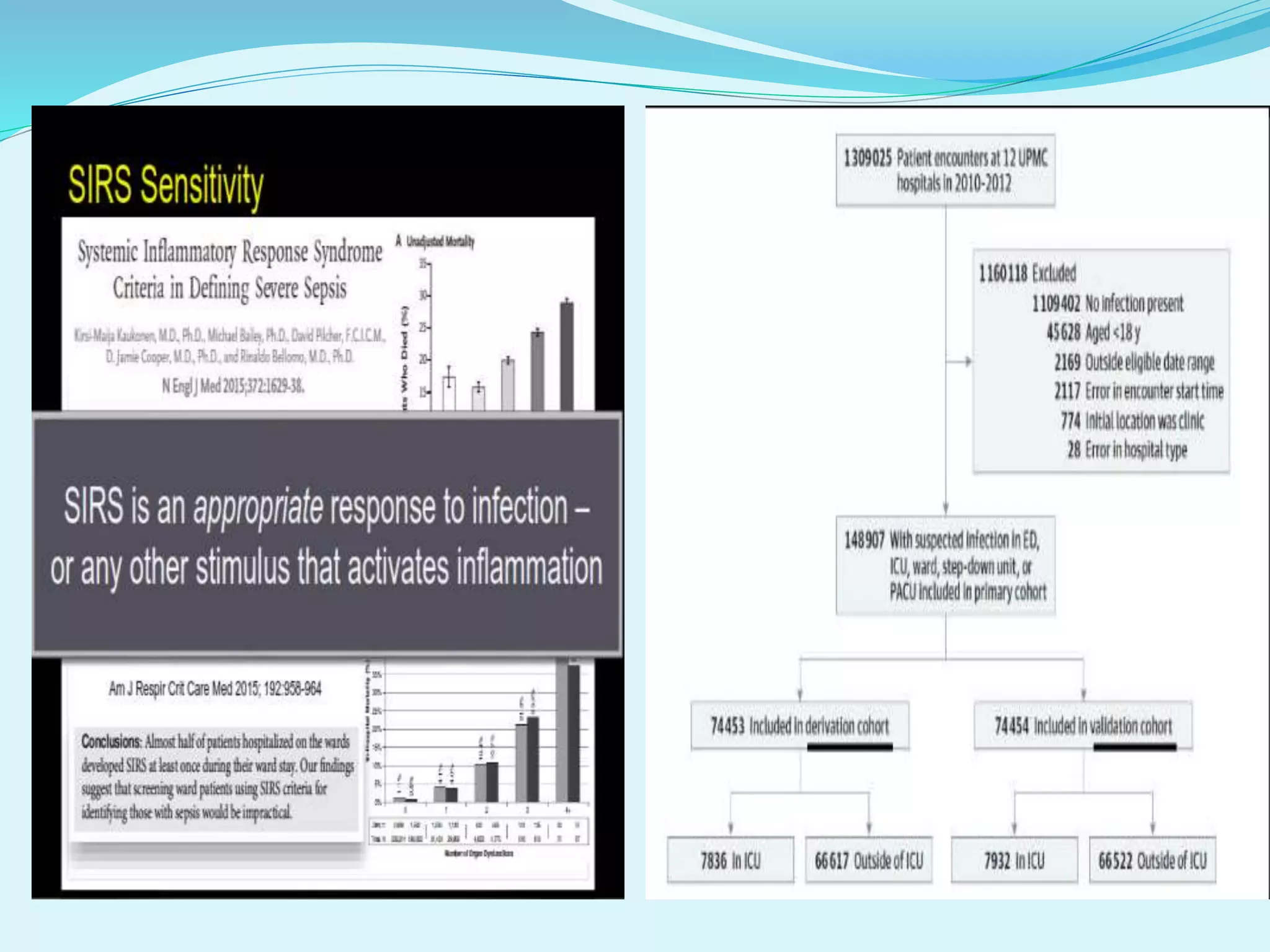
PITFALLS OF OLD DEFN….
SEPSIS 2……….
2001 SCCM/ESICM/ACCP/ATS/SIS International
Sepsis Definitions Conference
Intensive Care Med (2003) 29:530–538
Conclusions:
The 2001 conference participants convened with the belief
that the body of bench work since the 1991 sepsis
definitions conference may lead to a major change in
the definition of sepsis based on biomarkers.
After a process of evidenced-based review and
considerable debate, the participants determined that
the use of biomarkers for diagnosing sepsis is
premature.
SEPSIS 3
So what is out IN sepsis 3?
 SIRS
 SIRS criteria is out - so nobody should say that count
is normal so how to suspect or diagnose sepsis.
 Absent from the new definitions is the term “severe sepsis”
 With q-SOFA - one should be suspicious about sepsis in
out of the ICU scenario .
• Singer M et al. The Third International Consensus Definitions for Sepsis and
Septic Shock (Sepsis-3). JAMA, February 23, 2016, Vol 315, No. 8
• Shankar-Hari M et al. Developing a new definition and assessing new clinical
criteria for septic shock: For the Third International Consensus Definitions for
Sepsis and Septic 3 Shock (Sepsis-3). JAMA, February 23, 2016, Vol 315, No. 8
• Seymour, CW et al. Assessment of clinical criteria for sepsis. JAMA, February
23, 2016, Vol 315, No. 8
ORGAN DYSFUNCTION
 Organ dysfunction can be identified as an acute change in total
SOFA score ≥2 points consequent to the infection.
 The baseline SOFA score can be assumed to be zero in patients
not known to have preexisting organ dysfunction.
 A SOFA score ≥2 reflects an overall mortality risk of
approximately 10% in a general hospital population with
suspected infection.
 Even patients presenting with modest dysfunction can
deteriorate further, emphasizing the seriousness of this
condition and the need for prompt and appropriate intervention,
if not already being instituted.
What is qSOFA?
Sepsis –Clinical criteria
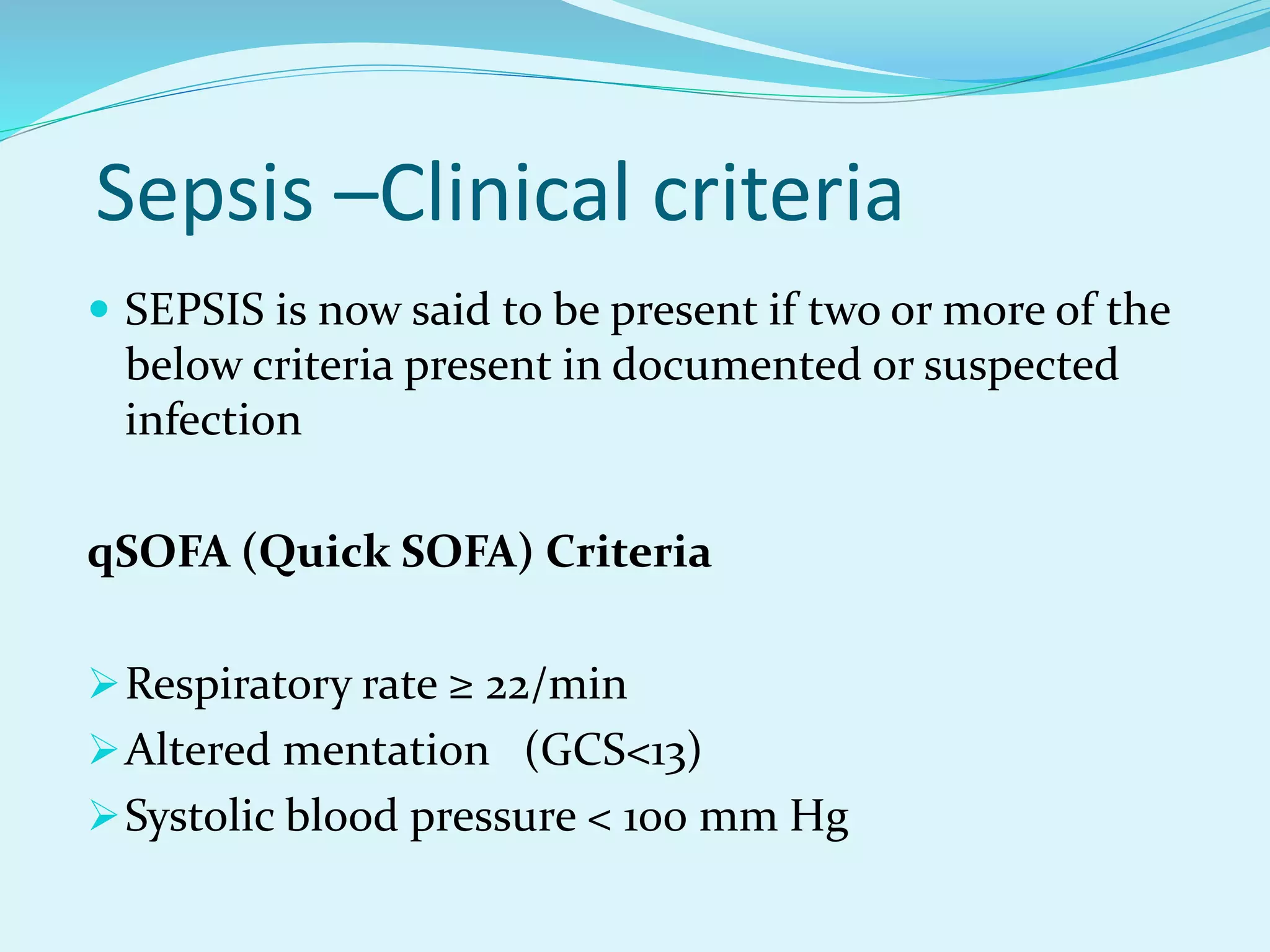
 SEPSIS is now said to be present if two or more of the
below criteria present in documented or suspected
infection
qSOFA (Quick SOFA) Criteria
Respiratory rate ≥ 22/min
Altered mentation (GCS<13)
Systolic blood pressure < 100 mm Hg
SEPTIC SHOCK -DEFN
SEPTIC SHOCK.
Three variables identified
 Hypotension
 Elevated serum lactate
 Sustained need for vasopressor therapy
NEW SEPSIS ALGORITHM
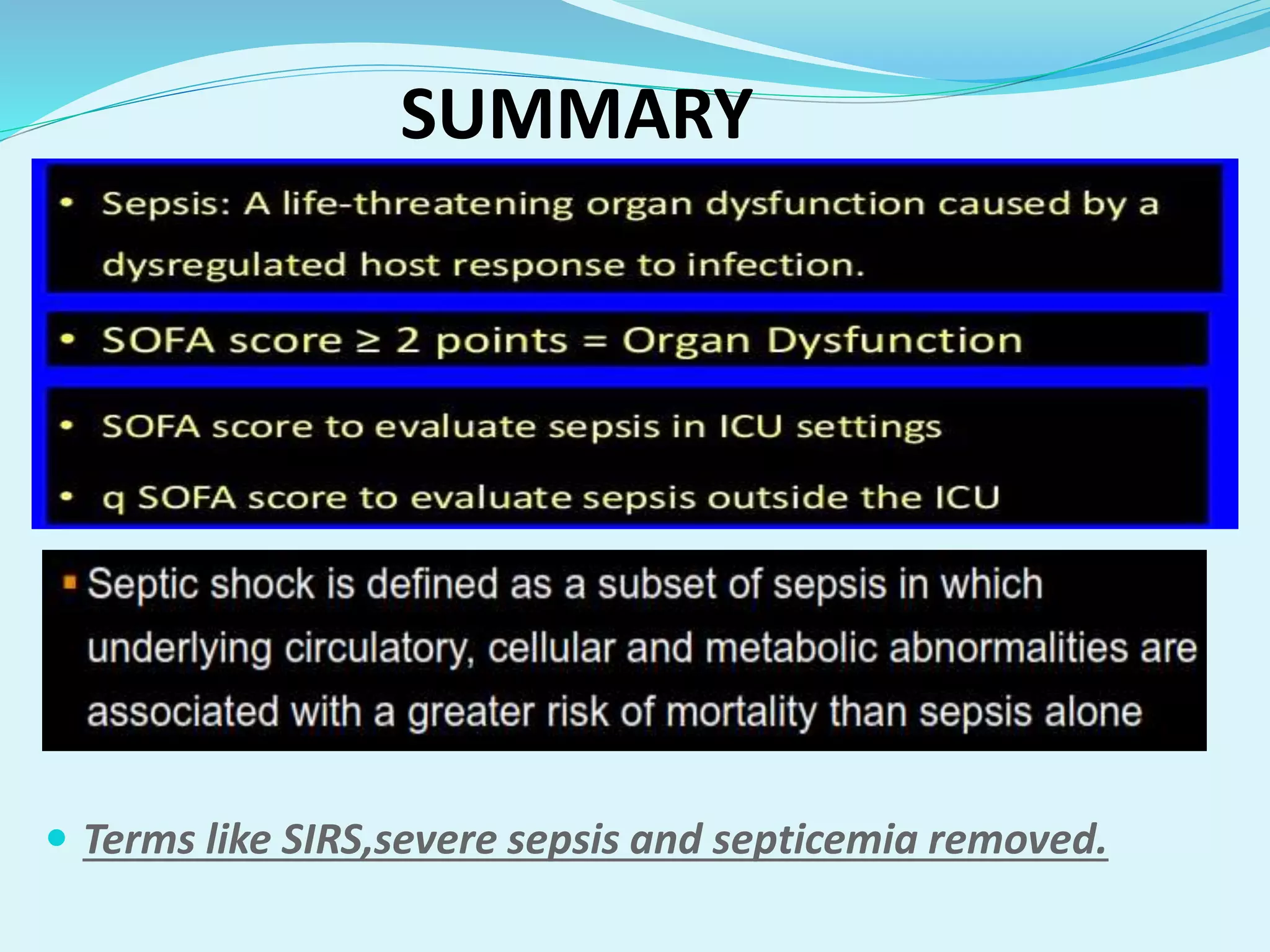
SUMMARY
 Terms like SIRS,severe sepsis and septicemia removed.
She does not take her medication properly.
Lab report
S/o Hb- 12gm/dl Urea -30mg/dl
TC -25K – N-90% Creatinine 1.9mg/dl
PLT- 4 Lakhs LFT –Normal
ABG - pH 7.12
Pco2 20, Po2 87, HCo3-10 Lactate 7 mm
Na 149 ,K+ 3.0, Cl-100
Urine R Alb +, Puscells 10-20 ,Bacteria +
Ketones - NEGATIVE
Chest X-ray NAD;CT Brain NAD; USG Abd- NO HN,Echogenic
N sized kidneys
BACK TO CASE…..
What are your differentials at this time?
What is your first response?
What is your first hour management in ICU?
What is your antibiotic of preference on initial
evaluatation?
Does this patient require invasive lines?
Should we subject her for scans?
In 2002, the European Society of Critical Care
Medicine and the Society of Critical Care
Medicine conducted an international survey to investigate
physicians' views on sepsis, in particular, their satisfaction with
current definitions, routes to diagnosis, and treatment options.
Based on the survey The Surviving Sepsis Campaign (SSC), an
initiative of the European Society of Intensive Care Medicine
(ESICM), the International Sepsis Forum (ISF), and the Society of
Critical Care Medicine, was developed to improve the
management, diagnosis, and treatment of sepsis. The agreement
among the three societies and funding for the campaign came to
a conclusion on December 31, 2008
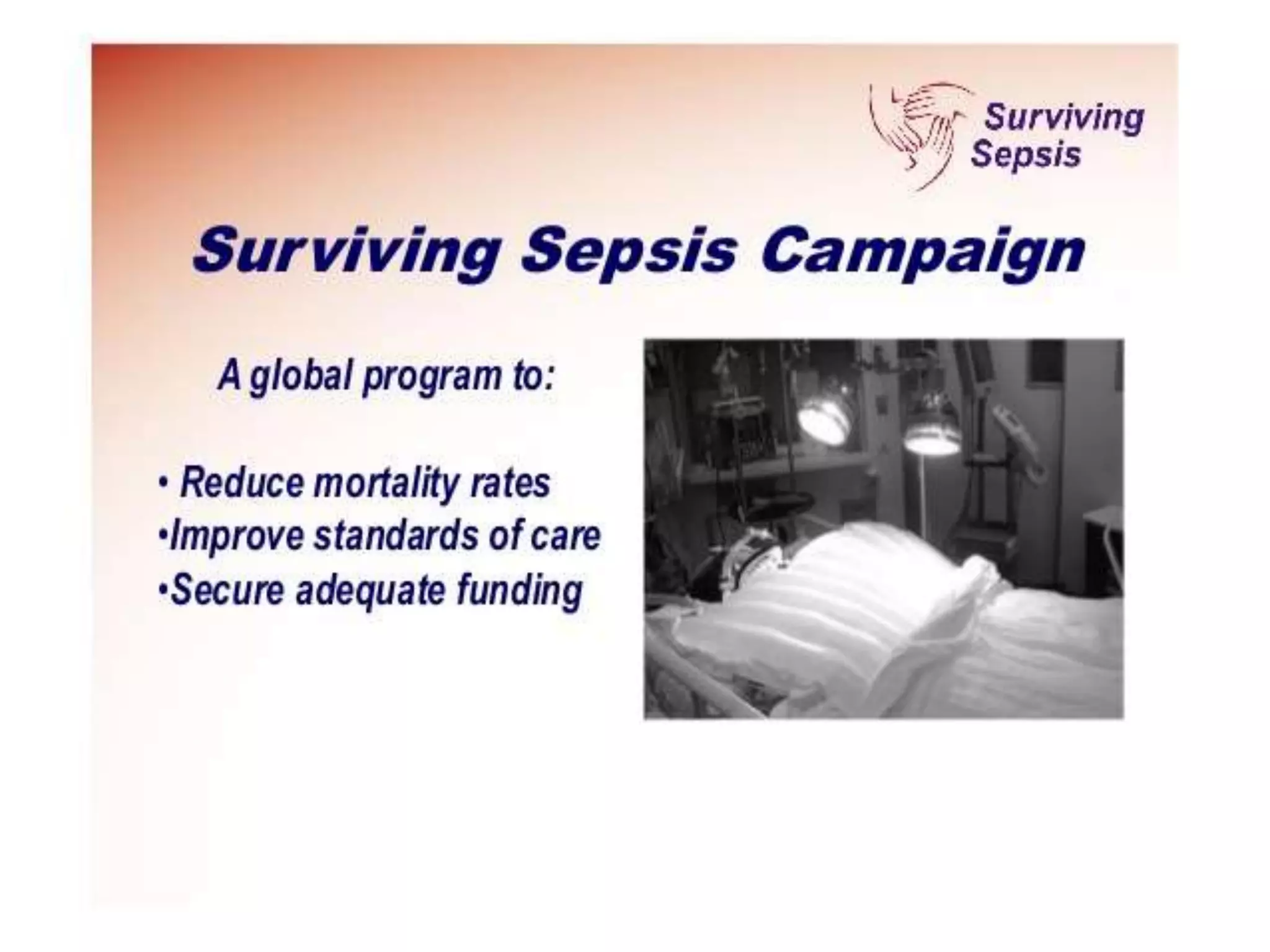
CURRENT AIMS OF SSC
The SSC aimed to reduce mortality BY 25% from sepsis
by
 Building awareness of sepsis
 Improving diagnosis
 Increasing the use of appropriate treatment
 Educating healthcare professionals
 Improving post-ICU care
 Developing guidelines of care
 Facilitating data collection for the purposes of audit
and feedback
SSC Guidelines.
 Highly evidenced based updated and published
every 4 years .
 Presents care in bundles.
 Addresses each issue or arm in the care and
introduces new ones as evidence arises.
 Aims for an universal global standard.
History of GUIDELINES…..
 The initial SSC guidelines were first published
in 2004 and revised in 2008
 Next set of guidelines published in 2012.
 Next set of guidelines in 2016,updated in 2018.
BUNDLES
A "bundle" is a group of therapies for a given disease
that, when implemented together, may result in better
outcomes than if implemented individually. In a
bundle, the individual elements included are built
around best evidence-based practices.
2015 GUIDELINES
TO BE COMPLETED WITHIN 3 HOURS OF TIME OF PRESENTATION*:
 1. Measure lactate level
 2. Obtain blood cultures prior to administration of antibiotics
 3. Administer broad spectrum antibiotics
 4. Administer 30ml/kg crystalloid for hypotension or lactate ≥4mmol/L
“Time of presentation” is defined as the time of triage in the emergency department
or, if presenting from another care venue, from the earliest TIME consistent with
elements of septic shock ascertained through chart review.
TO BE COMPLETED WITHIN 6 HOURS OF TIME OF
PRESENTATION:
 5. Apply vasopressors (for hypotension that does not
respond to initial fluid resuscitation) to maintain a mean
arterial pressure (MAP) ≥65mmHg
 6. In the event of persistent hypotension after initial fluid
administration (MAP < 65 mm Hg) or if initial lactate was ≥4
mmol/L, re-assess volume status and tissue perfusion and
document findings.
 7. Re-measure lactate if initial lactate elevated.
Whats new in 2018 ?
The HOUR 1 bundle..
 The most important change in the revision of the
SSC bundles is that the 3-h and 6-h bundles have
been combined into a single “hour-1 bundle” with
the explicit intention of beginning resuscitation
and management immediately
“as the physicians say it happens in hectic fever, that in the
beginning of the malady it is easy to cure but difficult to detect,
but in the course of time, not having been either detected or
treated in the beginning, it becomes easy to detect but difficult
to cure”
Time critical resuscitation
 “Hectic fever (sepsis) at its inception is difficult
to recognize but easy to treat, left unattended, it
becomes easy to recognize but difficult to treat.”
 Time dependent success
 The exact same treatment late, doesn’t have
the same effect (?harm)
 Golden hour;Door to balloon; Door to needle
 Now for sepsis…….
NICOLO Machiavelli, The Prince, 1513
Delaying antibiotics and death rates…..
Reduce shock exposure & avoid irreversible circulatory failure
 The administration of effective intravenous antimicrobials
within the first hour of recognition of septic shock
(Grade1B)should be the goal of therapy
Antimicrobial regimen should be reassessed daily for potential deescalation
(grade 1B).
Empiric combination therapy should not be administered for more than 3–5
days. De-escalation to the most appropriate single therapy should be performed
as soon as the susceptibility profile is known (grade 2B).
Duration of therapy typically 7–10 days; longer courses may be appropriate in
patients who have a slow clinical response,undrainable foci of infection,
bacteremia with S. aureus; some fungal and viral infections or immunologic
deficiencies, including neutropenia (grade 2C).
Use of low procalcitonin levels or similar biomarkers to assist the clinician in
the discontinuation of empiric antibiotics in patients who initially appeared
septic, but have no subsequent evidence of infection (grade 2C).
The antibiotics…
 The administration of effective intravenous antimicrobials
within the first hour of recognition of septic shock
(Grade1B)should be the goal of therapy
 All patients requiring vasopressors have an arterial catheter
placed as soon as practical if resources are available (UG).
 We recommend that imaging studies be performed
promptly in attempts to confirm a potential source of
infection.(UG)
ANSWERS….
What is your choice of fluids?
EVIDENCE -Land mark studies on fluid
management?
Why not colloids?
Anything else or other modalities which can
guide in fluid management?
Is more is good?
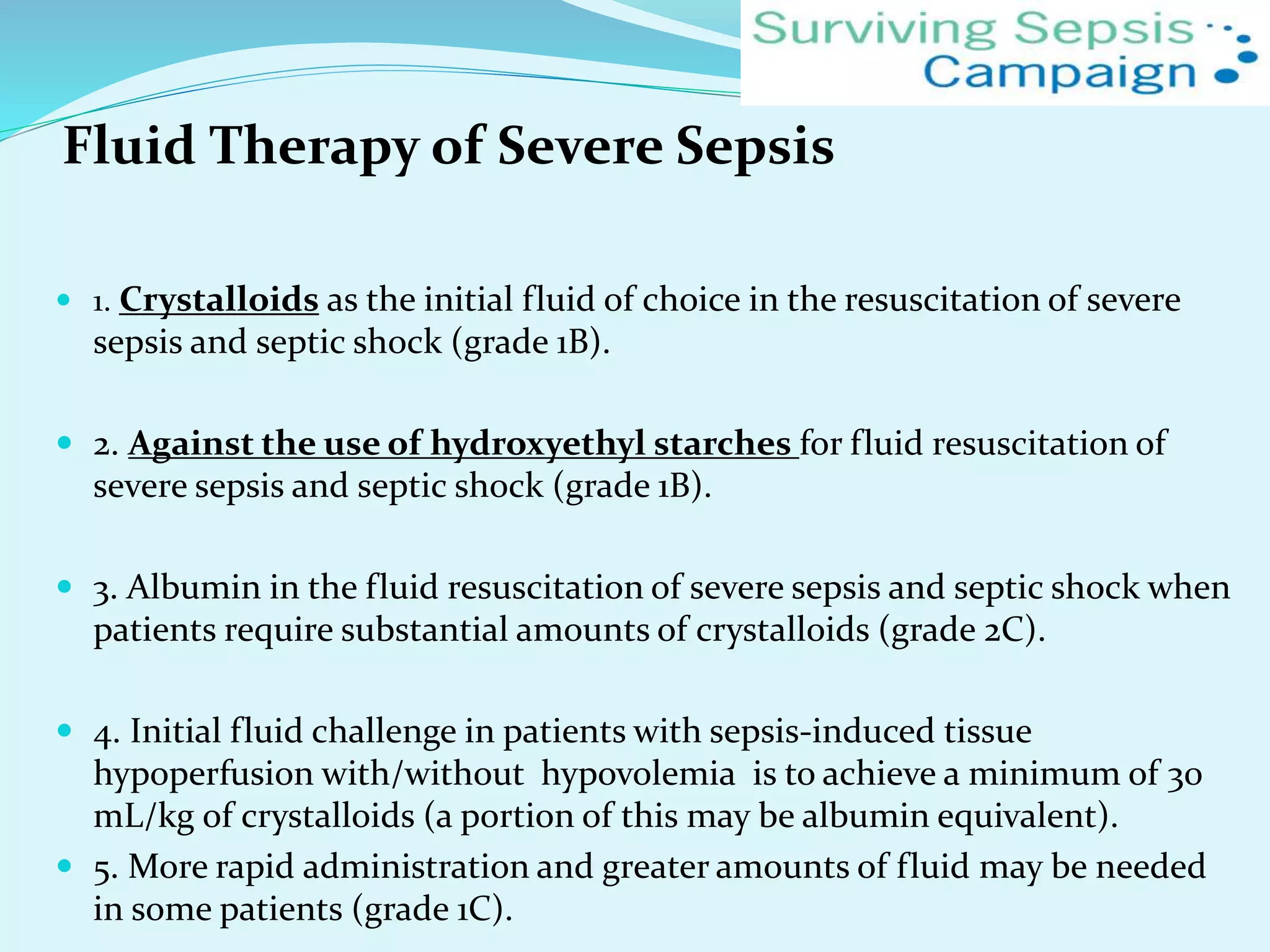
Fluid Therapy of Severe Sepsis
 1. Crystalloids as the initial fluid of choice in the resuscitation of severe
sepsis and septic shock (grade 1B).
 2. Against the use of hydroxyethyl starches for fluid resuscitation of
severe sepsis and septic shock (grade 1B).
 3. Albumin in the fluid resuscitation of severe sepsis and septic shock when
patients require substantial amounts of crystalloids (grade 2C).
 4. Initial fluid challenge in patients with sepsis-induced tissue
hypoperfusion with/without hypovolemia is to achieve a minimum of 30
mL/kg of crystalloids (a portion of this may be albumin equivalent).
 5. More rapid administration and greater amounts of fluid may be needed
in some patients (grade 1C).
 Fluid challenge technique be applied wherein fluid
administration is continued as long as there is hemodynamic
improvement based on dynamic PARAMETRERS.
(eg, change in pulse pressure, stroke volume variation or IVC
collapsibility on 2D ECHO)
 This recommendation is based on the results of the VISEP,
CRYSTMAS,6S and CHEST trials.
 The evidence of harm observed in the 6S and CHEST studies in
form of increased mortality and increased AKI and the meta-
analysis supports a high-level recommendation advising
against the use of HES solutions in patients with severe
sepsis and septic shock.
 The SAFE study indicated that albumin administration was safe
and equally as effective as 0.9% saline
IVC COLLAPSIBLITY
Pulse pressure variation
After 3 Hrs in ICU admission, the ICU nurse tells patient has
PERSISTING hypotension and asks should adrenaline be started.
Her urine output has been < 0.5 ml/lit in last 3 hrs
ABG reveals
pH 6.9
Pco2 35
Po2 60
Hco3 10
Na+ 150, K+ 2.7 ,Cl-108 BSL -450
Lactate 10
Coming back,
What do you infer from above lab value?
How do you go ahead with fluid resuscitation/
vasopressors?
Whats the choice of vasopressors?
Renal dose of dopamine?
When should we intubate?
Acidosis correction?
Steroids??
Vasopressors
1.Noradrenaline is the first choice vasopressor (grade 1B).
2. Adrenaline when an additional agent is needed to maintain adequate blood pressure
(grade 2B).
3. Low-dose dopamine should not be used for renal protection (grade 1A).
4. Vasopressin 0.03 units/minute can be added to noradrenaline to either ↑ MAP or
decrease Norad requirements (UG).
6. Low dose vasopressin is not recommended as the single initial vasopressor for
treatment of sepsis-induced hypotension (UG).
7. Dopamine as an alternative vasopressor agent to norepinephrine only in highly
selected patients (eg, patients with low risk of tachyarrhythmias and absolute or
relative bradycardia) (grade 2C).
8. Phenylephrine is not recommended in the treatment of septic shock except in
circumstances where (a) norepinephrine is associated with serious arrhythmias, (b)
cardiac output is known to be high and blood pressure persistently low .
Inotropic Therapy
 1. A trial of dobutamine infusion up to 20 micrograms/kg/min be
administered or added to vasopressor (if in use) in the presence
of
(a) myocardial dysfunction as suggested by elevated cardiac filling
pressures and low cardiac output, or
(b) ongoing signs of hypoperfusion, despite achieving adequate
intravascular volume and adequate MAP (grade 1C).
 2. Not using a strategy to increase cardiac index to
predetermined supranormal levels (grade 1B).
Bicarbonate Therapy
 1. Not using sodium bicarbonate therapy for the purpose of
improving hemodynamics or reducing vasopressor requirements
in patients with hypoperfusion-induced lactic acidemia with pH
≥7.15 (grade 2B).
After 6hrs patient ABG pH 7.23
HR- 90 b/m Pco2 33
Bp—90/50 On Norad 0.1 micg/kg/min Po2 65
Adrenaline 0.1 micg/kg/min Hco3 18
Spo2 93% with Fio2 60% Lactate 4 mm
Glu 321mg%
Was the resuscitation successful?
How do you monitor the ongoing haemodynamics?
Any other measures to improve perfusion? Steroids??
Droctrecogin alpha??
Ulinastatin ?? Immunomodulators??
Corticosteroids
1. No steroids if shock is adequately resuscitated with fluids
and vasopressors. In case this is not achievable.Dose of 200 mg
per day (grade 2C).
2. Not using the ACTH stimulation test to identify adults with septic
shock who should receive hydrocortisone (grade 2B).
3. In treated patients hydrocortisone tapered when vasopressors are
no longer required (grade 2D).
4. Corticosteroids not be administered for the treatment of sepsis in
the absence of shock (grade 1D).
5. When hydrocortisone is given, use continuous flow (grade 2D).
Adjunctive therapies for sepsis
Immunoglobulins
1. Not using intravenous immunoglobulins in adult patients
with severe sepsis or septic shock (grade 2B).
Selenium
 1. Not using intravenous selenium for the treatment of
severe sepsis (grade 2C).
Drotrecogin alpha
 History of Recommendations Regarding Use of
Recombinant Activated Protein C (rhAPC)
 DON’T USE -CAUSES HARM (GRADE 1B)
Ulinastatin – no mention
After 24 hrs,
 Patient CONSCIOUS ,occ drowsy
 HR- 90 b/m
 BP—114/60 On Norad 0.1 micg/kg/min & Adrenaline 0.1
micg/kg/min
 Output - good
 Spo2 95% with Fio2 60%
 ABG pH 7.33 , PaO2 100,PaCO2 34,HCO3 19
Lactate 2mm
Glu 321mg%
WHAT NEXT?
Glycemic control
1. A protocolized approach to blood glucose management in ICU patients
with severe sepsis commencing insulin dosing when 2 consecutive blood
glucose levels are >180 mg/dL. This protocolized approach should target an
upper blood glucose ≤180 mg/dL rather than an upper target blood glucose
≤ 110 mg/dL (grade 1A).
 2. Blood glucose values be monitored every 1–2 hrs until glucose values and
insulin infusion rates are stable and then every 4 hrs thereafter (grade 1C).
 3. Glucose levels obtained with point-of-care testing of capillary blood be
interpreted with caution, as such measurements may notaccurately estimate
arterial blood or plasma glucose values (UG).
FAST HUG
 FEEDING - EARLY ENTERAL NUTRITION
 ANALGESIA - USE ANALGESIA FIRST
 SEDATION -DAILY MORNING SEDATION HOLD
 THROMBOPROPHYLAXIS - MECH/PHARMACOL
 HEAD UP POSITION - ALL NURSED IN 30. HEADUP
 ULCER PROPHYLAXIS - STRESS ULCER PROPHYLAXIS
 GLYCEMIC CONTROL – GLUCOSE LESS THAN 180 MG%
After 48 hrs, urine C/S report shows ESBL Kleb.
What is ESBL?
How would you escalate / de escalate antibiotics ?
Antimicrobial regimen should be reassessed daily for
potential deescalation (grade 1B).
Empiric combination therapy should not be administered
for more than 3–5 days. De-escalation to the most
appropriate single therapy should be done as soon as the
susceptibility profile is known (grade 2B).
 source control…
After 3 days patient sensorium improved,
haemodynamics stabilized without support,sugar
stabilized, Na+ corrected.
Patient was extubated after a trial of weaning.
Follow up care..
FULL Guidelines
1. INITIAL RESUSCITATION
2. DIAGNOSIS
3. ANTIMICROBIAL THERAPY
4. SOURCE CONTROL
5. FLUID THERAPY
6. VASOACTIVE MEDICATIONS
7. STEROIDS
8. BLOOD PRODUCTS
9. IMMUNOGLOBULINS
10. BLOOD PURIFICATION
11. ANTICOAGULANTS
13. MECHANICALVENTILATION
14.GLUCOSE CONTROL
15.RRT
16.IMMUNOGLOBULINS
17.NUTRITION
18.BICARBONATE THERAPY
19.DVT PROPHYLAXIS
20.STRESS ULCER PROPHYLAXIS
21.SETTING GOALS OF CARE
SALIENT FEATURES
 Antibiotics within 1 hr.Take culture. Narrow down in 48
hrs.
 Crystalloids are fluids of choice. No colloids.
 No low dose dopamine for renal protection
 Noradrenaline is vasopressor of choice followed by
vasopressin and adrenaline. Dopamine dist 4th.
 Dobutamine to be used with caution in hypotension
 No steroids routinely.200 mg/day of Hydrocort for shock
not responding to fluid resuscitation and vasopressors
 No role for NaHC03 if pH >7.15
 AGGRESSIVE SOURCE CONTROL MEASURES
 No RBC transfusion if Hb>7 gm%.
 No FFP if no active bleeding only for lab values
 Platelet transfusion as per guidelines.
 No immunoglobulins,no anticoagulants or blood purification
extra corporeal strategies
 Mechanical ventilation –as per ARDS strategy
 Target blood sugars b/w 110-180mg %
 CRRT/SLEDD equally good.
 VTE prophylaxis if no contraindication. LMWH better than
unfractionated.
 Early enteral nutrition ,against early TPN or only
TPN.
 Stress ulcer prophylaxis with H2 blockers or PPIs.
 Goals of care to be set and EOL issues to be
discussed with relatives within 72 hrs…
 www.survivingsepsis.org
 www.esicm.org
 www.sccm.org
THANK YOU

Sepsis-

  • 1.
    Dr . VaidyanathanR Consultant Intensivist  DISCLOSURES:NONE  CONFLICT OF INTEREST:NONE
  • 3.
    60 year femaleDM/HTN on treatment presented with history of fever since 3 days and altered sensorium. She was not arousable from today morning, her daughter brought her to ER. On initial evaluatation. Her HR is 120/min BP 100/40 mmhg Spo2 99% Temp 100. F RR- 25/min BSL -457 mg/dl GCS E2V2M5 pupils equal and reactive
  • 4.
     How willyou evaluate the patient before lab report arrives?  What lab reports you would like to ask for this patient?  What should be your initial response? Her daughter reveals that she had been to pilgrimage 1 week back and she has been unwell after returning.
  • 5.
    The new recommendationsdefine sepsis as life-threatening organ dysfunction due to a dysregulated host response to infection. Septic shock is defined as a subset of sepsis in which particularly profound circulatory, cellular, and metabolic abnormalities substantially increase mortality. The new diagnostic tool is named quick SOFA, or qSOFA. It consists of three simple tests that clinicians can conduct at the bedside to identify patients at risk for sepsis.  An alteration in mental status  A decrease in systolic blood pressure of less than 100 mm Hg  A respiration rate greater than 22 breaths/min
  • 6.
  • 11.
  • 12.
  • 13.
    2001 SCCM/ESICM/ACCP/ATS/SIS International SepsisDefinitions Conference Intensive Care Med (2003) 29:530–538 Conclusions: The 2001 conference participants convened with the belief that the body of bench work since the 1991 sepsis definitions conference may lead to a major change in the definition of sepsis based on biomarkers. After a process of evidenced-based review and considerable debate, the participants determined that the use of biomarkers for diagnosing sepsis is premature.
  • 15.
  • 16.
    So what isout IN sepsis 3?  SIRS  SIRS criteria is out - so nobody should say that count is normal so how to suspect or diagnose sepsis.  Absent from the new definitions is the term “severe sepsis”  With q-SOFA - one should be suspicious about sepsis in out of the ICU scenario . • Singer M et al. The Third International Consensus Definitions for Sepsis and Septic Shock (Sepsis-3). JAMA, February 23, 2016, Vol 315, No. 8 • Shankar-Hari M et al. Developing a new definition and assessing new clinical criteria for septic shock: For the Third International Consensus Definitions for Sepsis and Septic 3 Shock (Sepsis-3). JAMA, February 23, 2016, Vol 315, No. 8 • Seymour, CW et al. Assessment of clinical criteria for sepsis. JAMA, February 23, 2016, Vol 315, No. 8
  • 20.
    ORGAN DYSFUNCTION  Organdysfunction can be identified as an acute change in total SOFA score ≥2 points consequent to the infection.  The baseline SOFA score can be assumed to be zero in patients not known to have preexisting organ dysfunction.  A SOFA score ≥2 reflects an overall mortality risk of approximately 10% in a general hospital population with suspected infection.  Even patients presenting with modest dysfunction can deteriorate further, emphasizing the seriousness of this condition and the need for prompt and appropriate intervention, if not already being instituted.
  • 22.
  • 23.
    Sepsis –Clinical criteria SEPSIS is now said to be present if two or more of the below criteria present in documented or suspected infection qSOFA (Quick SOFA) Criteria Respiratory rate ≥ 22/min Altered mentation (GCS<13) Systolic blood pressure < 100 mm Hg
  • 25.
  • 26.
    SEPTIC SHOCK. Three variablesidentified  Hypotension  Elevated serum lactate  Sustained need for vasopressor therapy
  • 27.
  • 28.
    SUMMARY  Terms likeSIRS,severe sepsis and septicemia removed.
  • 29.
    She does nottake her medication properly. Lab report S/o Hb- 12gm/dl Urea -30mg/dl TC -25K – N-90% Creatinine 1.9mg/dl PLT- 4 Lakhs LFT –Normal ABG - pH 7.12 Pco2 20, Po2 87, HCo3-10 Lactate 7 mm Na 149 ,K+ 3.0, Cl-100 Urine R Alb +, Puscells 10-20 ,Bacteria + Ketones - NEGATIVE Chest X-ray NAD;CT Brain NAD; USG Abd- NO HN,Echogenic N sized kidneys BACK TO CASE…..
  • 30.
    What are yourdifferentials at this time? What is your first response? What is your first hour management in ICU? What is your antibiotic of preference on initial evaluatation? Does this patient require invasive lines? Should we subject her for scans?
  • 31.
    In 2002, theEuropean Society of Critical Care Medicine and the Society of Critical Care Medicine conducted an international survey to investigate physicians' views on sepsis, in particular, their satisfaction with current definitions, routes to diagnosis, and treatment options. Based on the survey The Surviving Sepsis Campaign (SSC), an initiative of the European Society of Intensive Care Medicine (ESICM), the International Sepsis Forum (ISF), and the Society of Critical Care Medicine, was developed to improve the management, diagnosis, and treatment of sepsis. The agreement among the three societies and funding for the campaign came to a conclusion on December 31, 2008
  • 33.
    CURRENT AIMS OFSSC The SSC aimed to reduce mortality BY 25% from sepsis by  Building awareness of sepsis  Improving diagnosis  Increasing the use of appropriate treatment  Educating healthcare professionals  Improving post-ICU care  Developing guidelines of care  Facilitating data collection for the purposes of audit and feedback
  • 34.
    SSC Guidelines.  Highlyevidenced based updated and published every 4 years .  Presents care in bundles.  Addresses each issue or arm in the care and introduces new ones as evidence arises.  Aims for an universal global standard.
  • 35.
    History of GUIDELINES….. The initial SSC guidelines were first published in 2004 and revised in 2008  Next set of guidelines published in 2012.  Next set of guidelines in 2016,updated in 2018. BUNDLES A "bundle" is a group of therapies for a given disease that, when implemented together, may result in better outcomes than if implemented individually. In a bundle, the individual elements included are built around best evidence-based practices.
  • 39.
    2015 GUIDELINES TO BECOMPLETED WITHIN 3 HOURS OF TIME OF PRESENTATION*:  1. Measure lactate level  2. Obtain blood cultures prior to administration of antibiotics  3. Administer broad spectrum antibiotics  4. Administer 30ml/kg crystalloid for hypotension or lactate ≥4mmol/L “Time of presentation” is defined as the time of triage in the emergency department or, if presenting from another care venue, from the earliest TIME consistent with elements of septic shock ascertained through chart review.
  • 40.
    TO BE COMPLETEDWITHIN 6 HOURS OF TIME OF PRESENTATION:  5. Apply vasopressors (for hypotension that does not respond to initial fluid resuscitation) to maintain a mean arterial pressure (MAP) ≥65mmHg  6. In the event of persistent hypotension after initial fluid administration (MAP < 65 mm Hg) or if initial lactate was ≥4 mmol/L, re-assess volume status and tissue perfusion and document findings.  7. Re-measure lactate if initial lactate elevated.
  • 41.
    Whats new in2018 ? The HOUR 1 bundle..
  • 42.
     The mostimportant change in the revision of the SSC bundles is that the 3-h and 6-h bundles have been combined into a single “hour-1 bundle” with the explicit intention of beginning resuscitation and management immediately
  • 43.
    “as the physicianssay it happens in hectic fever, that in the beginning of the malady it is easy to cure but difficult to detect, but in the course of time, not having been either detected or treated in the beginning, it becomes easy to detect but difficult to cure” Time critical resuscitation  “Hectic fever (sepsis) at its inception is difficult to recognize but easy to treat, left unattended, it becomes easy to recognize but difficult to treat.”  Time dependent success  The exact same treatment late, doesn’t have the same effect (?harm)  Golden hour;Door to balloon; Door to needle  Now for sepsis……. NICOLO Machiavelli, The Prince, 1513
  • 44.
    Delaying antibiotics anddeath rates….. Reduce shock exposure & avoid irreversible circulatory failure
  • 45.
     The administrationof effective intravenous antimicrobials within the first hour of recognition of septic shock (Grade1B)should be the goal of therapy Antimicrobial regimen should be reassessed daily for potential deescalation (grade 1B). Empiric combination therapy should not be administered for more than 3–5 days. De-escalation to the most appropriate single therapy should be performed as soon as the susceptibility profile is known (grade 2B). Duration of therapy typically 7–10 days; longer courses may be appropriate in patients who have a slow clinical response,undrainable foci of infection, bacteremia with S. aureus; some fungal and viral infections or immunologic deficiencies, including neutropenia (grade 2C). Use of low procalcitonin levels or similar biomarkers to assist the clinician in the discontinuation of empiric antibiotics in patients who initially appeared septic, but have no subsequent evidence of infection (grade 2C). The antibiotics…
  • 46.
     The administrationof effective intravenous antimicrobials within the first hour of recognition of septic shock (Grade1B)should be the goal of therapy  All patients requiring vasopressors have an arterial catheter placed as soon as practical if resources are available (UG).  We recommend that imaging studies be performed promptly in attempts to confirm a potential source of infection.(UG) ANSWERS….
  • 47.
    What is yourchoice of fluids? EVIDENCE -Land mark studies on fluid management? Why not colloids? Anything else or other modalities which can guide in fluid management? Is more is good?
  • 48.
    Fluid Therapy ofSevere Sepsis  1. Crystalloids as the initial fluid of choice in the resuscitation of severe sepsis and septic shock (grade 1B).  2. Against the use of hydroxyethyl starches for fluid resuscitation of severe sepsis and septic shock (grade 1B).  3. Albumin in the fluid resuscitation of severe sepsis and septic shock when patients require substantial amounts of crystalloids (grade 2C).  4. Initial fluid challenge in patients with sepsis-induced tissue hypoperfusion with/without hypovolemia is to achieve a minimum of 30 mL/kg of crystalloids (a portion of this may be albumin equivalent).  5. More rapid administration and greater amounts of fluid may be needed in some patients (grade 1C).
  • 49.
     Fluid challengetechnique be applied wherein fluid administration is continued as long as there is hemodynamic improvement based on dynamic PARAMETRERS. (eg, change in pulse pressure, stroke volume variation or IVC collapsibility on 2D ECHO)  This recommendation is based on the results of the VISEP, CRYSTMAS,6S and CHEST trials.  The evidence of harm observed in the 6S and CHEST studies in form of increased mortality and increased AKI and the meta- analysis supports a high-level recommendation advising against the use of HES solutions in patients with severe sepsis and septic shock.  The SAFE study indicated that albumin administration was safe and equally as effective as 0.9% saline
  • 50.
  • 51.
  • 52.
    After 3 Hrsin ICU admission, the ICU nurse tells patient has PERSISTING hypotension and asks should adrenaline be started. Her urine output has been < 0.5 ml/lit in last 3 hrs ABG reveals pH 6.9 Pco2 35 Po2 60 Hco3 10 Na+ 150, K+ 2.7 ,Cl-108 BSL -450 Lactate 10 Coming back,
  • 53.
    What do youinfer from above lab value? How do you go ahead with fluid resuscitation/ vasopressors? Whats the choice of vasopressors? Renal dose of dopamine? When should we intubate? Acidosis correction? Steroids??
  • 54.
    Vasopressors 1.Noradrenaline is thefirst choice vasopressor (grade 1B). 2. Adrenaline when an additional agent is needed to maintain adequate blood pressure (grade 2B). 3. Low-dose dopamine should not be used for renal protection (grade 1A). 4. Vasopressin 0.03 units/minute can be added to noradrenaline to either ↑ MAP or decrease Norad requirements (UG). 6. Low dose vasopressin is not recommended as the single initial vasopressor for treatment of sepsis-induced hypotension (UG). 7. Dopamine as an alternative vasopressor agent to norepinephrine only in highly selected patients (eg, patients with low risk of tachyarrhythmias and absolute or relative bradycardia) (grade 2C). 8. Phenylephrine is not recommended in the treatment of septic shock except in circumstances where (a) norepinephrine is associated with serious arrhythmias, (b) cardiac output is known to be high and blood pressure persistently low .
  • 55.
    Inotropic Therapy  1.A trial of dobutamine infusion up to 20 micrograms/kg/min be administered or added to vasopressor (if in use) in the presence of (a) myocardial dysfunction as suggested by elevated cardiac filling pressures and low cardiac output, or (b) ongoing signs of hypoperfusion, despite achieving adequate intravascular volume and adequate MAP (grade 1C).  2. Not using a strategy to increase cardiac index to predetermined supranormal levels (grade 1B). Bicarbonate Therapy  1. Not using sodium bicarbonate therapy for the purpose of improving hemodynamics or reducing vasopressor requirements in patients with hypoperfusion-induced lactic acidemia with pH ≥7.15 (grade 2B).
  • 56.
    After 6hrs patientABG pH 7.23 HR- 90 b/m Pco2 33 Bp—90/50 On Norad 0.1 micg/kg/min Po2 65 Adrenaline 0.1 micg/kg/min Hco3 18 Spo2 93% with Fio2 60% Lactate 4 mm Glu 321mg% Was the resuscitation successful? How do you monitor the ongoing haemodynamics? Any other measures to improve perfusion? Steroids?? Droctrecogin alpha?? Ulinastatin ?? Immunomodulators??
  • 57.
    Corticosteroids 1. No steroidsif shock is adequately resuscitated with fluids and vasopressors. In case this is not achievable.Dose of 200 mg per day (grade 2C). 2. Not using the ACTH stimulation test to identify adults with septic shock who should receive hydrocortisone (grade 2B). 3. In treated patients hydrocortisone tapered when vasopressors are no longer required (grade 2D). 4. Corticosteroids not be administered for the treatment of sepsis in the absence of shock (grade 1D). 5. When hydrocortisone is given, use continuous flow (grade 2D).
  • 58.
    Adjunctive therapies forsepsis Immunoglobulins 1. Not using intravenous immunoglobulins in adult patients with severe sepsis or septic shock (grade 2B). Selenium  1. Not using intravenous selenium for the treatment of severe sepsis (grade 2C). Drotrecogin alpha  History of Recommendations Regarding Use of Recombinant Activated Protein C (rhAPC)  DON’T USE -CAUSES HARM (GRADE 1B) Ulinastatin – no mention
  • 59.
    After 24 hrs, Patient CONSCIOUS ,occ drowsy  HR- 90 b/m  BP—114/60 On Norad 0.1 micg/kg/min & Adrenaline 0.1 micg/kg/min  Output - good  Spo2 95% with Fio2 60%  ABG pH 7.33 , PaO2 100,PaCO2 34,HCO3 19 Lactate 2mm Glu 321mg% WHAT NEXT?
  • 60.
    Glycemic control 1. Aprotocolized approach to blood glucose management in ICU patients with severe sepsis commencing insulin dosing when 2 consecutive blood glucose levels are >180 mg/dL. This protocolized approach should target an upper blood glucose ≤180 mg/dL rather than an upper target blood glucose ≤ 110 mg/dL (grade 1A).  2. Blood glucose values be monitored every 1–2 hrs until glucose values and insulin infusion rates are stable and then every 4 hrs thereafter (grade 1C).  3. Glucose levels obtained with point-of-care testing of capillary blood be interpreted with caution, as such measurements may notaccurately estimate arterial blood or plasma glucose values (UG).
  • 61.
    FAST HUG  FEEDING- EARLY ENTERAL NUTRITION  ANALGESIA - USE ANALGESIA FIRST  SEDATION -DAILY MORNING SEDATION HOLD  THROMBOPROPHYLAXIS - MECH/PHARMACOL  HEAD UP POSITION - ALL NURSED IN 30. HEADUP  ULCER PROPHYLAXIS - STRESS ULCER PROPHYLAXIS  GLYCEMIC CONTROL – GLUCOSE LESS THAN 180 MG%
  • 62.
    After 48 hrs,urine C/S report shows ESBL Kleb. What is ESBL? How would you escalate / de escalate antibiotics ? Antimicrobial regimen should be reassessed daily for potential deescalation (grade 1B). Empiric combination therapy should not be administered for more than 3–5 days. De-escalation to the most appropriate single therapy should be done as soon as the susceptibility profile is known (grade 2B).  source control…
  • 63.
    After 3 dayspatient sensorium improved, haemodynamics stabilized without support,sugar stabilized, Na+ corrected. Patient was extubated after a trial of weaning. Follow up care..
  • 64.
    FULL Guidelines 1. INITIALRESUSCITATION 2. DIAGNOSIS 3. ANTIMICROBIAL THERAPY 4. SOURCE CONTROL 5. FLUID THERAPY 6. VASOACTIVE MEDICATIONS 7. STEROIDS 8. BLOOD PRODUCTS 9. IMMUNOGLOBULINS 10. BLOOD PURIFICATION 11. ANTICOAGULANTS 13. MECHANICALVENTILATION 14.GLUCOSE CONTROL 15.RRT 16.IMMUNOGLOBULINS 17.NUTRITION 18.BICARBONATE THERAPY 19.DVT PROPHYLAXIS 20.STRESS ULCER PROPHYLAXIS 21.SETTING GOALS OF CARE
  • 65.
    SALIENT FEATURES  Antibioticswithin 1 hr.Take culture. Narrow down in 48 hrs.  Crystalloids are fluids of choice. No colloids.  No low dose dopamine for renal protection  Noradrenaline is vasopressor of choice followed by vasopressin and adrenaline. Dopamine dist 4th.  Dobutamine to be used with caution in hypotension  No steroids routinely.200 mg/day of Hydrocort for shock not responding to fluid resuscitation and vasopressors  No role for NaHC03 if pH >7.15  AGGRESSIVE SOURCE CONTROL MEASURES
  • 66.
     No RBCtransfusion if Hb>7 gm%.  No FFP if no active bleeding only for lab values  Platelet transfusion as per guidelines.  No immunoglobulins,no anticoagulants or blood purification extra corporeal strategies  Mechanical ventilation –as per ARDS strategy  Target blood sugars b/w 110-180mg %  CRRT/SLEDD equally good.  VTE prophylaxis if no contraindication. LMWH better than unfractionated.
  • 67.
     Early enteralnutrition ,against early TPN or only TPN.  Stress ulcer prophylaxis with H2 blockers or PPIs.  Goals of care to be set and EOL issues to be discussed with relatives within 72 hrs…  www.survivingsepsis.org  www.esicm.org  www.sccm.org
  • 68.