PROCALCITONIN
ANUJ MEHTA
DNB -CTU
GKNM HOSPITAL
Advantages over other
biomarkers
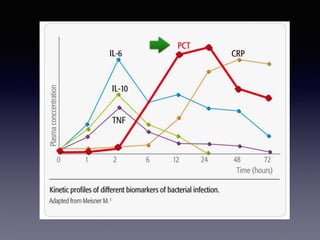
• Specificity for bacterial infection
• Rapidity of rise after an insult (6 hours)
• Rapid decline with treatment (T1/2 -24 hours)
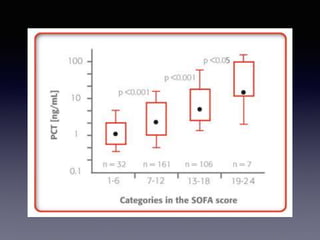
• Excellent correlation with severity of illness
• Lack of impact of anti-inflammatory and
immunosuppressive states.
LIMITATIONS
• Newborns
• Massive stress-severe trauma, surgery, cardiac shock, burns
• Treatment with agents stimulating cytokines(anti-lymphocyte
globulins,alemtuzumab,platelet transfusion.
• Prolonged cardiogenic shock or organ perfusion abnormalities
• Vasculitis, Acute GVHD
• Medullary thyroid and small cell lung cancer
• ESRD/ haemodialysis.
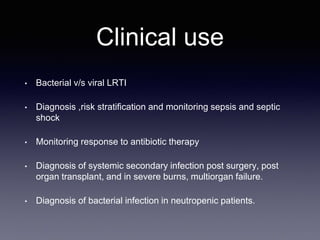
Clinical use
• Bacterial v/s viral LRTI
• Diagnosis ,risk stratification and monitoring sepsis and septic
shock
• Monitoring response to antibiotic therapy
• Diagnosis of systemic secondary infection post surgery, post
organ transplant, and in severe burns, multiorgan failure.
• Diagnosis of bacterial infection in neutropenic patients.
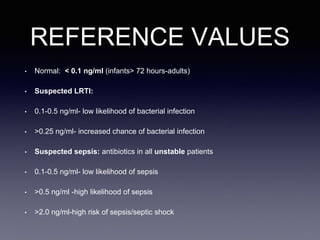
REFERENCE VALUES
• Normal: < 0.1 ng/ml (infants> 72 hours-adults)
• Suspected LRTI:
• 0.1-0.5 ng/ml- low likelihood of bacterial infection
• >0.25 ng/ml- increased chance of bacterial infection
• Suspected sepsis: antibiotics in all unstable patients
• 0.1-0.5 ng/ml- low likelihood of sepsis
• >0.5 ng/ml -high likelihood of sepsis
• >2.0 ng/ml-high risk of sepsis/septic shock
Recommendations:
• PCT at initiation of sepsis /septic shock/LRTI
• Repeat every 2-3 days
• Antibiotics according to PCT dynamics, culture
data and patient specific clinical data.
THANK YOU

Procalcitonin

  • 1.
  • 2.
    Advantages over other biomarkers •Specificity for bacterial infection • Rapidity of rise after an insult (6 hours) • Rapid decline with treatment (T1/2 -24 hours) • Excellent correlation with severity of illness • Lack of impact of anti-inflammatory and immunosuppressive states.
  • 6.
    LIMITATIONS • Newborns • Massivestress-severe trauma, surgery, cardiac shock, burns • Treatment with agents stimulating cytokines(anti-lymphocyte globulins,alemtuzumab,platelet transfusion. • Prolonged cardiogenic shock or organ perfusion abnormalities • Vasculitis, Acute GVHD • Medullary thyroid and small cell lung cancer • ESRD/ haemodialysis.
  • 7.
    Clinical use • Bacterialv/s viral LRTI • Diagnosis ,risk stratification and monitoring sepsis and septic shock • Monitoring response to antibiotic therapy • Diagnosis of systemic secondary infection post surgery, post organ transplant, and in severe burns, multiorgan failure. • Diagnosis of bacterial infection in neutropenic patients.
  • 8.
    REFERENCE VALUES • Normal:< 0.1 ng/ml (infants> 72 hours-adults) • Suspected LRTI: • 0.1-0.5 ng/ml- low likelihood of bacterial infection • >0.25 ng/ml- increased chance of bacterial infection • Suspected sepsis: antibiotics in all unstable patients • 0.1-0.5 ng/ml- low likelihood of sepsis • >0.5 ng/ml -high likelihood of sepsis • >2.0 ng/ml-high risk of sepsis/septic shock
  • 13.
    Recommendations: • PCT atinitiation of sepsis /septic shock/LRTI • Repeat every 2-3 days • Antibiotics according to PCT dynamics, culture data and patient specific clinical data.
  • 14.