Course Design For LearningGayla S. Keesee, Ph.D.
Iterative StepsArticulate Goals & ObjectivesCreate Learning EnvironmentKnow Your LearnersIdentify Teaching & Learning StrategiesIdentify Materials & ResourcesDevelop Assessments
Goals & ObjectivesState standards, accrediting bodies, NETS*StudentsHow can the course objectives be broken down into units, modules, lessons?Varied levels of Bloom’s TaxonomyOutcomes/performances expected upon completionCriteria for success to ensure mastery
Acquiring 21st century skills such as higher level thinking, stronger communication abilities, and collaborative learningwill encourage student engagement and increase academic achievement (Department of Education, 2002)
Learning EnvironmentAndragogical considerationsHow can learning be made active?How can the environment promote peer interaction?How can students develop responsibility for their own learning?
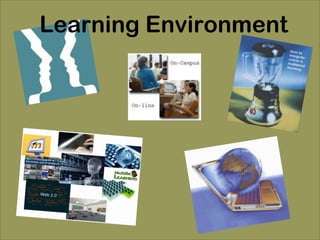
Learning Environment
1st Year College StudentKnowledge = gradual accumulation of right answers acquired through effort and obedience to the instructor Role of the instructor is to TEACH themRight answers for everything existFocused on passing the next testTurned off to school
Discouraged from                      following their own interests
No application to life after schoolWhere did this thinking come from?
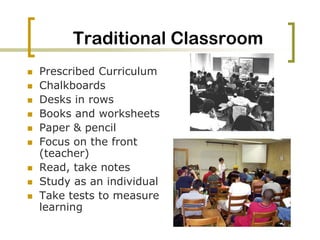
Traditional ClassroomPrescribed CurriculumChalkboardsDesks in rowsBooks and worksheetsPaper & pencilFocus on the front (teacher)Read, take notesStudy as an individualTake tests to measure learning
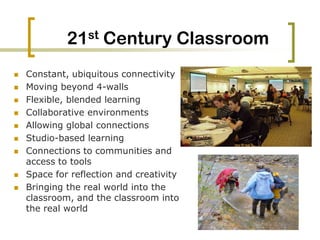
21st Century ClassroomConstant, ubiquitous connectivity Moving beyond 4-walls Flexible, blended learning Collaborative environments Allowing global connections Studio-based learning Connections to communities and access to tools Space for reflection and creativity Bringing the real world into the classroom, and the classroom into the real world
Know Your LearnersPersonal demographics (ethnicity, socio-economic level, cultural background) that might impact learningDevelopmental stage of the student relative to the contentCognitive/Learning style of each studentGenerational learning stylesStudent’s entry skills with reference to the content and technology
Digital Immigrant or Digital NativeDo you turn to the Internet first or second for information?Do you use a manual to learn a program, or is it intuitive?Do you print out your E-mail or have your secretary print it out for you?Do you need to print out a document in order to edit it?Do you call people into your office to see an interesting website rather than sending the link via E-mail?Do you make the “Did you get my E-mail?” phone call?
Digital NativesCtrl + Alt + Del is as basic as ABCThey have never been able to find the “return” keyComputers have always fit in their backpacksThey have always had a personal identification numberPhotographs have always been processed in an hour or lessBert and Ernie are old enough to be their parentsGas has always been unleadedRogaine has always been available for the follicularly challenged		--Beloit College, 2003, 2004
Net Gen LearnersDigital ConnectedExperientialVisual & KinestheticImmediateSocial
AdaptationIt is not about whether you are a digital native but whether you can adapt to those whose style does not match your own. – Dede, 2005
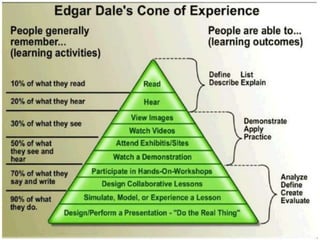
Teaching & Learning StrategiesConnect to prior knowledgeScaffold learningMotivationEngagementRelevanceRigorRelationshipsStudent-Centered vs. Teacher-centered
What can you do?Make learning interactive & experiential Consider peer-to-peer approachesUtilize real-world applicationsEmphasize information literacy in coursesEncourage reflectionIncorporate collaborative learning Use informal learning opportunitiesCreate opportunities for synthesis
Decide what’s important Technology does not drive choicesLearning outcomes drive choicesKnowledge constructionInteractivityRelevanceAuthentic contexts
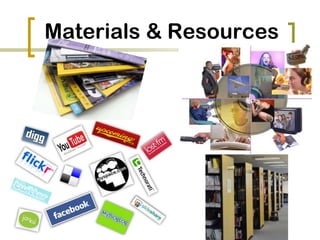
Materials & Resources
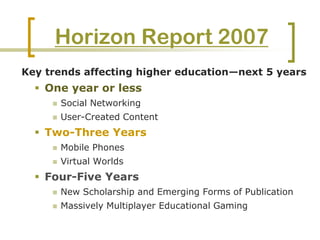
Horizon Report 2007Key trends affecting higher education—next 5 yearsOne year or lessSocial Networking  User-Created Content  Two-Three YearsMobile Phones Virtual Worlds Four-Five YearsNew Scholarship and Emerging Forms of Publication Massively Multiplayer Educational Gaming
Choose the Right ToolCollaboration
Communications

Course design for learning

  • 1.
    Course Design ForLearningGayla S. Keesee, Ph.D.
  • 2.
    Iterative StepsArticulate Goals& ObjectivesCreate Learning EnvironmentKnow Your LearnersIdentify Teaching & Learning StrategiesIdentify Materials & ResourcesDevelop Assessments
  • 3.
    Goals & ObjectivesStatestandards, accrediting bodies, NETS*StudentsHow can the course objectives be broken down into units, modules, lessons?Varied levels of Bloom’s TaxonomyOutcomes/performances expected upon completionCriteria for success to ensure mastery
  • 4.
    Acquiring 21st centuryskills such as higher level thinking, stronger communication abilities, and collaborative learningwill encourage student engagement and increase academic achievement (Department of Education, 2002)
  • 5.
    Learning EnvironmentAndragogical considerationsHowcan learning be made active?How can the environment promote peer interaction?How can students develop responsibility for their own learning?
  • 6.
  • 7.
    1st Year CollegeStudentKnowledge = gradual accumulation of right answers acquired through effort and obedience to the instructor Role of the instructor is to TEACH themRight answers for everything existFocused on passing the next testTurned off to school
  • 8.
    Discouraged from following their own interests
  • 9.
    No application tolife after schoolWhere did this thinking come from?
  • 10.
    Traditional ClassroomPrescribed CurriculumChalkboardsDesksin rowsBooks and worksheetsPaper & pencilFocus on the front (teacher)Read, take notesStudy as an individualTake tests to measure learning
  • 11.
    21st Century ClassroomConstant,ubiquitous connectivity Moving beyond 4-walls Flexible, blended learning Collaborative environments Allowing global connections Studio-based learning Connections to communities and access to tools Space for reflection and creativity Bringing the real world into the classroom, and the classroom into the real world
  • 12.
    Know Your LearnersPersonaldemographics (ethnicity, socio-economic level, cultural background) that might impact learningDevelopmental stage of the student relative to the contentCognitive/Learning style of each studentGenerational learning stylesStudent’s entry skills with reference to the content and technology
  • 13.
    Digital Immigrant orDigital NativeDo you turn to the Internet first or second for information?Do you use a manual to learn a program, or is it intuitive?Do you print out your E-mail or have your secretary print it out for you?Do you need to print out a document in order to edit it?Do you call people into your office to see an interesting website rather than sending the link via E-mail?Do you make the “Did you get my E-mail?” phone call?
  • 14.
    Digital NativesCtrl +Alt + Del is as basic as ABCThey have never been able to find the “return” keyComputers have always fit in their backpacksThey have always had a personal identification numberPhotographs have always been processed in an hour or lessBert and Ernie are old enough to be their parentsGas has always been unleadedRogaine has always been available for the follicularly challenged --Beloit College, 2003, 2004
  • 15.
    Net Gen LearnersDigitalConnectedExperientialVisual & KinestheticImmediateSocial
  • 16.
    AdaptationIt is notabout whether you are a digital native but whether you can adapt to those whose style does not match your own. – Dede, 2005
  • 17.
    Teaching & LearningStrategiesConnect to prior knowledgeScaffold learningMotivationEngagementRelevanceRigorRelationshipsStudent-Centered vs. Teacher-centered
  • 19.
    What can youdo?Make learning interactive & experiential Consider peer-to-peer approachesUtilize real-world applicationsEmphasize information literacy in coursesEncourage reflectionIncorporate collaborative learning Use informal learning opportunitiesCreate opportunities for synthesis
  • 20.
    Decide what’s importantTechnology does not drive choicesLearning outcomes drive choicesKnowledge constructionInteractivityRelevanceAuthentic contexts
  • 21.
  • 22.
    Horizon Report 2007Keytrends affecting higher education—next 5 yearsOne year or lessSocial Networking User-Created Content Two-Three YearsMobile Phones Virtual Worlds Four-Five YearsNew Scholarship and Emerging Forms of Publication Massively Multiplayer Educational Gaming
  • 23.
    Choose the RightToolCollaboration
  • 24.