
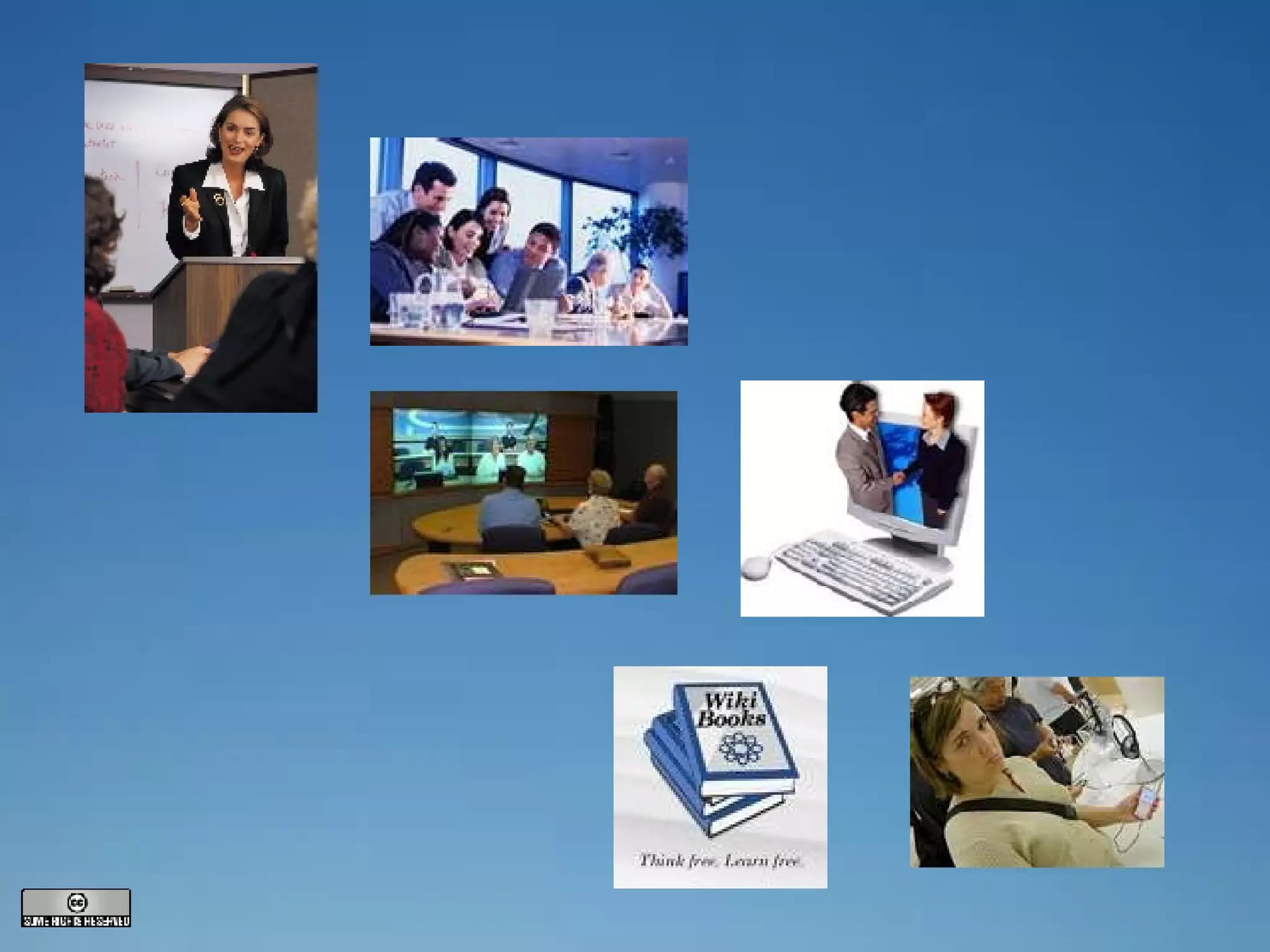

The future looks   digital Patricia McGee Leading from the Middle
Today’s Focus Teaching Learning (emerging) Technology What to consider about what’s next
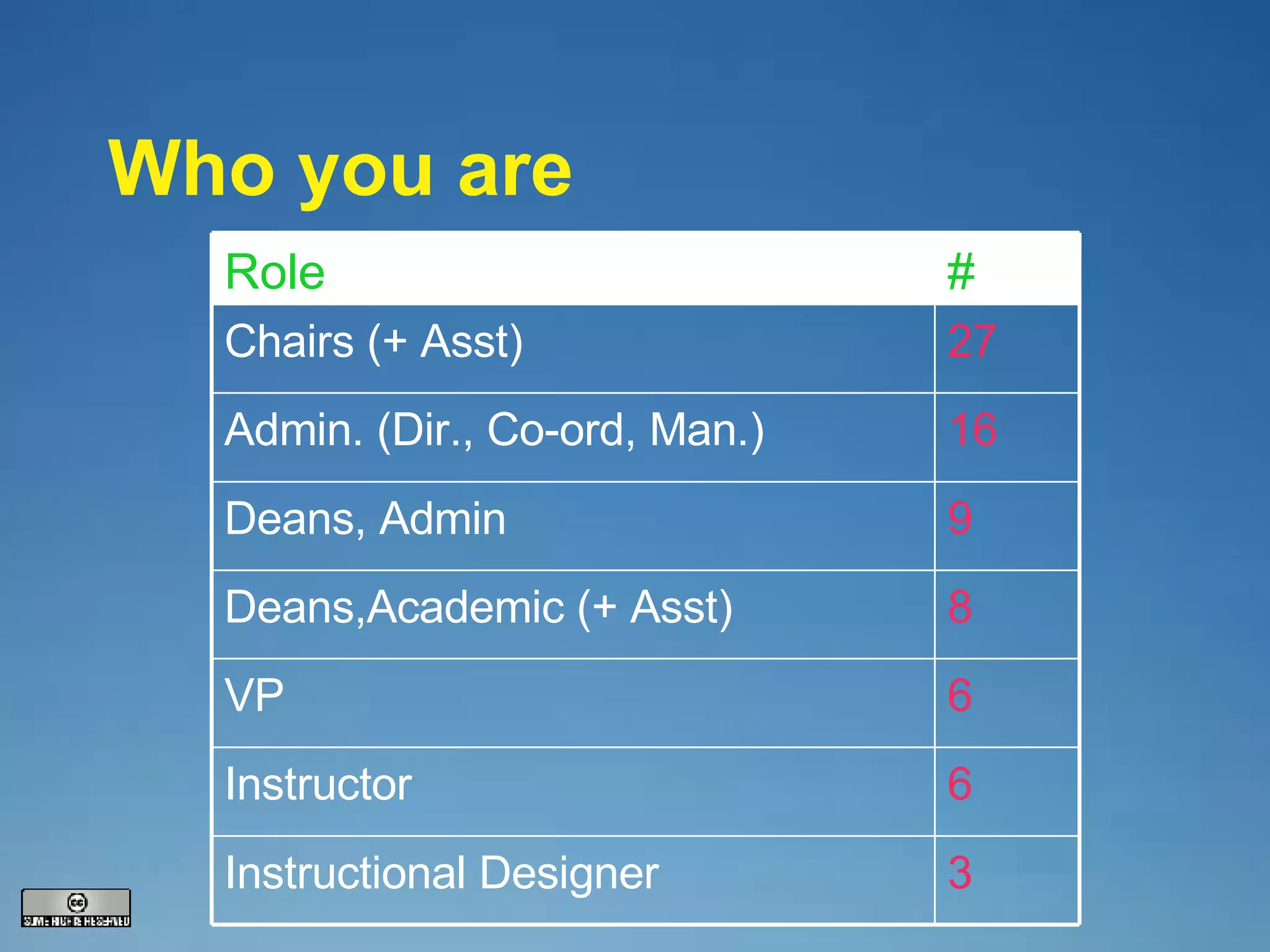
Who you are 3 Instructional Designer 6 Instructor 6 VP 8 Deans,Academic (+ Asst) 9 Deans, Admin 16 Admin. (Dir., Co-ord, Man.) 27 Chairs (+ Asst) # Role
Roles, roles, roles
What are your Top Issues? Funding? Staffing? Resources?
Top Issues of TLT Accessibility Evidence Ethics Ownership Role of staff Distribution of services and support Course Design Support structures Incentives and acknowledgements  Retention
Different strokes for different folks How do priorities, as relates to TLT, differ between roles?
Why should we attend to what other “stakeholders” think, do, believe ?
Change occurs more readily when it is embedded in  Beliefs  •  Values   •  Traditions *
What did you do in 1995? The longer and more fixed the schedule of courses, the less likely students are to complete a course.  Given 1995 conditions, how might this have been addressed  from your role in the institution?
1995 Strategies
What do you do in 2007? The longer and more fixed the schedule of courses, the less likely students are to complete a course.  Given 2007 conditions, how might this be addressed  from your role in the institution?
“ A number of studies have shown that over half the jobs created in America during the past half century were the direct consequence of earlier investments in science and technology.”
What does this suggest for the future?
The question today is… What do you do in 2017?
Shifts in  learning environments Not just in class Not just via the Internet Not just on a computer LSU Alexandria
The “new” academy? Environments .  e-mail, WebCT, VLEs, Blogs, IM, SMS, Wikis, discussion forums, gaming, shopping… Strategies .  Computer Supported Collaborative Learning  (CSCL), publishing, activism… Activities.  Practice, inquiry, observation, debate, projects… Assessments .  Digital papers, Power Point™ Presentations, ePortfolios, Communities of Practice…
The “new” learner? Are your students different than they were 10 years ago?
What has changed for the learner?
Think back 10 years…
Think about today…
The “new” graduate? The percentage of college graduates deemed proficient in prose literacy has actually declined from 40 to 31 percent in the past decade. *
Prepared? Employers report repeatedly that many new graduates they hire are not prepared to work, lacking the critical thinking, writing and problem-solving skills needed in today’s workplaces. *
What about faculty?
The ‘new’ faculty member? How have faculty changed?
What has changed for faculty?
Where are your faculty? I know its there but…. I’m kind of interested in that thing I saw… Hmm, I may have to change what I am doing. I sure am spending a lot of time managing it. Is what I am doing really helping students? I bet I can adapt from what others are doing. Gee, my ideas may work better than what others have done!
Disconnect Faculty at different stages Students living in a separate technology world Technology that changes daily
Other changes? Expectations? Infrastructure? Resources - type, amount?
Technology as a solution Or a new challenge
Accessibility Multiple communication modes Multiple content formats Just-in-time information and supports
Evidence Data collection of what is really going on  with the instructor, the learner and the departments that interact with both  Digital collections
Ethics Plagiarism, cheating, ignoring intellectual property rights Acceptable Use Policy? Punishment vs. engagement?
Ownership Intellectual Property Rights Faculty Learner Staff Do you have a policy for online courses? IPR for online courses
Distribution of services & supports Outsourcing Technology ownership
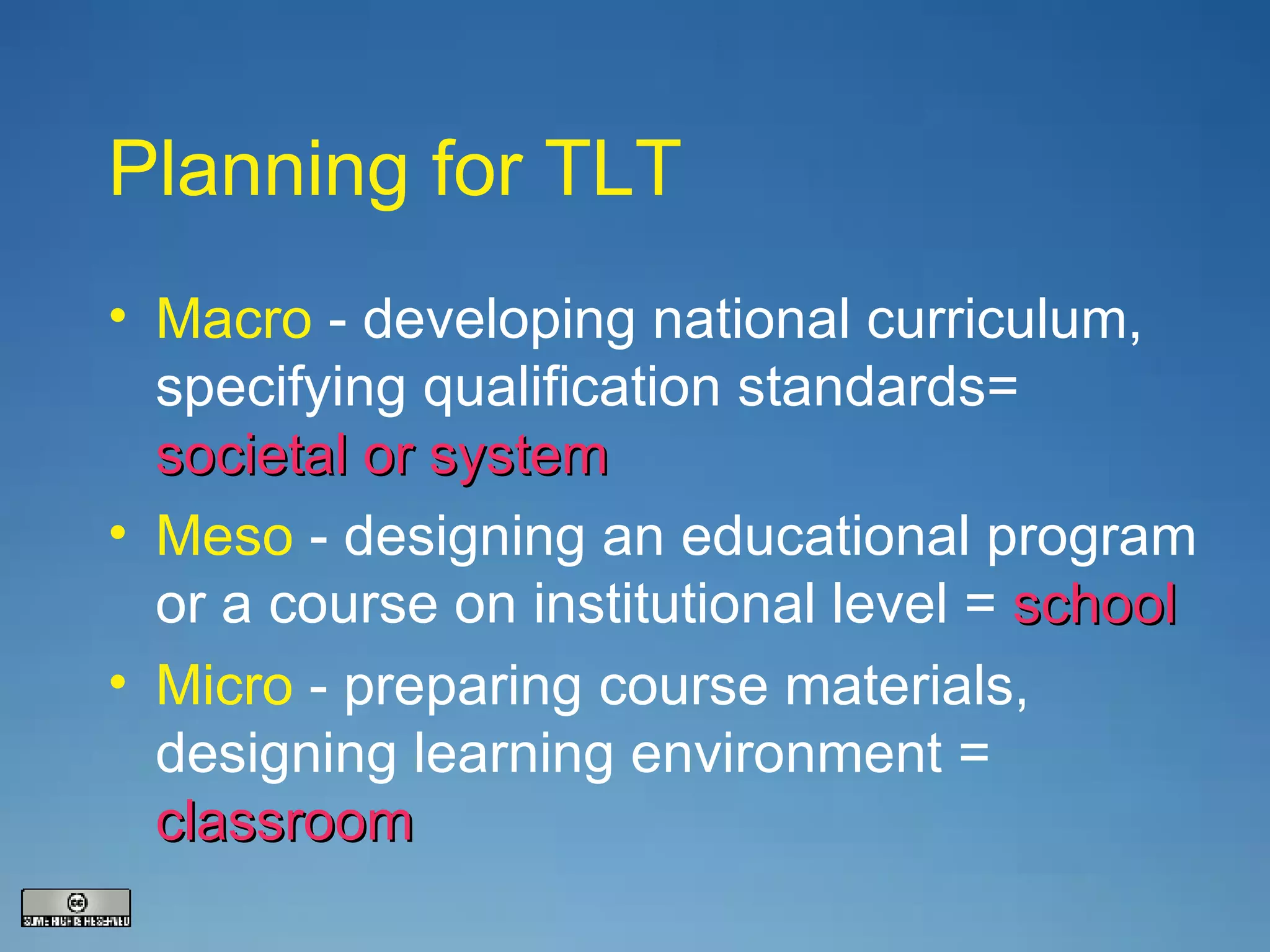
Planning for TLT Macro   - developing national curriculum, specifying qualification standards=  societal or system Meso  - designing an educational program or a course on institutional level =  school Micro  - preparing course materials, designing learning environment =  classroom
According to disruptive innovation theory, some organizations use relatively simple innovations to compete in new ways and “triumph over powerful incumbents.”
 
Re-thinking how degrees work Consortia? Collaborations? Credit for experience? Cross-institutional flexibility?
From where do you think the following statement comes?
Does your school give credit for courses taken online from other institutions and sources of instruction? Institutions that arbitrarily refuse to accept credit for courses taken electronically from other sources have not made the transition to the current learning environment. That is not to say that every form of distance learning will or should be accepted. An institution's methods for ensuring quality control should focus on learning outcomes and how they relate to the academic requirements, not on the method of delivery.
At the Macro level IU3+1  Students can… transfers 90 hours of credit from a community college, take 30 credit hours via distance learning from IU,  pay in-state tuition rates for IU courses,  get a Bachelor of General Studies degree UT  Telecampus Western Governor’s University
Thinking about how programs and courses work
Delivery mechanism Classroom, lab, etc. Online In field Considering
Considering Course Design Distributed Attendance Web Enhanced Blended/Hybrid 100% Online
Considering Pedagogical Design Open entry Open Exit Participatory Pedagogy Modularized
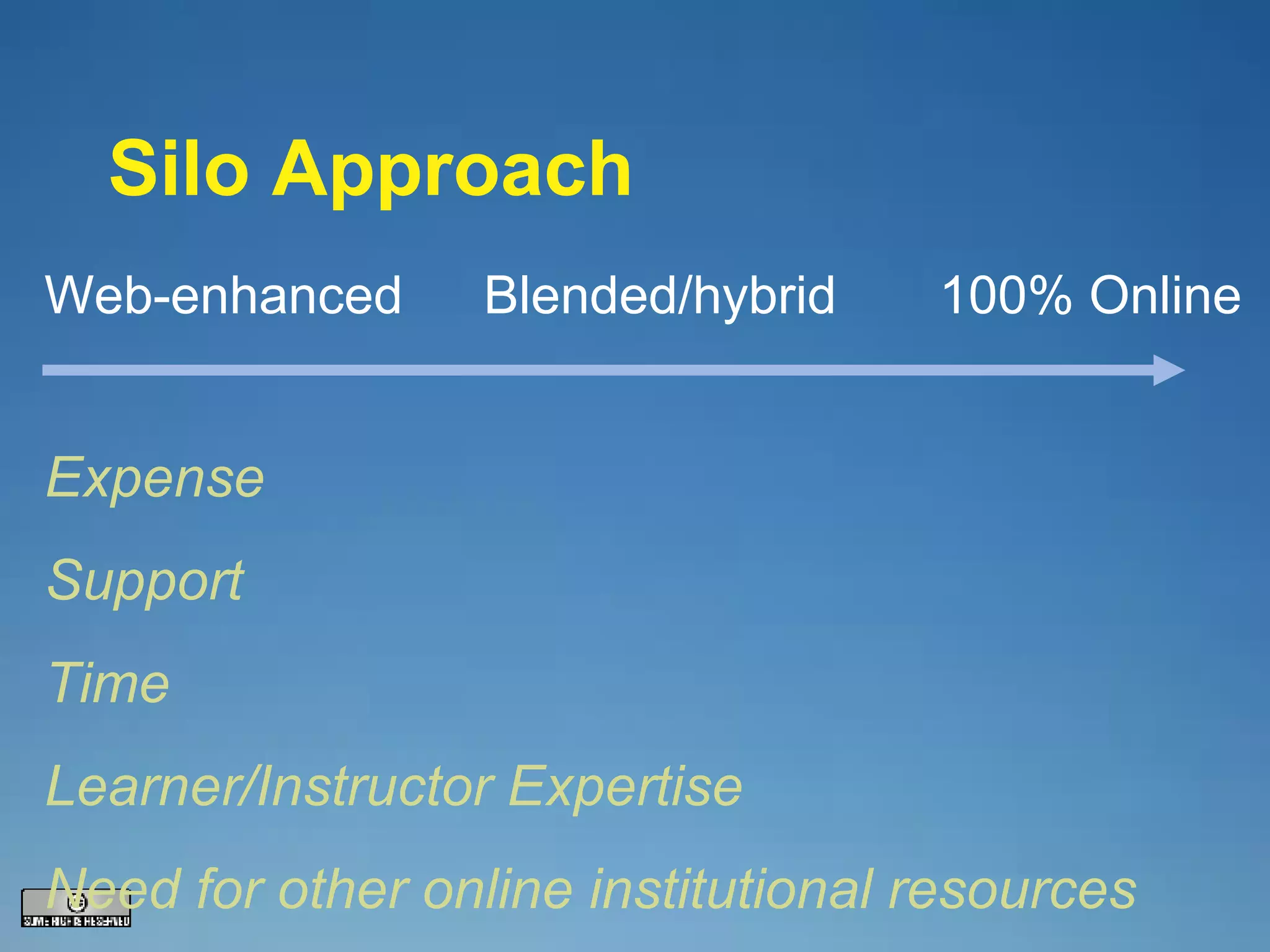
Silo Approach Web-enhanced   Blended/hybrid  100% Online Expense Support Time  Learner/Instructor Expertise Need for other online institutional resources
Incremental Approach Phase 1 -Web-enhanced Establish infrastructure, services Phase 2 - Blended/Hybrid for appropriate  courses Expand infrastructure, services,  seek  partners Phase 3 - 100% for appropriate courses Establish partnerships
Real world? 100% online Web-enhanced Established infrastructure, services Blended/Hybrid  Established partnerships
What are tested strategies? Four models of tech-supported instruction
Course Design:  Distributed Engagement This approach allows the learner to complete instructional sequences at his or her own pace, in various learning environments and with various supports. Usable for both campus and distributed environments, the intent is to allow students to progress through material in the way and speed that is most appropriate for the individual. Also known as the  Emporium Model  (NCAT).
Math My Way   Foothill College Hands on Self-paced math learning modules Patient, caring instruction with a group of students who have similar math skill levels Small groups and one-to-one Computer and paper drills Computer games Pass/No Pass Complete in one quarter what originally took two quarters
New systems
Pros? Cons?
Course Design: Web-enhanced Classroom courses that include between class meeting activities using learning systems or other ICT. Also known as the Supplemental Approach (NCAT). NCAT Examples * U of Mass Examples
New tools - Hardware -clickers, tablets, smart phones Software -  convergent systems Web 2.0 Applications
What value does this add?
Course Design: Blended/Hybrid Classroom courses that include between class meeting activities using learning systems or other ICT. NCAT Examples U. Of Mass Example
 
Course Design: 100% Online All course activities, resources, interactions, and communications occur online, typically through an institutional learning/course management system.
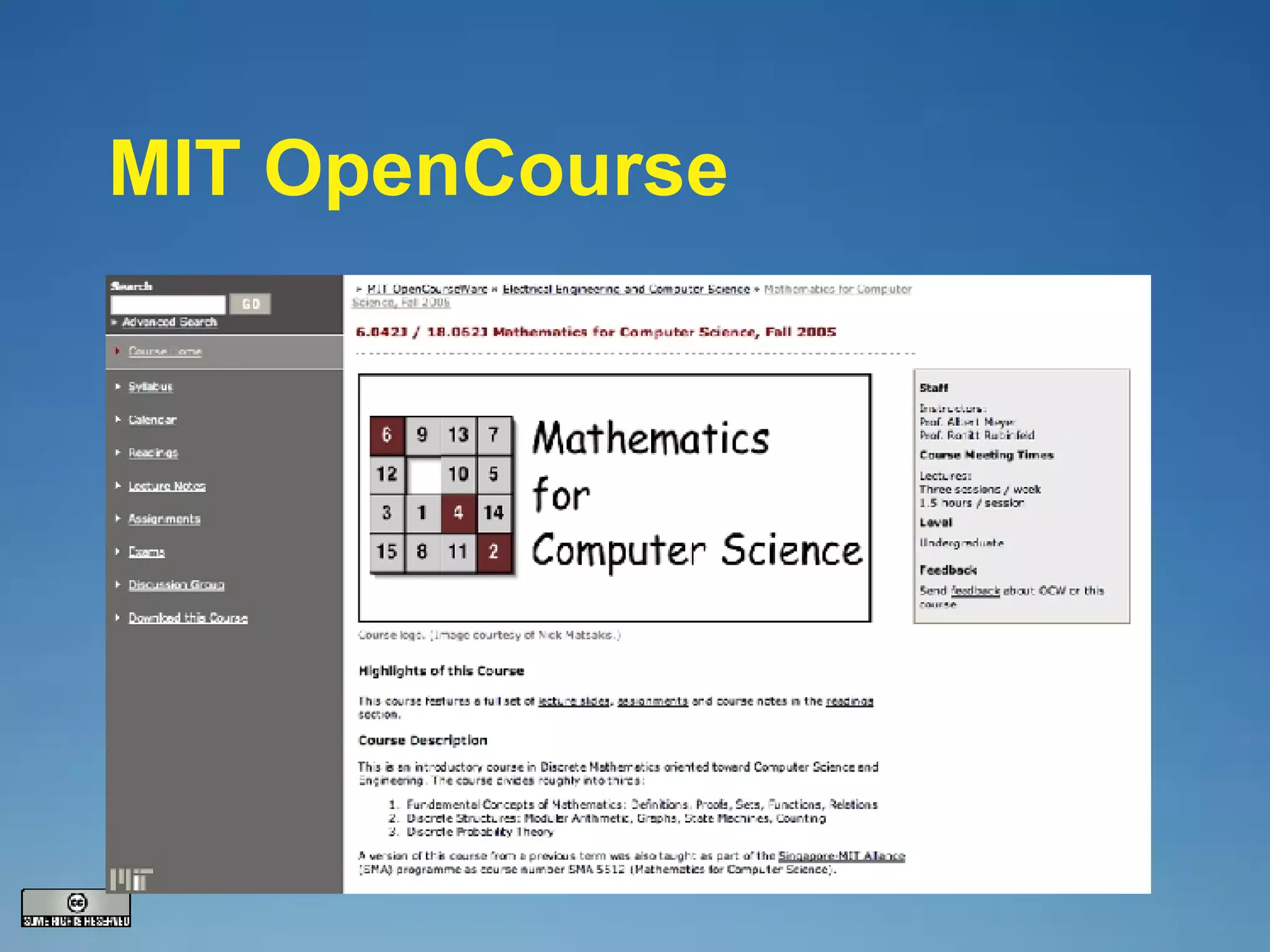
MIT OpenCourse
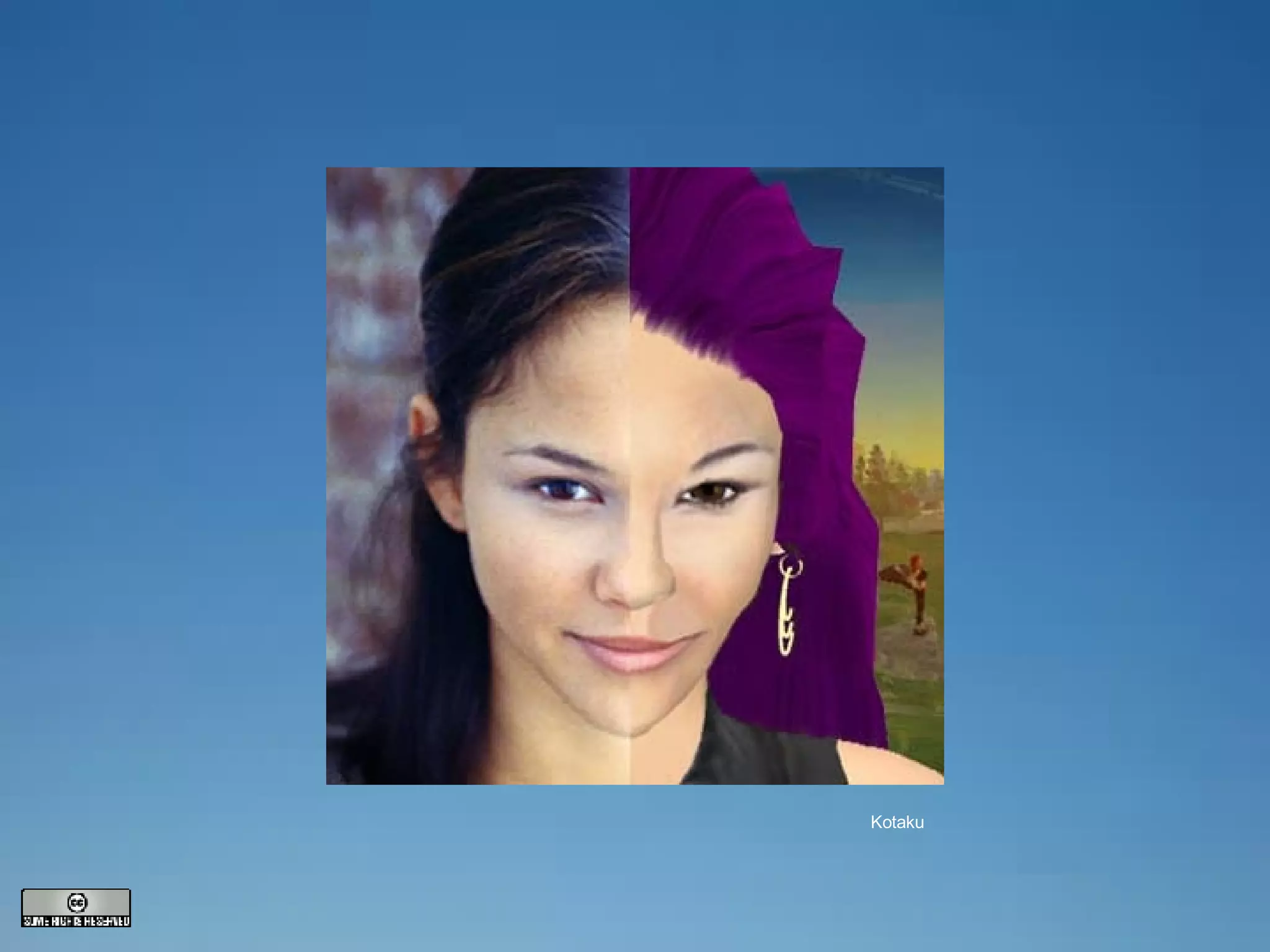
But the users determine  How the technology is used
Kotaku
 
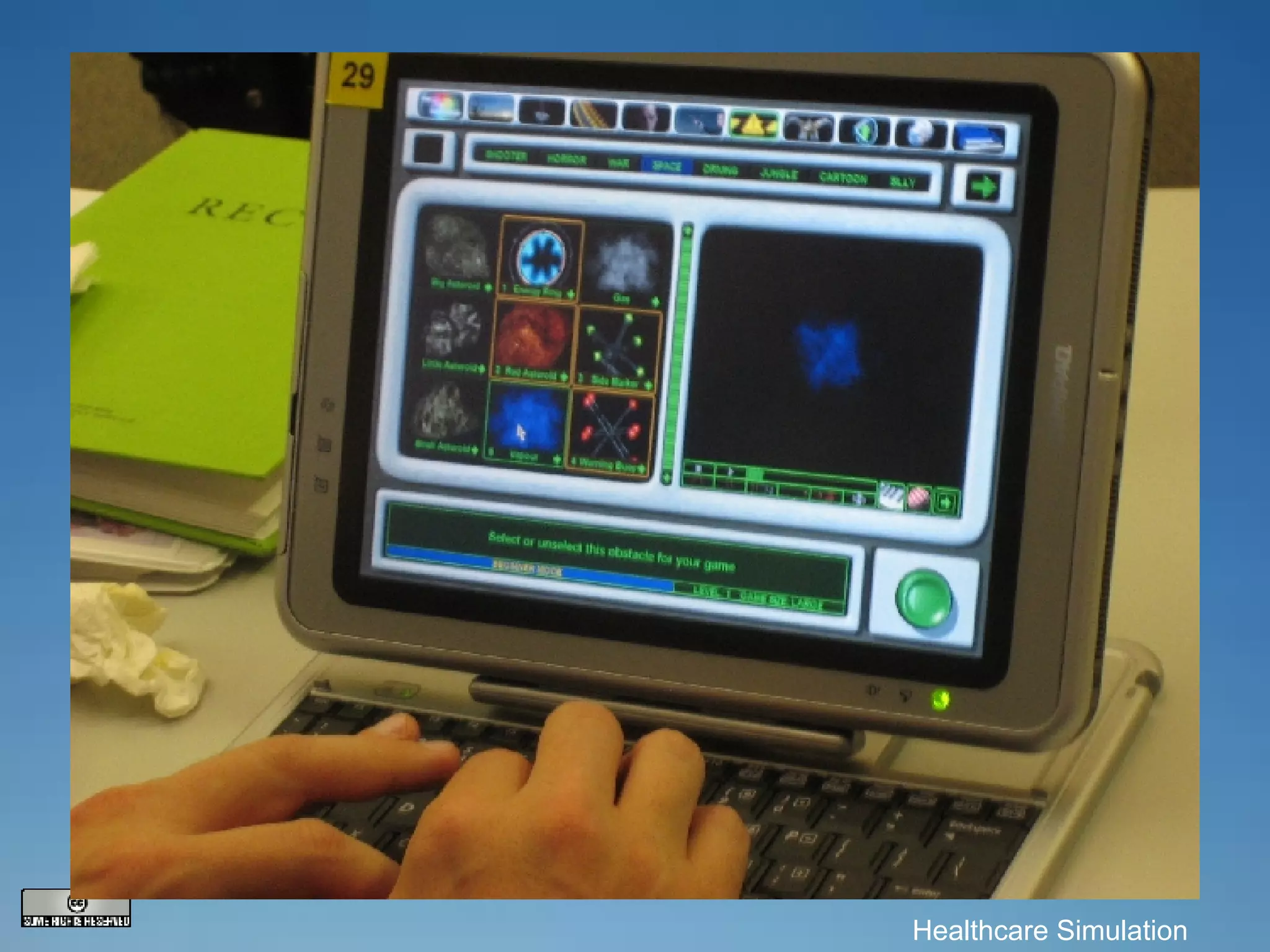
Healthcare Simulation
It’s not the technology… it’s the  Pedagogical Approaches
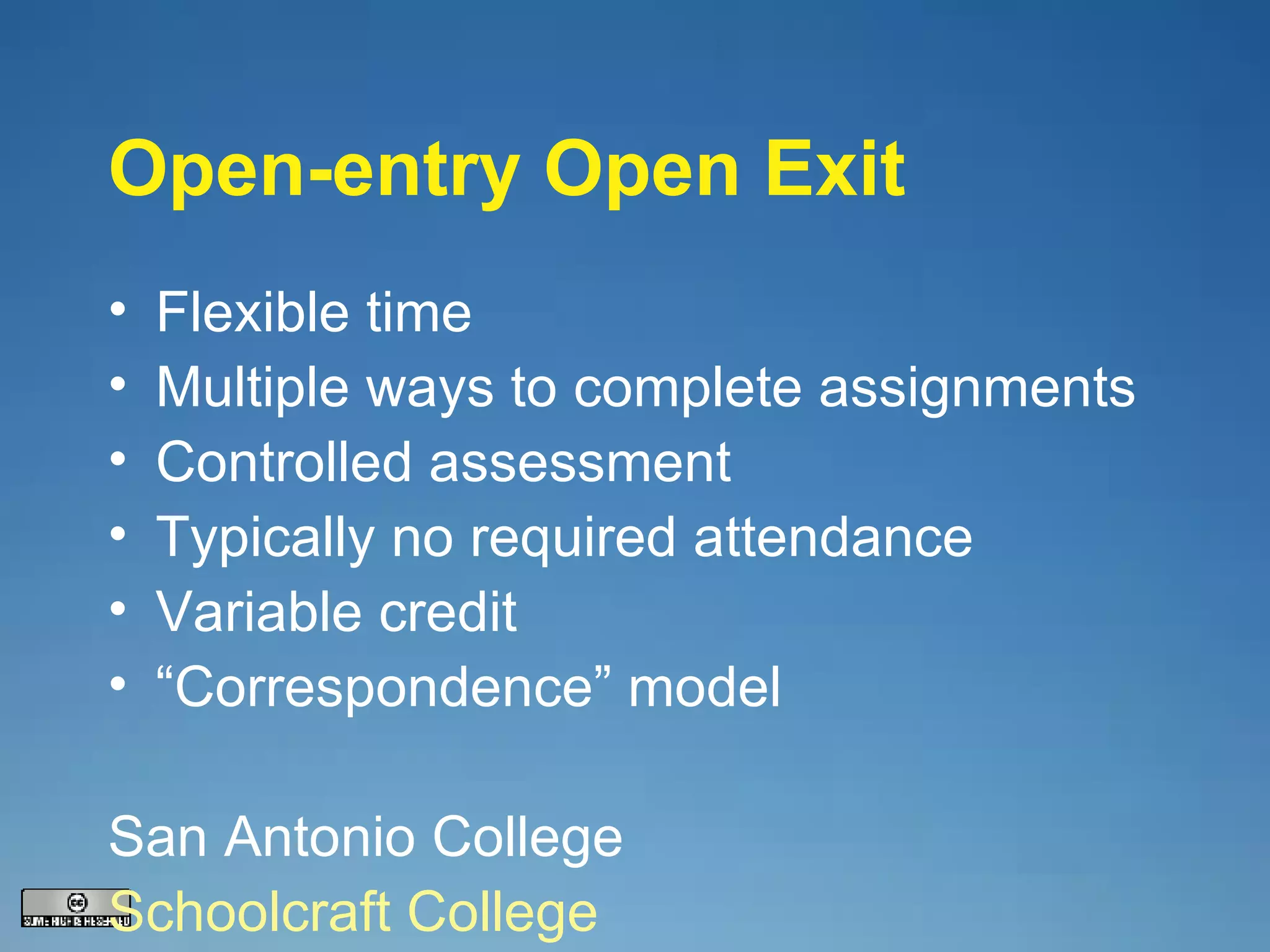
Open-entry Open Exit Flexible time Multiple ways to complete assignments Controlled assessment Typically no required attendance Variable credit “ Correspondence” model San Antonio College Schoolcraft College
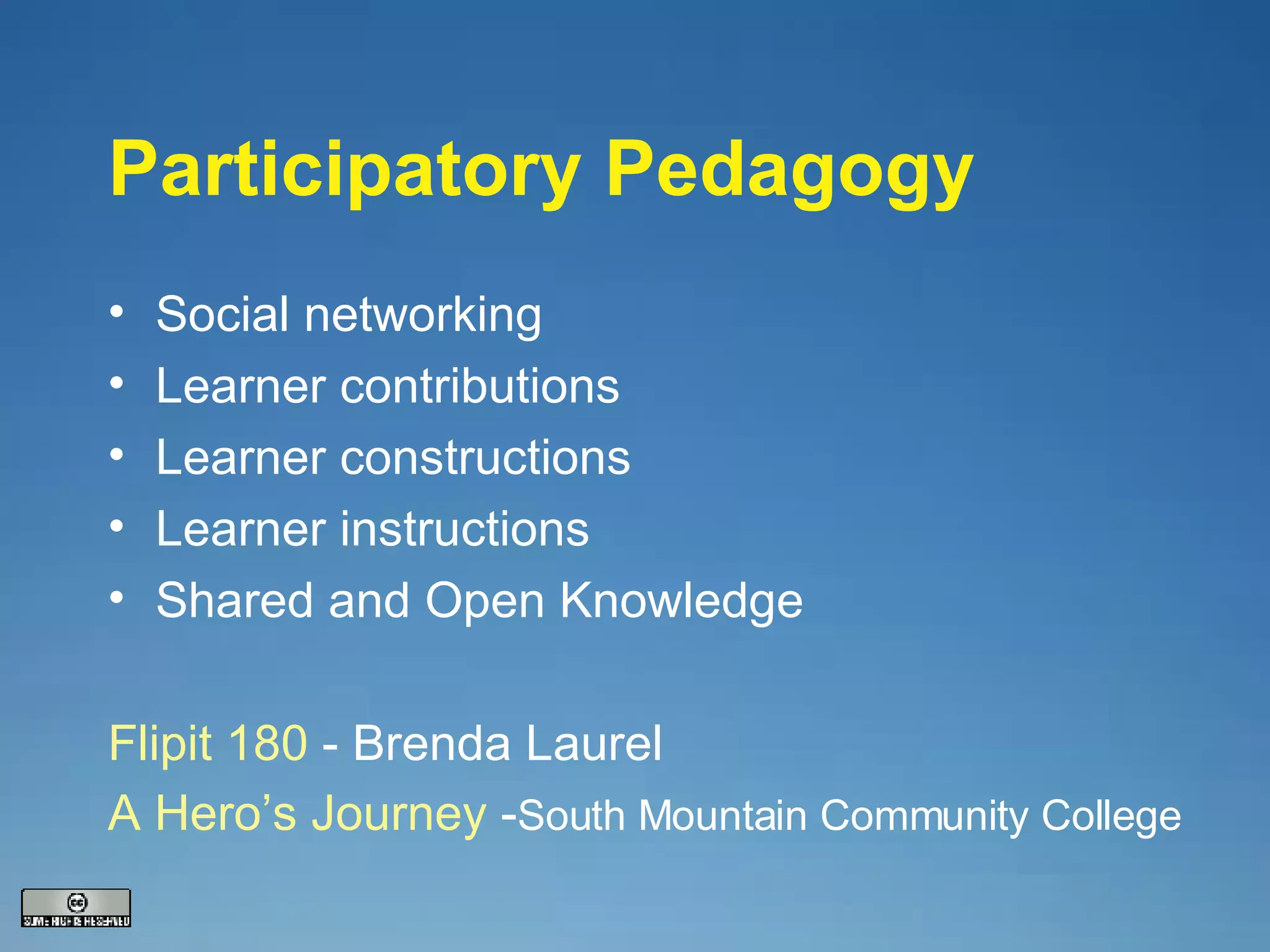
Participatory Pedagogy Social networking Learner contributions Learner constructions Learner instructions Shared and Open Knowledge Flipit  180  - Brenda Laurel A Hero’s Journey  - South Mountain Community College
Go2Web2.0
Modularized Curricula Self-paced Learning Agents/Objects Credit re-defined University of Leicester University of Salzburg
Reuse
Work with Vendors! Publishers Hardware Software
Final thoughts Learning hasn’t change but the delivery of instruction  has  changed and will continue to Look for collaborators and  first ‘responders’  Keep an eye on  trends
Quick picks A vision for free, global (online) education,  Richard Baraniuk, Rice University Map of Future Forces Affecting  Education The Future Video Emerging Technologies Maricopa Center for Learning and Instruction  (mcli) TLT Group  for planning and assessment
[email_address] Slides available from  http://www.slideshare.net/ Search for Patricia McGee Other materials available from http://drpmcgee.googlepages.com/home
 

The Future Looks Digital - TCCTA

  • 1.
    The future looks digital Patricia McGee Leading from the Middle
  • 2.
    Today’s Focus TeachingLearning (emerging) Technology What to consider about what’s next
  • 3.
    Who you are3 Instructional Designer 6 Instructor 6 VP 8 Deans,Academic (+ Asst) 9 Deans, Admin 16 Admin. (Dir., Co-ord, Man.) 27 Chairs (+ Asst) # Role
  • 4.
  • 5.
    What are yourTop Issues? Funding? Staffing? Resources?
  • 6.
    Top Issues ofTLT Accessibility Evidence Ethics Ownership Role of staff Distribution of services and support Course Design Support structures Incentives and acknowledgements Retention
  • 7.
    Different strokes fordifferent folks How do priorities, as relates to TLT, differ between roles?
  • 8.
    Why should weattend to what other “stakeholders” think, do, believe ?
  • 9.
    Change occurs morereadily when it is embedded in Beliefs • Values • Traditions *
  • 10.
    What did youdo in 1995? The longer and more fixed the schedule of courses, the less likely students are to complete a course. Given 1995 conditions, how might this have been addressed from your role in the institution?
  • 11.
  • 12.
    What do youdo in 2007? The longer and more fixed the schedule of courses, the less likely students are to complete a course. Given 2007 conditions, how might this be addressed from your role in the institution?
  • 13.
    “ A numberof studies have shown that over half the jobs created in America during the past half century were the direct consequence of earlier investments in science and technology.”
  • 14.
    What does thissuggest for the future?
  • 15.
    The question todayis… What do you do in 2017?
  • 16.
    Shifts in learning environments Not just in class Not just via the Internet Not just on a computer LSU Alexandria
  • 17.
    The “new” academy?Environments . e-mail, WebCT, VLEs, Blogs, IM, SMS, Wikis, discussion forums, gaming, shopping… Strategies . Computer Supported Collaborative Learning (CSCL), publishing, activism… Activities. Practice, inquiry, observation, debate, projects… Assessments . Digital papers, Power Point™ Presentations, ePortfolios, Communities of Practice…
  • 18.
    The “new” learner?Are your students different than they were 10 years ago?
  • 19.
    What has changedfor the learner?
  • 20.
    What has changedfor the learner?
  • 21.
    Think back 10years…
  • 22.
  • 23.
    The “new” graduate?The percentage of college graduates deemed proficient in prose literacy has actually declined from 40 to 31 percent in the past decade. *
  • 24.
    Prepared? Employers reportrepeatedly that many new graduates they hire are not prepared to work, lacking the critical thinking, writing and problem-solving skills needed in today’s workplaces. *
  • 25.
  • 26.
    The ‘new’ facultymember? How have faculty changed?
  • 27.
    What has changedfor faculty?
  • 28.
    What has changedfor faculty?
  • 29.
    Where are yourfaculty? I know its there but…. I’m kind of interested in that thing I saw… Hmm, I may have to change what I am doing. I sure am spending a lot of time managing it. Is what I am doing really helping students? I bet I can adapt from what others are doing. Gee, my ideas may work better than what others have done!
  • 30.
    Disconnect Faculty atdifferent stages Students living in a separate technology world Technology that changes daily
  • 31.
    Other changes? Expectations?Infrastructure? Resources - type, amount?
  • 32.
    Technology as asolution Or a new challenge
  • 33.
    Accessibility Multiple communicationmodes Multiple content formats Just-in-time information and supports
  • 34.
    Evidence Data collectionof what is really going on with the instructor, the learner and the departments that interact with both Digital collections
  • 35.
    Ethics Plagiarism, cheating,ignoring intellectual property rights Acceptable Use Policy? Punishment vs. engagement?
  • 36.
    Ownership Intellectual PropertyRights Faculty Learner Staff Do you have a policy for online courses? IPR for online courses
  • 37.
    Distribution of services& supports Outsourcing Technology ownership
  • 38.
    Planning for TLTMacro - developing national curriculum, specifying qualification standards= societal or system Meso - designing an educational program or a course on institutional level = school Micro - preparing course materials, designing learning environment = classroom
  • 39.
    According to disruptiveinnovation theory, some organizations use relatively simple innovations to compete in new ways and “triumph over powerful incumbents.”
  • 40.
  • 41.
    Re-thinking how degreeswork Consortia? Collaborations? Credit for experience? Cross-institutional flexibility?
  • 42.
    From where doyou think the following statement comes?
  • 43.
    Does your schoolgive credit for courses taken online from other institutions and sources of instruction? Institutions that arbitrarily refuse to accept credit for courses taken electronically from other sources have not made the transition to the current learning environment. That is not to say that every form of distance learning will or should be accepted. An institution's methods for ensuring quality control should focus on learning outcomes and how they relate to the academic requirements, not on the method of delivery.
  • 44.
    At the Macrolevel IU3+1 Students can… transfers 90 hours of credit from a community college, take 30 credit hours via distance learning from IU, pay in-state tuition rates for IU courses, get a Bachelor of General Studies degree UT Telecampus Western Governor’s University
  • 45.
    Thinking about howprograms and courses work
  • 46.
    Delivery mechanism Classroom,lab, etc. Online In field Considering
  • 47.
    Considering Course DesignDistributed Attendance Web Enhanced Blended/Hybrid 100% Online
  • 48.
    Considering Pedagogical DesignOpen entry Open Exit Participatory Pedagogy Modularized
  • 49.
    Silo Approach Web-enhanced Blended/hybrid 100% Online Expense Support Time Learner/Instructor Expertise Need for other online institutional resources
  • 50.
    Incremental Approach Phase1 -Web-enhanced Establish infrastructure, services Phase 2 - Blended/Hybrid for appropriate courses Expand infrastructure, services, seek partners Phase 3 - 100% for appropriate courses Establish partnerships
  • 51.
    Real world? 100%online Web-enhanced Established infrastructure, services Blended/Hybrid Established partnerships
  • 52.
    What are testedstrategies? Four models of tech-supported instruction
  • 53.
    Course Design: Distributed Engagement This approach allows the learner to complete instructional sequences at his or her own pace, in various learning environments and with various supports. Usable for both campus and distributed environments, the intent is to allow students to progress through material in the way and speed that is most appropriate for the individual. Also known as the Emporium Model (NCAT).
  • 54.
    Math My Way Foothill College Hands on Self-paced math learning modules Patient, caring instruction with a group of students who have similar math skill levels Small groups and one-to-one Computer and paper drills Computer games Pass/No Pass Complete in one quarter what originally took two quarters
  • 55.
  • 56.
  • 57.
    Course Design: Web-enhancedClassroom courses that include between class meeting activities using learning systems or other ICT. Also known as the Supplemental Approach (NCAT). NCAT Examples * U of Mass Examples
  • 58.
    New tools -Hardware -clickers, tablets, smart phones Software - convergent systems Web 2.0 Applications
  • 59.
    What value doesthis add?
  • 60.
    Course Design: Blended/HybridClassroom courses that include between class meeting activities using learning systems or other ICT. NCAT Examples U. Of Mass Example
  • 61.
  • 62.
    Course Design: 100%Online All course activities, resources, interactions, and communications occur online, typically through an institutional learning/course management system.
  • 63.
  • 64.
    But the usersdetermine How the technology is used
  • 65.
  • 66.
  • 67.
  • 68.
    It’s not thetechnology… it’s the Pedagogical Approaches
  • 69.
    Open-entry Open ExitFlexible time Multiple ways to complete assignments Controlled assessment Typically no required attendance Variable credit “ Correspondence” model San Antonio College Schoolcraft College
  • 70.
    Participatory Pedagogy Socialnetworking Learner contributions Learner constructions Learner instructions Shared and Open Knowledge Flipit 180 - Brenda Laurel A Hero’s Journey - South Mountain Community College
  • 71.
  • 72.
    Modularized Curricula Self-pacedLearning Agents/Objects Credit re-defined University of Leicester University of Salzburg
  • 73.
  • 74.
    Work with Vendors!Publishers Hardware Software
  • 75.
    Final thoughts Learninghasn’t change but the delivery of instruction has changed and will continue to Look for collaborators and first ‘responders’ Keep an eye on trends
  • 76.
    Quick picks Avision for free, global (online) education, Richard Baraniuk, Rice University Map of Future Forces Affecting Education The Future Video Emerging Technologies Maricopa Center for Learning and Instruction (mcli) TLT Group for planning and assessment
  • 77.
    [email_address] Slides availablefrom http://www.slideshare.net/ Search for Patricia McGee Other materials available from http://drpmcgee.googlepages.com/home
  • 78.