Guidance of: Presented by
Prof.Dr.M.V.Nagabhushanam , M.Pharm,Ph.D k.Sudheer
Dept. Of PMRA y16mph287
Pmra
Cost Control
Def:- The process of monitoring and regulating the
expenditure of funds is know as cost control.
In other words , it means to regulate/control the
operating costs in a business firm.
Features of Cost control
 Cost control process involves setting targets and
standards, ascertaining the actual performance,
comparing the actual performance with standard,
investigating the variances and taking corrective action.
 It aims at achieving the standard.
 It is a preventive function.
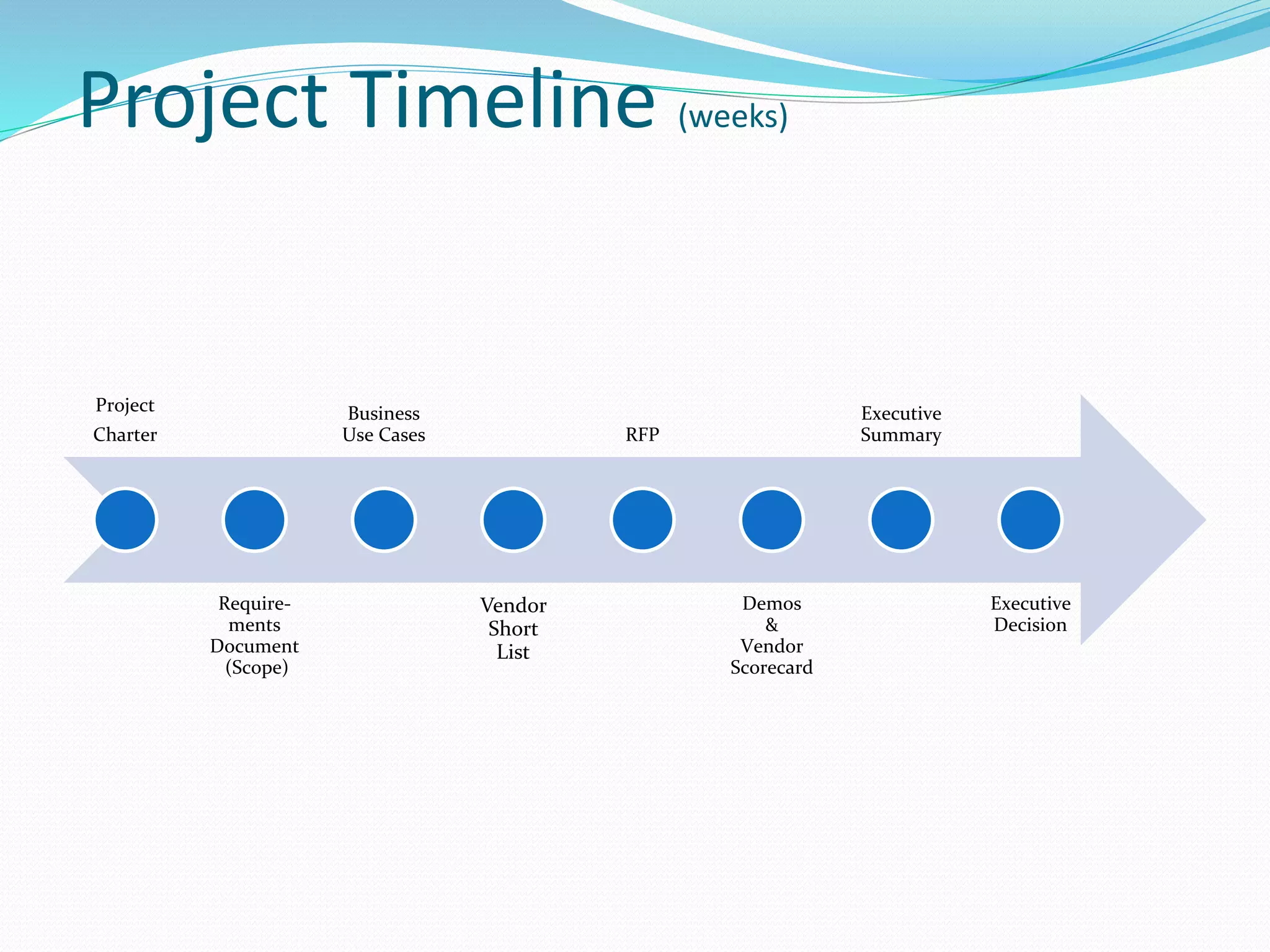
 In cost control, costs are optimized before they are
incurred.
 It is generally applicable to items which have standards.
 It contains guidelines and directive management such as,
how to do a thing.
Aspects Of Cost Control
1)Planning:- Initially a plan or set of targets is established in
the form of budgets and standards.
2)Communication:- The next step is to communicate the
plan to those whose responsibility is to implement the
plan.
3)Motivation:- Motivation is defined as the process that
initiates, guides and maintains goal-oriented behaviors.
cont..
4)Appraisal and Reporting:- comparison has to be
made with the predetermined targets and actual
performance. Deficiencies are noted and discussion is
started to overcome deficiencies.
5)Decision-making:- Finally, corrective actions and
remedial measures are taken or the set of targets are
revised, depending upon the administration’s
understanding of the problem.
Main Areas of cost control
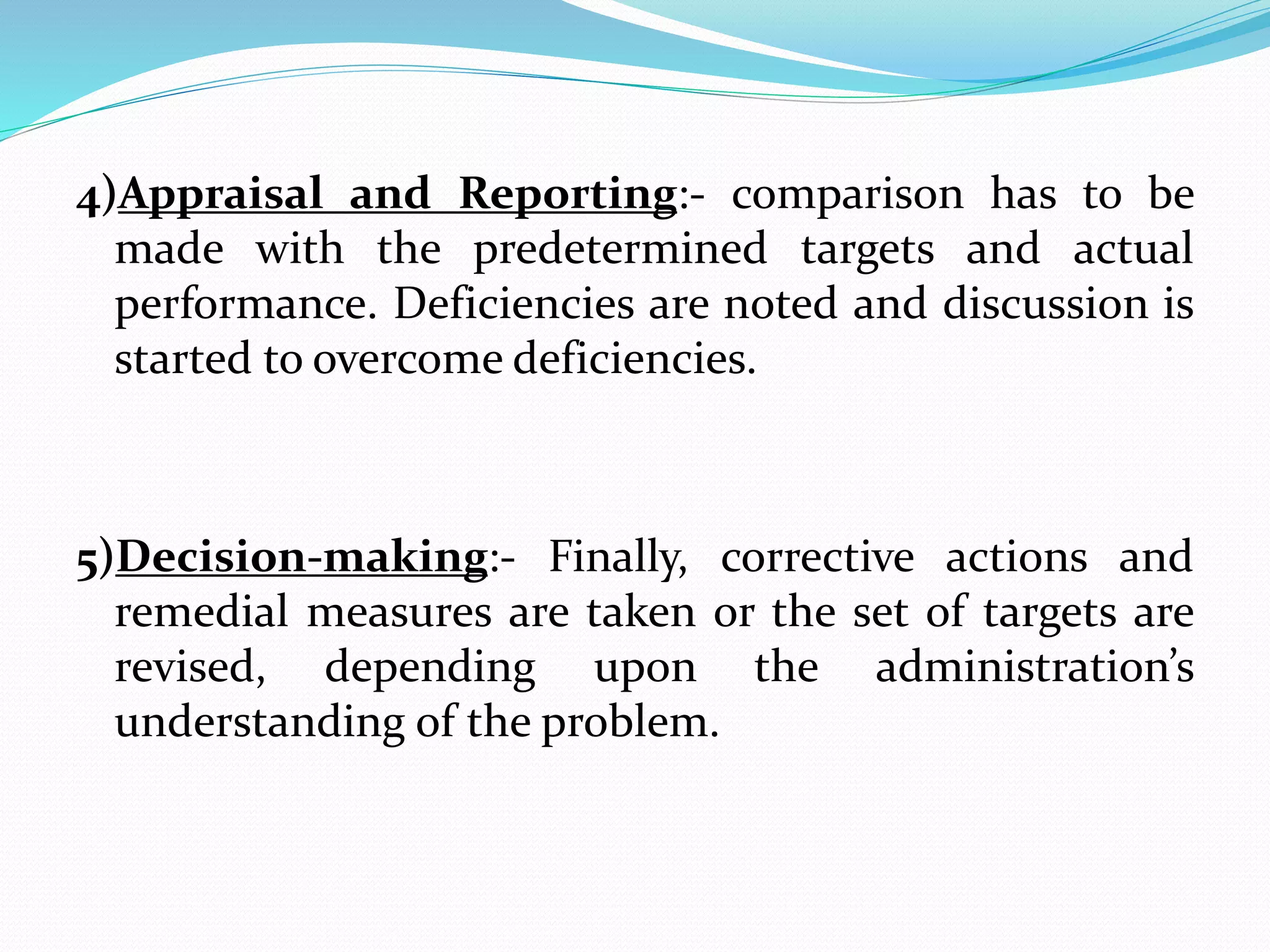
 Materials
 Labor
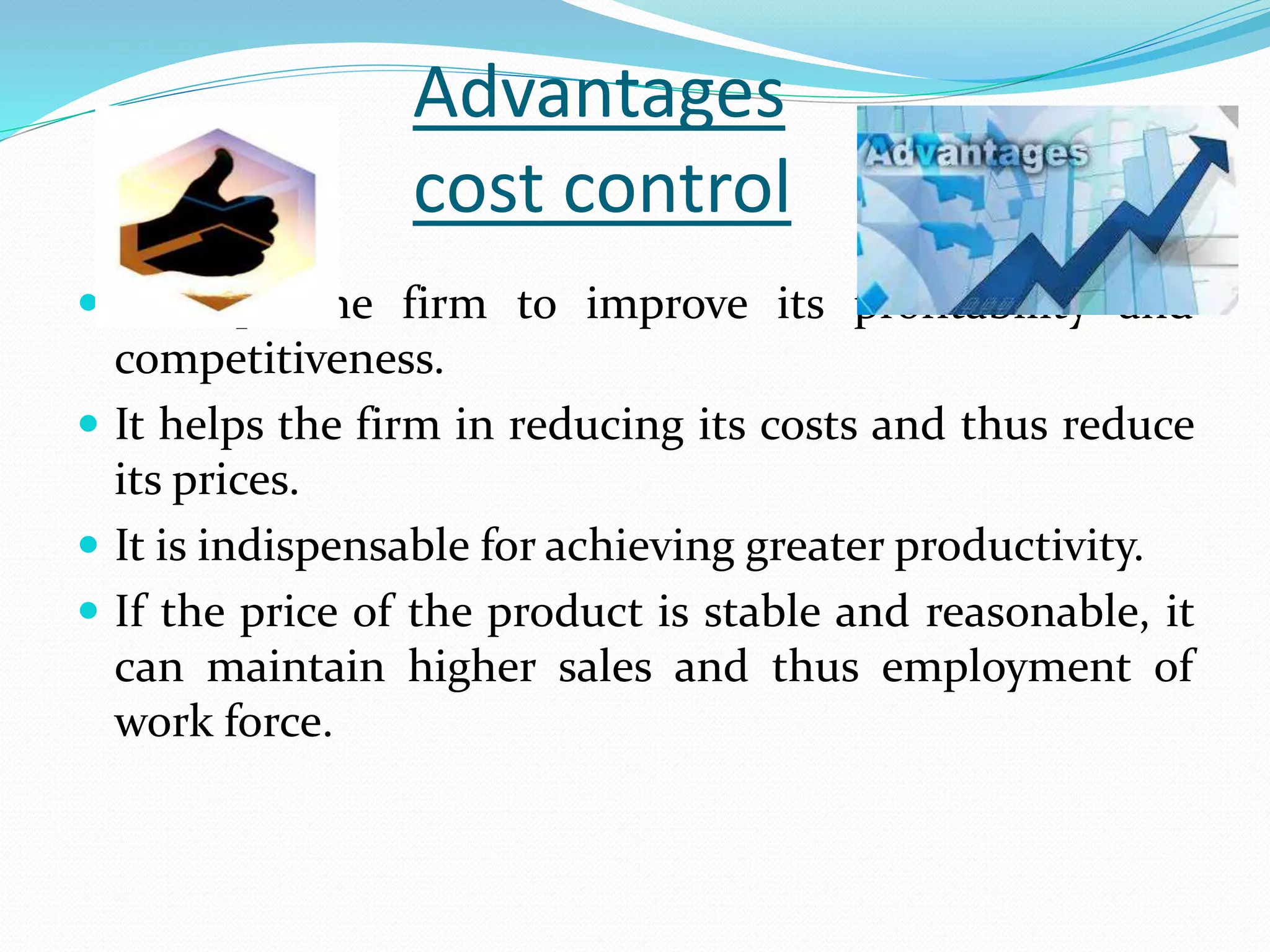
 Overheads
 Sales
 Energy
Advantages
cost control
 It helps the firm to improve its profitability and
competitiveness.
 It helps the firm in reducing its costs and thus reduce
its prices.
 It is indispensable for achieving greater productivity.
 If the price of the product is stable and reasonable, it
can maintain higher sales and thus employment of
work force.
Disadvantages of cost control
 Reduces the flexibility and process improvement in a
company.
 Restriction on innovation.
 Requirement of skillful personnel to set standards.
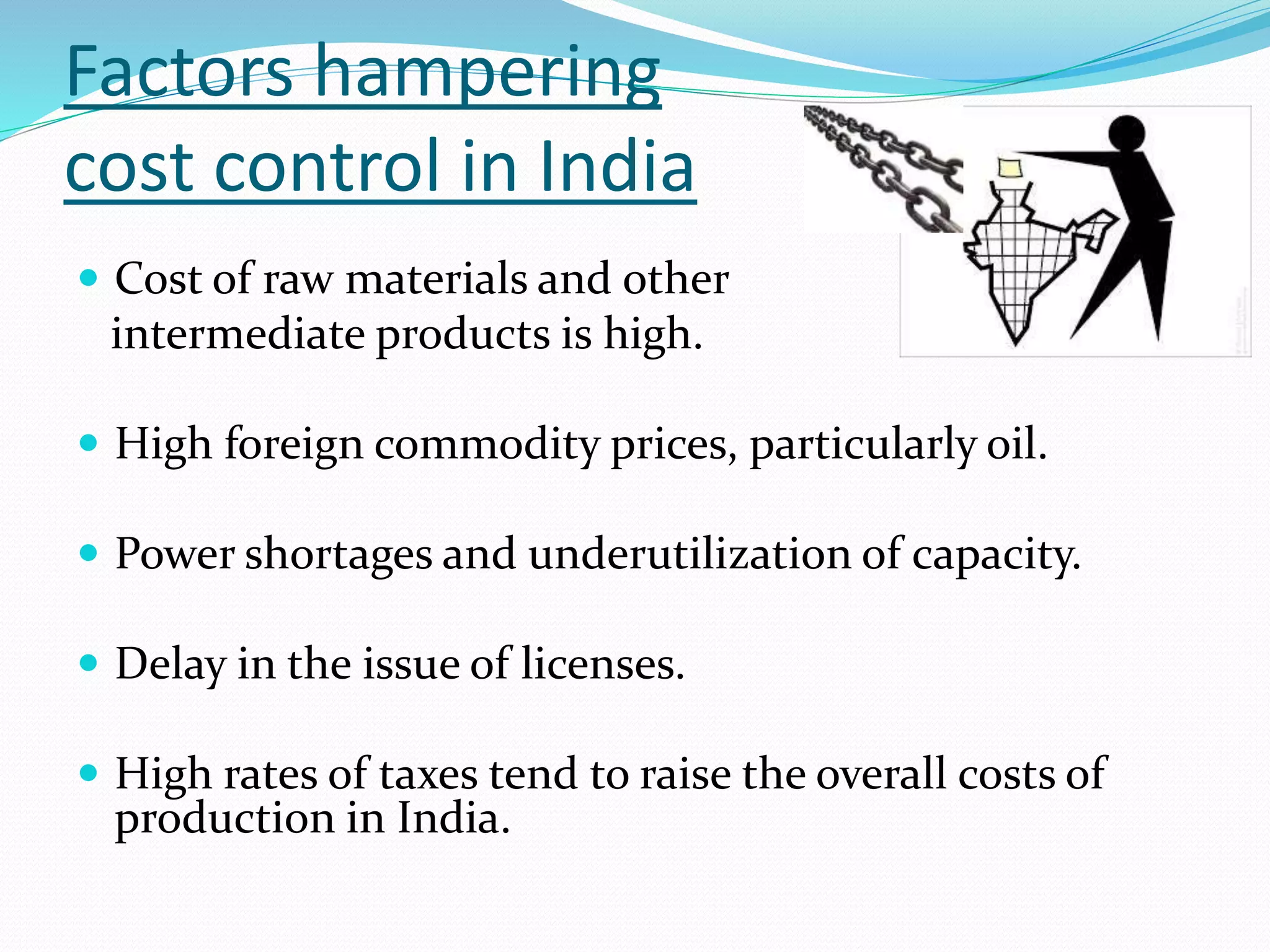
Factors hampering
cost control in India
 Cost of raw materials and other
intermediate products is high.
 High foreign commodity prices, particularly oil.
 Power shortages and underutilization of capacity.
 Delay in the issue of licenses.
 High rates of taxes tend to raise the overall costs of
production in India.
General techniques of
Cost cutting
 Use Skype to make domestic and international phone calls.
 Establish presence on social media sites such
as Facebook and Twitter instead of newspaper, magazine,
mail.
 Use electronic communication, cut down on print and
paper communication.
 Outsource computer maintenance.
 Lease equipments.
 Share office or building space with another business.
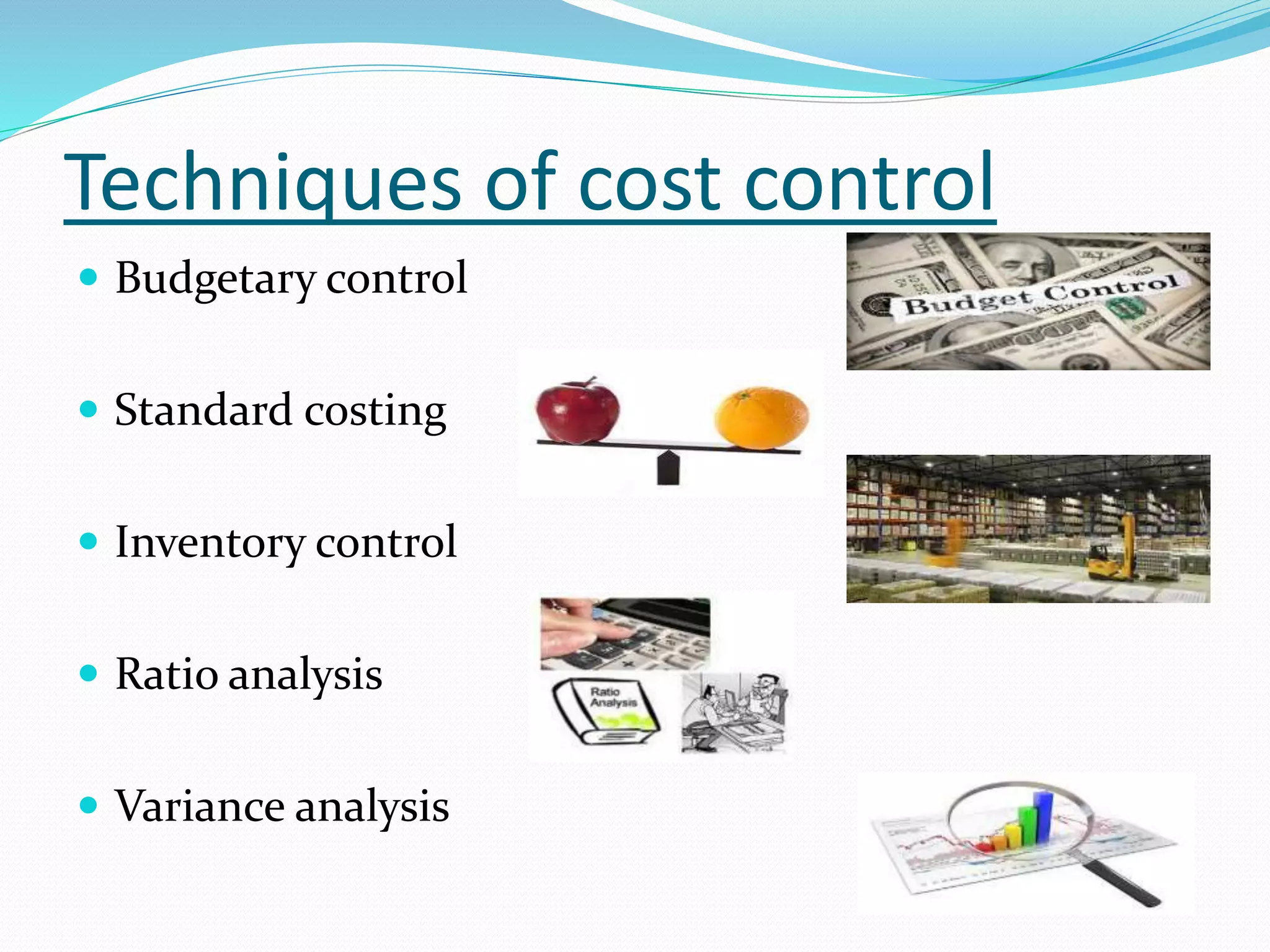
Techniques of cost control
 Budgetary control
 Standard costing
 Inventory control
 Ratio analysis
 Variance analysis
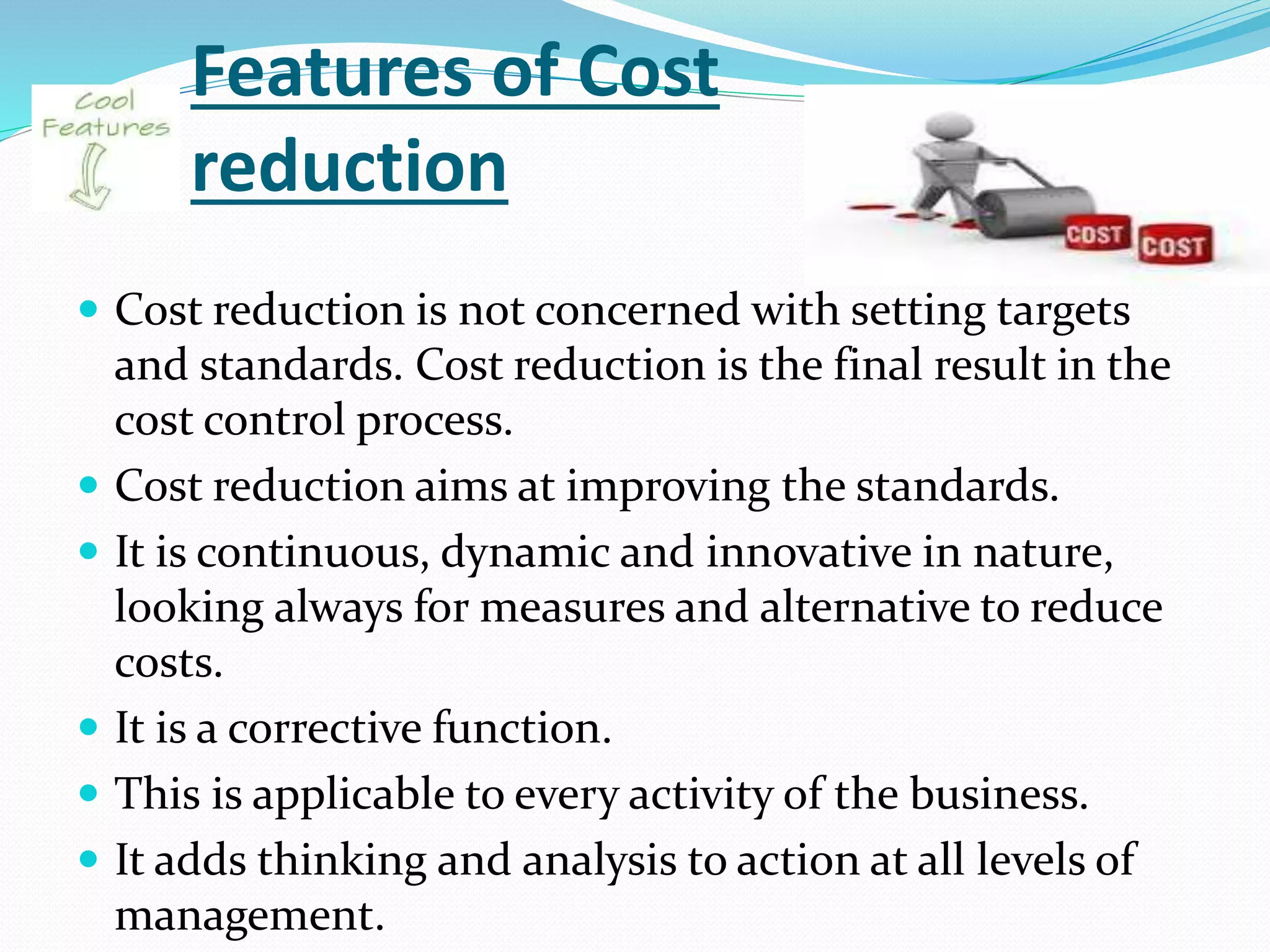
Cost Reduction
Def:-The process of identifying and eliminating
unnecessary costs to improve the profitability of a
business is know as cost reduction.
Features of Cost
reduction
 Cost reduction is not concerned with setting targets
and standards. Cost reduction is the final result in the
cost control process.
 Cost reduction aims at improving the standards.
 It is continuous, dynamic and innovative in nature,
looking always for measures and alternative to reduce
costs.
 It is a corrective function.
 This is applicable to every activity of the business.
 It adds thinking and analysis to action at all levels of
management.
Techniques of cost reduction Organization and methods
 Work study
 Material handling
 Automation
 Value analysis
 Variety reduction
 Production control
 Design
 Materials control
 Quality control
Goals
Defined Methodology
Identification of best vendor/product
Efficient and repeatable process
Quantitative & qualitative scoring
Compliance
Address potential vendor challenges
Sample Presentation Template to use
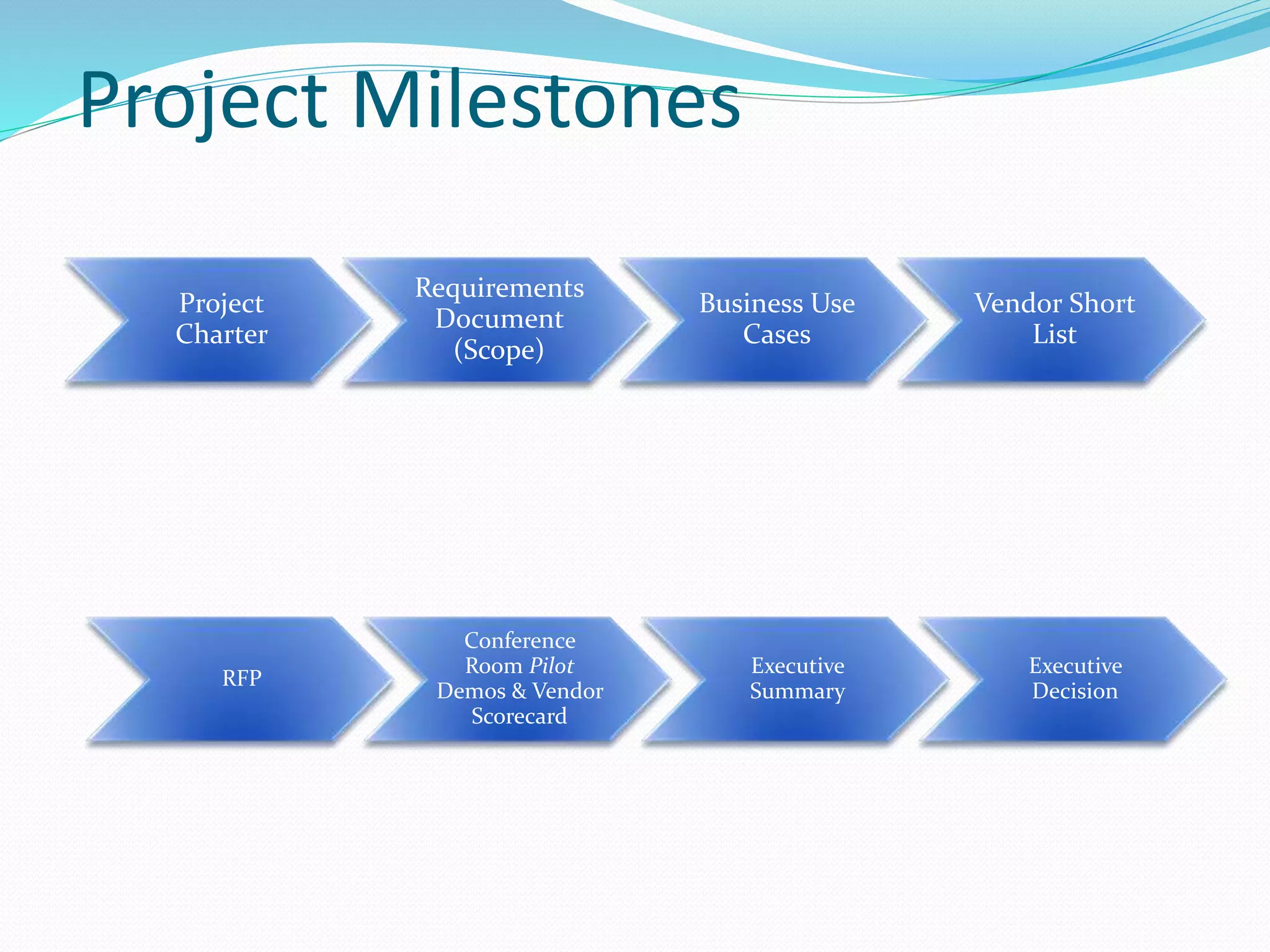
Project Milestones
Project
Charter
Requirements
Document
(Scope)
Business Use
Cases
Vendor Short
List
RFP
Conference
Room Pilot
Demos & Vendor
Scorecard
Executive
Summary
Executive
Decision
Project Timeline (weeks)
Project
Charter
Require-
ments
Document
(Scope)
Business
Use Cases
Vendor
Short
List
RFP
Demos
&
Vendor
Scorecard
Executive
Summary
Executive
Decision
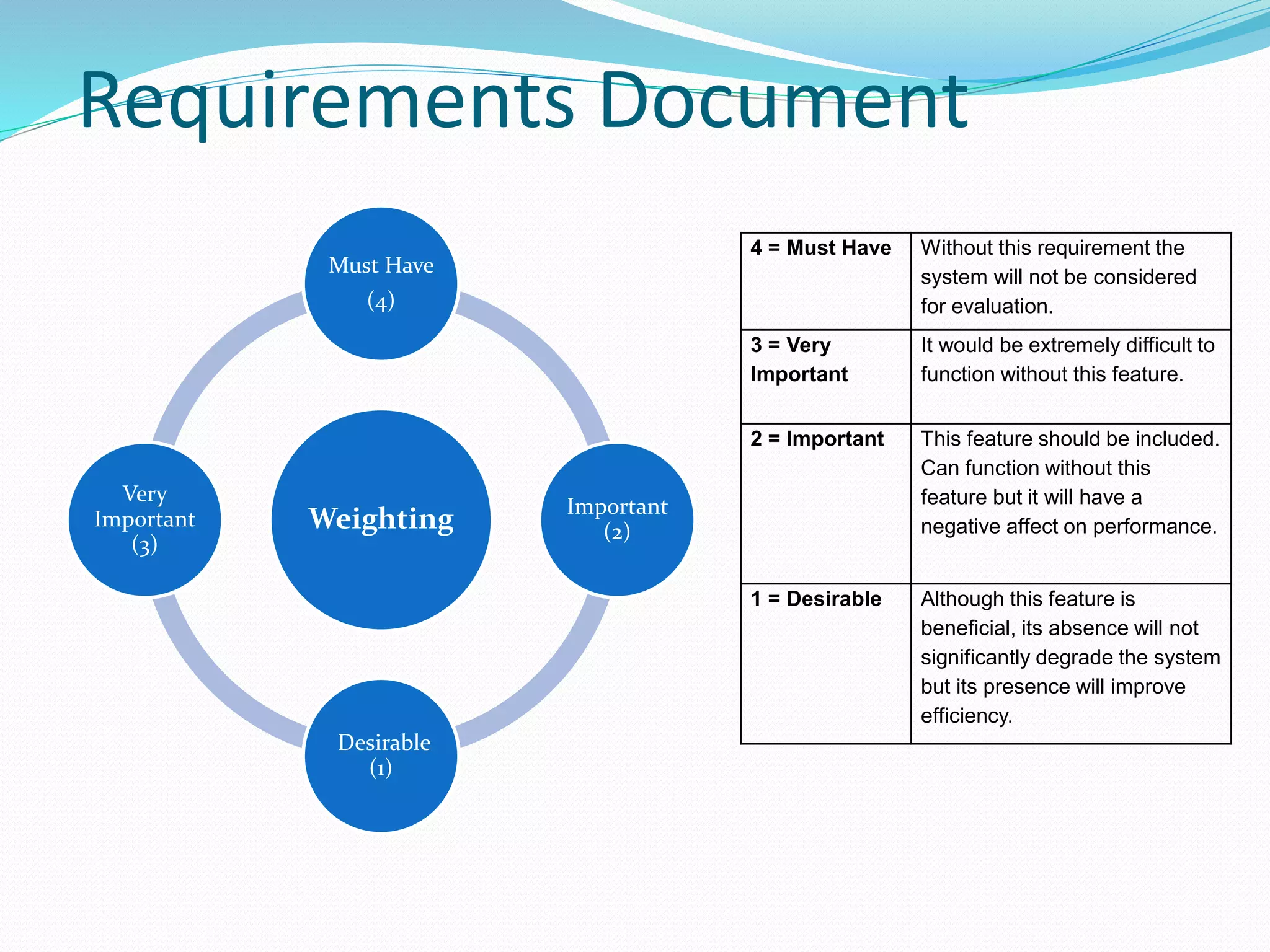
Requirements Document
Weighting
Must Have
(4)
Important
(2)
Desirable
(1)
Very
Important
(3)
4 = Must Have Without this requirement the
system will not be considered
for evaluation.
3 = Very
Important
It would be extremely difficult to
function without this feature.
2 = Important This feature should be included.
Can function without this
feature but it will have a
negative affect on performance.
1 = Desirable Although this feature is
beneficial, its absence will not
significantly degrade the system
but its presence will improve
efficiency.
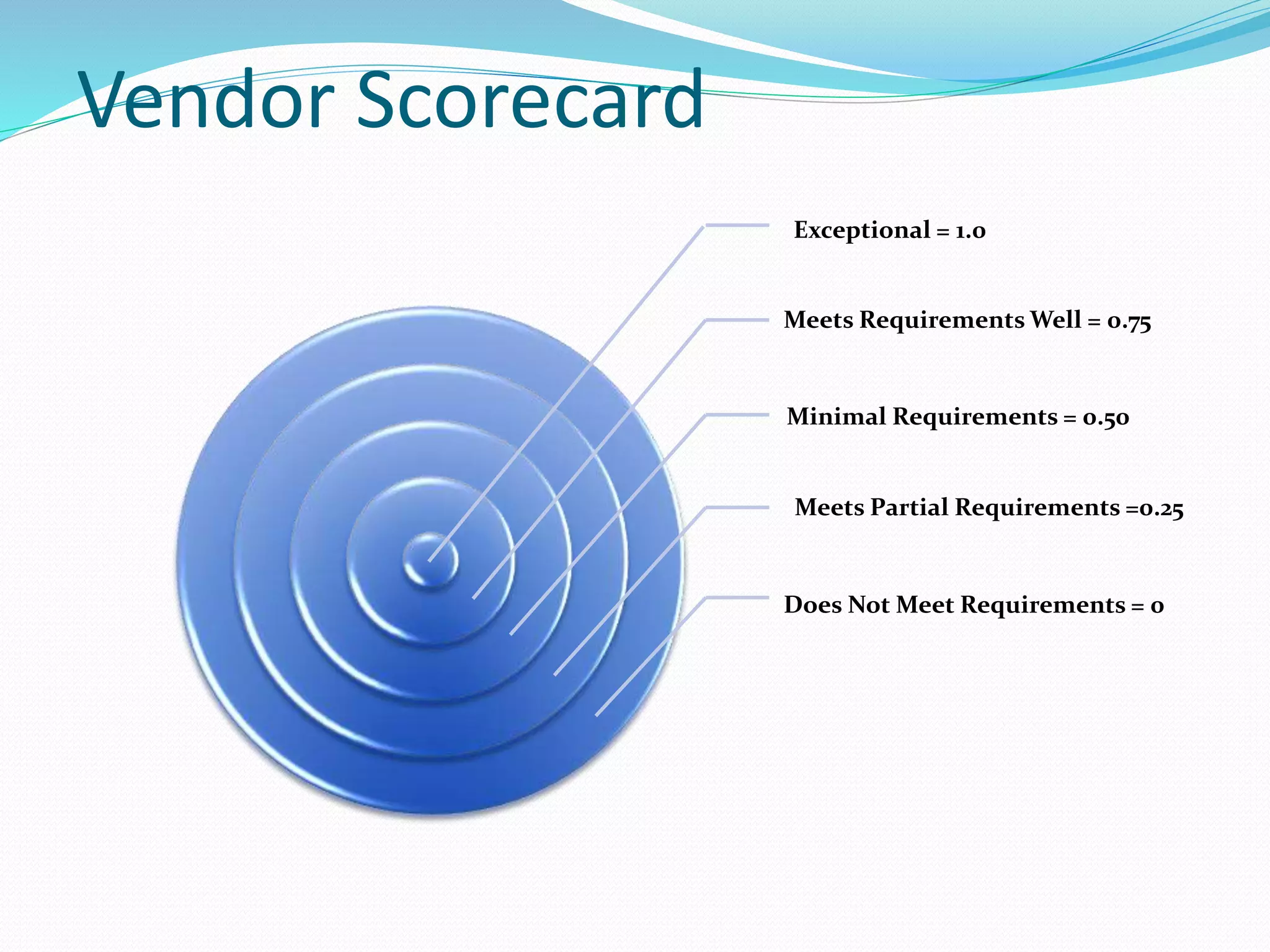
Vendor Scorecard
Exceptional = 1.0
Meets Requirements Well = 0.75
Minimal Requirements = 0.50
Meets Partial Requirements =0.25
Does Not Meet Requirements = 0
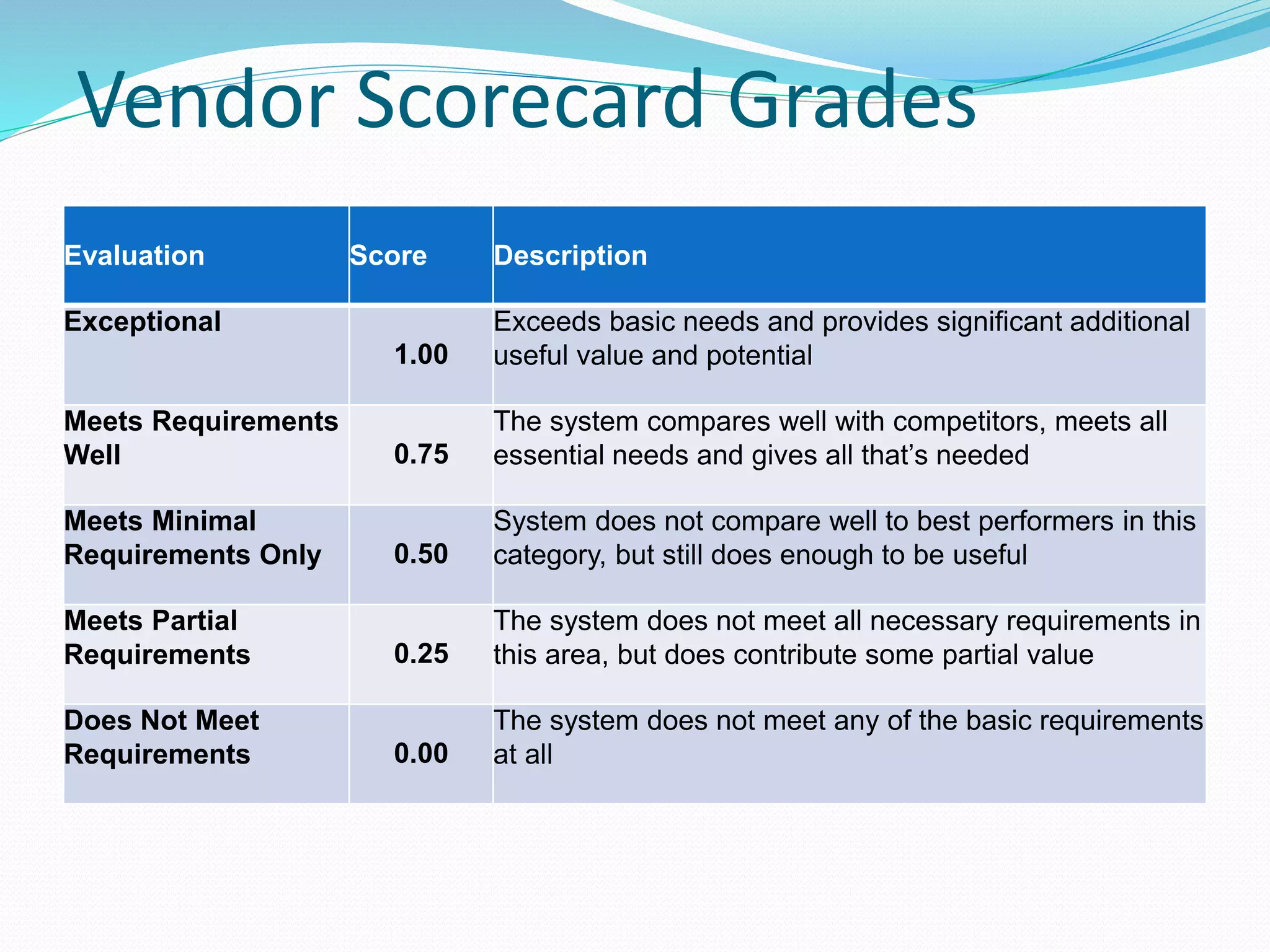
Vendor Scorecard Grades
Evaluation Score Description
Exceptional
1.00
Exceeds basic needs and provides significant additional
useful value and potential
Meets Requirements
Well 0.75
The system compares well with competitors, meets all
essential needs and gives all that’s needed
Meets Minimal
Requirements Only 0.50
System does not compare well to best performers in this
category, but still does enough to be useful
Meets Partial
Requirements 0.25
The system does not meet all necessary requirements in
this area, but does contribute some partial value
Does Not Meet
Requirements 0.00
The system does not meet any of the basic requirements
at all
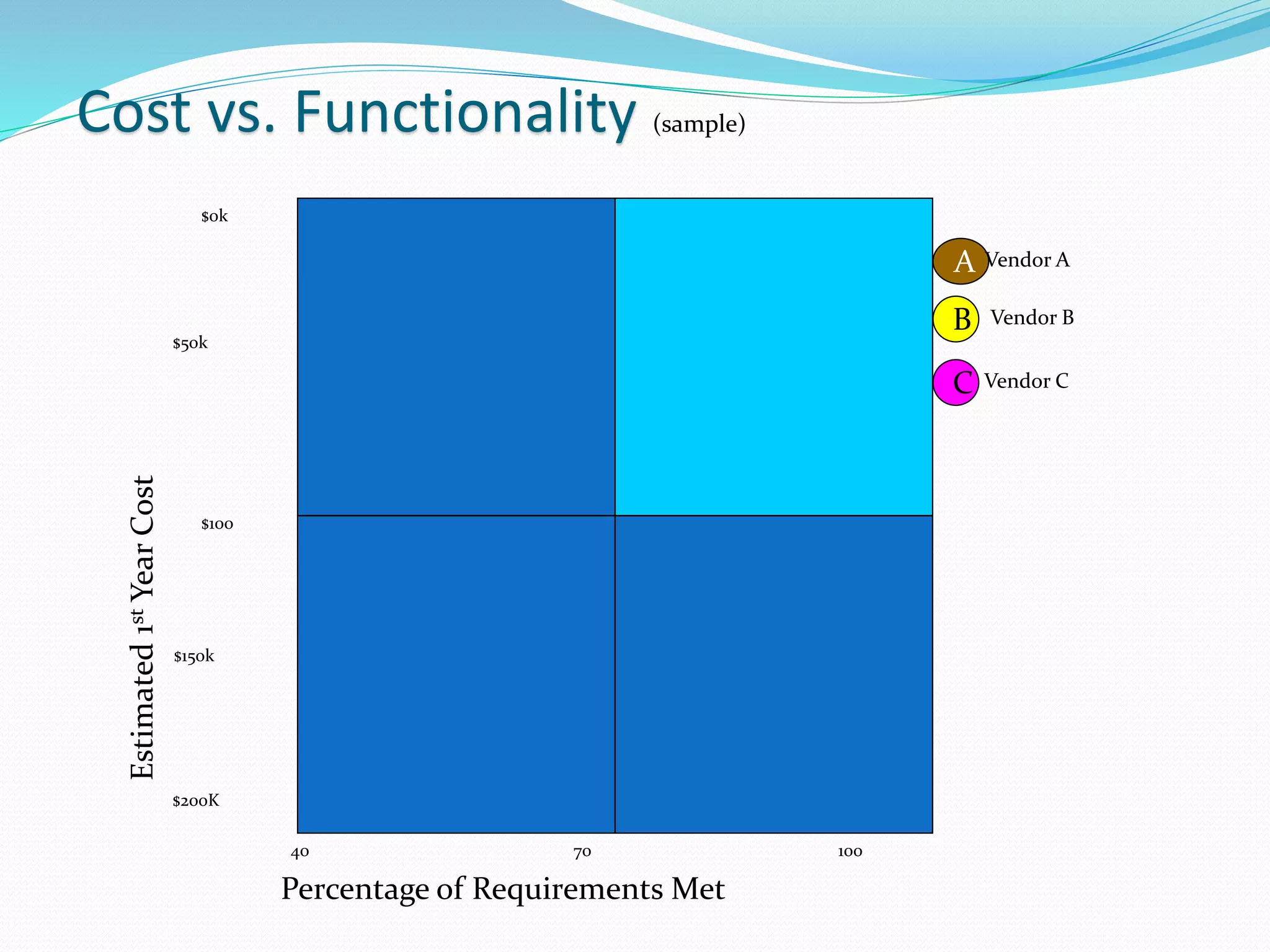
Cost vs. Functionality (sample)
Estimated1stYearCost
$0k
$50k
$100
$150k
$200K
40 70 100
Percentage of Requirements Met
Vendor CC
Vendor B
A Vendor A
B
Cost control and reduction

Cost control and reduction

  • 1.
    Guidance of: Presentedby Prof.Dr.M.V.Nagabhushanam , M.Pharm,Ph.D k.Sudheer Dept. Of PMRA y16mph287 Pmra
  • 2.
    Cost Control Def:- Theprocess of monitoring and regulating the expenditure of funds is know as cost control. In other words , it means to regulate/control the operating costs in a business firm.
  • 3.
    Features of Costcontrol  Cost control process involves setting targets and standards, ascertaining the actual performance, comparing the actual performance with standard, investigating the variances and taking corrective action.  It aims at achieving the standard.  It is a preventive function.  In cost control, costs are optimized before they are incurred.  It is generally applicable to items which have standards.  It contains guidelines and directive management such as, how to do a thing.
  • 4.
    Aspects Of CostControl 1)Planning:- Initially a plan or set of targets is established in the form of budgets and standards. 2)Communication:- The next step is to communicate the plan to those whose responsibility is to implement the plan. 3)Motivation:- Motivation is defined as the process that initiates, guides and maintains goal-oriented behaviors. cont..
  • 5.
    4)Appraisal and Reporting:-comparison has to be made with the predetermined targets and actual performance. Deficiencies are noted and discussion is started to overcome deficiencies. 5)Decision-making:- Finally, corrective actions and remedial measures are taken or the set of targets are revised, depending upon the administration’s understanding of the problem.
  • 6.
    Main Areas ofcost control  Materials  Labor  Overheads  Sales  Energy
  • 7.
    Advantages cost control  Ithelps the firm to improve its profitability and competitiveness.  It helps the firm in reducing its costs and thus reduce its prices.  It is indispensable for achieving greater productivity.  If the price of the product is stable and reasonable, it can maintain higher sales and thus employment of work force.
  • 8.
    Disadvantages of costcontrol  Reduces the flexibility and process improvement in a company.  Restriction on innovation.  Requirement of skillful personnel to set standards.
  • 9.
    Factors hampering cost controlin India  Cost of raw materials and other intermediate products is high.  High foreign commodity prices, particularly oil.  Power shortages and underutilization of capacity.  Delay in the issue of licenses.  High rates of taxes tend to raise the overall costs of production in India.
  • 10.
    General techniques of Costcutting  Use Skype to make domestic and international phone calls.  Establish presence on social media sites such as Facebook and Twitter instead of newspaper, magazine, mail.  Use electronic communication, cut down on print and paper communication.  Outsource computer maintenance.  Lease equipments.  Share office or building space with another business.
  • 11.
    Techniques of costcontrol  Budgetary control  Standard costing  Inventory control  Ratio analysis  Variance analysis
  • 12.
    Cost Reduction Def:-The processof identifying and eliminating unnecessary costs to improve the profitability of a business is know as cost reduction.
  • 13.
    Features of Cost reduction Cost reduction is not concerned with setting targets and standards. Cost reduction is the final result in the cost control process.  Cost reduction aims at improving the standards.  It is continuous, dynamic and innovative in nature, looking always for measures and alternative to reduce costs.  It is a corrective function.  This is applicable to every activity of the business.  It adds thinking and analysis to action at all levels of management.
  • 14.
    Techniques of costreduction Organization and methods  Work study  Material handling  Automation  Value analysis  Variety reduction  Production control  Design  Materials control  Quality control
  • 15.
    Goals Defined Methodology Identification ofbest vendor/product Efficient and repeatable process Quantitative & qualitative scoring Compliance Address potential vendor challenges Sample Presentation Template to use
  • 16.
    Project Milestones Project Charter Requirements Document (Scope) Business Use Cases VendorShort List RFP Conference Room Pilot Demos & Vendor Scorecard Executive Summary Executive Decision
  • 17.
    Project Timeline (weeks) Project Charter Require- ments Document (Scope) Business UseCases Vendor Short List RFP Demos & Vendor Scorecard Executive Summary Executive Decision
  • 18.
    Requirements Document Weighting Must Have (4) Important (2) Desirable (1) Very Important (3) 4= Must Have Without this requirement the system will not be considered for evaluation. 3 = Very Important It would be extremely difficult to function without this feature. 2 = Important This feature should be included. Can function without this feature but it will have a negative affect on performance. 1 = Desirable Although this feature is beneficial, its absence will not significantly degrade the system but its presence will improve efficiency.
  • 19.
    Vendor Scorecard Exceptional =1.0 Meets Requirements Well = 0.75 Minimal Requirements = 0.50 Meets Partial Requirements =0.25 Does Not Meet Requirements = 0
  • 20.
    Vendor Scorecard Grades EvaluationScore Description Exceptional 1.00 Exceeds basic needs and provides significant additional useful value and potential Meets Requirements Well 0.75 The system compares well with competitors, meets all essential needs and gives all that’s needed Meets Minimal Requirements Only 0.50 System does not compare well to best performers in this category, but still does enough to be useful Meets Partial Requirements 0.25 The system does not meet all necessary requirements in this area, but does contribute some partial value Does Not Meet Requirements 0.00 The system does not meet any of the basic requirements at all
  • 21.
    Cost vs. Functionality(sample) Estimated1stYearCost $0k $50k $100 $150k $200K 40 70 100 Percentage of Requirements Met Vendor CC Vendor B A Vendor A B