Copyright and Ethics In The Digital Age COM495 Kathy E. Gill
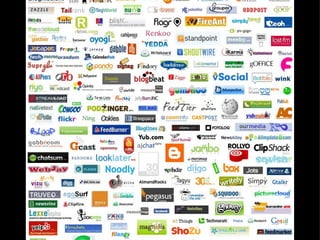
Framing Web 2.0 Technologies
Technologies change how we interact with (digital) cultural objects.  We are no longer merely a consumer; we can also be a producer.
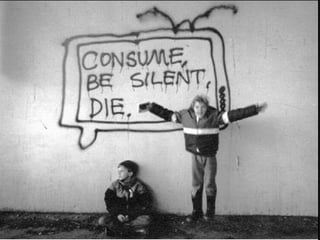
This is a shift from the late 20th century model:
 
In Our Digital World, It Is Easier to Borrow, Copy, Manipulate
This means it is technically easier to express ourselves in new, creative ways.
The Clash Culture as a freely flowing current of ideas and practices runs head first into culture as intellectual property
 
Ask  permission   each time Ask  permission   each use
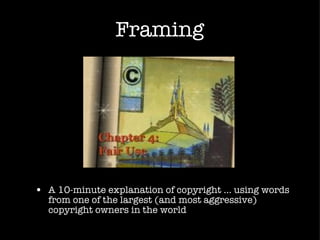
Framing A 10-minute explanation of copyright … using words from one of the largest (and most aggressive) copyright owners in the world
Terms: Copyright Copyright law protects  “creative and expressive works” Automatic (do not have to file, register) Scope:  http://copyright.gov/ Does not extend to ideas or facts
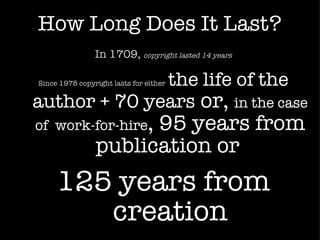
How Long Does It Last? In 1709,  copyright lasted 14 years Since 1978 copyright lasts for either   the life of the author + 70 years  or,  in the case of  work-for-hire , 95 years from publication or  125 years from creation
Controversy Copyright purpose is to  “ promote the progress of science and the useful arts ” … and the duration for exclusivity is to be “ limited ” …  - US Constitution
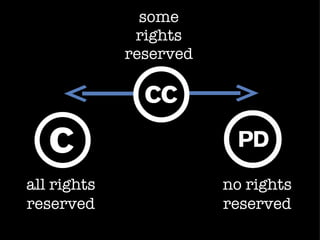
Terms: Public Domain When the copyright term expires, works revert to public domain. The copyright holder may dedicate works to the public domain; eg, works funded by the US Government. PD works are freely available for use by anyone for anything.
some rights reserved no rights reserved all rights reserved
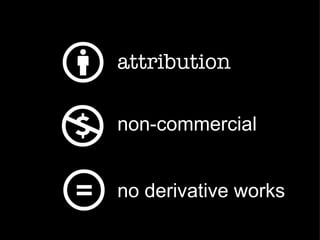
attribution non-commercial no derivative works
Ethics Value system by which a person determines what is right or wrong For bloggers: Be honest Be transparent Credit others Respect position of opponents
Digital technologies enable a "Tinkering culture" -- a "read write rip burn culture"
The legal system has not yet caught up with technology.
Sources Copyright, Fair Use & The Evolution of Creative Commons:  http://www.slideshare.net/cliotech/copyright-the-evolution-of-creative-commonshttp:/www.slideshare.net/cliotech/copyright-the-evolution-of-creative-commons Copyright and Options for Creative Practitioners:  http://www.slideshare.net/creativecommonsaustralia/creative-copyright-copyright-and-options-for-creative-practitioners A Fair(y) Use Tale:  http://youtube.com/watch?v=CJn_jC4FNDo Image: Consume. Be silent. Die.  (unknown) Web 2.0 Image (1):  http://joevans.pbwiki.com/Web+2+Point+O+Tools
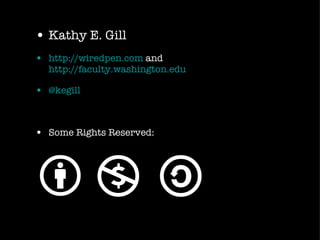
Kathy E. Gill http://wiredpen.com  and  http://faculty.washington.edu @kegill Some Rights Reserved:

Copyright and Ethics In Digital Age

  • 1.
    Copyright and EthicsIn The Digital Age COM495 Kathy E. Gill
  • 2.
    Framing Web 2.0Technologies
  • 3.
    Technologies change howwe interact with (digital) cultural objects. We are no longer merely a consumer; we can also be a producer.
  • 4.
    This is ashift from the late 20th century model:
  • 5.
  • 6.
    In Our DigitalWorld, It Is Easier to Borrow, Copy, Manipulate
  • 7.
    This means itis technically easier to express ourselves in new, creative ways.
  • 8.
    The Clash Cultureas a freely flowing current of ideas and practices runs head first into culture as intellectual property
  • 9.
  • 10.
    Ask permission each time Ask permission each use
  • 11.
    Framing A 10-minuteexplanation of copyright … using words from one of the largest (and most aggressive) copyright owners in the world
  • 12.
    Terms: Copyright Copyrightlaw protects “creative and expressive works” Automatic (do not have to file, register) Scope: http://copyright.gov/ Does not extend to ideas or facts
  • 13.
    How Long DoesIt Last? In 1709, copyright lasted 14 years Since 1978 copyright lasts for either the life of the author + 70 years or, in the case of work-for-hire , 95 years from publication or 125 years from creation
  • 14.
    Controversy Copyright purposeis to “ promote the progress of science and the useful arts ” … and the duration for exclusivity is to be “ limited ” … - US Constitution
  • 15.
    Terms: Public DomainWhen the copyright term expires, works revert to public domain. The copyright holder may dedicate works to the public domain; eg, works funded by the US Government. PD works are freely available for use by anyone for anything.
  • 16.
    some rights reservedno rights reserved all rights reserved
  • 17.
  • 18.
    Ethics Value systemby which a person determines what is right or wrong For bloggers: Be honest Be transparent Credit others Respect position of opponents
  • 19.
    Digital technologies enablea "Tinkering culture" -- a "read write rip burn culture"
  • 20.
    The legal systemhas not yet caught up with technology.
  • 21.
    Sources Copyright, FairUse & The Evolution of Creative Commons: http://www.slideshare.net/cliotech/copyright-the-evolution-of-creative-commonshttp:/www.slideshare.net/cliotech/copyright-the-evolution-of-creative-commons Copyright and Options for Creative Practitioners: http://www.slideshare.net/creativecommonsaustralia/creative-copyright-copyright-and-options-for-creative-practitioners A Fair(y) Use Tale: http://youtube.com/watch?v=CJn_jC4FNDo Image: Consume. Be silent. Die. (unknown) Web 2.0 Image (1): http://joevans.pbwiki.com/Web+2+Point+O+Tools
  • 22.
    Kathy E. Gillhttp://wiredpen.com and http://faculty.washington.edu @kegill Some Rights Reserved:

Editor's Notes

  • #3 http://joevans.pbwiki.com/f/web-20.jpg
  • #12 http://cyberlaw.stanford.edu/documentary-film-program/film/a-fair-y-use-tale
  • #17 a number of options, varying in how restrictive they are, between these two positions.