Objectives:
Why we check copies?
How to comment on the copy?
School format for copy checking.
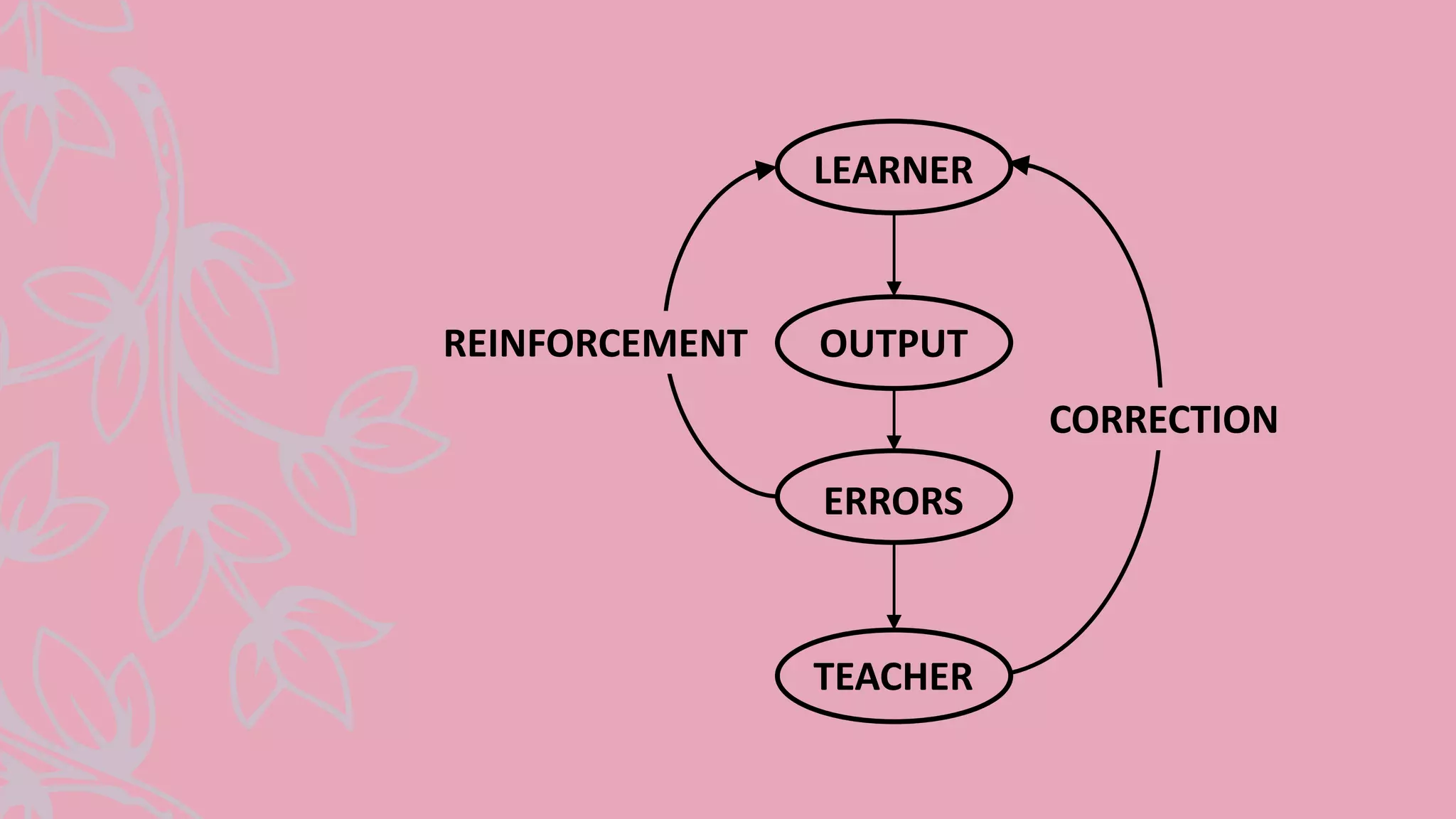
LEARNER
REINFORCEMENT OUTPUT
ERRORS
TEACHER
CORRECTION
Q: Why we check answers
We spend time checking answers once students have finished a class or homework
exercise because learners need to:
 Be reassured that what they think they have understood is right, before
going on to learn and acquire it entirely
 Have repeated exposure to language to aid acquisition
 Be encouraged to think about why an answer is correct, or how they have
reached a particular answer
 Have a record of correct language for future reference
 Have support at different levels. For stronger students, checking answers
reinforces. what they already know and weaker students can learn from the
answers
 Get a sense of satisfaction from discussing and sharing something they have
spent time doing.
As teachers we need to:
 Monitor students' learning, so as to make decisions about
whether further practice or explanations are required
 Use answers to recap and expand on what has been
covered.
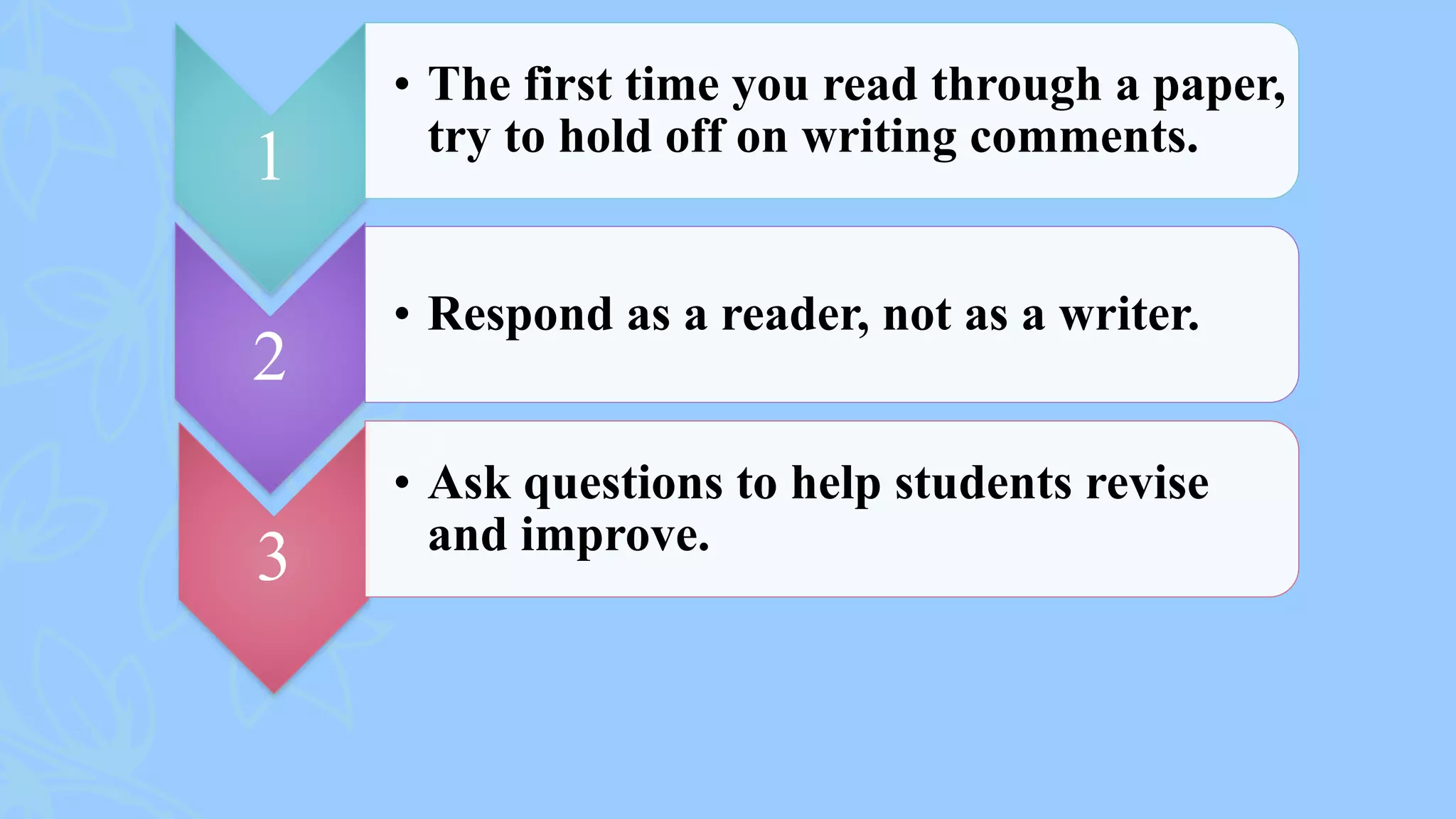
1
• The first time you read through a paper,
try to hold off on writing comments.
2
• Respond as a reader, not as a writer.
3
• Ask questions to help students revise
and improve.
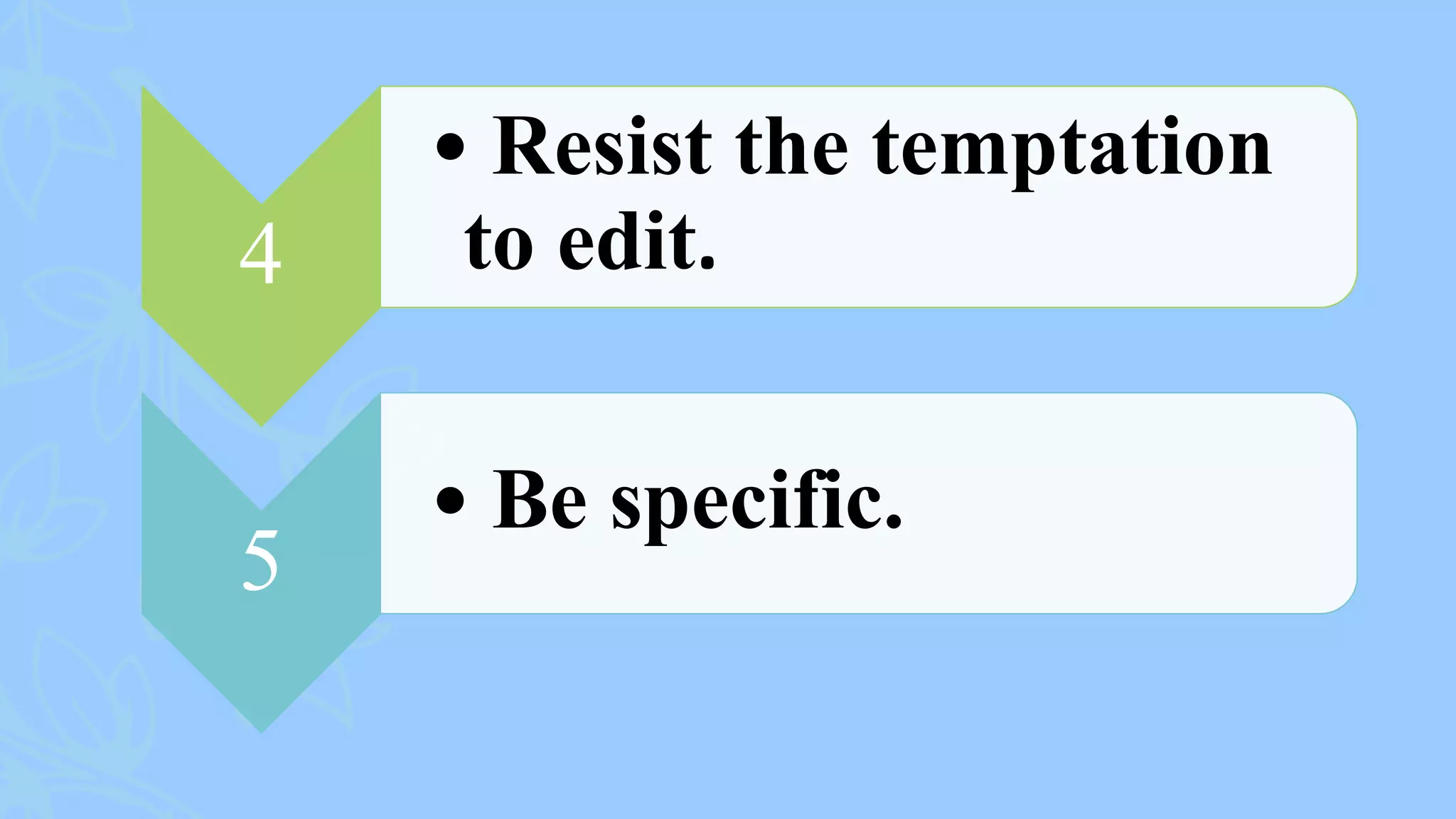
4
• Resist the temptation
to edit.
5
• Be specific.
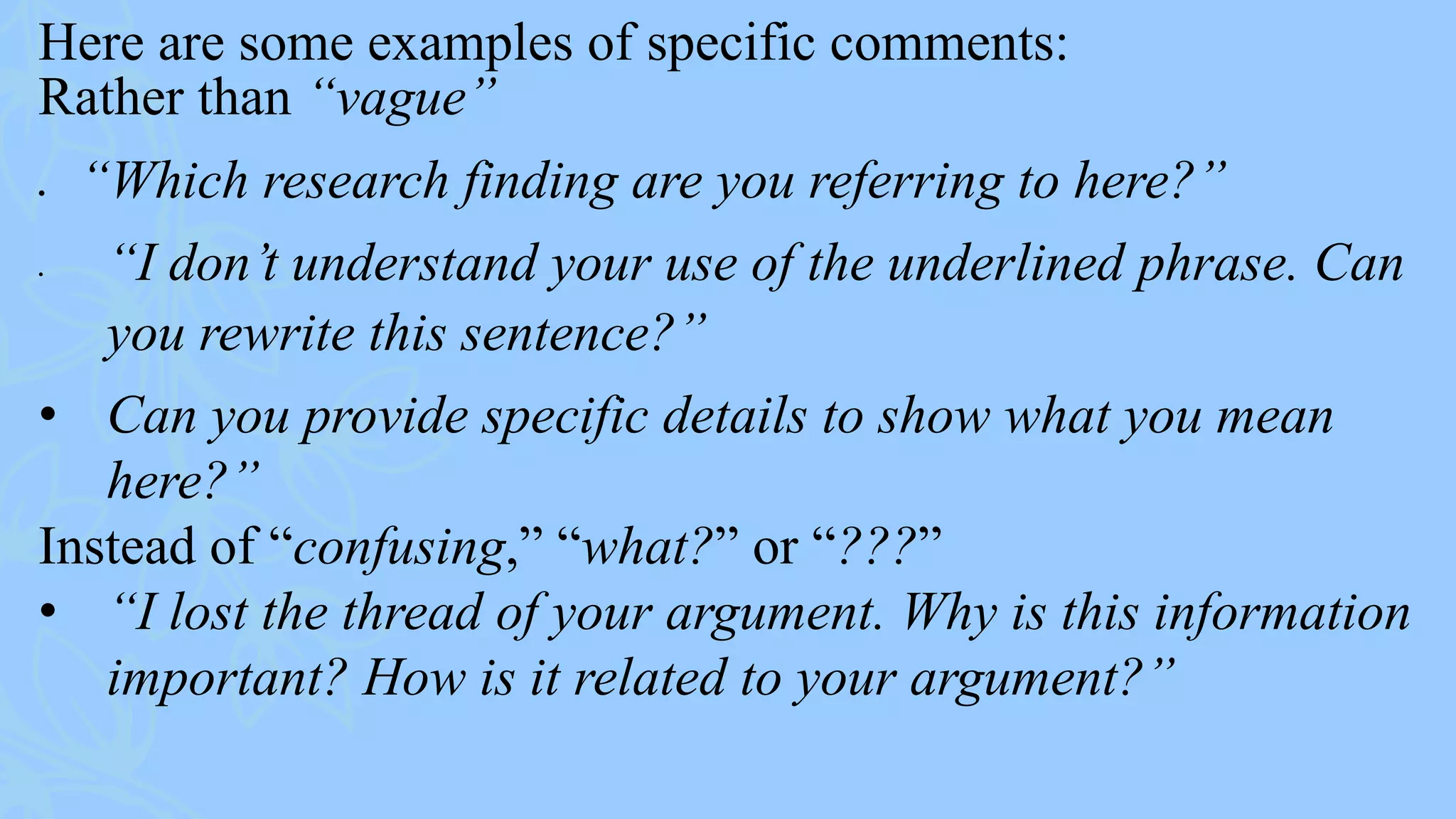
Here are some examples of specific comments:
Rather than “vague”
 “Which research finding are you referring to here?”
• “I don’t understand your use of the underlined phrase. Can
you rewrite this sentence?”
• Can you provide specific details to show what you mean
here?”
Instead of “confusing,” “what?” or “???”
• “I lost the thread of your argument. Why is this information
important? How is it related to your argument?”
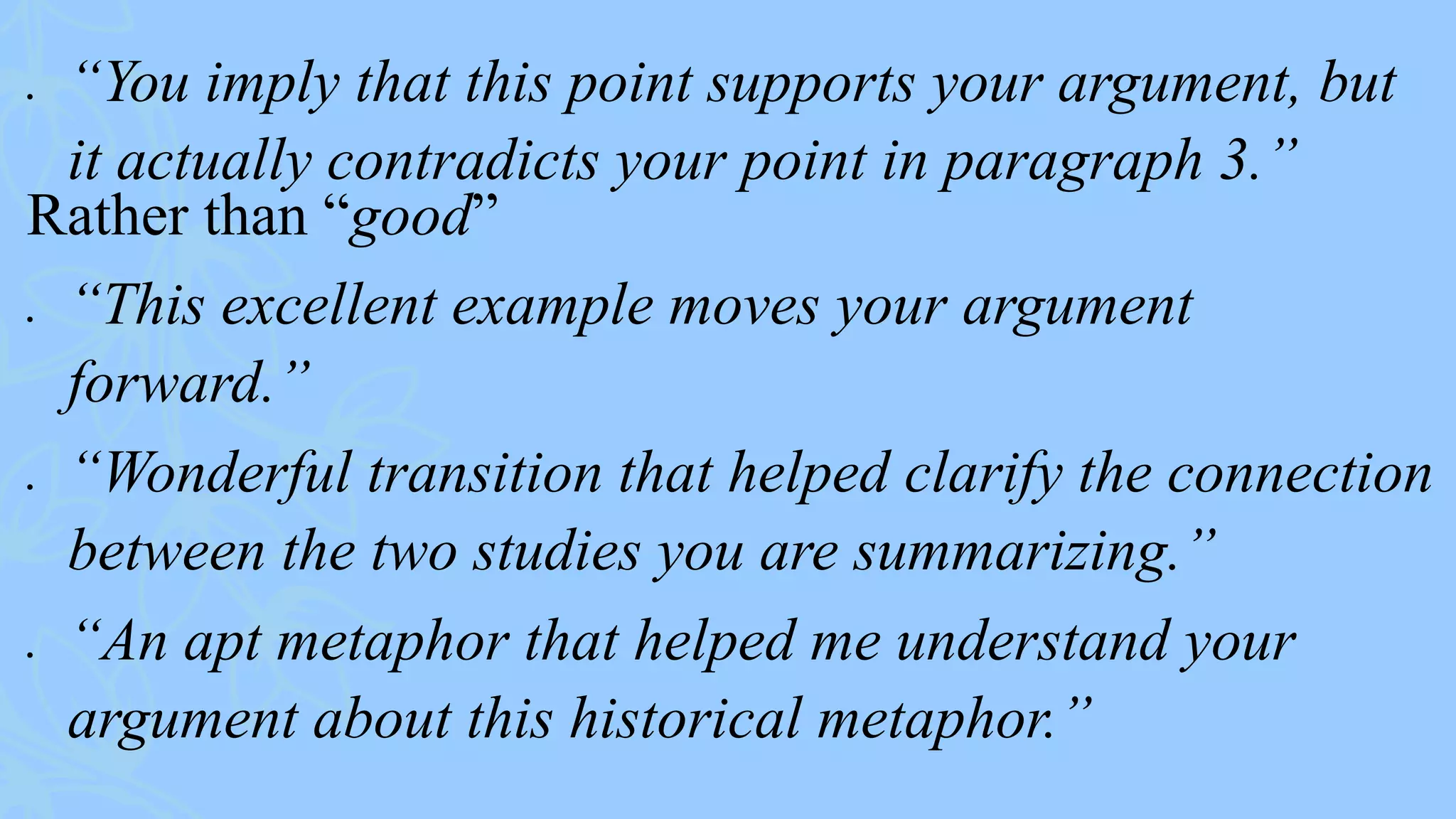
 “You imply that this point supports your argument, but
it actually contradicts your point in paragraph 3.”
Rather than “good”
 “This excellent example moves your argument
forward.”
 “Wonderful transition that helped clarify the connection
between the two studies you are summarizing.”
 “An apt metaphor that helped me understand your
argument about this historical metaphor.”
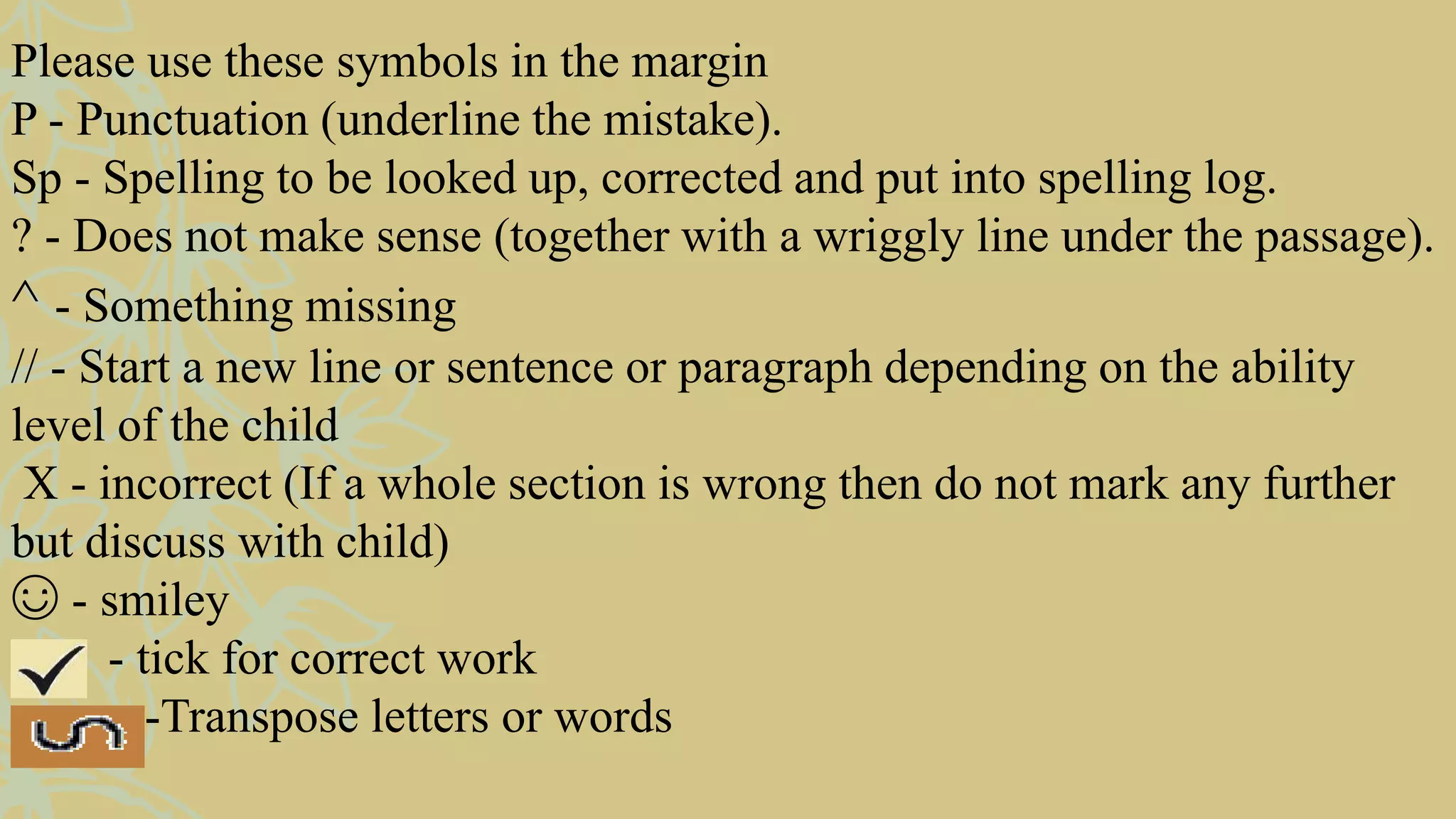
Please use these symbols in the margin
P - Punctuation (underline the mistake).
Sp - Spelling to be looked up, corrected and put into spelling log.
? - Does not make sense (together with a wriggly line under the passage).
^ - Something missing
// - Start a new line or sentence or paragraph depending on the ability
level of the child
X - incorrect (If a whole section is wrong then do not mark any further
but discuss with child)
☺ - smiley
- tick for correct work
-Transpose letters or words
As a Teacher What I have to consider during
Copy Checking
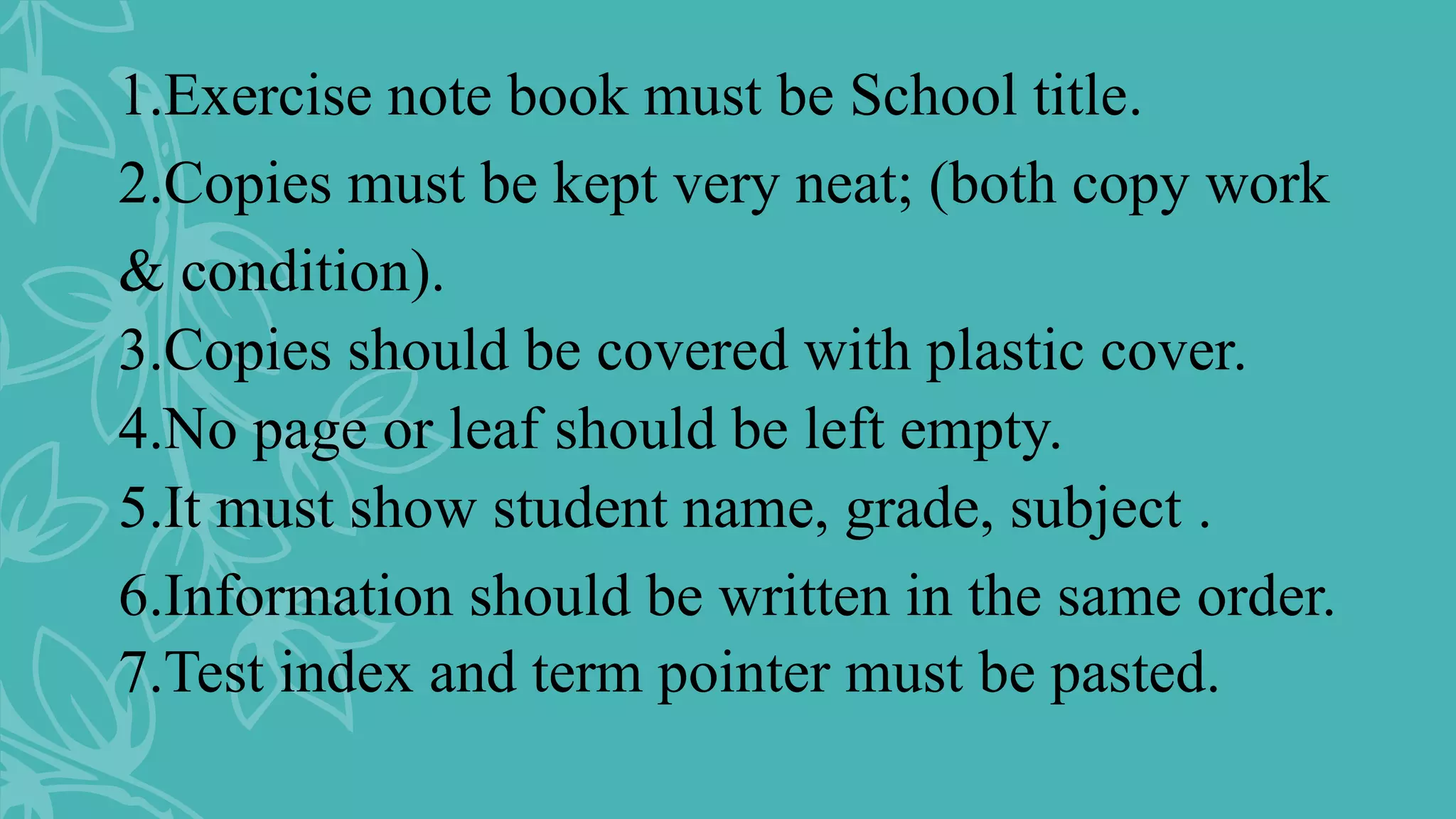
1.Exercise note book must be School title.
2.Copies must be kept very neat; (both copy work
& condition).
3.Copies should be covered with plastic cover.
4.No page or leaf should be left empty.
5.It must show student name, grade, subject .
6.Information should be written in the same order.
7.Test index and term pointer must be pasted.
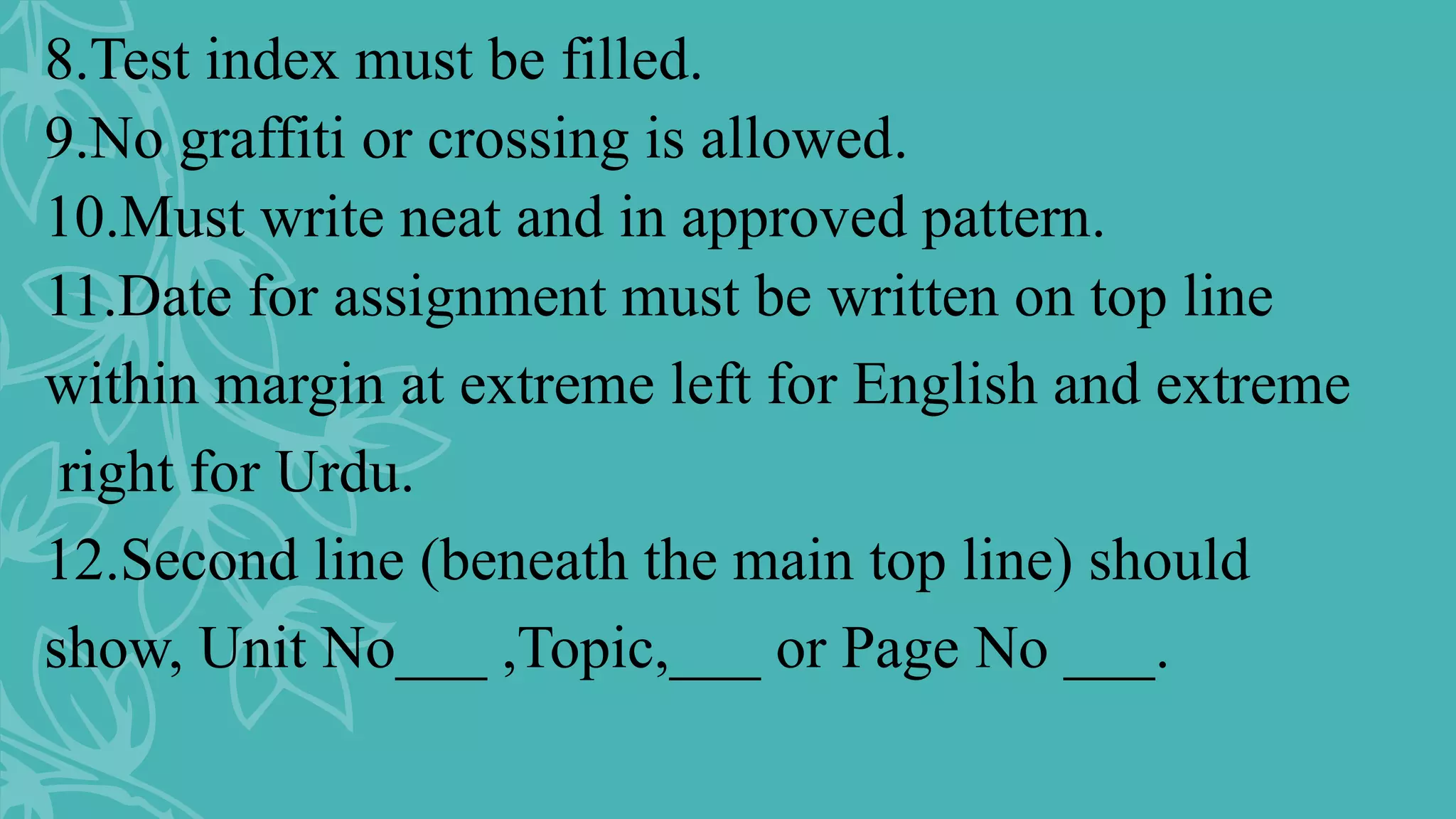
8.Test index must be filled.
9.No graffiti or crossing is allowed.
10.Must write neat and in approved pattern.
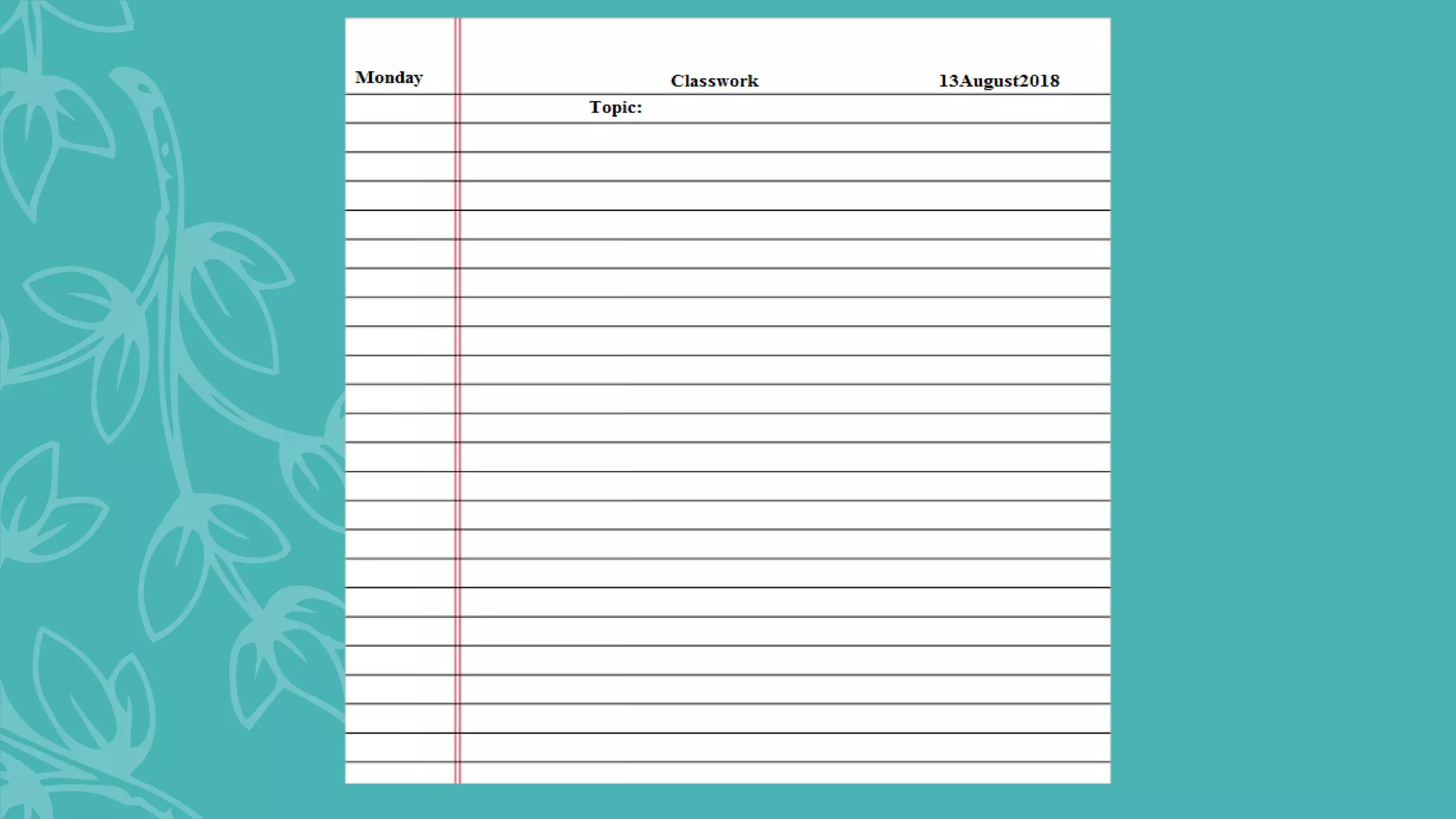
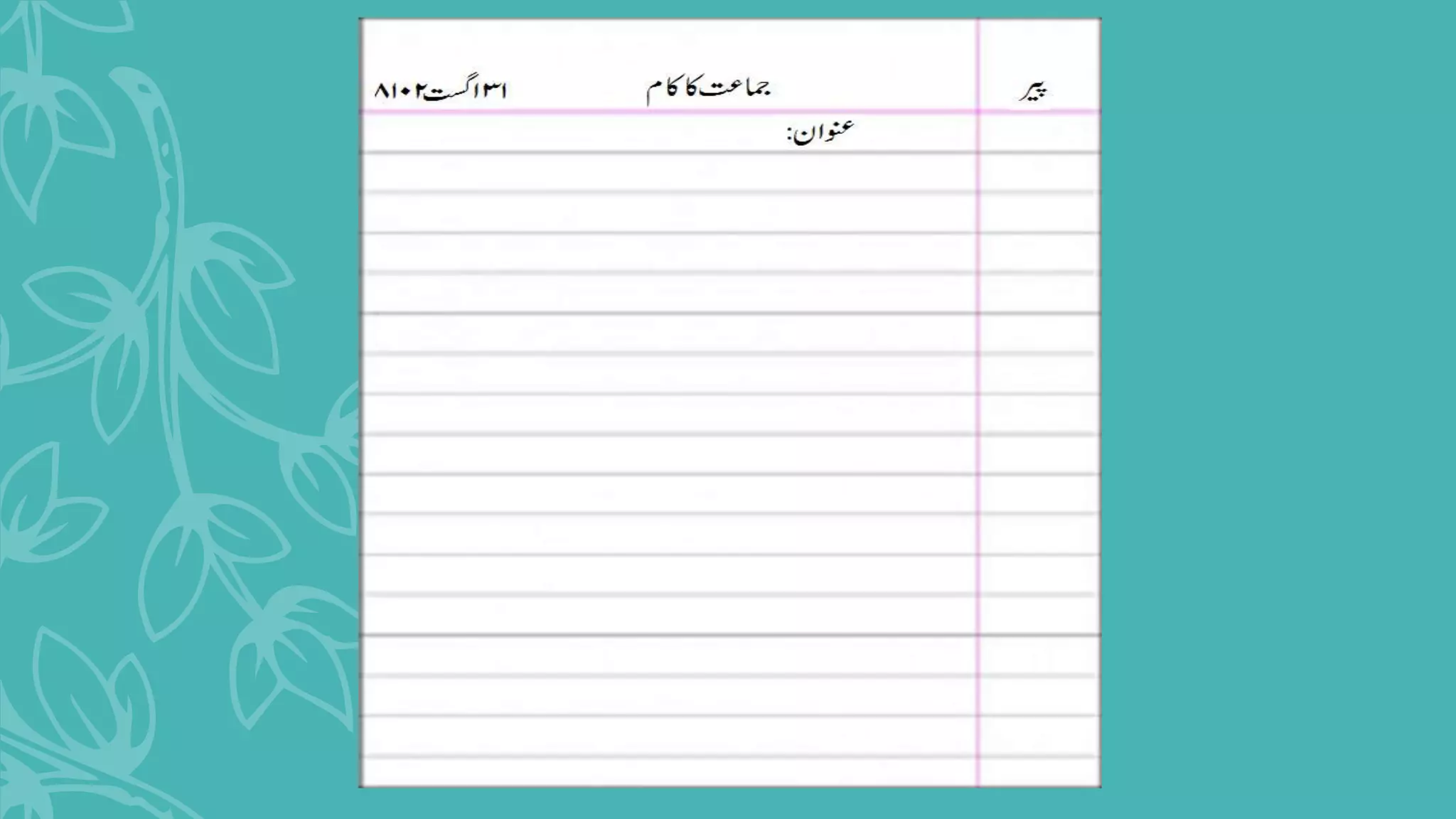
11.Date for assignment must be written on top line
within margin at extreme left for English and extreme
right for Urdu.
12.Second line (beneath the main top line) should
show, Unit No___ ,Topic,___ or Page No ___.
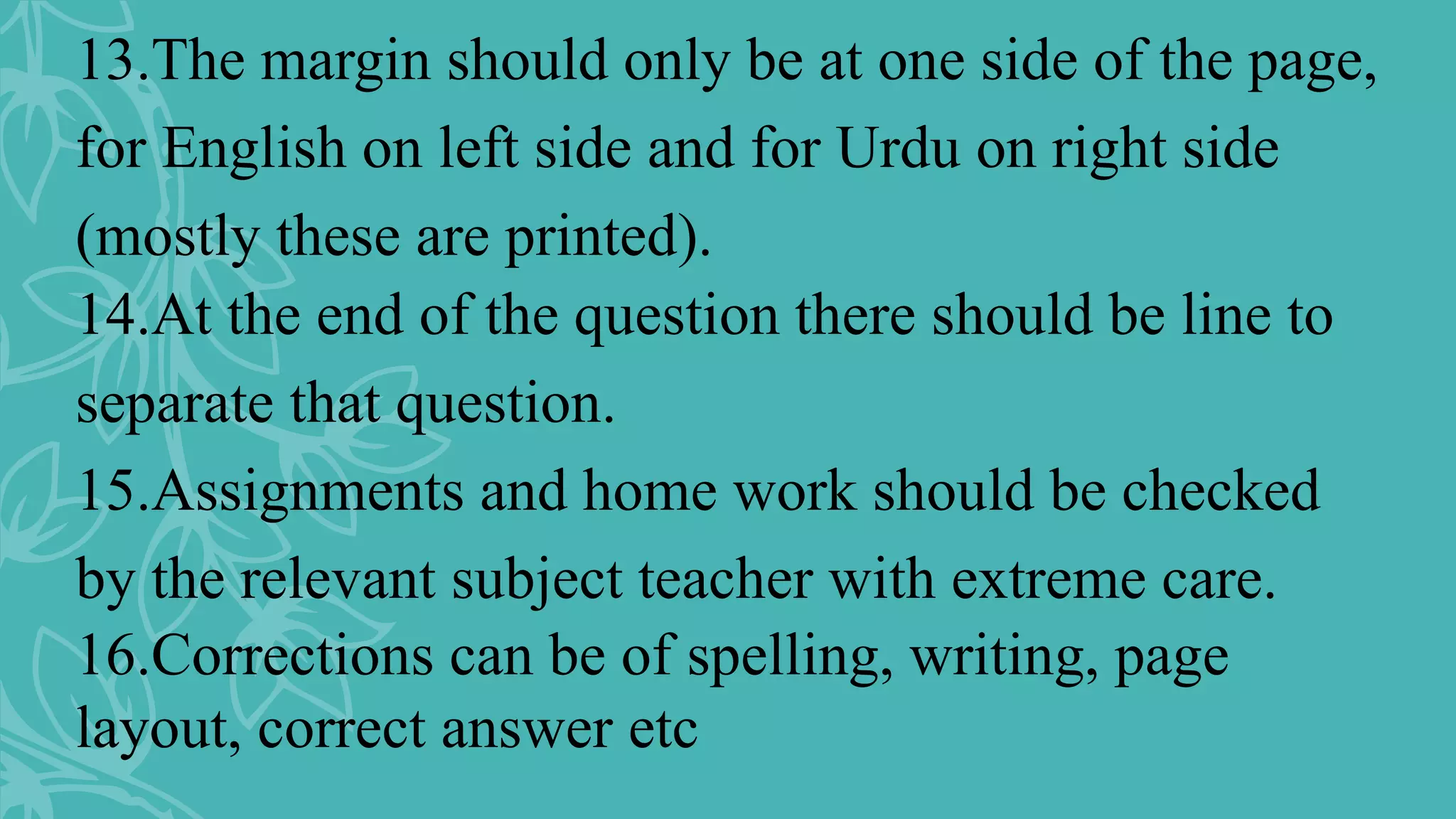
13.The margin should only be at one side of the page,
for English on left side and for Urdu on right side
(mostly these are printed).
14.At the end of the question there should be line to
separate that question.
15.Assignments and home work should be checked
by the relevant subject teacher with extreme care.
16.Corrections can be of spelling, writing, page
layout, correct answer etc
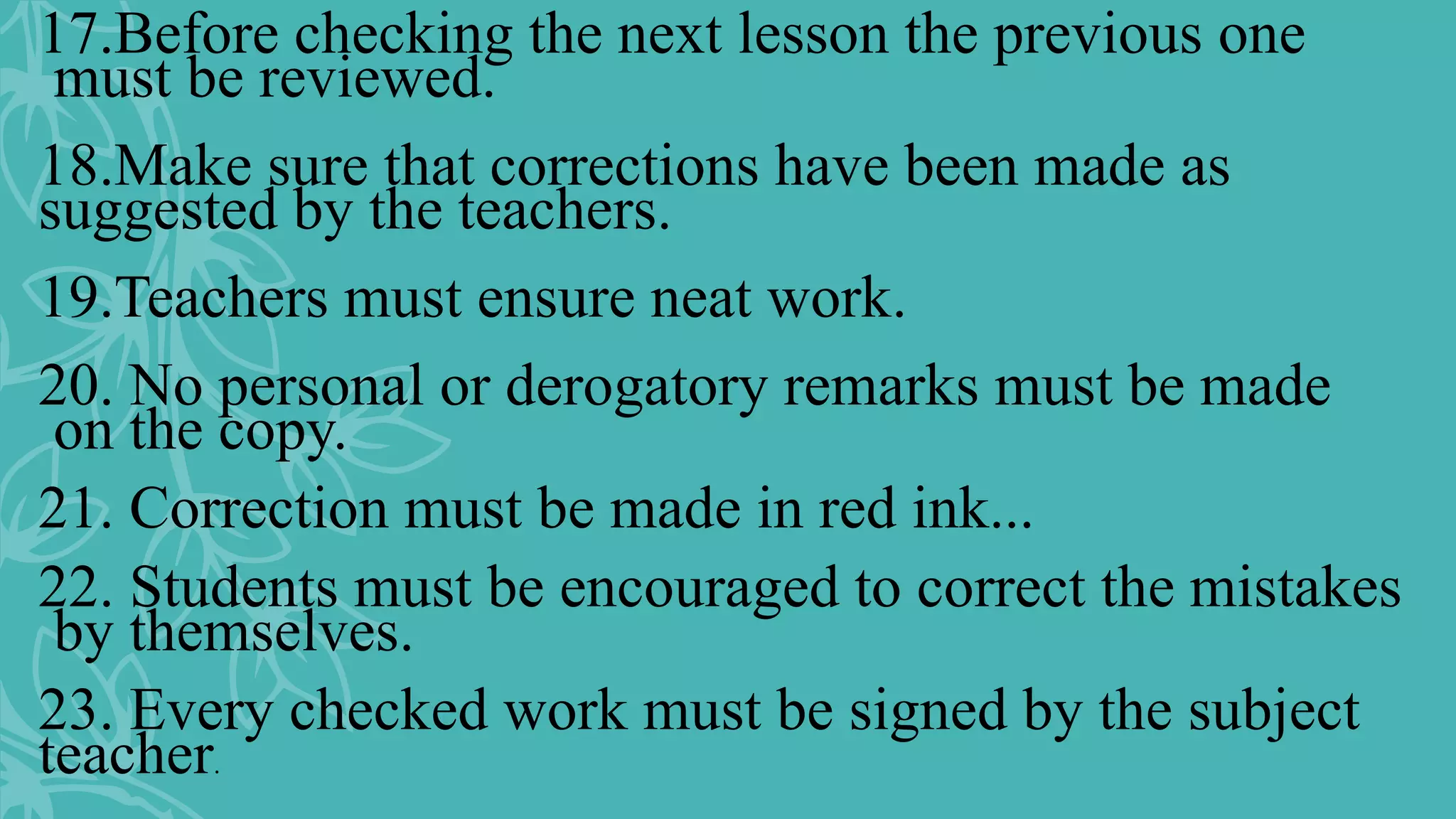
17.Before checking the next lesson the previous one
must be reviewed.
18.Make sure that corrections have been made as
suggested by the teachers.
19.Teachers must ensure neat work.
20. No personal or derogatory remarks must be made
on the copy.
21. Correction must be made in red ink...
22. Students must be encouraged to correct the mistakes
by themselves.
23. Every checked work must be signed by the subject
teacher.
Copy checking
Copy checking
Copy checking
Copy checking

Copy checking

  • 3.
    Objectives: Why we checkcopies? How to comment on the copy? School format for copy checking.
  • 5.
  • 8.
    Q: Why wecheck answers
  • 10.
    We spend timechecking answers once students have finished a class or homework exercise because learners need to:  Be reassured that what they think they have understood is right, before going on to learn and acquire it entirely  Have repeated exposure to language to aid acquisition  Be encouraged to think about why an answer is correct, or how they have reached a particular answer  Have a record of correct language for future reference  Have support at different levels. For stronger students, checking answers reinforces. what they already know and weaker students can learn from the answers  Get a sense of satisfaction from discussing and sharing something they have spent time doing.
  • 11.
    As teachers weneed to:  Monitor students' learning, so as to make decisions about whether further practice or explanations are required  Use answers to recap and expand on what has been covered.
  • 15.
    1 • The firsttime you read through a paper, try to hold off on writing comments. 2 • Respond as a reader, not as a writer. 3 • Ask questions to help students revise and improve.
  • 16.
    4 • Resist thetemptation to edit. 5 • Be specific.
  • 17.
    Here are someexamples of specific comments: Rather than “vague”  “Which research finding are you referring to here?” • “I don’t understand your use of the underlined phrase. Can you rewrite this sentence?” • Can you provide specific details to show what you mean here?” Instead of “confusing,” “what?” or “???” • “I lost the thread of your argument. Why is this information important? How is it related to your argument?”
  • 18.
     “You implythat this point supports your argument, but it actually contradicts your point in paragraph 3.” Rather than “good”  “This excellent example moves your argument forward.”  “Wonderful transition that helped clarify the connection between the two studies you are summarizing.”  “An apt metaphor that helped me understand your argument about this historical metaphor.”
  • 19.
    Please use thesesymbols in the margin P - Punctuation (underline the mistake). Sp - Spelling to be looked up, corrected and put into spelling log. ? - Does not make sense (together with a wriggly line under the passage). ^ - Something missing // - Start a new line or sentence or paragraph depending on the ability level of the child X - incorrect (If a whole section is wrong then do not mark any further but discuss with child) ☺ - smiley - tick for correct work -Transpose letters or words
  • 21.
    As a TeacherWhat I have to consider during Copy Checking
  • 22.
    1.Exercise note bookmust be School title. 2.Copies must be kept very neat; (both copy work & condition). 3.Copies should be covered with plastic cover. 4.No page or leaf should be left empty. 5.It must show student name, grade, subject . 6.Information should be written in the same order. 7.Test index and term pointer must be pasted.
  • 23.
    8.Test index mustbe filled. 9.No graffiti or crossing is allowed. 10.Must write neat and in approved pattern. 11.Date for assignment must be written on top line within margin at extreme left for English and extreme right for Urdu. 12.Second line (beneath the main top line) should show, Unit No___ ,Topic,___ or Page No ___.
  • 24.
    13.The margin shouldonly be at one side of the page, for English on left side and for Urdu on right side (mostly these are printed). 14.At the end of the question there should be line to separate that question. 15.Assignments and home work should be checked by the relevant subject teacher with extreme care. 16.Corrections can be of spelling, writing, page layout, correct answer etc
  • 25.
    17.Before checking thenext lesson the previous one must be reviewed. 18.Make sure that corrections have been made as suggested by the teachers. 19.Teachers must ensure neat work. 20. No personal or derogatory remarks must be made on the copy. 21. Correction must be made in red ink... 22. Students must be encouraged to correct the mistakes by themselves. 23. Every checked work must be signed by the subject teacher.