



COPD
Back to Basics
www.slideshare.net/ashraf eladawy
Chronic Overlooked Pulmonary
Disease
Smoking Is the Single Most Important
Risk Factor for COPD
Global Strategy for the Diagnosis, Management, and Prevention of Chronic Obstructive Pulmonary Disease, Global Initiative for Chronic Obstructive
Lung Disease (GOLD) 2008. Available from: http://www.goldcopd.org.
COPD is the only chronic disease that is rapidly
increasing in prevalence on a worldwide basis
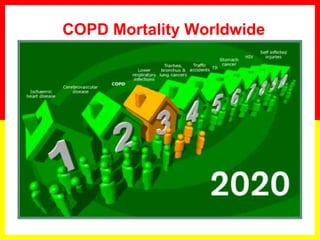
COPD Mortality Worldwide
Mortality :
Global burden of Disease study
• Almost 90% of COPD deaths occur in low- and
middle-income countries.
COPD: Reality
Under
diagnosed
perceived
treated
COPD is a Cinderella Condition
Limited recognition
from patients
Limited recognition
from physicians
QuickT ime™ and a
T IF F (Uncompressed) decompressor
are needed to see this picture.
COPD is
Underestimated
Underdiagnosed
Undertreated
Physician Specialty Seen Most Often
Respiratory
Specialist,
22% Internal Medicine,
15%
General/Family
Medicine,
52%
Cardiologist,
3%
Other,
2%
Not Sure,
5%
Allergist,
1%
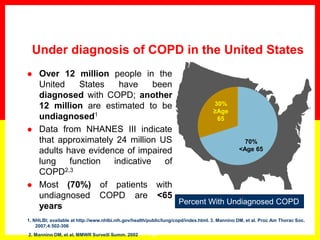
Under diagnosis of COPD in the United States
 Over 12 million people in the
United States have been
diagnosed with COPD; another
12 million are estimated to be
undiagnosed1
 Data from NHANES III indicate
that approximately 24 million US
adults have evidence of impaired
lung function indicative of
COPD2,3
 Most (70%) of patients with
undiagnosed COPD are <65
years
70%
<Age 65
30%
≥Age
65
Percent With Undiagnosed COPD
1. NHLBI; available at http://www.nhlbi.nih.gov/health/public/lung/copd/index.html. 3. Mannino DM, et al. Proc Am Thorac Soc.
2007;4:502-306
2. Mannino DM, et al. MMWR Surveill Summ. 2002:1-16.
An estimated 210 million people worldwide have
COPD
More than 3 million people died of COPD in 2005 ,
this represented 5% of all deaths worldwide
COPD disproportionately affects the world's
poorest
WHO , 2009.
COPD: Global Burden
 COPD Is Deadly But Treatable -- And Preventable
disease , responsible for a large human and
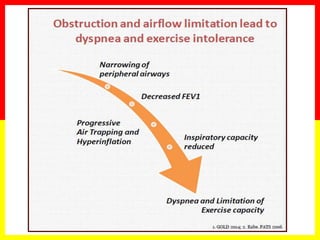
economic burden around the world
Encourage the health care community to take a
more active role in developing programs for
COPD prevention
Stimulate effective management programs to
treat those with the disease
17
COPD
Practice
Guidelines
Common preventable & treatable disease
Characterized by persistent airflow limitation that is
usually progressive
Associated with an enhanced chronic inflammatory
response in the airways & the lung to noxious
particles or gases
Exacerbations & comorbidities contribute to the
overall severity in individual patients
Definition of COPD 2014
19
COPD is used to describe emphysema, chronic
bronchitis or a combination of the two.
Burden of COPD
COPD is a leading cause of morbidity & mortality
worldwide
The burden will increase in coming decades due to
continued exposure to risk factors & the aging of the
world’s population
COPD is associated with significant economic
burden
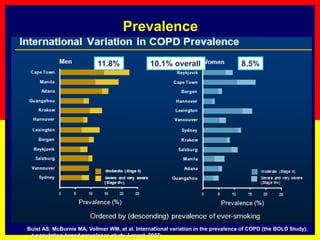
Prevalence
Buist AS, McBurnie MA, Vollmer WM, et al. International variation in the prevalence of COPD (the BOLD Study):
a population-based prevalence study. Lancet. 2007;
11.8% 8.5%10.1% overall
Chapman KR, et al. Chest. 2001.
COPD Misdiagnosis Is Common in
Women
Hypothetical Male Patient With
COPD Symptoms
Hypothetical Female Patient
With COPD Symptoms
Diagnosed as COPD by
65% of physicians
Diagnosed as COPD by
49% of physicians
65%
49%
COPD symptoms in women were most
commonly misdiagnosed as asthma
Risk Factors for COPD
Genes
Infections
Socio-economic
status
Aging Populations
© 2015 Global Initiative for Chronic Obstructive Lung Disease
24
Genes
25
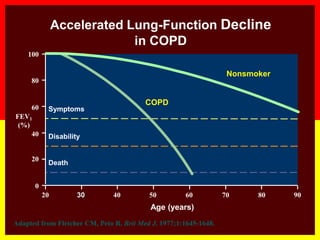
Fletcher-Peto Diagram: 1977
Adapted from Fletcher CM, Peto R. Brit Med J. 1977;1:1645-1648.
Accelerated Lung-Function Decline
in COPD
0
20
40
60
80
100
20 30 40 50 60 70 80 90
Age (years)
Death
Disability
Symptoms
Nonsmoker
COPD
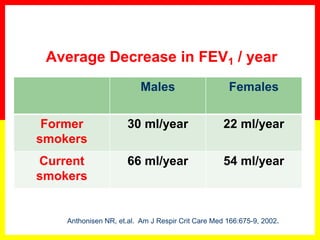
Average Decrease in FEV1 / year
Males Females
Former
smokers
30 ml/year 22 ml/year
Current
smokers
66 ml/year 54 ml/year
Anthonisen NR, et.al. Am J Respir Crit Care Med 166:675-9, 2002.
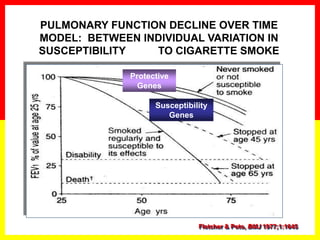
Fletcher & Peto, BMJ 1977;1:1645
Susceptibility
Genes
Protective
Genes
PULMONARY FUNCTION DECLINE OVER TIME
MODEL: BETWEEN INDIVIDUAL VARIATION IN
SUSCEPTIBILITY TO CIGARETTE SMOKE
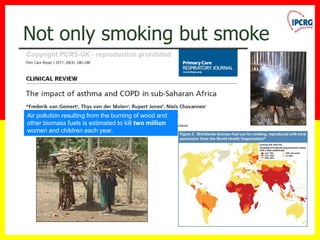
Not only smoking but smoke
Air pollution resulting from the burning of wood and
other biomass fuels is estimated to kill two million
women and children each year.
31
32
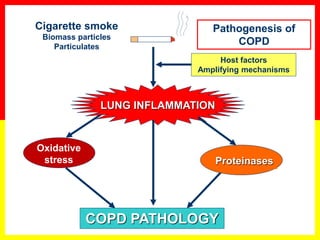
LUNG INFLAMMATION
COPD PATHOLOGY
Oxidative
stress Proteinases
Host factors
Amplifying mechanisms
Cigarette smoke
Biomass particles
Particulates
Pathogenesis of
COPD
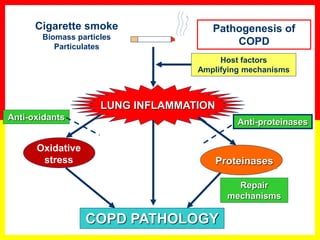
LUNG INFLAMMATION
COPD PATHOLOGY
Oxidative
stress Proteinases
Repair
mechanisms
Anti-proteinases
Anti-oxidants
Host factors
Amplifying mechanisms
Cigarette smoke
Biomass particles
Particulates
Pathogenesis of
COPD
Chronic Inflammation plays a central role
in COPD
Adapted from Barnes PJ, in Stockley, et al (editors), Chronic Obstructive Pulmonary Disease. Oxford, England: Blackwell Publishing; 2007
Smoke Pollutants
Inflammation
Chronic inflammation
Structural changes
Neutrophils
CD8+ T-lymphocytes
Macrophages
Key inflammatory cells
Systemic
inflammation
Airflow limitation
Bronchoconstriction,
oedema, mucus,
emphysema
Acute
exacerbation
37
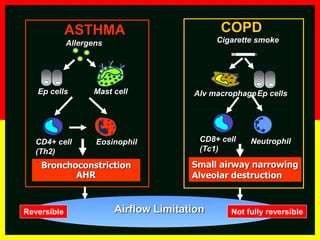
Mast cell
CD4+ cell
(Th2)
Eosinophil
Allergens
Ep cells
ASTHMA
Bronchoconstriction
AHR
Alv macrophageEp cells
CD8+ cell
(Tc1)
Neutrophil
Cigarette smoke
Small airway narrowing
Alveolar destruction
COPD
Reversible Not fully reversibleAirflow Limitation
Pathology
The site of pathology
in COPD
 COPD comprises pathological changes in four
different compartments of the lungs
1. Central airways
2. Peripheral airways
3. Lung parenchyma
4. Pulmonary vasculature
40
PATHOLOGY
 COPD comprises major pathological changes in the
following four different compartments of the lung,
which are variably present in individuals with the
disease:
1. Central airways (cartilaginous airways >2mm of internal
diameter)
2. Peripheral airways (noncartilaginous airways <2mm
internal diameter)
3. Lung parenchyma (respiratory bronchioles, alveoli and
capillaries)
4. Pulmonary vasculature
41
Mucus gland hyperplasia
Goblet cell
hyperplasia
Mucus hypersecretion Neutrophils in sputum
Squamous metaplasia of epithelium
↑ Macrophages
No basement membrane thickening
Little increase in
airway smooth muscle
↑ CD8+ lymphocytes
 Changes in Large Airways of COPD
Patients
Source: Peter J. Barnes, MD
Disrupted alveolar attachments
Inflammatory exudate in lumen
Peribronchial fibrosis
Lymphoid follicle
Thickened wall with inflammatory cells
- macrophages, CD8+ cells, fibroblasts
 Changes in Small Airways in COPD
Patients
Source: Peter J. Barnes, MD
Alveolar wall destruction
Loss of elasticity
Destruction of pulmonary
capillary bed
↑ Inflammatory cells
macrophages, CD8+ lymphocytes
Source: Peter J. Barnes, MD
 Changes in Lung Parenchyma in COPD
45
 Lung parenchyma (respiratory bronchioles,
alveoli and capillaries)
 Alveolar wall destruction, apoptosis of epithelial and
endothelial cells. There are two major types :
1) Centrilobular emphysema:
dilatation & destruction of respiratory bronchioles;
most commonly seen in smokers
2) Panacinar emphysema:
destruction of alveolar sacs as well as respiratory
bronchioles; most commonly seen in alpha-1
antitrypsin deficiency
Emphysema
Endothelial dysfunction
Intimal hyperplasia
Smooth muscle hyperplasia
↑ Inflammatory cells
(macrophages, CD8+ lymphocytes)
 Changes in Pulmonary Arteries in COPD
Patients
Source: Peter J. Barnes, MD
Chronic hypoxia
Pulmonary vasoconstriction
Muscularization
Intimal
hyperplasia
Fibrosis
Obliteration
Pulmonary hypertension
Cor pulmonale
Death
Edema
Pulmonary Hypertension in COPD
Source: Peter J. Barnes, MD
Pathogenic mechanisms
Pathological changes in COPD
Physiological abnormalities:
Mucous hypersecretion & ciliary
dysfunction
Airflow obstruction & hyperinflation
Gas exchange abnormalities
Pulmonary hypertension & systemic effects
Pathophysiology
50
-Chronic Bronchitis predominant
-Airway obstruction is the main problem
Normal
Elastic Recoil
Chronic Bronchitis
Elastic Recoil
Increased airway resistance
due to thickened wall and
secretions
Airway supported
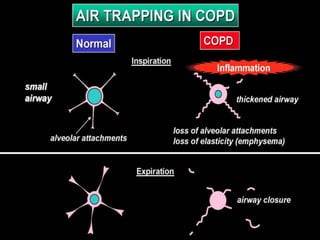
by connective
tissue
-Emphysema Predominant
-This results in a loss of the elastic recoil of the lungs on expiration
-This also results in loss of tethering or support of the most distal
portions of the airway leading to collapse on expiration
Normal
Elastic Recoil
Airway supported
by connective
tissue
Decreased
Elastic Recoil
= Lower Flow
Loss of support = Airway
collapses= Air gets trapped in lung
53
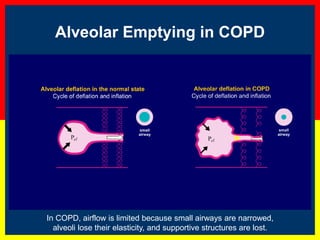
Alveolar Emptying in COPD
In COPD, airflow is limited because small airways are narrowed,
alveoli lose their elasticity, and supportive structures are lost.
COPD is a Complex Disease
Progressive Loss of Lung Function
Reduced Quality of Life
Exacerbations
Mortality
Broncho-
constriction
Inflammation
Structural
Changes
Airflow
Limitation &
Hyperinflation
57
58
59
60
61
Clinical Course of COPD
Air Trapping
Expiratory Flow Limitation
Breathlessness
Inactivity
Poor Health-Related Quality of Life
Hyperinflation
Deconditioning
COPD
EXACERBATIONS
Disability Disease progression Death
Reduced Exercise
Capacity
63
COPD is a progressive disease
The Downward Spiral in COPD
65
Is it Inevitably All Downhill ?
COPD Disease Progression
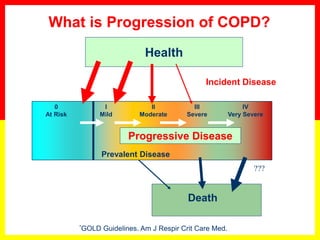
What is Progression of COPD?
*GOLD Guidelines. Am J Respir Crit Care Med.
0
At Risk
I
Mild
II
Moderate
III
Severe
IV
Very Severe
Health
Prevalent Disease
Progressive Disease
Death
???
Incident Disease
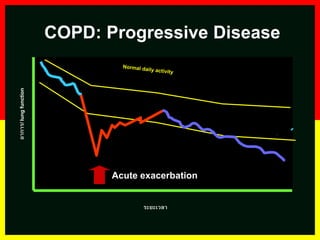
COPD: Progressive Disease
อาการ/lungfunction
ระยะเวลา
Acute exacerbation
Natural History of COPDLungFunction
Time (Years)
Exacerbation
Exacerbation
Exacerbation
Never smoked
Smoker
Fletcher C. Br Med J. 1977
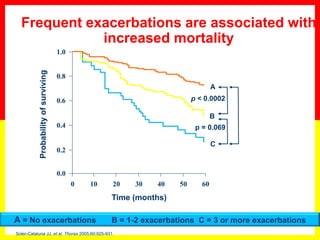
Frequent exacerbations are associated with
increased mortality
A = No exacerbations B = 1-2 exacerbations C = 3 or more exacerbations
Soler-Cataluna JJ, et al. Thorax 2005;60:925-931.
p < 0.0001
1.0
Probabilityofsurviving
0.8
0.6
0.4
0.2
0.0
0 10 20 30 40 50 60
Time (months)
A
B
C
p = 0.069
p < 0.0002
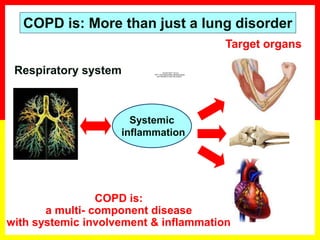
COPD is:
a multi- component disease
with systemic involvement & inflammation
Respiratory system
Systemic
inflammation
Target organs
QuickTime™ and a
TIFF (Uncompressed) decompressor
are needed to see this picture.
COPD is: More than just a lung disorder
Barnes PJ (2010) Chronic Obstructive Pulmonary Disease: Effects beyond the Lungs.
Mechanism linking COPD to systemic manifestations
Declining lung function
Symptoms
Exacerbations
Decreased exercise tolerance
Deteriorating health status
and increasing morbidity
Mortality
Airflow
limitation
Systemic
component
Structural
changes
Mucociliary
dysfunction
Airway
inflammation
Agusti. Respir Med 2005
Agusti et al. Eur Respir J 2003
Bernard et al. Am J Respir Crit Care Med 1998
COPD is a multicomponent disease with
inflammation at its core leading to mortality
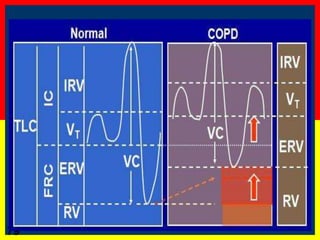
Lung Volumes
IRV
TV
ERV
 4 Volumes
 4 Capacities
– Sum of 2 or
more lung
volumes
RV
IC
FRC
VC
TLC
RV
Lung Volumes in Obstructive DiseaseLung Volumes in Obstructive Disease
VT
VT
NormalNormal COPDCOPD
RVRV
RVRV
TLCTLC
FRCFRC
ICIC
ICIC
TLCTLC
FRCFRC
VolumeVolume
78
Progressive Hyperinflation Reduces
Inspiratory Capacity
FRC/
EELV
79
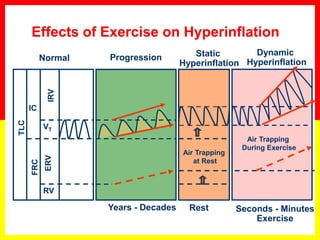
Effects of Exercise on Hyperinflation
VT
IRVERV
IC
RV
Normal
Years - Decades
Progression
Rest
Static
Hyperinflation
Air Trapping
at Rest
Seconds - Minutes
Exercise
Dynamic
Hyperinflation
Air Trapping
During Exercise
81
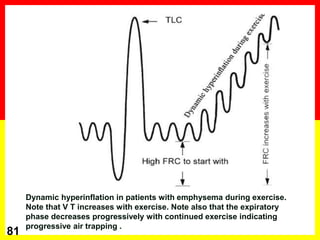
Dynamic hyperinflation in patients with emphysema during exercise.
Note that V T increases with exercise. Note also that the expiratory
phase decreases progressively with continued exercise indicating
progressive air trapping .
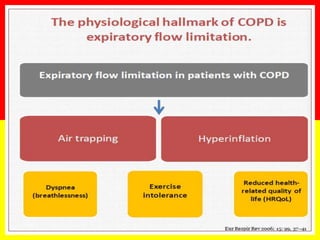
 Despite its heterogeneity, the pathophysiological
hallmark of COPD is expiratory flow limitation and
Lung hyperinflation
 Dyspnea (breathlessness) and exercise intolerance are
the most common symptoms in COPD and progress
relentlessly as the disease advances.
82
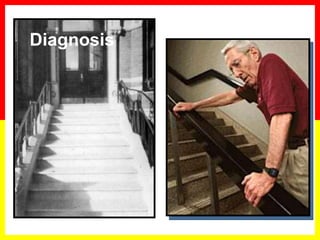
To the COPD
patient, this is a
breathtaking
view
Diagnosis
o Many patients with COPD remain undiagnosed until the
more advanced stages of the disease.
o Delayed diagnosis results in patients suffering
symptoms and limitations that could otherwise be
alleviated by treatment.
Diagnosis of COPD
Early diagnosis of COPD can be challenging
The COPD patient
 Generally over 40
years
 A smoker or ex-
smoker
 Presentation with:
– cough
– excessive sputum
production
– shortness of
breath
 Dyspnea is the reason
most patients seek
medical attention.
1. BTS, 1997; 3. GOLD, 2003
SYMPTOMS
Cough
Sputum
Shortness of breath
EXPOSURE TO RISK
FACTORS
Tobacco
Occupation
Indoor/outdoor pollution
SPIROMETRY
Diagnosis of COPD

Spirometer
89
Spirometry
Predicted Normal Values
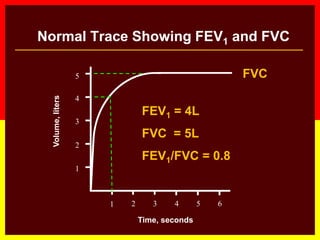
Normal Trace Showing FEV1 and FVC
1 2 3 4 5 6
1
2
3
4
Volume,liters
Time, seconds
FVC5
1
FEV1 = 4L
FVC = 5L
FEV1/FVC = 0.8
Criteria for Normal
Post-bronchodilator Spirometry
 FEV1: % predicted > 80%
 FVC: % predicted > 80%
 FEV1/FVC: > 0.7 - 0.8, depending on
age
Spirometry:
Obstructive Disease
Volume,liters
Time, seconds
5
4
3
2
1
1 2 3 4 5 6
FEV1 = 1.8L
FVC = 3.2L
FEV1/FVC = 0.56
Normal
Obstructive
Obstructive Pattern
 FEV1: < 80% predicted
● FVC: can be normal or reduced – usually to
a lesser degree than FEV1
 FEV1/FVC: <70% predicted
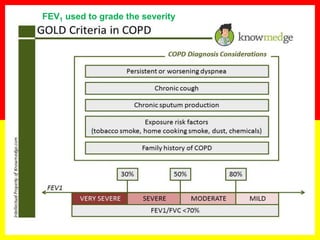
FEV1 used to grade the severity
Volume,liters
Time, seconds
FEV1 = 1.9L
FVC = 2.0L
FEV1/FVC = 0.95
1 2 3 4 5 6
5
4
3
2
1
Spirometry: Restrictive Disease
Normal
Restrictive
 FEV1: Normal or mildly reduced –
usually to a lesser degree than FVC
 FVC: < 80% predicted
 FEV1/FVC: Normal or increased > 0.7
Restrictive Pattern
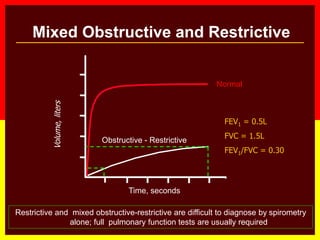
Mixed Obstructive and Restrictive
Volume,liters
Time, seconds
Restrictive and mixed obstructive-restrictive are difficult to diagnose by spirometry
alone; full pulmonary function tests are usually required
FEV1 = 0.5L
FVC = 1.5L
FEV1/FVC = 0.30
Normal
Obstructive - Restrictive
Mixed Obstructive/Restrictive
 FEV1: < 80% predicted
 FVC: < 80% predicted
 FEV1 /FVC: < 0.7
99
Spirometric Diagnosis of COPD
 COPD is confirmed by post–bronchodilator
FEV1/FVC < 0.7
● Post-bronchodilator FEV1/FVC measured 15
minutes after : e
– 4 puffs Salbutamol 100 MDI with AeroChamber OR
– Salbutamol 2.5mg nebuliser.
Bronchodilator
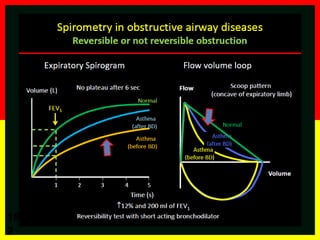
Reversibility
Testing in COPD
GOLD
Report (2009)
10
2
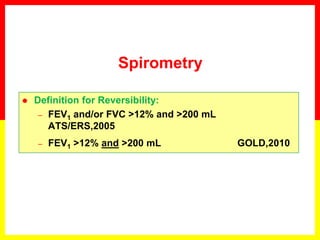
Spirometry
 Definition for Reversibility:
– FEV1 and/or FVC >12% and >200 mL
ATS/ERS,2005
– FEV1 >12% and >200 mL GOLD,2010
10
4
Algorithm for Interpreting Spirometry Results
105
Petty TL. Spirometry made simple. National Lung Health Education Program website.
http://www.nlhep.org/resources/SpirometryMadeSimple.htm. Published January 1999.
Acceptable spirogram
Restrictive
defect
Is FVC low?
Yes
Further
testing
Normal
Yes
Obstructive defect
Is FVC low?
Near-total reversal with
use of beta agonist?
Yes
Mixed
obstructive/
restrictive defect
or hyperinflation
No
Pure obstruction
No
Is FEV1/FVC ratio low?
No
Yes No
Asthma COPDFurther testing
Case
10
6
10
7
Spirometry is required for the diagnosis of COPD
SPIROMETRY REQUIRED TO DIAGNOSE COPD
Presence of a post-bronchodilator FEV1/FVC < 0.70 confirms the presence of persistent airflow limitation and thus of COPD.
Key Indicators to Consider COPD Diagnosis:
1
• SYMPTOMS
• Dyspnea-progressive (worsens over time and with exercise)
• Chronic cough
• Sputum
2
• HISTORY OF EXPOSURE TO RISK FACTORS
• Tobacco smoke
• Smoke from home cooking/heating fuels
• Occupational dusts and chemical
3
• FAMILY HISTORY OF COPD
Adapted from GOLD 2014
10
9
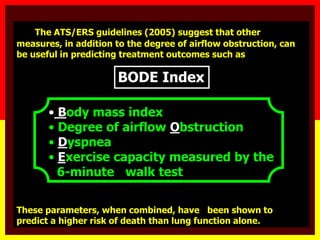
The ATS/ERS guidelines (2005) suggest that other
measures, in addition to the degree of airflow obstruction, can
be useful in predicting treatment outcomes such as
• Body mass index
• Degree of airflow Obstruction
• Dyspnea
• Exercise capacity measured by the
6-minute walk test
These parameters, when combined, have been shown to
predict a higher risk of death than lung function alone.
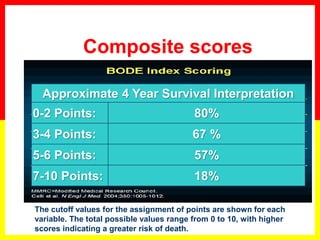
BODE Index
BODE
Composite scores
The cutoff values for the assignment of points are shown for each
variable. The total possible values range from 0 to 10, with higher
scores indicating a greater risk of death.
Approximate 4 Year Survival Interpretation
0-2 Points: 80%
3-4 Points: 67 %
5-6 Points: 57%
7-10 Points: 18%
What can we do ???COPD
Disease Management should now be focusing on
2 key areas
1.
Goal of COPD Management
Road Map
COPD: Management
Clinical diagnosis
Spirometry
Gold Severity stage
Drugs a/t stages
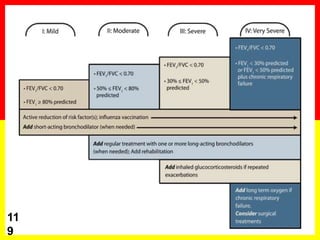
11
8
FEV1 used to grade the severity
11
9
12
0
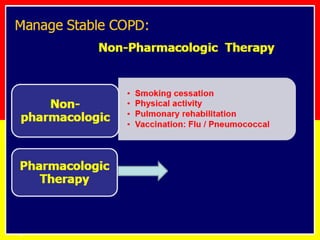
Manage Stable COPD
12
1
GOLD 2011
© 2013 Global Initiative for Chronic Obstructive Lung Disease
 Looks at 3 things (combined assessment):
1) FEV1
2) Symptoms
3) History of exacerbations
Revised GOLD classification
12
4
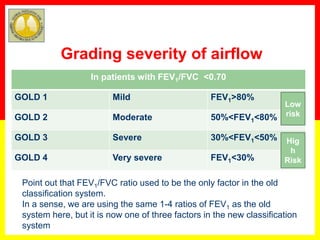
In patients with FEV1/FVC <0.70
GOLD 1 Mild FEV1>80%
GOLD 2 Moderate 50%<FEV1<80%
GOLD 3 Severe 30%<FEV1<50%
GOLD 4 Very severe FEV1<30%
Grading severity of airflow
Point out that FEV1/FVC ratio used to be the only factor in the old
classification system.
In a sense, we are using the same 1-4 ratios of FEV1 as the old
system here, but it is now one of three factors in the new classification
system
Low
risk
Hig
h
Risk
Combined Assessment of COPD
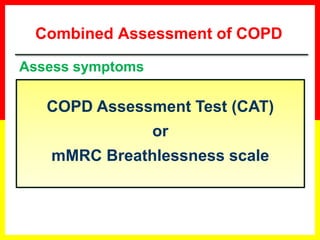
Assess symptoms
Assess degree of airflow limitation using
spirometry
Assess risk of exacerbations
Assess comorbidities
COPD Assessment Test (CAT)
or
mMRC Breathlessness scale
Grading symptoms
Grading symptoms
0-1 = less breathlessness
>2 = more breathlessness
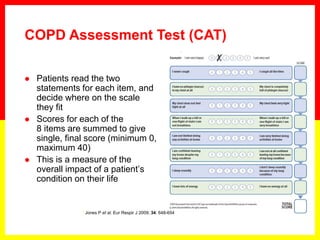
 Patients read the two
statements for each item, and
decide where on the scale
they fit
 Scores for each of the
8 items are summed to give
single, final score (minimum 0,
maximum 40)
 This is a measure of the
overall impact of a patient’s
condition on their life
1 Jones P et al. Eur Respir J 2009; 34: 648-654
COPD Assessment Test (CAT)
13
1
Cough
Sputum
Chest tightness
Walking up hill
ADLs
Leaving the house
Sleep
Energy levels
COPD Assessment Test (CAT)
Aim of the COPD Assessment
Test(CAT) is to grade the impact
of COPD on health status.
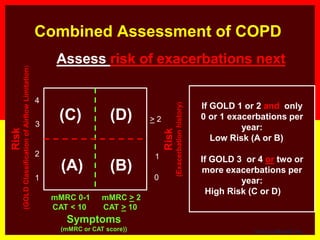
Assess risk of exacerbations
 History of exacerbations (Two or more
exacerbations in the preceding year).
 Spirometry (GOLD 3 or GOLD 4 categories).
Combined Assessment of COPD
Adapted from GOLD 2014
1) Assess symptoms first
2) Assess risk of exacerbations next
3) When assessing risk, choose the highest risk
according to GOLD grade or exacerbation
history
Patient is now in one of four categories
Adapted from GOLD 2014
Combined Assessment of COPD
(C) (D)
(A) (B)
mMRC 0-1
CAT < 10
mMRC > 2
CAT > 10
Symptoms
(mMRC or CAT score))
If mMRC 0-1 or CAT < 10:
Less Symptoms (A or C)
If mMRC > 2 or CAT > 10:
More Symptoms (B or D)
Assess symptoms first
www.goldcopd.org
Risk
(GOLDClassificationofAirflowLimitation)
Risk
(Exacerbationhistory)
> 2
1
0
(C) (D)
(A) (B)
mMRC 0-1
CAT < 10
4
3
2
1
mMRC > 2
CAT > 10
Symptoms
(mMRC or CAT score))
If GOLD 1 or 2 and only
0 or 1 exacerbations per
year:
Low Risk (A or B)
If GOLD 3 or 4 or two or
more exacerbations per
year:
High Risk (C or D)
Assess risk of exacerbations next
www.goldcopd.org
Combined Assessment of COPD
13
7
Global Strategy for Diagnosis, Management and
Prevention of COPD. Updated 2011
Risk
(GOLDClassificationofAirflowLimitation)
Risk
(Exacerbationhistory)
> 2
1
0
(C) (D)
(A) (B)
mMRC 0-1
CAT < 10 or CCQ<1
4
3
2
1
mMRC > 2
CAT > 10 or
CCQ>1
Symptoms
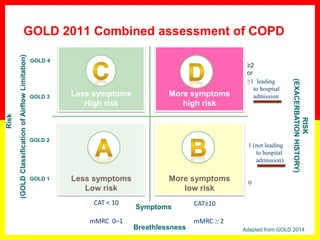
A: Les symptoms, low risk
B: More symtoms, low risk
C: Less symptoms, high risk
D: More Symtoms, high risk
GOLD 2011 Combined assessment of COPD
Less symptoms
High risk
Less symptoms
Low risk
More symptoms
low risk
More symptoms
high risk
GOLD 1
GOLD 2
GOLD 3
GOLD 4
(GOLDClassificationofAirflowLimitation)
Symptoms
≥2
or
1 (not leading
to hospital
admission)
0
RISK
(EXACERBATIONHISTORY)
Adapted from GOLD 2014
≥1 leading
to hospital
admission
Breathlessness
mMRC 0–1 mMRC ≥ 2
CAT < 10 CAT≥10
Risk
14
0
Manage Stable COPD: Pharmacologic
Therapy
Patient Recommended 1st choice Alternative choice
Other Possible
Treatments
A
SAMA prn
or
SABA prn
LAMA
or
LABA
or
SABA & SAMA
Theophylline
B
LAMA
or
LABA
LAMA & LABA
SABA and/or SAMA
Theophylline
C
ICS + LABA
or
LAMA
LAMA & LABA or
LAMA & PDE4-inh. or
LABA & PDE4-inh.
SABA and/or SAMA
Theophylline
D
ICS + LABA
and/or
LAMA
ICS + LABA & LAMA or
ICS+LABA & PDE4-inh. or
LAMA & LABA or
LAMA & PDE4-inh.
Carbocysteine
SABA and/or SAMA
Theophylline
From the Global Strategy for the Diagnosis, Management, and Prevention of Chronic Obstructive Pulmonary Disease, Global Initiative for Chronic Obstructive Lung Disease (GOLD) 2011. http://www.goldcopd.org.
14
2
14
3
14
4
14
5
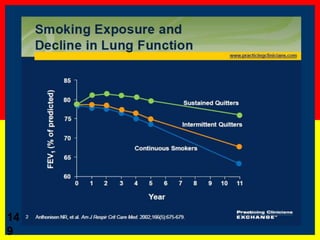
 Smoking cessation is the single most effective
and cost-effective intervention to reduce the
risk of developing COPD and stop its
progression (Evidence A)
COPD progression
Age (year)
FEV1%ofvalueatage25yr
100
75
50
25
5025 75
Death
Disability
Adapted from:Fletcher C,et al.Br Med J.1977;1:1645-1648
Nonsmokers
20-30 ml/year
COPD
60 mL/year
symptoms
Age 40-50 50-55 55-60 60-70
Age (years)
Death
Disability
Symptoms
Not SusceptibleSusceptible
Smokers
Stopped smoking
at 45 (mild COPD)
Stopped smoking
at 65 (severe COPD)
30 40 50 60 70 80 90
0
20
40
60
80
20
100
Adapted from Fletcher CM, Peto R. BMJ 1977
14
9
15
0
15
1
15
2
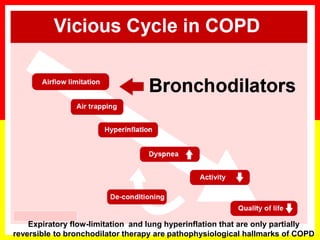
 Role of Bronchodilators in COPD
Expiratory flow-limitation and lung hyperinflation that are only partially
reversible to bronchodilator therapy are pathophysiological hallmarks of COPD
V
BD
 Air flowDeflation
 Improvement in flow – FEV1
 Improvement in volumes – FVC and IC
Bronchodilator therapy deflates the lung
BD = bronchodilator; V = ventilation; FEV1= forced expiratory volume in 1 second;
FVC= forced vital capacity; IC = inspiratory capacity
Bronchodilators work by:
Eur Respir Rev 2006; 15: 99, 37–41
Relieve dyspnea by
deflating the lungs
Allowing improved lung
emptying with each
breath
Improvement in
exercise tolerance
Reduces
the elastic
load on the
inspiratory
muscles.
15
6
Current Bronchodilator Options for COPD
Short-acting Long-acting
-agonists:
Albuterol
Fenoterol
Terbutaline
Anticholinergic:
Ipratropium
-agonists:
Salmeterol
Formoterol
Anticholinergic:
Tiotropium
Methylxanthine:
Theophylline
Fixed Combination
Albuterol + ipratropium
Fenoterol + ipratropium
Budesonide + Formoterol
Fluticasone + Salmeterol
 The use of bronchodilators is now recommended
as the cornerstone of maintenance treatment of
COPD , since this disease is no longer regarded
as one characterised by irreversible airflow
limitation but rather as a disease with at least
partial reversibility of airflow limitation.
15
8
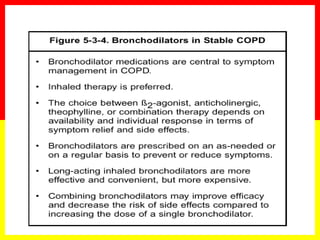
 Short-acting and long-acting bronchodilators form
the cornerstone of pharmacologic management.
 Unlike asthmatic patients who experience dyspnea
when acute bronchospasm occurs, patients with
COPD most commonly experience dyspnea due to
increased respiratory demands, such as occurs with
exertion.
15
9
 Besides bronchodilatation , inhaled bronchodilators,
probably by reducing hyperinflation both at rest and
during exercise (a so-called pharmacological volume
reduction effect), offer beneficial effects on real world
outcomes important for the patient, such as symptoms
(dyspnoea), exercise tolerance (endurance),
exacerbation/hospitalisation rate and health-related
quality of life.
16
0
Bronchodilator effect :
Indacaterol > Formoterol or Salmeterol
Indacaterol = Tiotropium (Evidence A)
There is no evidence to recommend one
class of long acting bronchodilators over
the another for initial treatment. In the
individual patient, the choice should be in
the patient's perception of symptom relief.
Manage Stable COPD:
Pharmacologic Therapy
● None of the existing medications for COPD
has been shown conclusively to modify the
long-term decline in lung function.
● Therefore, pharmacotherapy for COPD is
used to decrease symptoms, complications,
or both.
© 2013 Global Initiative for Chronic Obstructive Lung Disease
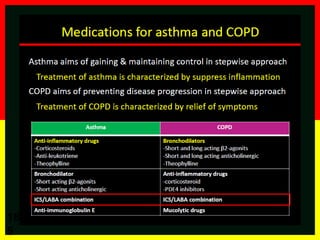
COPD treatment options
 The overall approach to the management of
stable COPD is a stepwise increase in
treatment, depending on disease severity.
 Bronchodilators (especially inhaled ) form the
cornerstone of pharmacologic treatment for
COPD
16
3
COPD treatment options
16
4
 Inhaled corticosteroids (ICS) are now very widely
used in high doses in the management of COPD
patients , in sharp contrast to the situation in
asthma
16
6
ASTHMA AND COPD
Macrophages
Neutrophils
Tc1 cells
Mast cells
Eosinophils
Th2 cells
Airway Inflammation
ASTHMA COPD
Inflammatory gene
expression
NF-κB
AP-1
Steroid sensitive Steroid resistant
Combination inhalers in COPD
Symbicort 320 Turbohaler and Seretide 500 Accuhaler
16
9
ICS/LABA combination therapy
 Inhaled steroids not licensed for use in
COPD except as combination
– ICS must be used in combination with LABA
for patients with COPD
– ICS monotherapy only FDA approved for
treatment of asthma, not COPD
17
0
 Since COPD is usually progressive recommendations
for the pharmacological treatment of COPD reflect the
following general principles:
1. Treatment tends to be cumulative with more
medications being required as the disease state
worsens.
2. Regular treatment needs to be maintained at the same
level for long periods of time unless significant side
effects occur or the disease worsens.17
1
17
2
17
3
Treatment algorithm for patients without frequent
exacerbations
Pharmacological options for the prevention of
exacerbations in frequent exacerbators
17
7
17
8
18
0
Asthma
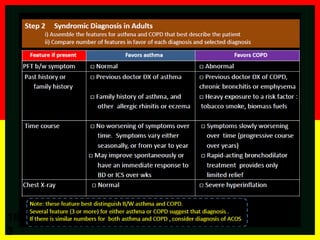
Asthma is a heterogeneous disease, usually characterized by chronic airway
inflammation. It is defined by the history of respiratory symptoms such as wheeze,
shortness of breath, chest tightness and cough that vary over time and in intensity,
together with variable expiratory airflow limitation. [GINA 2014]
COPD
COPD is a common preventable and treatable disease, characterized by persistent
airflow limitation that is usually progressive and associated with enhanced chronic
inflammatory responses in the airways and the lungs to noxious particles or gases.
Exacerbations and comorbidities contribute to the overall severity in individual
patients. [GOLD 2015]
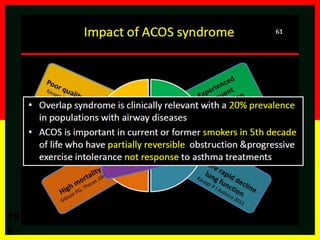
Asthma-COPD overlap syndrome (ACOS) [a description]
Asthma-COPD overlap syndrome (ACOS) is characterized by persistent airflow
limitation with several features usually associated with asthma and several features
usually associated with COPD. ACOS is therefore identified by the features that it
shares with both asthma and COPD.
Definitions
18
1
18
2
18
3
18
4
18
5
18
6
18
7
18
8
18
9
19
0

COPD back to basis

  • 2.
  • 3.
  • 4.
  • 5.
    Smoking Is theSingle Most Important Risk Factor for COPD Global Strategy for the Diagnosis, Management, and Prevention of Chronic Obstructive Pulmonary Disease, Global Initiative for Chronic Obstructive Lung Disease (GOLD) 2008. Available from: http://www.goldcopd.org.
  • 7.
    COPD is theonly chronic disease that is rapidly increasing in prevalence on a worldwide basis
  • 8.
  • 9.
  • 10.
    Mortality : Global burdenof Disease study • Almost 90% of COPD deaths occur in low- and middle-income countries.
  • 11.
  • 12.
    COPD is aCinderella Condition Limited recognition from patients Limited recognition from physicians QuickT ime™ and a T IF F (Uncompressed) decompressor are needed to see this picture. COPD is Underestimated Underdiagnosed Undertreated
  • 13.
    Physician Specialty SeenMost Often Respiratory Specialist, 22% Internal Medicine, 15% General/Family Medicine, 52% Cardiologist, 3% Other, 2% Not Sure, 5% Allergist, 1%
  • 14.
    Under diagnosis ofCOPD in the United States  Over 12 million people in the United States have been diagnosed with COPD; another 12 million are estimated to be undiagnosed1  Data from NHANES III indicate that approximately 24 million US adults have evidence of impaired lung function indicative of COPD2,3  Most (70%) of patients with undiagnosed COPD are <65 years 70% <Age 65 30% ≥Age 65 Percent With Undiagnosed COPD 1. NHLBI; available at http://www.nhlbi.nih.gov/health/public/lung/copd/index.html. 3. Mannino DM, et al. Proc Am Thorac Soc. 2007;4:502-306 2. Mannino DM, et al. MMWR Surveill Summ. 2002:1-16.
  • 15.
    An estimated 210million people worldwide have COPD More than 3 million people died of COPD in 2005 , this represented 5% of all deaths worldwide COPD disproportionately affects the world's poorest WHO , 2009. COPD: Global Burden
  • 16.
     COPD IsDeadly But Treatable -- And Preventable disease , responsible for a large human and economic burden around the world Encourage the health care community to take a more active role in developing programs for COPD prevention Stimulate effective management programs to treat those with the disease
  • 17.
  • 18.
    Common preventable &treatable disease Characterized by persistent airflow limitation that is usually progressive Associated with an enhanced chronic inflammatory response in the airways & the lung to noxious particles or gases Exacerbations & comorbidities contribute to the overall severity in individual patients Definition of COPD 2014
  • 19.
    19 COPD is usedto describe emphysema, chronic bronchitis or a combination of the two.
  • 20.
    Burden of COPD COPDis a leading cause of morbidity & mortality worldwide The burden will increase in coming decades due to continued exposure to risk factors & the aging of the world’s population COPD is associated with significant economic burden
  • 21.
    Prevalence Buist AS, McBurnieMA, Vollmer WM, et al. International variation in the prevalence of COPD (the BOLD Study): a population-based prevalence study. Lancet. 2007; 11.8% 8.5%10.1% overall
  • 22.
    Chapman KR, etal. Chest. 2001. COPD Misdiagnosis Is Common in Women Hypothetical Male Patient With COPD Symptoms Hypothetical Female Patient With COPD Symptoms Diagnosed as COPD by 65% of physicians Diagnosed as COPD by 49% of physicians 65% 49% COPD symptoms in women were most commonly misdiagnosed as asthma
  • 23.
    Risk Factors forCOPD Genes Infections Socio-economic status Aging Populations © 2015 Global Initiative for Chronic Obstructive Lung Disease
  • 24.
  • 25.
  • 26.
  • 27.
    Adapted from FletcherCM, Peto R. Brit Med J. 1977;1:1645-1648. Accelerated Lung-Function Decline in COPD 0 20 40 60 80 100 20 30 40 50 60 70 80 90 Age (years) Death Disability Symptoms Nonsmoker COPD
  • 28.
    Average Decrease inFEV1 / year Males Females Former smokers 30 ml/year 22 ml/year Current smokers 66 ml/year 54 ml/year Anthonisen NR, et.al. Am J Respir Crit Care Med 166:675-9, 2002.
  • 29.
    Fletcher & Peto,BMJ 1977;1:1645 Susceptibility Genes Protective Genes PULMONARY FUNCTION DECLINE OVER TIME MODEL: BETWEEN INDIVIDUAL VARIATION IN SUSCEPTIBILITY TO CIGARETTE SMOKE
  • 30.
    Not only smokingbut smoke Air pollution resulting from the burning of wood and other biomass fuels is estimated to kill two million women and children each year.
  • 31.
  • 32.
  • 33.
    LUNG INFLAMMATION COPD PATHOLOGY Oxidative stressProteinases Host factors Amplifying mechanisms Cigarette smoke Biomass particles Particulates Pathogenesis of COPD
  • 34.
    LUNG INFLAMMATION COPD PATHOLOGY Oxidative stressProteinases Repair mechanisms Anti-proteinases Anti-oxidants Host factors Amplifying mechanisms Cigarette smoke Biomass particles Particulates Pathogenesis of COPD
  • 36.
    Chronic Inflammation playsa central role in COPD Adapted from Barnes PJ, in Stockley, et al (editors), Chronic Obstructive Pulmonary Disease. Oxford, England: Blackwell Publishing; 2007 Smoke Pollutants Inflammation Chronic inflammation Structural changes Neutrophils CD8+ T-lymphocytes Macrophages Key inflammatory cells Systemic inflammation Airflow limitation Bronchoconstriction, oedema, mucus, emphysema Acute exacerbation
  • 37.
  • 38.
    Mast cell CD4+ cell (Th2) Eosinophil Allergens Epcells ASTHMA Bronchoconstriction AHR Alv macrophageEp cells CD8+ cell (Tc1) Neutrophil Cigarette smoke Small airway narrowing Alveolar destruction COPD Reversible Not fully reversibleAirflow Limitation
  • 39.
    Pathology The site ofpathology in COPD
  • 40.
     COPD comprisespathological changes in four different compartments of the lungs 1. Central airways 2. Peripheral airways 3. Lung parenchyma 4. Pulmonary vasculature 40
  • 41.
    PATHOLOGY  COPD comprisesmajor pathological changes in the following four different compartments of the lung, which are variably present in individuals with the disease: 1. Central airways (cartilaginous airways >2mm of internal diameter) 2. Peripheral airways (noncartilaginous airways <2mm internal diameter) 3. Lung parenchyma (respiratory bronchioles, alveoli and capillaries) 4. Pulmonary vasculature 41
  • 42.
    Mucus gland hyperplasia Gobletcell hyperplasia Mucus hypersecretion Neutrophils in sputum Squamous metaplasia of epithelium ↑ Macrophages No basement membrane thickening Little increase in airway smooth muscle ↑ CD8+ lymphocytes  Changes in Large Airways of COPD Patients Source: Peter J. Barnes, MD
  • 43.
    Disrupted alveolar attachments Inflammatoryexudate in lumen Peribronchial fibrosis Lymphoid follicle Thickened wall with inflammatory cells - macrophages, CD8+ cells, fibroblasts  Changes in Small Airways in COPD Patients Source: Peter J. Barnes, MD
  • 44.
    Alveolar wall destruction Lossof elasticity Destruction of pulmonary capillary bed ↑ Inflammatory cells macrophages, CD8+ lymphocytes Source: Peter J. Barnes, MD  Changes in Lung Parenchyma in COPD
  • 45.
    45  Lung parenchyma(respiratory bronchioles, alveoli and capillaries)  Alveolar wall destruction, apoptosis of epithelial and endothelial cells. There are two major types : 1) Centrilobular emphysema: dilatation & destruction of respiratory bronchioles; most commonly seen in smokers 2) Panacinar emphysema: destruction of alveolar sacs as well as respiratory bronchioles; most commonly seen in alpha-1 antitrypsin deficiency
  • 46.
  • 47.
    Endothelial dysfunction Intimal hyperplasia Smoothmuscle hyperplasia ↑ Inflammatory cells (macrophages, CD8+ lymphocytes)  Changes in Pulmonary Arteries in COPD Patients Source: Peter J. Barnes, MD
  • 48.
    Chronic hypoxia Pulmonary vasoconstriction Muscularization Intimal hyperplasia Fibrosis Obliteration Pulmonaryhypertension Cor pulmonale Death Edema Pulmonary Hypertension in COPD Source: Peter J. Barnes, MD
  • 49.
    Pathogenic mechanisms Pathological changesin COPD Physiological abnormalities: Mucous hypersecretion & ciliary dysfunction Airflow obstruction & hyperinflation Gas exchange abnormalities Pulmonary hypertension & systemic effects Pathophysiology
  • 50.
  • 51.
    -Chronic Bronchitis predominant -Airwayobstruction is the main problem Normal Elastic Recoil Chronic Bronchitis Elastic Recoil Increased airway resistance due to thickened wall and secretions Airway supported by connective tissue
  • 52.
    -Emphysema Predominant -This resultsin a loss of the elastic recoil of the lungs on expiration -This also results in loss of tethering or support of the most distal portions of the airway leading to collapse on expiration Normal Elastic Recoil Airway supported by connective tissue Decreased Elastic Recoil = Lower Flow Loss of support = Airway collapses= Air gets trapped in lung
  • 53.
  • 55.
    Alveolar Emptying inCOPD In COPD, airflow is limited because small airways are narrowed, alveoli lose their elasticity, and supportive structures are lost.
  • 56.
    COPD is aComplex Disease Progressive Loss of Lung Function Reduced Quality of Life Exacerbations Mortality Broncho- constriction Inflammation Structural Changes Airflow Limitation & Hyperinflation
  • 57.
  • 58.
  • 59.
  • 60.
  • 61.
  • 62.
    Clinical Course ofCOPD Air Trapping Expiratory Flow Limitation Breathlessness Inactivity Poor Health-Related Quality of Life Hyperinflation Deconditioning COPD EXACERBATIONS Disability Disease progression Death Reduced Exercise Capacity
  • 63.
  • 64.
    COPD is aprogressive disease The Downward Spiral in COPD
  • 65.
    65 Is it InevitablyAll Downhill ?
  • 66.
  • 67.
    What is Progressionof COPD? *GOLD Guidelines. Am J Respir Crit Care Med. 0 At Risk I Mild II Moderate III Severe IV Very Severe Health Prevalent Disease Progressive Disease Death ??? Incident Disease
  • 68.
  • 69.
    Natural History ofCOPDLungFunction Time (Years) Exacerbation Exacerbation Exacerbation Never smoked Smoker Fletcher C. Br Med J. 1977
  • 70.
    Frequent exacerbations areassociated with increased mortality A = No exacerbations B = 1-2 exacerbations C = 3 or more exacerbations Soler-Cataluna JJ, et al. Thorax 2005;60:925-931. p < 0.0001 1.0 Probabilityofsurviving 0.8 0.6 0.4 0.2 0.0 0 10 20 30 40 50 60 Time (months) A B C p = 0.069 p < 0.0002
  • 71.
    COPD is: a multi-component disease with systemic involvement & inflammation Respiratory system Systemic inflammation Target organs QuickTime™ and a TIFF (Uncompressed) decompressor are needed to see this picture. COPD is: More than just a lung disorder
  • 72.
    Barnes PJ (2010)Chronic Obstructive Pulmonary Disease: Effects beyond the Lungs. Mechanism linking COPD to systemic manifestations
  • 73.
    Declining lung function Symptoms Exacerbations Decreasedexercise tolerance Deteriorating health status and increasing morbidity Mortality Airflow limitation Systemic component Structural changes Mucociliary dysfunction Airway inflammation Agusti. Respir Med 2005 Agusti et al. Eur Respir J 2003 Bernard et al. Am J Respir Crit Care Med 1998 COPD is a multicomponent disease with inflammation at its core leading to mortality
  • 76.
    Lung Volumes IRV TV ERV  4Volumes  4 Capacities – Sum of 2 or more lung volumes RV IC FRC VC TLC RV
  • 77.
    Lung Volumes inObstructive DiseaseLung Volumes in Obstructive Disease VT VT NormalNormal COPDCOPD RVRV RVRV TLCTLC FRCFRC ICIC ICIC TLCTLC FRCFRC VolumeVolume
  • 78.
  • 79.
  • 80.
    Effects of Exerciseon Hyperinflation VT IRVERV IC RV Normal Years - Decades Progression Rest Static Hyperinflation Air Trapping at Rest Seconds - Minutes Exercise Dynamic Hyperinflation Air Trapping During Exercise
  • 81.
    81 Dynamic hyperinflation inpatients with emphysema during exercise. Note that V T increases with exercise. Note also that the expiratory phase decreases progressively with continued exercise indicating progressive air trapping .
  • 82.
     Despite itsheterogeneity, the pathophysiological hallmark of COPD is expiratory flow limitation and Lung hyperinflation  Dyspnea (breathlessness) and exercise intolerance are the most common symptoms in COPD and progress relentlessly as the disease advances. 82
  • 83.
    To the COPD patient,this is a breathtaking view Diagnosis
  • 84.
    o Many patientswith COPD remain undiagnosed until the more advanced stages of the disease. o Delayed diagnosis results in patients suffering symptoms and limitations that could otherwise be alleviated by treatment. Diagnosis of COPD Early diagnosis of COPD can be challenging
  • 85.
    The COPD patient Generally over 40 years  A smoker or ex- smoker  Presentation with: – cough – excessive sputum production – shortness of breath  Dyspnea is the reason most patients seek medical attention. 1. BTS, 1997; 3. GOLD, 2003
  • 87.
    SYMPTOMS Cough Sputum Shortness of breath EXPOSURETO RISK FACTORS Tobacco Occupation Indoor/outdoor pollution SPIROMETRY Diagnosis of COPD 
  • 88.
  • 89.
  • 90.
  • 91.
    Normal Trace ShowingFEV1 and FVC 1 2 3 4 5 6 1 2 3 4 Volume,liters Time, seconds FVC5 1 FEV1 = 4L FVC = 5L FEV1/FVC = 0.8
  • 92.
    Criteria for Normal Post-bronchodilatorSpirometry  FEV1: % predicted > 80%  FVC: % predicted > 80%  FEV1/FVC: > 0.7 - 0.8, depending on age
  • 93.
    Spirometry: Obstructive Disease Volume,liters Time, seconds 5 4 3 2 1 12 3 4 5 6 FEV1 = 1.8L FVC = 3.2L FEV1/FVC = 0.56 Normal Obstructive
  • 94.
    Obstructive Pattern  FEV1:< 80% predicted ● FVC: can be normal or reduced – usually to a lesser degree than FEV1  FEV1/FVC: <70% predicted FEV1 used to grade the severity
  • 95.
    Volume,liters Time, seconds FEV1 =1.9L FVC = 2.0L FEV1/FVC = 0.95 1 2 3 4 5 6 5 4 3 2 1 Spirometry: Restrictive Disease Normal Restrictive
  • 96.
     FEV1: Normalor mildly reduced – usually to a lesser degree than FVC  FVC: < 80% predicted  FEV1/FVC: Normal or increased > 0.7 Restrictive Pattern
  • 97.
    Mixed Obstructive andRestrictive Volume,liters Time, seconds Restrictive and mixed obstructive-restrictive are difficult to diagnose by spirometry alone; full pulmonary function tests are usually required FEV1 = 0.5L FVC = 1.5L FEV1/FVC = 0.30 Normal Obstructive - Restrictive
  • 98.
    Mixed Obstructive/Restrictive  FEV1:< 80% predicted  FVC: < 80% predicted  FEV1 /FVC: < 0.7
  • 99.
  • 100.
    Spirometric Diagnosis ofCOPD  COPD is confirmed by post–bronchodilator FEV1/FVC < 0.7 ● Post-bronchodilator FEV1/FVC measured 15 minutes after : e – 4 puffs Salbutamol 100 MDI with AeroChamber OR – Salbutamol 2.5mg nebuliser.
  • 101.
  • 102.
  • 103.
    Spirometry  Definition forReversibility: – FEV1 and/or FVC >12% and >200 mL ATS/ERS,2005 – FEV1 >12% and >200 mL GOLD,2010
  • 104.
  • 105.
    Algorithm for InterpretingSpirometry Results 105 Petty TL. Spirometry made simple. National Lung Health Education Program website. http://www.nlhep.org/resources/SpirometryMadeSimple.htm. Published January 1999. Acceptable spirogram Restrictive defect Is FVC low? Yes Further testing Normal Yes Obstructive defect Is FVC low? Near-total reversal with use of beta agonist? Yes Mixed obstructive/ restrictive defect or hyperinflation No Pure obstruction No Is FEV1/FVC ratio low? No Yes No Asthma COPDFurther testing
  • 106.
  • 107.
  • 108.
    Spirometry is requiredfor the diagnosis of COPD SPIROMETRY REQUIRED TO DIAGNOSE COPD Presence of a post-bronchodilator FEV1/FVC < 0.70 confirms the presence of persistent airflow limitation and thus of COPD. Key Indicators to Consider COPD Diagnosis: 1 • SYMPTOMS • Dyspnea-progressive (worsens over time and with exercise) • Chronic cough • Sputum 2 • HISTORY OF EXPOSURE TO RISK FACTORS • Tobacco smoke • Smoke from home cooking/heating fuels • Occupational dusts and chemical 3 • FAMILY HISTORY OF COPD Adapted from GOLD 2014
  • 109.
  • 110.
    The ATS/ERS guidelines(2005) suggest that other measures, in addition to the degree of airflow obstruction, can be useful in predicting treatment outcomes such as • Body mass index • Degree of airflow Obstruction • Dyspnea • Exercise capacity measured by the 6-minute walk test These parameters, when combined, have been shown to predict a higher risk of death than lung function alone. BODE Index
  • 111.
  • 112.
    Composite scores The cutoffvalues for the assignment of points are shown for each variable. The total possible values range from 0 to 10, with higher scores indicating a greater risk of death. Approximate 4 Year Survival Interpretation 0-2 Points: 80% 3-4 Points: 67 % 5-6 Points: 57% 7-10 Points: 18%
  • 114.
    What can wedo ???COPD
  • 115.
    Disease Management shouldnow be focusing on 2 key areas 1. Goal of COPD Management
  • 116.
  • 117.
  • 118.
    11 8 FEV1 used tograde the severity
  • 119.
  • 120.
  • 121.
  • 122.
    GOLD 2011 © 2013Global Initiative for Chronic Obstructive Lung Disease
  • 123.
     Looks at3 things (combined assessment): 1) FEV1 2) Symptoms 3) History of exacerbations Revised GOLD classification
  • 124.
  • 126.
    In patients withFEV1/FVC <0.70 GOLD 1 Mild FEV1>80% GOLD 2 Moderate 50%<FEV1<80% GOLD 3 Severe 30%<FEV1<50% GOLD 4 Very severe FEV1<30% Grading severity of airflow Point out that FEV1/FVC ratio used to be the only factor in the old classification system. In a sense, we are using the same 1-4 ratios of FEV1 as the old system here, but it is now one of three factors in the new classification system Low risk Hig h Risk
  • 127.
    Combined Assessment ofCOPD Assess symptoms Assess degree of airflow limitation using spirometry Assess risk of exacerbations Assess comorbidities COPD Assessment Test (CAT) or mMRC Breathlessness scale
  • 128.
  • 129.
    Grading symptoms 0-1 =less breathlessness >2 = more breathlessness
  • 130.
     Patients readthe two statements for each item, and decide where on the scale they fit  Scores for each of the 8 items are summed to give single, final score (minimum 0, maximum 40)  This is a measure of the overall impact of a patient’s condition on their life 1 Jones P et al. Eur Respir J 2009; 34: 648-654 COPD Assessment Test (CAT)
  • 131.
    13 1 Cough Sputum Chest tightness Walking uphill ADLs Leaving the house Sleep Energy levels
  • 132.
    COPD Assessment Test(CAT) Aim of the COPD Assessment Test(CAT) is to grade the impact of COPD on health status.
  • 133.
    Assess risk ofexacerbations  History of exacerbations (Two or more exacerbations in the preceding year).  Spirometry (GOLD 3 or GOLD 4 categories). Combined Assessment of COPD Adapted from GOLD 2014
  • 134.
    1) Assess symptomsfirst 2) Assess risk of exacerbations next 3) When assessing risk, choose the highest risk according to GOLD grade or exacerbation history Patient is now in one of four categories Adapted from GOLD 2014 Combined Assessment of COPD
  • 135.
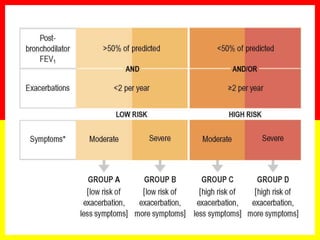
    Combined Assessment ofCOPD (C) (D) (A) (B) mMRC 0-1 CAT < 10 mMRC > 2 CAT > 10 Symptoms (mMRC or CAT score)) If mMRC 0-1 or CAT < 10: Less Symptoms (A or C) If mMRC > 2 or CAT > 10: More Symptoms (B or D) Assess symptoms first www.goldcopd.org
  • 136.
    Risk (GOLDClassificationofAirflowLimitation) Risk (Exacerbationhistory) > 2 1 0 (C) (D) (A)(B) mMRC 0-1 CAT < 10 4 3 2 1 mMRC > 2 CAT > 10 Symptoms (mMRC or CAT score)) If GOLD 1 or 2 and only 0 or 1 exacerbations per year: Low Risk (A or B) If GOLD 3 or 4 or two or more exacerbations per year: High Risk (C or D) Assess risk of exacerbations next www.goldcopd.org Combined Assessment of COPD
  • 137.
  • 138.
    Global Strategy forDiagnosis, Management and Prevention of COPD. Updated 2011 Risk (GOLDClassificationofAirflowLimitation) Risk (Exacerbationhistory) > 2 1 0 (C) (D) (A) (B) mMRC 0-1 CAT < 10 or CCQ<1 4 3 2 1 mMRC > 2 CAT > 10 or CCQ>1 Symptoms A: Les symptoms, low risk B: More symtoms, low risk C: Less symptoms, high risk D: More Symtoms, high risk
  • 139.
    GOLD 2011 Combinedassessment of COPD Less symptoms High risk Less symptoms Low risk More symptoms low risk More symptoms high risk GOLD 1 GOLD 2 GOLD 3 GOLD 4 (GOLDClassificationofAirflowLimitation) Symptoms ≥2 or 1 (not leading to hospital admission) 0 RISK (EXACERBATIONHISTORY) Adapted from GOLD 2014 ≥1 leading to hospital admission Breathlessness mMRC 0–1 mMRC ≥ 2 CAT < 10 CAT≥10 Risk
  • 140.
  • 141.
    Manage Stable COPD:Pharmacologic Therapy Patient Recommended 1st choice Alternative choice Other Possible Treatments A SAMA prn or SABA prn LAMA or LABA or SABA & SAMA Theophylline B LAMA or LABA LAMA & LABA SABA and/or SAMA Theophylline C ICS + LABA or LAMA LAMA & LABA or LAMA & PDE4-inh. or LABA & PDE4-inh. SABA and/or SAMA Theophylline D ICS + LABA and/or LAMA ICS + LABA & LAMA or ICS+LABA & PDE4-inh. or LAMA & LABA or LAMA & PDE4-inh. Carbocysteine SABA and/or SAMA Theophylline From the Global Strategy for the Diagnosis, Management, and Prevention of Chronic Obstructive Pulmonary Disease, Global Initiative for Chronic Obstructive Lung Disease (GOLD) 2011. http://www.goldcopd.org.
  • 142.
  • 143.
  • 144.
  • 145.
  • 146.
     Smoking cessationis the single most effective and cost-effective intervention to reduce the risk of developing COPD and stop its progression (Evidence A)
  • 147.
    COPD progression Age (year) FEV1%ofvalueatage25yr 100 75 50 25 502575 Death Disability Adapted from:Fletcher C,et al.Br Med J.1977;1:1645-1648 Nonsmokers 20-30 ml/year COPD 60 mL/year symptoms
  • 148.
    Age 40-50 50-5555-60 60-70 Age (years) Death Disability Symptoms Not SusceptibleSusceptible Smokers Stopped smoking at 45 (mild COPD) Stopped smoking at 65 (severe COPD) 30 40 50 60 70 80 90 0 20 40 60 80 20 100 Adapted from Fletcher CM, Peto R. BMJ 1977
  • 149.
  • 150.
  • 151.
  • 152.
    15 2  Role ofBronchodilators in COPD
  • 153.
    Expiratory flow-limitation andlung hyperinflation that are only partially reversible to bronchodilator therapy are pathophysiological hallmarks of COPD
  • 154.
    V BD  Air flowDeflation Improvement in flow – FEV1  Improvement in volumes – FVC and IC Bronchodilator therapy deflates the lung BD = bronchodilator; V = ventilation; FEV1= forced expiratory volume in 1 second; FVC= forced vital capacity; IC = inspiratory capacity
  • 155.
    Bronchodilators work by: EurRespir Rev 2006; 15: 99, 37–41 Relieve dyspnea by deflating the lungs Allowing improved lung emptying with each breath Improvement in exercise tolerance Reduces the elastic load on the inspiratory muscles.
  • 156.
  • 157.
    Current Bronchodilator Optionsfor COPD Short-acting Long-acting -agonists: Albuterol Fenoterol Terbutaline Anticholinergic: Ipratropium -agonists: Salmeterol Formoterol Anticholinergic: Tiotropium Methylxanthine: Theophylline Fixed Combination Albuterol + ipratropium Fenoterol + ipratropium Budesonide + Formoterol Fluticasone + Salmeterol
  • 158.
     The useof bronchodilators is now recommended as the cornerstone of maintenance treatment of COPD , since this disease is no longer regarded as one characterised by irreversible airflow limitation but rather as a disease with at least partial reversibility of airflow limitation. 15 8
  • 159.
     Short-acting andlong-acting bronchodilators form the cornerstone of pharmacologic management.  Unlike asthmatic patients who experience dyspnea when acute bronchospasm occurs, patients with COPD most commonly experience dyspnea due to increased respiratory demands, such as occurs with exertion. 15 9
  • 160.
     Besides bronchodilatation, inhaled bronchodilators, probably by reducing hyperinflation both at rest and during exercise (a so-called pharmacological volume reduction effect), offer beneficial effects on real world outcomes important for the patient, such as symptoms (dyspnoea), exercise tolerance (endurance), exacerbation/hospitalisation rate and health-related quality of life. 16 0
  • 161.
    Bronchodilator effect : Indacaterol> Formoterol or Salmeterol Indacaterol = Tiotropium (Evidence A) There is no evidence to recommend one class of long acting bronchodilators over the another for initial treatment. In the individual patient, the choice should be in the patient's perception of symptom relief. Manage Stable COPD: Pharmacologic Therapy
  • 162.
    ● None ofthe existing medications for COPD has been shown conclusively to modify the long-term decline in lung function. ● Therefore, pharmacotherapy for COPD is used to decrease symptoms, complications, or both. © 2013 Global Initiative for Chronic Obstructive Lung Disease COPD treatment options
  • 163.
     The overallapproach to the management of stable COPD is a stepwise increase in treatment, depending on disease severity.  Bronchodilators (especially inhaled ) form the cornerstone of pharmacologic treatment for COPD 16 3 COPD treatment options
  • 164.
  • 166.
     Inhaled corticosteroids(ICS) are now very widely used in high doses in the management of COPD patients , in sharp contrast to the situation in asthma 16 6
  • 167.
    ASTHMA AND COPD Macrophages Neutrophils Tc1cells Mast cells Eosinophils Th2 cells Airway Inflammation ASTHMA COPD Inflammatory gene expression NF-κB AP-1 Steroid sensitive Steroid resistant
  • 168.
    Combination inhalers inCOPD Symbicort 320 Turbohaler and Seretide 500 Accuhaler
  • 169.
  • 170.
    ICS/LABA combination therapy Inhaled steroids not licensed for use in COPD except as combination – ICS must be used in combination with LABA for patients with COPD – ICS monotherapy only FDA approved for treatment of asthma, not COPD 17 0
  • 171.
     Since COPDis usually progressive recommendations for the pharmacological treatment of COPD reflect the following general principles: 1. Treatment tends to be cumulative with more medications being required as the disease state worsens. 2. Regular treatment needs to be maintained at the same level for long periods of time unless significant side effects occur or the disease worsens.17 1
  • 172.
  • 173.
  • 175.
    Treatment algorithm forpatients without frequent exacerbations
  • 176.
    Pharmacological options forthe prevention of exacerbations in frequent exacerbators
  • 177.
  • 178.
  • 180.
    18 0 Asthma Asthma is aheterogeneous disease, usually characterized by chronic airway inflammation. It is defined by the history of respiratory symptoms such as wheeze, shortness of breath, chest tightness and cough that vary over time and in intensity, together with variable expiratory airflow limitation. [GINA 2014] COPD COPD is a common preventable and treatable disease, characterized by persistent airflow limitation that is usually progressive and associated with enhanced chronic inflammatory responses in the airways and the lungs to noxious particles or gases. Exacerbations and comorbidities contribute to the overall severity in individual patients. [GOLD 2015] Asthma-COPD overlap syndrome (ACOS) [a description] Asthma-COPD overlap syndrome (ACOS) is characterized by persistent airflow limitation with several features usually associated with asthma and several features usually associated with COPD. ACOS is therefore identified by the features that it shares with both asthma and COPD. Definitions
  • 181.
  • 182.
  • 183.
  • 184.
  • 185.
  • 186.
  • 187.
  • 188.
  • 189.
  • 190.