COPD
PowerPoint Template
COPD
Chronic Obstructive
Pulmonary Disease
COPD
is a group of lung
diseases that cause
airflow blockage and
breathing-related
problems. It is a
progressive disease,
meaning it gets
worse over time.
COPD
In the United
States,
COPD is the
third leading
cause of
death.

COPD
COPD is a
major cause of
death
worldwide, and
it is estimated
that 328 million
people have
COPD.
COPD forms
The two main forms of COPD
are chronic bronchitis and
emphysema
COPD
The lungs are the
primary organs
responsible for
respiration, the process
of taking in oxygen and
releasing carbon
dioxide. Respiration
involves inhalation
(inspiration), where the
diaphragm contracts,
expanding the chest
cavity and drawing air
into the lungs through
the trachea, bronchi,
and bronchioles to the
alveoli. Exhalation
(expiration) is primarily
passive, with the chest
cavity recoiling and
forcing air out of the
lungs. Gas exchange
occurs in the alveoli,
where oxygen diffuses
from air into the blood
and carbon dioxide
diffuses from blood into
air. The lungs also
regulate blood pH,
protect against
infection, and produce
surfactant to prevent
alveoli from collapsing.
COPD pathophysiology
COPD is a complex
disease with a
pathophysiology
characterized by
airway
inflammation, air
sac destruction,
and small airway
remodeling. These
changes lead to
airflow obstruction,
chronic cough,
dyspnea, gas
exchange
abnormalities, and,
in advanced cases,
right-sided heart
failure
COPD Risk factors
Smoking
Exposure to
secondhand smoke
Exposure to air
pollution
Occupational
exposure to dusts
and fumes
History of childhood
respiratory
infections
Genetic
predisposition
Alpha-1 antitrypsin
deficiency (AATD)
Aging
Low socioeconomic
statusdust
COPD causes
Smoking
Air pollution
Genetics
Occupational
exposures
History of
childhood
respiratory
infections
Smoking
Smoking is the leading
cause of COPD,
accounting for about
80% of cases
worldwide. Smoking
damages the lungs and
airways in multiple
ways, leading to the
development of chronic
inflammation, air sac
destruction, and small
airway remodeling, the
key pathophysiological
features of COPD.
COPD causes
Smoking triggers
inflammation in the
airways, leading to
thickening of the
walls, narrowing of
the lumen, and
increased mucus
production.
Smoking also
generates
excessive reactive
oxygen species
(ROS) that damage
the elastin fibers in
the airways, leading
to airway collapse.
Additionally,
smoking disrupts
the balance
between proteases
and antiproteases,
leading to
excessive protease
activity that
damages the
alveolar walls,
causing
emphysema. These
mechanisms
contribute to the
development and
progression of
COPD.
AAT deficiency
AAT is a protease
inhibitor, meaning it
blocks the activity of
proteases, enzymes
that break down
proteins. In the
lungs, proteases
play a role in the
inflammatory
response, and
excessive protease
activity can damage
lung tissue. AAT
helps to regulate
protease activity
and protect the
lungs from damage.
People with
AATD have lower
levels of AAT in
their blood,
making them
more susceptible
to lung damage
from proteases
COPD stages
COPD- stage 1
Mild COPD:
People with mild
COPD may have
no symptoms or
only mild
symptoms, such
as shortness of
breath after
exertion
COPD – stage 2
People with
moderate COPD
may have more
frequent shortness
of breath,
especially during
exertion. They may
also have a chronic
cough or wheezing,
increased phlegm
COPD - Stage 3
People with severe
COPD may have
frequent shortness
of breath, even at
rest. They may also
have wheezing,
chest tightness, and
fatigue, patient may
need supplemental
oxygen
COPD
• Shortness of
breath
• Cough
• Wheezing
• Chest tightness
• Fatigue
• Mucous
production
• Heart failure at
later stages
symptoms
Symptoms
COPD complications
• Anemia
• Right-sided heart
failure
• Muscle weakness
• Lung infections
• Bone thinning
• Collapsed lungs
• Bone thinning
COPD
Patient history
COPD
Patient history
COPD
Physical
examination
COPD – diagnostic methods
•Spirometry
•Chest X-ray
•Arterial blood gas (ABG)
test
•Body plethysmography
•Alpha-1 antitrypsin (AAT)
deficiency test
•Pulse oximetry
COPD tests
spirometry
his is the most common
test used to diagnose
COPD. It measures how
much air you can blow
out of your lungs and
how fast you can blow it
out.
Pulse oximetry
Pulse oximetry is a
non-invasive
method for
measuring the
oxygen saturation
of your blood,
which is the
percentage of
hemoglobin in your
blood that is
carrying oxygen. It
is a quick,
painless, and easy-
to-use test that
can be done in a
doctor's office,
hospital, or even at
home.
ABGs
This test measures
the amount of
oxygen and carbon
dioxide in your
blood. It can help
to determine how
severe your COPD
is and whether you
need oxygen
therapy.
Electrocardiogram
In COPD, ECG
changes can
occur due to the
long-term effects
of hypoxic
pulmonary
vasoconstriction
(HPVC) upon the
right side of the
heart. HPVC is a
narrowing of the
blood vessels in
the lungs, which
can lead to
pulmonary
hypertension
(high blood
pressure in the
lungs).
Pulmonary
hypertension can
cause the right
side of the heart
to enlarge and
weaken, which
can lead to right
ventricular
hypertrophy
(RVH).
Chest x ray
This test can show
if you have
emphysema,
which is one of the
main causes of
COPD. It can also
rule out other lung
problems, such as
pneumonia.
COPD treatment
• Bronchodilators:
These medications
open up the
airways and make
it easier to breathe.
• Antibiotics: These
medications are
used to treat lung
infections.
• Supplemental
oxygen: This can
help people with
low levels of
oxygen in the
blood.
• Vaccination:
People with COPD
should get a flu
vaccine every year
and a pneumonia
vaccine once a
year.
treatment
Bronchodilators
Bronchodilators form
the cornerstone of
COPD treatment,
working by relaxing
the muscles
surrounding the
airways, allowing for
easier airflow. Short-
acting bronchodilators,
such as albuterol
(ProAir HFA, Ventolin
HFA) and ipratropium
(Atrovent HFA),
provide rapid relief
from acute symptoms,
while long-acting
bronchodilators, such
as salmeterol (Advair
HFA, Serevent HFA)
and tiotropium
(Spiriva), offer
sustained symptom
control over an
extended period.
Anti inflammatory
Inhaled
corticosteroids,
such as
fluticasone and
budesonide
(Symbicort HFA),
combat the
chronic
inflammation that
underlies COPD.
By reducing
inflammation,
these medications
help alleviate
symptoms,
improve lung
function, and
minimize the risk of
exacerbations.
Supplemental oxygen
Antibiotics
Vaccination
Rehabilitation
Anti cholinergic
Anticholinergics
work by blocking
muscarinic
receptors, which are
receptors for
acetylcholine. By
blocking these
receptors,
anticholinergics
prevent
acetylcholine from
binding to them and
exerting its
bronchoconstrictor
effects. This leads to
relaxation of the
muscles in the
airways, allowing for
easier airflow.
Leukotriene modifiers
LTRAs work by binding to
leukotriene receptors on
immune cells and
smooth muscle cells in
the airways. By blocking
these receptors, LTRAs
prevent leukotrienes
from exerting their
inflammatory and
broncho constrictive
effects. This leads to
reduced airway
inflammation, mucus
production, and airway
constriction, which can
help improve lung
function and reduce
symptoms in people with
COPD.broncho-
constrictive
expectorants
Expectorants are
thought to work by
stimulating the
production of mucus
in the airways. They
may do this by
increasing the activity
of the cilia, which are
tiny hairs that line the
airways and help to
move mucus.
Expectorants may
also make mucus
thinner by increasing
the amount of water in
it.
Antihistamine
COPD prevention
COPD preventive methods
The best way to
prevent COPD is to
avoid smoking and
air pollution. Several
lifestyle changes can
help reduce the risk
of COPD, such as
eating a healthy diet
and exercising
regularly
Chronic bronchitis
Chronic bronchitis
is a progressive lung
disease characterized
by persistent
inflammation of the
bronchial airways,
leading to excessive
mucus production and
persistent cough. It is a
major component of
chronic obstructive
pulmonary disease
(COPD), a broader term
encompassing
obstructive lung
diseases.
Chronic bronchitis
Chronic bronchitis
Symptoms of chronic bronchitis
- Shortness of breath
- Chest tightness
- Wheezing
- Fatigue
- Recurrent
respiratory infections
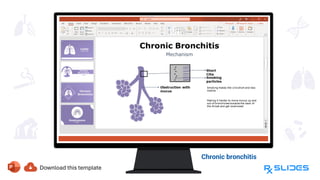
Pathophysiology
Chronic bronchitis
arises from chronic
inflammation of the
airways, primarily due
to exposure to
irritants like cigarette
smoke, air pollution,
and occupational
dusts. This
inflammation
damages the cilia,
tiny hair-like
structures
responsible for
clearing mucus from
the airways.
Consequently, mucus
accumulates, leading
to cough and
increased
susceptibility to
infections.
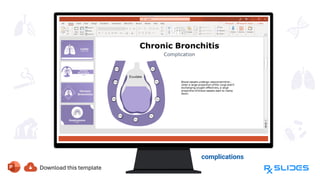
Chronic bronchitis
complications
Acute exacerbations:
Worsening of symptoms
requiring additional
treatment
- Respiratory failure:
Severe impairment of
lung function, requiring
mechanical ventilation
- Cor pulmonale: Right-
sided heart failure due to
chronic pulmonary
hypertension
- Lung cancer: Increased
risk associated with
chronic inflammation
complications
Diagnosis
prevention
emphysema
Emphysema
- Emphysema is a
type of chronic
obstructive
pulmonary disease
(COPD), where the
air sacs in the lungs
(alveoli) become
damaged and lose
their elasticity.
- The loss of
elasticity causes the
airways to collapse
during exhalation,
leading to difficulty
in expelling air from
the lungs.
causes
Primary cause:
Smoking is the
leading cause of
emphysema, with
long-term exposure
to tobacco smoke
being the primary risk
factor.
- Alpha-1 antitrypsin
deficiency: Genetic
factors can
contribute to the
development of
emphysema,
especially in
individuals with a
deficiency of the
alpha-1 antitrypsin
enzyme.
Pathophysiology
Smoking-induced
inflammation: Chronic
exposure to cigarette
smoke triggers
inflammation in the
airways, leading to the
release of enzymes that
break down elastin in the
lungs.
- Destruction of alveoli:
Elastin breakdown
results in the destruction
of alveoli, reducing the
surface area available for
gas exchange.
Pathophysiology
- Loss of lung
elasticity:
Reduced
elasticity
impairs the
ability of the
lungs to recoil
during
exhalation,
causing air
trapping.
symptoms
- Shortness of breath,
especially during
physical exertion.
- Persistent cough.
- Wheezing.
- Fatigue.
- Weight loss.
Emphysema types
Centriacinar emphysema
Panacinar emphysema
Paraseptal emphysema
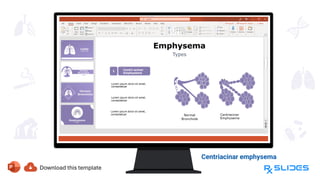
Centriacinar emphysema
Primarily affects the
central or proximal
parts of the acinus.
Panacinar emphysema
Paraseptal emphysema
Emphysema diagnosis
Emphysema prevention

COPD

  • 1.
  • 2.
  • 3.
    COPD is a groupof lung diseases that cause airflow blockage and breathing-related problems. It is a progressive disease, meaning it gets worse over time.
  • 4.
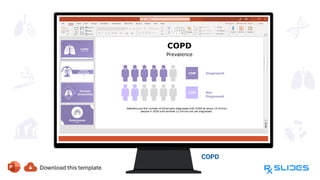
    COPD In the United States, COPDis the third leading cause of death.
  • 5.
    COPD COPD is a majorcause of death worldwide, and it is estimated that 328 million people have COPD.
  • 6.
    COPD forms The twomain forms of COPD are chronic bronchitis and emphysema
  • 7.
    COPD The lungs arethe primary organs responsible for respiration, the process of taking in oxygen and releasing carbon dioxide. Respiration involves inhalation (inspiration), where the diaphragm contracts, expanding the chest cavity and drawing air into the lungs through the trachea, bronchi, and bronchioles to the alveoli. Exhalation (expiration) is primarily passive, with the chest cavity recoiling and forcing air out of the lungs. Gas exchange occurs in the alveoli, where oxygen diffuses from air into the blood and carbon dioxide diffuses from blood into air. The lungs also regulate blood pH, protect against infection, and produce surfactant to prevent alveoli from collapsing.
  • 8.
    COPD pathophysiology COPD isa complex disease with a pathophysiology characterized by airway inflammation, air sac destruction, and small airway remodeling. These changes lead to airflow obstruction, chronic cough, dyspnea, gas exchange abnormalities, and, in advanced cases, right-sided heart failure
  • 9.
    COPD Risk factors Smoking Exposureto secondhand smoke Exposure to air pollution Occupational exposure to dusts and fumes History of childhood respiratory infections Genetic predisposition Alpha-1 antitrypsin deficiency (AATD) Aging Low socioeconomic statusdust
  • 10.
  • 11.
    Smoking Smoking is theleading cause of COPD, accounting for about 80% of cases worldwide. Smoking damages the lungs and airways in multiple ways, leading to the development of chronic inflammation, air sac destruction, and small airway remodeling, the key pathophysiological features of COPD.
  • 12.
    COPD causes Smoking triggers inflammationin the airways, leading to thickening of the walls, narrowing of the lumen, and increased mucus production. Smoking also generates excessive reactive oxygen species (ROS) that damage the elastin fibers in the airways, leading to airway collapse. Additionally, smoking disrupts the balance between proteases and antiproteases, leading to excessive protease activity that damages the alveolar walls, causing emphysema. These mechanisms contribute to the development and progression of COPD.
  • 13.
    AAT deficiency AAT isa protease inhibitor, meaning it blocks the activity of proteases, enzymes that break down proteins. In the lungs, proteases play a role in the inflammatory response, and excessive protease activity can damage lung tissue. AAT helps to regulate protease activity and protect the lungs from damage. People with AATD have lower levels of AAT in their blood, making them more susceptible to lung damage from proteases
  • 14.
  • 15.
    COPD- stage 1 MildCOPD: People with mild COPD may have no symptoms or only mild symptoms, such as shortness of breath after exertion
  • 16.
    COPD – stage2 People with moderate COPD may have more frequent shortness of breath, especially during exertion. They may also have a chronic cough or wheezing, increased phlegm
  • 17.
    COPD - Stage3 People with severe COPD may have frequent shortness of breath, even at rest. They may also have wheezing, chest tightness, and fatigue, patient may need supplemental oxygen
  • 18.
    COPD • Shortness of breath •Cough • Wheezing • Chest tightness • Fatigue • Mucous production • Heart failure at later stages
  • 19.
  • 20.
  • 21.
    COPD complications • Anemia •Right-sided heart failure • Muscle weakness • Lung infections • Bone thinning • Collapsed lungs • Bone thinning
  • 22.
  • 23.
  • 24.
  • 25.
    COPD – diagnosticmethods •Spirometry •Chest X-ray •Arterial blood gas (ABG) test •Body plethysmography •Alpha-1 antitrypsin (AAT) deficiency test •Pulse oximetry
  • 26.
  • 27.
    spirometry his is themost common test used to diagnose COPD. It measures how much air you can blow out of your lungs and how fast you can blow it out.
  • 28.
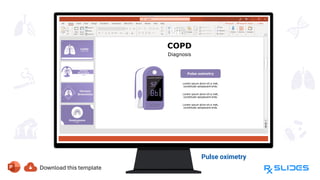
    Pulse oximetry Pulse oximetryis a non-invasive method for measuring the oxygen saturation of your blood, which is the percentage of hemoglobin in your blood that is carrying oxygen. It is a quick, painless, and easy- to-use test that can be done in a doctor's office, hospital, or even at home.
  • 29.
    ABGs This test measures theamount of oxygen and carbon dioxide in your blood. It can help to determine how severe your COPD is and whether you need oxygen therapy.
  • 30.
    Electrocardiogram In COPD, ECG changescan occur due to the long-term effects of hypoxic pulmonary vasoconstriction (HPVC) upon the right side of the heart. HPVC is a narrowing of the blood vessels in the lungs, which can lead to pulmonary hypertension (high blood pressure in the lungs). Pulmonary hypertension can cause the right side of the heart to enlarge and weaken, which can lead to right ventricular hypertrophy (RVH).
  • 31.
    Chest x ray Thistest can show if you have emphysema, which is one of the main causes of COPD. It can also rule out other lung problems, such as pneumonia.
  • 32.
    COPD treatment • Bronchodilators: Thesemedications open up the airways and make it easier to breathe. • Antibiotics: These medications are used to treat lung infections. • Supplemental oxygen: This can help people with low levels of oxygen in the blood. • Vaccination: People with COPD should get a flu vaccine every year and a pneumonia vaccine once a year.
  • 33.
  • 34.
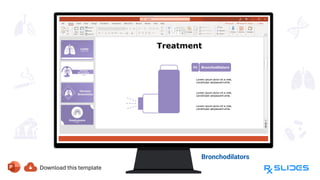
    Bronchodilators Bronchodilators form the cornerstoneof COPD treatment, working by relaxing the muscles surrounding the airways, allowing for easier airflow. Short- acting bronchodilators, such as albuterol (ProAir HFA, Ventolin HFA) and ipratropium (Atrovent HFA), provide rapid relief from acute symptoms, while long-acting bronchodilators, such as salmeterol (Advair HFA, Serevent HFA) and tiotropium (Spiriva), offer sustained symptom control over an extended period.
  • 35.
    Anti inflammatory Inhaled corticosteroids, such as fluticasoneand budesonide (Symbicort HFA), combat the chronic inflammation that underlies COPD. By reducing inflammation, these medications help alleviate symptoms, improve lung function, and minimize the risk of exacerbations.
  • 36.
  • 37.
  • 38.
  • 39.
  • 40.
    Anti cholinergic Anticholinergics work byblocking muscarinic receptors, which are receptors for acetylcholine. By blocking these receptors, anticholinergics prevent acetylcholine from binding to them and exerting its bronchoconstrictor effects. This leads to relaxation of the muscles in the airways, allowing for easier airflow.
  • 41.
    Leukotriene modifiers LTRAs workby binding to leukotriene receptors on immune cells and smooth muscle cells in the airways. By blocking these receptors, LTRAs prevent leukotrienes from exerting their inflammatory and broncho constrictive effects. This leads to reduced airway inflammation, mucus production, and airway constriction, which can help improve lung function and reduce symptoms in people with COPD.broncho- constrictive
  • 42.
    expectorants Expectorants are thought towork by stimulating the production of mucus in the airways. They may do this by increasing the activity of the cilia, which are tiny hairs that line the airways and help to move mucus. Expectorants may also make mucus thinner by increasing the amount of water in it.
  • 43.
  • 44.
  • 45.
    COPD preventive methods Thebest way to prevent COPD is to avoid smoking and air pollution. Several lifestyle changes can help reduce the risk of COPD, such as eating a healthy diet and exercising regularly
  • 46.
  • 47.
    Chronic bronchitis is aprogressive lung disease characterized by persistent inflammation of the bronchial airways, leading to excessive mucus production and persistent cough. It is a major component of chronic obstructive pulmonary disease (COPD), a broader term encompassing obstructive lung diseases.
  • 48.
  • 49.
  • 50.
    Symptoms of chronicbronchitis - Shortness of breath - Chest tightness - Wheezing - Fatigue - Recurrent respiratory infections
  • 51.
    Pathophysiology Chronic bronchitis arises fromchronic inflammation of the airways, primarily due to exposure to irritants like cigarette smoke, air pollution, and occupational dusts. This inflammation damages the cilia, tiny hair-like structures responsible for clearing mucus from the airways. Consequently, mucus accumulates, leading to cough and increased susceptibility to infections.
  • 52.
  • 53.
    complications Acute exacerbations: Worsening ofsymptoms requiring additional treatment - Respiratory failure: Severe impairment of lung function, requiring mechanical ventilation - Cor pulmonale: Right- sided heart failure due to chronic pulmonary hypertension - Lung cancer: Increased risk associated with chronic inflammation
  • 54.
  • 55.
  • 56.
  • 57.
  • 58.
    Emphysema - Emphysema isa type of chronic obstructive pulmonary disease (COPD), where the air sacs in the lungs (alveoli) become damaged and lose their elasticity. - The loss of elasticity causes the airways to collapse during exhalation, leading to difficulty in expelling air from the lungs.
  • 59.
    causes Primary cause: Smoking isthe leading cause of emphysema, with long-term exposure to tobacco smoke being the primary risk factor. - Alpha-1 antitrypsin deficiency: Genetic factors can contribute to the development of emphysema, especially in individuals with a deficiency of the alpha-1 antitrypsin enzyme.
  • 60.
    Pathophysiology Smoking-induced inflammation: Chronic exposure tocigarette smoke triggers inflammation in the airways, leading to the release of enzymes that break down elastin in the lungs. - Destruction of alveoli: Elastin breakdown results in the destruction of alveoli, reducing the surface area available for gas exchange.
  • 61.
    Pathophysiology - Loss oflung elasticity: Reduced elasticity impairs the ability of the lungs to recoil during exhalation, causing air trapping.
  • 62.
    symptoms - Shortness ofbreath, especially during physical exertion. - Persistent cough. - Wheezing. - Fatigue. - Weight loss.
  • 63.
  • 64.
    Centriacinar emphysema Primarily affectsthe central or proximal parts of the acinus.
  • 65.
  • 66.
  • 67.
  • 68.